Crafting a Content Strategy for Startups: Key Considerations

Most teams think crafting a content strategy is about topics, keywords, and a publishing calendar. It isn’t. For a scaling SaaS team, content strategy usually breaks because the strategy never really made it into the system that creates the content.
That’s why so many CMOs and VPs Marketing feel like they have a content machine, but still can’t trust what comes out of it. The work is happening. The pipeline isn’t compounding.
Key Takeaways:
- Crafting a content strategy starts with positioning, not a content calendar
- Most content problems are really operating model problems
- AI writing tools speed up drafting, but they rarely solve consistency, context, or narrative drift
- Scaling SaaS teams lose more time in rework and coordination than in writing itself
- A strong content strategy needs audience, persona, use case, product truth, and brand rules built in
- GEO rewards consistency and clarity across many pieces, not random bursts of output
- The teams that win treat demand generation like a system, not a pile of tactics
Why crafting a content strategy breaks once the team grows
Crafting a content strategy breaks when the strategy lives in a deck, but execution lives in five tools and twelve people’s heads. That gap is where quality starts to drift, reviews pile up, and output gets slower even though you have more people involved.

Back in 2012-2016 I ran a website called Steamfeed. At our peak, we hit 120k unique visitors a month. We got there because we had both depth and breadth, at high volume, with a lot of different contributors. We started seeing SEO traffic spikes at 500 pages, 1000 pages, 2500 pages, 5000 pages, then 10000 pages. Most pages didn’t get massive traffic on their own. But together, they created coverage. Volume plus quality did the work.
That lesson sticks with me. A lot of people look at content strategy like it’s mostly ideation. It’s not. The real job is building something that can keep producing useful, aligned content over time. That’s where most teams go wrong.
The visible problem is content quality
When people talk about crafting a content strategy, they usually complain about surface symptoms. Content feels generic. Writers miss product nuance. SEO content doesn’t sound like the brand. PMM says the messaging is off. Demand gen says the content isn’t usable in campaigns. Leadership wants more output, but every extra piece creates more review work.
That all sounds like a writing problem. It rarely is.
The real issue is that each person is working from partial context. One person knows positioning. Another knows product nuance. Another knows the audience objections. Another knows what sales is hearing. Nobody is writing from the whole picture. So every draft turns into a negotiation.
If you’ve led a mid-market SaaS team, you know the feeling. You read a draft and think, this is technically fine, but it’s not us. And now you’re back in the doc fixing what should have been clear before the first sentence was written.
The root cause is fragmented execution
The bottleneck isn’t content. And it isn’t prompts. It’s fragmented execution without a system.
AI tools made writing faster. They did not make demand generation work. They don’t understand your category framing, your enemy, your market point of view, your use cases, your product boundaries, or how a CMO actually wants the market to understand the problem. So humans still carry the hard part. They brief. They rewrite. They fact check. They clean up tone. They argue with the draft.
At that point, what did the tool really save you?
I’ve seen this movie before. When I was the sole marketer at PostBeyond, I could write 3-4 strong blog posts a week because I had the context in my head and I had a framework. As the team grew, output got harder, not easier. Writers had less context than I did. I had less time than I used to. Quality slipped. Review cycles got heavier. Sound familiar?
And that’s the part that wears teams down. Not the writing itself. The constant cleanup.
What crafting a content strategy actually requires now
Crafting a content strategy now means encoding what your company believes, who you sell to, what your product really does, and how each piece of content should move the market. Without that, you don’t have strategy. You have a list of content tasks.
I remember being at a panel at the DMZ in Toronto when I was at LevelJump. A guy was rattling off tool after tool after tool. Use this for the list. Use this for outreach. Use this for this. Use this for that. Then April Dunford jumped in and said, tactics without strategy are shit. She was right. Still is.
That’s the mistake a lot of SEO, GEO, and AI content tools make. They’re anchored in channels and tactics. They optimize the piece. They ignore the marketing plan underneath the piece.
Positioning has to drive the whole thing
A real content strategy starts with positioning. Who are you for. What problem are you really solving. What old way are you trying to replace. Why should the market care. What do you want buyers to believe before they ever book a demo.
That sounds obvious. But most teams skip it in practice.
Instead, they go straight to keyword clusters and publishing targets. Then they wonder why the content doesn’t convert, or why sales says the story feels flat, or why traffic goes up but pipeline doesn’t. Traffic without a sharp position is just more people misunderstanding you.
There’s a case to be made for starting with search opportunity first, especially if you need quick wins. Fair point. But if the position is weak, all you’re doing is scaling confusion. A bigger audience does not fix fuzzy messaging.
Audience and use case context can’t be optional
The second thing crafting a content strategy requires is context on who the content is for and what they’re trying to get done. Not generic personas either. I mean actual audience segments, real pains, real goals, and real use cases.
A CMO at a 300-person SaaS company is not reading the same way a content manager at a 40-person startup is. Their goals are different. Their risk tolerance is different. The questions running through their head are different. One is thinking about team alignment, ROI, and board pressure. The other may be thinking about getting the next article out this week.
That’s why generic content misses. It speaks to everyone a little, and nobody deeply.
So when you’re crafting a content strategy, you need to answer a few things clearly:
- Which audience segment matters most right now
- Which personas inside that segment influence the buy
- Which use cases matter by role and maturity
- Which pains are urgent enough to trigger action
- Which product truths actually support those pains
Miss this, and you end up with content that looks polished but has no pull.
Product truth and brand rules have to be upstream
This one gets ignored all the time. People treat product accuracy and brand voice like editing tasks at the end. That’s backwards.
If the draft starts without clear product definitions, boundaries, and approved language, then your reviewers are doing repair work. Same with voice. Same with claims. Same with messaging. The more content you publish, the more expensive that mistake gets.
Honestly, this surprised me more than anything else once AI tools got popular. People thought the hard part was generating text. It wasn’t. The hard part was making sure the text stayed true to the business.
A strong content strategy has guardrails upstream. Before the draft. Not after.
GEO raises the bar on consistency
The GEO shift matters because now your audience isn’t just human readers and search engines. LLMs are another audience, and they reward consistency in a way most teams still underestimate.
You can’t publish one sharp article and six muddled ones and expect the market to understand you clearly. LLMs synthesize patterns. They look at how consistently you define the problem, explain the category, describe the product, and repeat your position across many pieces.
That changes the game.
So crafting a content strategy in the GEO era is less about producing isolated wins. It’s more about building a body of work that says the same core truth from many angles. Different topics. Same signal. Different formats. Same position. That repetition is not boring. It’s how trust gets built.
How to build a content strategy that actually scales
A scalable content strategy is built by turning marketing fundamentals into operating rules, then using those rules to drive planning, creation, review, and publication. The teams that scale well don’t just write better. They reduce ambiguity before the writing starts.
This is the new way. And no, it’s not sexy. But it works.
Start with the market argument, not the content calendar
Before you build a calendar, define the argument you want the market to absorb. What do you believe is broken. What does the old way get wrong. What does the better way look like. Why are buyers struggling to solve this with the tools they already have.
For scaling SaaS teams, this matters a lot because you usually have enough people to create a ton of activity. What you don’t always have is one shared narrative. So content gets published, but the market signal gets weaker.
Your strategy should make these things painfully clear:
- category framing
- old way versus new way
- enemy and alternatives
- key differentiators
- core messages that should repeat across channels
That becomes the spine of the whole program.
Map content to audience, persona, and use case
Once the market argument is clear, the next move is mapping content around who you need to influence and what they need to understand. This is where a lot of teams get lazy. They say the audience is “B2B marketers” and move on. That’s not enough.
You want a matrix. Segment. Persona. Use case. Pain. Desired outcome. Feature relevance. Buying trigger. Without that, your content strategy stays broad and weak.
For an executive audience, I’d focus hard on problems like rework tax, narrative drift, approval drag, and the inability to prove content is compounding. Those are not small annoyances. Those are operational and financial problems. A CMO doesn’t care that an article was published. They care whether the system can produce credible demand without eating the team alive.
And this is where a lot of strategy work gets missed. Not because teams are lazy. Usually because they’re busy. They jump right into execution. I get it. But skipping this part creates months of muddy content later.
Build topic clusters around repeated truths
Then you build your topics. Not randomly. Not by grabbing whatever keyword tool spits out first. You build clusters around repeated truths your market needs to hear.
That means if your point of view is that fragmented execution kills demand gen, you should say that across acquisition content, thought leadership, product-led content, and buyer content. Different angle. Same truth. That’s how the market learns what you stand for.
A good cluster strategy has a few layers:
- Problem education content that defines the issue
- Category content that reframes the old way
- Evaluation content for buyers comparing options
- Product-led content that shows how the approach works
- Supporting content that expands use cases, objections, and edge cases
When teams do this well, every piece reinforces the others. When they do it badly, each article feels like a new company wrote it.
Put quality controls before scale
A lot of teams try to scale first and tighten quality later. Bad move. You should lock in the rules first.
That means clear voice rules. Clear approved claims. Clear product boundaries. Clear formatting patterns. Clear structural standards. Clear review criteria. If not, every new writer, freelancer, PMM, or AI workflow adds another layer of inconsistency.
What I’ve seen work is pretty simple. You define the bar once. Then you make the system enforce it. Not perfectly. But consistently enough that humans are editing for sharpness, not rescuing the piece from being wrong.
That’s why quality at scale is really a systems question. Not a talent question.
Treat distribution as part of strategy, not an afterthought
Last thing. Distribution belongs inside content strategy. Not after it.
Too many teams write the article, publish it, and then ask what they should do with it. That’s backwards. If the piece matters, you should already know how it supports search, thought leadership, social, sales conversations, and buyer education.
Good content strategy is not just “what will we publish.” It’s “how will this idea travel.”
And if you’re crafting a content strategy for an executive team, this matters even more because leadership wants leverage. They want one strong idea to echo across multiple touchpoints, not die quietly in the blog archive.
If you want to see what a governed, repeatable version of this looks like, Request a Demo. You’ll get a much clearer picture of how to turn strategy into a running system.
How Oleno turns content strategy into consistent execution
Oleno turns crafting a content strategy from a manual planning exercise into a governed execution system. Instead of asking humans to remember positioning, audience nuance, product truth, and voice on every piece, it stores those rules once and applies them throughout the content pipeline.
Governance that keeps the strategy intact
This is where most teams feel the relief first. Oleno uses Brand Studio, Marketing Studio, and Product Studio to encode how you sound, what you believe, and what is true about the product. So the strategy is not sitting in a slide deck while the drafts drift somewhere else.
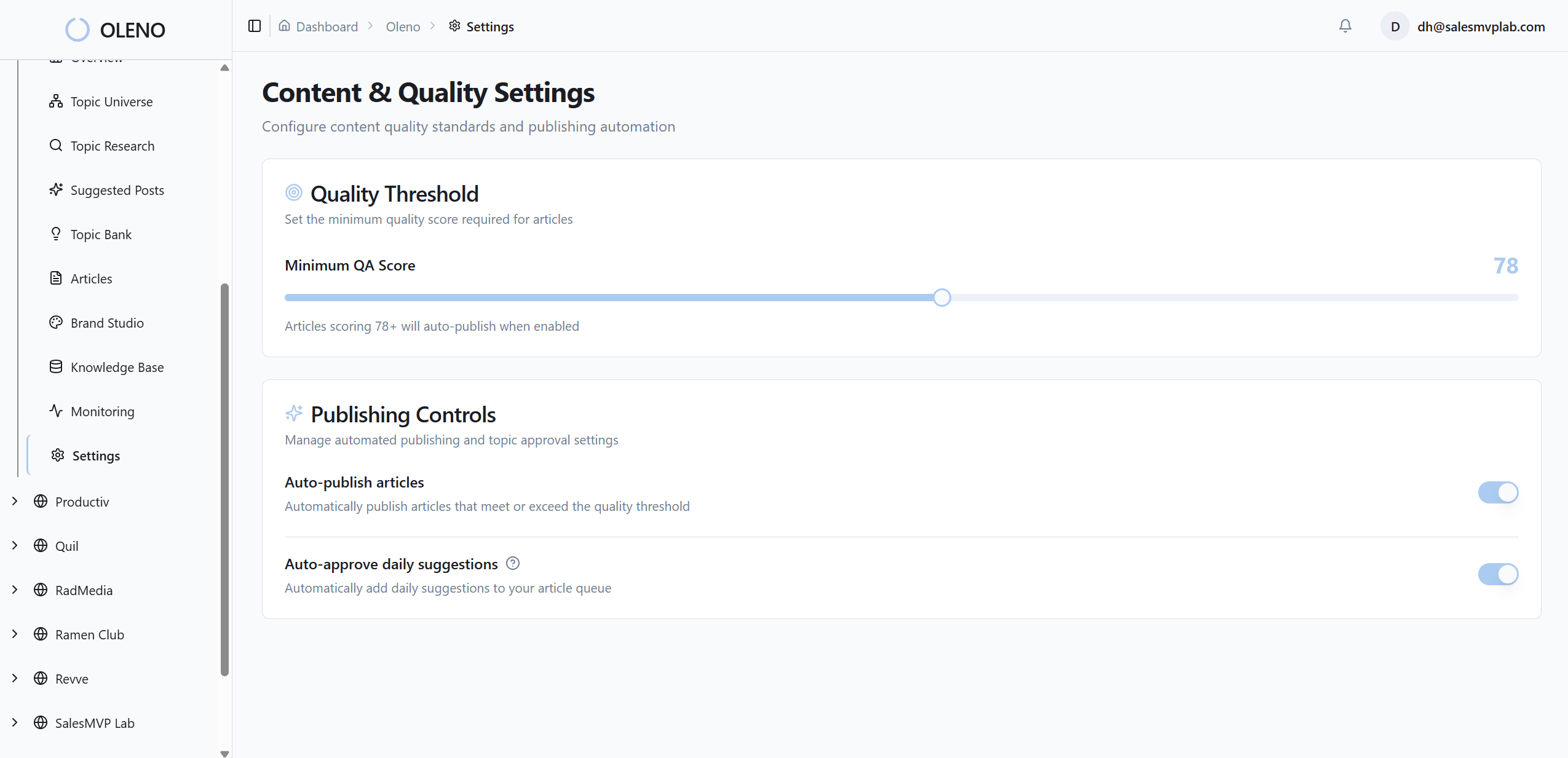
Marketing Studio carries your category framing, key messages, and narrative structure into briefs and drafts. Brand Studio keeps tone, terminology, and style constraints consistent. Product Studio grounds content in approved product definitions and boundaries, which matters a lot when you’re producing product-led or evaluation content at volume.
That means the review cycle changes. You’re not fixing the same foundational problems over and over. You’re sharpening.
Planning and execution that reduce rework tax
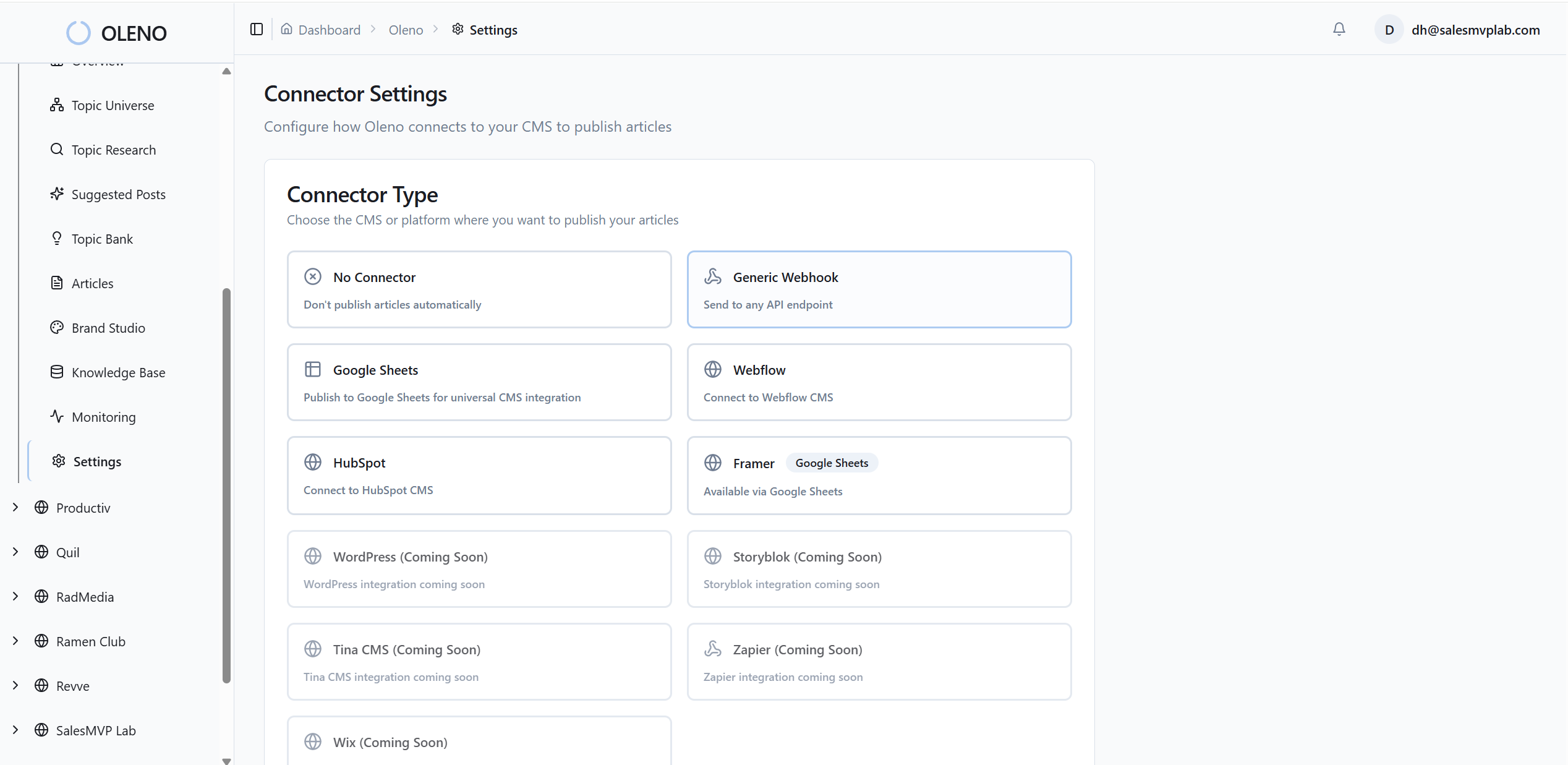
Oleno also closes the gap between strategy and output with Storyboard, Audience & Persona Targeting, Use Case Studio, and the Orchestrator. Storyboard allocates content across the dimensions that matter, so coverage gets planned with balance instead of by gut feel. Audience & Persona Targeting and Use Case Studio make sure the same topic can be framed correctly for the right buyer and workflow, instead of speaking to a blurry “marketer” audience.
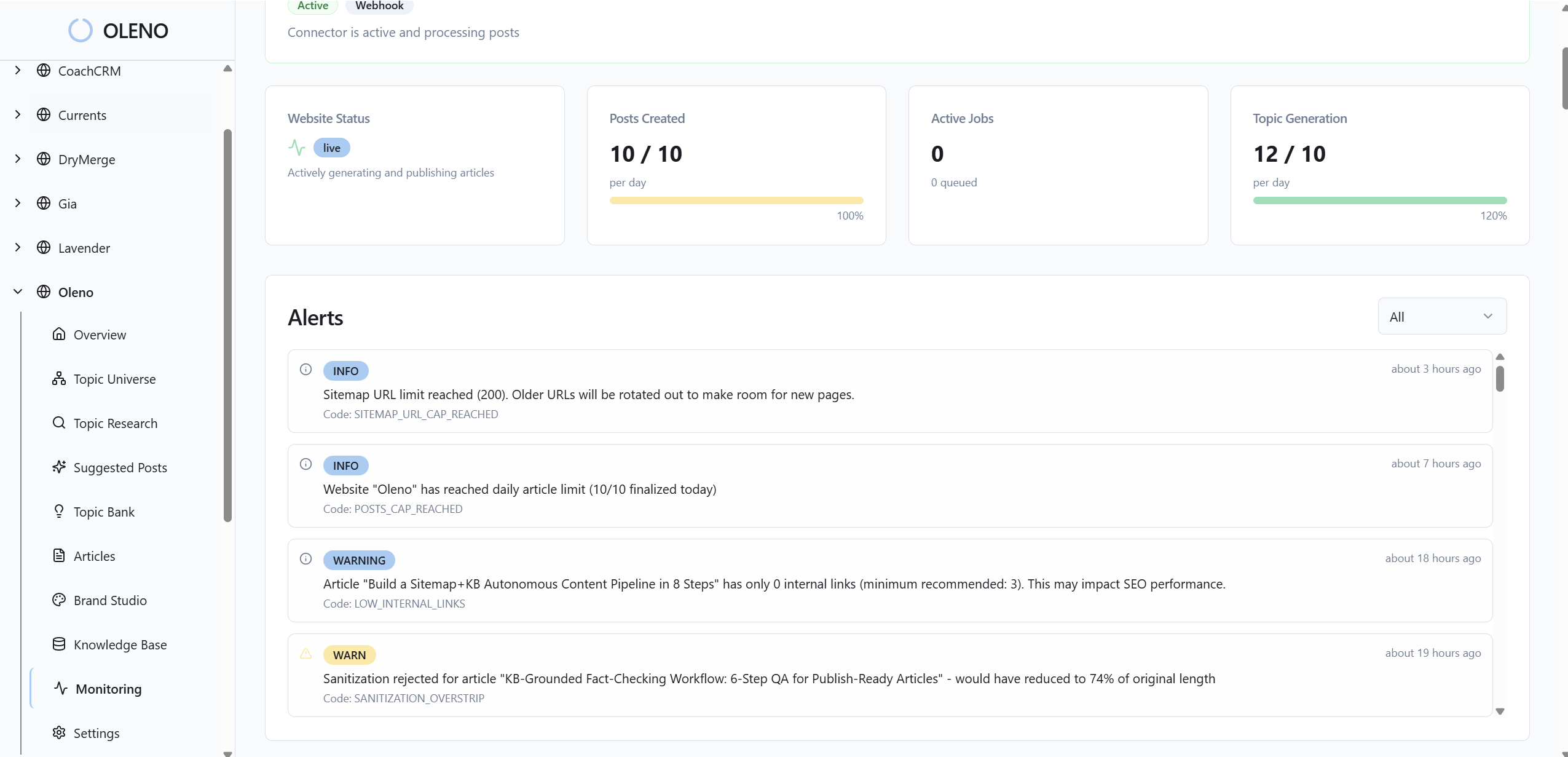
Then the Orchestrator runs the pipeline against approved topics and quotas. So you get continuity. Cadence. Less stop-start chaos.
For an executive team, that matters. A lot. Because the hidden cost of bad content strategy is not just weak articles. It’s the time your expensive team spends coordinating, rewriting, re-briefing, and resetting. Oleno is built to cut that waste by making execution follow the system.
Book a Demo if you want to see how Oleno turns strategy into steady, governed output without adding headcount.
A better content strategy starts with better operating rules
Crafting a content strategy is not about producing more ideas. It’s about making sure your market argument, audience context, product truth, and brand voice survive contact with scale. That’s what most teams miss.
The teams that win in GEO won’t be the ones publishing the most random content. They’ll be the ones repeating the clearest signal across the most useful body of work. Ready to make your strategy executable, not just aspirational? Request a Demo.
About Daniel Hebert
I'm the founder of Oleno, SalesMVP Lab, and yourLumira. Been working in B2B SaaS in both sales and marketing leadership for 13+ years. I specialize in building revenue engines from the ground up. Over the years, I've codified writing frameworks, which are now powering Oleno.
Frequently Asked Questions