Crawl Budget & Indexing Strategy for High‑Volume Automated Content

Back when we cranked Steamfeed to 10k-plus pages, I learned a hard truth: volume gets you attention, but only if the right pages get seen first. We had depth, breadth, and momentum. Still, Google didn’t crawl in the order we wished. It crawled in the order our site deserved. That distinction matters.
Later at Proposify, different angle. Our content team shipped beautiful work, then waited. Launch pages idled. Indexing lagged. Revenue felt it. Not a crisis, but a drag you notice in pipeline meetings. The pattern repeats across teams: publish more, cross your fingers, then burn sprints cleaning up crawl waste. This isn’t a content problem. It’s an index governance problem.
Key Takeaways:
- Treat crawl as a finite resource and govern publishing to match it
- Run indexation as code: rules, quotas, sitemaps, canonicals, and time-bound noindex
- Prevent junk before it exists; don’t try to mop it up later
- Shard sitemaps by priority and keep lastmod fresh to accelerate money pages
- Enforce canonical and parameter rules at the template level, tested in CI
- Publish on a fixed cadence to avoid crawl spikes that delay launches
Why Scale Without Index Governance Backfires
Publishing more without index controls pushes crawlers toward the wrong pages. Google allocates crawl based on host health, internal linking, and perceived value, not your sprint goals. So, your “big launch” can wait behind thin variants. Example: 500 new URLs on Monday. Your money pages sit in line.

Automation creates more crawl demand than Google will serve
When you automate content, you effectively queue crawl requests. That queue isn’t first-in, first-out. It’s scored. If your host hints at instability, duplication, or messy parameters, crawlers throttle, then spend cycles where signals are easiest, not where value is highest. That’s how you bury your best work with your own momentum.
Most teams realize this after a launch slips. The URLs are “live,” but impressions lag. You look at Search Console. Indexing drips in over days, sometimes weeks. Meanwhile, logs show Googlebot churning through tags and archive pages. Guardrails fix this. Cap daily new URLs. Weight internal links to your priority templates. And stop flooding the pool with near-duplicates in the first place.
Why volume without control buries money pages
If 80 percent of what’s new is repetitive or parameterized, crawlers stall on noise. Your revenue pages wait their turn behind it. The fix starts upstream. Block low-value templates before they go live. Keep experiments behind noindex with a clear expiry. Shard sitemaps so priority sets update first and most often.
Here’s the nuance: volume still matters. But only when the system promotes the right URLs, in the right order, with clear canonicals, and accurate lastmod. A little discipline unlocks a lot of speed. If you need a refresher on fundamentals, Google’s overview of crawl budget concepts is still a useful baseline.
Ready to skip theory and see a governed pipeline in action? Try Generating 3 Free Test Articles Now.
Indexation Is An Operational Control Layer
Indexation should function like a release process: states, gates, and promotions. You define controls once, in code, then run them on every publish. This reduces surprises, speeds launches, and makes “why isn’t this indexed?” a standard checklist, not an incident.

Map your pipeline to index states
Treat every template like a feature flag. Blocked. Candidate. Indexable. Monitored. Drafts are blocked. Fresh posts move into candidate. Pillars and high-intent pages become indexable when they meet criteria. Experiments live in monitored with time-bound noindex until quality and link thresholds are hit.
When states exist, promotions become predictable. You’re not arguing in Slack about whether a page is “ready.” The rules decide. Canonical points home? In correct sitemap shard? Internal links above threshold? Then it moves. And because the rules are code, you can audit them, test them, and roll them forward with confidence.
Design your control surface before you scale
Pick the levers you’ll actually use: sitemap shards, canonical by rule, robots patterns, publishing quotas, internal link seeds. Assign owners. Define triggers. Bake pre-publish checks into CI so the page’s target state is verified before it exists publicly. If the canonical doesn’t match your source of truth, the build fails. Good. Fail cheap, not live.
Keep the control surface simple. A handful of levers that your team can operate consistently beats a fancy diagram no one follows. If a control requires a meeting, it’s not a control; it’s a bottleneck. For deeper reading on large-site mechanics, this crawl budget management primer summarizes common production levers.
The Hidden Costs Draining Your Crawl Budget
Crawl waste doesn’t announce itself. It shows up as slow indexing, soft 404s, and sprints you didn’t plan. The cost is real: opportunity lost on launches, engineering time burned on cleanups, and credibility hits when thin variants outrank the page you meant to ship.
Where does your crawl budget actually go?
Let’s pretend you ship 500 URLs in a week. Logs show 60 percent of Googlebot activity on parameter pages and tag archives. Your sitemaps are stale, and canonicals are inconsistent across a template family. The result is index bloat and soft 404s. Not catastrophic, just a slow bleed on impressions and time.
You don’t fix this quarterly. You fix it weekly. Stand up a simple report combining published URLs, sitemap inclusion, crawl hits, and indexing state. Flag anomalies: crawled not in sitemap, indexed candidates missing canonical, or shards with stale lastmod. Then adjust levers, prune sitemaps, raise thresholds, or gate a template until it’s healthy. For a compact overview of patterns at scale, see this Botify perspective on crawl budget optimization.
The revenue drag from slow indexing
If a money page takes 14 days to index and your average conversion cycle is 30 days, you’ve pushed revenue out by roughly half a cycle. Not fatal, but noticeable in pipeline. Two predictable accelerants: prioritize high-value shards for frequent updates and seed internal links from crawled pages that refresh often.
It’s not just speed. It’s reliability. Launch timing matters when sales and product are coordinated. If indexing is a coin toss, that cross-functional trust erodes. Your job is to make the system boringly dependable, money pages seen in hours, long tail pages scheduled for quieter windows when crawl capacity isn’t strained.
Still dealing with this manually across tools and checklists? Try Using An Autonomous Content Engine For Always-On Publishing.
When Broken Indexing Sabotages Real Work
Indexing failures rarely trigger an “incident.” They just drain results. A quiet dip here, a buried launch there. And that’s why teams live with it for too long. You don’t need drama to justify guardrails, just the pattern of avoidable rework.
The 3 a.m. incident no one saw coming
You wake up to traffic dip alerts. A parameter storm slipped past robots patterns. Your most linked template started emitting thousands of near-duplicates. Googlebot spent the night crawling noise. No outage, just a bleed. You roll a revert, but clean-up takes weeks. Meanwhile, the launch page waits behind the mess.
If controls live in code, this story ends differently. A revert plus a prune job clears bad URLs from sitemaps, canonicals reassert, and param variants 301 to the source. You contain the blast radius in hours, not sprints. That’s the promise of indexation as an operational layer: small problems stay small.
When parameter storms bury your site
One missing canonical paired with an open query param can tank crawl efficiency. Session=true, color=, sort=, pick your poison. Preventive medicine looks like this: canonical by rule tied to template and slug, parameter allow lists in code, and a nightly scan flagging URLs that don’t match valid patterns.
Once flagged, act fast. Auto-prune sitemaps. 410 irrecoverable junk. Redirect recoverable variants. Then raise the bar: enforce CI checks that fetch a rendered page and assert the canonical matches your rule. If it doesn’t, the build fails. You’d rather break the build than ship a crawl trap. For a quick refresher, see how SEOZoom explains crawl budget signals.
Run Indexing As Code Across Your Content Pipeline
Index management works best as code: predictable checks, repeatable promotions, and deployable rules. You don’t need a platform overhaul. You need a few jobs, a CI linter, and the discipline to operate your levers consistently.
Audit current indexation with Search Console and server logs
Start with the truth on the wire. Export Search Console data (CSV or API) and sample with the URL Inspection API for freshness. Add a daily BigQuery job parsing server logs with user_agent like Googlebot and group by path class. Join these sets to map published URLs, sitemap coverage, crawl hits, and indexing state.
Use the join to flag gaps: crawled not in sitemap, candidate pages indexed too early, or priority shards with stale lastmod. Share a weekly diff. The goal isn’t a dashboard. It’s a short, actionable list your team can actually work. Keep the format boring so it runs every week without ceremony.
Segment sitemaps by class and cadence with automation
Shard sitemaps per content class and priority. Keep each under 50k URLs and 50 MB. Update high-value shards hourly; long tail weekly. Generate on publish, writing something like sitemap-posts-high.xml and sitemap-posts-longtail.xml plus a master index. Always set accurate lastmod and drop non-canonical URLs quickly to stop waste.
Make shard membership a rule, not a manual toggle. If a page promotes to indexable, it graduates into the priority shard. If it regresses, the shard drops it. That progression should be visible in code review, not an after-hours spreadsheet. For e-commerce specifics, these crawl budget practices for large catalogs translate well to any high-volume setup.
Enforce canonical and URL governance at the template level
Define canonical by rule, derived from template and slug. Strip parameters from canonical generation entirely. In CI, render the page and assert the rel=canonical equals your computed source of truth. Add regex guards to 301 parameter variants to canonical and store parameter allow lists in code.
Test every deploy. The linter shouldn’t be polite. If canonical mismatches, fail the build. If a sitemap includes a non-canonical URL, fail the build. If a page marked indexable is missing minimum internal links, fail the build. It’s much cheaper to argue with a bot in CI than with Googlebot in production.
How Oleno Implements Indexation Governance In Your Pipeline
Oleno reduces crawl waste by constraining output and enforcing quality upstream. It doesn’t replace your robots or sitemap jobs; it keeps the content side clean so your rules behave. When the pipeline respects quotas, structure, and canonical consistency, crawlers spend time where you want them to.
Match output to daily quotas to prevent crawl spikes
Oleno publishes on a fixed cadence that matches your daily quota. You set the ceiling; the system respects it. That steadies discovery and avoids Monday spikes that push money pages behind a flood. If slow indexing delays pipeline by half a cycle, quota-aligned publishing is a direct lever to reduce that drag.
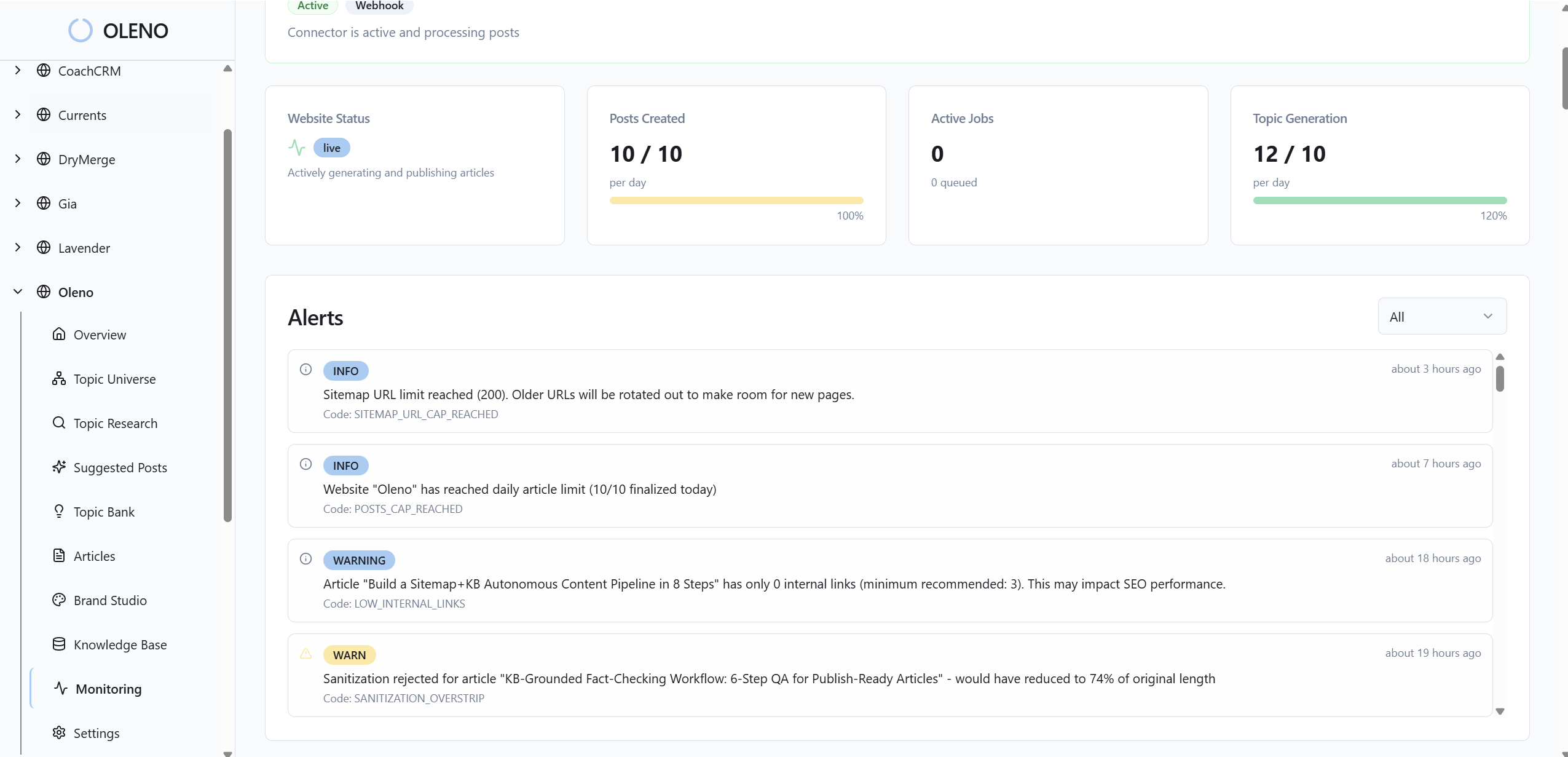
In practice, this looks like predictable daily releases rather than batch drops. Your crawl demand curve smooths out, which helps high-value URLs get seen sooner. It’s simple, but without system support, teams rarely stick to it. Oleno keeps the cadence without meetings or manual scheduling.
Block low value topics before they exist
Topic Discovery in Oleno evaluates differentiation and information gain before writing begins. Weak or duplicative topics are blocked upstream. That means fewer thin variants, fewer near-duplicate URLs, and less index bloat. The easiest crawl to save is the one you never asked for.
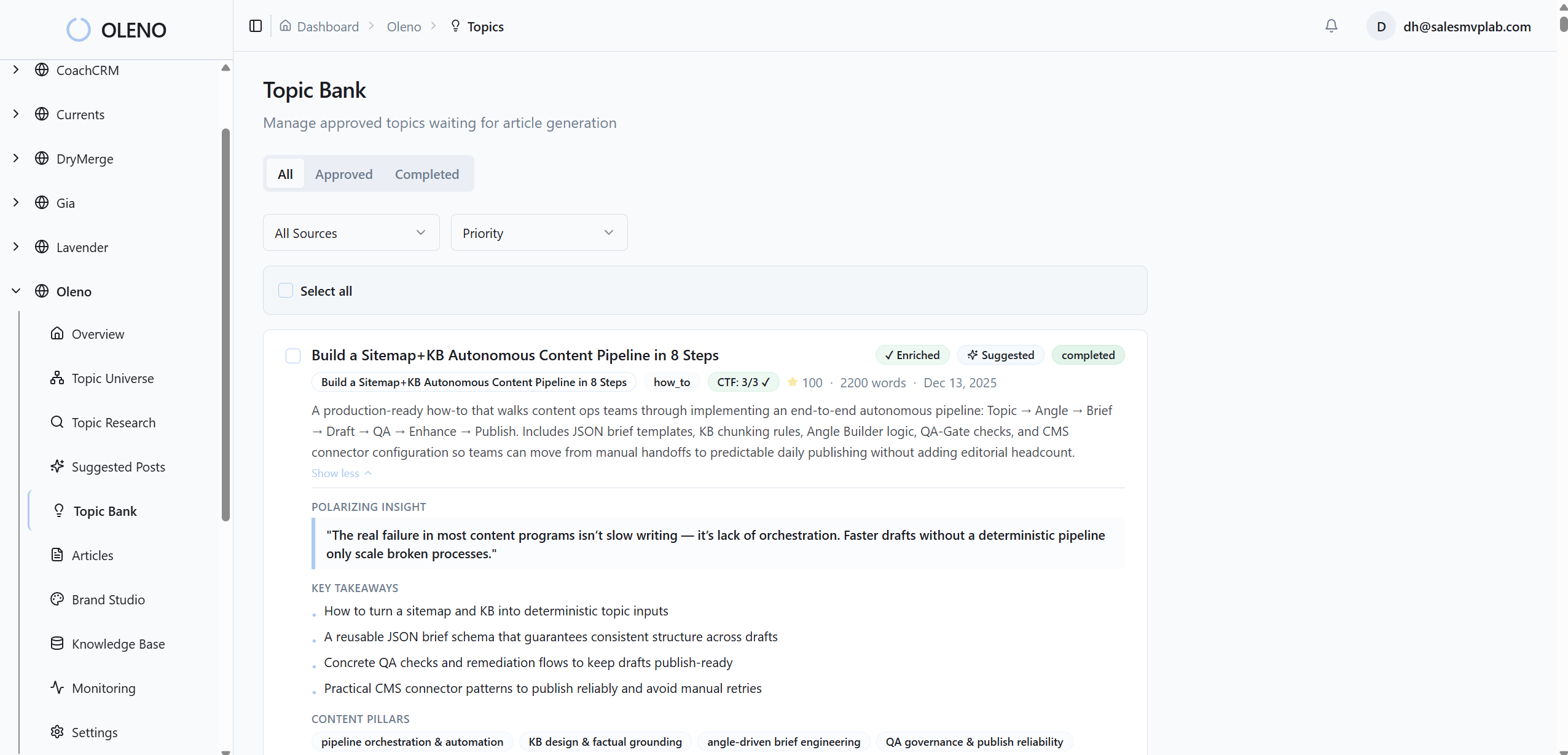
This upstream gate also protects launches. When low-value templates never reach CMS, your priority shards aren’t competing with noise for crawler attention. The result is fewer soft 404s and faster visibility for pages that actually drive revenue.
Publish cleanly with idempotent, structured outputs
Oleno’s publishing is idempotent, so you don’t get accidental duplicates or weird URL echoes. Every article passes a QA gate that enforces narrative structure, brand voice, SEO placement, and knowledge-base grounding. If a draft fails, it’s revised automatically; it doesn’t go live half-baked.
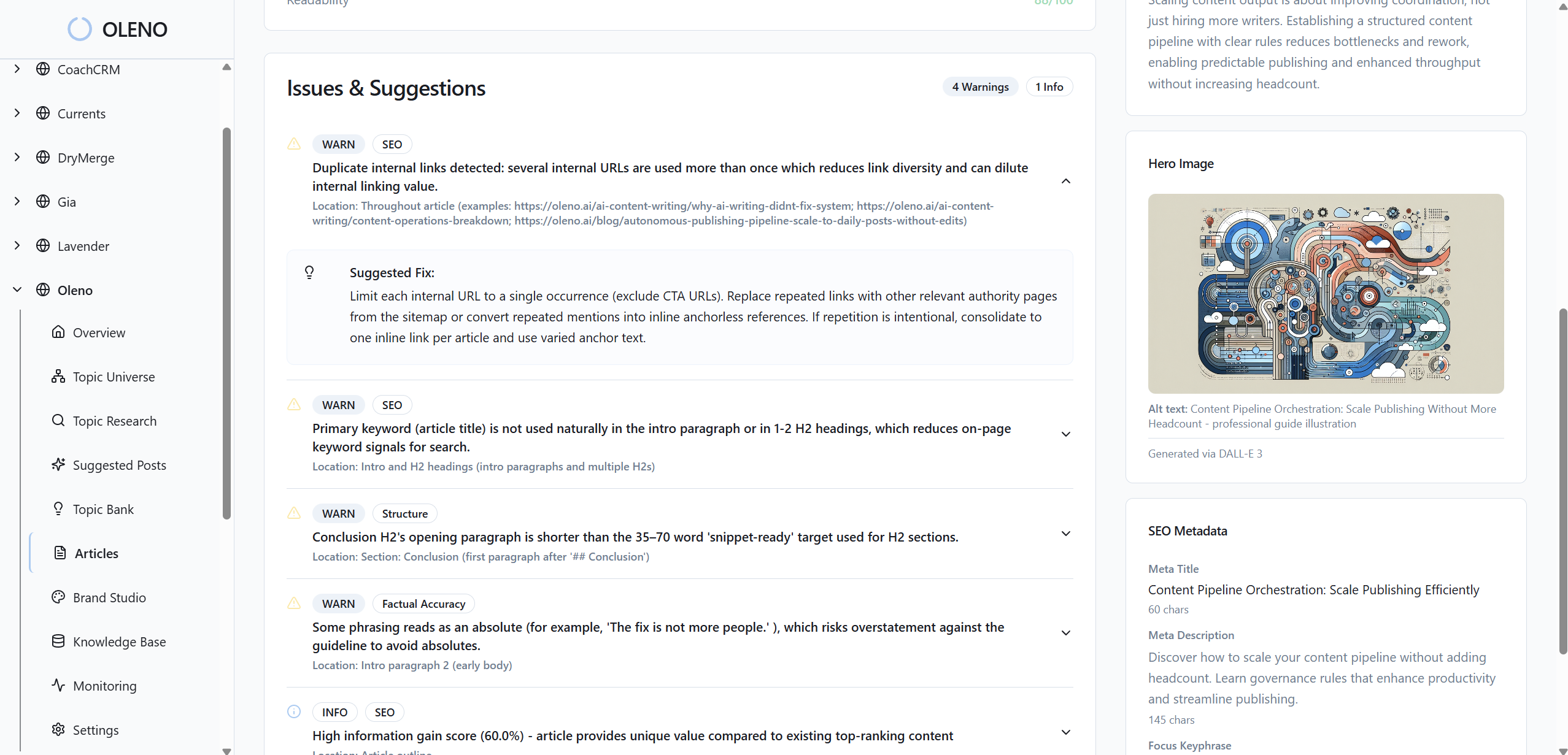
Structured outputs support canonical stability and template hygiene. Your sitemap generator can trust the inputs. Your canonical rules don’t have to guess. And when something needs to retry, it retries safely, no duplicate posts, no messy slugs, no unplanned crawl demand.
Work alongside your sitemap and canonical policies
Oleno isn’t your robots file or your sitemap generator. It’s the system that keeps content predictable so those controls work as designed. Clean URLs, consistent metadata, and a steady cadence make your shards, canonicals, and quotas effective instead of aspirational.
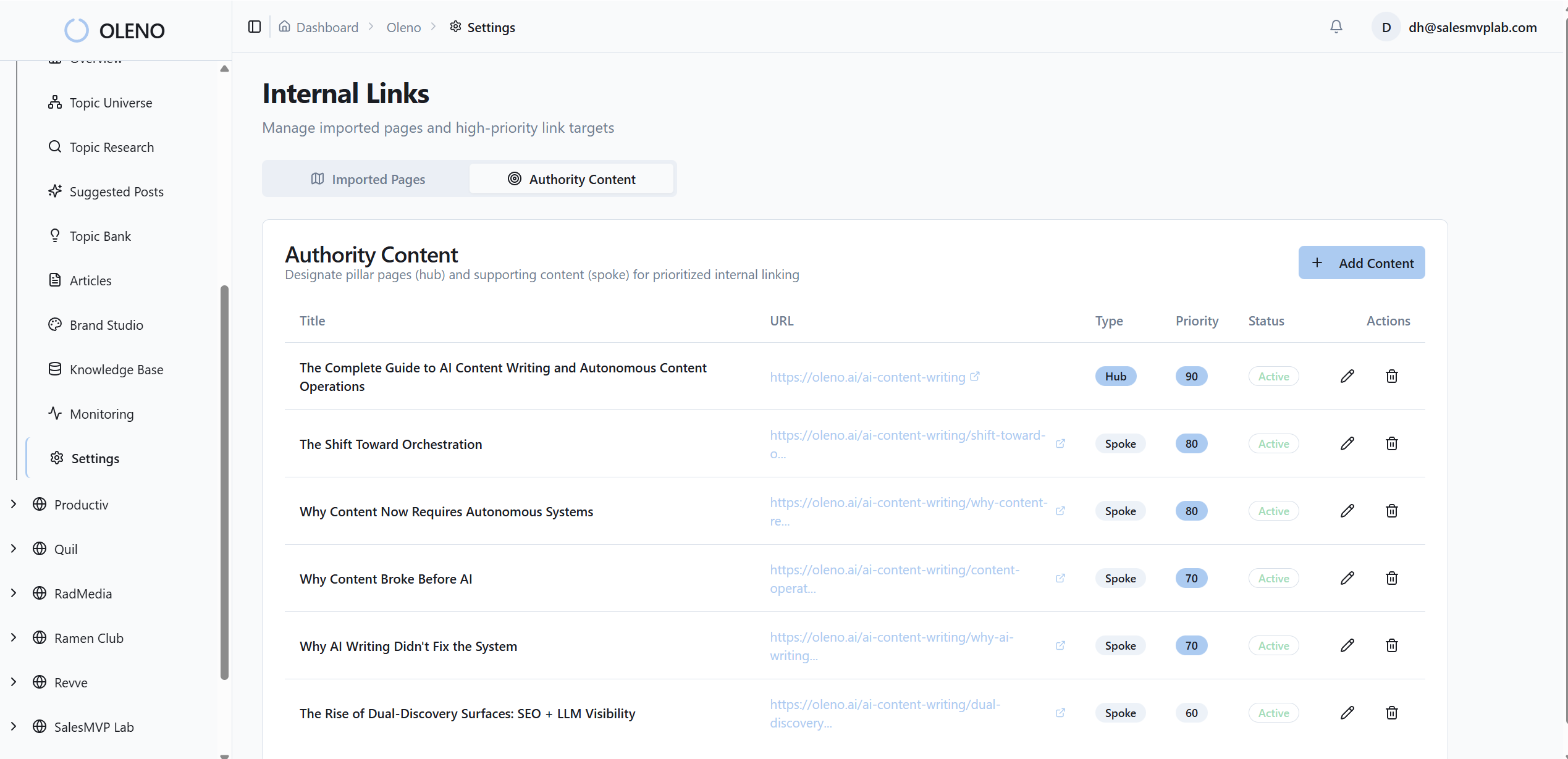
Put differently: you keep the levers; Oleno keeps the pipeline honest. That’s how you reduce reactive cleanups, accelerate indexing for launches, and give engineering their roadmap back. If you want to see that end-to-end pipeline run without prompting or edits, Try Oleno For Free. For fundamentals, Google’s reference on crawl budget signals and constraints remains a solid companion to a governed content system.
Conclusion
You don’t need more content. You need a system that makes the right content discoverable at the right time. Govern indexation like a release: states, gates, quotas, and tests. Ship on a cadence that crawlers can honor. Block junk upstream. When you do, launches move faster, cleanups shrink, and your best pages stop waiting in line.
About Daniel Hebert
I'm the founder of Oleno, SalesMVP Lab, and yourLumira. Been working in B2B SaaS in both sales and marketing leadership for 13+ years. I specialize in building revenue engines from the ground up. Over the years, I've codified writing frameworks, which are now powering Oleno.
Frequently Asked Questions