Create category content that gets cited by LLMs and positions your brand as the category authority

Most teams think winning in GEO is about volume and hacks. It is not. You win when your category story is so clear and so consistent that LLMs feel safe citing you. If you want the formal name, call it “Achieving Establish definitive category content that gets cited by LLMs and positions your brand as the category authority.: Best Practices.” Clunky title. Important job.
I learned this the hard way. When positioning is tight, content lands. When positioning is fuzzy, you drown in rewrites, reviews, and meetings. You already feel that rework tax. The GEO era just makes the penalty bigger. LLMs synthesize. They reward the brand that repeats the same true signal across hundreds of pieces, not whoever shoved more keywords into a pillar page.
Key Takeaways:
- Category authority beats tactics, because LLMs cite consistent, trustworthy signals
- The real blocker is fragmented execution, not a lack of ideas or effort
- Quantify your rework tax and drift cost, then eliminate them at the source
- Encode your fundamentals first, then publish to a repeatable framework
- Teach the market with extractable structures GEO prefers, not random essays
- Turn the method into a system so cadence and consistency never slip
Why Category Authority Beats Tactics In The GEO Era
Category authority matters more than any single SEO trick because LLMs cite brands with consistent, specific, repeated truths. They do not rank pages, they synthesize across sources and look for stable signals. If your message shifts each week, you get ignored while steadier voices get named.
Tactics Don’t Create Authority
You can stuff a blog with keywords, swap headers, and ship thirty posts a month. If your point of view drifts, you build noise, not trust. In my experience, most teams over-index on channels because channels feel measurable. Authority comes from clarity repeated across breadth and time. You need both.
And that means saying the same thing a hundred different ways without losing the throughline. It’s harder than it sounds. People get bored before the market learns. That’s the trap. LLMs are even less forgiving. They see drift as risk and skip you for the player who sounds the same on the hundredth article as they did on the first.
Consistency Is The Signal LLMs Reward
Generative engines want safe citations. Safe means specific definitions, steady claims, and structures that are easy to extract. When your content keeps a steady cadence, uses claim-first paragraphs, and re-states product truth cleanly, you show up. Google’s AI Overviews move in that direction, pulling concise answers over fluffy intros, which is already public in the AI Overviews announcement.
I know it feels boring to say your category definition again. Do it anyway. Repetition with precision is how you become the answer both humans and machines trust.
Why LLMs Ignore You: Fragmented Execution, Not Content
LLMs pass over brands that can’t repeat themselves with precision, because fragmented execution creates contradictions. The writing isn’t the root problem. The system is. When strategy lives in heads and prompts, everything frays between brief and publish.
Symptoms Mask The System Problem
Missed deadlines, “off-brand” drafts, last-minute edits, executives jumping in with rewrites, SEO leaders pushing new outlines mid-week. Those are symptoms. The deeper issue is that strategy, voice, product truth, audience targeting, and structural rules never make it into the work, end to end. People are guessing.
And when people guess, output diverges. One post says you do A, another says you do B. One talks to enterprise CMOs, another talks to growth-stage managers. LLMs see that inconsistency and move on. You blame writers. It is not the writers. It is the missing system.
Where Execution Fragments Inside Teams
Fragmentation hides in handoffs. PMM has positioning, but the writer never sees the latest product boundaries. SEO picks topics in isolation. The reviewer fixes tone, but not the structure. Demand gen changes angle to fit a campaign. None of this is malicious. It is the gravity of a team without shared guardrails.
You need governance that everyone touches automatically. Otherwise you’re paying a permanent rework tax and teaching the market a different story every week. That is how you lose authority you already earned.
The Cost Of Drifting Narratives For Scaling SaaS Teams
Drift has a real cost: time wasted, budget burned, and pipeline delayed. Put numbers to it and the risk gets obvious fast. Review cycles balloon, stakeholders escalate, and content velocity stalls right when you need compounding coverage.
Time, Money, And Opportunity You Lose
Rework is expensive. If five people touch a piece for “final polish,” you just doubled the cost. If the whole chain repeats next month because nothing was systematized, that is real money out the door. McKinsey points out that gen AI’s gains show up when teams redesign the workflow, not just draft faster, which aligns with their take in Generative AI and the future of marketing.
Now add opportunity cost. While you rewrite the same post, your competitors fill clusters and lock in narrative space. LLMs pick them up as the safer citation. You didn’t just lose a week. You lost the compounding effect of being named everywhere for months.
Why Review Cycles Quietly Break Output
Reviews feel safe. The problem is they hide indecision about voice, claims, and audience in endless edits. Each reviewer optimizes for a different thing. The draft becomes a Frankenstein, slow and bland. GEO punishes bland. Stanford’s AI Index 2024 underscores how fast generative systems improve at synthesis, which means they also get faster at filtering out weak, repetitive answers.
If your first paragraph does not answer the implied question, you’re invisible. If your definitions shift post to post, you’re risky. If your product claims wobble, you’re out. That is the cost. Quiet, compounding, and easy to miss.
What It Feels Like When Your Category Story Keeps Slipping
It’s late, the doc is on version 12, and you’re still debating the definition in sentence one. I’ve been there. It’s exhausting. You start to wonder if the channel is broken. It isn’t. The system is.
The Human Toll On Your Team
Writers lose confidence when every draft gets re-angled. PMMs get frustrated when product truths are “softened” in edits. Leaders stop trusting the content calendar because dates slip. Morale dips. People avoid risk. Creativity collapses into safe, generic lines that read fine, but never land.
That stress leaks into meetings. You burn cycles debating nouns instead of building assets. It’s not just a workflow issue. It’s an energy drain across the org. And you feel it most in the middle of the funnel, where precision matters and drift hurts.
Stakeholder Whiplash And Second Guessing
Whiplash happens when no source of truth exists. One exec prefers feature-led copy. Another wants the category story. A third wants social-first angles. Without guardrails, the loudest voice wins that day. Next week, a different voice wins. The team adapts by writing to survive, not to win.
Everyone starts second guessing. That is the moment output slows to a crawl. It is also the moment competitors pass you quietly. Painful lesson, but fixable.
How To Build Definitive Category Content For LLM Citation
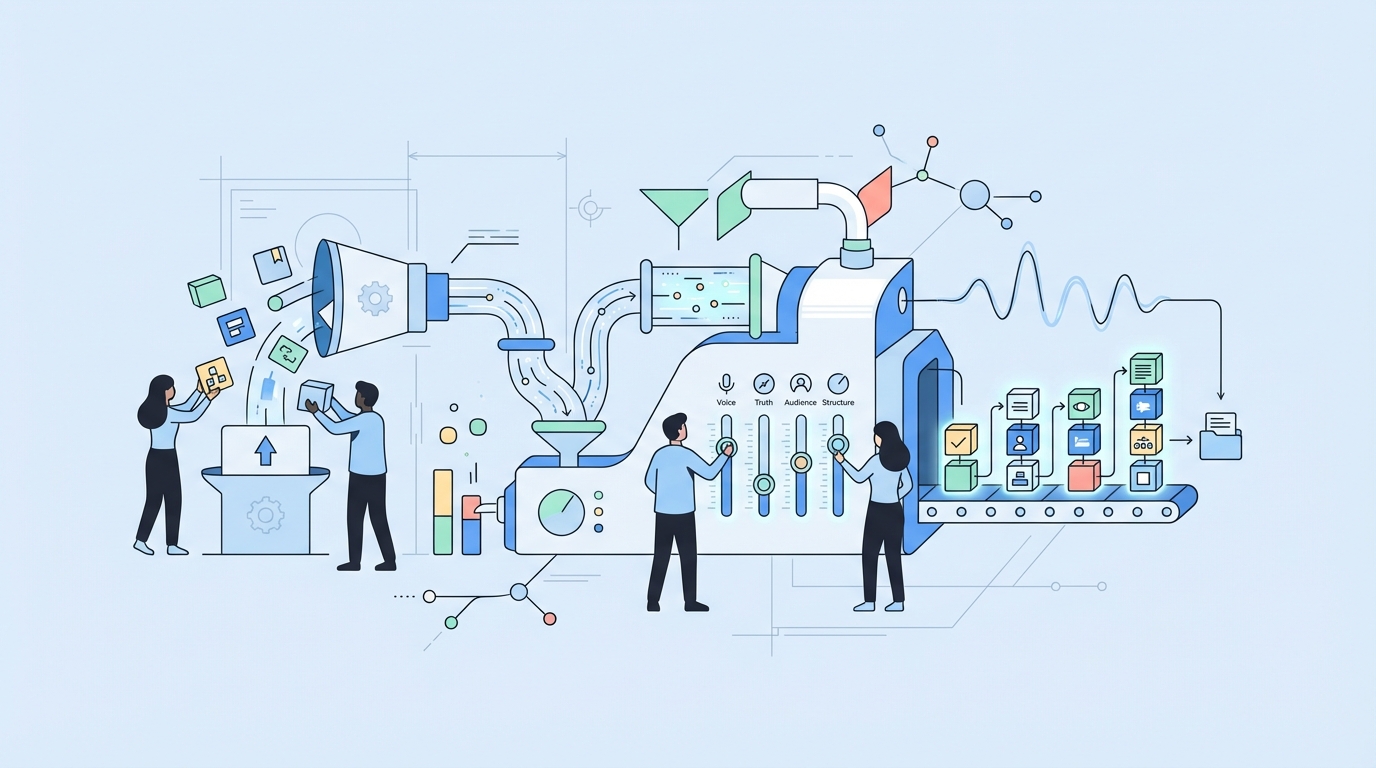
Definitive category content comes from encoding fundamentals first, then publishing to extractable patterns at a steady cadence. You align voice, product truth, audiences, and structure, then you repeat the signal across breadth with zero drift. That’s what LLMs can safely cite.
Encode Your Fundamentals First
You need four locked inputs that never go out of date without a formal update. Your category definition and enemy frame. Your product truth with explicit boundaries. Your audience and persona stack with language preferences and objections. Your brand voice rules with examples.
In my view, this is where most teams go wrong. They try to write before they decide what can’t change. Set the non-negotiables. Write them down. Make them show up in every brief and draft. Without this, you will always pay the rewrite tax.
Now operationalize them:
- Document category definition, enemy, and three pillars with examples
- Codify product features and boundaries, including what you do not do
- Map audiences, personas, and use cases to preferred angles and terms
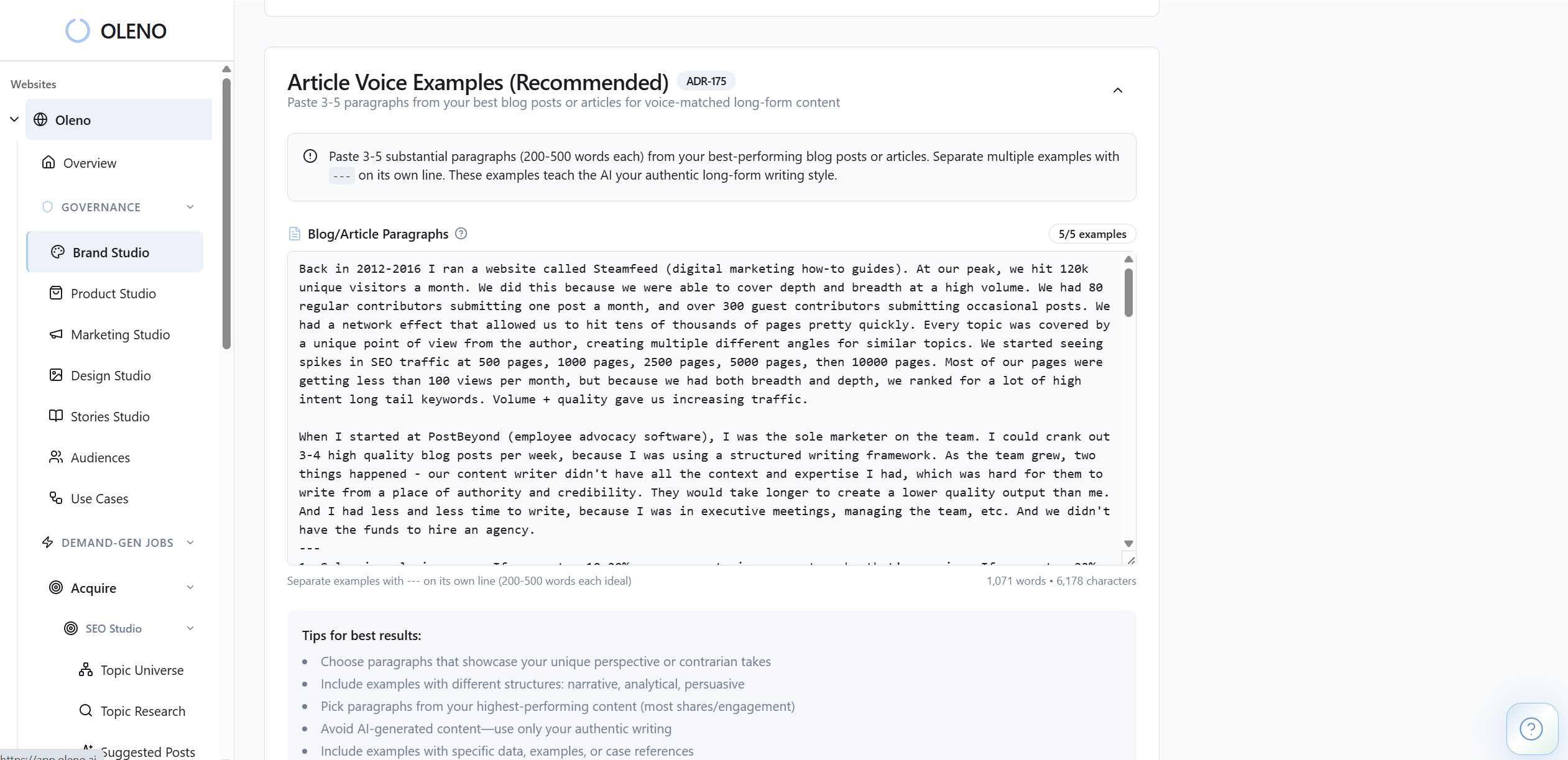
- Capture voice: tone, vocabulary, sentence rhythm, and do/don’t lists
- Enforce snippet-ready openings, definition blocks, and comparison tables
Teach The Market With A Repeatable Framework
Once the inputs are set, your job is teaching. Not once. Repeatedly. Use claim-first paragraphs that answer the question in sentence one. Use definition patterns for “what is,” numbered steps for “how to,” and tables for “X vs Y.” These formats are easy to extract and cite. Microsoft’s search team has documented their move toward grounded answers, which mirrors this direction in Microsoft’s approach to grounded responses.
Stay consistent on cadence. Two to four long-form pieces a week is realistic with a system. Not every piece will break records. That’s fine. Breadth plus depth, repeated over time, is how you become the default answer.
Ready to turn this into a working system instead of a deck? Request a Demo
Turning Category Authority Into A System With Oleno
You make this real by moving from “prompt and review” to governed execution. Oleno encodes your fundamentals once, injects them into every brief and draft, and blocks drift before publish. The outcome is steady cadence, consistent structure, and product truth that never wobbles.
Governance Makes Content GEO-Ready
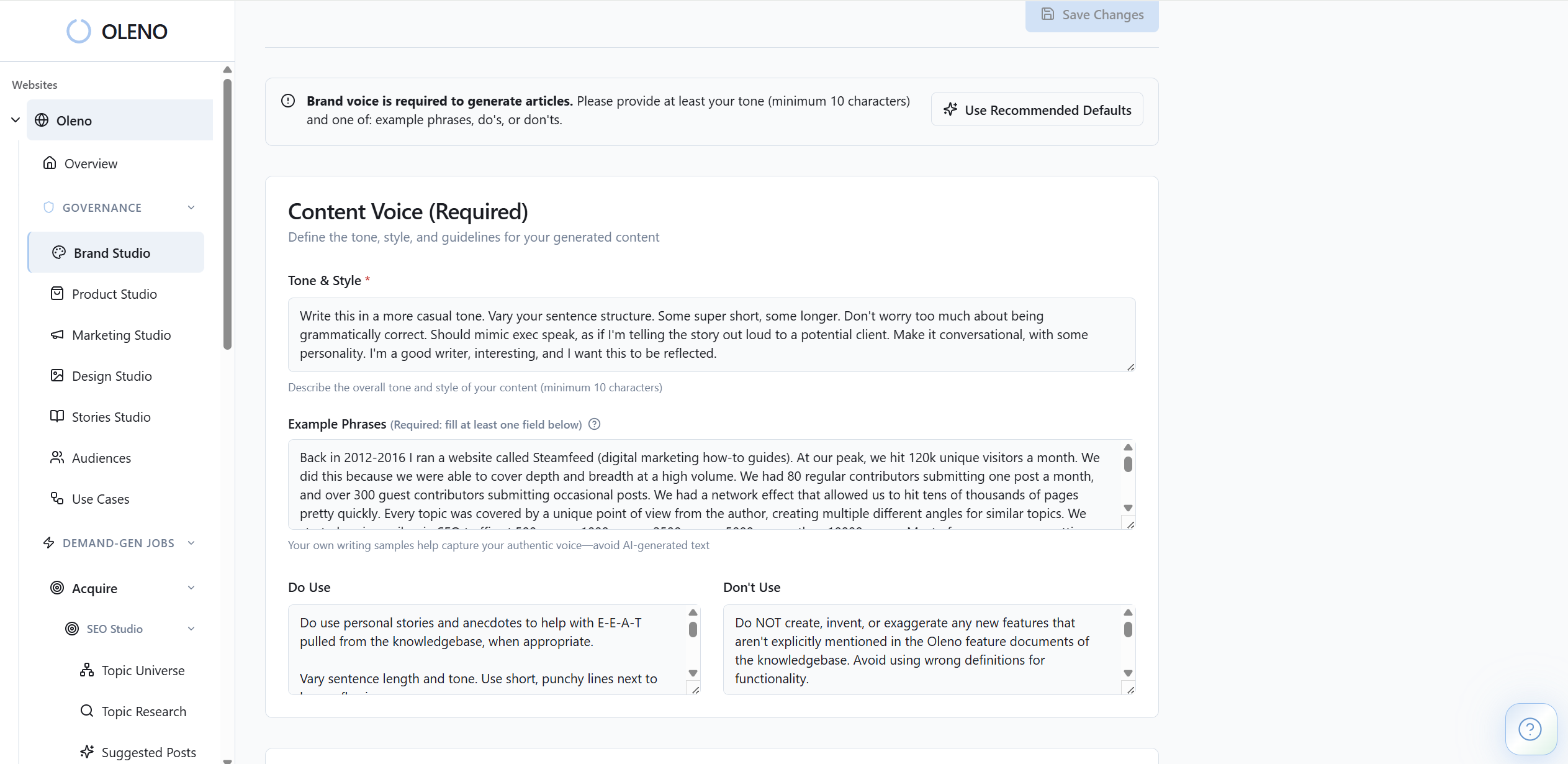
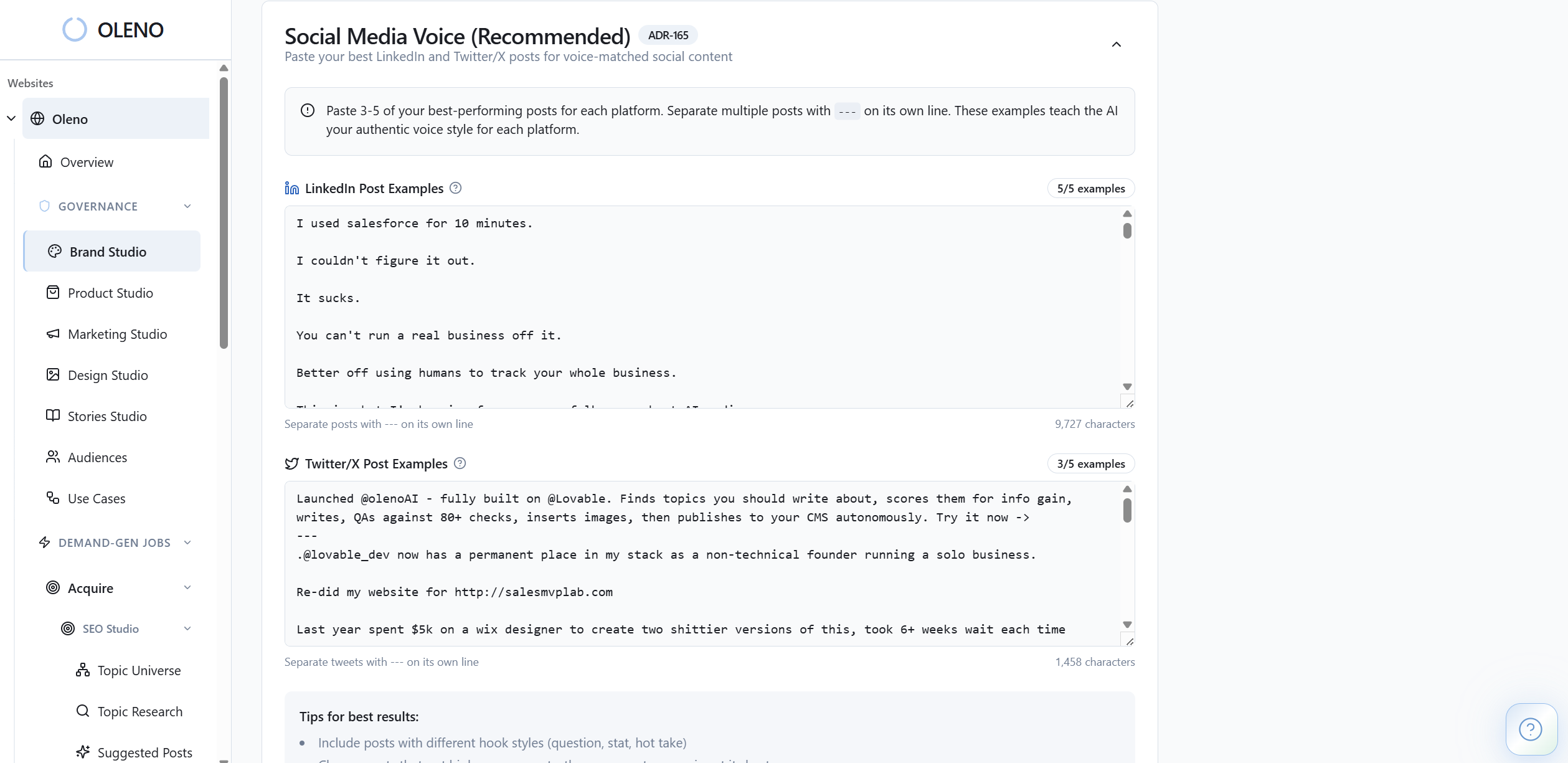
Marketing Studio loads your category framing, key messages, and enemy narrative into briefs and drafts so every piece pushes the same argument. Product Studio centralizes approved features and boundaries, so explanations and comparisons stay accurate. Brand Studio applies tone, vocabulary, and rhythm rules, then the Quality Gate checks voice and structure before anything reaches review.
Audience & Persona Targeting and Use Case Studio make sure the same topic reads differently for different buyers without losing the core. That’s how you stay specific without fragmenting. The net effect is content that opens with direct answers, defines terms consistently, and stays aligned with product truth, which is exactly what GEO rewards.
You want proof in your own context? Request a Demo
Here’s how capabilities map to the pains we covered:
- Marketing Studio: Eliminates narrative drift by injecting your POV into every outline
- Product Studio: Prevents invented features and keeps claims defensible
- Brand Studio + Quality Gate: Enforces voice and structure, catching issues before review
- Audience & Persona Targeting + Use Case Studio: Tailors angles by segment without changing the core story
Operational Control, Cadence, And Safety
Consistency needs operations, not heroics. The Orchestrator runs job-based pipelines on a schedule, which means cadence stops depending on who has time this week. Programmatic SEO Studio discovers and organizes topics into clusters so coverage grows with intent, not random lists. Category Studio tackles the heavyweight, point-of-view pieces that anchor your authority.
Storyboard helps you allocate across audiences, personas, and use cases, so you are balanced across the quarter. The Executive Dashboard shows output, quality trends, and coverage gaps in one place, so CMOs can see the system is working without micromanaging. When the drift cost used to be hours per piece, Oleno turns that into minutes of review, because the guardrails are in the pipeline, not just in people’s heads.
Want to see your category story, product truth, and cadence stitched together in a single system? Book a Demo
Conclusion
Category authority is not a stunt. It is a system. Encode your fundamentals, publish to extractable patterns, and keep the cadence steady. If you do that, LLMs start citing you because you are safe to cite. Humans feel it too.
I’ve seen the alternative. Endless rewrites, stalled calendars, and a brand that sounds different every week. You don’t need more tactics. You need orchestration. Once the engine runs, the compounding effect kicks in and the market starts repeating your words back to you. That is the tell you are doing it right.
About Daniel Hebert
I'm the founder of Oleno, SalesMVP Lab, and yourLumira. Been working in B2B SaaS in both sales and marketing leadership for 13+ years. I specialize in building revenue engines from the ground up. Over the years, I've codified writing frameworks, which are now powering Oleno.
Frequently Asked Questions