Demand-Gen Budget Allocation: $10k/month Channel Mix for B2B SaaS
If you only have $10k a month, spreading it across five channels feels responsible. It isn’t. You dilute intent, slow feedback, and end up defending “awareness” while sales misses their number. I’ve watched that movie too many times. Smart marketers cap experiments, concentrate on visible intent, and install rules that move dollars fast.
Here’s the simple mental shift that changes the plan. Make spend follow signal quality. Not the other way around. When you can see intent and learn within 30 days, the budget compounds. When you can’t, you’re funding guesses. That’s where CAC inflates and trust erodes.
Key Takeaways:
- Concentrate spend where intent and post‑click behavior are visible in under 30 days
- Govern every dollar with a small metric stack and simple thresholds
- Fix handoffs first, because routing lag and page friction kill CAC
- Run two high‑intent acquisition bets in parallel to avoid channel shocks
- Keep a 10–15% reserve for 24‑hour reallocations, reviewed weekly
- Use opinionated, evaluation‑aligned content so traffic translates to pipeline
Why Small B2B SaaS Teams Should Stop Spreading $10k Across Too Many Channels
Most lean teams spread $10k across four or five channels, hoping coverage equals safety. The math rarely works. With limited budget, you need channels that show intent and feedback quickly, or you burn cash. Start where the next click, form, or meeting is most likely and measurable.

The Awareness Trap For Lean Teams
Broad awareness usually eats 40 percent or more of small budgets, then fails to show up as SQLs. I’m not against future demand, it just can’t dominate when dollars are tight and feedback loops are slow. Awareness becomes a tax when your paid and content programs don’t have a path to a booked meeting.
Your goal is to weight toward visible intent first. Think in-market search terms, tight LinkedIn firmographics, evaluation content tied to your use cases. Awareness can be a supporting cast, not the star. Once you’re under cost per SQL thresholds for two consecutive weeks, sure, nudge into broader reach. Until then, buy signal density.
If you want a sanity check on channel allocation patterns, skim the breakdowns in First Page Sage’s budget models for B2B. Use it as a reference, not a rule.
What Do Most CMOs Get Wrong About Channel Mix?
They try to buy reach, then count on nurture to clean it up later. Reach can lower CAC at scale, but that proof takes time and volume you might not have. With $10k, you need channels that show keyword intent, firmographic match, and post‑click behavior within days, not quarters.
That means prioritizing paid search on high‑intent queries before top‑funnel social. It means LinkedIn with ICP titles and company filters, not broad interest buckets. It means evaluation pages over general blog posts. Simple test, can you tell by next Friday if this channel is trending toward your SQL target, yes or no. If not, it’s a luxury.
Why Intent Concentration Beats Volume
Volume without signal is noise that looks productive and misses the number. Concentration keeps feedback tight and decisions clean. Stack spend where intent is concrete first, then expand. Paid search for exact‑match, in‑market terms. LinkedIn to ICP titles with tight creative. SEO content built around comparison and evaluation topics.
Email accelerates known interest, not cold lists. Retargeting amplifies the pages that prove fit, not generic site visits. When the next action is likely and observable, every dollar has a job. Nothing floats. And when something underperforms, you see it early and move cash within 24 hours, without debate.
Want to see what concentrated, rule‑driven execution looks like in practice, end to end? Request a Demo.
Shift The Plan From Spend To Signal Quality
Building the plan around signal quality means you decide what constitutes proof, then make dollars obey those thresholds. Most teams do the opposite. With $10k, your advantage is speed, not scale. Measure a short list of metrics, enforce guardrails, and let the budget drift toward what crosses the bar.

What Traditional Planning Misses
Annual plans love percentage splits. 30 percent here, 20 percent there, and a small “innovation” bucket to look modern. The constraint isn’t your dollars, it’s how quickly you can prove or disprove a bet. If you can’t learn in 30 days, the line item shouldn’t be large.
So flip the planning lens. Define evidence. Cost per SQL within a bound. Time from MQL to first touch. SQL acceptance rate by source. If a channel can’t show trajectory on these within two weekly reviews, it’s not ready for budget concentration. Pretty dashboards don’t beat fast feedback. Tight routing and fast follow‑ups do.
For a governance lens on budgets and review rhythms, the principles in The B2B Playbook’s allocation guide are useful. Keep it simple, but enforce it.
How Do You Set Baselines That Predict SQLs?
Before you buy a single click, define a minimal metric stack. Capture CTR, CPC, CPL, MQL to SQL conversion, SQL acceptance rate, cost per SQL, and time to first meeting. Pick thresholds you believe are achievable. For example, cost per SQL under 800 dollars, MQL to SQL above 30 percent by source, and a 2 hour SLA from MQL to first touch.
Those aren’t magic numbers. They’re stress tests. You’ll refine them, but they force real decisions quickly. Build a weekly ritual where you check sample size, trajectory, and thresholds. If you don’t have enough data to call it, keep running. If you do, move dollars. No debates, just rules everyone agreed on.
The Hidden Complexity Of Handoffs
Leads don’t just suffer in the funnel, they suffer in the seams. Ads to landing pages, pages to forms, forms to routing, routing to human touch. Each lag inflates CPL and hides the channel’s true potential. You end up blaming LinkedIn, when the issue was a broken UTM or a page that promised one thing and delivered another.
Map the path from first impression to booked meeting. Remove dead ends. Decide attribution windows upfront, maybe 30 days for paid search, 7 days for social, and write those rules into your reviews. When sales says “lead quality is down,” you’re not guessing. You can trace what happened, where, and how fast.
The Budget Leaks That Inflate CAC
CAC inflates when small percentages compound in the wrong direction. Low page conversion, slow follow‑up, weak MQL to SQL, and generic content each take a bite. You don’t need perfect numbers. You need bounds and a plan to correct the big leaks first.
The CAC Math When Conversion Lags
Let’s pretend you buy 500 clicks at 8 dollars CPC. That’s 4,000 dollars. If landing pages convert at 1.5 percent, you get 7.5 leads. If MQL to SQL is 25 percent, that’s 2 SQLs. Cost per SQL becomes 2,000 dollars. On a $10k budget, that math doesn’t last long.
Small shifts change the outcome. Raise landing page conversion to 3 percent and MQL to SQL to 35 percent, and your 4,000 dollars yields 5.25 SQLs. Cost per SQL drops to around 762 dollars. That’s the same spend, different system. Which means your biggest lever isn’t more cash, it’s better fit, faster routing, and tighter pages.
The Time Tax Of Manual Reporting
Fragmented spreadsheets burn 5 to 10 hours a week, introduce errors, and create lag. That lag turns yesterday’s spend into tomorrow’s problem. Fewer dashboards isn’t a slogan, it’s a speed rule. Decide the 6 metrics that matter, automate the pulls, and review them the same day every week so spend decisions keep pace with reality.
When reporting is manual, you also lose trust. Sales hears “we’re on track,” then sees a desert on the calendar. Burned once, they start discounting your updates, which leads to more meetings, more screenshots, and less signal. Automate the feed, lock the review, and keep humans focused on decisions, not copy‑paste work.
When Content Drifts From Product Fit
At Proposify, our content team could rank. High traffic, top keywords, beautiful design. Pipeline didn’t follow. The content was too far from the job our product actually solved. Education detached from evaluation and use‑case intent. So sales got attention they couldn’t use.
Fixing that was not more content. It was alignment. Comparison pages tied to the product’s core fit. Use‑case explainers that mirrored sales discovery. Evaluation checklists that matched buyer questions. When you tie topics and offers back to what your product really does, you stop paying for attention that won’t convert.
If you want a broader budget structure lens, the overview in SaaS Mag’s budgeting guide covers CAC tradeoffs and payback thinking in plain terms.
Seeing these leaks in your own numbers and want a faster path to fix them without adding people? You can walk through a working system and ask hard questions. Request a Demo.
What It Feels Like When Budget Decisions Get Risky
Risk shows up as second‑guessing and scramble. You feel pressure to spread dollars so no one can blame a single miss. Ironically, that increases risk. The antidote is thresholds, redundancy, and operating constraints that hold when people get pulled away.
The 3 PM Slack About Missed SQLs
You’ve got two weeks left in the month. Your best bet is underperforming. Leadership wants a quick fix. The pull is to throw dollars at a second channel with no proof it can meet your SQL bound. Resist the scramble. Go back to thresholds.
If a channel is outside cost per SQL bounds and your minimum detectable effect says you have enough data, pause and reallocate. Not forever. Just until it proves it can hit the bar again. Panic spends are where CAC goes to die. Rules keep you from buying hope.
For context on the volume swings many SaaS teams report right now, the snapshots in The SaaS Barometer’s 2025 benchmarks are helpful. It’s not just you. Variance is up.
When Your Best Source Stalls For A Week
Traffic dips happen. Sometimes auctions shift. Sometimes a creative fatigues. The fix isn’t to spin up five new things. It’s redundancy. Run two acquisition bets in parallel that both meet your SQL thresholds. If paid search stalls, LinkedIn retargeting and evaluation SEO keep meetings coming in.
Redundancy lowers the risk of one‑channel shocks, even with a $10k ceiling. You’re not doubling work, you’re buying insurance. Two reliable sources, each capable of carrying 60 percent of the target for a week, beat five weak sources that can’t carry anything alone.
What Happens When Your One Writer Gets Pulled
Small teams live this. The writer moves to launch support, demand gen slows, the month slips. You don’t need more people to avoid drift, you need operating constraints that hold. Locked formats, ready‑to‑ship templates, and a prebuilt backlog keep cadence when someone gets pulled into other work.
I’ve seen this across teams. When structure exists, publishing continues. When it doesn’t, everything becomes bespoke and slows. You can accept lower volume for a week. What you can’t accept is losing the weekly rhythm that feeds sales. Cadence is a KPI, not a nice‑to‑have.
A $10k Monthly Plan You Can Run Next Week
A workable $10k plan concentrates on visible intent, enforces a small set of thresholds, and keeps a reserve for fast reallocations. It’s not fancy. It’s repeatable. You can run it with a lean team and improve it every week without changing the bones.
Step 1: Set Baselines And Thresholds That Govern Spend
Put thresholds on one page. Example guardrails, CTR above 0.6 percent in LinkedIn, landing page conversion above 2.5 percent, MQL to SQL above 30 percent by source, cost per SQL at or below 800 dollars, and a 2 hour SLA for first response. Define attribution windows, 30 days for paid search, 7 days for social.
Lock a weekly review ritual. Check sample size, check trajectory, decide go, hold, or pause. Use the same spreadsheet or dashboard every time, reviewed by the same people. The goal is boring consistency. Over time, tighten thresholds where you see slack and document exceptions so they don’t become habits.
Step 2: Start With This $10k Channel Mix And Why It Works
A practical split for lean B2B SaaS looks like this. Paid Search 30 percent on high‑intent, exact‑match terms. SEO and Content 25 percent focused on evaluation topics and comparison content. LinkedIn 20 percent targeted to ICP titles and firmographics, with retargeting layered on. Email and Nurture 10 percent to accelerate known interest.
Then, Content Syndication 5 percent with strict quality checks and lead validation. Finally, Experimentation 10 percent, one new bet per 8 weeks, defined by a written hypothesis. Keep a 10 percent reserve unallocated for fast moves within 24 hours. The interjection. If a channel beats thresholds two weeks in a row, consider feeding it from the reserve.
Step 3: Run Channel Playbooks With Minimal Headcount
Paid search, mirror ad copy to keyword, one intent per ad group, send to tight pages that match the query. LinkedIn, 2 to 3 creatives that lean into problem framing, add social proof, and use a demo or meeting CTA. SEO, publish two evaluation pieces a week, comparisons and alternatives that tie to product truth.
Email, a three‑step follow‑up within 48 hours with calendar links upfront, then value, then a bump. Every channel uses the same UTM scheme and a shared template library. Keep your meetings flow close to the data, so you can see where lift comes from without digging through five tools.
Step 4: An 8 Week Experiment Calendar And MDE Rules
Plan one experiment at a time per channel. Write a hypothesis, define success as a delta in cost per SQL or SQL rate, and estimate a minimum detectable effect, maybe 25 percent. If you can’t reach the sample size in 8 weeks, shrink scope, test one audience segment or one creative angle.
Stop tests early when thresholds are clearly met or missed. Don’t hide behind significance if the business signal is obvious. The point of MDE is to stop arguing about interpretations and make clean calls. Document learnings, roll winners into the base plan, and kill losers fast.
Step 5: A Lean Dashboard And Reallocation Triggers
Build one live view with cost per SQL, MQL to SQL, and meetings by channel, week over week. Reallocate when a channel beats thresholds for two consecutive weeks with adequate sample size. Pause when it misses for two consecutive checks. Keep that unallocated 10 to 15 percent reserve to move within 24 hours.
Reviews happen weekly, deeper postmortems monthly. Everyone knows the triggers, so there’s no drama when you shift dollars. The few metrics you track become habits. That predictability reduces the time tax and keeps focus on the work that actually lowers CAC.
How Oleno Turns A Fixed Budget Into A Managed Demand-Gen System
Turning a $10k ceiling into steady pipeline requires more than tools. You need an operating system for demand gen. Oleno gives small teams a way to set rules once, then run jobs continuously with quality gates, publishing control, and operational visibility that supports weekly budget decisions.
Governance Rules That Stop Content Waste
Oleno starts with governance, not output. You define narrative, voice, product truth, and claim boundaries once, then those rules apply everywhere automatically. That means evaluation content for SEO and LinkedIn variants don’t drift from what your product actually does. You get less rework, fewer rewrites, and fewer review meetings.
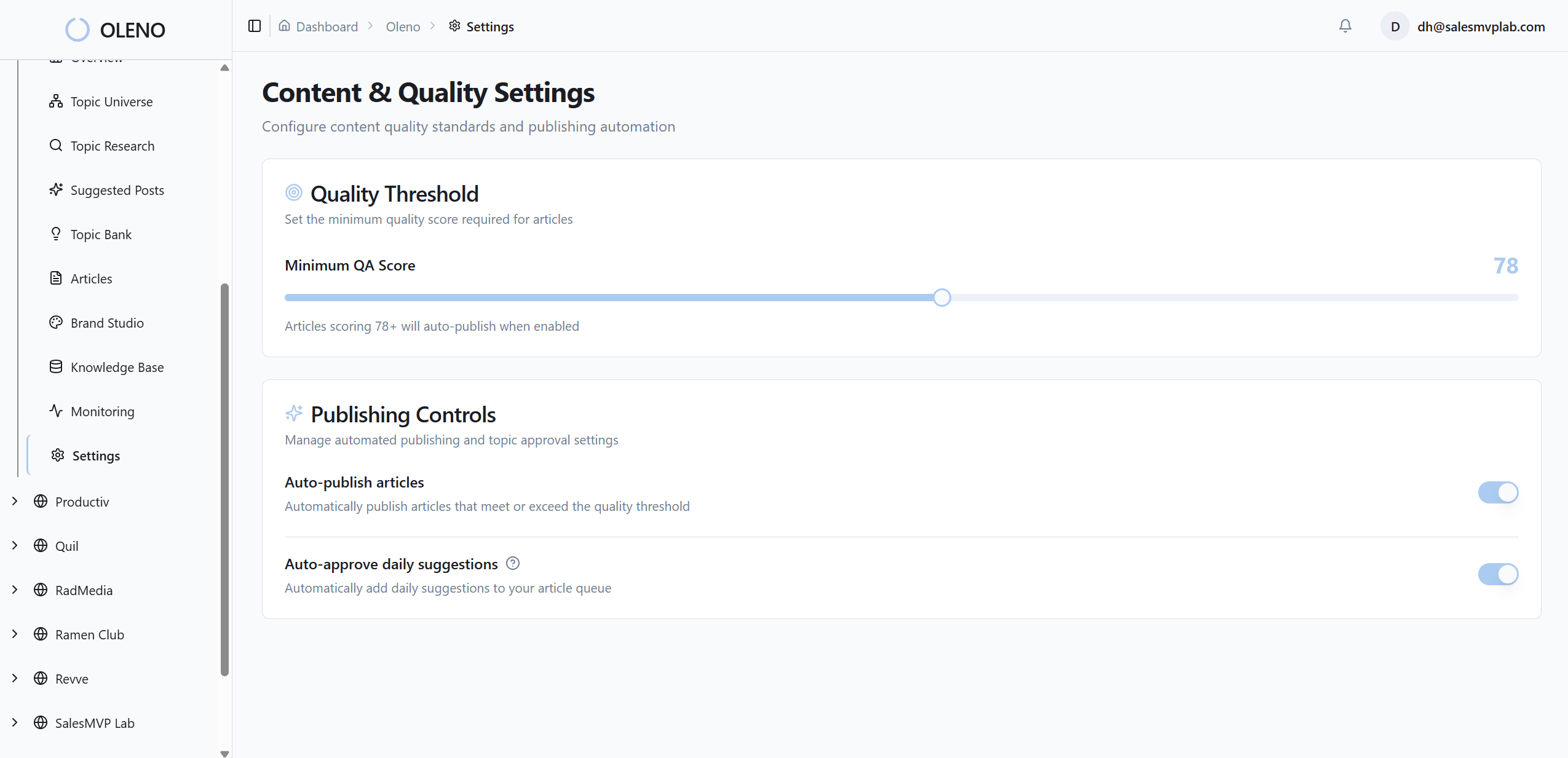
When budgets are tight, drift is expensive. Oleno’s governance layer keeps creation locked to approved positioning and language, so content stays both opinionated and safe. Over time, that stability lowers the chance you pay for traffic that sales won’t accept. It also shortens time from draft to publish because guardrails catch issues early.
Job-Based Content That Feeds SEO, LinkedIn, And Nurture
Oleno organizes work as demand‑gen jobs, not random posts. You can enable programmatic SEO for acquisition, POV education to shape the category, comparisons and alternatives for evaluation, and product explainers for conversion. Each job runs through the same deterministic pipeline from brief to publish.
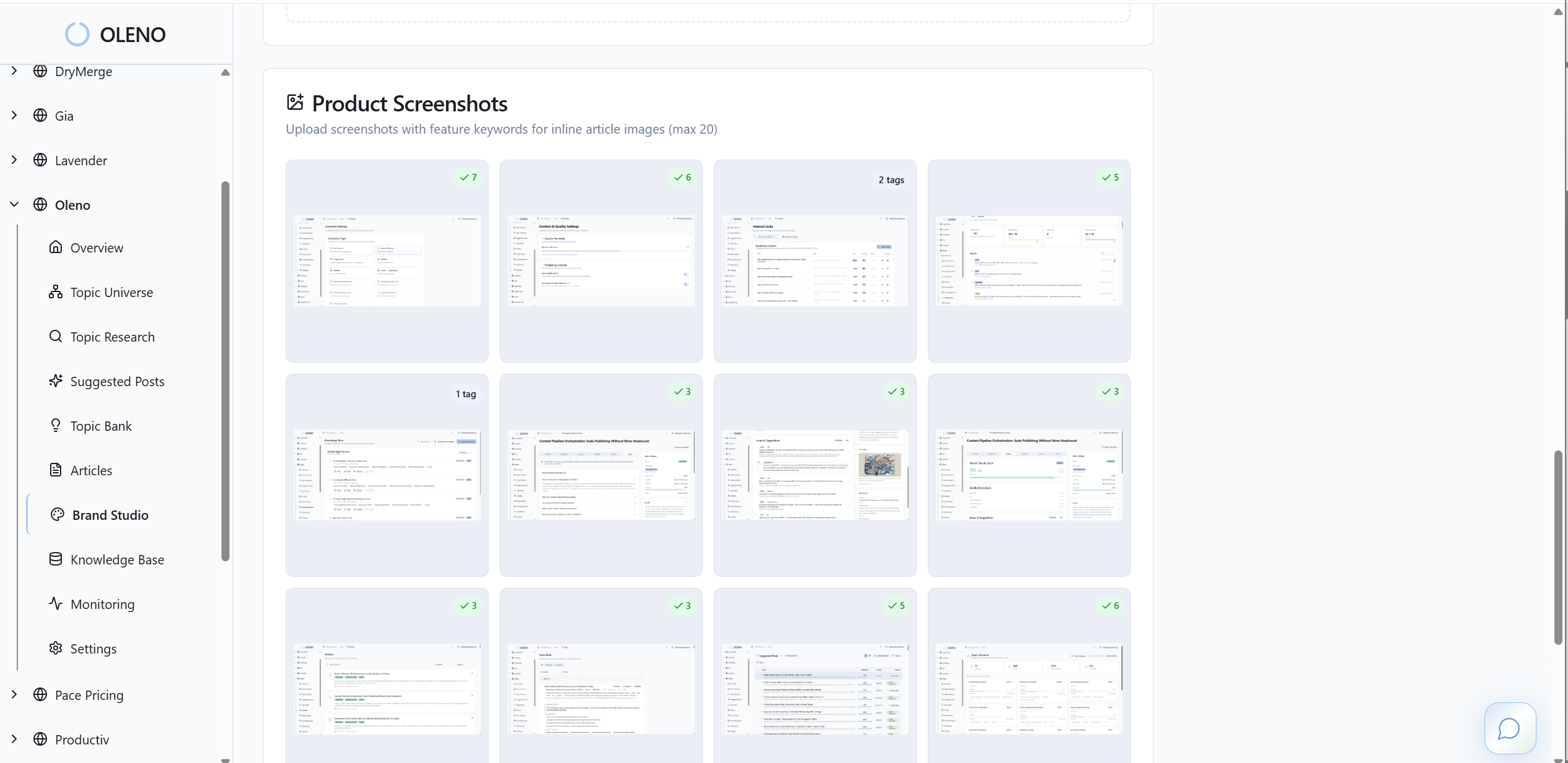
The benefit is predictability. You can plan to publish two evaluation assets a week that plug into search, feed LinkedIn variants, and support email follow‑ups without extra coordination. Small teams get leverage because the system handles structure and consistency while you focus on direction.
QA Gates, Publishing, And Reuse That Protect Cadence
Nothing ships unless it passes Oleno’s QA checks for voice, structure, grounding, clarity, and narrative rules. When content clears, you publish directly to your CMS, draft or live, with idempotent publishing so you avoid duplicates. Optional distribution reuses approved content across channels with formatting and scheduling rules.
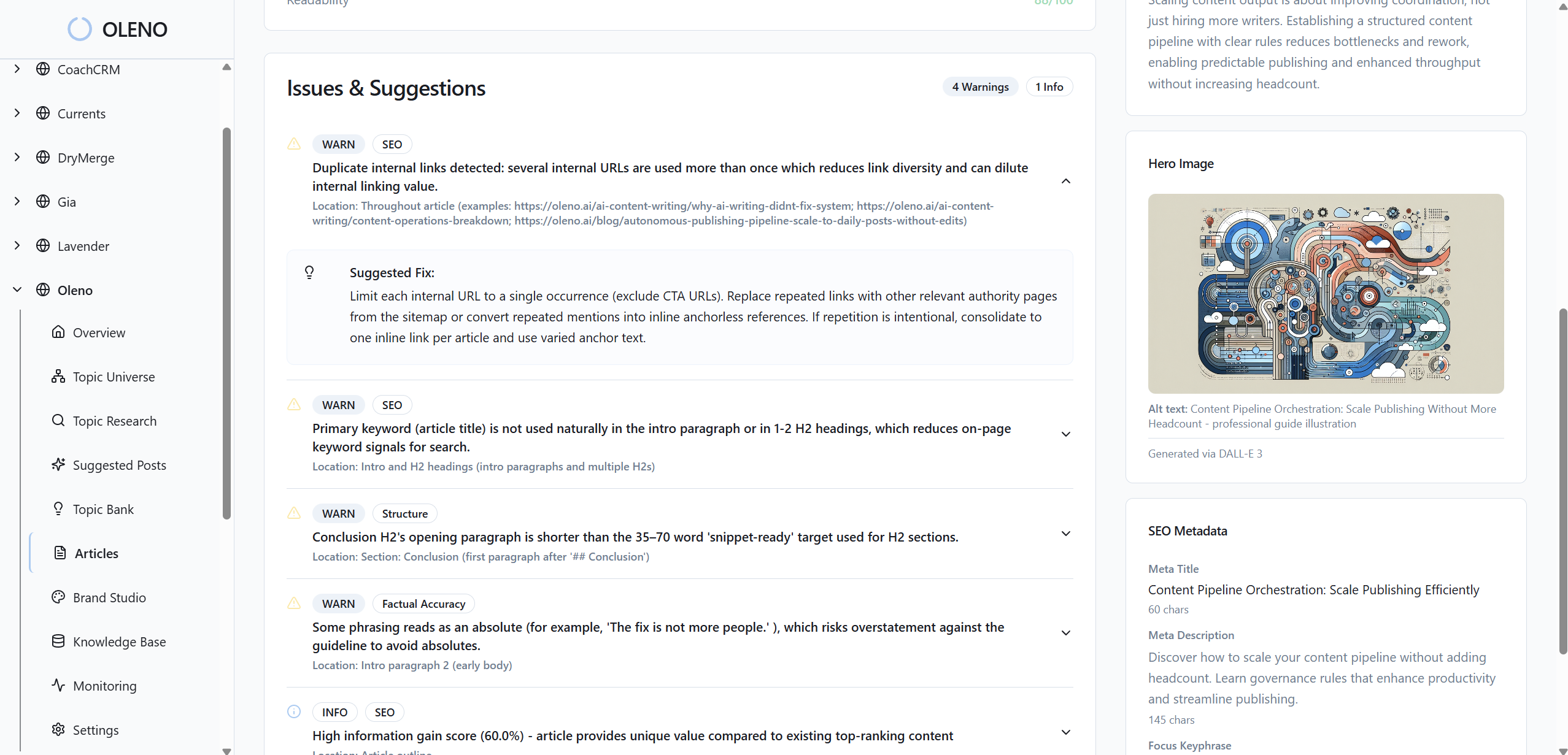
Cadence becomes real. When cadence is real, measurement gets honest. Your weekly review stops arguing about outliers and focuses on reallocations. That is how you protect cost per SQL and keep the experiment calendar running without needing more editors and coordinators.
Visibility Into Execution Health, Not Vanity
Oleno includes operational visibility so you can see whether the engine is actually running. Output and cadence trends, common failure patterns, and sampling to catch issues that slip past QA. This is not ad analytics. It’s system health, which is what a $10k plan depends on to make fast, confident budget moves.
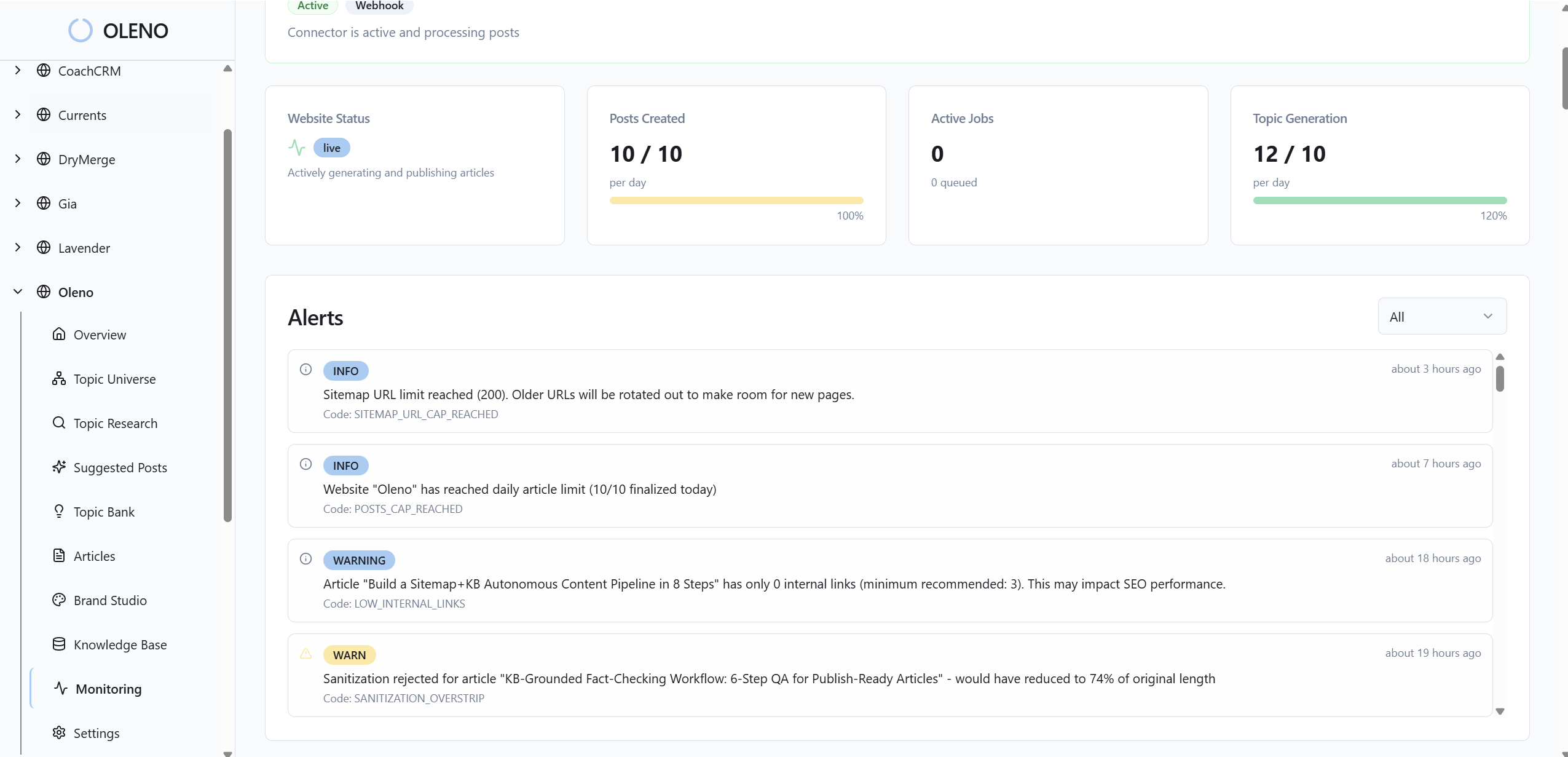
When you can trust that content is shipping on schedule, in the right formats, aligned to product truth, your channel bets have a fair shot. That’s the quiet multiplier. Oleno gives you the execution layer that removes coordination drag and protects your thresholds.
If you want to walk through governance setup, enabled jobs, QA gates, and direct publishing in the context of your mix, we can show it in under 30 minutes. Request a Demo.
Conclusion
$10k a month can move the needle if you force spend to follow signal. Concentrate on high‑intent channels, set thresholds, fix handoffs, and keep a reserve. Then install a system that keeps the work running when people get pulled into other priorities. That’s how small teams lower CAC, learn faster, and stop burning cash.
About Daniel Hebert
I'm the founder of Oleno, SalesMVP Lab, and yourLumira. Been working in B2B SaaS in both sales and marketing leadership for 13+ years. I specialize in building revenue engines from the ground up. Over the years, I've codified writing frameworks, which are now powering Oleno.
Frequently Asked Questions