Demand‑Gen Execution RACI: 7 Job Templates & Handoff Rules

Most teams confuse activity with a working demand‑gen system. The failure isn’t ideas or effort. It’s murky handoffs and missing acceptance criteria that force constant rework. If your demandgen execution raci doesn’t spell out job templates, inputs, SLAs, and pass‑fail checks, you’ll reset work every quarter. I’ve watched that movie. Too many times.
You don’t need more meetings. You need jobs with owners, time boxes, and binary tests that anyone can verify in minutes. When R, A, C, and I are tied to an actual artifact and a clear finish line, momentum returns. Pipeline stops slipping due to avoidable delays, and your team gets their evenings back.
Key Takeaways:
- Anchor R, A, C, I to concrete jobs with artifacts, SLAs, and acceptance checklists
- Define “ready for handoff” in each template, not in a meeting
- Set job‑level SLAs plus breach triggers, then track cycle time and defect rate
- Use seven standard jobs to drive repeatability and speed
- Keep A, R, C, I lightweight by writing rules into the job, not the calendar
- Automate pass‑fail checks where possible to cut review time to minutes
- Publish a one‑page scorecard monthly to kill drift and expose real bottlenecks
Why demandgen execution raci fails before launch
RACI collapses when it’s tied to people and departments instead of jobs with artifacts and timestamped rules. The fix is simple, but not easy, tie roles to a specific job, a visible checklist, and an SLA you can breach. When the job is the unit, execution stops being a debate.
The hidden trap in role labels
Labels look clear in planning docs, then fall apart when work starts. The trap is assigning “A” to “Marketing” or “PMM,” not to “Campaign Brief Approver for Q2 Offers.” Roles need to attach to a job object with inputs, outputs, a due date, and a pass‑fail checklist. I used to think “everyone knows their lane.” Wrong. Ambiguity invites stalls and polite silence. Tie roles to artifacts, not org boxes, and you’ll feel the drag disappear. If you want a primer on role clarity mechanics, the Atlassian guide to RACI matrices is a solid baseline.
Why acceptance criteria beat gut feel
Taste debates are a time sink. Acceptance criteria turn “looks good” into “meets the bar.” Think in binary checks that reflect your brand and product truth. Example, “Landing page copy scores 80+ on brand voice checks, all claims trace to approved sources, and hero aligns to the offer.” I’ve seen teams cut review loops in half by writing three to five objective tests per job and sticking to them. PMI’s take on responsibility matrices backs the idea that clarity reduces churn, see the PMI overview of responsibility assignment.
- Good criteria are short, verifiable, and public
- Every check maps to a job artifact, not a slide
- Anyone on the team can run the check in minutes
What does “ready for handoff” actually mean?
Ready isn’t a vibe. Ready is a state. Spell it out in the template, “Brief v1 approved by A, requirements attached, sources cited, due date confirmed, risk notes logged, escalation path listed.” If a box is unchecked, it isn’t ready. No exceptions. When you get strict here, rework drops and cycle time tightens. People will resist at first. Give it two sprints. The calm is worth it.
The real problem with demandgen execution raci: no acceptance criteria, no SLAs
Failing RACI usually hides a simpler truth, no job‑level SLAs and no binary tests. Teams hope for speed, then wonder why work lingers in review purgatory. Put time boxes and checks in writing per job, then enforce. The change feels small. The impact is large.
Define SLAs per job, not per team
Team‑wide SLAs blur responsibility. Job‑level SLAs put a clock on the exact handoff that tends to stall. Write targets like “Campaign Brief approval within 24 business hours” or “Email QA response in 2 hours.” Tie the SLA to the A, not to a department. Track cycle time and breach rates by job type so patterns show up fast. When a breach fires, escalation triggers kick in automatically. No more waiting days for a “quick review.”
Acceptance tests you can check in minutes
Speed comes from checks you can run without a meeting. A few that work, “UTMs validated against schema,” “All claims linked to Product truth,” “Email build passes link and image checks,” “Offer mapped to ICP.” Keep tests short and automatable where possible. Scrum folks have preached this for years, and for good reason, see the Scrum acceptance criteria basics. ISO’s language on documented quality criteria points the same way, documented checks prevent drift, the ISO 9001 clause on documented quality criteria is a useful reference.
- Aim for 3‑7 checks per job
- Prefer machine‑verifiable checks over subjective reads
- Put the checklist inside the job, not a separate doc
How do you keep A, R, C, I lightweight?
Treat roles as functions inside the job. “A” is the approver function, usually the program owner. “R” is the builder for this job, not a title. “C” are contributors who comment inside the artifact, not in meetings. “I” are notified on status change only. Write these rules into the template header. Lightweight governance beats theatrical process. Always.
The cost of a broken demandgen execution raci
A broken system doesn’t just feel slow. It costs you iterations, offers, and pipeline. Slip a 10‑day cycle to 16 days and you lose one full turn per month. Two turns per quarter. That’s two missed tests, fewer learnings, and less revenue. Numbers beat vibes.
Pipeline and cycle time math that stings
Cycle time is the truth. When approvals stall, you lose compounding gains from faster test loops. Quantify it, if MQL to SAL conversion improves 10% per turn, and you miss two turns, you just left gains on the table. Track cycle time, breach rates, and conversion deltas by job so you can tie execution gaps to pipeline. For framing, the Forrester B2B Revenue Waterfall helps teams think in full‑funnel metrics, not just pageviews.
Rework tax and the meeting treadmill
Rewrites are expensive. Every pass adds context switching, morale hits, and calendar debt. Meetings multiply to compensate for missing criteria. I used to think more collaboration would fix it. The reality, better templates and checks fix it faster. Protect builder time by front‑loading inputs and automating obvious checks. Meetings should resolve edge cases, not validate links.
Escalation lag and lost windows
Delays without an escalation path linger for days. Meanwhile, launch windows close. Events pass. Offers lose heat. Define a two‑step escalation inside each job, ping the A on breach, then route to an exec sponsor after 24 more hours. Time‑box it. Marketing runs on moments; lag kills impact even when assets look perfect. Governance reports from Gartner echo this, strong ops rules sustain throughput when priorities shift, see Gartner on marketing operations governance.
What chaos feels like across marketing, product, and sales
If your week feels like serial fire drills, you’re not alone. That pressure isn’t a workload issue. It’s missing rules of engagement at the job level. Put lines on the court, then enforce them. Suddenly, the game gets cleaner.
Tuesday fire drill, Friday forecast panic
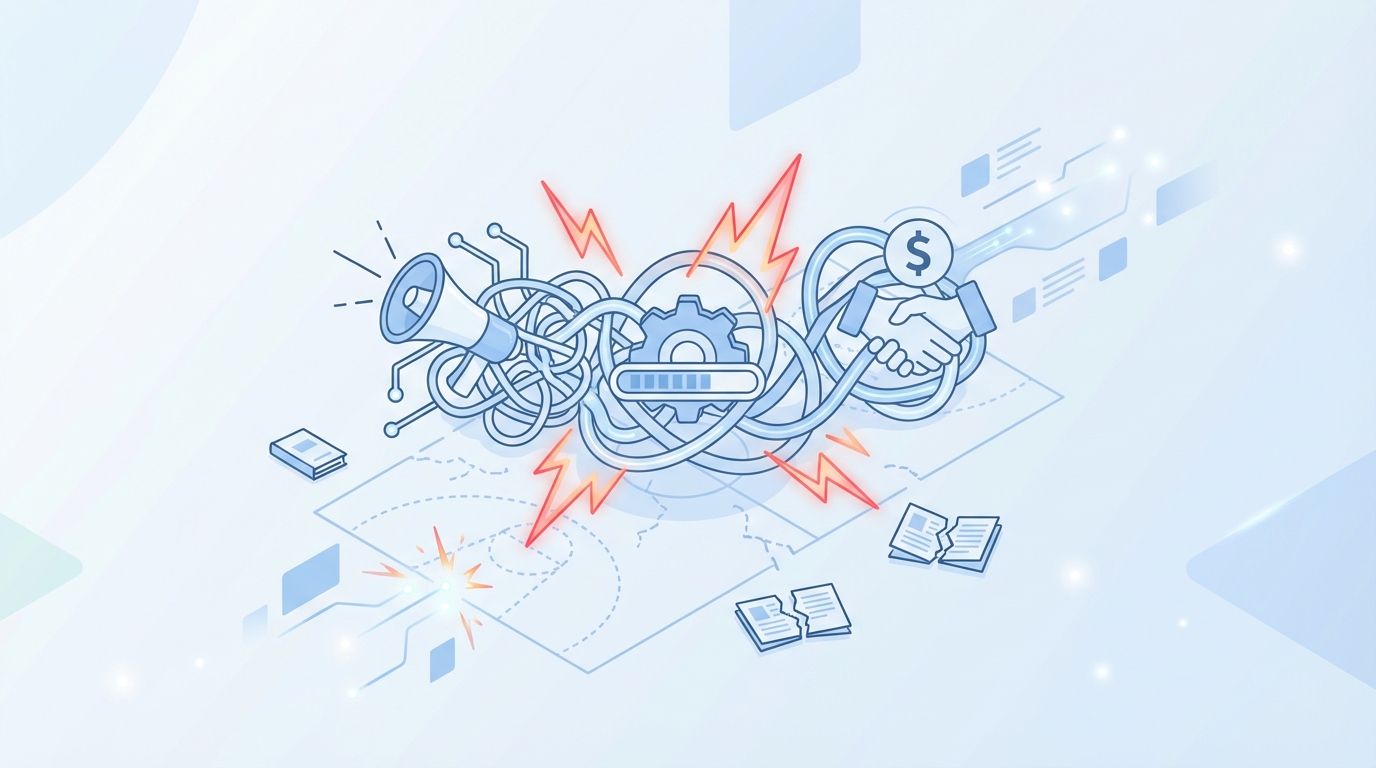
You fix the landing page Tuesday after a late product ask. Wednesday, sales wants another proof point. Friday’s pipeline review turns tense because the offer shipped two days late. Sound familiar? Clean handoff rules shrink these spikes into footnotes. When jobs define who decides, which claims are allowed, and when something is truly ready, the drama fades.
The PMM ping pong, sales says “not our lead”
PMM ships narrative, demand gen tweaks copy, sales ignores both. Everyone has a point. Nothing moves. Solve it in the job, define who approves messaging, how claims map to verified sources, and when sales must acknowledge the offer and route responses. Ping pong stops when the table has lines. For a broader look at why handoffs fail, HBR has a good overview, see HBR on where process improvement projects go wrong. The throughline, unclear ownership breaks good intentions.
Why is your team exhausted, not lazy?
They’re doing judgment work the system should carry. Voice calls. Claim checks. Naming rules. Distribution steps. Acceptance tests. Put those rules in the template so humans focus on creative and decisions that matter. Exhaustion drops when governance takes the boring weight. Salesforce’s annual reports show marketers stretched thin by coordination overhead, the Salesforce State of Marketing spells out the risk.
Seven demandgen execution raci job templates and clean handoffs
Standardize seven core jobs with copy‑ready templates, one owner, and pass‑fail checks. Then run them on a steady cadence. Small teams need repeatability to win sprints without adding headcount. Start here, then refine after two cycles.
Job taxonomy and inputs: the seven you need
Every run doesn’t need a bespoke doc. Use seven jobs, Campaign Brief, Offer Packaging, Landing Page, Email Build, Social Set, Sales Enablement One‑pager, Post‑launch Analysis. For each job, list required inputs, a single owner, and due dates. I like keeping templates short, with rules at the top and the checklist in view, so builders don’t hunt across tabs.
- Campaign Brief
- Offer Packaging
- Landing Page
- Email Build
- Social Set
- Sales Enablement One‑pager
- Post‑launch Analysis
RACI per job with handoff rules and SLAs
Attach a RACI block to each template. Name the A and R by function, list C contributors, and I recipients. Then add SLAs for review time and breach triggers. Handoff rules should be blunt, “Email build can’t start until page slug and UTMs are final,” “Brief must carry approved claims.” Ambiguity creates risk, so close the gaps at the source.
- RACI belongs in the template header
- SLAs are time‑boxed and visible
- Breach triggers route to a human with authority
Lightweight measurement plan that prevents drift
Four metrics per job tell the truth, cycle time, breach rate, defect rate, and conversion impact. Publish a one‑page scorecard monthly. Stack‑rank issues by impact, then fix the template or SLA. Measurement should guide improvements, not create bureaucracy. Keep it simple so it sticks when the team is under pressure.
Ready to stop rework from eating your week? Request a Demo.
How Oleno turns your demandgen execution raci into a running system
Oleno bakes your rules into the work, then enforces them at creation and handoff. Governance defines truth and voice. Jobs carry inputs and checklists. QA turns review into minutes. That’s how execution holds when priorities shift or headcount is tight.

Governance Studios bake in voice, product truth, and rules
Brand, Marketing, and Product Studios centralize voice guidelines, narrative rules, and verified claims. Templates pull these constraints automatically, so pass‑fail checks reflect how your company should sound and what you can safely say. I’ve seen the biggest rework drops come from removing guesswork at the sentence level. With Oleno, the job starts with the right guardrails, so debates shrink and risk of wrong claims goes down.
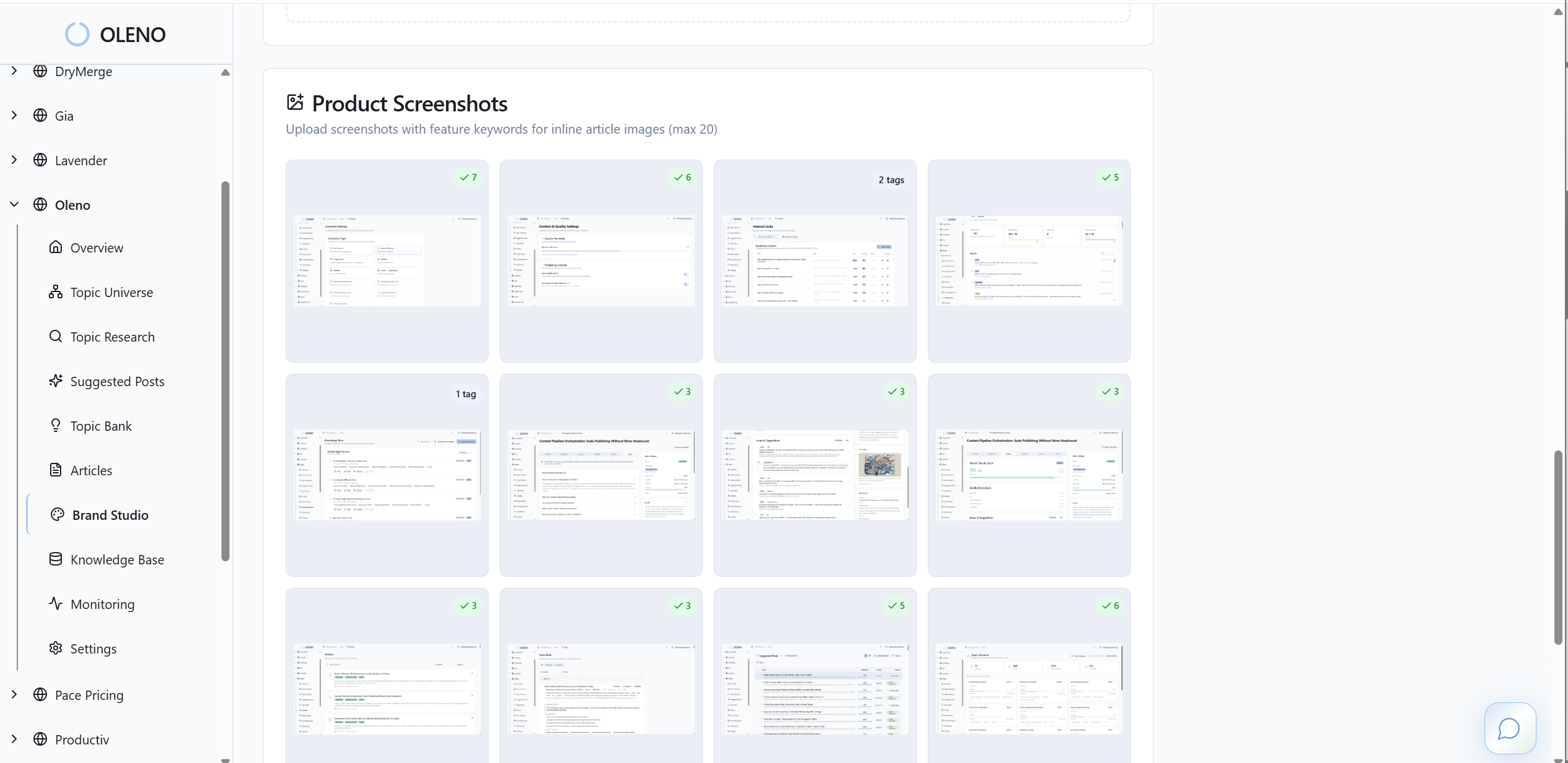
- Brand Studio keeps tone and style consistent
- Marketing Studio locks in your point of view and message rules
- Product Studio ensures claims map to approved truth
Jobs, briefs, and QA automate acceptance criteria
Oleno turns each job into a governed workflow, pre‑populated briefs, input checklists, and automated QA built in. UTMs, voice checks, claim citations, and structure rules are validated in minutes. What used to take an hour of manual review now becomes a quick pass‑fail, then move on. Cycle time drops, and breach rates are visible in one place so you can fix the actual bottleneck.
3x faster reviews and fewer rewrites. That’s the pattern I keep seeing. Want that outcome? Book a Demo.
Orchestrated handoffs and reporting close the loop
Handoffs stop being a guessing game. Status updates notify I stakeholders on milestones, while A approvers get time‑boxed review tasks with built‑in escalation. Post‑publish, Oleno rolls metrics into a lightweight scorecard tied to each job, directly addressing the costs we covered earlier, fewer meetings, less rework, steadier pipeline. When the system carries governance and timing, humans focus on moves that win quarters. Oleno makes that shift real without adding people.
Before you spin up another meeting to “align,” try seeing your jobs run themselves. Request a Demo.
Conclusion
Confusing activity for a working system is the core mistake. Clean job templates, job‑level SLAs, and acceptance criteria turn demand gen from fragile to durable. Within 90 days, teams that adopt the seven templates and RACI rules above should cut handoff rework by roughly 40% and reduce time‑to‑publish for prioritized jobs by 30–50%. Small teams keep execution steady without adding headcount. That’s the point.
About Daniel Hebert
I'm the founder of Oleno, SalesMVP Lab, and yourLumira. Been working in B2B SaaS in both sales and marketing leadership for 13+ years. I specialize in building revenue engines from the ground up. Over the years, I've codified writing frameworks, which are now powering Oleno.
Frequently Asked Questions