Demand-Gen SLAs & Runbooks: Operationalize Continuous Execution

Most marketing teams don’t fail because of ideas. They fail because content is treated like ad hoc creative work instead of an operations function with contracts. I run demand like a system. Calendars, SLAs, runbooks, QA gates. Call them demand-gen slas runbooks if you want the short version. When you codify the work, cadence sticks. When you don’t, deadlines become aspirational and drift creeps in.
I learned this the hard way. Early on, we shipped in bursts, then went quiet for weeks. Sales lost trust. Execs lost patience. Nothing compounded. The minute we wrote SLAs, set simple service level targets, and published one-page runbooks for every job, misses dropped and publish time fell fast. It wasn’t magic. It was operations.
Key Takeaways:
- Treat demand gen like ops: define SLAs, SLTs, and one-page runbooks per content job
- Use measurable SLTs, for example, discovery-to-brief in 48 hours and QA pass rate at 90 percent or higher
- Publish three runbook templates to start: SEO article, thought leadership, and comparison page
- Wire light enforcement with CMS flags, Slack alerts, and simple webhooks tied to SLTs
- Hold a 30‑minute weekly ops ritual to review misses, remove blockers, and reset targets
- Aim to cut missed publishes by about 70 percent and reduce time-to-publish by 40 to 60 percent in one quarter
Content Is Ops: Why Demand-Gen SLAs Matter
Marketing needs SLAs because demand gen is recurring work that must hit dates with consistent quality. SLAs turn vague expectations into measurable contracts, and runbooks make those contracts executable by anyone on the team. When you do that, cadence stops depending on your best writer’s availability.
Creative Without Contracts = Chaos
If you rely on talent and goodwill, you get heroics and hangovers. People rush to hit a date, quality slips, then the team slows down to recover. That wobble is expensive. You lose momentum, and pipeline influence gets lumpy. An SLA doesn’t kill creativity, it protects it by removing avoidable chaos.
I’ve seen small teams punch above their weight once the work is constrained. A clear “brief within 48 hours” target, a “QA pass rate above 90 percent,” and a “publish within 24 hours of QA” rule does wonders. Not because rules are fun, but because decisions get faster when the contract is obvious.
Cadence Beats Bursts
Cadence compounds. Bursts don’t. A steady flow of publish-ready pieces increases surface area for discovery and keeps your story present in every channel. That’s what SLAs actually buy you, not bureaucracy. Predictability is the engine. Creativity rides shotgun.
If you’ve ever had a month where you published five stellar posts, then nothing for six weeks, you know the cost. It’s not just traffic volatility. It’s missed internal trust. People stop planning around marketing because it feels unreliable. SLAs are how you rebuild that trust.
Why SLAs Belong in Marketing
SLAs are normal in support, SRE, and IT. Marketing runs the same kind of recurring, time-bound work, yet we rarely set service targets. That gap is strange. The concept is the same: define the service, measure the response, and hold the line. The Google SRE guidance on SLIs and SLAs applies here more than most teams realize.
When you adopt the mindset, your language changes. You stop saying “let’s try to get this out next week” and start saying “this job type has a 72-hour lead time, and we’re at 36 hours already.” That shift alone cuts debate and saves hours per week.
Runbooks, Not Vibes: The Root Cause You Can Fix
The real problem isn’t motivation or ideas. It’s the absence of explicit contracts and repeatable steps. Without an SLA and a one-page runbook per job, every piece is a snowflake. That invites delays, scope creep, and handoff confusion. Write the contract, then write the how.
Symptoms We Blame on People
Missed dates get pinned on the writer. Inconsistent tone gets pinned on the freelancer. Slow reviews get pinned on the editor. None of those are root causes. The system is missing. People fill the gaps with meetings and Slack threads, then feel like they failed when it slips.
Once you publish a runbook, those “people problems” often vanish. Everyone knows what “good” looks like, where inputs live, who approves, and when. You cut arguments by clarifying the path.
The Missing Runbook
If your team can’t point to a one-page runbook for your top content jobs, that’s the hole. The runbook should cover inputs, steps, owners, SLTs, and pass/fail criteria. Not a novel. One page. Short enough to print and tape near a desk.
Before the runbook exists, people improvise. After it exists, people execute. That is the difference between hoping and shipping.
What Good Looks Like
Good runbooks are specific, boring, and measurable. They turn “write an SEO article” into “ingest topic card, generate brief within 48 hours, draft within 72 hours, QA within 24 hours, publish within 24 hours.” No fluff, no cleverness.
If you ever feel the urge to add “depends,” pause. A runbook that “depends” on everything helps no one. Set the baseline, then list the 2 or 3 exceptions that truly matter.
The Cost of Missing Cadence in Demand Gen
Missed cadence wastes time, burns budget, and erodes trust. Each slip adds coordination overhead and context switching. Over a quarter, that compounds into lost output and weaker pipeline support. The small delays are the real cost, especially when evaluating demand-gen slas runbooks.
Time Loss You Can Measure
Every unplanned review costs minutes you didn’t budget. Every context reset adds drag. Teams often spend more time coordinating content than creating it. Industry surveys consistently show coordination bloat in marketing; the Content Marketing Institute research has flagged this pattern for years.
Quantify it. If a manual review round averages 23 minutes and you add two extra rounds per piece for 20 pieces a month, that’s over 15 hours gone. That is two working days you will never get back.
Quality Debt That Compounds
Rushed publishing creates quality debt. You pay it later with rewrites, corrections, and brand cleanup. That debt spreads. One off-brand article lowers readers’ confidence in the next one. SLAs prevent that spiral by enforcing a clean QA gate before publish.
I like a simple target: 90 percent or higher QA pass rate on first submission. If you’re under that, your system is leaking. Add guardrails until you cross it. Borrow from ops playbooks; the Atlassian guide to SLAs explains why tight definitions reduce firefighting.
- Extra rewrites mean lost velocity
- Off-brand tone means confused positioning
- Bad facts mean credibility hits that linger
Stakeholder Trust Erodes
Stakeholders don’t remember your best sprint. They remember the blackout weeks. When cadence breaks, sales stops planning around launches, leadership stops betting on inbound, and your “marketing is a system” narrative starts to sound hollow. That’s a reputational cost, not just an operational one.
Trust is hard to earn and easy to lose. SLAs and runbooks help you earn it daily.
What It Feels Like When Ops Breaks for Demand-gen slas runbooks
It’s frustrating. You’re juggling approvals, chasing inputs, and rewriting at midnight because someone flagged a tone issue late. You can feel the waste. And you know it’s avoidable.
The Thursday Fire Drill
Picture this. Thursday afternoon, two drafts due tomorrow. Your subject matter expert hasn’t weighed in. Legal had questions on a comparison claim. The CMS has a broken template. None of these should surprise you, yet here we are.
When the system lacks explicit steps and targets, every minor bump turns into a fire drill. You start negotiating with time instead of executing the plan.
The 2 AM Rewrite
You finally get feedback at 11 PM. You rewrite till 2 AM. It goes live Friday morning, and the team is cooked. The piece performs fine, but you lost the next three days to recovery. That cycle is a silent killer. Most teams accept it as normal. It isn’t.
I’ve lived this. The fix wasn’t more caffeine. It was a runbook and a gate that stopped late-breaking rewrites from blowing up the timeline.
The New Way: Demand-Gen SLAs and Runbooks That Hold
The new way is simple. Define SLAs with measurable SLTs, publish one-page runbooks per job, and wire light automation that enforces the contracts. This stack reduces misses and shortens time-to-publish without adding headcount. You can start this week.
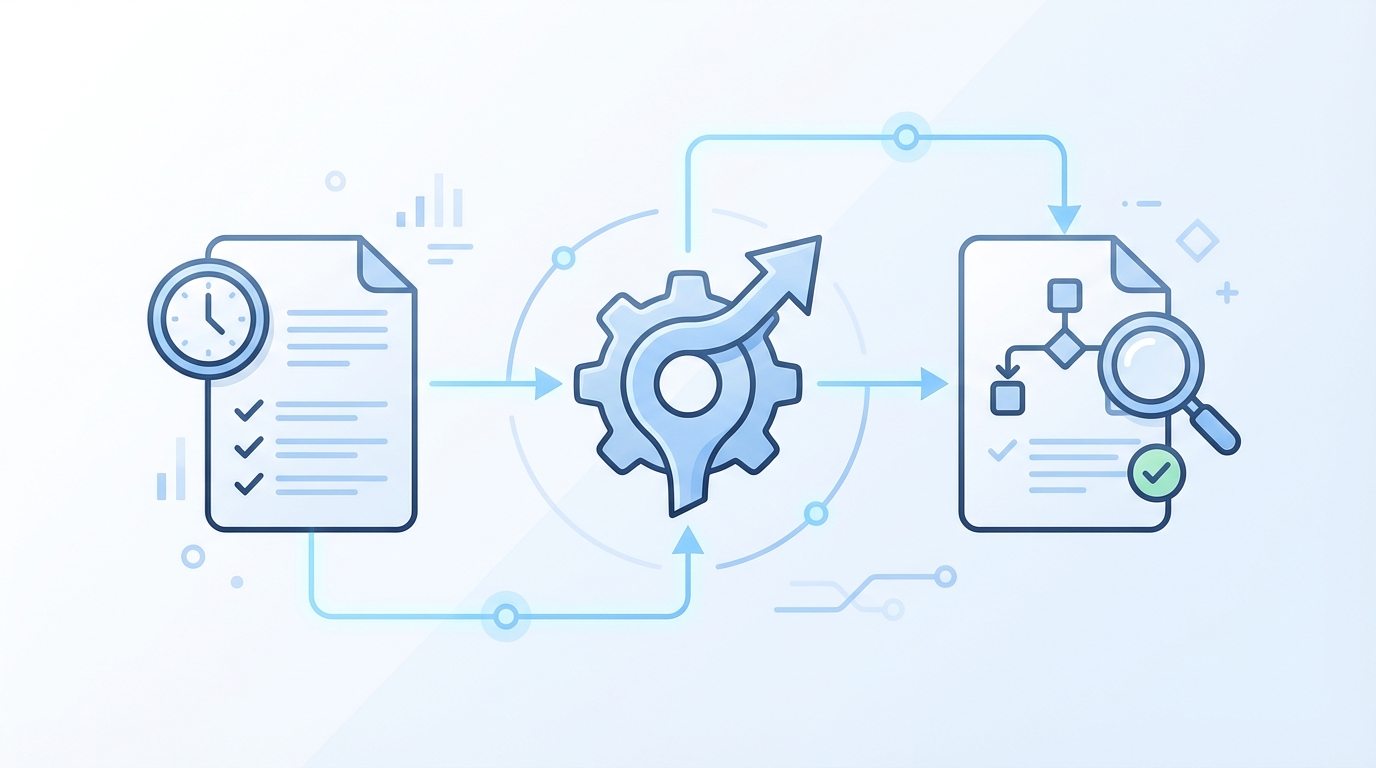
Define the SLA Taxonomy
Start by defining a small set of SLAs that cover your recurring jobs. Use SLTs that are easy to measure and hard to debate. You want clarity, not cleverness.
When I do this with teams, we keep it tight. Enough to cover the work, few enough to remember.
- Discovery to brief in 48 hours
- Brief to draft in 72 hours
- Draft to QA within 24 hours
- QA pass rate at 90 percent or higher
- Publish within 24 hours of QA pass
Publish the One-Page Runbook per Job
Create a one-pager for your top three jobs: SEO article, thought leadership, and comparison page. Each runbook lists inputs, steps, owners, SLTs, and pass/fail checks. No extra fluff. If it doesn’t fit on a page, it’s too long, especially when evaluating demand-gen slas runbooks.
Be explicit about owners and handoffs. Vague ownership is a common failure mode, and it’s easy to fix in a runbook.
- Inputs: topic card, angle, voice constraints, sources
- Steps: brief, draft, QA, revise, publish
- Owners: who does what and when
- SLTs: the clock that governs each step
- Checks: what must be true before moving forward
Wire Lightweight Enforcement
You don’t need heavy tooling to enforce contracts. A CMS status flag, a Slack alert when an SLT breaches, and a daily checklist cover most of it. Start with the smallest possible circuit that catches misses early.
Automation is there to nudge, not nag. The goal is to prevent silent slips, not flood your team with noise.
Stop missing the cadence you need. Want a simple way to make this real next month? Request a Demo
How Oleno Operationalizes Your SLAs and Runbooks
Oleno turns the SLA and runbook method into a repeatable system for small teams. Governance encodes voice, positioning, and product truth. Execution runs blueprinted jobs on a steady cadence. Operations enforces quality and keeps the line moving. The result is consistent output without headcount creep.

Encode Voice and Truth Once
Oleno’s Brand Studio and Marketing Studio store your tone, vocabulary, and market POV so every brief and draft starts aligned. Product Studio loads the approved feature definitions and boundaries so claims stay accurate. Knowledge Archive grounds drafts in your real sources to reduce re-verification.
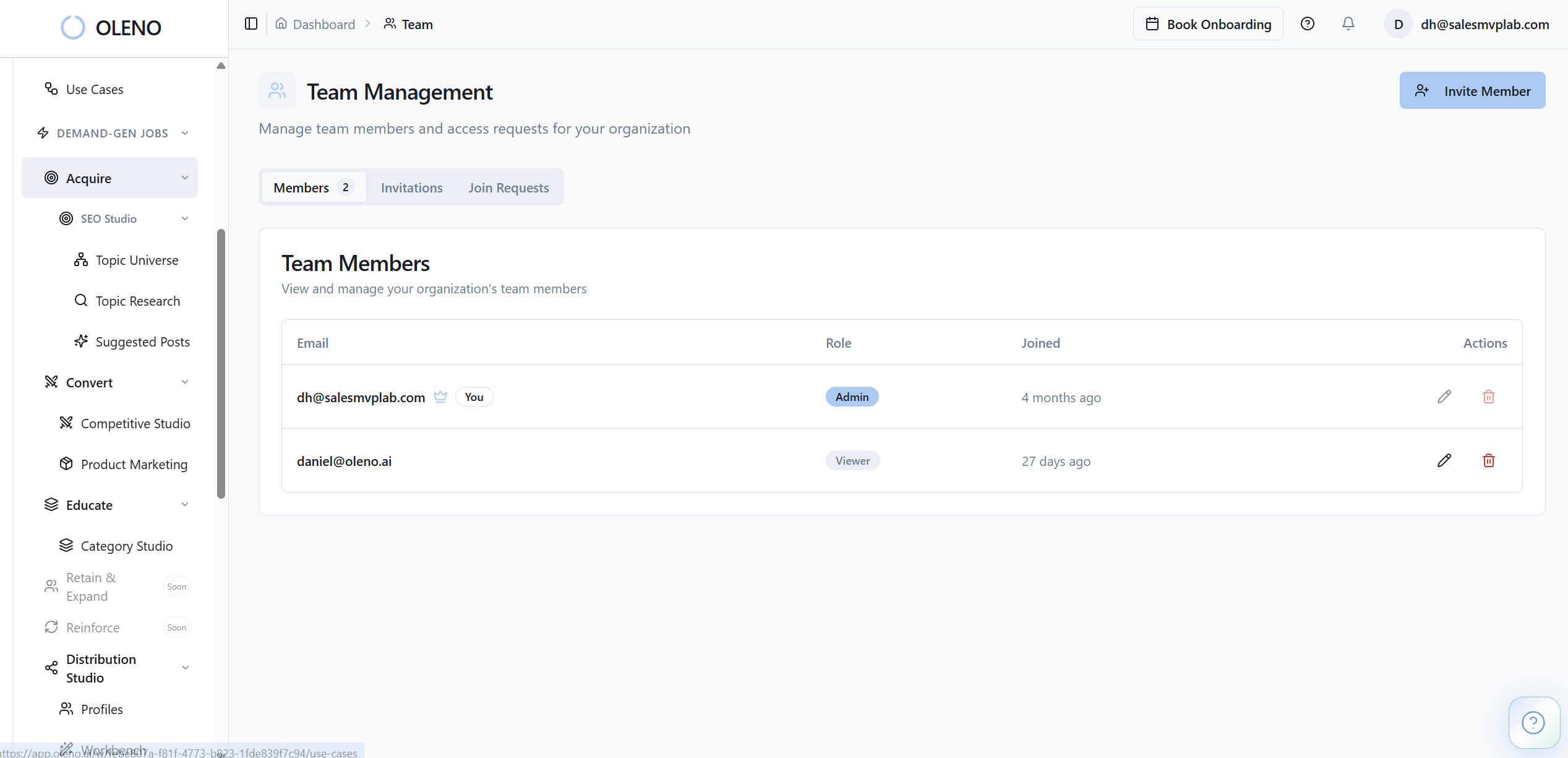
When you combine those, you raise your QA pass rate because drafts start closer to done. That tackles the quality debt we talked about, the one that quietly wastes hours on rewrites.
Make Work Move on Schedule
Oleno’s Orchestrator reads per-type quotas and moves jobs through the chain from brief to draft to QA and finalize. Topic Universe keeps a rolling list of approved topics so you never run dry, and CMS Publishing pushes finished content directly to the CMS in draft or live mode.
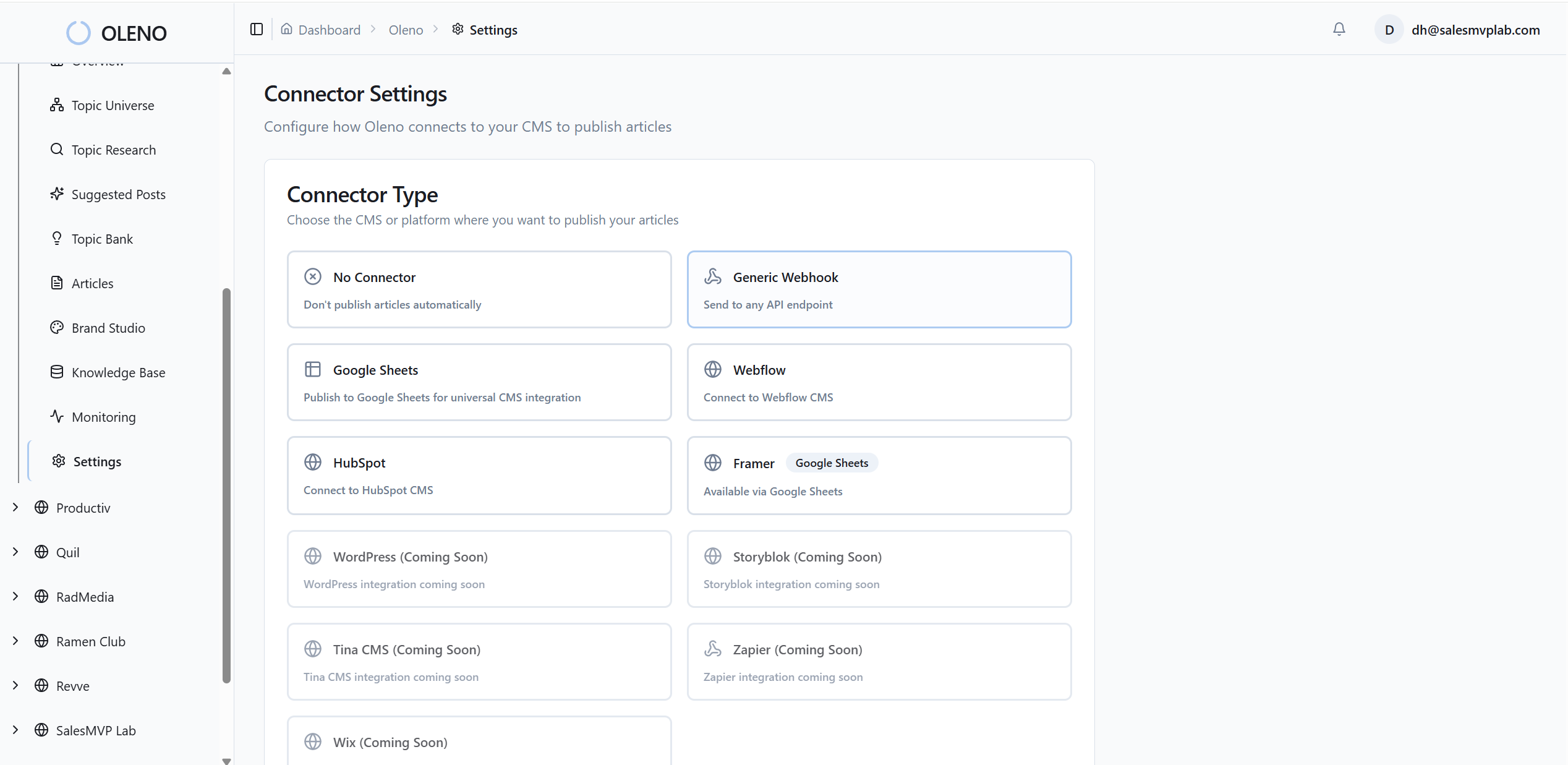
That flow shortens end-to-end time-to-publish. What used to take a week collapses into days because the system keeps picking up the next step even when people are busy. Teams I work with see 40 to 60 percent faster cycles once the pipeline runs consistently.
Ready to see what a governed pipeline feels like in practice? Request a Demo
Quality You Can Trust
Quality Gate evaluates every article against voice, structure, grounding, and SEO rules before it hits review. If scores are low, it attempts auto-revision or blocks publish. The Article Editor gives you tight control when you do want to make changes, without leaving the platform.
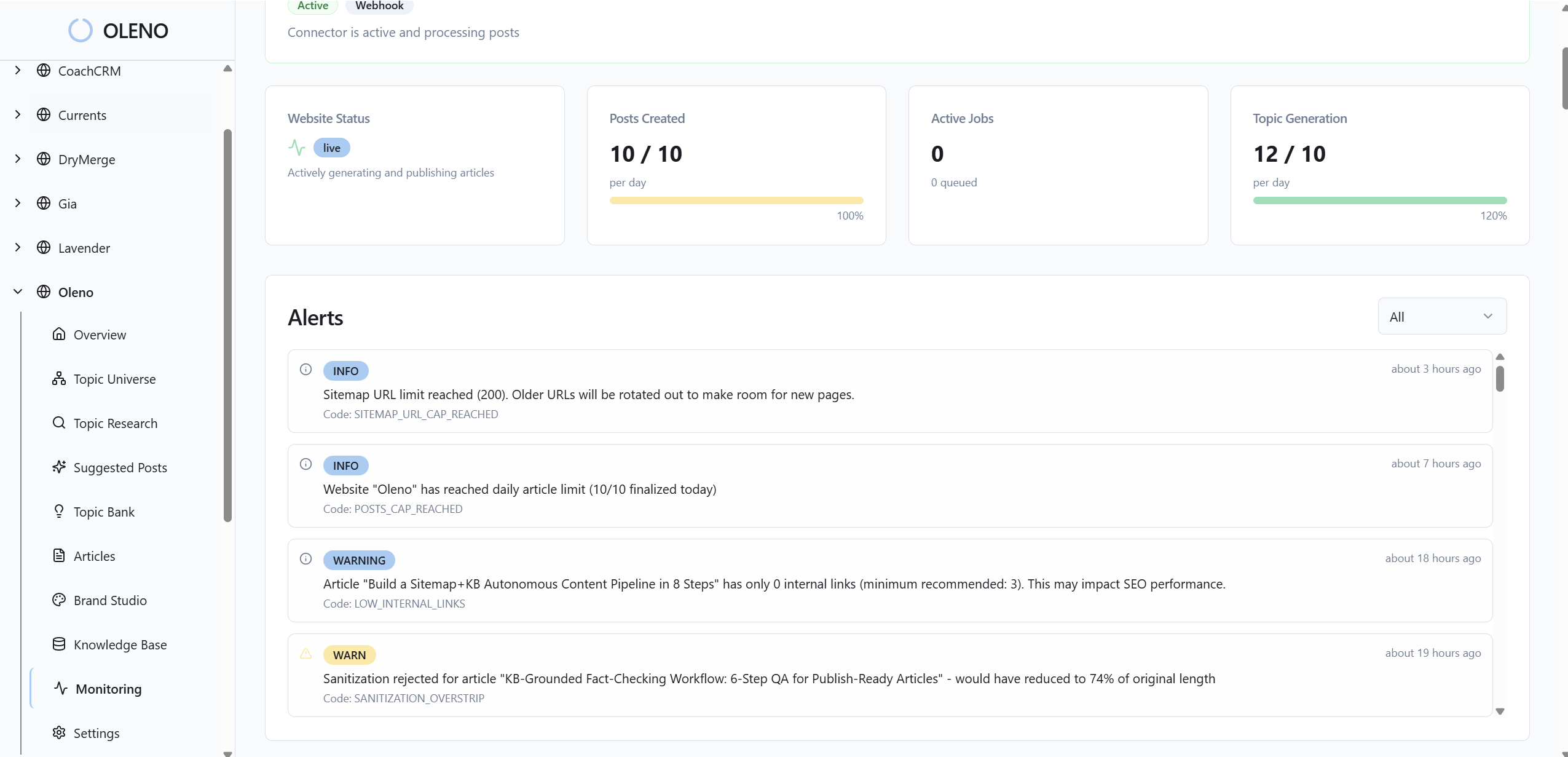
Tie this back to the earlier costs. Extra review rounds and late rewrites burn days. With Quality Gate guarding the line and governance feeding accurate inputs, you cut those wasteful loops. That’s how missed publishes drop and consistency returns. And once consistency returns, trust follows.
Small team, big goals, no appetite for drift. If that’s you, Oleno was built for your reality. Book a Demo
Conclusion
Most teams don’t lack ideas. They lack operational contracts. Write the SLAs and SLTs. Publish one-page runbooks for your core jobs. Add light enforcement. Hold a weekly ops ritual. Do that and you’ll cut missed publishes by about 70 percent and shorten time-to-publish by 40 to 60 percent in one quarter. It isn’t glamorous. It works.
About Daniel Hebert
I'm the founder of Oleno, SalesMVP Lab, and yourLumira. Been working in B2B SaaS in both sales and marketing leadership for 13+ years. I specialize in building revenue engines from the ground up. Over the years, I've codified writing frameworks, which are now powering Oleno.
Frequently Asked Questions