Embedding Brand Voice into Content Pipelines: A Practical Playbook

Most teams treat brand voice like a PDF. A thing you hand to writers and hope they follow. Then the drafts roll in, and you’re stuck editing the same phrases, the same cadence issues, the same “why does this sound like us and also… not?” You don’t have a writing problem. You have a pipeline problem.
Here’s the thing. Voice drifts where rules end. If guidance lives in docs while production lives in tools, drift is baked in. The fix isn’t more edits or a longer style guide. It’s encoding voice as rules the system can check, enforce, and ship, the same way you treat schema or internal links.
Key Takeaways:
- Encode brand voice as rules (lexicon, banned terms, rhythm ranges), not advice
- Move enforcement upstream: brief schema + retrieval + QA gate with pass/fail checks
- Treat snippet-ready section openers as voice, not just structure
- Quantify the rework tax: turn recurring edits into deterministic checks
- Place voice checks at retrieval and QA, with automated remediation loops
- Use an orchestrated system (not prompts) to hold tone at volume
Why Guidance Alone Never Holds Voice In Production
Voice breaks in production because workflows create variance at every handoff. The only reliable fix is treating voice like a constraint that tools can check, not a preference writers interpret. Encode tone, cadence, and opener patterns as rules. Then enforce them in briefs, drafting, and QA with pass/fail outcomes.
The hidden complexity inside content pipelines
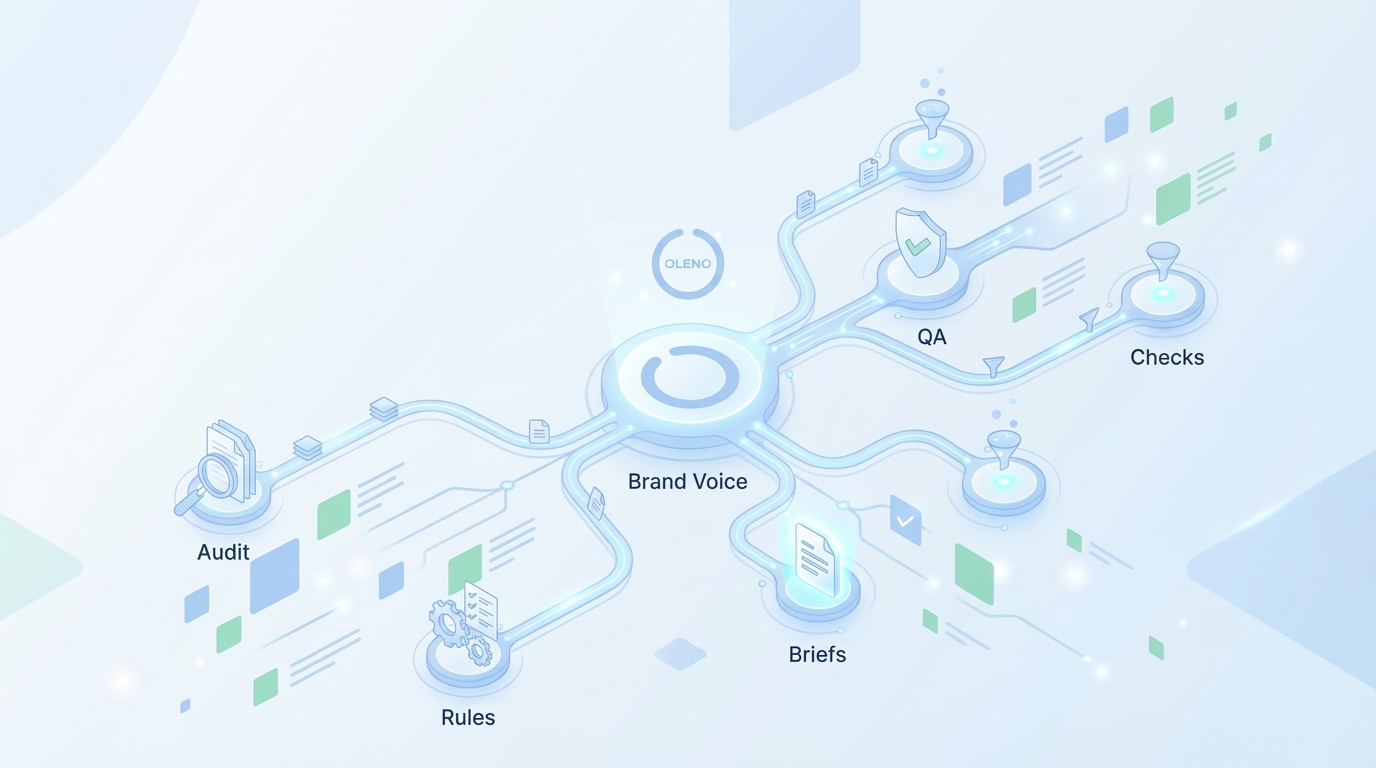
Voice does not drift because someone ignored a PDF. It drifts because 20+ micro-decisions happen between topic selection and publish: brief copy, retrieval snippets, draft tone, section openers, alt text, filenames, schema, and more. Each touchpoint adds variance. Unless voice is expressed as rules in code, you will chase edits forever.
In practice, style guidance arrives as adjectives. Production runs on tokens and templates. That mismatch creates a gap where “sounds off” sneaks in. We found that when H2 openers were standardized and banned terms were enforced automatically, downstream rework dropped. Not to zero, but noticeably. Decisions moved upstream. Drafts got closer on the first pass.
If you’ve ever fixed the same phrase three releases in a row, you’ve felt the gap. The path out is simple: define voice as constraints the pipeline can validate. Then let humans focus on narrative decisions, not policing commas or cadence.
- Encode voice into the brief schema, not a slide deck
- Validate snippet-ready openers during QA
- Generate visuals and alt text inside the same ruleset
- Make banned terms impossible to publish
What is brand voice as code?
Turn adjectives into variables. Instead of “confident but approachable,” define a lexicon list, a banned list, sentence length bands, and sentiment thresholds. Add example pairs (do/don’t) for tricky phrases. Specify H2 opening patterns and snippet sizing so structure “sounds” like you.
A practical starting point mirrors guidance from Thousands of Words, One Brand Voice (Slideshare). Translate tone into JSON: allowed verbs, prohibited metaphors, minimum short sentences per section, opener pattern rules, and cadence ranges. It doesn’t kill creativity. It kills ambiguity.
Once rules exist, they can be enforced in drafting and QA. Writers don’t guess. Systems don’t shrug. And your voice stops depending on who had coffee that morning.
Why conventional edits fail to scale
Edits fix a draft. Rules fix the pipeline. When voice guidance lives in comments, every new draft becomes a fresh negotiation. You’re paying the same tax repeatedly. You can lower it.
The move is simple: identify recurring edits and convert them into deterministic checks. If “don’t use hype words” shows up every week, ban them. If “open with a direct answer” keeps reappearing, enforce snippet-ready openers. When rules run, editors spend time on story, not tone policing.
And one nuance. Don’t confuse preference with pattern. Lock patterns that make the voice recognizable. Leave room for judgment on story and structure within those boundaries.
Ready to see rules hold voice in real drafts? Try Generating 3 Free Test Articles Now.
The Real Root Cause Of Voice Drift In Teams
Voice drifts because guidance is static while production is dynamic. Style guides advise; pipelines require executable rules. The fix is persistent brand memory that follows every stage: strategy, brief, drafting, visuals, and QA. When rules live in tools, not documents, voice holds under volume.

What traditional style guides miss
Style guides are helpful but unenforceable. They live outside the system. Writers reference them, then confront empty fields in a CMS or a blank doc. The leap from adjectives to sentences is where drift happens.
You need machine-checkable guidance that shows up in briefs and survives into QA. This is where persistent brand memory matters: tone rules, banned terms, opener patterns, and sentence rhythm ranges available at the moment of writing. Without that, even your best writers will guess.
For a useful lens on multi-touch consistency, see Zigpoll’s overview of voice integration across touchpoints. The takeaway is familiar: advice isn’t enforcement. You need both.
How do you encode voice without killing creativity?
Bound the boring parts. Not the ideas. Define the lexicon, the no-go phrases, and the cadence range (e.g., at least one sub-10-word sentence per section). Enforce snippet-ready openers so sections start strong and consistently. Then let writers decide the narrative arc, examples, and framing.
When we shifted to “guardrails, not scripts,” first drafts improved. Even better, the same rules applied cleanly to alt text and filenames. Voice lived in the text and the metadata. Creativity didn’t shrink. It just stopped fighting avoidable ambiguity.
That’s the goal: remove low-value decisions so high-value ones get attention.
Where writers and systems talk past each other
Writers think in paragraphs. Systems enforce rules. The handoff breaks when voice constraints are implied, not encoded. If “open with an insight” is a note in Slack, it dies in production. Put it in your brief schema with fields that require direct-answer openers. Then verify in QA.
This is how you translate intent into outcomes:
- Briefs carry tone pillars and opener patterns, not just headings
- Retrieval supplies brand phrasing and examples in context
- QA checks banned terms, rhythm range, and opener format
- Remediation loops rewrite until the score clears your threshold
Encode once. Reuse forever. That’s the language systems understand.
The Rework Tax When Voice Remains Subjective
Subjective tone creates multi-round reviews, re-briefs, and visual rework. The cost is real: time, missed windows, frayed trust. Turning recurring feedback into rule checks reduces meetings and approvals. You don’t eliminate judgment. You just reserve it for the parts that need humans.
Engineering hours lost to rewrites and approvals
When tone is a “we’ll know it when we see it” decision, everything takes longer. A typical loop looks like this: content review for accuracy, tone pass to strip hype or jargon, visual pass to fix off-brand captions and alt text, then an approval rerun because a product name changed.
The fix isn’t another meeting. It’s codifying the decisions you repeat. If you always remove certain adjectives, ban them. If you always rework openers to be snippet-ready, enforce the pattern. That’s how you retire recurring edits rather than relive them.
Teams that do this notice fewer meetings. Not none. Fewer.
What happens at 50 posts a month?
Let’s pretend you publish 50 posts monthly. Two voice-only edits per draft, about an hour each, is 100 hours. Visual rewrites, captions, alt text, filenames, add 30 hours because tone didn’t carry into metadata. That’s 130 hours of friction, every month.
Now imagine rules:
- Banned-term checks stop hype at the source
- Opener patterns enforce direct-answer clarity
- Alt text and filenames inherit tone constraints
- QA blocks publish until thresholds pass
Even if rules reclaim half the time, that’s 60–70 hours back. Enough to cover research depth or repackaging for distribution. See the practical framing in Automate Blog Creation in Brand Voice With AI (Scribd). The math isn’t perfect. The direction tends to be.
The cascading impact on brand trust and search
Voice inconsistency chips away at recall. Prospects hesitate because they can’t place your tone. It also hurts how sections read: scattered openers reduce snippet eligibility and how confidently AI tools can cite your work. You don’t control citations. You do control clarity.
When you stabilize tone at the source, structure, rhythm, lexicon, you stabilize understanding. Sections stand alone. Product names stay consistent. Your content becomes easier to quote and safer to trust. That’s the job.
Still fixing this manually? Try Using an Autonomous Content Engine for Always‡On Publishing.
The Frustration Of Fixing Off-Brand Content After The Fact
Post-publish edits are expensive and demoralizing. You can prevent most of them by moving voice rules into the brief and QA gate. Codify what “good” sounds like and make it impossible to ship drafts that don’t meet the threshold. Prevention beats apology.
A quick story from a three-person team
I’ve lived this. At LevelJump, we were three people: CEO, VP Product, and me, context switching across marketing and sales. We shipped content by recording and transcribing. Fast, sure, but the structure and tone drifted. We paid the edit tax later, pulling nights to fix cadence, terminology, and openers.
That’s when it clicked. We didn’t need more effort; we needed rules. Put voice into the system, not comments. Set banned terms. Require snippet-ready openers. Bake product naming and examples into retrieval. You won’t catch everything. You’ll catch the things you always catch.
When your biggest launch sounds like a different company
You know the feeling. Launch morning, traffic spikes, leadership is watching. Then you read the post and it sounds like a cousin of your brand, not the brand. Hard to claw that back.
This is why voice rules can’t live in a checklist someone skims at 11 pm. They have to live upstream, in the brief schema and the QA gate, so off-brand drafts don’t make it to “publish.” You reduce surprises. You reduce apologies.
How To Embed Brand Voice Into Your Pipeline
Make voice measurable, then executable. Start with an audit of your best pieces, convert findings into rules, wire those rules into briefs and QA, and place checks where they’ll do real work: retrieval and gatekeeping. You’re not adding process. You’re removing rework.
Audit voice into measurable signals
Pull three to five representative pieces that unquestionably sound like you. Extract signals: lexicon and banned lists, average sentence length and cadence range, sentiment and formality, opener patterns. Capture example pairs that show do/don’t phrasing for tricky lines and product naming.
Document these in a single source of truth that machines can read. Think JSON or YAML, not a slide deck. Add snippet-ready constraints for H2 openers so structure itself carries voice. This step turns taste into data the pipeline can verify. If you want a benchmark, the approach in Thousands of Words, One Brand Voice (Slideshare) is a solid starting point.
The output isn’t pretty. It’s powerful.
Where should voice checks live in your pipeline?
Two places: retrieval and QA. Retrieval ensures branded phrasing, product names, and example pairs appear in the drafting context. QA ensures drafts can’t ship without clearing banned-term checks, rhythm ranges, and opener patterns.
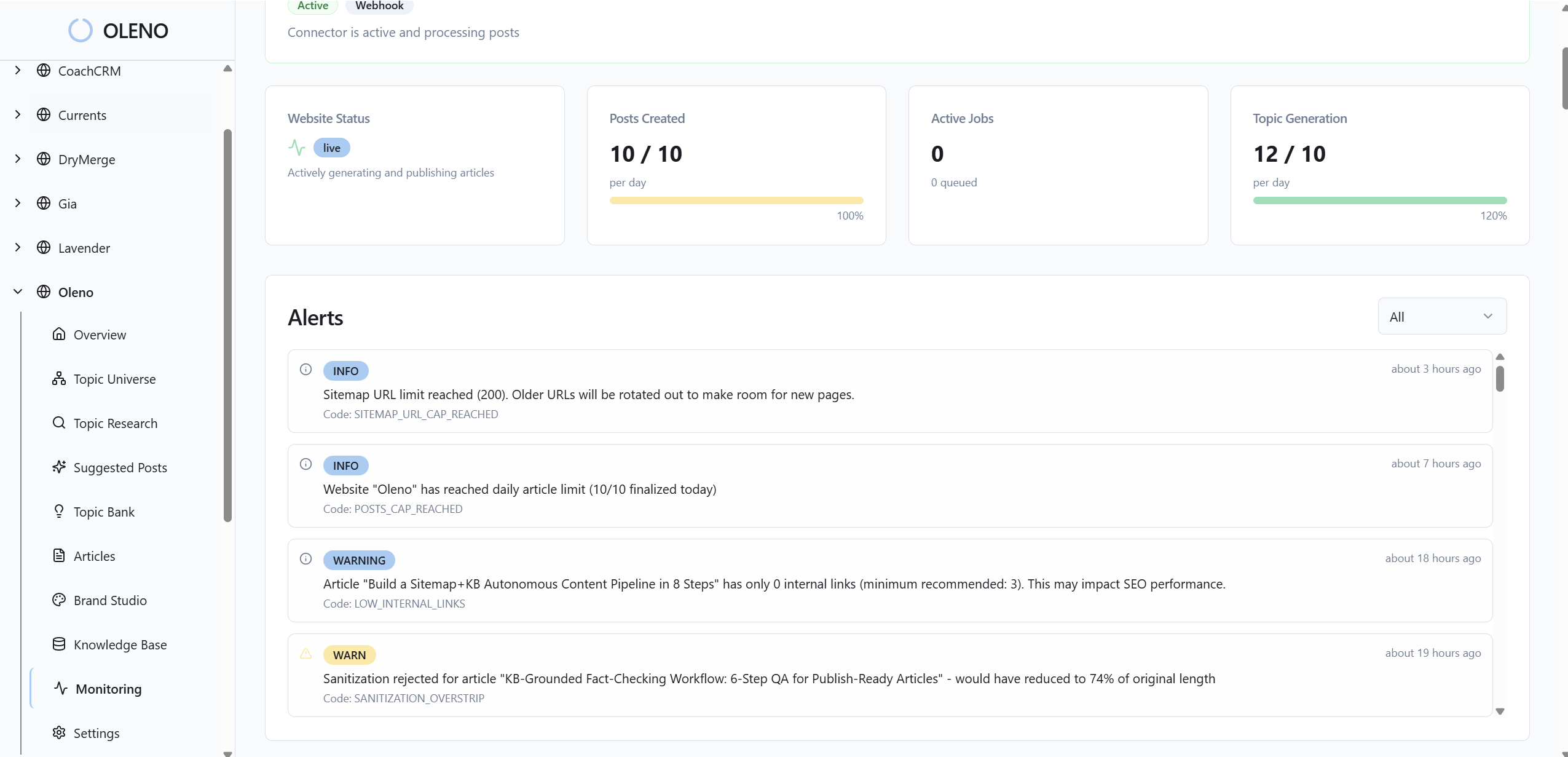
Add remediation loops that rewrite until the score crosses your threshold. No shaming, no meetings. Just rules doing work. Over time, you’ll tune bands (e.g., shorter sentences in intros, stricter banned-term enforcement in product sections) as patterns emerge. The goal isn’t rigidity. It’s repeatability.
How Oleno Encodes And Enforces Brand Voice End To End
Oleno holds voice by translating your guidance into enforceable rules, then applying them across strategy, briefs, drafting, visuals, and QA. It doesn’t monitor performance. It ensures what ships is consistent, differentiated, and structured for citation. Creativity stays with your story. Accuracy lives in code.
Brand Studio turns voice into enforceable rules
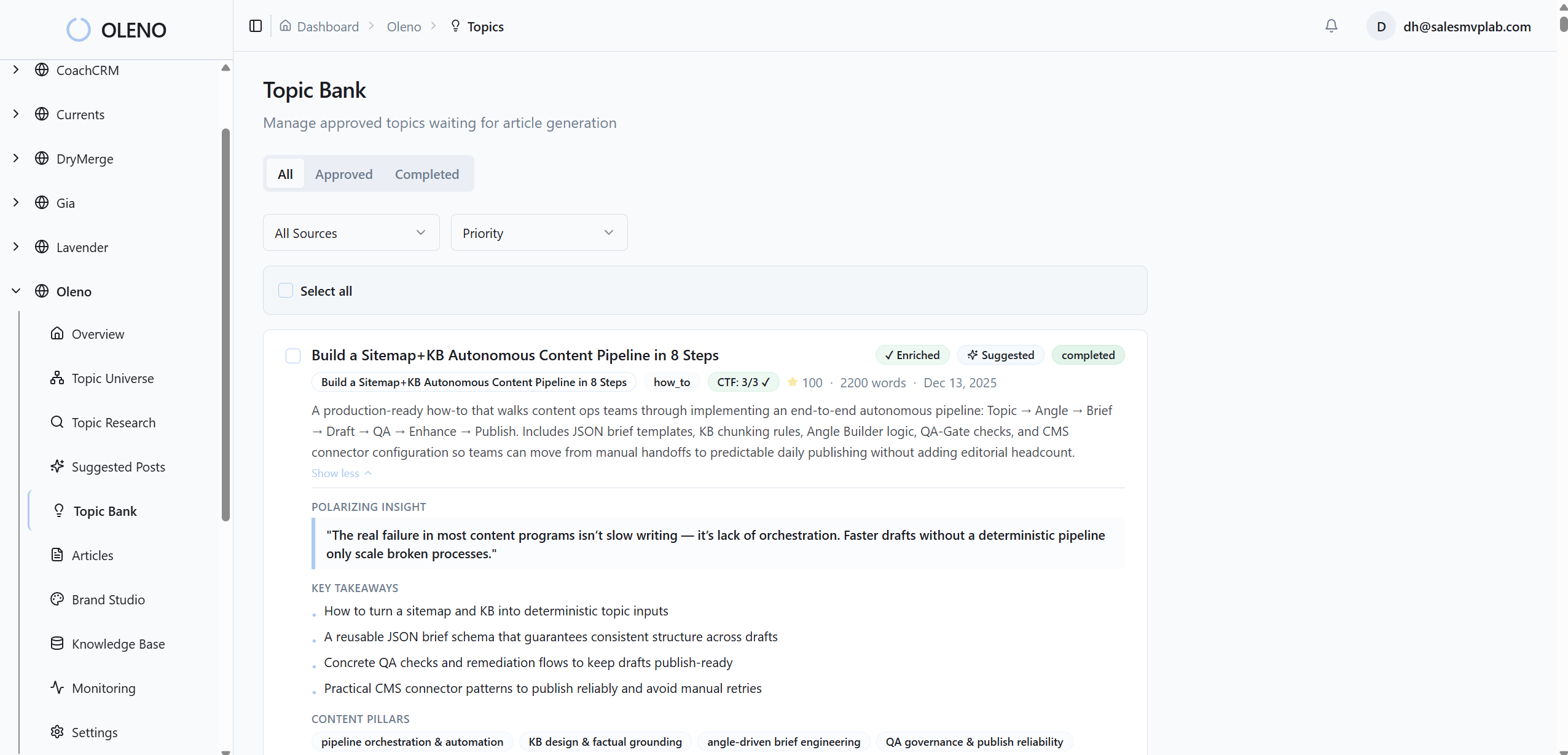
Brand Studio stores your lexicon, banned terms, phrasing preferences, and structural patterns. Those rules apply at strategy, brief, and drafting stages so tone isn’t a surprise at the end. You specify sentence rhythm ranges, opener templates for H2s, and do/don’t examples for tricky phrases.
Here’s why that matters. With rules embedded, Oleno drafts start inside the guardrails. H2s open with direct answers sized for snippet readiness. Short sentences appear where you expect. Off-brand words are blocked. And because the rules live in the system, they’re applied the same way every time, not dependent on who’s editing this week.
QA Gate scores tone and triggers refinement loops
Every Oleno draft passes through a QA gate that evaluates 80+ criteria, including voice alignment, banned terms, snippet-ready structure, and clarity. If the draft misses your threshold, Oleno runs an automated remediation loop, rewriting and re-testing until it passes.
This shifts effort from conversations to checks:
- Voice alignment scored against your rules
- Snippet-ready openers validated section by section
- Alt text and filenames generated to match tone
- Information gain considerations reinforced from the brief
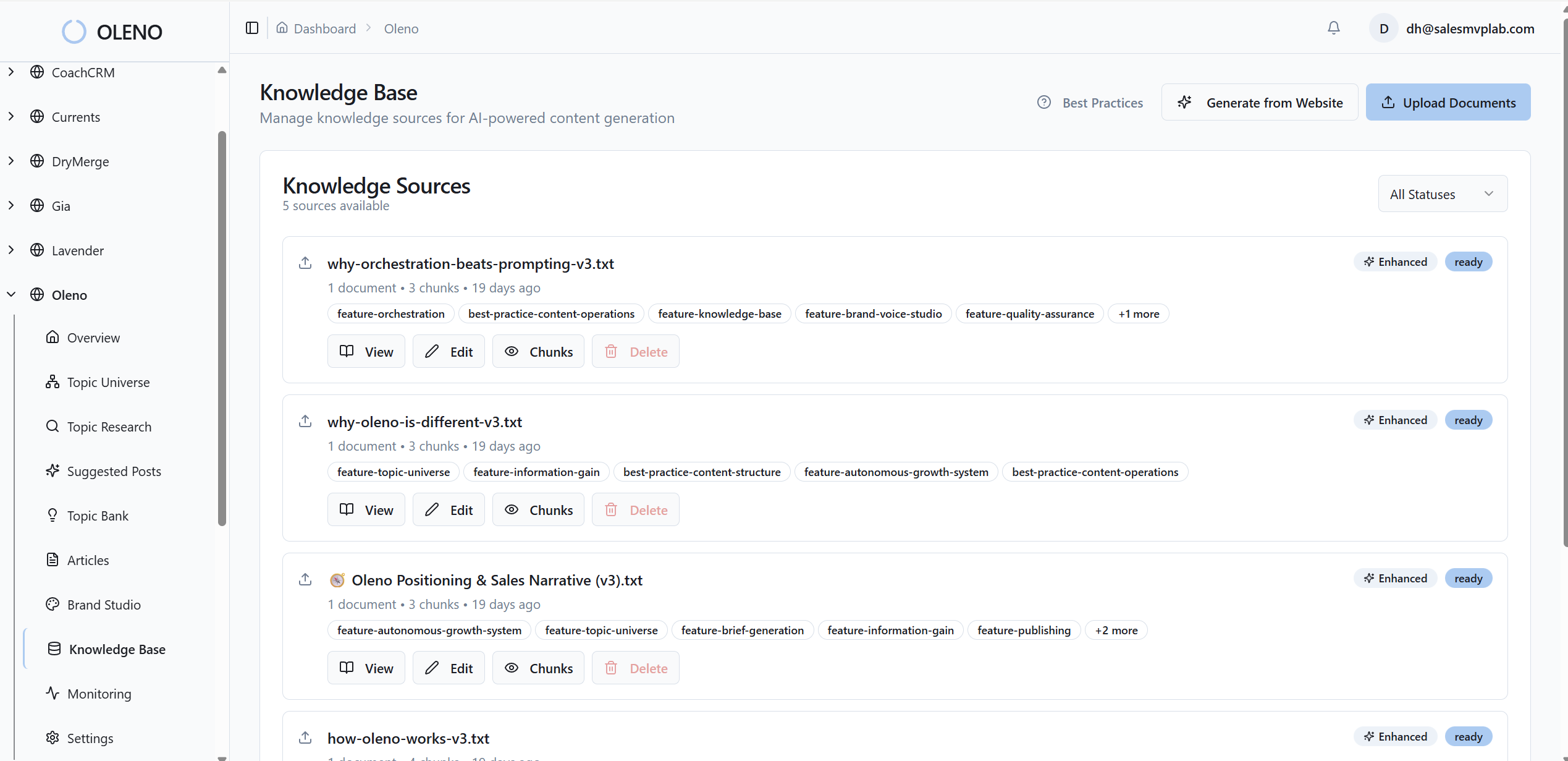
Oleno also applies supporting systems that keep your brand intact: Knowledge Base grounding to maintain product naming and examples, Visual Studio to generate brand-consistent hero and inline images, deterministic internal linking from a verified sitemap, and schema generation for clean structure. You’re not promised perfection. You are given a system that reduces avoidable rework and protects tone at scale.
If you’re ready to see rules, drafts, visuals, and QA work as one flow, Try Oleno for Free.
Conclusion
Brand voice fails in production when it’s treated like guidance, not governance. Encode it. Put rules where work happens: briefs, retrieval, and QA. Use snippet-ready openers so your structure “speaks” like you. Then let your team focus on story, not tone debates. That’s how you publish more, argue less, and sound like one brand at scale.
About Daniel Hebert
I'm the founder of Oleno, SalesMVP Lab, and yourLumira. Been working in B2B SaaS in both sales and marketing leadership for 13+ years. I specialize in building revenue engines from the ground up. Over the years, I've codified writing frameworks, which are now powering Oleno.
Frequently Asked Questions