Enforce Brand Voice in Your CMS: Templates, Tokens & Editor Guards

Most teams write brand guidelines, train the writers, then hope. Hope that people remember. Hope that agencies read the doc. Hope that AI doesn’t go off script. If you want to enforce brand voice in real life, you do it where words get written, not where rules get filed. In the editor. In the CMS. Inside the pipeline.
I learned this the hard way. Early on, I thought more docs would fix drift. Bigger decks. Longer workshops. It didn’t. Voice still slipped. Editors still rewrote. Leaders still flagged terms we banned a year ago. When we moved the rules into the tools, the drift stopped. Edit cycles dropped. Time to publish sped up. That’s the shift I want to show you.
Key Takeaways:
- Put voice rules in the editor (not just a PDF) so violations are caught as authors type
- Use tokens and components for hero, CTAs, and microcopy so tone stays consistent across pages
- Add inline linters for preferred/banned terms so you cut rework before review starts
- Run a publish-time QA gate with rollback so tone slip never goes live
- Track edit rate, pre‑publish failures, and time‑to‑publish, then tune rules monthly
- Expect ~60% fewer tone edits and ~40% faster time to publish when rules live inside tools
Enforce Brand Voice In The Editor, Not In A PDF
Brand voice is enforced when the editor blocks or warns on violations at the moment of writing. Guidelines in a PDF, a wiki, or a slide deck don’t change behavior during creation. Put rules into the editor and CMS, then measure edit rate and publish speed to prove it.
Why PDFs Don’t Change Behavior
Writers don’t flip through a 30‑page guide mid sentence. They write. They rely on memory and muscle. A static doc asks people to remember dozens of rules under a deadline. Humans miss things, then editors catch them late, which triggers rework. That’s avoidable.
When rules live in the editor, you replace memory with guardrails. Preferred terms auto-suggest. Banned phrases highlight. CTA structure nudges the right pattern. You reduce the odds of a wrong word sneaking through, so quality climbs without a heavier review. Honestly, the first week you’ll wonder why you waited.
Editor-Time Enforcement Beats Memory
Inline checks change behavior fast. Writers see issues as they appear, fix them in seconds, and keep moving. Editors stop being the tone police and start being coaches. Quality rises with fewer meetings. You also create a repeatable system that survives handoffs and hiring changes.
There’s a second win. New contributors get up to speed in days, not months. The system carries the nuance. That cuts onboarding cost and reduces risk when you bring in freelancers. You’ll feel the difference the first time a new writer ships without a rewrite cycle.
Why Brand Voice Drifts Without Editor-Time Guardrails
Voice drifts because every person adds interpretation under pressure. Without live guardrails, small choices compound across dozens of assets. People revert to old habits, agencies make reasonable guesses, and AI fills gaps with generic language. The result feels off, even if nothing is technically wrong.
Memory And Handoffs Create Drift
Handoffs are where tone gets lost. Strategy to brief. Brief to draft. Draft to review. Every hop leaks context. People shorten examples, skip edge cases, and forget the stuff that seems minor. Those minor details add up to a different voice by the time it hits publish.
You won’t fix that with more slides. You fix it by encoding the details where work happens. Terms lists get enforced inline. Sentence rhythm guidance shows in a style panel. CTA copy uses a component with locked patterns. The guardrails keep everyone between the lines without slowing them down.
Agencies, Freelancers, And The Translation Loss
External partners rarely live inside your brand day to day. They try, they care, but they still miss subtleties. Without guardrails, you pay in edits and back-and-forth. With guardrails, you pay once to set the rules, then everyone benefits. You trade interpretation risk for predictable output.
AI needs this too. Generic prompts bring generic tone. Inject the constraints and exemplars right into the brief and draft stages, then score outputs on voice before anyone touches them. The drift drops because the system knows what “good” sounds like, not just what the topic is about.
The Hidden Cost Of Manual Voice Policing
Manual tone enforcement burns time, budget, and goodwill. Each fix seems small. Together, they create a slow and expensive pipeline. You pay in edit cycles, missed windows, and brand trust that erodes quietly when inconsistencies ship.
Time And Budget You Don’t See
Add up the minutes. Ten here, fifteen there. A quick find‑and‑replace that isn’t so quick. Multiply that across 30 assets a month. Now add the meeting to debate a word that your rules already decided last quarter. That is hours you never planned for and budget you didn’t need to spend.
Voice and tone consistency also drive credibility. Resources like the Mailchimp Content Style Guide and guidance from Nielsen Norman Group on tone of voice point to consistent language improving trust and comprehension. Inconsistent tone does the opposite. You lose attention first, then conversions—especially when you’re trying to enforce brand voice at scale.
Quality Debt That Compounds
Every time an article ships with mixed terms or off‑brand phrasing, you add quality debt. Sales shares content they don’t quite trust. Execs flag copy in live channels. Teams start adding manual reviews “just in case,” which slows everything and still misses edge cases.
The debt shows up later as rebrands to “clean things up,” retraining, and more tools. You could have avoided it by catching mistakes upstream. Inline guardrails and a hard QA gate turn those downstream surprises into upstream nudges you fix in seconds.
What It Feels Like When Voice Governance Fails
You feel late, reactive, and a bit exposed. Deadlines slip because edits balloon. Slack fills with word debates. Leaders jump into copy threads. Teams start to hedge with safe language that reads generic. Morale drops because no one likes shipping work that feels off.

Late-Night Rewrites And Slack Fire Drills
Picture this. It’s 9:30 PM, and an email goes out tomorrow. Someone finally notices three phrases you banned last year. The writer is offline. The editor rewrites on the fly, fingers crossed. You hit send, then hope customers don’t notice the parts that still feel wrong.
You can avoid that tension. Guardrails in the editor and a publish-time gate stop those phrases from surviving to final. Rewrites fade into light edits. Slack threads get shorter. Everyone sleeps better because the system carries the load, not one overworked editor.
Leaders Lose Trust, Teams Lose Steam
When leaders see off‑brand outputs, they lose trust in the process. They start asking for earlier reviews and more approvals. That is a slow way to grind a team down. People stop taking creative swings, and output turns beige. Pipeline suffers, and you pay twice.
Put the trust back into the system. Encode the rules once, then enforce them the same way every time. Leaders stop hovering. Writers stop guessing. Editors stop firefighting. You stop wasting energy on problems you can engineer out of the workflow.
How To Enforce Brand Voice In Your Stack, Step By Step
You enforce brand voice by translating rules into controls inside tools. Start in the editor and CMS, then add a hard gate before publish. The combo cuts edit cycles and blocks tone slip from going live. You will feel the gains in your first month.

Turn Rules Into Tokens And Linters
Start by converting abstract rules into concrete pieces. Terms, patterns, and structures become tokens and components. Editor linters flag banned phrases, auto-suggest preferred terms, and score sentence rhythm if that matters to your voice. Writers get feedback as they type, which is where change sticks.
Keep the heavy rules simple and visible. If a rule fires often, consider a component instead of a warning. For example, lock CTA copy inside a reusable block that carries tone, format, and link style. Writers pick the block and fill the specifics. You get consistency without extra meetings.
To make this practical:
- Map voice rules to fields, tokens, and components in your CMS
- Load preferred and banned terms into your editor linter
- Attach exemplar paragraphs in briefs so writers can see and feel the voice—especially when you’re enforcing brand voice across teams and tools
- Add a pre‑publish checklist that blocks on voice score and term violations
Publish-Time QA And Rollback As Safety Net
Editor-time checks reduce mistakes, but safety nets matter. Add a QA gate before anything goes live. Score voice, verify terms, confirm structure, and check for repetition or fluff. If it fails, route it back with targeted fixes. No guesswork. No pile‑on.
Pair the gate with a clean rollback plan. If something slips through, revert fast and fix upstream. That one step changes behavior. Teams move confidently because the system will catch them if they miss an edge case. Confidence speeds you up without risky shortcuts.
Ready to cut tone edits in half and ship faster? Request A Demo
The Practical Way To Enforce Brand Voice In Oleno
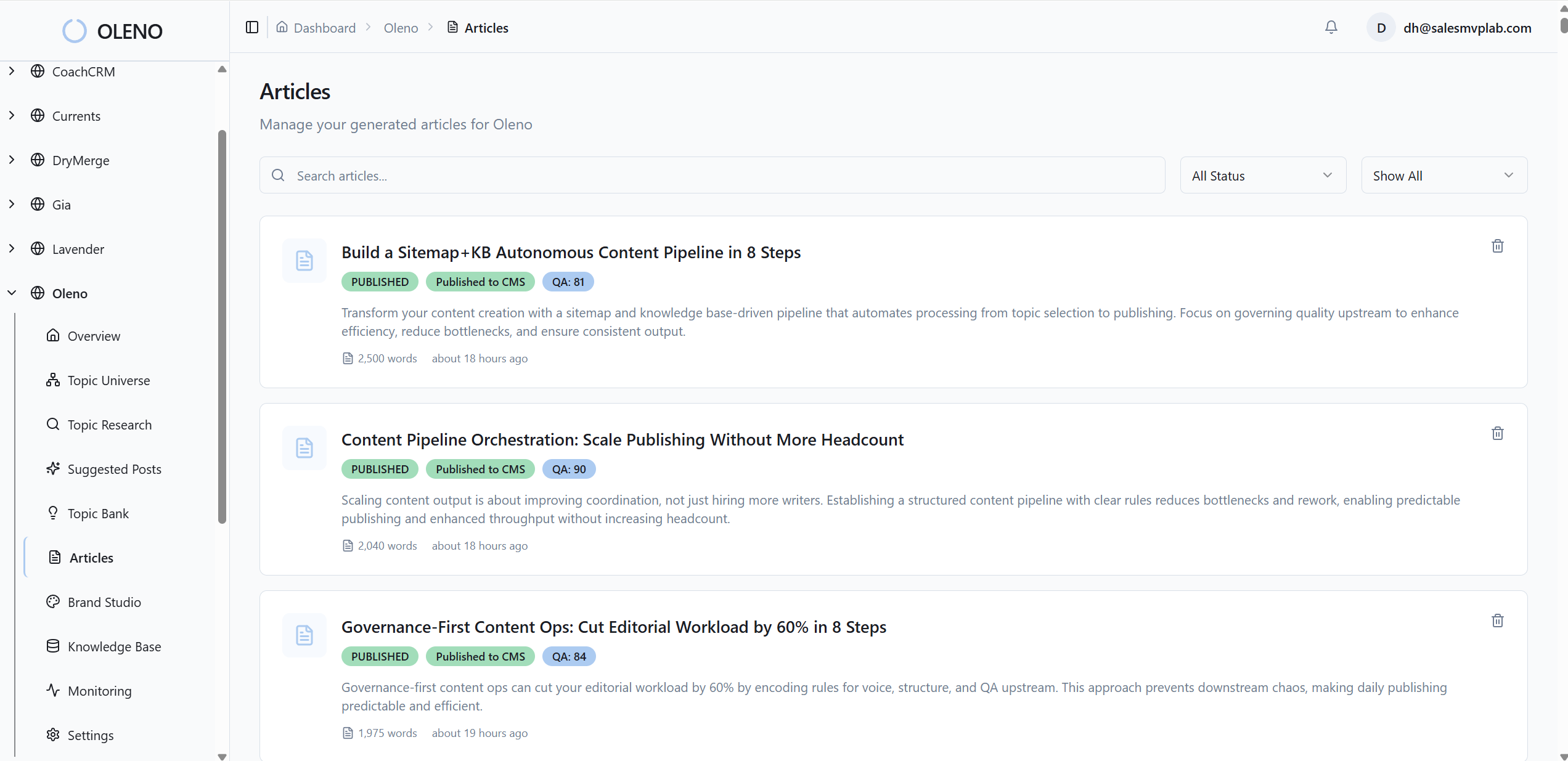
Oleno enforces brand voice by moving governance into creation, then making the system check itself before publish. Brand Studio encodes tone, terms, CTA style, and structure. Marketing Studio injects your messages and POV. A QA gate blocks anything that drifts, then CMS publishing ships on schedule.
Brand Studio And Marketing Studio Do The Heavy Lifting
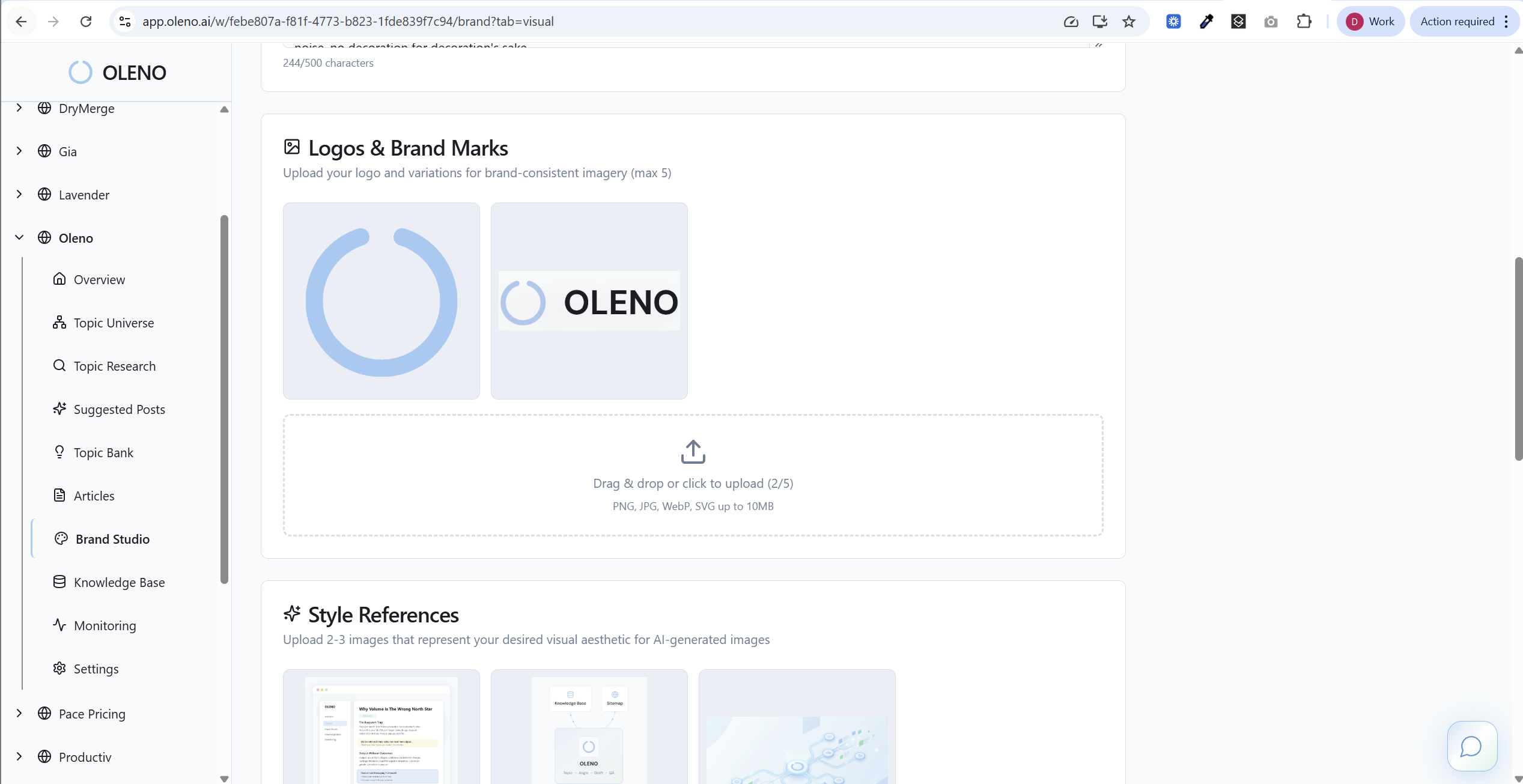
Brand Studio stores voice as machine-readable rules with few‑shot examples. During Brief and Draft, those rules guide outputs so drafts sound like you, not a template. Marketing Studio brings your narrative and message pillars into every piece, which stops the slow leak of positioning over time.
You can adapt content by audience and persona without losing voice. Audience and Persona Targeting merges segment language into briefs and drafts, so a Head of Content and a CFO read content that still sounds like you. Knowledge Archive grounding keeps claims accurate and safe, which reduces product edit cycles.
QA Gate, Knowledge Archive, And CMS Publishing Close The Loop
Quality Control runs a non‑negotiable gate before publishing. It checks voice alignment, structure, clarity, and grounding against what you encoded. Failed checks trigger targeted revisions and re‑runs until it passes. That replaces memory-driven reviews with a system that won’t let drift sneak through.
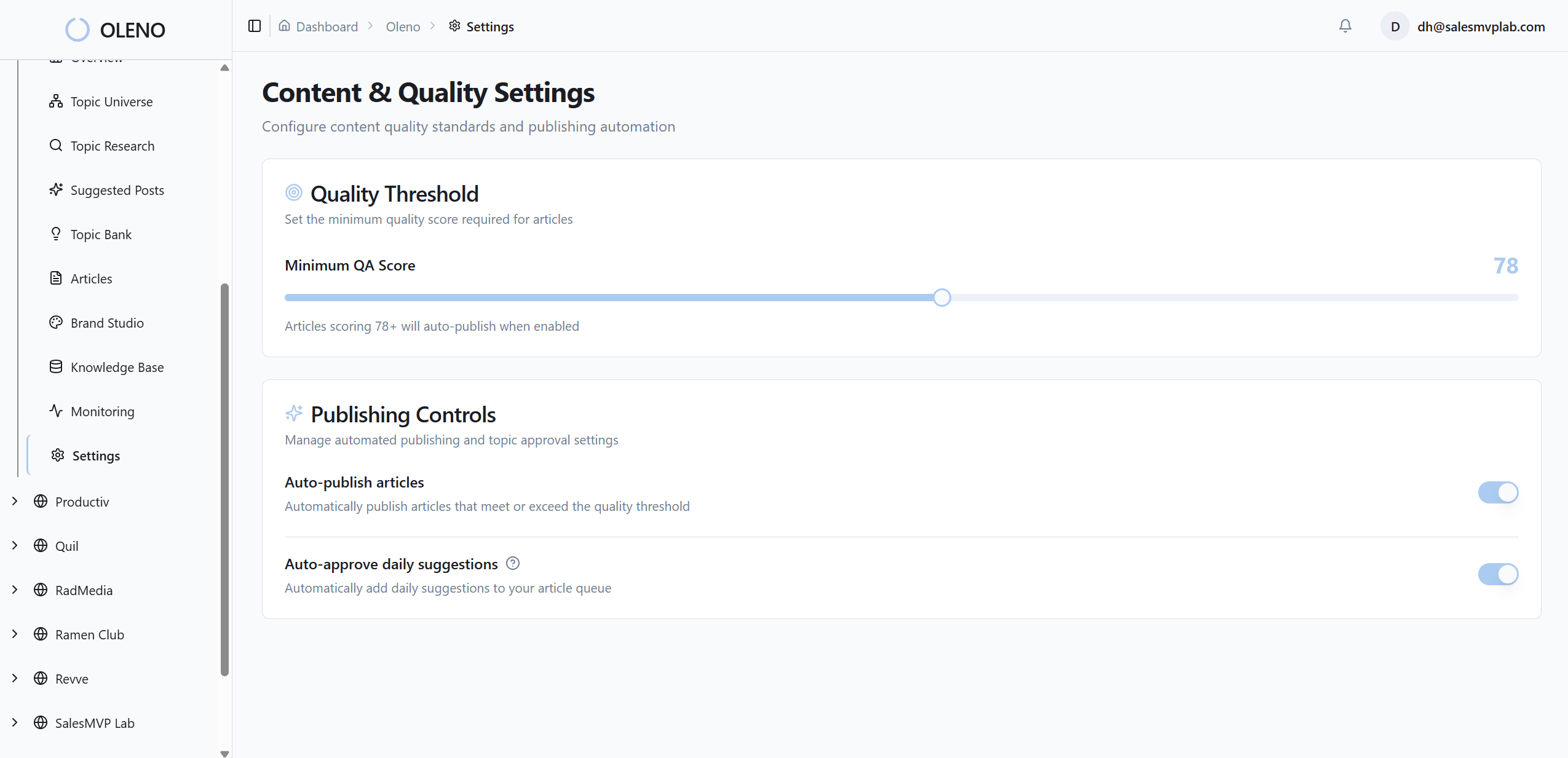
When content clears QA, CMS Publishing pushes it as a draft or live post to WordPress, Webflow, HubSpot, and more. Idempotent publishing prevents duplicates, so cadence stays steady. Measurement and System Health tracks cadence and quality trends, which helps you tune rules and catch issues early.
In practice, teams using Oleno report fewer manual edits on tone and terminology, faster approvals, and steadier output. The system carries the weight so your small team can keep shipping, even when priorities shift.
- Brand Studio: encodes tone, terms, CTA style, and structure for consistent voice
- Marketing Studio: injects your POV and message pillars so outputs stay opinionated
- Quality Control: blocks publishing until voice and accuracy standards are met
- Audience & Persona Targeting: adapts language by segment without losing voice
- CMS Publishing: pushes approved content to your site on a reliable cadence
Want to see Brand Studio catch tone issues before review even starts? Book A Demo
Conclusion
If your brand rules live in a PDF, you are paying a quiet tax. Edits pile up. Deadlines slip. Trust erodes. Move the rules into the editor, the brief, the draft, and the gate. Enforce brand voice in the tools your team uses daily, then watch the rework disappear.
I’d expect you to cut tone and term edits by around 60 percent and shorten time‑to‑publish by roughly 40 percent once editor-time checks and a publish-time gate are in place. That is the point. Fewer fire drills. More shipping. If you want a system that makes the new way easy, Oleno was built for it. Ready to run it for real? Request A Demo
About Daniel Hebert
I'm the founder of Oleno, SalesMVP Lab, and yourLumira. Been working in B2B SaaS in both sales and marketing leadership for 13+ years. I specialize in building revenue engines from the ground up. Over the years, I've codified writing frameworks, which are now powering Oleno.
Frequently Asked Questions