Every contradictory page teaches LLMs to ignore you

Every contradictory page teaches LLMs to ignore you
Every contradictory page teaches LLMs to ignore you. That's the uncomfortable truth. Maybe a little blunt. Still true. If your site frames the problem one way on Monday, describes your product differently on Wednesday, and borrows a totally different buyer language on Friday, you're not just creating content sprawl. You're teaching the market, and the models reading the market, that your brand is inconsistent.
This matters more now because LLMs don't evaluate you like a human skimming one great page. They look for patterns. They infer the average. And every contradictory page teaches them whether your story is stable enough to trust, cite, and repeat. In that environment, messy messaging isn't just inefficient. It's expensive.
This category showed up because GEO changed the rules. Humans still matter. Search still matters. But now LLMs sit in the middle, trying to decide which brands are clear enough, specific enough, and consistent enough to mention. And that means Fragmented Demand Generation has become a real problem. Not a theory. A patchwork of tools, prompts, people, agencies, reviews, and docs where nobody is fully wrong, but the output still ends up contradictory. That's why every contradictory page teaches the wrong lesson.
Key Takeaways:
- Every contradictory page weakens your authority by teaching LLMs your brand signal is unstable.
- Fragmented Demand Generation is usually a system problem, not a writer problem.
- Faster drafting doesn't fix narrative drift, product drift, or audience mismatch.
- Rework tax starts climbing the second context stops traveling with the work.
- Category leaders win by defining truth once, repeating it often, and checking whether the market sees one clear story.
Why Every Contradictory Page Becomes A Bad Training Signal
Every contradictory page teaches models what to trust about you, and that's why contradiction now costs more than most teams think. One weak page used to feel survivable. In an LLM-mediated market, it becomes part of the pattern. That's the shift. Not one bad page. The accumulated lesson across all of them.
LLMs Infer Your Average Truth, Not Your Best Page
LLMs don't remember your one killer article. They infer your average truth across the body of work. That's a big change. For years, marketers could get away with a few strong pages carrying a messy library. You ranked a couple winners, got traffic, and moved on.
That gets shaky when AI systems synthesize patterns instead of rewarding isolated pages. If ten pages say slightly different things about who you serve, what problem you solve, and why your approach matters, the model doesn't politely ignore the weak ones. It absorbs the contradiction. Then it hedges. Or skips you.
I saw a version of this years ago with SEO, before anyone was talking this much about LLM visibility. Back in 2012-2016 I ran a site called Steamfeed. At our peak we hit 120k unique visitors a month. We had 80 regular contributors and 300+ guest contributors. Volume mattered. But what really mattered was depth around topics and a clear point of view across a huge surface area. Most pages got less than 100 visits a month. Didn't matter. Breadth plus depth compounded. That's the part people still underestimate.
Contradiction Builds Uncertainty Faster Than Authority
This is where every contradictory page teaches the market something you never meant to teach. Authority takes time. Uncertainty shows up fast. And once uncertainty becomes the pattern, it's hard to reverse.
If one page says you're for enterprise teams, another sounds like you're for founders, and a third talks like you're a generic AI writer, you've created confusion at scale. A buyer feels it. A sales rep feels it. And an LLM definitely feels it because it's trying to reduce ambiguity, not reward it.
Most teams think contradiction is an editing issue. A few sloppy pages. A writer who missed context. A brief that wasn't tight enough. I don't buy that. The real issue is signal failure. Every page is either reinforcing the same market story or weakening it. There isn't much middle ground.
You might be thinking, come on, are a few mixed messages really that serious? I think they are, especially once your library gets big. One mismatch becomes twenty. Twenty becomes a pattern. And patterns are what these systems read.
Fragmented Execution Turns Output Into A Trust Leak
Fragmented Demand Generation is what causes this. That's the enemy. And every contradictory page teaches because the enemy keeps showing up in the output, over and over, in slightly different forms.
It looks normal because most marketing teams were built this way. Content lives with content. Product truth lives with PMM. SEO lives in another tool. Audience notes sit in some sales deck. Founder stories are trapped in someone's head or buried in call transcripts. Then everybody meets in review and argues over the output. Not because anyone is bad at their job. Because the system itself is broken.
I had this problem at PostBeyond in a different form. I was the only marketer when I started, and I could push out 3-4 strong blog posts a week because the context was all in my head and I had a writing framework. Then the team grew. Sounds like it should have gotten easier. It didn't. Our writer didn't have all the product and market context I had, so quality dropped and speed dropped too. And I had less time to write because I was in meetings, managing, doing all the other stuff. More people. More effort. Worse throughput. Sound familiar?
Why Marketing Teams Built For Tasks Struggle To Produce One Clear Story
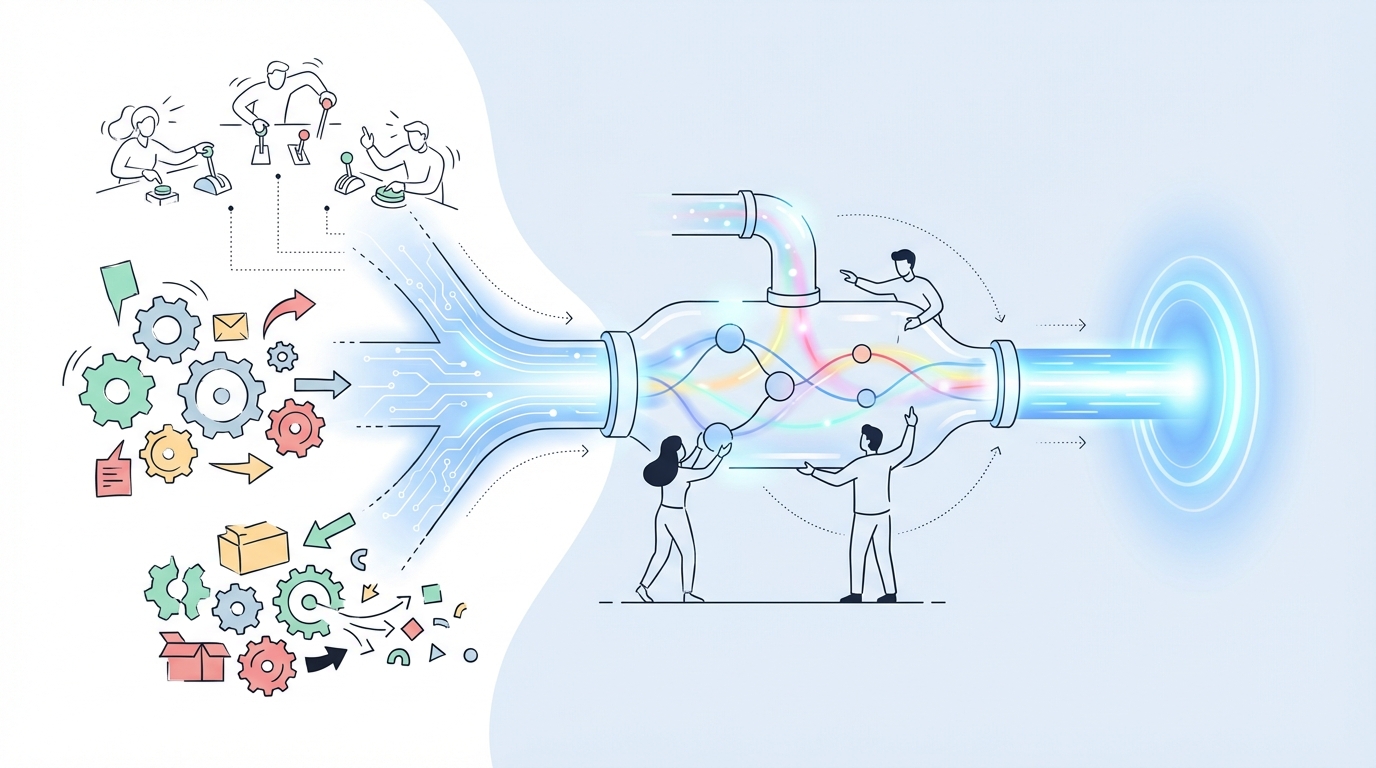
Most teams aren't failing because they lack effort. They're failing because the operating model is built around tasks, not signal consistency. That's the real issue. Task systems can produce lots of content. They usually struggle to produce one clear story over and over without drift.
Faster Drafting Doesn't Mean Better Execution
This is where a lot of teams get it wrong. They see AI make drafting faster and assume demand gen is now fixed. It isn't. Drafting speed was never the full problem.
Prompting is useful. I use AI. Most teams should. But demand generation is not one task. It's a system of work that has to hold together over time. You need a stable point of view. Product truth that doesn't drift. Audience framing that changes on purpose, not by accident. Coverage across the funnel. Repeatability. Reliability. Those are very different problems than getting a draft on the page faster.
So no, this isn't really a writing problem. It's an execution architecture problem. If every contradictory page teaches instability, then speeding up the production of contradictory pages just makes the damage scale faster.
Manual Coordination Is Usually The Thing Causing Drift
Every contradictory page teaches because manual coordination keeps recreating the same failure mode. People think review protects quality. Sometimes it does. A lot of the time it just catches drift late, after the drift already happened.
What usually happens is this: one person writes, another edits for voice, another checks SEO, PMM fixes claims, demand gen wants a stronger angle, sales wants customer language added, leadership wants more opinion. By the time the piece gets approved, it may be fine on its own. But nobody checked whether it still matches the rest of the system.
That's why reviews feel endless. You're not just polishing. You're reconstructing shared truth over and over again. It's expensive. And it gets worse as output rises.
Last summer I built a B2C app and wanted traffic, so I went hard on SEO and GEO. I made a bunch of GPTs, kept prompting, copying, pasting, uploading into the CMS. It was taking me 3-4 hours a day. Complete waste. Drafts were faster, sure. But the whole process still depended on me remembering what mattered, checking what was true, deciding what should exist next, and making sure nothing drifted. AI produced text. I still carried the system.
The Stack Solves Tasks While The Market Judges Systems
The market doesn't care how many tools are in your stack. It only sees the final signal. That's the trap. Teams optimize pieces while the market evaluates the whole, and every contradictory page teaches the market what your system actually produces.
This is the old category problem.
Content tools solve pieces. SEO platforms solve pieces. Agencies solve pieces. Freelancers solve pieces. AI writers solve pieces. None of that is bad. But the market doesn't judge your stack one tool at a time. It judges the final signal.
If your website teaches one story, your social content teaches another, your category pages hedge, your product-led pages overreach, and your comparison pages sound like a different company wrote them, buyers don't see specialization. They see fuzziness. LLMs do too.
That's why I think the bottleneck isn't content. And it isn't prompts. It's fragmented execution without a system.
What Contradiction Actually Costs Once You Start Scaling
Once output scales, contradiction stops being a brand nitpick and starts acting like an operating cost. You pay for it in time, in clarity, in trust, and eventually in visibility. That's why every contradictory page teaches in ways most dashboards never show you directly.
Rework Tax Starts The Moment Context Stops Traveling
The first cost is rework. Boring. Expensive. Constant.
As soon as context stops traveling with the work, your team starts paying a tax. Writers need re-briefing. Editors fix positioning. PMMs correct claims. Demand gen rewrites intros because the CTA path is off. Leadership asks why this sounds like everyone else. Then the next piece starts and the whole thing happens again.
For scaling SaaS teams, this gets ugly fast. You have 5, 10, maybe 20 contributors touching content in some way. Content, PMM, SEO, demand gen, leadership, sometimes agency support too. Let's pretend each article triggers just 45 extra minutes of corrective review across the group. At 30 articles a month, that's 22.5 hours gone. And honestly, that estimate might be kind.
Diluted Positioning Shows Up Before Traffic Drops
The scary part is that positioning damage usually shows up before the obvious channel metrics break. You feel it in the market first. Then the traffic chart catches up later.
A lot of teams wait for traffic to tank before they admit there's a positioning issue. Usually the damage starts earlier.
The first thing to break is clarity. Your brand starts sounding broader than it is, softer than it should be, and less specific than buyers need. Sales feels it in calls. Prospects struggle to compare you against anything. Pipeline impact gets fuzzy. Then traffic or conversion issues show up later and people blame channels or tactics.
I saw something close to this at Proposify. We had a strong content team. Strong writers. Great design. Ranked really well for a bunch of topics. But a lot of the content drifted too far from the product and the demand-gen narrative. So we had SEO wins without enough commercial pull. Plenty of activity. Weak connection back to why someone should care about the solution. That's a painful lesson.
Visibility In AI Answers Depends On Repetition Without Drift
Every contradictory page teaches the opposite of authority, while stable repetition teaches confidence. That's really the game. Not volume for the sake of volume. Repetition without drift.
LLM visibility is a repetition game. Not repetition like lazy copying. Repetition like stable signal.
If a model scans your body of work and keeps finding the same defined category, same product boundaries, same audience relevance, same point of view, it gets more confident citing you. If it keeps finding contradiction, it gets cautious. Or it grabs someone else.
For CMOs and VPs Marketing, that's the hidden risk. You can have budget. You can have talent. You can have output. And still lose because the system keeps teaching mixed signals.
When Review Cycles Turn Into Identity Crises
At some point, bad review cycles stop being about copy quality and start exposing something deeper. The company doesn't actually have one operational version of the truth. So every draft becomes a debate about identity. That's brutal on speed.
The Review Process Stops Being About Quality
You know the moment.
A writer drafts a page. PMM says the framing is off. Sales says the customer would never say it that way. Leadership says the company point of view is missing. SEO wants a different angle. Somebody pulls an old deck. Somebody quotes a homepage line from six months ago. And suddenly the review isn't about improving a page. It's about figuring out what the company actually believes.
That's exhausting. And pretty common.
The worst part is that teams with resources still get stuck here. More talent doesn't fix a system that forgets what it knows. More stakeholders can actually make it worse, because every new person brings another version of the truth.
Resets Make Busy Teams Feel Slow
This is where every contradictory page teaches your own team something demoralizing too: all that effort isn't compounding. You're working hard, but the story keeps resetting.
Every quarter, things reset. New priorities. New messaging deck. New campaign angle. New prompts. New freelancers. New review comments. Same old problems. You keep producing, but the work doesn't stack. It evaporates into revisions, exceptions, and one-off decisions.
And if you're the exec owning ROI, that's the frustrating part. You can see the effort. You can see smart people working hard. But you can't point to a market story that's getting stronger every month.
How Strong Teams Reinforce The Right Story Without Drift
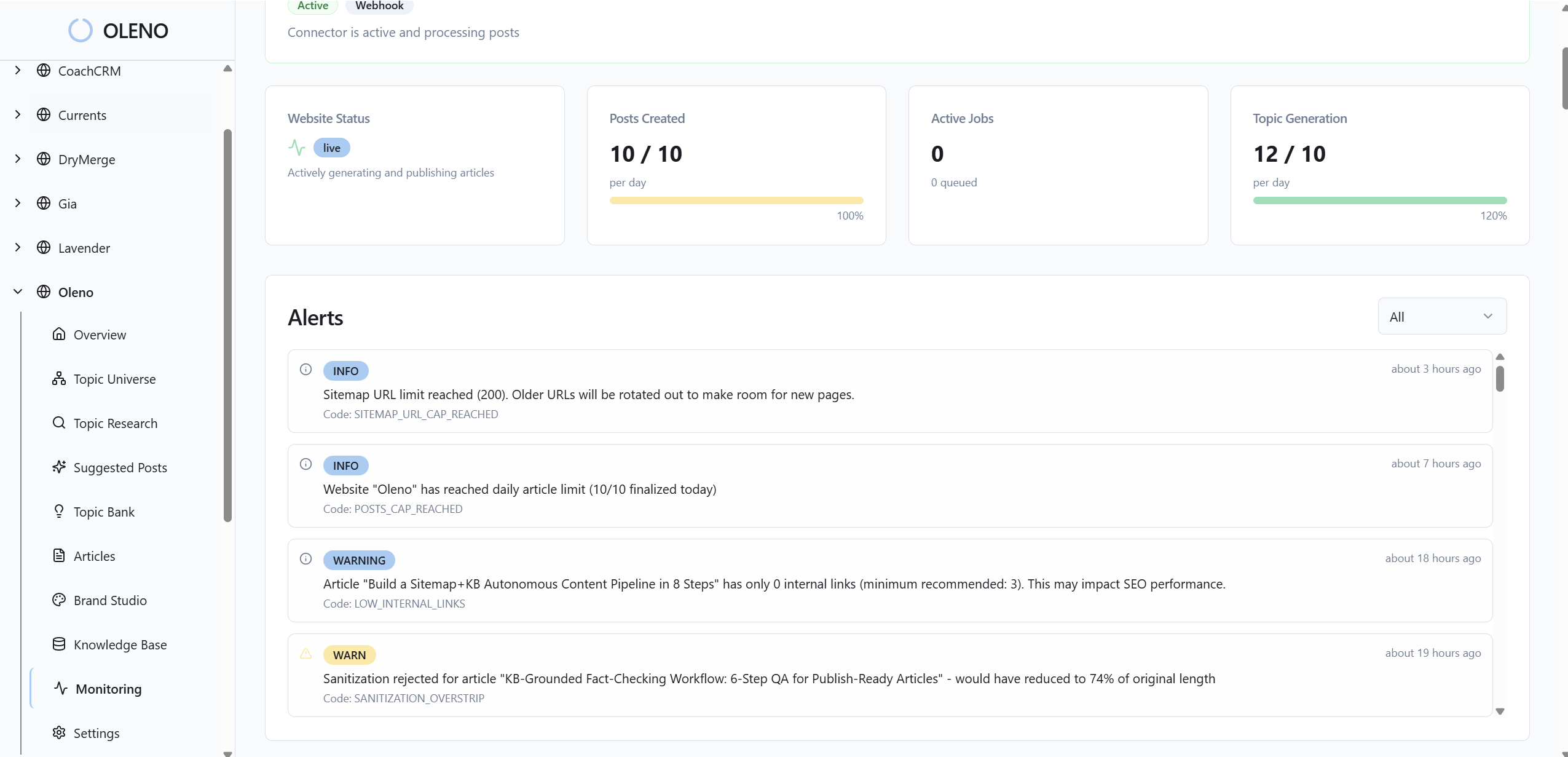
The fix isn't perfection. It's governance. Strong teams don't try to make every single asset magical. They make sure each asset starts from the same strategic inputs and stays within clear boundaries. That's how compounding starts. Same core story. Different expressions. No drift.
Demand-generation execution software is a governed system for turning strategy into publish-ready content with clear standards for messaging, product truth, audience context, and quality. That's the category. Not a writing tool. Not a prompt wrapper. A system for making sure every contradictory page teaches less because fewer contradictory pages get made in the first place.
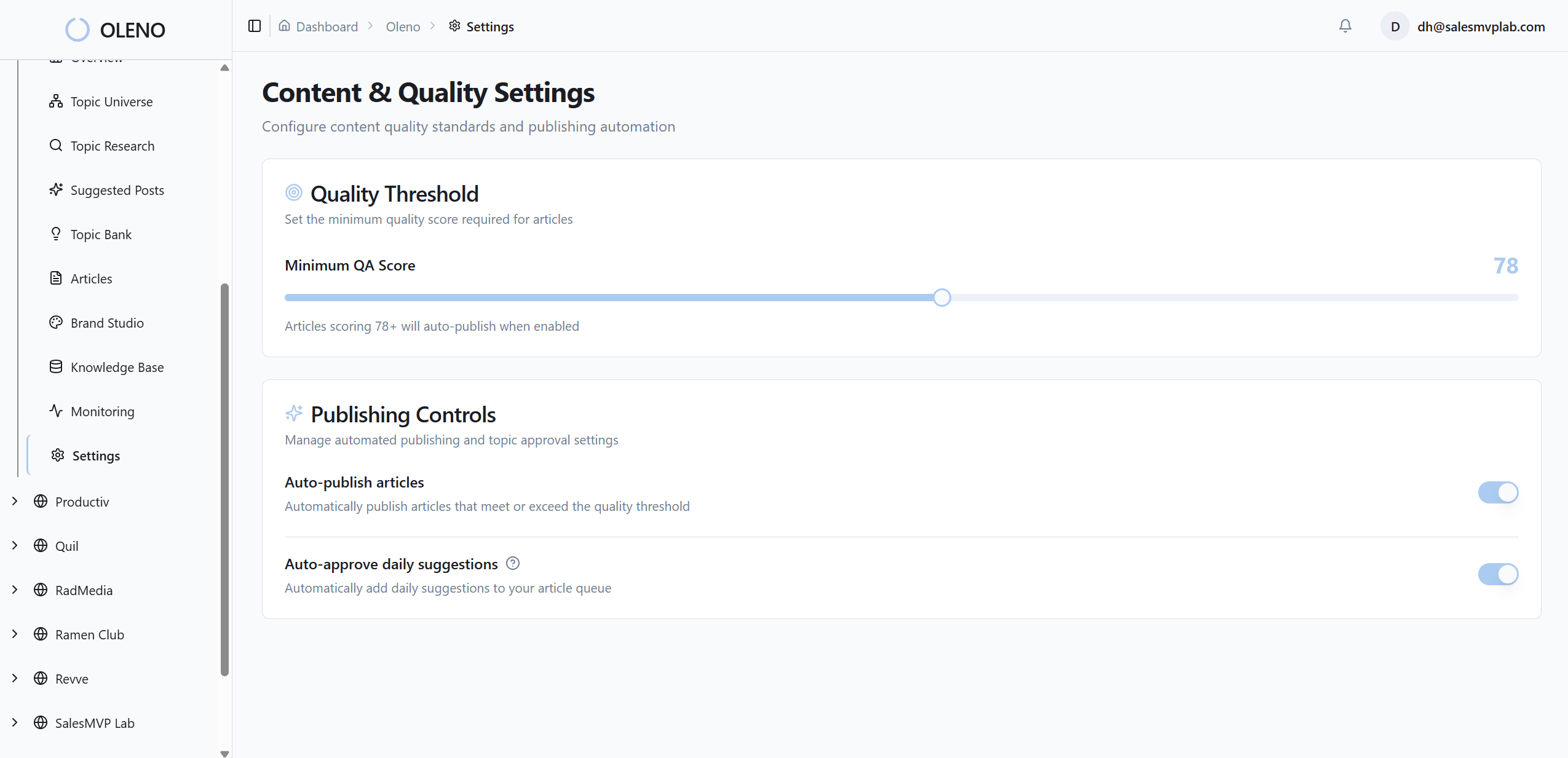
1. Governed Truth: Define positioning, product facts, audience context, and narrative standards once so every asset starts from the same source of strategic truth. 2. Orchestrated Execution: Run planning, creation, review, and publishing as one connected system rather than a patchwork of prompts, tools, and handoffs. 3. Quality Enforcement: Score outputs against approved standards before publication so weak, drifted, or contradictory pages get caught before they teach the market the wrong thing.
That sounds simple. It's not easy. But it is straightforward.
Discover how consistent execution works in practice
Strategy Needs One Source Of Truth
If every contradictory page teaches confusion, then one source of truth is where consistency starts. This is the foundation. Not the final step. The first one.
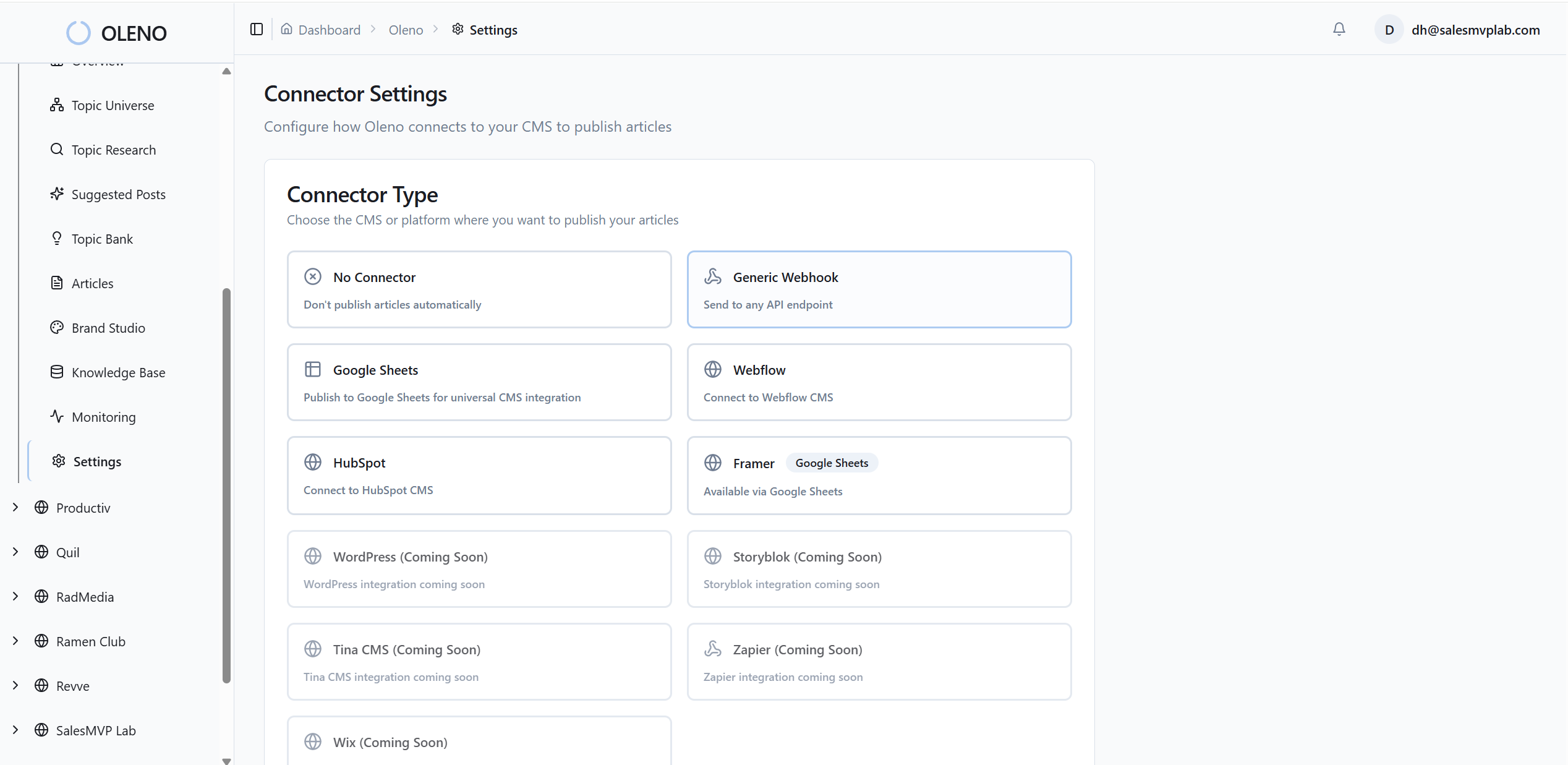
The first move is centralizing truth. Positioning. Category framing. Audience definitions. Product boundaries. Use cases. Voice. All of it.
Not because you want robotic sameness. Because you want deliberate variation. Big difference. A category page should sound different than a product page. A page for a CMO should sound different than one for a PMM. But both still need to reflect the same positioning, the same product truth, and the same company voice.
What I've seen work is defining the non-negotiables once, then letting execution vary inside those boundaries. That's how you get consistency without flattening the writing.
Repetition Without Drift Is How Authority Compounds
This is the part people still resist because it feels less exciting than publishing more. But it works. Repetition without drift is how authority compounds. Not repetition alone.
Back to Steamfeed for a second. We saw traffic spikes at 500 pages, then 1000, then 2500, then 5000, then 10000. Most pages were not stars. But the site kept getting stronger because the catalog became hard to ignore. Lots of useful pages. Lots of angles. Lots of depth.
GEO works in a similar way, except the bar is a bit different. It isn't enough to just cover a lot. The content has to keep reinforcing clear positioning and real product truth. Quantity still matters. But consistency across quantity matters more.
That said, not everyone agrees with this. Some teams still think volume alone will carry them. Fair point for certain search programs. But if your goal is citation confidence and stronger buyer understanding, loose volume is risky.
The Best Teams Govern Execution Instead Of Reviewing Chaos
Not more review. Better system design. That's the move. Strong teams make the draft start closer to truth instead of getting dragged there after five rounds of comments.
Instead of waiting for drafts to go off the rails, you define what should be true before the work starts. You define who it's for. What claims are allowed. Which problem you're naming. Which old way you're attacking. How the company sounds. Then the production motion follows that.
A simple way to think about it:
| Dimension | Old Way | Category Way |
|---|---|---|
| Strategic Source Of Truth | Messaging lives across docs, prompts, and people | Messaging is governed centrally and applied through briefs, drafts, and QA |
| Content Production Model | Each asset is treated like a standalone task | Planning and production run through connected workflows |
| Quality Control | Review catches drift after it appears | Quality Gate scores content before publication and blocks weak outputs |
| Team Efficiency | Resets, rewrites, and handoff overhead compound | Execution scales with less rework and coordination cost |
Not more prompts but more governed truth. Not faster drafts but stronger standards. Not isolated tasks but orchestrated execution.
You don't need a giant team to start doing this. You do need discipline.
Start building a governed workflow that reduces rework and mixed signals
What This Looks Like When The System Is Actually Running
This is where the category stops sounding theoretical and starts looking operational. You can actually see what changes when governed truth, orchestration, and quality control live in one system. Less reset. Less drift. Better output.
Oleno Turns Shared Truth Into Repeatable Execution
This is where Oleno fits. Oleno is demand-generation execution software for marketing teams, built around the idea that strategy should stay human while execution becomes a repeatable system.
Instead of relying on scattered prompts and human memory, Oleno gives teams a place to define the core stuff once. Marketing Studio encodes the category framing and point of view. Product Studio keeps product claims, boundaries, and approved descriptions grounded. Audience & Persona Targeting carries audience context into the work. Then the orchestrator runs production against those inputs, while the Quality Gate blocks work that falls short of the standard.
That's the practical difference. You're not just generating pages. You're trying to produce a more stable market signal.
Fewer Resets, Clearer Signal, Better Throughput
When the system is working, every contradictory page teaches less because fewer contradictory pages get published in the first place. That's the win. Prevention, not cleanup.
The value isn't that humans disappear. They shouldn't. The value is that teams stop rebuilding context every time a new piece gets created.
Programmatic SEO Studio can expand acquisition coverage without losing the thread. Category Studio can carry the same enemy framing into longer market-shaping pieces. Product Marketing Studio can stay tied to product truth instead of drifting into vague copy. CMS Publishing closes the loop so approved work gets live without another messy handoff.
In my view, that's what the category looks like in practice. A system where your body of work starts sounding like one company again.
Ready to transform execution into one clear market signal? Book a demo
One Clear Story Beats A Hundred Mixed Signals
This is really the whole argument. The market doesn't reward the most pages. It rewards the clearest repeated signal. If your content keeps teaching one coherent truth, trust grows. If not, confusion compounds.
Every contradictory page teaches something. That's the point.
It can teach the market that you're sharp, clear, and worth citing. Or it can teach the market that your story changes depending on who wrote the page, which prompt got used, or what quarter the asset was created in. LLMs are reading that pattern. Buyers are too.
So the question isn't whether your team can publish more. Most can. The question is whether your output compounds or contradicts. And if it contradicts, the problem probably isn't talent. It's that Fragmented Demand Generation has been running the show.
About Daniel Hebert
I'm the founder of Oleno, SalesMVP Lab, and yourLumira. Been working in B2B SaaS in both sales and marketing leadership for 13+ years. I specialize in building revenue engines from the ground up. Over the years, I've codified writing frameworks, which are now powering Oleno.
Frequently Asked Questions