Demand Generation Execution Is a Category, Not a Checklist

Demand-generation execution is a category, not a task list, because the hard part isn’t writing another post, it’s keeping positioning, product truth, and voice consistent across hundreds of pieces so humans, search engines, and LLMs all see the same signal. Demand-generation execution software is a marketing operations system that makes end-to-end demand generation consistent and compounding by encoding positioning, product truths, audiences, and voice into governance, then coordinating planning, creation, distribution, and measurement so the work actually stacks over time.
Unlike an AI writer, an SEO platform, or a project management tool, demand-generation execution software isn’t trying to “assist” a bunch of separate tasks. It’s trying to make the whole system reliable. That’s a different job.
And it showed up now for a reason. LLMs changed the bar. You can’t “hit publish” a few times, get lucky with a banger post, and call it demand gen anymore. The brands that get surfaced are the ones that repeat the same clear story, over and over, across a wide catalog, without drifting into nonsense.
Most teams aren’t failing because they’re lazy. They’re failing because they’re doing Fragmented Demand Generation: a patchwork of tools, prompts, and people where narrative, product truth, and voice live in different places. Drift creeps in. Output gets inconsistent. And nothing compounds.
Key Takeaways:
- Stop treating execution like a checklist and start treating it like a governed system with rules, flows, and reinforcement.
- Fragmented Demand Generation creates a hidden tax: rewrites, resets, coordination overhead, and diluted positioning that GEO punishes.
- LLM visibility comes from repeated, clean signals across a catalog, not sporadic brilliance.
- Prompting speeds up drafting, but it pushes execution judgment back onto humans, which is where the system breaks.
- The “new way” is simple to describe and hard to sustain: govern once, run end-to-end, reinforce continuously.
Execution Breaks Because Demand Gen Work Lives In Pieces
Execution is broken because the work isn’t designed to hold together. Content lives in one place, SEO in another, product truth in a doc somewhere, voice in someone’s head, and distribution in a separate calendar that nobody keeps updated. You can still ship. You just pay for it in drift and rework.
GEO makes this problem obvious. When LLMs decide what to surface, they’re not grading one post. They’re sniffing for a pattern. Consistent positioning. Consistent language. Consistent point of view. And when your system is a pile of disconnected efforts, you don’t produce a pattern. You produce a mess.
Fragmented Demand Generation feels normal because it’s how most teams grew up. Add a new tool. Add a new person. Add a new process. Eventually the “process” is just meetings and checklists and a bunch of smart people trying to keep things aligned by force of will.
Activity Scales. Execution Fractures.
You can scale activity pretty fast. Hire a content writer. Add freelancers. Bring in an agency. Subscribe to an AI writing tool. Now you’ve got output.
But execution fractures because each new contributor adds context gaps and handoff overhead. The PMM knows the product nuance but doesn’t write the post. The writer writes the post but doesn’t know the product nuance. SEO reviews it later and changes the structure. Legal shows up late and changes the claims. Then the CMO “fixes the voice” because it doesn’t sound like the company.
Nobody’s trying to break things. That’s the problem. Fragmented Demand Generation isn’t a talent issue. It’s a system issue, where consistency becomes probabilistic instead of designed.
I’ve lived this in a bunch of forms.
Back in 2012-2016 I ran a site called Steamfeed. We hit 120k unique visitors a month at peak, mostly by publishing a ton of pages across a wide set of topics, with real depth. We had 80 regular contributors and 300+ guest contributors over time. It was chaos in a way, but it was also a system. We saw traffic spikes at 500 pages, 1000 pages, 2500 pages, 5000 pages, then 10000 pages. Most pages were under 100 views a month, but the catalog compounded.
Contrast that with most SaaS teams today. You’re not building a compounding catalog. You’re shipping disconnected pieces, and then wondering why nothing sticks.
LLMs Reward Consistency, Not Sporadic Brilliance.
LLMs don’t “rank” you the way classic SEO does. They synthesize. They pull patterns across sources. They surface the brands that look coherent.
So one great post doesn’t save you. A single brilliant founder POV essay doesn’t offset 40 bland, off-message pages. If your output reads like five different companies depending on who wrote it, you’re hard to trust. You might still win some clicks. You’ll rarely win citation.
That’s why the game shifted from “did we publish” to “did we repeat the same signal.” Positioning. Enemy. Old way vs new way. Product truth. Audience specificity. The stuff that used to feel like “nice to have” is now the prerequisite to show up. Not one hero post, but a coherent catalog.
And you can’t brute force that with more effort. If anything, more effort makes the drift worse because you’re creating more surface area for inconsistency.
Prompting Accelerates Tasks. It Doesn’t Run Demand Gen.
Prompting feels like progress because you get text. Fast.
But the second you try to run demand gen with prompting, you realize what’s happening. The system is still in your head. You’re still deciding what to create, how it should sound, what claims are allowed, what the POV is, and how each piece connects to the last one. The AI gives you drafts. You still carry execution.
And as output goes up, review and coordination cost goes up with it. You end up with more meetings. More “can you tweak the intro.” More Slack threads about voice. More re-briefing writers because strategy didn’t make it into the draft.
Prompting speeds up writing. It doesn’t fix Fragmented Demand Generation. Sometimes it actually amplifies it, because now you can produce inconsistent stuff faster.
Reclassifying Demand Generation Execution As A Governed Category
Demand generation execution isn’t a pile of tasks. It’s a category of work, with a clear boundary: the job is to turn strategy into consistent output across the full system, not just produce words on demand. Govern the system once, express it everywhere, and you stop relying on heroics or memory to keep the story straight.
When you treat execution like a category, you stop shopping for tools that “help with content” or “help with SEO” or “help with distribution.” You start asking a different question: do we have a system that keeps our narrative intact while the team changes, priorities shift, and volume increases.
That’s the reframe. Execution is ownable. Governable. Operable. If you don’t build it like a system, you’ll keep living in Fragmented Demand Generation forever.
Define Execution As An Owned, Governed System
Most teams have “strategy.” They just don’t have it encoded anywhere that actually runs the work.
Strategy usually lives in:
- a positioning deck from six months ago
- a Notion page nobody reads
- the CEO’s head
- tribal knowledge in the PMM team
- a bunch of random Loom videos
So every new piece of work starts with interpretation. And interpretation is where drift shows up.
A governed execution system starts upstream. You define, in plain language, what you believe about the market, what’s true about the product, who you sell to, what you won’t say, what you will say, and how you sound when you say it. Then those rules cascade into briefs, drafts, and distribution.
You don’t “trust the process.” You make the process enforce the strategy by default.
And yes, some teams hate this idea. They want “creative freedom.” Fair point. Creative freedom matters. But you don’t get creative freedom by having ten people interpret the positioning differently. You get it by creating a stable frame that lets people create inside it without rewriting the fundamentals every week.
Replace Tool Stacks With Category-Level Orchestration
Most stacks look like a diagram, not a system.
Keyword tool. Docs. Project management board. Writer. Editor. SEO review. SME review. Publishing step. Repurposing step. Analytics step.
Now multiply that by 20 pieces a month. That’s where the headaches show up. It’s not the writing. It’s the handoffs.
Category-level execution means the flow is end-to-end. Topic selection rolls into a brief. Brief rolls into a draft. Draft gets checked for voice and claims. Approved work rolls into publishing and distribution. Measurement feeds back into what gets refreshed and reinforced next.
You can still have humans in the loop. You just stop building a workflow where humans are the glue holding the system together. Humans should be doing judgment and direction. They shouldn’t be doing copy-paste, reformatting, and “did we remember to post this.”
The Real Cost Of Fragmented Demand Generation Shows Up In Time And Missed Signal
Fragmented Demand Generation doesn’t just feel messy. It burns hours, slows velocity, and muddies your market signal. The worst part: it hides in “quick tweaks,” late reviews, soft resets of the narrative every quarter, and work that looks productive but never compounds. GEO punishes that harder now because inconsistency kills visibility, not just conversion.
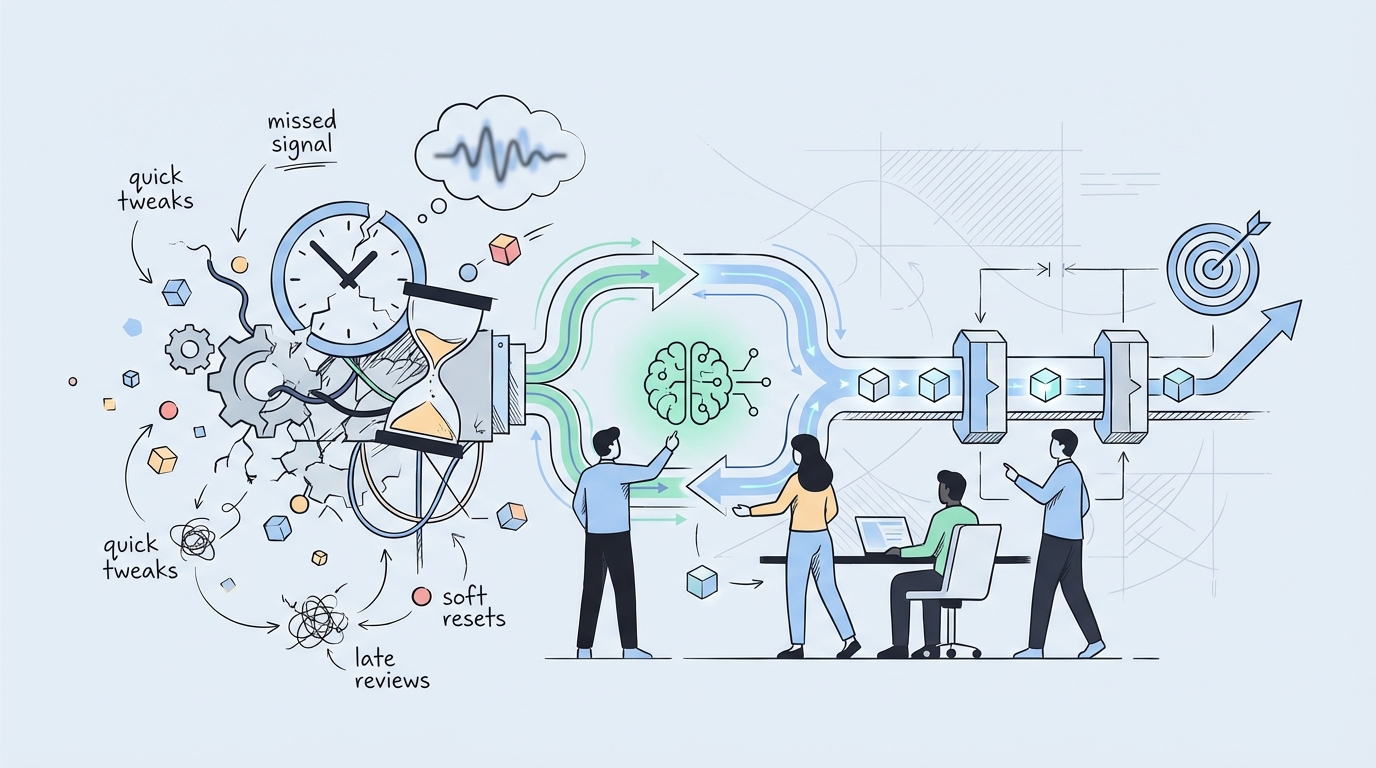
The tricky part is that it hides. It hides in “quick tweaks.” It hides in “just one more review.” It hides in “we’ll reset the narrative next quarter.” It hides in a calendar full of work that looks productive but doesn’t compound.
And GEO punishes it harder than SEO ever did, because inconsistency is now a visibility problem, not just a conversion problem.
Fragmentation Steals Hours And Erodes Outcomes
Let’s pretend you’re a mid-market SaaS team trying to publish 20 articles a month.
Each piece goes through:
- a brief (1 hour)
- a draft (4 to 6 hours, depending on who writes it)
- an edit (1 hour)
- an SEO pass (30 minutes)
- a PMM pass (30 minutes)
- a “voice” pass from leadership (15 minutes, but it never stays 15)
- formatting and publishing (30 minutes)
- repurposing into social (30 minutes)
Even if you’re conservative, you can easily end up with 8 to 12 hours of human time per article. Multiply that by 20 and you’re in the 160 to 240 hour range per month. That’s basically one to two full-time people.
Now add fragmentation.
A brief that misses positioning creates a rewrite. A draft that invents a claim creates a review loop. A writer that doesn’t have product context creates Slack threads and meetings. A quarterly pivot creates a reset where you stop reinforcing what you already said, and start over.
So the cost isn’t only the time. It’s the opportunity cost of never letting your signal repeat long enough to stick.
I saw this at PostBeyond. I could crank out 3 to 4 high quality posts a week myself because I had all the context and I was using a structured writing framework. When we hired a writer, output didn’t magically scale. It slowed down. They didn’t have the same context, so it took longer, and quality dropped. Then I had less time to write because I was managing the team and sitting in exec meetings. We didn’t have the budget for an agency either, so we were stuck in the middle.
That’s a common trap. More hands, less throughput. Because the system isn’t designed.
Visibility Shifts To Clean, Repeated Signals
SEO still matters. No debate. But now you’ve got dual-discovery: classic search plus LLM surfaces.
Classic search can reward a great page. LLMs reward a consistent catalog, where your POV shows up across dozens of related topics, with stable language and clear product definitions. It’s closer to “do you look like an authority across the space” than “did you nail this one keyword.”
That’s why Steamfeed worked. Volume plus quality, across a catalog, created compounding discovery. We weren’t relying on a few hero posts. We were building breadth and depth, and it eventually stacked into step-function growth.
Fragmented Demand Generation breaks that compounding effect. You might rank for a bunch of stuff. You might even get traffic. But if your narrative is diluted, you don’t get pulled into the buyer’s evaluation path. You end up like the Proposify situation I’ve seen: great rankings, great writing, but the content is detached from the solution, so pipeline impact is mushy.
Traffic isn’t the goal. Signal is. Not more motion, but more meaning.
Fragmented Demand Generation Feels Like Death By A Thousand Rewrites
This is where the pain is most obvious. Endless loops. More reviewers, more opinions, more risk language, fewer decisions. You add steps to feel safer, but the story still drifts because nothing upstream changed. Everyone’s working hard. The system just keeps leaking context between each handoff.
You know the meeting.
Five tools open. Six people weighing in. SEO says “we need more structure.” PMM says “we can’t say that.” Demand gen says “where’s the CTA.” The writer says “that wasn’t in the brief.” Leadership says “it doesn’t sound like us.”
Everyone’s right. That’s what makes it brutal.
You leave with a longer checklist, a later publish date, and this low-grade worry that even if you ship it, the next piece will drift again because nothing upstream changed.
The Category-Level Way To Run Execution So It Actually Compounds
Category-level execution is the opposite of Fragmented Demand Generation. You don’t ask people to “stay aligned” through effort. You set rules once, run the work through a single flow, then reinforce what you shipped so the catalog gets stronger over time. Not more approvals, but better defaults.
And you can do a lot of this without buying anything, if you’re disciplined. It’s just rare for teams to stay disciplined when the quarter gets chaotic.
Three pillars make it work:
- Governed Consistency: Encode positioning, product truths, audiences, and voice so every artifact reflects the same strategy without manual policing.
- End-To-End Orchestration: Coordinate planning, creation, distribution, and measurement in a single flow to eliminate handoff debt and narrative drift.
- Compounding Reinforcement: Systematically refresh and reuse assets so signals strengthen across humans, search engines, and LLMs over time.
That’s the whole thing. Simple idea. Hard execution.
Govern Once, Express Everywhere
Most teams try to solve consistency at the end. They review harder. They add more approvals. They create “final checks.” That’s backwards.
You need a single source of truth for:
- your POV and enemy framing
- the words you use to describe the problem
- the words you use to describe the old way
- what’s true about your product, and what isn’t
- your audiences and what they care about
- your voice (tone, structure, what you don’t do)
Then every brief and draft should inherit that by default. Not through a human remembering to paste it in. By default.
This reduces the rewrite loop more than anything else, because you remove interpretation from the system. People can still write in their own style. But they’re writing inside the same frame.
One sentence that matters here: if you need your CMO to edit every post to “make it sound like you,” you don’t have a voice. You have a person acting as a filter.
That doesn’t scale.
Orchestrate End-To-End, Not Step-By-Step
Most marketing teams operate step-by-step. Someone picks a topic. Someone writes. Someone reviews. Someone posts. Someone remembers to share it. Then it disappears.
End-to-end orchestration means you define the flow and the entry and exit criteria.
A clean version looks like:
- topic selection that matches your audience and POV
- a brief that bakes in positioning and product truth
- a draft that follows a consistent structure
- checks for claims and voice before it hits review
- publishing that doesn’t require copy-paste and reformatting
- distribution variants planned at the same time, not later
- measurement that feeds into what to refresh and reinforce
Break patterns intentionally, though. Not everything needs to go through the same pipeline. Some stuff is urgent. Some stuff is experimental. But the default should be governed and repeatable, or you’ll slowly drift back into Fragmented Demand Generation.
Measure Reinforcement, Not Just Release
Most dashboards measure releases. Posts published. Emails sent. Social posts scheduled. That’s activity.
Category-level execution measures reinforcement. Are we repeating the same signal across the catalog. Are we covering the topic space we need to own. Are we staying on cadence. Are we refreshing the stuff that matters before it goes stale.
A simple way to start is to track:
- coverage by audience and use case
- cadence by content type (SEO, category, competitive, product marketing)
- rewrite rate (how many drafts got sent back)
- refresh completion (what got updated this month)
- consistency checks (are we using the same framing across pieces)
If you don’t measure reinforcement, you won’t do it. Reinforcement is never urgent. It’s just important. And important work loses to urgent work unless you build it into the system.
If you want to see what this looks like with a real system underneath it, you can request a demo and we’ll walk through how governed execution works end-to-end for a mid-market SaaS team.
| Dimension | Old Way | Category Way | |---|---| | Planning | Ad hoc topics and quarterly resets | Roadmap with governed priorities | | Governance | Strategy lives in docs and heads | Strategy encoded as reusable rules applied everywhere | | Creation | Prompts and reviewers vary output | Governed briefs and checks produce consistent drafts | | Distribution | Manual, channel-by-channel effort | Planned variants and scheduled publishing from one flow | | Measurement | Counts posts, misses coherence | Tracks coverage, cadence, consistency, and refresh completion | | GEO visibility | Inconsistent signals, low inclusion | Repeated patterns LLMs can confidently surface and cite |
What Category-Level Execution Looks Like When You Run It In Oleno
Oleno is built around the idea that demand generation execution is a system, not a pile of tasks. The platform is basically a way to encode your strategy once, then run repeatable pipelines that produce and publish content without your team playing traffic cop every day.
The thing I like about this approach, and I’m biased here, is that it stops relying on heroics. You don’t need the one writer who “gets it.” You don’t need the CMO to be the final editor on everything. You don’t need to keep re-briefing the team every time you change priorities.
How Oleno Operationalizes Governed Execution
Oleno starts with governance, because that’s where most teams actually fail.
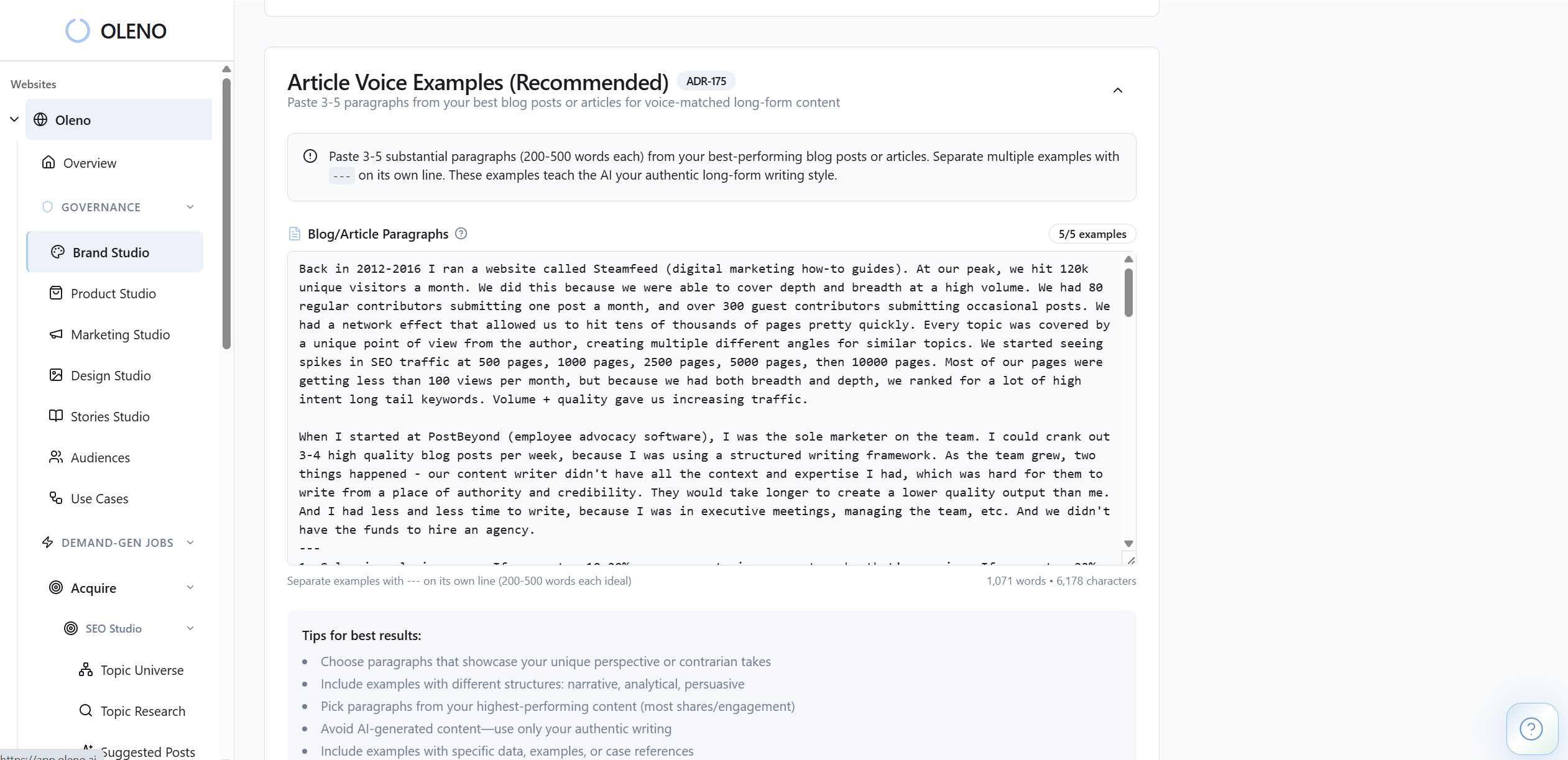
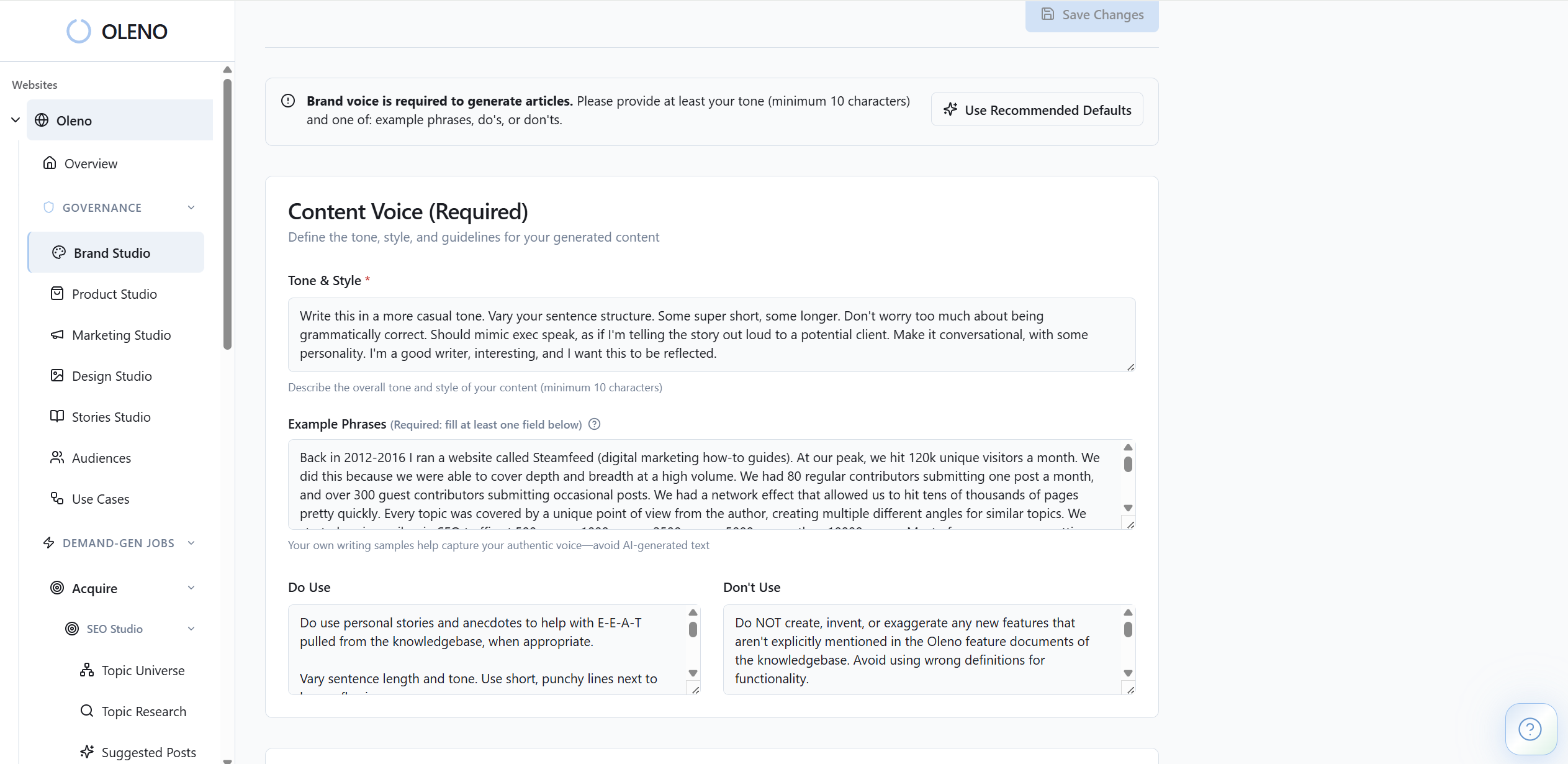
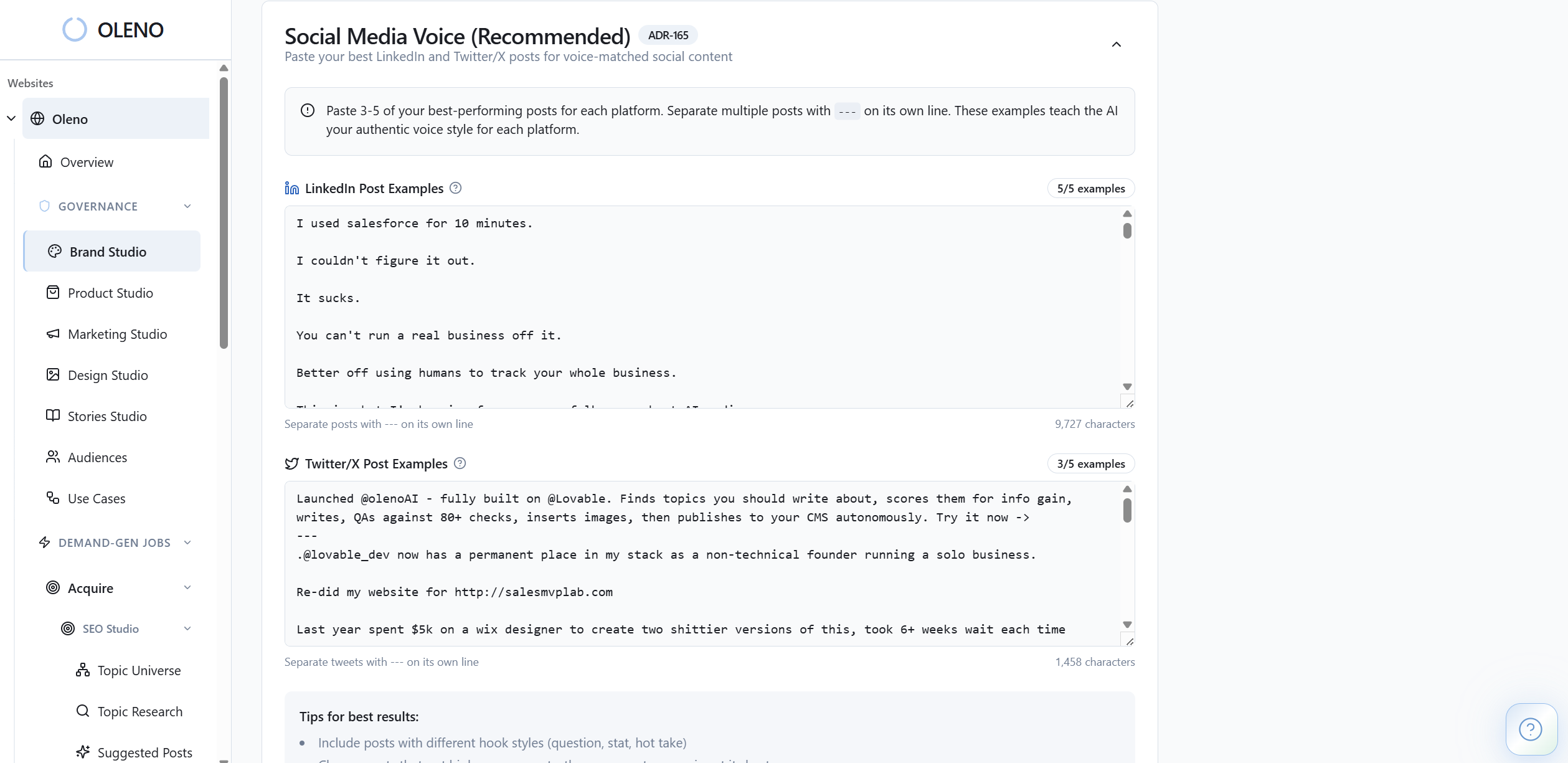
- brand studio defines how you sound, what words you avoid, and the structural rules that keep output consistent.
- marketing studio encodes your category framing, enemy, key messages, and the old way vs new way argument.
- product studio centralizes product truth, boundaries, and approved descriptions, then checks drafts for accuracy.
- audience & persona targeting and use case studio make sure the same topic gets framed differently for different buyers, instead of writing generic “everyone” content.
Then the system runs the work.
- storyboard turns strategy into a planned allocation across audiences, personas, and use cases.
- orchestrator schedules and executes the pipeline, so content moves from brief to draft to checks to publish without manual handoffs.
- quality gate blocks content that fails objective standards, so you don’t publish thin stuff just to hit a quota.
- article editor gives your team a place to do tight edits without losing the governed structure.
- distribution & social planning repurposes approved articles into social posts, with a workflow for editing and scheduling.
- cms publishing pushes content directly to your CMS, so you’re not wasting time on formatting and copy-paste errors.
- executive dashboard shows output cadence, quality trends, coverage gaps, and pipeline health, which is what a CMO actually needs to see without getting pulled into every draft.
If you’re thinking “cool, but isn’t that a lot to set up,” yeah, it can be. A governed system always takes some upfront thinking. But that’s the trade. You’re swapping constant coordination for a one-time definition of how you operate.
If you want to see how this maps to your current stack and where the drift is coming from, request a demo. We’ll usually find the failure point in about 10 minutes.
What Changes In Month One And Quarter One
Month one usually looks like stabilization.
Cadence gets real. The calendar stops being aspirational. Rewrites drop because briefs and drafts carry the same framing every time. You also get fewer “wait, are we allowed to say that” moments, because product truth is defined once and enforced.
Quarter one is where compounding starts to show up.
Coverage expands across the funnel, not just top-of-funnel SEO posts. Refresh starts happening because it’s part of the system, not a heroic project. Leadership gets visibility into whether the narrative is staying coherent across the catalog, instead of guessing based on a few links in Slack.
None of that is magic. It’s just what happens when execution stops living in pieces.
From Task Lists To A Real Execution System
Execution is a category. That’s the whole argument.
If you treat demand generation like a checklist, you’ll keep buying more tools, hiring more people, and wondering why output goes up but coherence goes down. Fragmented Demand Generation will keep winning, because it feels normal and it’s easy to slip into when the quarter gets busy.
If you treat execution like a governed system, you get a chance to compound. Not just traffic. Not just content volume. Actual market signal.
If you want to talk through whether your team is dealing with a capacity problem or a system problem, book a demo.
About Daniel Hebert
I'm the founder of Oleno, SalesMVP Lab, and yourLumira. Been working in B2B SaaS in both sales and marketing leadership for 13+ years. I specialize in building revenue engines from the ground up. Over the years, I've codified writing frameworks, which are now powering Oleno.
Frequently Asked Questions