Executive dashboard integrations with brand studio and CMS only work when execution is governed

You felt this gap already this week. The executive dashboard integrations with your content system looked clean in one tab, but the actual publishing reality lived somewhere else, and now you're stuck explaining why leadership sees green while the team feels buried in rework.
That disconnect gets expensive fast. Not always in a neat budget line item, either. It shows up in slower approvals, content that technically shipped but missed the narrative, and those reporting meetings where half the time goes to reconciling status instead of making decisions.
For scaling SaaS teams, this usually isn't a data shortage. It's a system shortage. Strategy lives in one place, writing rules live in another, publishing status lives in the CMS, and executive visibility becomes a stitched-together story that changes depending on who exports what. Oleno is built for that exact problem, but the useful part comes first: why executive dashboard integrations with brand studio and CMS break in the first place.
Key Takeaways:
- Executive dashboard integrations with content systems only help when the dashboard reflects governed execution, not disconnected activity.
- If brand rules, workflow, and publishing status live in separate tools, reporting drift usually appears before pipeline impact does.
- A useful executive view connects Brand Studio inputs, operational execution, quality control, and CMS publishing in one management layer.
- Scaling teams can reduce review loops and reporting confusion when leaders spot narrative drift before it turns into broad rework.
- Oleno's executive dashboard is valuable because it connects upstream governance and downstream publishing, not because it adds another analytics surface.
If you want to see what that governed operating view looks like in practice, you can request a demo.
Why fragmented reporting creates executive blind spots
Executive dashboard integrations with publishing systems break down when reporting summarizes activity instead of showing whether the system is producing the right output. That's the real issue. You can have plenty of dashboards and still have almost no useful visibility into whether content is aligned, accurate, and actually making it to market the way leadership intended.
Fragmented reporting hides the real cost of content operations
The visible problem usually sounds like, "we need better reporting." I don't think that's quite right. The deeper problem is that brand context, strategy, writing, review, and publishing happen in separate layers with no shared operating truth.
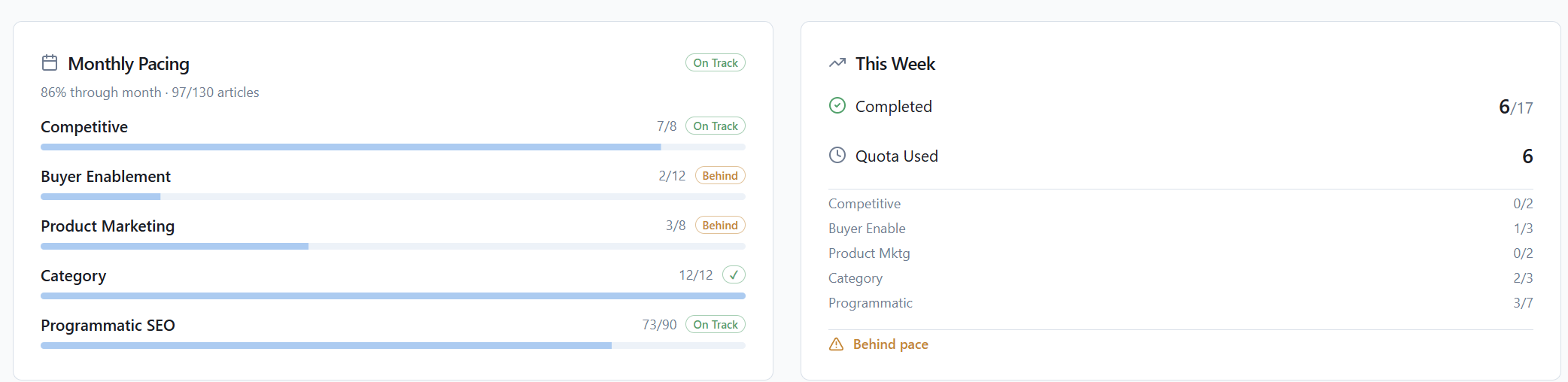
Picture a VP Marketing at 4:30 on Thursday. The planning doc says six articles are on track. The workflow tool shows eight in progress. The CMS shows three published. PMM says two are still off-message, and sales is asking whether the category push is live yet. Nobody is making things up. They're just all looking at different slices of reality.
That gets worse once a team grows past roughly 200 employees or adds multiple contributors across content, PMM, SEO, and demand gen. Not because people get sloppy. Because context stops traveling. PMM knows the product nuance. Content knows the editorial calendar. SEO knows the cluster gaps. Executives see summaries. And those summaries usually hide the rework tax underneath.
Back when I was the sole marketer on a small SaaS team, I could keep most of that context in my head. Once more people got involved, the cracks showed up fast. Writers took longer because they didn't have the same background. I had less time because I was in meetings and managing. Quality slipped a bit. Coordination shot up a lot. Bad trade.
A useful rule here is what I call the 3-Layer Drift Test: if your reporting cannot connect strategy, execution, and publishing in one view, you'll eventually manage by anecdote. And anecdote is a terrible operating system. So the next question is obvious: what kind of system actually prevents that drift?
Teams lose confidence when dashboard numbers and published output do not match
Confidence drops the minute numbers and reality stop lining up. That's when dashboards get political instead of useful.
Want a fast diagnostic? Ask these four questions:
- Can leadership see what was planned, what is in production, and what is published without opening three tools?
- When a draft is off-message, does that show up before the final review meeting?
- Can someone explain a publishing slowdown without building a side spreadsheet?
- Does the executive dashboard reflect governed content work, or just activity counts?
If you answered "no" to two or more, your executive dashboard integrations with brand studio and CMS are probably reporting drift, not operating truth.
And yes, the emotional side matters. It's draining to walk into a leadership review already bracing for a debate about whose numbers are right. At that point, reporting is no longer a visibility problem. It's an execution-confidence problem.
Manual reconciliation also hides opportunity cost. A 12-person marketing team spending even two hours a week reconciling content status across strategy docs, workflow tools, and the CMS burns 24 hours a week. That's about 100 hours a month. Not because the team can't work. Because the system can't speak clearly.
That kind of gap doesn't just slow reporting. It slows judgment. Which is exactly why another reporting layer usually isn't the answer.
Why governed execution beats another reporting layer
Executive dashboard integrations with brand and publishing systems work when the dashboard sits downstream from clear rules. Not on top of chaos. That's why another reporting layer usually disappoints: it summarizes broken operations really nicely, but it still summarizes broken operations.
Governance matters more than another reporting layer
Most teams assume the answer is better analytics. I'd push back on that. Better analytics on top of fragmented work just gives you sharper screenshots of the same underlying problem.
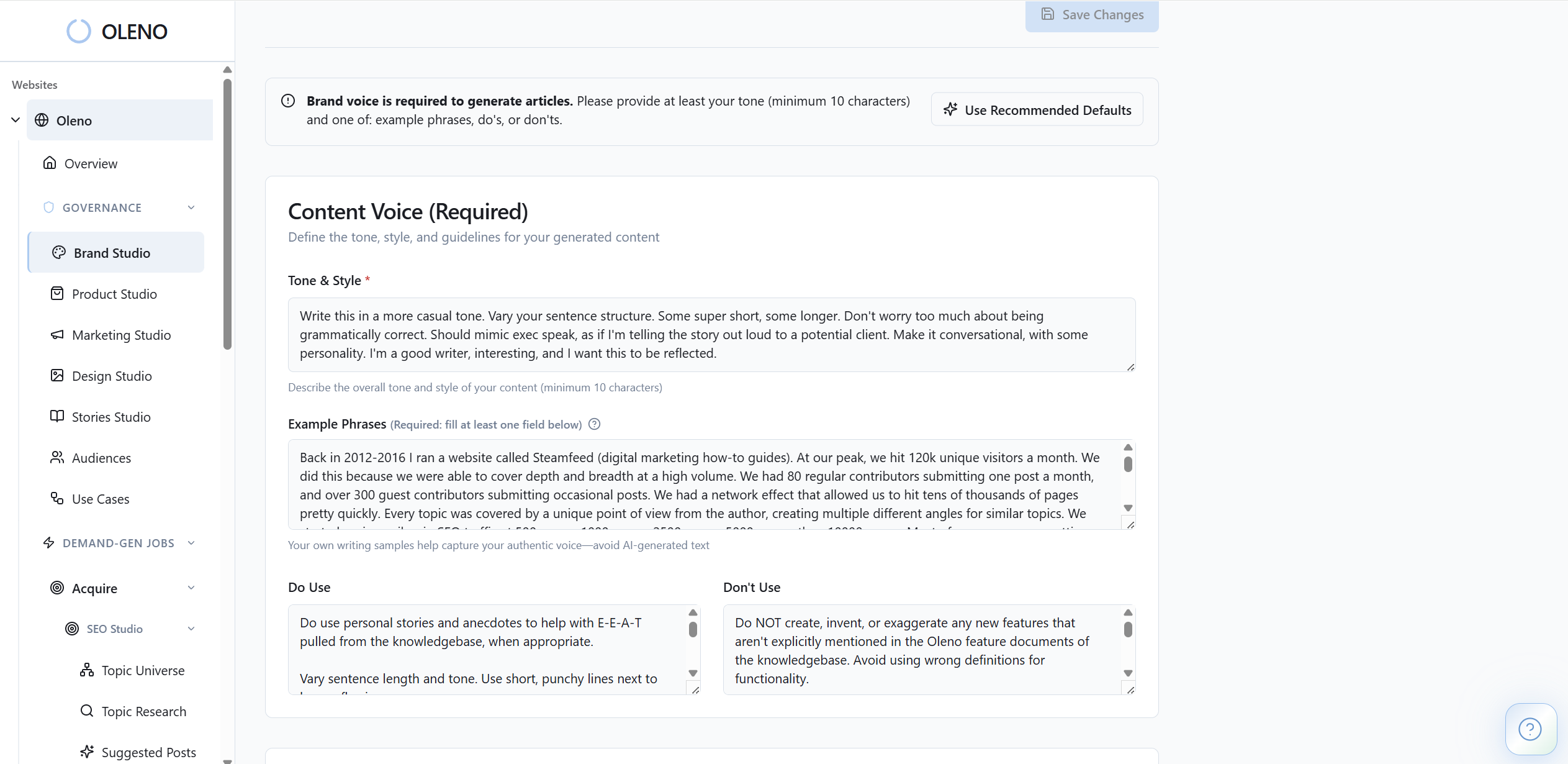
The better approach starts earlier. Define how the company sounds. Define what is true about the product. Define who you're talking to. Define the point of view you want repeated across content. Then make execution run inside those boundaries. Only after that does an executive dashboard become meaningful.
Here's the threshold I use: if more than 20% of drafts need message correction in review, you do not have a reporting problem first. You have a governance problem first. Fix that layer, and the reporting starts getting cleaner almost by accident.
This matters even more in the GEO shift. LLM visibility doesn't reward random bursts of output. It leans toward brands that are consistent, precise, and clear across many pieces. So if the system producing content drifts from article to article, the dashboard metric you probably care about most isn't traffic. It's consistency at scale.
I saw this years ago with a high-volume publishing model. At one point we hit 120k unique visitors a month because we had both depth and breadth. But volume alone wasn't the secret. The catalog worked because each topic had enough substance and point of view to reinforce the whole. Once consistency slips, volume starts working against you.
One framework I like here is the Mirror Rule: your dashboard should mirror the operating model, not compensate for its absence. If the operating model is fragmented, the dashboard will be fragmented too. Maybe prettier. Still fragmented. So what does a shared operating model actually look like?
Executive visibility only works when strategy and execution share the same system
Visibility is only useful when leadership is seeing the same underlying truth the team is working from. Otherwise the dashboard becomes a summary of exported fragments.
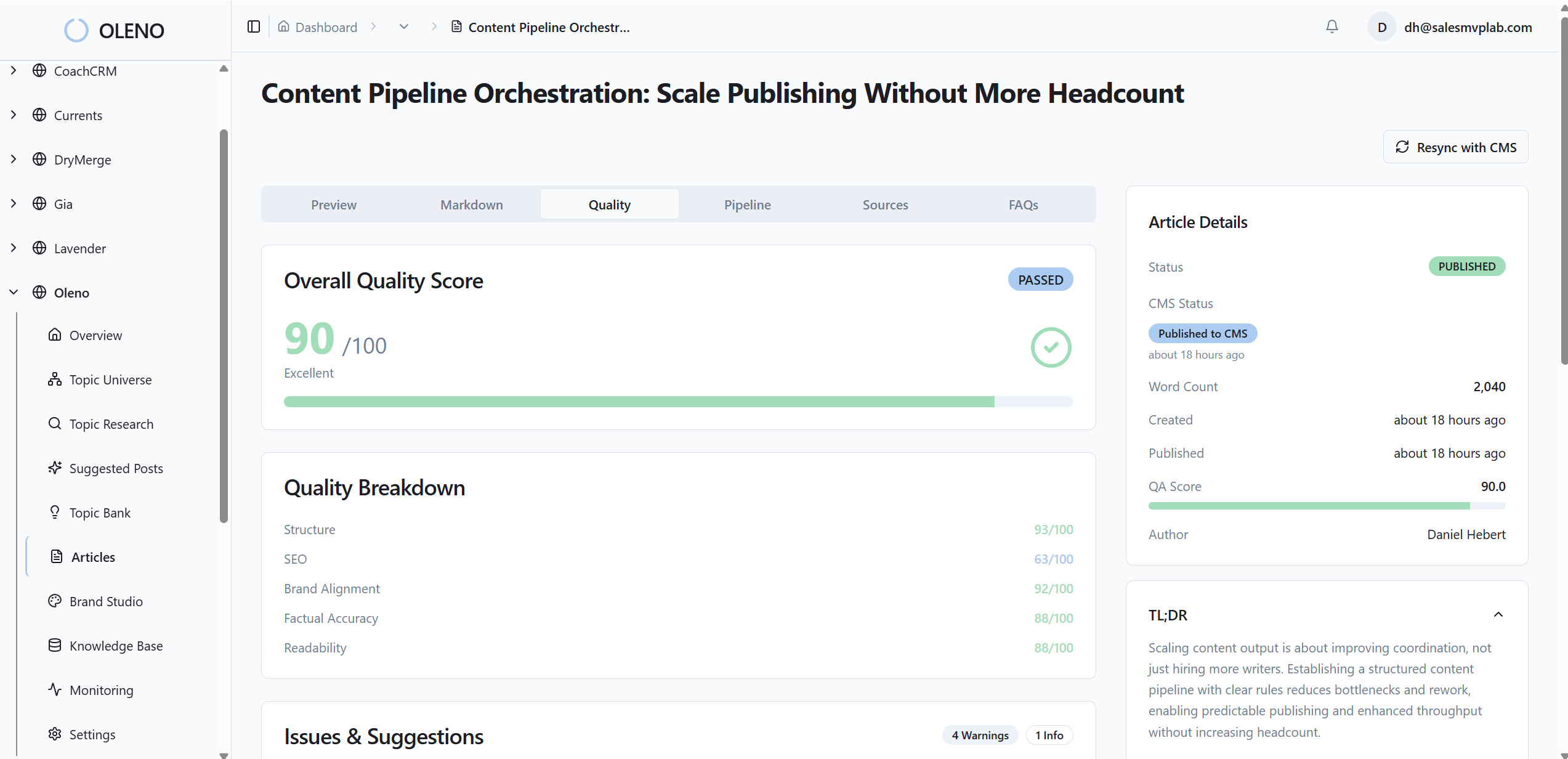
A governed system fixes that by tying planning, writing rules, approved product truth, quality control, and publishing into one chain. That's a different philosophy than stacking one more BI layer on top. One approach tries to observe the mess. The other tries to reduce the mess before reporting even happens.
There is a fair counterpoint here. Plenty of teams already have BI tools, dashboards, and data warehouses. That's valid. If your main issue is attribution modeling or broader revenue reporting, you may not need a content operating layer to answer every question. But if the pain is reporting drift between strategy, execution, and publishing, a generic BI stack usually won't solve it. It reports what happened after people finished reconciling.
Think of it like a newsroom run from sticky notes. One board tracks story angles. Another tracks edits. A third tracks what actually made it to print. You can build a polished executive dashboard on top of that. Sure. But until the desks share one assignment system, the editor-in-chief is still managing fog.
That's why the better question isn't, "How do we visualize more content data?" It's, "How do we make strategy, workflow, and publishing produce a single management view?" Different question. Better answer. And that leads straight into how Oleno handles executive dashboard integrations with brand studio and CMS publishing.
How Oleno connects strategy, execution, and publishing
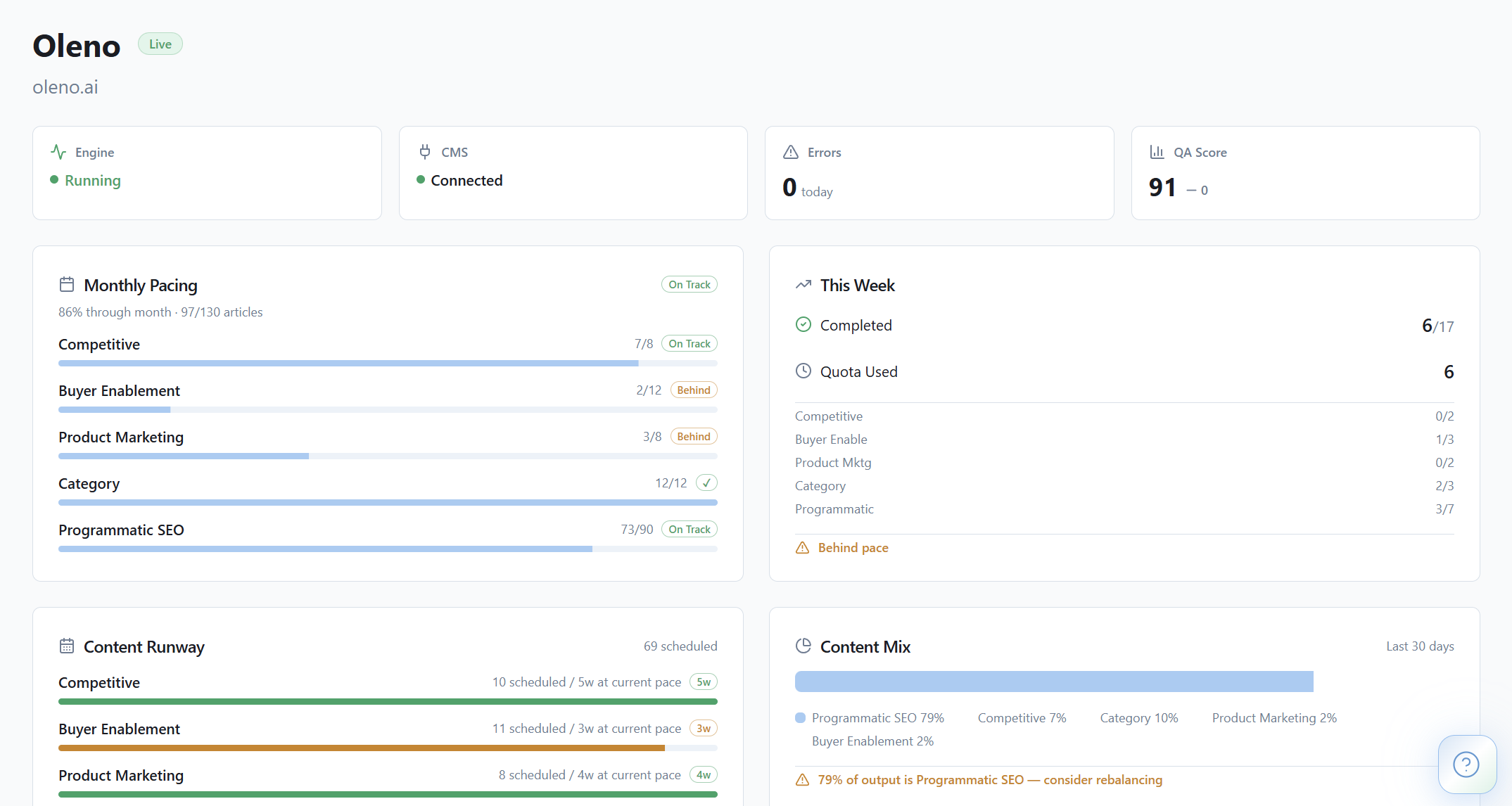
Oleno brings governed content operations, execution, and publishing into one system. In plain English, the Executive Dashboard becomes useful because it reflects output cadence, quality trends, coverage gaps, pipeline health, dimension balance, and quota utilization, rather than forcing a leader to stitch those pieces together by hand.
Governance inputs connect to executive reporting without manual reconciliation
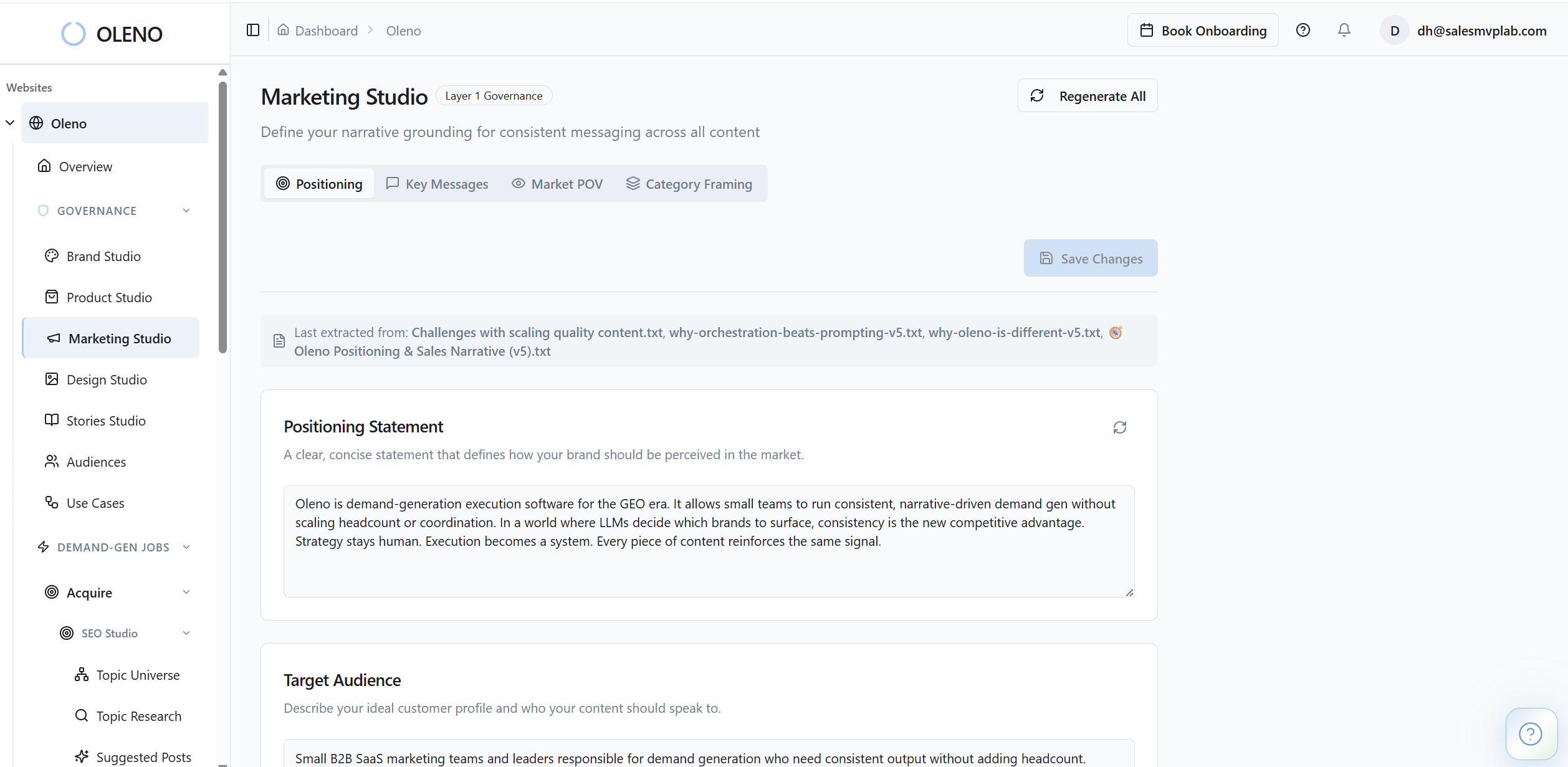
Start upstream. Brand Studio defines how content should sound, what language to use, what to avoid, and how structure and CTAs should work. Marketing Studio sets market framing and key messages. Product Studio keeps product descriptions and approved claims accurate. Those aren't side docs people might remember on a good day. They're part of the operating system.
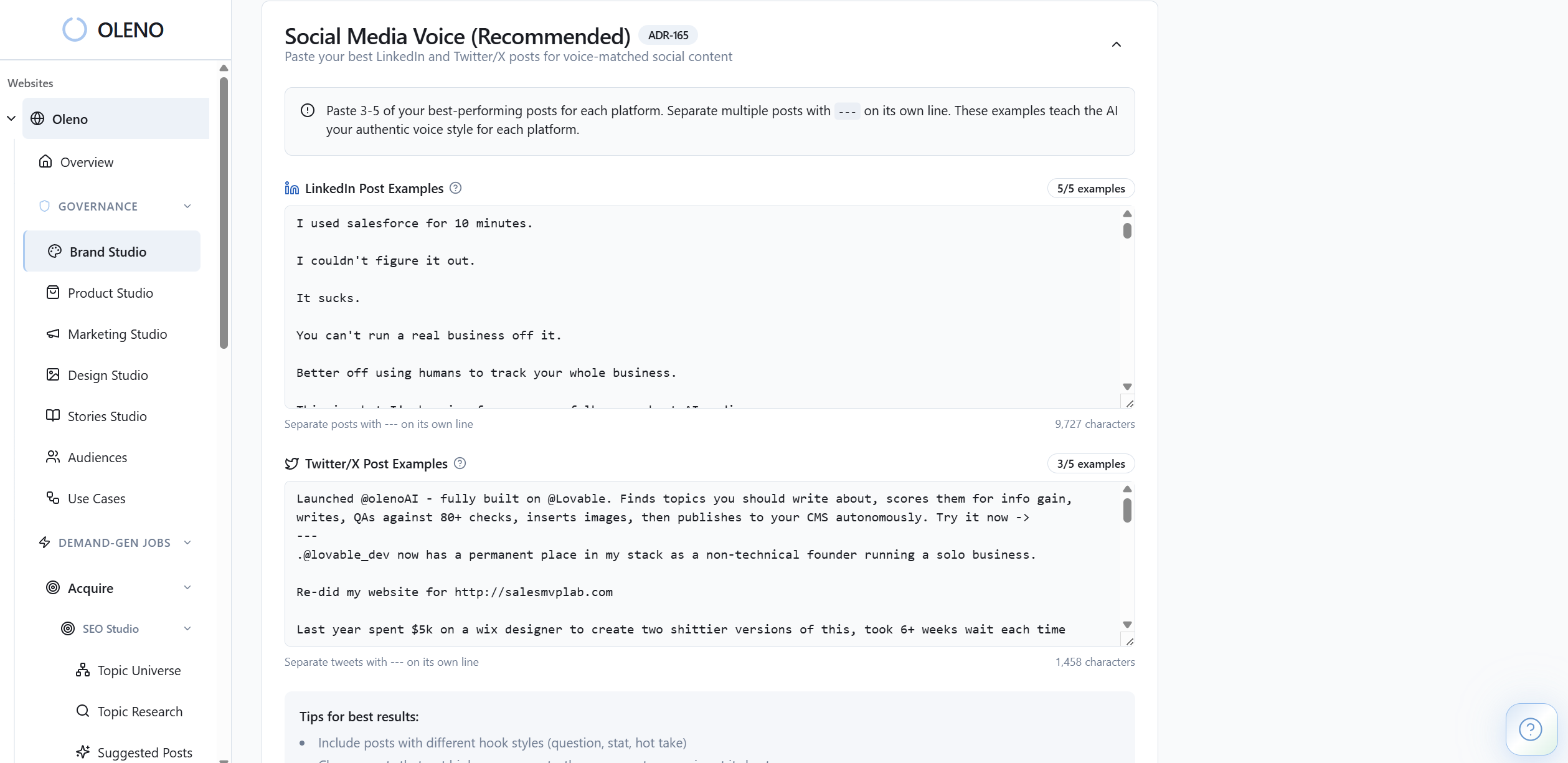
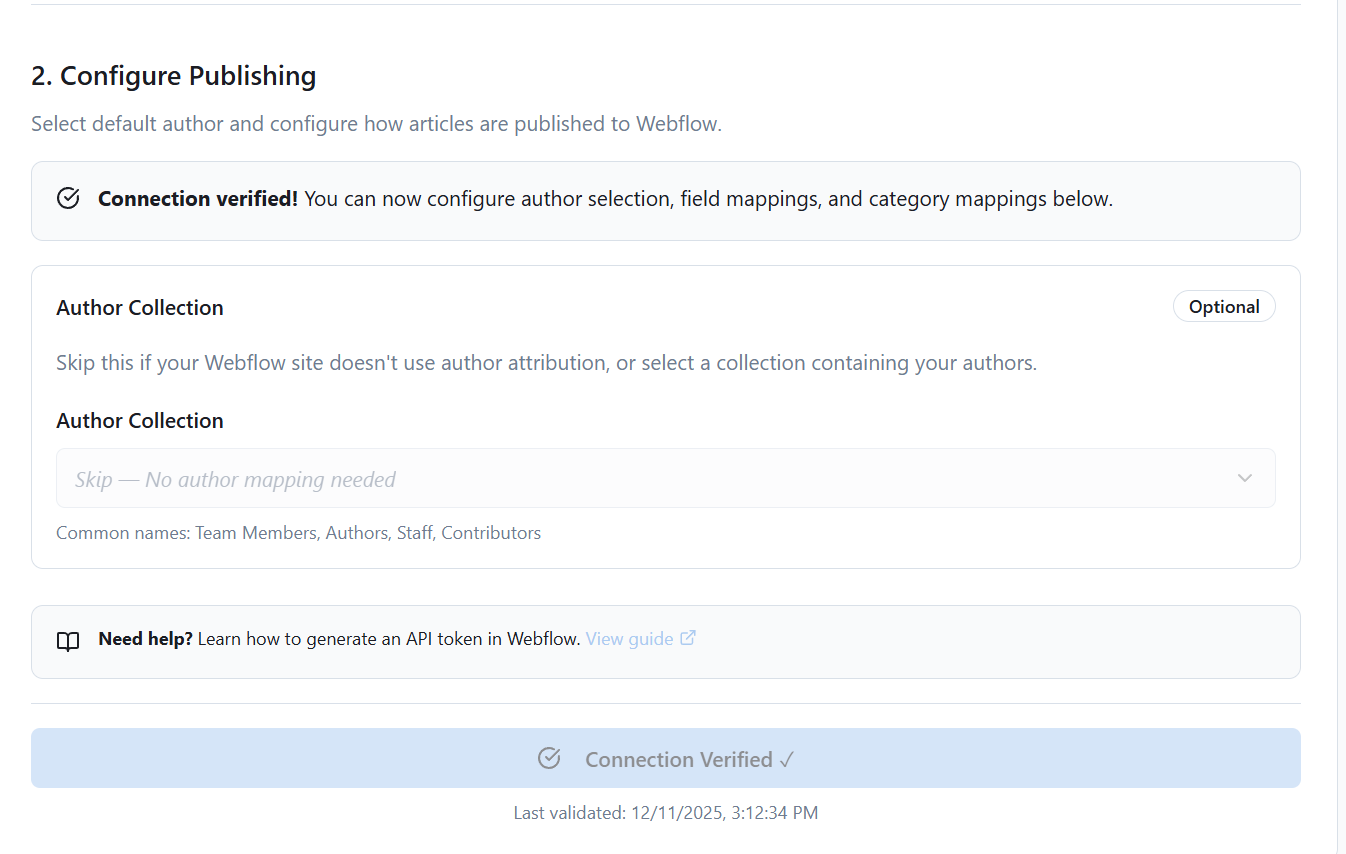
From there, work moves through execution. The Orchestrator runs content jobs from approved Topic Universe items while enforcing quotas and cadence settings. Quality Gate checks whether output meets structural, voice, and accuracy standards before it moves forward. CMS Publishing pushes finalized content directly to connected CMSs in draft or live mode.
The Executive Dashboard sits above that flow as a reporting layer. Not just, "how many articles did we publish?" More like: are jobs moving, are quality patterns holding, are coverage gaps emerging, is cadence slipping, and is output staying balanced across dimensions? That's a much more useful leadership view than a simple count of published URLs.
A practical way to think about this is the Chain-of-Truth Model:
- Set the rules in Brand Studio, Marketing Studio, and Product Studio.
- Run content execution inside those rules.
- Check quality before publication.
- Monitor output, coverage, and pipeline health in the Executive Dashboard.
Miss one link and leaders end up doing detective work again. Keep the chain intact and reporting starts reflecting reality instead of cleanup work. Which raises the next issue: where does narrative drift usually sneak in?
Brand rules, execution, and output become one operational view
Here's the contrast that matters: a voice guide in a doc and a CMS full of published pages are not the same thing as an operating system. The gap between those two points is where narrative drift sneaks in.
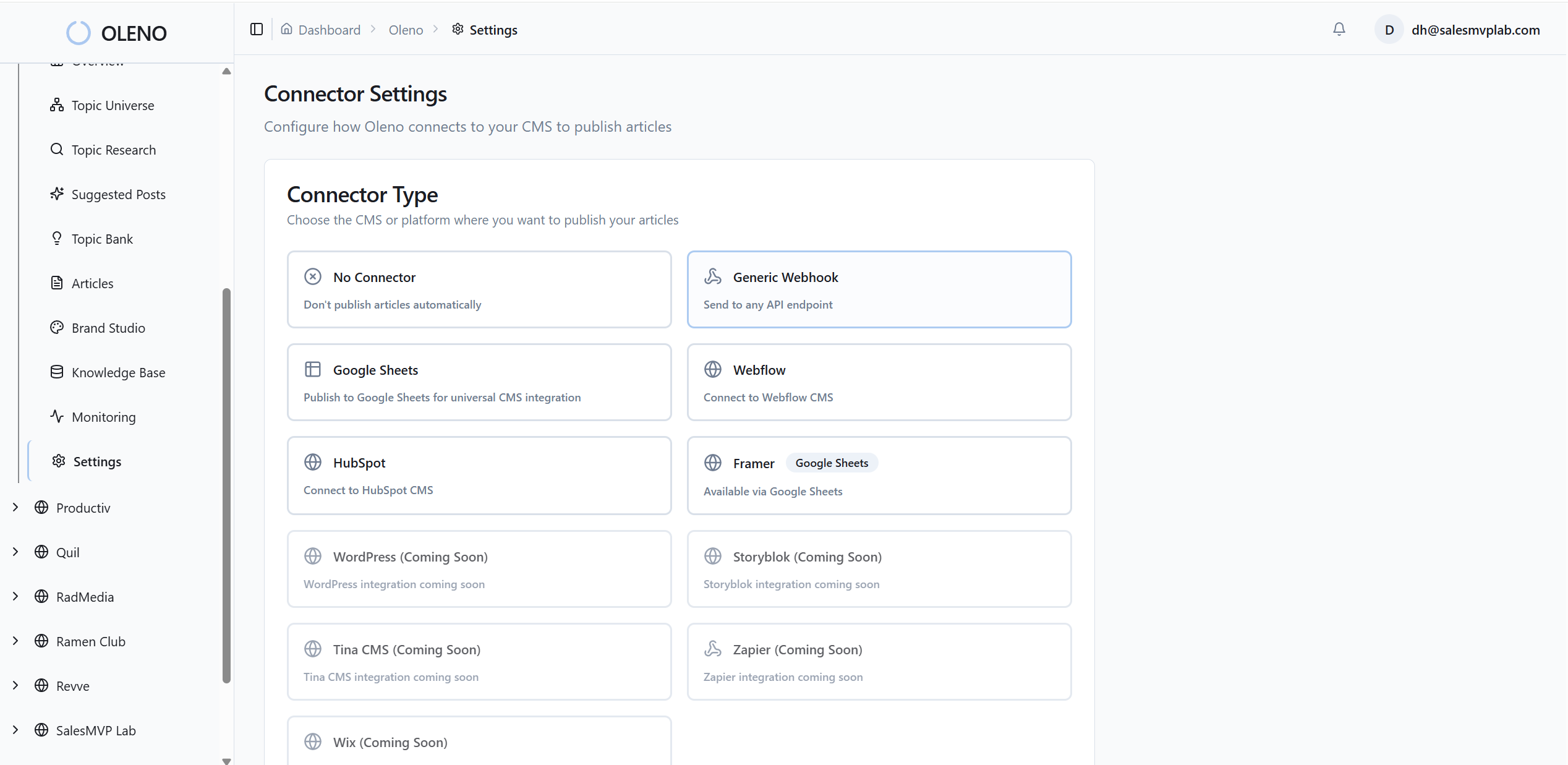
Brand Studio handles the writing rules and voice constraints. CMS Publishing removes the copy-paste layer by pushing finished content to your CMS. The Executive Dashboard gives leaders a read-only view into output cadence, quality score trends, pipeline health, and coverage gaps.
You don't always notice drift in one article. You notice it after 20. The category story starts sounding slightly different depending on who touched the piece. Review cycles get longer. PMM starts rewriting intros. The CMO gets that vague sense that output is active but not compounding.
Oleno is solving that at the operating level. Not with more reminders. Not with more review meetings. With a system where the same governed inputs shape output across studios, and publishing is part of the same chain.
I also think this is one of those areas where architecture matters more than feature checklists. AI writing tools can generate text. CMS tools can publish pages. But if they don't share the same controlled inputs, the executive view still drifts.
For grounding on the broader model, the Content Marketing Institute has covered the shift toward content operations as a system, not a pile of tasks: content operations framework. And for the larger change in search behavior, Google's documentation on AI Overviews and search experiences is useful context. Architecture first. Reporting second. Always.
What this looks like for a scaling SaaS team
A strong example of executive dashboard integrations with brand and CMS systems is a scaling SaaS team running category and thought leadership content across multiple contributors. The dashboard matters because leadership doesn't just want volume. They want to know whether planned stories are on track, on-message, and actually reaching publication without drift or hidden bottlenecks.
A CMO can spot narrative drift before it becomes a pipeline problem
Let's make it concrete. A 250-person SaaS company is trying to define a category while also shipping SEO content and product-led thought leadership. The CMO has a strong point of view. PMM knows the product positioning. Content owns the calendar. Freelancers and internal writers are producing drafts. The CMS shows what got published, but it doesn't show whether the work still reflects the original strategic frame.
So what happens? Review comments start sounding weirdly repetitive. "This feels off." "This doesn't sound like us." "Good draft, but the argument is too generic." "Why is this article educating without pulling toward our point of view?" Not dramatic. Just expensive.
That exact pattern is why governed inputs matter. In Oleno, Brand Studio, Marketing Studio, and Product Studio shape the work upstream. The executive dashboard then gives leadership a way to monitor the health of that execution without checking every draft personally. Not because it replaces judgment. Because it shows where judgment is needed.
One customer reaction that stuck with me came after seeing the output for the first time: it felt like adding three people to the team. That's a strong framing of the value. Not because dashboards create headcount. Because leaders spend less time chasing clarity and more time steering the system.
If you want a decision rule, use this one: if leadership is reviewing drafts to detect messaging drift, the operating model is too manual. Executives should inspect patterns, not police paragraphs. And once that changes, publishing visibility gets a lot more useful.
Publishing visibility improves when brand governance and CMS output are connected
Now look at the after state. Instead of checking a planning doc, asking Slack for status, reviewing random drafts, and then opening the CMS to see what actually went live, leadership gets one operational view of cadence, quality trend lines, coverage gaps, and publishing flow.
That doesn't mean every issue disappears. Fair point. A strong system still won't save a weak strategy or fix fuzzy ownership overnight. But it does make problems show up earlier, which is exactly what executive dashboard integrations with brand studio and CMS should do.
If planned thought leadership is moving but quality trends dip, you can investigate before weak content piles up. If the publishing layer slows down, you can see it in the context of the overall system instead of blaming writers immediately. If coverage across audiences or use cases gets lopsided, leadership can correct direction before a quarter gets away from them.
There's another reason this matters. At Proposify, we had strong rankings and talented writers, but a lot of the content drifted too far from the product narrative. We could attract traffic and still miss the demand-gen connection. That's the hidden cost of separation. Good content in one system. Product narrative in another. Weak bridge between them.
The same lesson applies here. Published output alone is a lagging signal. Governed publishing visibility is an operating signal. And that distinction matters because these integrations have real limits.
What these integrations do not solve on their own
Executive dashboard integrations with brand and CMS systems improve visibility and management, but they do not create strategy for you. That's an important boundary. A lot of reporting projects fail because teams quietly expect the dashboard to fix weak messaging, unclear ownership, or fuzzy positioning. It won't.
Visibility improves decision-making, but it does not replace strategy
Oleno can connect governed inputs, execution flow, quality control, and publishing state into one executive operating view. That's useful. But if your positioning is still vague, the dashboard won't magically make it sharp.
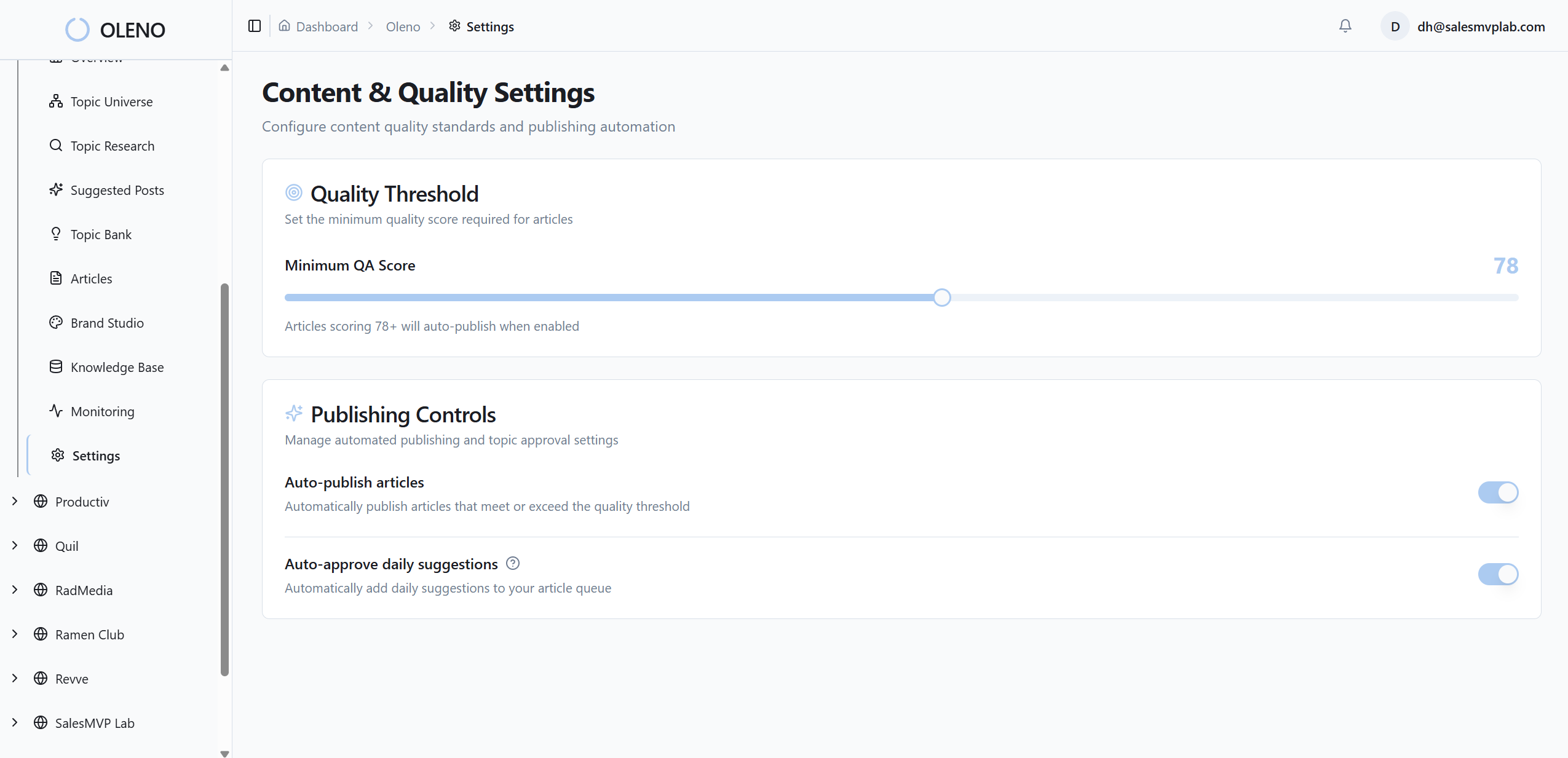
I've seen this a bunch. Early on, teams try to be everything. Messaging stays broad. Content sounds decent, but not distinct. Then reporting shows activity, yet leadership still can't tell whether the machine is reinforcing a real market position. That's not a visibility bug. That's a strategy bug.
So use this feature for what it is actually good at: making governed execution visible. If your team hasn't clearly defined voice, market framing, audience, and product truth yet, start there first. The dashboard gets much more valuable after those pieces are in place.
That concession matters. Some software tries to pretend visibility equals control. It doesn't. Visibility gives you a cleaner surface for judgment. Nothing more. Nothing less. And ownership is the next boundary.
Integrations reduce reporting gaps, not organizational ownership gaps
There's another limit worth being direct about. Integrations reduce reporting gaps, but they do not solve messy ownership by themselves.
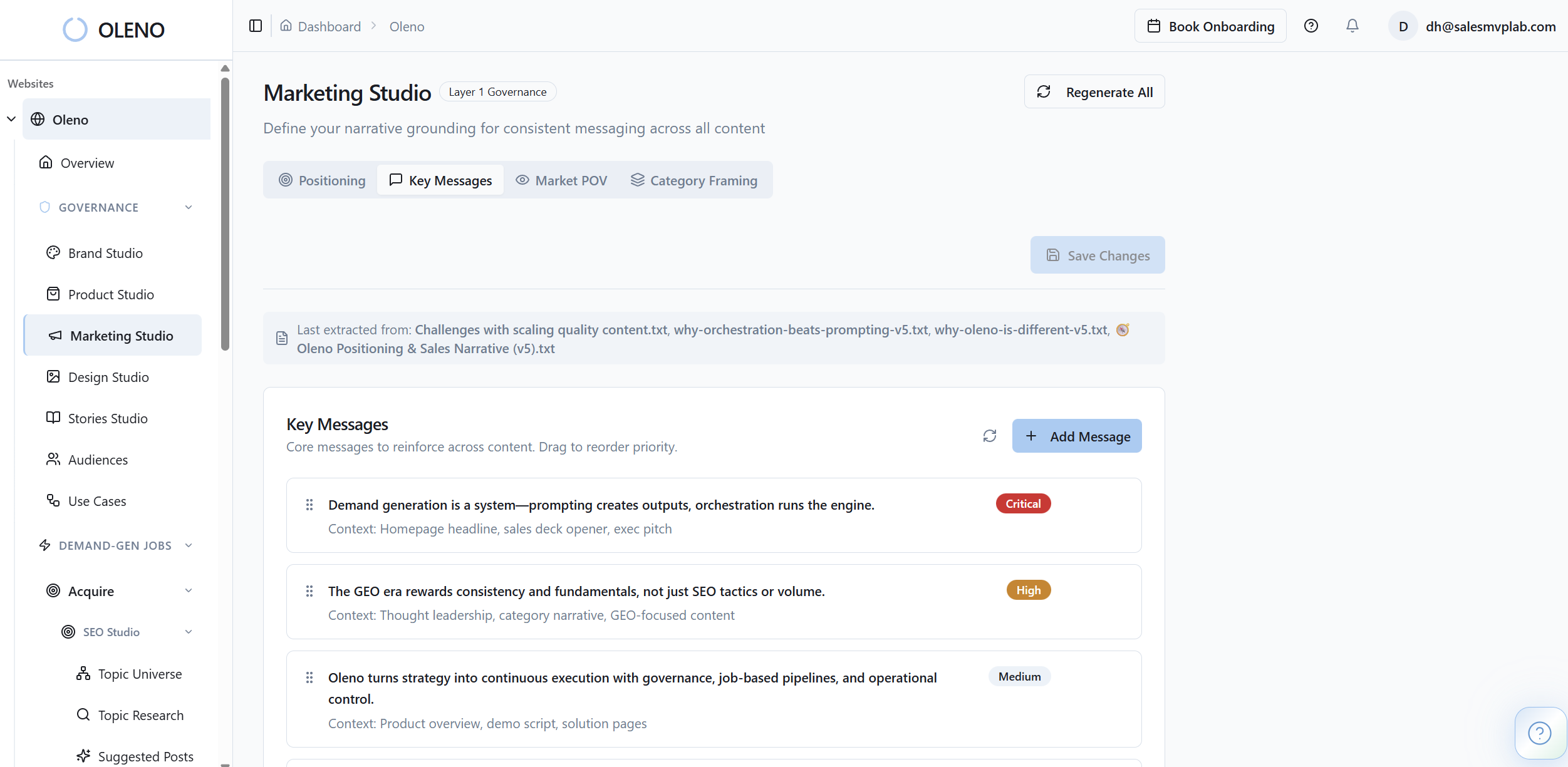
If content, PMM, and demand gen still disagree on who owns the narrative, the dashboard can show the symptoms without fixing the politics. If leadership wants a category play but nobody has encoded the point of view into the system, visibility won't fill in the blanks. If the team ignores the signals, that's a people issue.
Also, because the exact mechanics of every implementation are not spelled out here, it's smarter to stay at the architecture level. I wouldn't claim exact sync timing, custom connector behavior, or deep attribution details without published proof. That's where a lot of product content goes off the rails. The writer wants to sound precise, so they invent precision. Bad move.
A simple decision rule works well here: if you need the dashboard to replace strategic thinking, you're asking too much from reporting. If you need it to show whether governed execution is healthy, aligned, and reaching publication, that's a solid use case. Know the boundary, and the feature gets a lot more valuable.
The next step for teams that need a clearer operating view
Teams scale better when leaders can see governed execution clearly. That's the point. Not more dashboards for the sake of dashboards. A better operating view of whether strategy is actually making it through content creation and into the CMS the way your team intended.
If you're a CMO or VP Marketing trying to bridge planning, brand rules, execution, and publishing, the useful next move is a walkthrough focused on executive visibility, quality trends, coverage gaps, and CMS publishing flow. That's usually where the mismatch becomes obvious fast.
You can book a demo to see how Oleno connects Brand Studio, the executive dashboard, and CMS publishing into one governed operating model.
About Daniel Hebert
I'm the founder of Oleno, SalesMVP Lab, and yourLumira. Been working in B2B SaaS in both sales and marketing leadership for 13+ years. I specialize in building revenue engines from the ground up. Over the years, I've codified writing frameworks, which are now powering Oleno.
Frequently Asked Questions