From Campaigns to Continuous Demand Gen: 8-Step Transition
Most small teams don’t fail because the ideas are weak. They fail because every quarter they spin up a new campaign, then watch momentum evaporate. It looks busy, the calendar fills, but nothing compounds, and by month two you’re back to scramble mode. I’ve been in those rooms. It wears you down.
Here’s the uncomfortable truth. AI made drafting easier, not execution. If you’re still juggling briefs, prompts, reviewers, and ad-hoc publishing, you don’t have a demand-gen system. You have activity. And activity without rules turns into drift, rework, and missed revenue.
Key Takeaways:
- Campaign resets create coordination debt, voice drift, and idle assets that never compound
- Demand gen is a system problem, not a content problem—solve governance, jobs, and operations first
- Quantify hidden costs: rework hours, idle asset reach loss, cadence drift effects on pipeline
- Protect momentum with guardrails, QA gates, and a publishing SLA that survives launches and turnover
- Build an 8-step migration: audit, governance, job catalog, cadence, QA, measurement, sprints, playbook
- Oleno turns those rules into daily execution with governance, job-based studios, QA, and CMS publishing
- Start small, ship weekly, and let the system compound instead of resetting every quarter
Why Campaign Resets Stall Growth For Small Teams
Campaign resets stall growth because work stops and restarts instead of compounding. The coordination spikes, review piles, and handoffs create hidden tax most teams never count. You feel it when a launch ends and the calendar goes quiet for three weeks while everyone “catches up.”

What breaks when campaigns run the show?
When campaigns run the show, everything becomes a sprint to a date, not a system that runs daily. Sales asks for tweaks, legal rewrites claims, design revisits images, SEO asks for structure changes, and the publishing window slips. Then the next campaign starts, and none of the rules or learnings carry forward. You reset to zero.
The hidden cost is the pileup in reviews and unclear ownership between handoffs. One edit in a Google Doc becomes a hundred little changes across assets, then none of those changes become policy. So you repeat the same edits next month on different assets. Voice drifts, claims get inconsistent, and context gets lost between people. It’s not the ideas. It’s the execution debt.
I’ve watched teams celebrate a “successful” campaign, then go dark for six weeks while they unwind the chaos. Momentum dies. Organic traffic dips. SDRs feel the lull. The calendar looked full, but without compounding rules, you’re paying interest on coordination every quarter. There’s a better way, but you have to name the pattern first so the fix sticks.
Why do teams confuse activity with a system?
Output feels like progress because you can see it. Slides, posts, ads, blogs. But if nothing compounds, you’re busy without leverage. A system, by contrast, has rules that survive people and priorities. Governance defines what’s true and allowed. Jobs define why an asset exists and how it gets produced. Operations keep cadence predictable even when launches hit.
Draw a clean line between assets and machinery. Assets are the result. Machinery is governance, jobs, and operations working together end to end. If your rules live in people’s heads, you don’t have machinery. If your jobs aren’t defined by stage and inputs, you’ll keep making one-offs. If publishing depends on a hero editor, you don’t have operations, you have hope.
Teams that move from campaigns to programs don’t just rebrand their calendar. They install rules that make work repeatable and reusable. That’s the shift leaders describe in the Upland perspective on moving from campaigns to programs. It’s the same lesson you hear in the Cognism guide on pivoting from lead gen to demand gen. Less splash, more compounding.
A quick story from the field
At Proposify, we ranked for big terms, and the content looked great. But a chunk of it sat far from product truth and evaluation. Think management advice for SDR teams, while our real value lived in proposals, approvals, and e-signature. Traffic was high, revenue impact was light. Marketing felt successful, sales felt the gap.
With a one-page governance sheet and job definitions, this could’ve been different. Governance would have locked claims, voice, and CTA rules. Jobs would have forced an even mix across acquire, educate, and convert, so comparison pages and use-case explainers didn’t lose out to broad top-of-funnel topics. The writing doesn’t get worse with constraints, it gets focused. We would’ve kept the personality and tightened the tie-back to evaluation. That’s the difference between activity and a system-driven program.
Want to skip the theory and see a working system? Get a walkthrough of how this runs end to end and decide if it fits your team’s reality. Request A Demo.
Why This Is A Systems Problem, Not A Content Problem
Demand gen fails when execution fragments across tools and people, not because the writing is bad. The fix is installing governance, job-based execution, and lightweight operations that run daily. Do that, and ideas finally have a way to compound without heroics.
What traditional campaign thinking misses
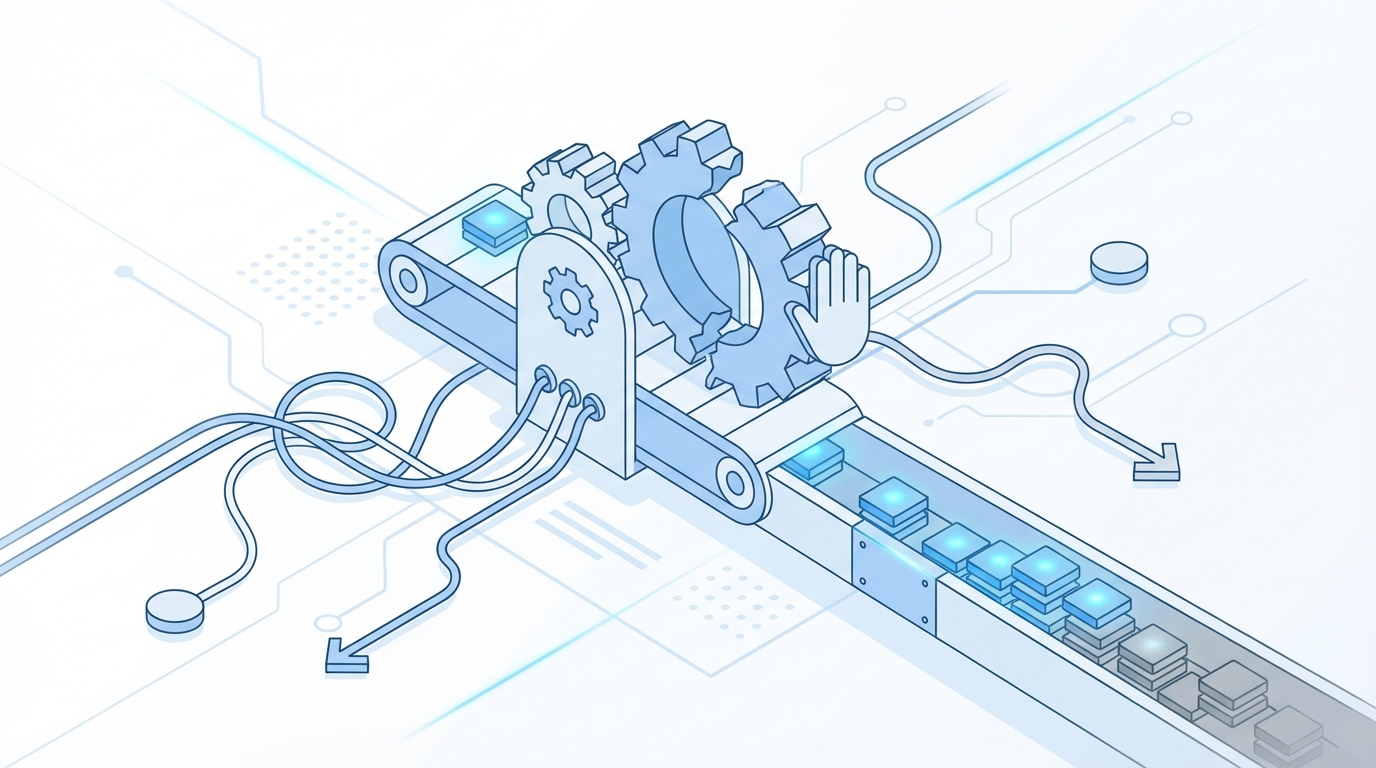
Campaign thinking optimizes for splash and speed. System thinking optimizes for reliability and reuse. A continuous engine needs a canonical POV you can point to, voice rules that apply everywhere, and deterministic handoffs that don’t rely on memory. Without those, the same rewrite happens three times in different files, and cadence slips.
Keep this practical. Create operational artifacts you can ship in an hour, not a week. A one-page POV with three truths you’ll defend, a claim matrix with allowed and disallowed phrasing, a simple voice spec with examples, and a publish-ready structure for core asset types. Then decide which jobs you’ll run by stage, and write down the inputs and outputs for each job. It’s unglamorous. It works.
The moment those artifacts exist, you gain leverage. Editors stop guessing. Writers stop over-explaining. Legal stops re-litigating language. Ops stops chasing “who owns what.” That’s how the machine starts to run, even when people get pulled into fires.
Where fragmentation hides in your stack
Fragmentation rarely shows up in one place. It hides in five percent gaps across SEO tools, writers, designers, approvers, and CMS workflows. The SEO audit is strong, but structure rules never become part of briefs. Writers nail the story, but claims drift because the matrix is tribal. Design creates a new image style for each post, so visual consistency fades. CMS publishing happens whenever someone has time, not at a set cadence.
You fix this with one-page guardrails and a single source of truth for approved product claims. Not a wiki that takes twenty minutes to parse, a sheet anyone can skim in under two. Convert common edits into rules. Turn one-off fixes into policy. If a claim is sensitive, add a sign-off rule once, not every time the topic appears. For a deeper strategy shift, the Annuitas analysis on strategic demand marketing maps nicely to this system-first approach.
Who owns execution end to end?
Ask the question nobody wants to answer. When launches hit and sales asks spike, who owns the system still running daily? Not the calendar. The system. If the answer is “it depends,” execution will stall when pressure hits. You need a minimal RACI that actually lives.
Make governance the job of one accountable owner, with final say on POV, voice, and claim control. Assign job leads per studio, so acquisition, education, and evaluation each have someone responsible for inputs, outputs, and quality. Give publishing to a single owner with a clear SLA: things ship on schedule, or escalate. Keep it lightweight and enforceable. It’s not bureaucracy. It’s accountability that survives chaos.
The Hidden Costs You Do Not See On The Campaign Calendar
Hidden costs show up as rework hours, idle assets, and cadence drift that quietly shrinks pipeline. You won’t see them on a campaign calendar, but you’ll feel them in slower approvals, lower reach, and fewer SQLs. Quantify these costs, then install rules that eliminate them.
The rework tax you pay every quarter
Let’s pretend you run four campaigns a quarter with eight assets each. If 20 percent need rewrite cycles due to voice or claims, and each cycle burns three hours across three roles, you lose 57 hours per quarter. That’s seven full workdays, gone. At a blended $100 per hour, you just burned $5,700 making the same edits twice.
The bigger cost is the pipeline delay. Those assets were supposed to ship on Monday, not Thursday. Sales loses fresh traffic. SDR follow-ups hit later. Attribution will never show you the missed micro-moments, but your team feels them. The fix is turning recurring edits into policy. If legal edits the same sentence three times, that’s a rule. If writers keep adding fluff intros, that’s a rule. Encode the rules and the rework rate drops fast.
The opportunity cost of idle assets
Most assets go dark after two weeks without a reuse plan. No scheduled repurposing, no distribution beyond launch week, and no links pointing back to priority pages. You lose reach that was already earned. A simple reuse matrix changes the math. One playbook article can fuel three shorts, one email, a sales one-pager, and a FAQ update, scheduled over six weeks.
When reuse is encoded as part of the job, not optional “if there’s time,” reach compounds. You stop reinventing context and instead keep your core ideas in motion. The US Chamber overview of demand generation strategies hits this as a principle, but the execution lives in your rules. Build the matrix once, then run it every week.
How much pipeline did cadence drift cost last quarter?
Cadence drift is sneaky. You planned three posts a week, then a launch hit, and it dropped to one. Let’s layer a conservative impact. Branded search dips 10 percent, SQL velocity eases 5 percent, and sales cycles stretch a week because evaluation content arrived late. It’s not a cliff, it’s a slow leak that adds up across the quarter.
You need leading indicators that flag drift before revenue feels it. Track output vs plan, percent passing QA on first try, voice drift rate, reuse ratio, job coverage by stage, and time-to-publish. If two of those trend red for two weeks, you intervene. Do not wait for pipeline to whisper you a warning in QBR slides. By then, you’re already rebuilding momentum.
When The Machine Stops, Momentum Dies
Momentum dies when standards are tribal and cadence depends on people instead of rules. You see it in last-minute rewrites, onboarding delays, and launch weeks that swallow the calendar. The fix is boring on purpose: guardrails, QA gates, and pre-queued work that keeps shipping.
The 3am scramble before a board meeting
Picture the board readout tomorrow. Someone’s pulling screenshots, rewriting claims, fixing tone, and stitching slides. Nobody trusts the latest copy because standards live in heads, not in a guardrail. The scramble is not about talent, it’s about missing rules. Teams do hero work to hide a systems gap.
A one-page guardrail and a QA gate stop this. Lock claims and tone. Set a QA rule that blocks off-brand content before it ever hits the calendar. The energy you spend editing last minute is better spent shipping on schedule. It’s quiet, unsexy work. It also makes the board deck a simple export, not a fire drill.
When your best writer leaves mid-quarter
Turnover exposes unwritten rules. Voice degrades, structure gets inconsistent, CTAs go generic. A new writer spends three weeks reading old posts to guess the pattern. That is a slow, expensive way to learn. You can replace that guesswork with a role playbook and a tight onboarding SLA.
Give examples of good, bad, and banned patterns. Provide CTA templates, structure examples, and claim boundaries in plain English. Set an onboarding SLA: a new writer ships one publish-ready asset in week two, review capped at one hour. The rule forces clarity, and clarity protects cadence when people change. It sounds strict. In practice, it reduces anxiety.
What happens when a launch hijacks your calendar?
Launch weeks pull everyone into collateral, sales support, and landing pages. Publishing slips, distribution pauses, nurture gaps open up. Then you spend two weeks rebuilding momentum. It feels inevitable. It’s not. Launches should be one job among many, not a calendar takeover.
A studio model keeps the machine running while you launch. Keep a two-week queue ready. Pre-approve assets. Guardrails and QA gates protect quality when attention shifts. The system ships on schedule, the launch gets what it needs, and you don’t pay the restart tax. Interjection: this is controllable. If you’re a one-writer team under pressure, the approach in this small-team execution guide is a helpful reference point.
Still living in scramble mode more weeks than not? It might be time to see a system that keeps shipping even when launches hit. Request A Demo and we’ll walk through it together.
Build A Continuous Demand Engine In 8 Steps
A continuous engine replaces resets with rules. You’ll install guardrails, define jobs, and set a cadence that survives launches and turnover. It’s eight steps, all practical, all designed for small teams with limited time.
Step 1: Audit Current Campaigns And Failure Modes
Start with an honest audit. List assets shipped in the last two quarters, note handoffs, and capture every reason something slipped or got rewritten. Look for patterns, not blame. Legal delays, claim edits, design bottlenecks, unclear briefs, missing internal links, and no reuse plan are common culprits.
Tag quick wins you can land this week. Refresh evergreen posts with schema and internal links. Republish bylines that still rank with updated claims. Reuse that overlooked guide into shorts and an email. Then document the systemic risks you’ll fix with rules, not willpower. Deliverable: a one-page audit with three low-effort fixes and three systemic risks to address.
Step 2: Define Governance On A Page
Governance is the upstream truth. Create a canonical POV with three core beliefs, a claim matrix with allowed and banned phrasing, and voice rules with examples. Add CTA structure, tone notes, and a short design section for visuals. If a claim is sensitive, add a sign-off rule so it doesn’t get relitigated.
Keep it on a single page everyone can skim. Your goal is to convert recurring edits into policy. Once this exists, your editors stop rewriting, and your writers stop guessing. Deliverable: brand guardrail v1.0 that content, product marketing, and legal can all accept. If legal review is the bottleneck, tighten your pipeline using a governance approach like this one: fast legal review for marketers.
Step 3: Build A Job Catalog That Replaces Campaign Outputs
Translate campaign assets into jobs by stage of the flywheel. Acquire, educate, convert, retain. For each job, define inputs, outputs, and success conditions. A comparison page needs product truth, competitive constraints, and a structure. A POV explainer needs your category stance and three proof points. A use-case article needs the problem, triggers, and outcome metrics.
List three jobs per stage you’ll actually run. Keep the scope realistic. Then create a sample brief template for each job so writers never start from zero. Deliverable: a job catalog with inputs, outputs, and a brief template per job. The catalog is where you prevent random one-offs from sneaking back in.
Step 4: Design Cadence, SLAs, And A Publishing Rhythm
Pick a baseline you can keep even during launch weeks. For example, three articles and two distribution assets weekly. Set SLAs everyone can live with: brief in 24 hours, draft in 48, QA in 24, publish on schedule. Build a two-week rolling queue so surprises don’t knock you off cadence.
Make publishing a promise, not a wish. One owner, one calendar, visible to sales and leadership. Deliverable: a capacity-based schedule with a reuse plan that compounds coverage without burning out the team. If reliability is your Achilles’ heel, define simple publishing SLOs using an approach like this: fail-safe publish workflows.
Step 5: Implement Lightweight Ops And QA Gates
Ops and QA protect quality without slowing you down. Your QA gate checks voice, narrative structure, claim accuracy, and basic SEO and LLM-readability structure. If something fails, it loops back with specific fixes and a time-boxed review window. No asset moves forward without passing the gate.
Make the execution flow explicit: discover, angle, brief, draft, QA, visuals, publish. Then add a “definition of done” for each job, so done means done. Deliverable: an orchestration checklist and a QA gate anyone can run. If you want a deeper pattern, treat QA as code with a declarative rules approach like this: content QA-as-code.
Step 6: Set Measurement And Health Indicators
You do not need a complex dashboard. Start with six leading indicators that catch drift early: output vs plan, percent passing QA on first try, voice drift rate, reuse ratio, coverage by job and stage, and time-to-publish. Color code thresholds. If two turn red for two weeks, intervene.
Make it a 15-minute weekly review. One owner updates, the team makes one decision, and the calendar adjusts. Deliverable: a one-page health dashboard outline with thresholds and remediation playbooks. Measurement does not have to be heavy to be useful. It has to be consistent.
Step 7: Run An 8-Week Migration Plan
Plan two sprints per month with clear outcomes. Sprint 1: audit plus guardrails. Sprint 2: job catalog with two jobs live. Sprint 3: cadence and QA gate in production. Sprint 4: measurement and reuse in motion. Each sprint ends with a retro and a rules update. Keep scope tight and visible.
Make the burndown public to stakeholders so momentum stays obvious. When the system ships weekly, confidence builds. Deliverable: a dated checklist and a simple burndown chart. You’re rewiring the plane while flying, so smaller wins, shipped faster, matter more than a grand reveal.
Step 8: Write The Playbook For Scale
Codify reuse rules, evergreen maintenance, and how to handle launches without pausing cadence. Include role SLAs, sample OKRs by job, and escalation paths when SLAs slip. Add a quarterly narrative sprint to refresh POV and truth, without rewriting the system underneath.
Your playbook turns decisions into durable rules. It’s a living document, not a dusty PDF. Deliverable: a playbook that protects quality and cadence as you grow. This is how you avoid sliding back into campaign chaos when new people join or priorities shift.
How Oleno Operationalizes Continuous Demand Gen For Your Team
Oleno runs the execution layer of demand gen so small teams can ship consistent, on-voice content without scaling headcount. You define truth, voice, and jobs once, and Oleno applies those rules daily across the pipeline. That reduces rework, protects cadence, and lets coverage compound.
Governance you configure once, consistency you get daily
Start with governance. In Oleno, you codify voice, POV, product truth, and allowed claims as reusable rules. Those apply everywhere, so drafts arrive on-voice and on-claim without editors rewriting the same lines. When legal language is sensitive, you set it once, and Oleno enforces it across jobs.
This is where the rework tax drops. Recurring edits disappear because the system carries the rules, not the team’s memory. You spend less time debating phrasing and more time shipping content that points back to evaluation and product fit.
Job-based studios aligned to the full funnel
Oleno organizes work as job-based studios across acquire, educate, convert, and retain. You enable the studios that match your goals: programmatic SEO, POV and category education, competitive and evaluation content, product marketing explainers, and customer proof. Each job has clear inputs, deterministic steps, and quality enforcement so output exists for a reason.
No more one-off assets that look good but float away from the funnel. Jobs map to stages, and coverage grows intentionally. That’s how you avoid the mismatch I saw at Proposify and keep traffic tied to evaluation content that actually supports buying decisions.
QA gate and CMS publishing that protect cadence
Oleno enforces a QA gate before anything ships. Voice alignment, narrative structure, clarity, repetition, grounding, accuracy constraints, and SEO and LLM-readability checks are all applied automatically. If something fails, it loops back for revision until it meets the bar. Nothing publishes until it passes.
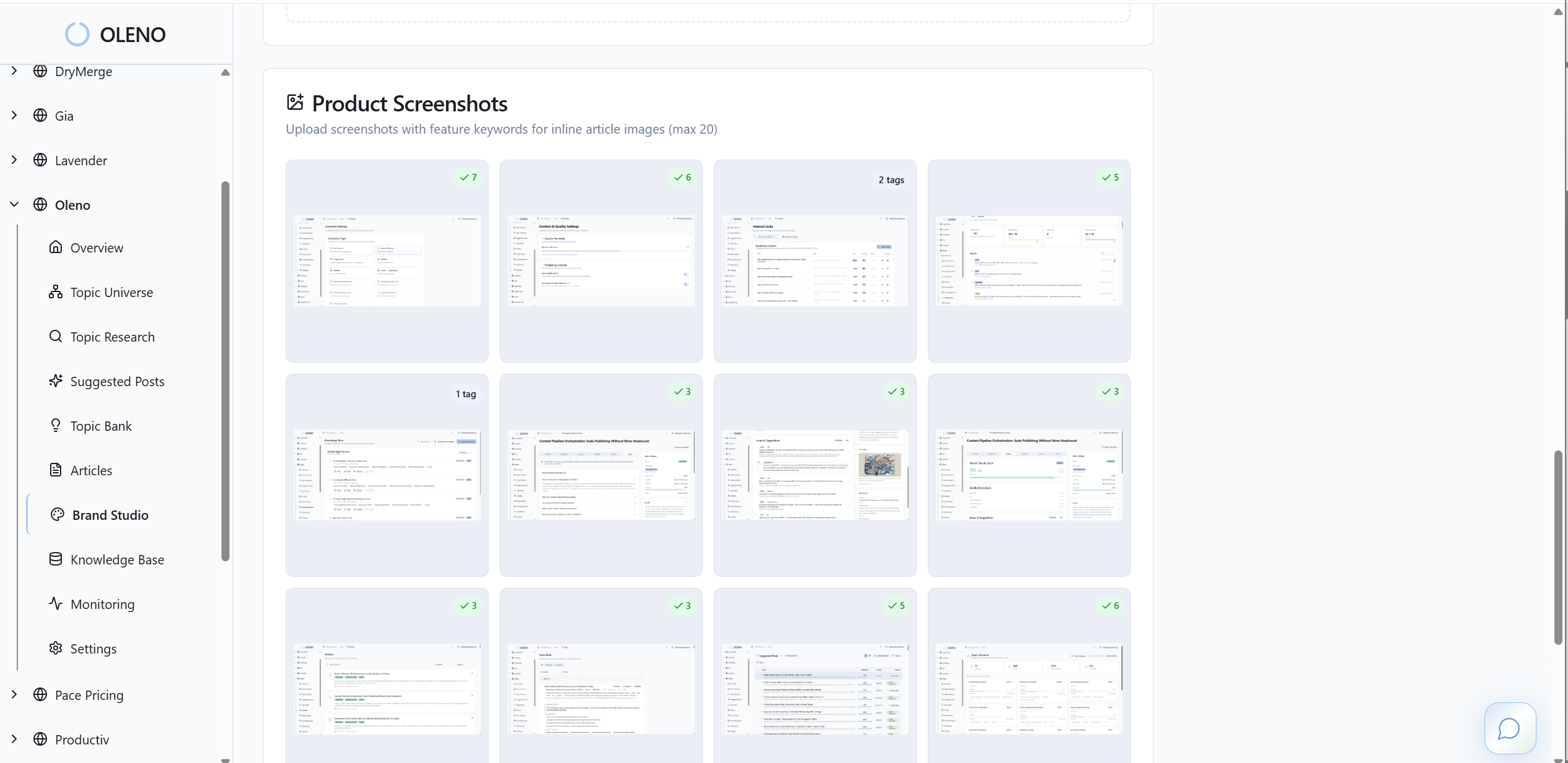
When it’s ready, Oleno publishes directly to your CMS, draft or live, with idempotent controls so you never create duplicates. The result is predictable cadence without 3am edits. This is how you prevent the cadence drift we quantified earlier from quietly draining your pipeline.
Optional distribution and health visibility for steady compounding
With distribution enabled, Oleno reuses approved content across channels using scheduling, channel formatting, cadence enforcement, and reuse rules. It does not invent new positioning, it works with what governance approved. For operational visibility, you can see output and cadence trends, quality patterns, and sampling to catch edge cases. It’s about knowing the engine is running well, not traffic analytics.
Put together, Oleno lets a small team operate like a larger one. Strategy stays human. Execution becomes a system that runs daily. If you want to ground this shift in a broader strategy view, the Annuitas piece on moving from tactical to strategic demand pairs well with how Oleno executes. Ready to see it mapped to your reality? Request A Demo.
Conclusion
Campaigns aren’t the enemy, resets are. If you install governance, define jobs, and run lightweight operations with a QA gate and a publishing SLA, demand gen stops depending on heroics. It becomes infrastructure. That’s how a small team ships steady, opinionated content, week after week. Set the rules once. Let the system run.
About Daniel Hebert
I'm the founder of Oleno, SalesMVP Lab, and yourLumira. Been working in B2B SaaS in both sales and marketing leadership for 13+ years. I specialize in building revenue engines from the ground up. Over the years, I've codified writing frameworks, which are now powering Oleno.
Frequently Asked Questions