Governance First: Build a System to Keep Your Marketing Message Consistent

Creative guidelines are comforting. They make you feel like you’ve got things covered. Fonts, colors, tone words. But when volume goes up, those guidelines break. Not because they’re wrong, but because they’re optional. People interpret them differently, especially when they’re rushing to ship.
I’ve seen this across a few teams. Solo marketer mode, I could brute force for a while. As the team grew or shifted, speed dropped and rework spiked. Not because talent changed. Because the rules didn’t travel with the work. If voice and claims don’t sit inside the process, consistency collapses the second people get busy.
Key Takeaways:
- Guidelines are taste; governance is rules that publish or block
- Encode product truths and claim boundaries to prevent risky language
- Move QA upstream with checks that catch drift before it hits your CMS
- Start with a minimum viable governance that people actually use
- Quantify rework and risk to create urgency and unlock buy-in
- Use a system that runs daily, so consistency doesn’t depend on memory
Why Creative Guidelines Fail Without Real Governance
Creative guidelines fail because they’re suggestions, not guardrails, and suggestions don’t scale under pressure. Real governance defines what is true, what’s allowed, and how work must pass checks before it publishes. When the rules live in the system, not in someone’s head, drift has nowhere to hide.

The difference between taste and rules
Style guides help people aim in the right direction. Governance makes sure they hit the target. The job is to turn taste into rules that can be enforced by the process. Define what is true about your product, what you believe about the market, and what claims are allowed. Then embed those boundaries in briefs, templates, and gates.
Without this, every writer will make reasonable but different choices. Reasonable plus different creates narrative spread. And as volume increases, small tone shifts and creative improvisations add up to a story that sounds familiar, yet inconsistent. You feel it in your gut. Prospects feel it too, and they get confused.
At Steamfeed, we grew on volume plus quality. Tens of thousands of pages. That only worked because every author had a structure, even if their voice was unique. Early on, I learned that structure is the quiet hero. Without it, you get chaos. With it, the content might vary, but the throughline holds.
Why do teams keep rewriting the basics?
Strategy lives in decks. Content lives in tools. Decisions live in people’s heads. That fragmentation guarantees rework. Every new asset becomes a fresh debate about headline tone, product language, and claims. You’re not writing, you’re re-deciding. Over and over.
What works instead is a single source of messaging truth that travels with the work. One repository of product truths, allowed claims, voice rules, and examples. The same reference drives topic selection, outlines, drafts, and final review. You remove the debate stage. You also cut those long back-and-forth comment chains where 3 people rewrite the same paragraph five times.
Teams sometimes worry this will kill creativity. It doesn’t. It narrows the field so people can create inside the boundaries, fast. That’s the difference between control and constraint. Control says no. Constraint says here’s the shape, now go.
What happens when prompts replace process?
Prompts feel fast. You get a draft in seconds and move on to the next thing. Except two prompts a week apart are never the same, and tone drift compounds. So you add meetings and more reviews to catch it, and the speed evaporates.
Treat content like a system, not a series of one-off prompts. Decide once, encode rules, and use checks to prevent repeat mistakes. Prompts still have value for exploration, but they’re not your execution layer. Without guardrails, prompting pushes judgment back onto humans. And as output increases, coordination cost explodes.
The real goal is repeatable quality. Not a perfect first draft, but a reliable path to a publishable asset that sounds like you, reflects product truth, and aligns to the narrative. That doesn’t happen by accident. It happens when governance rules sit inside the flow, not in a doc nobody opens.
Ready to see what governance looks like when it actually runs the work? You can walk through it in a short session. Request A Demo.
Message Consistency Starts With Policy, Not Preference
Consistency starts with policy that defines non-negotiables, not preferences that people can interpret differently. The work is to codify product truths, allowed claims, and voice rules into artifacts the system can use. When policy is explicit and portable, teams spend less time debating and more time publishing.

Define non-negotiable product truths and claim boundaries
Write down what is absolutely true about your product, what is in progress, and what is off limits. Not every detail, just the things that impact how you talk. Include approved use cases and disallowed scenarios. Add examples of safe claims and near-the-line phrasing, with the evidence those claims rely on.
This is about preventing invented features, risky promises, and vague superlatives. You also speed up approvals, because legal and product have already signed off on the language. The best version of this isn’t a slide lost in Drive. It’s the reference everyone uses, and it shows up in the brief and the QA gate before publish.
You won’t get it perfect the first time. That’s fine. Aim for clear enough to reduce rework by 30 percent in month one. Improve from there.
Turn voice into reusable writing rules
“Bold and helpful” is not a writing rule. It’s a vibe. Translate tone into concrete checks that a human or machine can verify. Preferred phrases, banned terms, CTA patterns, sentence length and rhythm cues, structure rules for H2s and H3s. Include on-voice examples and off-voice anti-patterns so the boundary feels real.
This becomes linting for drafts and an on-ramp for new contributors. The benefits compound quickly. Reviews focus on substance instead of copy cleanup. Writers stop guessing. And you avoid the slow drip of tone drift that creeps into teams using ad-hoc prompts.
If you want a practical starting point, look at how experts break down tone into dimensions and examples, like the approach in NN/g’s tone-of-voice framework. Then adapt it to your point of view and claims.
Where should QA live in the flow?
Upstream. Not bolted onto the end. If governance lives in the brief and template, and if narrative, voice, and claim checks run before publish, you prevent rework instead of catching it late. The gate should block publish if something fails and provide specific remediation notes, not just a red X.
This isn’t about perfection. It’s about catching drift, risky language, and structural gaps before the asset hits your CMS. The best systems keep a log of failures so you can spot patterns and update rules. Over time, you’ll see fewer violations and faster reviews.
Even a light set of checks helps here. Think voice alignment, claim safety, narrative shape, clarity, repetition, and alignment to helpful content principles like those outlined by Google’s helpful content guidelines. Keep it simple to start.
What is the minimum viable governance?
Don’t overbuild. Ship a one-pager with product truths, banned claims, three voice rules, a simple CTA pattern, and two example headlines. Then put a small gate in front of publishing that checks voice, claims, and basic structure. That’s it. Use it for a month, then expand based on the mistakes you see.
Governance that ships beats perfect rules nobody follows. The bar isn’t compliance theater. It’s fewer edits, faster approvals, and less anxiety about risk. As your confidence grows, you can add more nuance. But don’t start there. Start with the handful of rules that eliminate 60 percent of your rework.
The Hidden Costs Draining Your Marketing Budget
Inconsistency is expensive because it hides inside edits, meetings, and delays. You don’t see one big bill, you see a hundred small ones. Add them up and the cost dwarfs any software line item. Quantify the rework, risk, and approval ping pong. Leaders will move when they can see the burn.
The rework tax you do not see
Let’s pretend you publish 40 assets a month. If 25 percent require two review cycles and each cycle costs one hour across three people, you burn 60 hours monthly fixing preventable inconsistencies. At a fully loaded 100 dollars per hour, that’s 6,000 dollars a month. Multiply by 12. It hurts.
That’s the obvious tax. Here’s the quiet one. Every time people rewrite the same paragraphs, they delay the next asset. Cadence slips. Momentum fades. Your pipeline impact drops a little, then a lot. You start chasing quick wins, which usually generate more rework later.
When we ran high volume at Steamfeed, we avoided this by enforcing structure and on-voice norms. Not heavy-handed, just clear. The result wasn’t robotic content. It was output that moved without dragging six editors behind it.
Still wrestling this every month? There’s a faster path. Request A Demo and we can map your rework tax in 15 minutes.
Risk and delay from unapproved claims
Unvetted language triggers legal reviews. Launches slow, sometimes by weeks. A single sentence in a webinar deck can freeze a campaign while people scramble for evidence. The cost isn’t just delay. It’s worry. Leaders start second-guessing messaging because the boundaries aren’t clear.
Boundaries and claim examples reduce back-and-forth, and a pre-publish gate catches the rest. You don’t eliminate legal review, you make it predictable. The trick is to separate what’s already approved from what needs escalation. Once that line is visible, teams ship with more confidence and fewer emergencies.
A simple rule of thumb helps. If a claim needs proof, store the proof next to the claim. If the proof changes, the claim changes. No guesswork.
Approval ping pong across teams
When sales, HR, and marketing speak different versions of the story, everything slows. Competing edits, off-message CTAs, leaders asking for rewrites at the 11th hour. Nobody is wrong. They’re just working from different mental models of the brand.
Standardized briefs that link your brand promise to performance metrics keep teams aligned without rewriting strategy in every doc. Put message pillars, proof points, and example headlines at the top of the brief. Tie them to the asset’s job to be done. People can still tailor for channels, but they’re not inventing the message every time.
Approvals get lighter when everyone is reading from the same score. You keep nuance, lose the chaos.
When Inconsistency Becomes Personal
You don’t notice drift until it costs you a week, a launch, or a weekend. The sting isn’t theoretical. It’s losing time you didn’t plan to lose. When the system protects you from that, morale and trust go up. That matters as much as the dollars.
The 3 am incident no one planned for
At a past role, a strong draft got pulled late because a single claim couldn’t be cleared by legal. Not because the writer was sloppy. Because the guardrails weren’t encoded in the process, so the sentence made it all the way to the finish line. We lost a week. The team lost confidence.
It’s too easy to chalk this up to “we’ll be more careful next time.” That’s not a plan. When rules live in the system, not memory, you catch the sentence before it becomes a fire drill. The goal isn’t to prevent all mistakes. It’s to prevent predictable ones from making it to publish.
Small teams feel this pain more. Every delay bumps someone else’s work. The calendar gets tight. Anxiety creeps in. Guardrails aren’t bureaucracy, they’re relief.
Why do sales decks tell a different story than the website?
Because each team patches the message to fit the moment. They’re optimizing for their day-to-day reality. They are not wrong, they are uncoordinated. Without a shared message architecture, it’s natural for sales to prioritize outcomes, marketing to prioritize narrative, and product to prioritize accuracy.
A single message architecture with three to five pillars, attached proof points, and example headlines raises recall across touchpoints without killing creativity. People stop guessing. You see fewer off-message slides and fewer rewrites of the hero section. And the story feels stronger because it repeats intentionally, not accidentally.
The simple litmus test is this. If someone asks for a deck refresh, do they get a menu of approved story blocks, or a blank page? The menu wins every time.
The frustrating rework that burns out good people
Editors become referees. Writers guess. Leaders worry about risk. None of that is the job people signed up for. Burnout doesn’t come from writing, it comes from rewriting. Over and over. That’s what governance fixes when it’s done right.
Move decisions upstream. Give teams checked building blocks. Let reviews start at 80 percent aligned instead of 40. You’ll notice the change in tone in your review meetings. More discussion about argument clarity and examples, less about whether “powerful” is allowed this quarter. People ship, which is the thing that keeps them energized.
Small shift, big relief.
Build Governance That Scales With Volume
Scalable governance codifies product truth, voice, and checks into your actual workflows. The craft stays human, the rules get automated. Start small and iterate monthly. The point is repeatable quality that holds at 10 assets a month and at 100.
Codify product truths and claim boundaries
Document approved product descriptions, in-scope use cases, and prohibited claims. Add examples of safe phrasing and near-the-line language so writers know what good looks like. Include a short process for requesting new claims with required evidence, owners, and expected SLAs.
Make this a living document that every brief references and every gate checks. If you change a claim, the next draft should inherit the change automatically. That is how drift dies. And when someone wants to stretch into a new claim, the request flows through a known path with known timelines.
Even if you operate in a fast-moving category, this still works. The doc reflects the truths you’re willing to stand on today. You can update it as the product evolves.
Encode voice and structure into templates and briefs
Create a writing rules file. Preferred terms, banned phrases, how CTAs should read, and structure guidance for H2s and H3s. Add two on-voice examples and two off-voice anti-examples. The examples do more work than any definition. People copy patterns they can see.
Require every asset to start from this brief. Don’t accept freehand drafts that ignore your structure. The result is faster ramp for new contributors, and reviews that focus on substance. If you want a reference point for why consistency increases trust and recall, see how usability and communication research frames it in NN/g’s tone model. Then build your own version.
Interjection: keep the file short. Two pages beats twelve.
Implement a pre-publish QA gate
Add automated checks for voice alignment, claim safety, narrative structure, clarity, repetition, and knowledge grounding. If a draft fails, block publish and provide targeted remediation notes. Keep a log of failures to improve rules monthly. The outcome you want is fewer manual edits over time, not more clever warnings.
This is where teams see the biggest drop in friction. Review cycles go from two or three to one. Legal gets fewer cold surprises. Writers get instant feedback that matches the rules you set. And because checks run on every asset, consistency holds even when people are busy.
If you need a simple baseline, align your checks to helpful content, accuracy, and clarity standards like those in Google’s helpful content guidelines, then tighten them to your brand over time.
Set a maintenance cadence and office hours
Do a monthly 45-minute review of rule violations and friction points. Update voice rules, add new claim examples, and retire outdated language. Host a 30-minute weekly office hour for questions and edge cases. Small rhythms beat big rewrites. You will see fewer exceptions, and when an exception is necessary, it will be thoughtful, not a scramble.
This cadence keeps governance alive without turning it into a project. You’re improving the machine a little each month. That’s how you scale trust along with output.
How Oleno Turns Governance Into A Gate That Blocks Drift
Oleno operationalizes governance by making your rules executable and your checks enforceable. You define voice, claims, and structure once, then Oleno applies those rules to every draft before it reaches your CMS. The outcome is steady output without constant coordination or drift.
Voice and writing rules become enforceable checks
Load tone guidelines, preferred terms, banned phrases, CTA patterns, and structure rules into Oleno. The system applies them automatically to every draft across studios. Voice enforcement stops relying on a single editor’s memory. Oleno flags off-voice phrasing, missing CTAs, and structural gaps, then proposes targeted revisions so reviews focus on content quality, not copy cleanup.
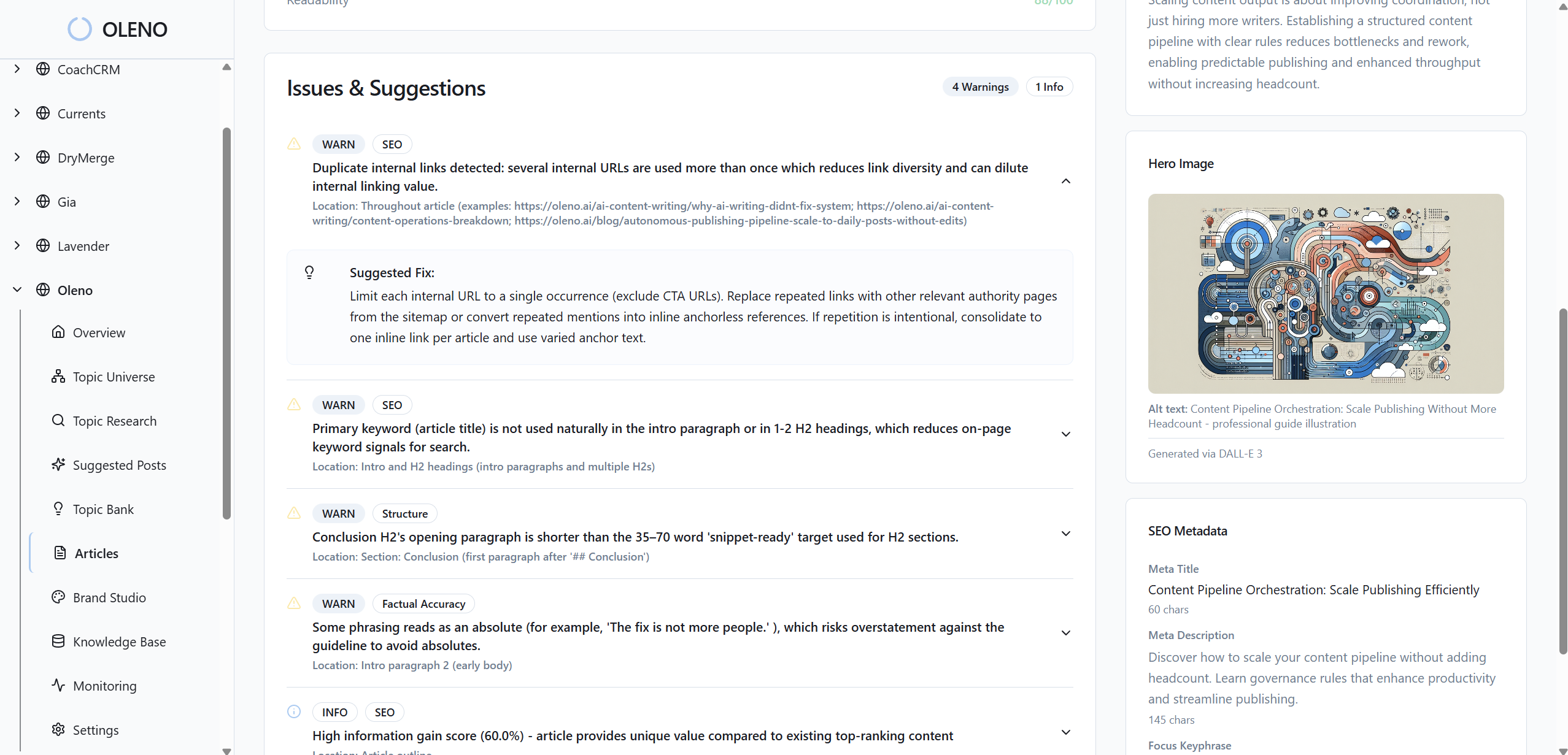
Because the rules are encoded, new contributors produce on-voice work faster. And you avoid the slow tone creep that shows up when teams depend on prompts and manual edits. Oleno keeps the narrative steady while the team moves quickly.
Product truth and claim control prevents risky language
Oleno encodes approved features, use cases, and claim boundaries. Drafts are grounded in product truth, and the system blocks invented features or risky promises from slipping through. If a claim sits near the line, Oleno asks for proof or routes the draft for specific review based on your rules.
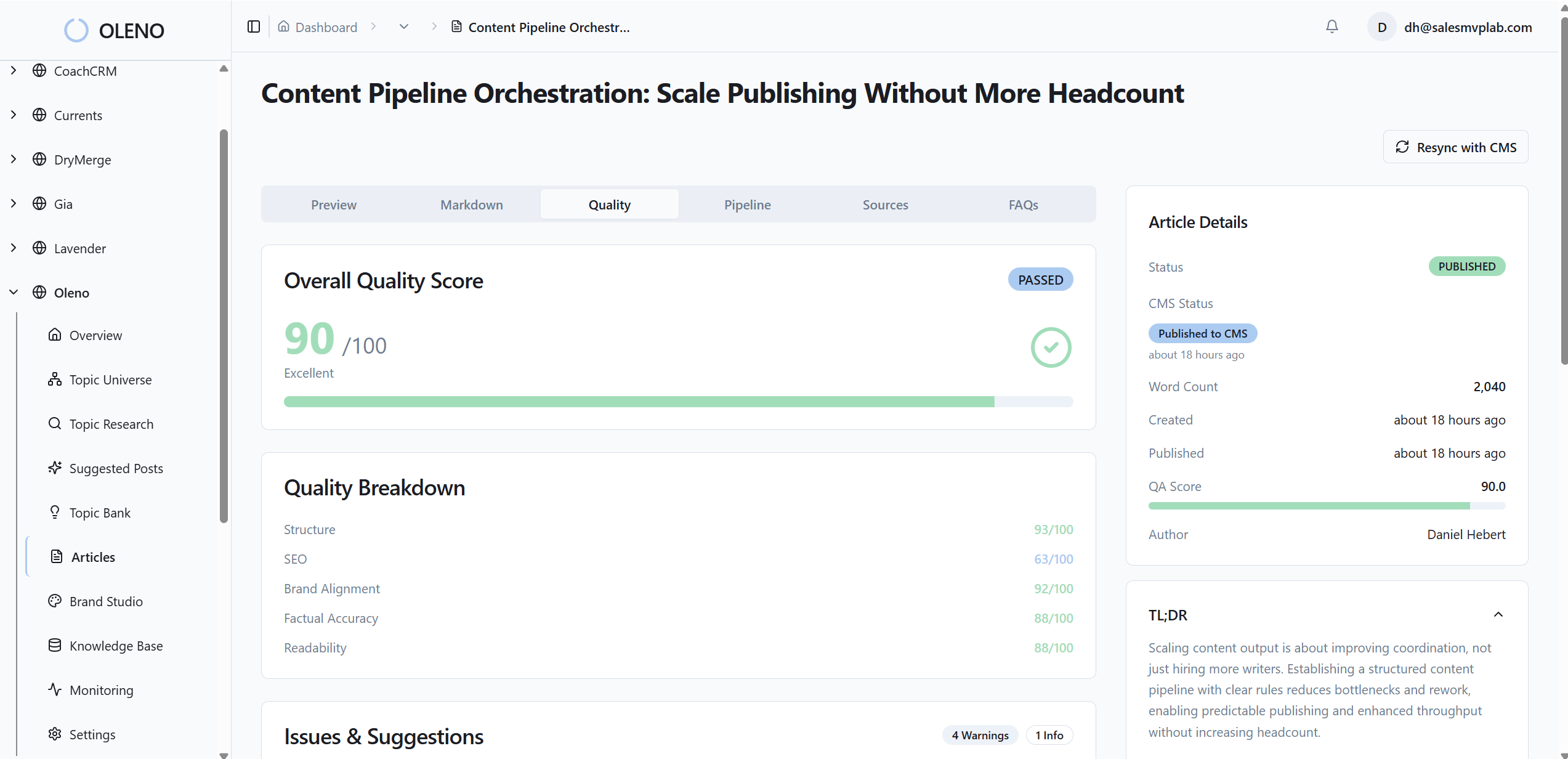
The immediate benefit is fewer last-minute legal escalations. You also reduce the worry leaders carry about compliance in regulated sections of your site. Reviews become a confirmation step, not a hunt for landmines.
A QA gate blocks publish until standards pass
Every draft must pass voice alignment, narrative structure, clarity, repetition, knowledge grounding, and SEO-shape checks before going live. If something fails, Oleno revises or flags it with specific fixes tied to your rules. Nothing publishes unless it meets the bar you set, which directly addresses the rework tax and delay costs we walked through earlier.
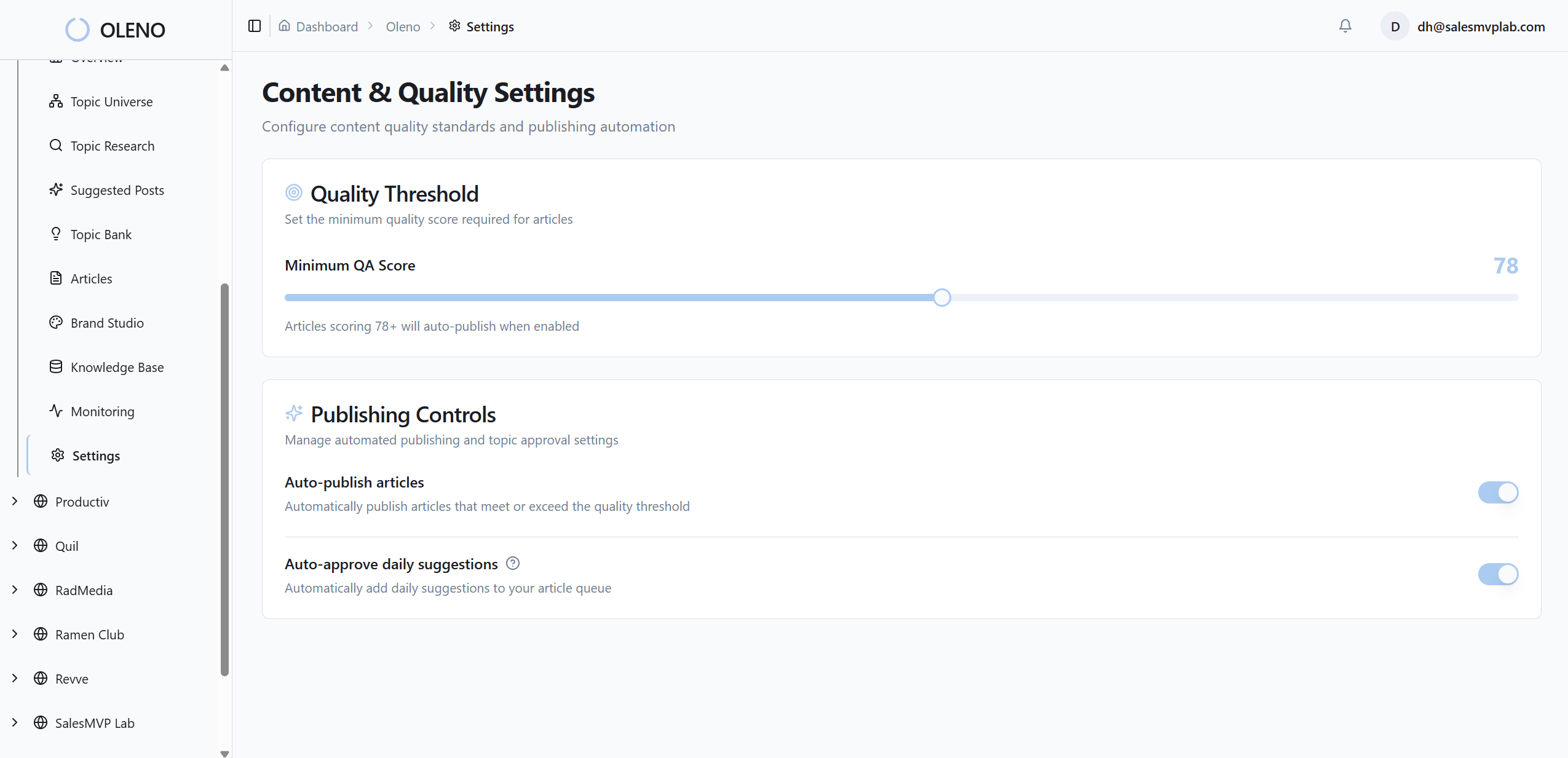
This is the difference between “we’ll try to be consistent” and “we are consistent by design.” As volume increases, the gate maintains quality without adding headcount.
Distribution reuses approved language without inventing new messaging
Once an asset passes checks, Oleno’s distribution workflows reuse governed messaging and cadence rules. Channels inherit the same approved language, which reduces improvisation platform by platform. Internal teams can trust that assets are already on-message when they hit their queues, so they spend less time editing and more time publishing.
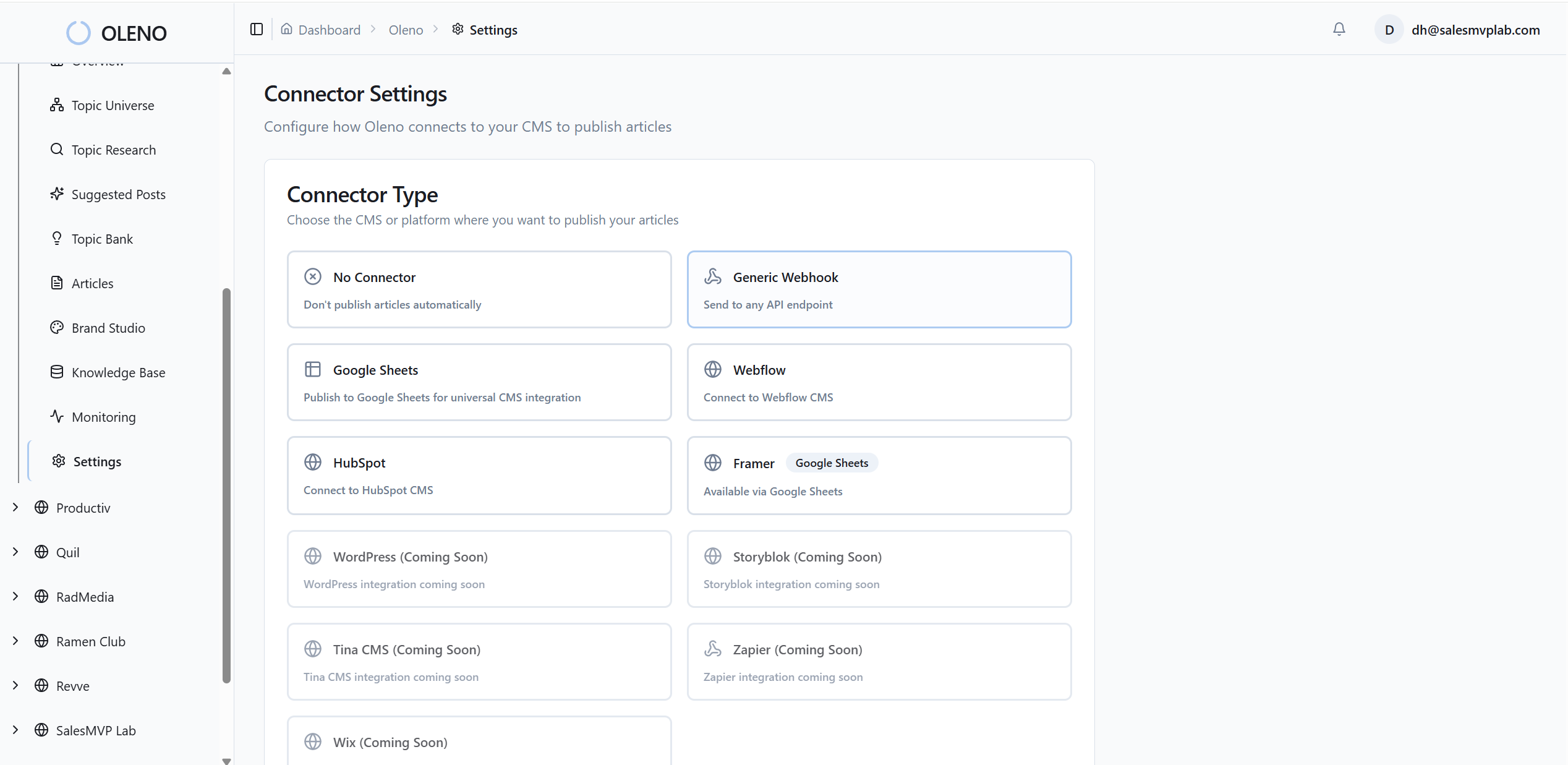
This is how consistency compounds. You reinforce the same message intentionally across touchpoints, rather than rewriting it for each channel.
If you want to see how your existing rules would behave in a live gate, we can run a quick sandbox with your voice and claim set. Request A Demo.
Conclusion
Creative guidelines make you feel organized. Governance makes you consistent. The shift is simple. Decide once, encode rules, and run checks before publish. Start with a minimum viable set that kills the obvious rework, then tune monthly.
I like systems that keep going even when people get busy. That’s what this is. A way to protect your narrative, reduce risk, and free your team to ship. When the rules travel with the work, you stop restarting from zero and start compounding. That’s the point.
About Daniel Hebert
I'm the founder of Oleno, SalesMVP Lab, and yourLumira. Been working in B2B SaaS in both sales and marketing leadership for 13+ years. I specialize in building revenue engines from the ground up. Over the years, I've codified writing frameworks, which are now powering Oleno.
Frequently Asked Questions