How Agencies Scale Content Output Without Adding Writers

If you're figuring out how agencies scale output, the first thing to understand is this: agencies rarely hit the wall because people can't write fast enough. They hit it because every new client adds a fresh layer of context, approvals, brand nuance, product truth, and frustrating rework.
You feel it pretty quickly. One account becomes three. Three becomes eight. Now your strategist is rewriting intros at 10 PM, your freelancers are missing product nuance, and your PM is stuck playing telephone between client feedback, briefs, drafts, and publishing. That's usually where output starts to break.
A lot of agency owners assume the answer is more freelancers. Sometimes that helps for a minute. But it usually shifts the bottleneck, not removes it. What actually scales is a system that captures client truth once, then uses it repeatedly across production. Oleno is built around that idea.
Key Takeaways:
- Agencies usually break on coordination load before they break on drafting capacity.
- Every new client adds a context gap, and that gap shows up as rewrites, slower approvals, and voice drift.
- A governed system can move monthly output from 4-8 articles to 20-40+ without proportional headcount growth.
- Oleno uses brand studio, marketing studio, product studio, audiences, and use cases to keep each client setup distinct.
- Quality gate checks content before it reaches review, which can reduce the editing tax that usually eats agency margin.
Why Agency Growth Usually Creates Operational Drag First
Agencies that want to know how agencies scale output need to look past drafting speed and look at coordination cost. Writing is only one part of the job. Briefing, context transfer, review cycles, QA, client changes, and publishing usually take more time than people want to admit.
More Client Volume Creates Coordination Drag Before It Creates Writing Shortages
Back in 2012-2016 I ran a website called Steamfeed. At our peak, we hit 120k unique visitors a month. We got there with volume and depth. We had 80 regular contributors and 300+ guest contributors. So I’m not anti-volume at all. Volume matters.
But volume only works when the system underneath it can hold. That was the lesson later on too. When I started at PostBeyond, I was the sole marketer and could push out 3-4 high quality blog posts per week because the context lived in my head and I had a framework. As the team grew, output didn't get easier. It got messier. The writer had less context than I did, took longer, and the output quality dropped. That pattern shows up in agencies all the time.
Let's pretend your agency adds 4 new B2B SaaS clients in one quarter. Each client wants 6 articles a month. That's 24 articles. If each piece needs a 30-minute brief, 45 minutes of revision cleanup, 20 minutes of account review, and 15 minutes of publishing coordination, you're looking at 110 minutes of non-drafting work per article. That's 44 hours a month before you even talk about the draft itself. That's the tax. And it's why hiring one more writer often doesn't really solve the problem.
A freelancer bench can give you more words. It usually doesn't give you tighter operations.
Every New Account Adds A Fresh Context Gap
The second break point is context. Every client has their own positioning, product claims, audience language, competitive angles, and things they never want said. Miss one of those and you get the dreaded comment thread. Sound familiar?
A strategist sets direction in a kickoff call. Then an account manager translates it into a brief. Then a writer interprets the brief. Then an editor cleans up what got lost. Then the client adds feedback that reveals what mattered most was never encoded in the first place. That loop is expensive. Also tiring. People don't usually quit over writing. They quit over endless rework.
Some agency leaders push back on this and say, fair enough, good account managers can solve a lot. They're not wrong. Strong account people absolutely reduce the damage. But once you get enough accounts moving at once, human memory and good intentions stop being enough. You need a system that stores client reality in a way production can actually use.
That’s the shift. The issue isn’t “we need faster writers.” The issue is “we need fewer translation losses.”
The Agencies That Scale Cleanly Encode Strategy Before Production
The way agencies scale output isn't by building the biggest freelancer roster. It's by turning strategy into a reusable operating layer. Once that layer exists, production gets more repeatable, quality becomes easier to verify, and account teams stop re-explaining the same client every week.
Scaling Output Requires A System, Not A Larger Freelancer Bench
Most agency owners have lived this already. You land a new client, rush to staff it, get a few pieces out, then realize half the effort is spent teaching outsiders how this client talks, what they sell, who they sell to, and what they don't want associated with their brand. Then you do it all over again for the next client.
That model can work. It just gets expensive fast. And not only in payroll terms. It costs you in QA time, PM overhead, and margin leakage. I’d argue that once an agency is producing content across 5 or more active B2B accounts, the system matters more than individual writer throughput. That's the 5-account threshold. Under that, good people can brute-force a lot. Over that, the cracks show.
Think of it like a kitchen line. If every cook has to ask where the ingredients are, what the recipe is, and how the plating should look for every single order, service falls apart. Not because the cooks are bad. Because the prep wasn't done. Agencies have the same problem with content. Strategy has to be prepped before scale shows up.
So the better model is this:
- Define client truth once.
- Map that truth to the right audience and use case.
- Run repeatable content jobs against those rules.
- Check quality before humans spend time on it.
That's the four-layer handoff I tend to look for. If step 1 is weak, scale gets ugly. If step 4 is missing, editing eats your profit.
Governance Beats Prompt-By-Prompt Production At Agency Volume
Prompting is useful for one-off work. We all use it. But prompt-by-prompt production breaks down when an agency is juggling multiple client environments.
Why? Because prompting treats each draft like a standalone event. Agency delivery is not standalone work. It has to hold together over weeks and months. It has to preserve client voice across dozens of articles. It has to keep product claims accurate. It has to stay aligned with a point of view even when different people are touching the account.
That's why I don't think the real debate is AI vs humans. That's too shallow. The real debate is isolated output vs managed execution.
The old way is prompt, draft, edit, patch, repeat. The better way is encode, run, verify, publish. Different model entirely. And once agencies see that, they stop asking how to squeeze more from writers and start asking how to reduce the coordination headache around them.
If you want to look more closely at that shift, request a demo.
How Oleno Turns Client Strategy Into Repeatable Delivery
Oleno handles how agencies scale output by separating client setup from daily content production. The setup captures voice, messaging, product truth, audience context, and use cases for each client. Then the system uses those rules to run content jobs, check quality, and publish content on a steady cadence.
Oleno Isolates Each Client’s Voice, Positioning, And Product Truth
This is where the system starts to matter. Oleno gives agencies a way to define each client's content environment separately instead of relying on scattered briefs and Slack messages.
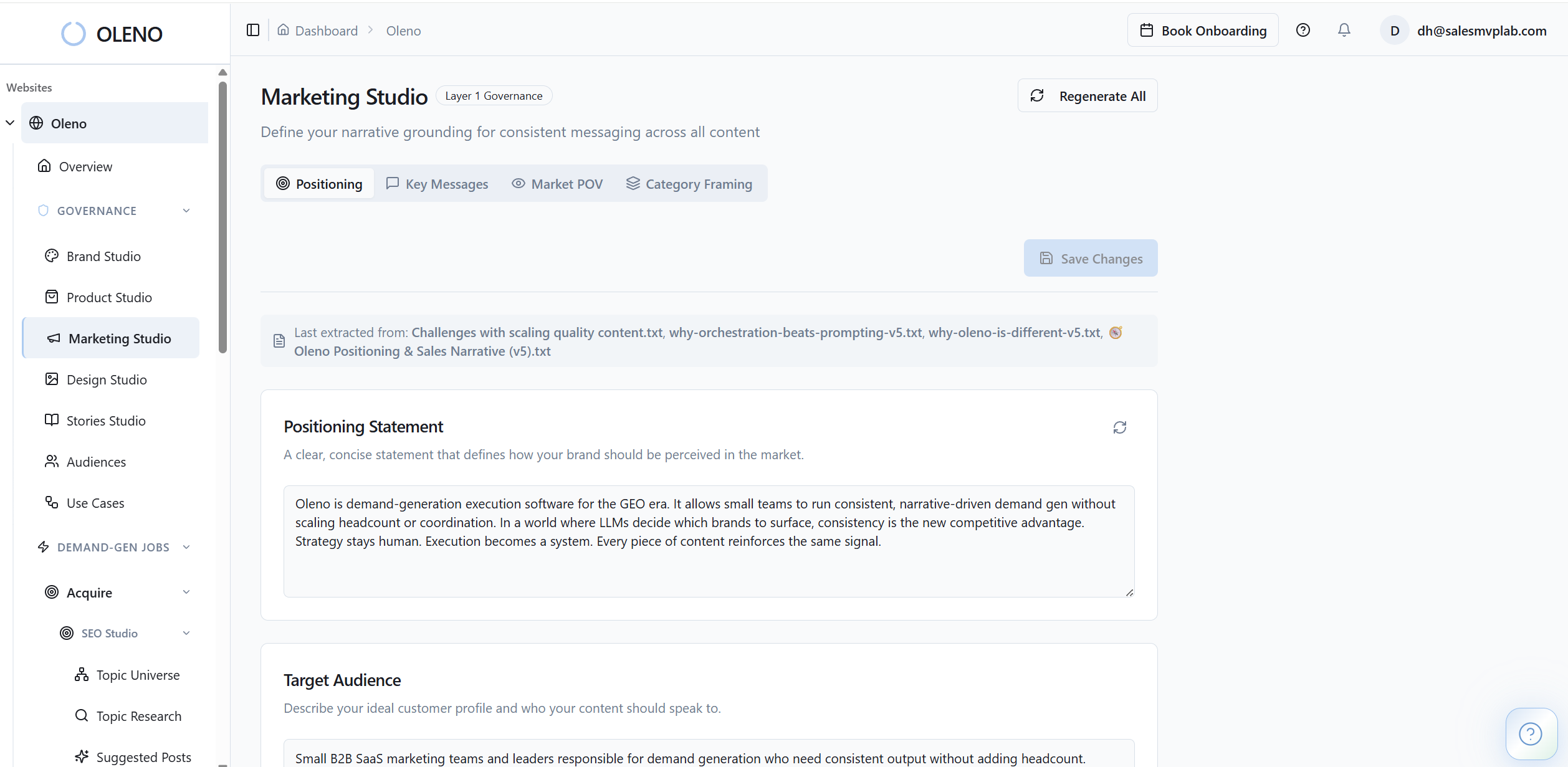
Brand studio sets how the content should sound. Marketing studio captures the client's category framing, key messages, and point of view. Product studio stores approved product descriptions, claims, and boundaries so content stays accurate. Audience & persona targeting defines who the content is for, and use case studio adds the workflows, triggers, and desired outcomes that matter for that client.
That's important because agency failure often looks like cross-account contamination. A phrase from Client A sneaks into Client B's draft. A writer uses the wrong audience frame. A product claim gets overstated because the nuance lived in an old kickoff doc nobody checked. Oleno lowers that risk by keeping those client rules structured and available during content creation.
One practical rule I like here: if a client needs more than 3 major rewrite rounds per month because of voice or accuracy issues, the issue usually isn't writer quality. It's missing source truth. Fix the setup first.
The System Turns Approved Strategy Into Repeatable Content Jobs
Once the client context is in place, Oleno doesn't ask the team to manually rebuild the workflow every time. Topic Universe automatically discovers, scores, and organizes content topics. Approved topics then feed the Orchestrator, which runs them through a defined pipeline and enforces quotas and pacing.
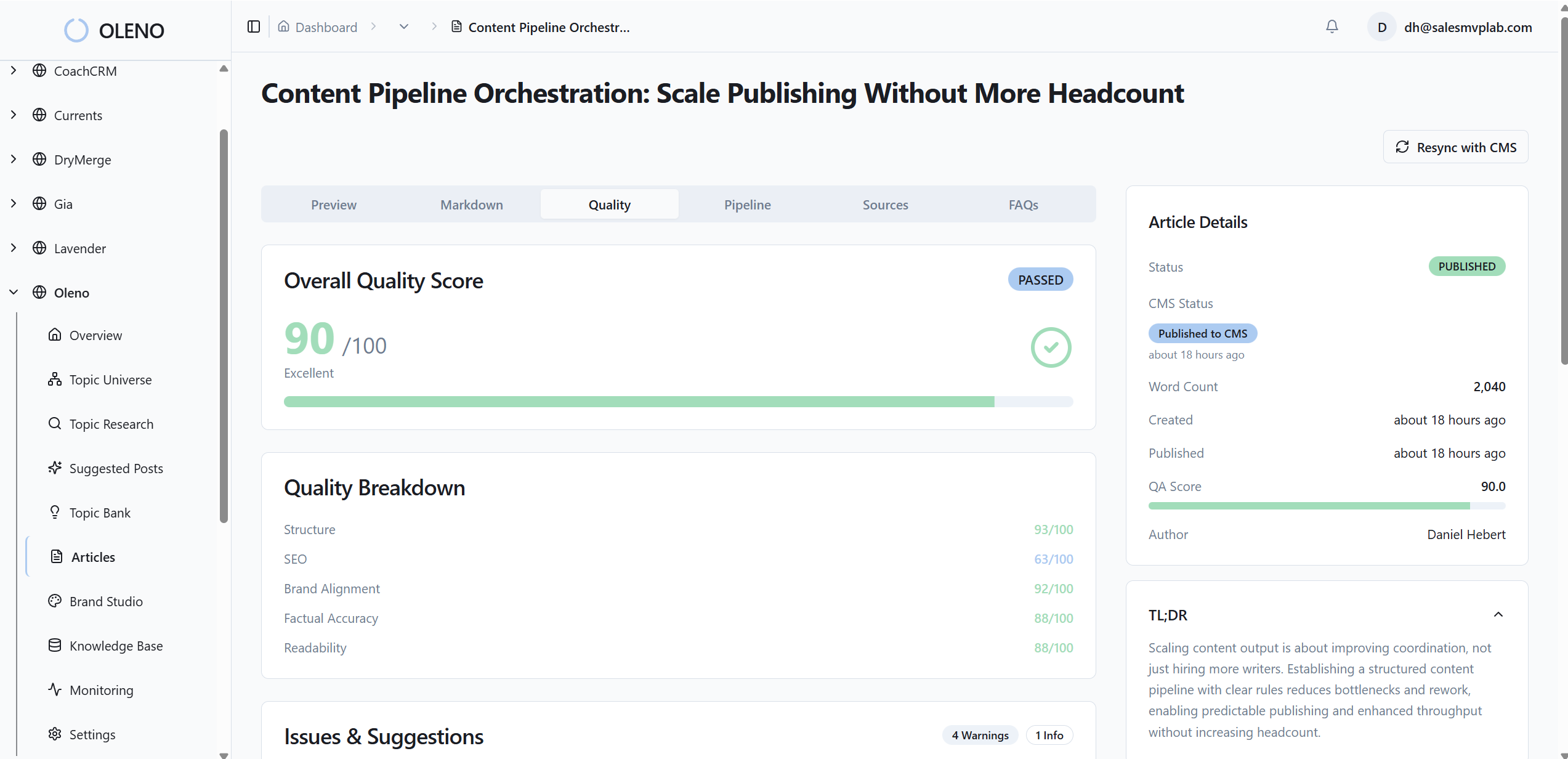
That matters for agencies because delivery tends to break in the handoffs. Topic selection lives in one place. Briefing in another. Drafting in another. Publishing in another. You can make that work, but it's fragile. Oleno keeps those steps connected so content doesn't keep resetting as it moves.
And the output isn't limited to one generic format. Programmatic SEO Studio supports acquisition content at scale. Product Marketing Studio supports feature and use-case content. Category Studio handles long-form point-of-view pieces. Writing Studio covers reactive content when something in the market changes and you need to respond quickly. So the same client truth can drive multiple content types without being retranslated from scratch every time.
KB-backed outcomes matter here. Oleno's SEO content scaling use case is built to move teams from 4-8 articles per month to 20-40+ without adding headcount. Agencies won't all hit the same number, obviously. Different clients, different review styles. But the benchmark gives you a useful decision point. If your current process can't plausibly 3x output without chaos, your setup probably isn't systemized enough.
Quality Gates Reduce The Editing Tax Before Content Reaches Review
This part gets underrated. Agencies don't just need more drafts. They need fewer bad drafts making it into human review.
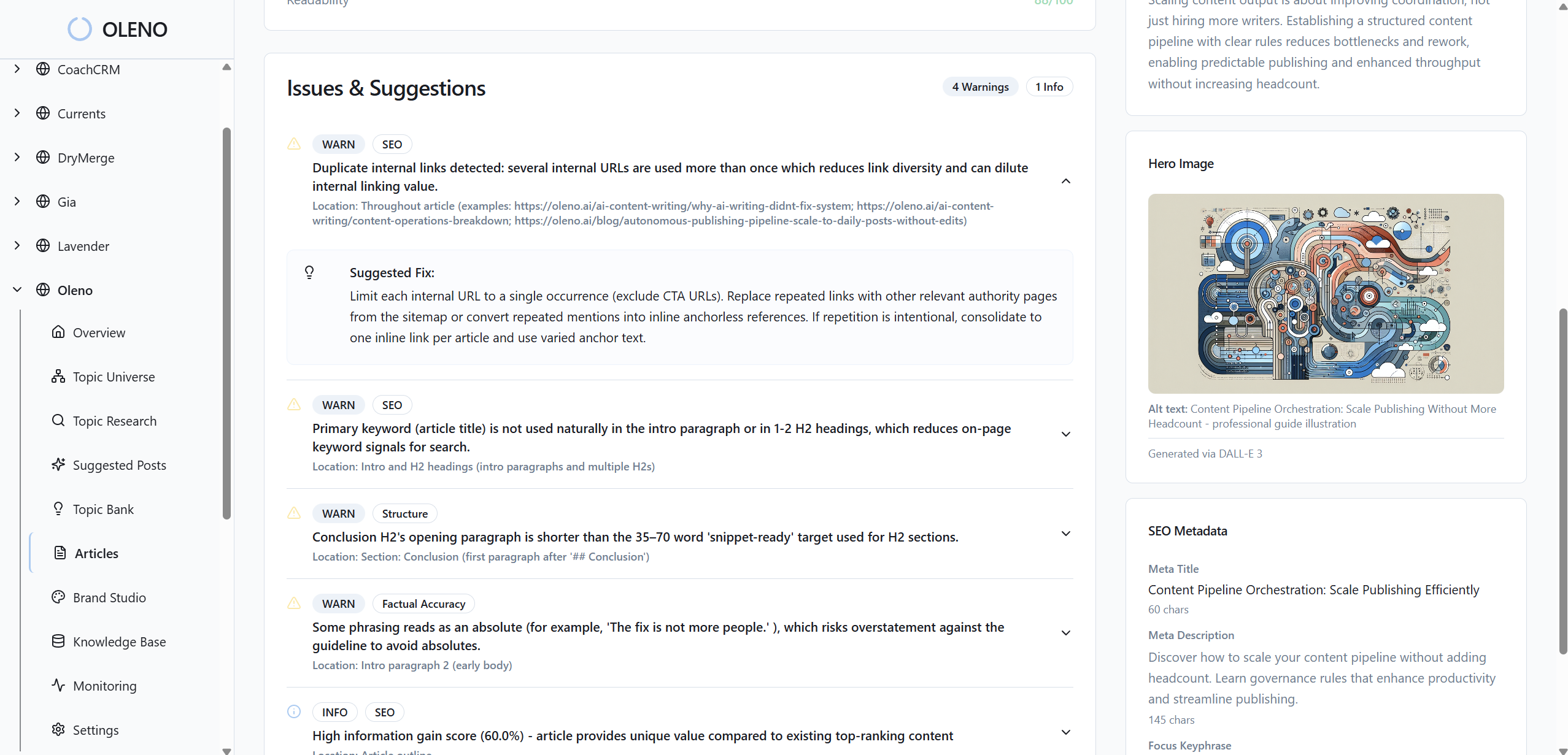
Oleno's Quality Gate runs 80+ automated checks on brand voice compliance, product accuracy, structure, and other quality thresholds before content reaches the review queue. That means reviewers spend more time making strategic calls and less time cleaning up obvious drift. For agencies, that's margin protection.
I think this is where a lot of AI workflows quietly fall apart. The generation is quick, so everyone feels productive. But then a strategist or editor spends 40 minutes fixing voice drift, factual fuzziness, or structural issues. That's not leverage. That's deferred labor.
There’s also a trust effect here. Oleno describes this standard clearly: no manual triage, no AI slop, and content that passes the slop test before it moves forward. That matters because most content leaders know the feeling immediately when a draft reads generic. If content can get closer to usable before human review starts, the whole account team moves better.
What This Looks Like Inside A Growing Agency
A useful way to judge how agencies scale output is to look at the weekly operating model. Not the pitch deck. Not the theoretical process. The actual Tuesday afternoon reality of getting six clients out the door without burning out your strategist.
One Strategist Can Oversee Output That Used To Require Multiple Writers
Let's pretend an agency signs 3 new B2B clients in 90 days. Each wants a mix of SEO articles, product-led pages, and thought leadership. Before a governed system, the agency would usually solve that with a patchwork approach: more freelancers, more briefs, more editing, and more PM coordination.
So the week might look like this. Monday is briefing day. Tuesday is chasing drafts. Wednesday is internal edits. Thursday is client revision chaos. Friday is publishing cleanup and trying to figure out next week's pipeline. That cycle works for a bit. Then someone gets sick, a client changes positioning, or a freelancer misses nuance, and everything backs up.
With Oleno, the operating model shifts. The strategist still owns the account direction. That's important. But each client's voice, market framing, product truth, audience definitions, and use cases are already structured inside the system. Topics are surfaced and scheduled automatically. Content jobs run against those client-specific rules. Quality gate catches a portion of the obvious issues before review starts. CMS publishing can be part of the workflow too.
That's why the "+3 headcount" reaction lands. One customer looked at the output and said it felt like adding 3 people to the team. I wouldn't treat that like a universal promise. But as a framing device, it's useful because it points to where the leverage actually comes from: fewer manual resets.
Client-By-Client Governance Prevents Cross-Account Narrative Drift
Narrative drift is one of those problems agencies notice late. The first few drafts might look fine. Then over time, clients start sounding more similar than they should. The same analogies show up. The same framing gets reused. Competitive nuance gets flattened. That hurts trust.
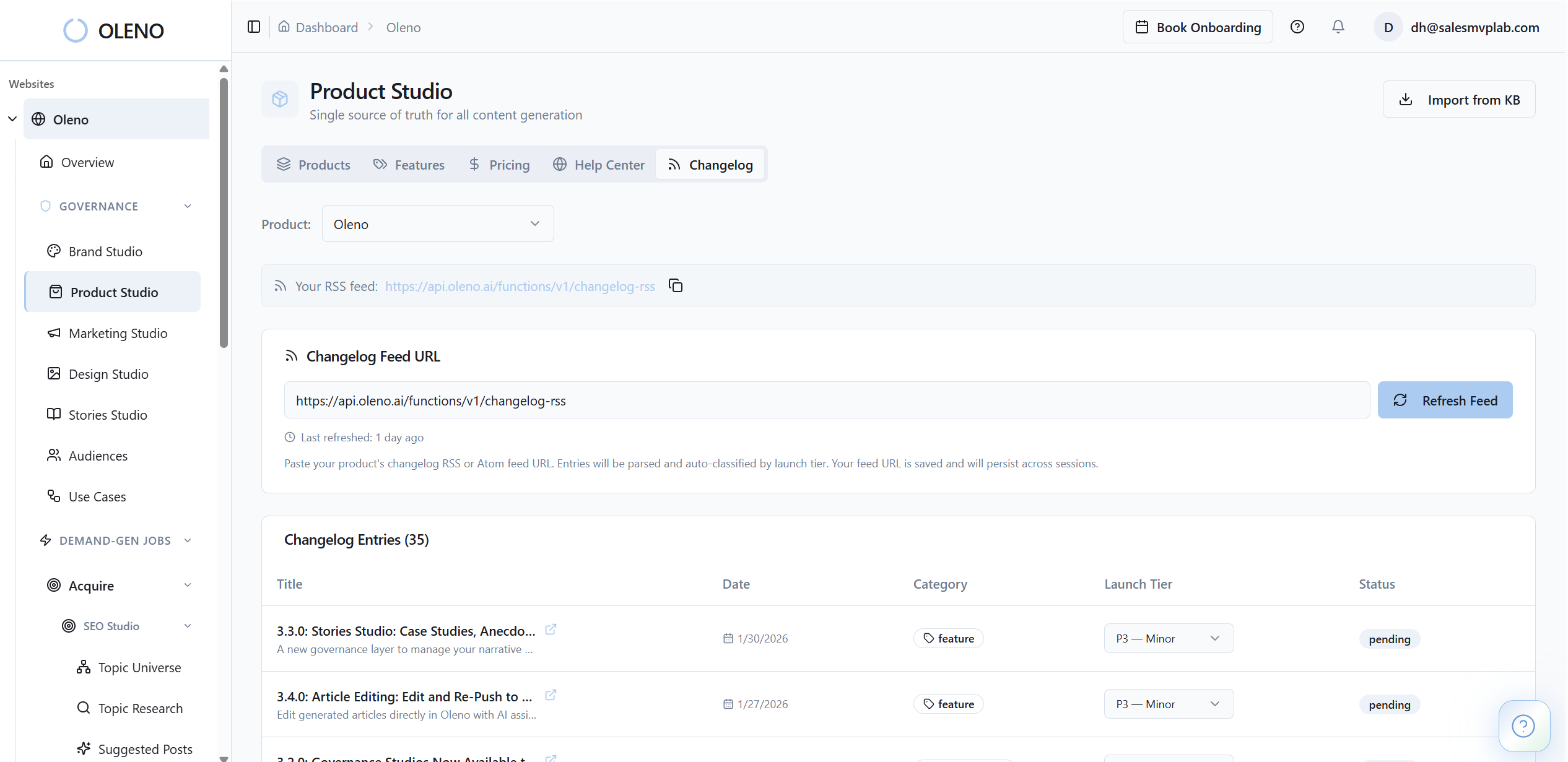
Client-by-client governance is what prevents that. When each account has its own voice rules, product truth, audience data, and use cases set up separately, the system has a much better shot at keeping boundaries intact. That's especially important for agencies serving multiple B2B SaaS clients in adjacent markets, where overlap creates risk.
There’s a nice second-order effect too. Account managers have fewer "can you remind me what this client hates us saying?" moments. Strategists spend less time re-briefing. Writers get clearer source material. Clients see cleaner first drafts. Everyone wins a little.
And that's usually how scale works in real life. Not through one giant breakthrough. Through fewer small breakdowns.
More Output Still Depends On Strong Inputs And Human Judgment
Oleno can reduce coordination load. It does not replace strategy. Agencies still need clear positioning, clear approvals, and someone who understands the client's market well enough to make real judgment calls.
More Output Only Works When Client Strategy Is Explicit
If the client strategy is muddy, the output will reflect that. Oleno can enforce the rules you give it. It can't invent clarity you never defined.
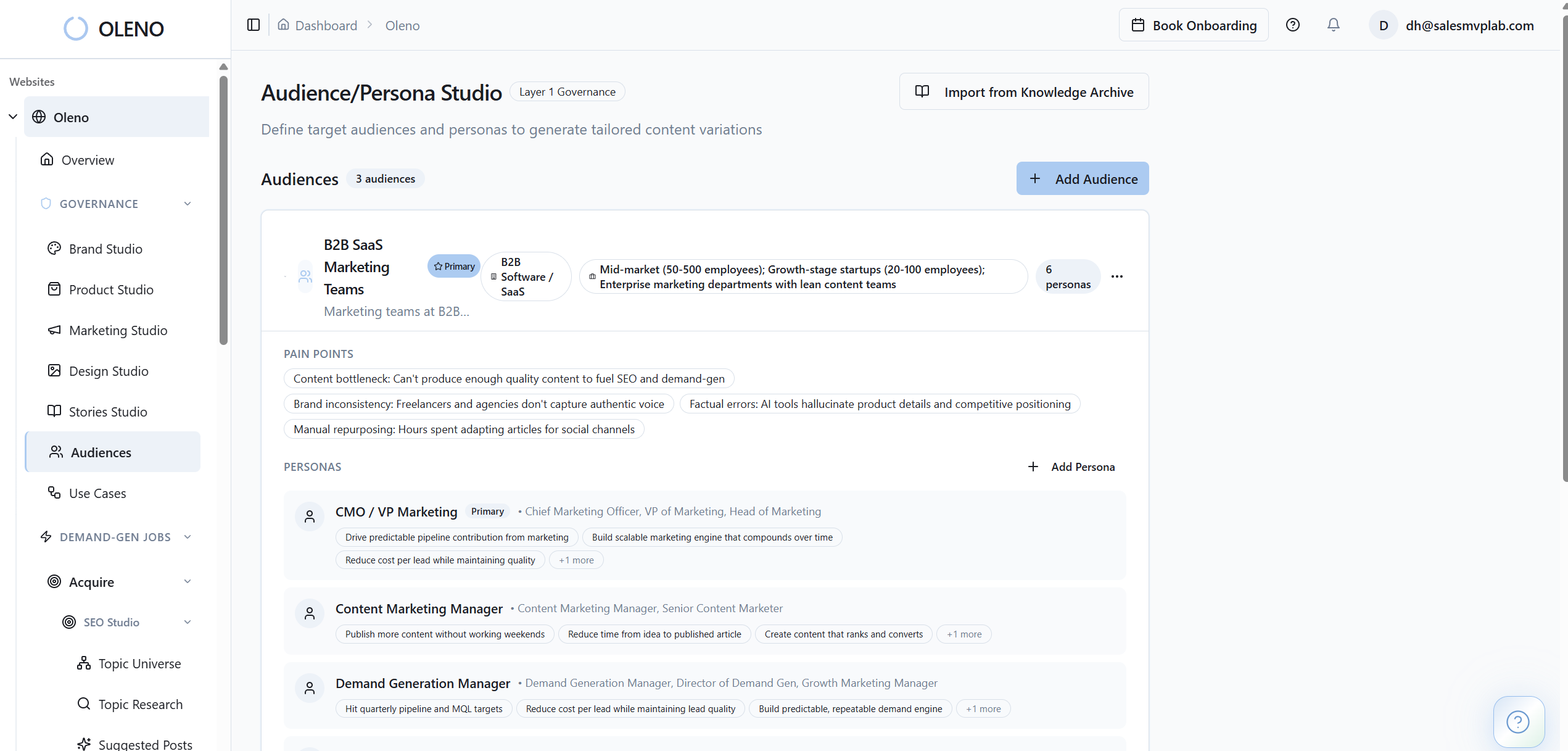
This is worth stating directly because some teams want the tool to solve a strategy problem. It won't. If a client hasn't figured out who they sell to, what they believe, how they differ, and what claims are actually defensible, you're still going to get fuzzy content. Maybe faster. But still fuzzy.
I learned a version of this at LevelJump. We were using founder-led input and getting decent raw material out of it quickly. But it lacked the structure SEO needed, and we didn't have a reliable way to find the right topics. So even though the content had insight, it wasn't translating into the output system we needed. Speed helped. Structure was still missing.
That same rule applies here. Strong setup first. Then scale.
Oleno Reduces Coordination Load But Does Not Replace Strategic Judgment
Agencies still own the relationship. They still decide positioning. They still handle client approvals, market nuance, and final calls on messaging. Frankly, they should.
Oleno is better understood as execution infrastructure. It stores and applies the truth you've already defined. It automates scheduling, generation, checking, and publishing within those boundaries. That's a big deal. But it's not the same thing as strategic leadership.
There are also cases where a lighter workflow makes sense. If you're a tiny agency with 2 low-volume clients and highly custom founder-led work, a full system may feel heavier than you need on day one. That's valid. But once you're trying to scale delivery across multiple accounts with repeatable motions, the tradeoff changes. At that point, not having a system starts costing more than setting one up.
Agencies Can Test Governed Execution On One Client First
The cleanest next step isn't rolling this across every account at once. It's proving the model on one client workflow where review chaos is already eating time.
Agencies Can Scale Delivery Without Scaling Review Chaos
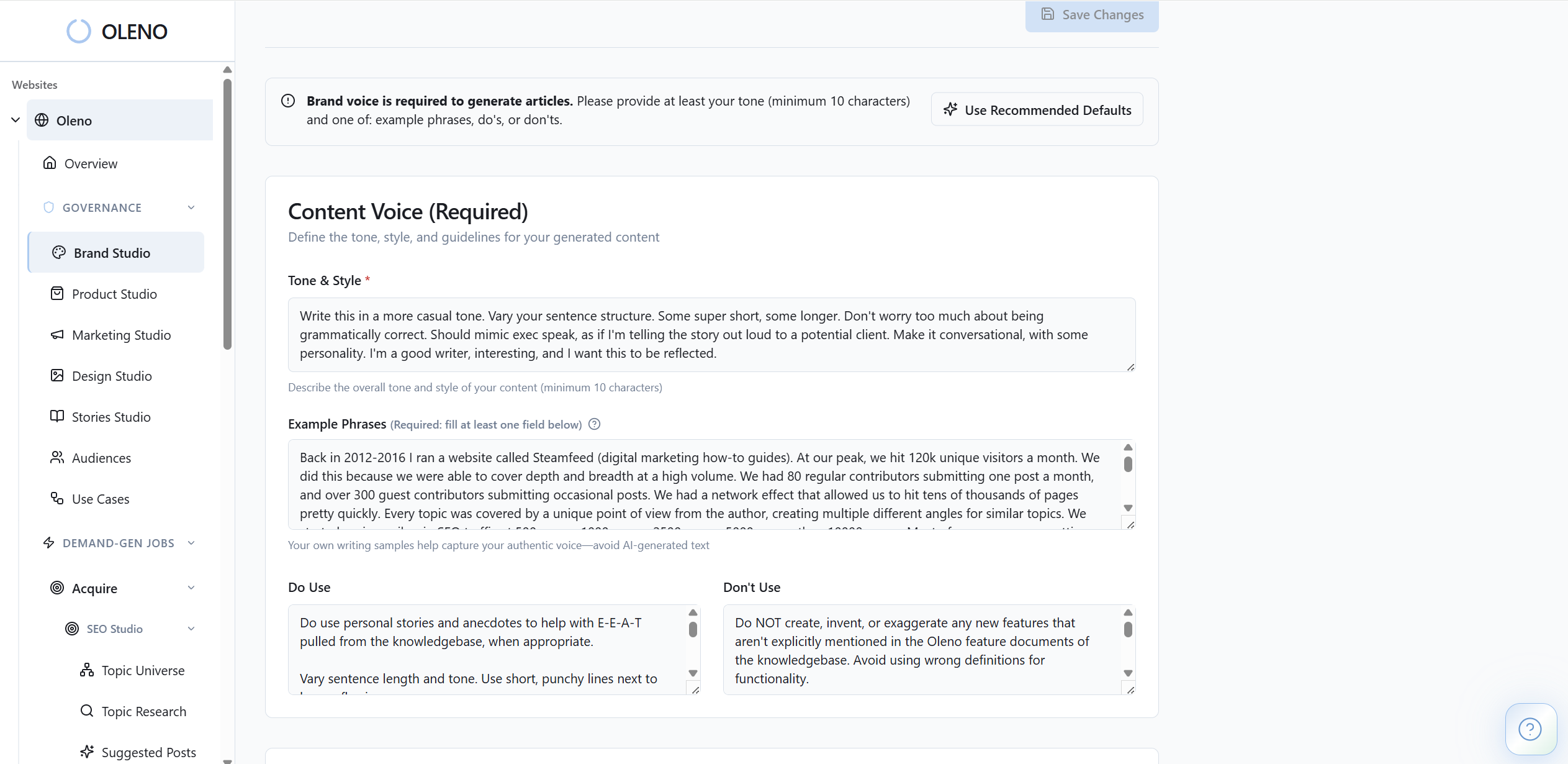
Start with the account that creates the most editing tax. Usually that's the client with lots of content demand, lots of nuance, and lots of review friction. Set up the client's voice in brand studio, positioning in marketing studio, product truth in product studio, then define the right audiences and use cases. Let the system run a repeatable stream from there.
You don't need a huge migration plan to learn something useful. One account is enough to see whether the model lowers rework, tightens consistency, and gives your team more room to think.
The Next Step Is Proving Governed Execution On One Client Workflow
That's really the test. Not “can it generate text.” Plenty of tools can do that. The test is whether your agency can deliver more, with less coordination drag, without blurring client voices together or creating more review headaches downstream.
If that's the problem you're trying to solve, book a demo and walk through one client workflow. That's usually where the fit becomes obvious, or not. Either way, you'll know pretty fast.
About Daniel Hebert
I'm the founder of Oleno, SalesMVP Lab, and yourLumira. Been working in B2B SaaS in both sales and marketing leadership for 13+ years. I specialize in building revenue engines from the ground up. Over the years, I've codified writing frameworks, which are now powering Oleno.
Frequently Asked Questions