How Oleno Health Monitor Works When Agency Delivery Starts To Creak
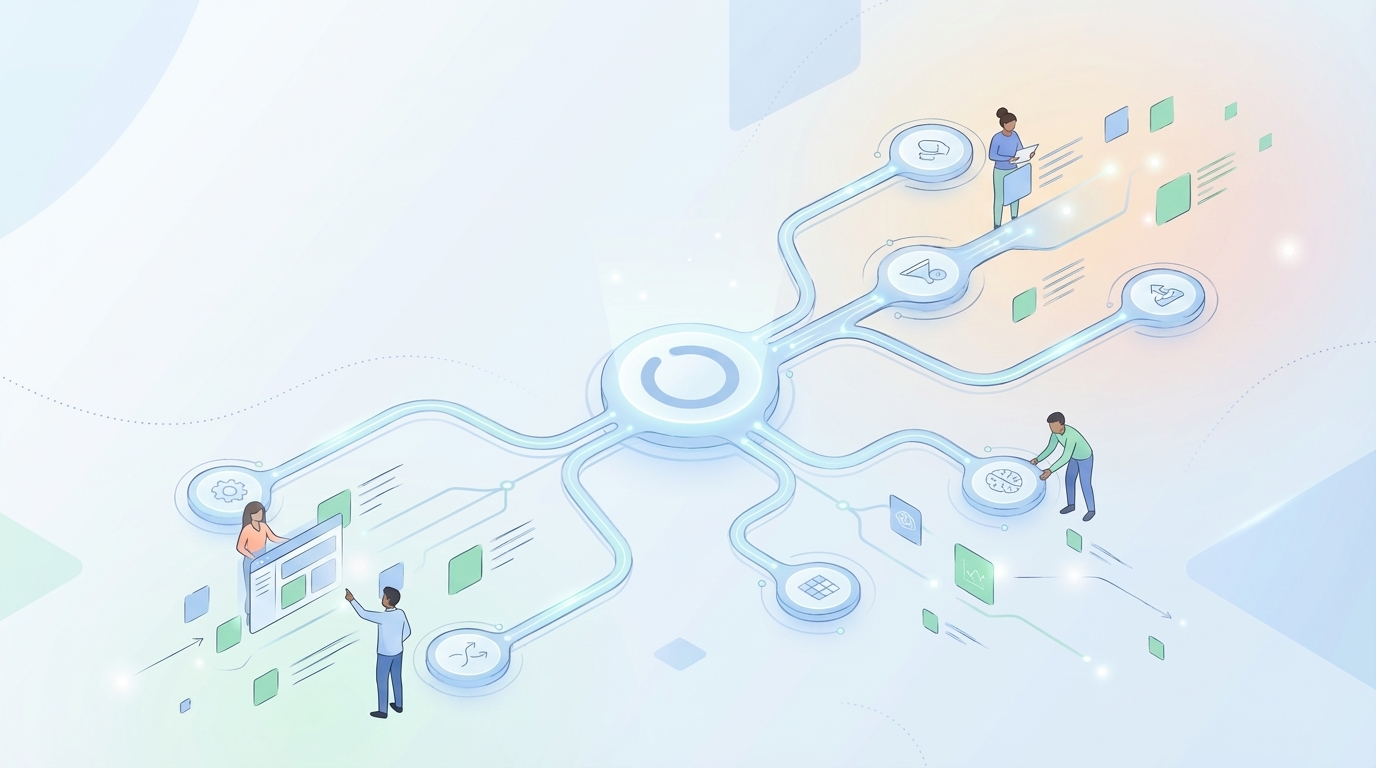
If you're searching for how oleno health monitor works, you're probably not looking for a shiny feature list. You're trying to figure out whether the system gives you a clear read on delivery health when multiple client accounts are moving at once, brand rules are different across each one, and nobody has time for deadline drama. That's the real question. And the best way to understand how oleno health monitor works is to look at it inside a governed content operation, not as some isolated dashboard.
Agency teams usually don't break because one article was weak. They break because small workflow issues stay hidden a little too long. A job gets stuck. A quality check fails late. A publish step doesn't move. Then your team is doing rework, your margin gets squeezed, and the client update turns reactive. That's where understanding how oleno health monitor fits into the bigger operating model starts to matter.
I've lived versions of this before in content. Back when I was scaling with limited time and way too much context trapped in my own head, the problem wasn't just writing. It was knowing where things were going wrong early enough to do something useful about it. That's the gap Oleno is built to close across governed content pipelines.
Key Takeaways:
- Health monitoring matters because small workflow failures can turn into client-facing delivery problems faster than most agency teams expect.
- How oleno health monitor works makes the most sense inside a broader system that tracks execution health across scheduled content pipelines, quality checks, and publishing flow.
- For agencies trying to scale delivery 3-5x without proportional hiring, earlier visibility can cut down reactive review cycles and last-minute status chasing.
- Monitoring does not replace strategy, editorial judgment, or strong setup in brand studio, marketing studio, product studio, use case studio, and audience & persona targeting.
- The real value shows up when system status is explicit enough that your team can verify risk before deadlines slip.
Why Health Monitoring Matters When Client Workloads Pile Up
Agency delivery risk usually starts small, then compounds. One stalled workflow can affect review timing, publishing cadence, and client confidence across the week. When you're managing several B2B accounts at once, hidden drift gets expensive fast. That's exactly why teams start asking how oleno health monitor works.
Small Workflow Failures Become Client-Facing Problems Fast
A lot of agency content leads can get one article out the door. That's not the hard part. The hard part is keeping 8, 12, or 20 parallel workflows healthy when each client has different voice rules, product facts, approval habits, and publishing expectations.
One missed issue can cascade. A draft can fail quality gate late. A job can sit longer than expected in the orchestrator. A publishing step can lag behind the rest of the pipeline. None of that sounds dramatic on its own. But stack enough of those little misses together and now you're updating an account team with bad news on Thursday about work that looked fine on Tuesday.
I've seen versions of this before, even outside agencies. At PostBeyond, I could write quickly because the context lived in my head. Once more people got involved, quality got less predictable and output slowed down. Not because anyone was weak. Just because context gaps and handoffs create drag. Agencies feel that even harder because they don't just manage one brand. They manage many.
Agencies Pay A Margin Tax When Health Checks Are Manual
Manual health checks cost time, sure. But that's only part of it. They also create uncertainty. And uncertainty is what turns a normal delivery week into a mess.
Let's say an agency content lead oversees 10 active client pipelines. If they spend even 10 to 15 minutes per account checking status, chasing blockers, and figuring out whether something is off, that's 100 to 150 minutes gone before any real problem-solving starts. Then add the actual intervention work. Then add the client communication. Then add the rework from catching issues late instead of early.
That margin tax adds up fast.
And there's another issue. Manual checking is inconsistent by nature. People check when they remember, when a client asks, or when something already feels wrong. That's backward. In multi-account operations, you want risk surfaced before it becomes visible to the client, not after.
How Oleno Fits A More Reliable Way To Run Content
Reliable content operations start with visibility. You can't manage what you can't see, and you definitely can't scale governed content if execution health is a mystery. Volume matters. But consistency is what compounds. That's the frame for understanding how oleno health monitor works in practice.
Reliable Content Operations Start With System Visibility
A healthy content system is not just one that publishes a lot. It's one that makes status visible enough that you can spot problems early, verify what's actually happening, and intervene where it matters.
That's why monitoring shouldn't be treated like some reporting add-on. It's part of the operating model. If your demand gen system runs every week, visibility into workflow health has to live inside that system, not outside it in spreadsheets, Slack threads, or status meetings.
This matters because execution quality is cumulative. If your pipeline produces drift, delays, and uneven quality, that doesn't just slow the team down. It weakens consistency across the content operation.
Governance Only Works When Execution Health Is Observable
A lot of teams put real effort into brand rules, positioning, and product accuracy. Good. They should. But those rules only matter if the execution layer is healthy enough to carry them through consistently.
This is where many systems fall apart. People assume the problem is content output. Usually it isn't. The problem is fragmented execution. One tool handles drafting. Another handles review. Someone manually tracks publish status. Somebody else owns QA. Then when something breaks, nobody has a clean picture of where the break happened.
You end up with activity. Not reliability.
If you want to see the bigger system in action, explore how governed content workflows run in Oleno.
How Oleno Health Monitor Works Inside A Governed Pipeline
How oleno health monitor works is easiest to understand inside Oleno's governed content pipeline. It gives teams visibility into execution health across scheduling, pipeline progress, quality evaluation, and publishing status. That explicit status helps teams intervene earlier and trust the system for the right reasons.
The System Surfaces Risk Before Deadlines Slip
The real value here is simple. Teams get a clearer signal on workflow condition before missed deadlines become obvious somewhere else.
Oleno is built as an ongoing content operating system, not a pile of disconnected tasks. Teams can plan work in studios like marketing studio, product studio, stories studio, use case studio, or programmatic seo studio. From there, the orchestrator runs scheduled content pipelines, quality gate evaluates output against defined standards, and cms publishing handles approved content moving live. Inside that model, how oleno health monitor works matters because it helps make workflow condition visible before deadline risk turns into client-facing cleanup.
That distinction matters.
The system already includes the orchestrator for running scheduled content pipelines, the quality gate for evaluating output against defined standards, cms publishing for moving approved content live, and the executive dashboard for operational visibility. Health monitor fits into that environment as the layer that helps teams see where execution is healthy, where it may be blocked, and where intervention is needed.
Health Signals Show Where Workflows Need Intervention
The practical value of health signals is not that they replace human judgment. They narrow human attention.
If a governed content system is doing its job, most work should move without daily babysitting. But some jobs will need intervention. A quality threshold might not be met. A pipeline may slow down. A publish handoff could require attention. When status is explicit, you don't waste time checking everything equally. You focus where risk is actually showing up.
That's a much better use of a content lead's time.
Back when I was manually prompting GPTs for a B2C app I built, I was spending 3 to 4 hours a day doing repetitive content work and CMS updates. It worked for a bit. But it was fragile. The minute the system depends on your constant attention, it stops being a system and starts being a job. That's a big part of how oleno health monitor changes the operating rhythm.
If you want to dig into that operating model, discover how Oleno helps teams run governed content more reliably.
Governed Pipelines Are Easier To Trust When Status Is Explicit
Trust in content automation is rarely about the draft alone. It's about whether the full chain is observable enough that you know what's happening across accounts, jobs, and deadlines.
That's where explicit status does real work. If your team can see that topics are being surfaced on schedule, that jobs are progressing through deterministic steps, that quality gate is evaluating output before review, and that cms publishing is moving as expected, confidence goes up. Not blind confidence. Informed confidence.
Some teams still prefer very hands-on management, and fair enough. In some environments that can work. But when client volume grows, trust usually comes from visibility plus control boundaries, not from more manual checking.
How Oleno Health Monitor Helps When One Client Pipeline Goes Sideways
One unhealthy client pipeline can derail a full delivery week because agency work is shared-capacity work. Delays rarely stay isolated. They spill into review time, account communication, and the next scheduled items behind them. This is where how oleno health monitor becomes less theoretical and a lot more practical.
One Unhealthy Client Pipeline Can Derail A Full Delivery Week
Let's say you're running content for six B2B SaaS clients. Each has a different brand voice, different approval sensitivity, and different product truth that has to stay accurate. On paper, the week looks manageable. A few drafts here. A few refreshes there. One product marketing article for a launch. A couple of SEO pieces moving to publish.
Then one account starts slipping.
Without clear health visibility, you often find out late. Maybe the job slowed down because a quality check didn't pass cleanly. Maybe the workflow is stuck between stages. Maybe publishing isn't progressing the way you assumed. By the time that becomes obvious, your editor is reprioritizing, your account lead is writing a defensive client note, and the rest of the week's schedule is getting squeezed.
That's the hidden cost. Not just one bad asset. The knock-on effect across shared capacity.
Early Visibility Helps Reduce Rework Across Multiple Accounts
Now picture the same scenario with execution health visible early enough to act. The issue surfaces while there's still room to move work around, tighten a review pass, or communicate clearly with the client before the deadline becomes the problem.
That changes the shape of the week.
You still need judgment. You still need someone to decide what gets priority. But you don't spend half your time figuring out where the issue is. You spend it handling the issue itself. Big difference.
For agencies trying to scale content delivery without proportional hiring, that difference matters. The workflow value here is straightforward: when visibility improves and rework drops, scaling gets more realistic. That's the practical answer to how oleno health monitor helps teams operating across multiple accounts.
If you want to see that value in context, start exploring how Oleno supports healthier content operations.
What Health Monitoring Does Not Do For You
Health monitoring does not replace strategic judgment. It shows workflow condition and risk. It does not decide what your agency should publish, what matters most to a client, or whether your positioning is strong enough to win. That boundary is part of understanding how oleno health monitor clearly.
Monitoring Execution Health Does Not Replace Strategic Judgment
This boundary matters. Honestly, a lot of software pages blur it.
Health monitoring can show that a pipeline is healthy, delayed, blocked, or worth checking. It can support visibility across execution. It can reduce surprises. But it won't create your strategy. It won't define your client narrative. It won't tell you which use case matters most this quarter or how to handle a nuanced account relationship.
Humans still own that.
Oleno's broader model is built around that idea. Marketers set the boundaries. They define voice, positioning, product truth, audiences, and use cases through tools like brand studio, product studio, use case studio, marketing studio, and audience & persona targeting. The system runs inside those boundaries.
Visibility Reduces Surprises But Does Not Fix Weak Governance
If your inputs are weak, visibility alone won't save you. You can monitor a messy system and still get messy outcomes.
So if brand rules are vague, if product claims aren't grounded, if audience targeting is generic, or if review standards are fuzzy, health monitor won't magically correct that. It can make workflow condition clearer. It can't compensate for unclear setup in brand studio, marketing studio, product studio, use case studio, or audience & persona targeting.
That's why observability and good setup have to work together.
You might be thinking, fine, then why does monitoring matter so much? Because once the strategic foundation is set, execution problems become the next place teams lose time, lose margin, and lose trust. Visibility doesn't solve everything. But without it, small problems stay hidden longer than they should.
Why Agency Teams Care More About Health As Volume Grows
Teams scale faster when system health is visible because volume exposes weak spots quickly. What feels manageable at three active clients starts to break at ten. And once the breakage is client-facing, you're already paying for it. That's another reason how oleno health monitor keeps coming up for agency operators.
Teams Scale Faster When System Health Is Visible
As client count grows, the cost of uncertainty grows with it. That's why agency leaders usually hit a wall where they realize the issue isn't effort. It's system reliability.
I saw a version of this years ago with content scale. At Steamfeed, volume worked because we had both breadth and enough structure to keep publishing consistently across thousands of pages. At smaller SaaS teams, I saw the opposite. Great intentions, lots of work, but too much lived in people's heads. That's when output gets slower and quality gets less predictable.
Agencies live in that tension every day. More client volume sounds good until the hidden coordination cost starts eating your margin. And that is usually when the question shifts from "do we need another tool" to "do we actually understand how oleno health monitor helps us keep the machine healthy?"
Operational Clarity Matters More As Client Volume Grows
Once you move beyond a handful of client workflows, you need more than production capacity. You need visibility into whether the machine is healthy.
Oleno is built as a governed content operating system, not just a drafting tool. Health monitor makes the most sense in that larger context, alongside orchestrator, quality gate, executive dashboard, and cms publishing. The value isn't just seeing status. It's being able to verify whether governed execution is holding together across multiple accounts, content types, and publishing timelines.
If your agency is trying to protect margins, reduce rework, and scale delivery without hiring in lockstep, ready to see how Oleno can tighten your content operation? Get started with a demo.
Next Steps
So, how oleno health monitor works really comes down to this: it helps make execution health visible inside a governed content system so teams can catch risk earlier, focus attention where it matters, and run multi-account delivery with more confidence.
Not magic. Not strategy in a box. Just clearer operational visibility where agency teams usually need it most.
And honestly, that's the point. When status is explicit, surprises go down, rework drops, and trust in the system gets a lot more grounded.
About Daniel Hebert
I'm the founder of Oleno, SalesMVP Lab, and yourLumira. Been working in B2B SaaS in both sales and marketing leadership for 13+ years. I specialize in building revenue engines from the ground up. Over the years, I've codified writing frameworks, which are now powering Oleno.
Frequently Asked Questions