How to Build a Knowledge-Backed Fact-Checking Workflow

I’ve never met a team that failed because they didn’t care about accuracy. They failed because their process assumed an editor could catch everything at the end. That works until you ship daily. Then it doesn’t. At scale, “we’ll fix it in review” turns into late-night corrections, nervous sales teams, and content that slows instead of ships.
Here’s the real story. Accuracy isn’t an edit. It’s a system. When we grew output on small teams, we sped up by recording leadership and transcribing. Great for speed. Terrible for provenance. We had ideas, but the facts drifted. We only stopped the rework when we encoded the facts up front and forced the workflow to use them. Not more eyes. Better rules.
Key Takeaways:
- Editorial-only fact checking breaks once you publish at volume—accuracy must be systematized upstream
- A knowledge-backed workflow ties drafting, retrieval, and QA to a single source of truth
- Retrieval rules (freshness, snippet-level grounding, conflict resolution) convert judgment calls into predictable behavior
- Quantifying rework highlights hidden costs: hours lost, credibility hits, distribution friction
- A practical sequence—inventory sources, define rules, integrate provenance, add a QA gate—keeps speed without sacrificing trust
- Oleno operationalizes this approach with KB grounding, an automated QA-Gate, deterministic provenance, and publish-ready delivery
Why Editorial-Only Fact Checking Breaks At Scale
Editorial-only fact checking breaks at scale because manual review can’t enforce consistent provenance, freshness, and grounding across daily output. Once AI accelerates drafting, errors shift from typos to context drift and stale sources. You don’t fix that with more editors—you fix it with a knowledge base and rules that fire every time.

The hidden failure rate once volume increases
Mistakes aren’t loud at first. They leak in as tiny context mismatches—old pricing, an outdated API limit, a misattributed stat—that slip past even good editors because the words read fine. When you add AI drafting or push to daily publishing, the rate of these quiet misses increases, and they concentrate around provenance, not punctuation.
Here’s the punchline: these misses weren’t editorial oversights; they were system absences. Without machine-readable sources and retrieval rules, editors can’t see the evidence, only the sentence. Automated tools can help, but they’re not set-and-forget. Even the best research on automation warns about scope and source limits. Useful? Absolutely. But constrained, as outlined by the Reuters Institute’s review of automated fact-checking’s promise and limits.
What is a knowledge-backed workflow and why now
A knowledge-backed workflow wires drafting, retrieval, and QA to a single source of truth. Claims draw from machine-readable sources with inline provenance; QA enforces rules before publish. Now matters because AI increased throughput. Without codified memory, you scale rework and risk—fast.
Practically, it looks like this: you inventory sources, encode them with metadata (authority, freshness windows), and enforce retrieval policies in the draft itself, not after the fact. Reviewers see claims and evidence side by side. The playbook is very similar to how rigorous journalism teams structure their checks—document the source, verify the snippet, log the decision—described clearly in the KSJ Handbook’s fact-checking process. Difference here: we make those steps executable by a system, not dependent on a hero editor.
Ready to skip theory and see a production flow? Try a governed run and see where provenance shows up automatically. Want a quick test drive? Try Generating 3 Free Test Articles Now.
The Real Root Cause Is Missing Knowledge And Rules
The real root cause is missing knowledge and rules—teams edit outputs instead of governing inputs. When writers pull from scattered docs and ad hoc tabs, accuracy depends on memory. Encode trusted sources, define how they’re used, and let the pipeline enforce the rules. That’s how accuracy becomes repeatable.

What traditional approaches miss
Traditional approaches optimize the last mile. They polish headlines, tighten sentences, and fix small errors. What they don’t fix is the upstream chaos: unstructured sources, unclear authority, no freshness windows, and no snippet-level grounding. If your “source of truth” is a shared folder and an internal wiki, you’re asking humans to reconcile versions on the fly. That’s generous. And fragile.
We learned this the hard way. On one team, founder-led content brought speed and insight. But our facts came from whoever had the latest deck. It read well, but a month later, product details drifted. Editors caught grammar; no one caught provenance. The fix wasn’t heavier editing. It was consolidating sources, encoding them, and forcing drafting to use them. If a claim couldn’t map to an approved snippet, it paused.
How retrieval rules change accuracy
Retrieval rules turn accuracy from a judgment call into a predictable behavior. Decide when a sentence must be grounded to a specific snippet versus a whole document, set freshness windows for volatile data (e.g., less than 30 days for pricing), and define tie-breakers when sources conflict. Risky claims—metrics, dates, comparative statements—get stricter requirements.
You can start strict, then relax with guardrails as your pass rate stabilizes. It mirrors what research in automated fact-checking has explored for years: localizing claims, mapping to evidence, and scoring alignment. A good primer on these mechanics is the ACL paper on automated fact-checking pipelines. The takeaway isn’t “machines will check it all.” It’s “machines can enforce the structure that lets humans verify the right things, fast.”
The Compounding Cost Of Factual Drift
Factual drift compounds because small inconsistencies multiply across pages, channels, and teams. Each correction creates rework, slows distribution, and erodes trust. Quantifying that tail work makes the case for a system-level fix—codified retrieval, provenance, and a QA gate—before scaling output further.
Let’s quantify the rework
Let’s pretend you ship 20 articles a month. If 25 percent need factual remediation and each fix takes 60 minutes, you burn 5 hours. Add a pulled post and a social correction—another 2–3 hours—and a credibility hit that’s hard to measure. And that’s just the visible rework. The hidden cost is slower approvals next month.
There’s also the meta-cost: editors start creating custom checklists for every edge case, which lengthens review without increasing accuracy. That’s why systemic controls beat manual heroics. Codified retrieval and a pass/fail QA gate reduce tail work without slowing drafting. And when you do need to intervene, you intervene with evidence. Research on evaluator consistency backs this up; even trained fact-checkers vary, which means structure matters more than preference, as shown by the Harvard Misinformation Review’s analysis of fact-checker agreement.
The domino effect on trust and distribution
One wrong stat doesn’t just trigger a correction. It slows the next five pieces. Syndication partners hesitate. Sales stops sharing. Your social queue gets review layers it never had. Distribution velocity drops because the team’s compensating for a system gap with manual friction. That’s not sustainable.
What you want is the opposite: a pipeline that refuses risky drafts, documents provenance inline, and lets clean content move fast. You shouldn’t debate whether a claim is “probably fine.” The draft either meets rules or it doesn’t. Pass, or pause. Yes, there’s nuance. But nuance sits inside the system—freshness windows, source hierarchy—rather than inside someone’s inbox.
How does inconsistent sourcing erode trust
Audiences forgive a typo. They don’t forgive contradictions across your own pages. If your pricing, integration specs, or benchmarks differ by article, you train readers—and prospects—to double-check you. That’s a tough reputation to shake and a headache for every future launch.
The fix isn’t to write less; it’s to make contradictions rare and trivial to resolve. Tighten the KB. Enforce snippet-level grounding for volatile claims. Set freshness requirements. And tag provenance inline so editors can verify in one view. When contradictions do slip, you’ve got the audit trail to fix them quickly and explain why. That restores confidence without slowing the whole machine.
Still doing this manually across docs and comments? You’re carrying unnecessary risk. If you want a safer baseline while keeping your calendar moving, Try Using An Autonomous Content Engine For Always-On Publishing.
What It Feels Like When Errors Slip Through
When errors slip through, the pain isn’t just a correction—it’s lost weekends, executive pings, and distribution pauses. Make it vivid: a 3am Slack alert, a quiet note from a top customer, an unclear escalation path. Build procedures that prevent those moments or, at minimum, make them short and contained.
The 3am correction nobody wanted
You get the ping at 3:07am. Someone noticed an outdated API limit in a post that went live yesterday. You log in, patch the article, ping social to pull the share, and send a correction note. Everyone’s awake for a preventable problem. This isn’t about perfection. It’s about controlling volatility.
To avoid this, define freshness constraints for claims tied to volatile data. Auto-flag those spans in drafting. Keep a clean audit trail so the fix takes minutes and requires no archaeology. Version history should tell you what changed, when, and why. You want procedures, not heroics.
When your biggest customer spots the mistake
Worse than an angry email is a worried one. A top customer flags a contradiction—your integration page says one thing, a recent blog says another. The CSM wants guidance. You want receipts. If risky claims require snippet-level grounding and inline provenance, your reviewer can verify in seconds. If not, you’re digging through tabs.
When you treat provenance as part of the draft, not an afterthought, reviews get faster and less defensive. Less “who wrote this?” and more “what does the evidence say?” That tone shift alone eases cross-functional strain. It also teaches new contributors how to ship responsibly without memorizing tribal knowledge.
When should you escalate to a subject-matter expert
Escalate when a claim can’t be grounded within the freshness window, when sources conflict irreconcilably, or when a classifier flags sensitive topics—regulatory, medical, legal. Your system should route those automatically, prefill context, and record the decision so the same question never stalls the line again.
This isn’t bureaucracy. It’s a speed play. You’re sharing load with the right experts at the right time, and you’re turning one-off clarifications into durable rules. Over time, fewer claims need escalation because your KB and policies improve. You feel that in shorter reviews and fewer “quick questions” that aren’t.
A Practical Workflow That Bakes Facts Into Every Stage
A practical, knowledge-backed workflow bakes facts into every stage: source inventory, retrieval rules, provenance in drafting, and a QA gate. You start strict on risky claims, set freshness windows, and enforce snippet-level grounding where it matters. The result is speed with guardrails—less rework, more trust, and a faster path to publish.
Step 1: Inventory and encode authoritative sources in a machine-readable KB
Start with a ruthless source inventory: product docs, terms, pricing, partner specs, and any third-party standards you rely on. Convert them to machine-readable chunks with stable IDs. Add metadata—authority tier, update cadence, freshness windows—and create an allowlist that drafting must use. This is your single source of truth.
Tag volatile fields—dates, limits, anything that changes—and store version history. You’re not building a library; you’re building a control surface. The point is to make evidence callable in context, not buried in folders. If a claim maps to a tagged snippet with a valid freshness window, it flies. If not, it pauses. That clarity alone removes half the “is this okay?” Slack threads. For a clear mental model of disciplined checking, see the KSJ Handbook’s step-by-step guidance.
Step 2: Define retrieval rules, snippet versus document grounding and freshness
Codify when a sentence must cite a specific snippet versus a whole document. Require snippet-level grounding for metrics, dates, and comparative claims. Define freshness windows—pricing must be updated within 30 days, legal within 7, for example—and tie-breakers for conflicts: highest authority wins, with recency as a secondary rule.
Make these rules visible to writers and enforced in QA. Start strict and relax only after you observe stable pass rates. Then, update rules by exception—not by sentiment. Research on automated verification emphasizes evidence granularity and conflict management for a reason; it’s the difference between “sounds right” and “is justified,” a principle echoed in the ACL automated fact-checking literature. Keep rules readable. If editors can’t explain them, they won’t trust them.
Step 3: Integrate retrieval into drafting with claim tagging and inline provenance
Make the draft carry its own receipts. Instrument drafting so risky claims auto-tag themselves and insert provenance inline—source title, snippet ID, date. Writers can stay creative because the system handles evidence formatting. Reviewers see the claim and its proof side by side, which speeds approvals and reduces debate.
Add guardrails for clarity: structured citation templates, short anchors that don’t break flow, and simple tooltips or comments that show the underlying snippet. When a claim doesn’t meet freshness or authority, the draft pauses with a reason code. Editors shouldn’t hunt across tabs; they should resolve in context, then move on. Interjection. The fewer context switches, the fewer mistakes.
How Oleno Automates Knowledge-Backed Fact Checking
Oleno automates a knowledge-backed workflow by grounding drafts in your KB, enforcing a QA-Gate with pass/fail rules, and shipping publish-ready content with deterministic provenance. It doesn’t add analytics or monitoring; it runs a governed pipeline that reduces rework and preserves velocity. The system handles structure. Your team focuses on story.
QA-Gate with 80 plus checks and a passing threshold
Oleno embeds quality into the pipeline. Before anything ships, an automated QA-Gate evaluates structure, voice, KB accuracy, snippet readiness, and information gain against 80+ criteria. Minimum passing score is enforced so borderline drafts don’t slip. If a draft fails, Oleno refines and re-tests automatically until standards are met.
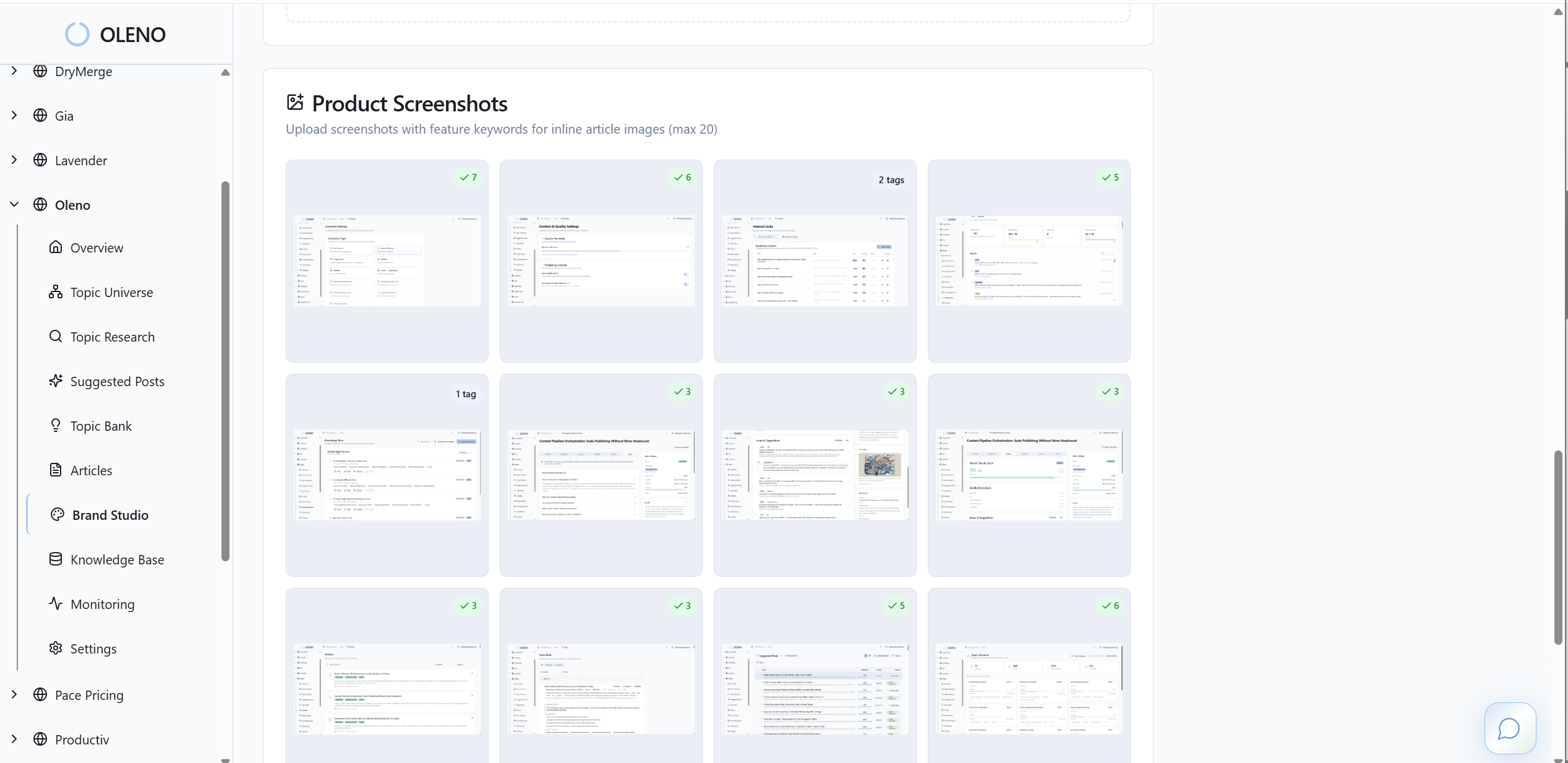
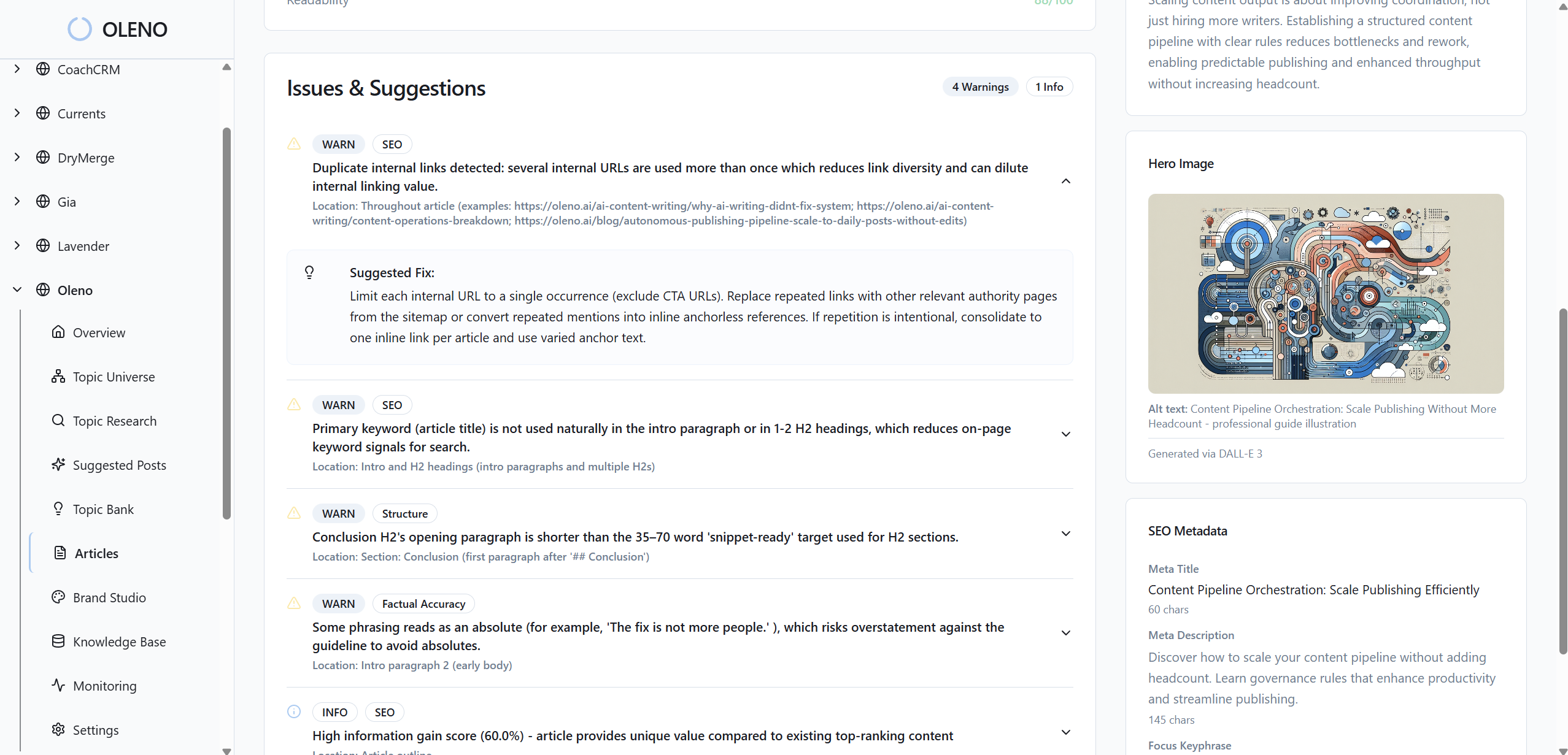
Because checks are codified, you cut the “nearly there” round-trips that drain time. Oleno isn’t judging taste; it’s enforcing the rules you set: provenance present where required, freshness windows respected, conflicts resolved. This is how you reduce the tail work we quantified earlier without slowing creation upfront. It’s not heavier process, it’s clearer pass/fail.
Publish-ready delivery and safe rollbacks
Once QA passes, Oleno prepares the article for delivery. It generates CMS-ready HTML, injects internal links from your verified sitemap, attaches JSON-LD schema, and delivers via connectors to WordPress, Webflow, or HubSpot. Duplicate publishing is prevented by design, and metadata rides along cleanly.
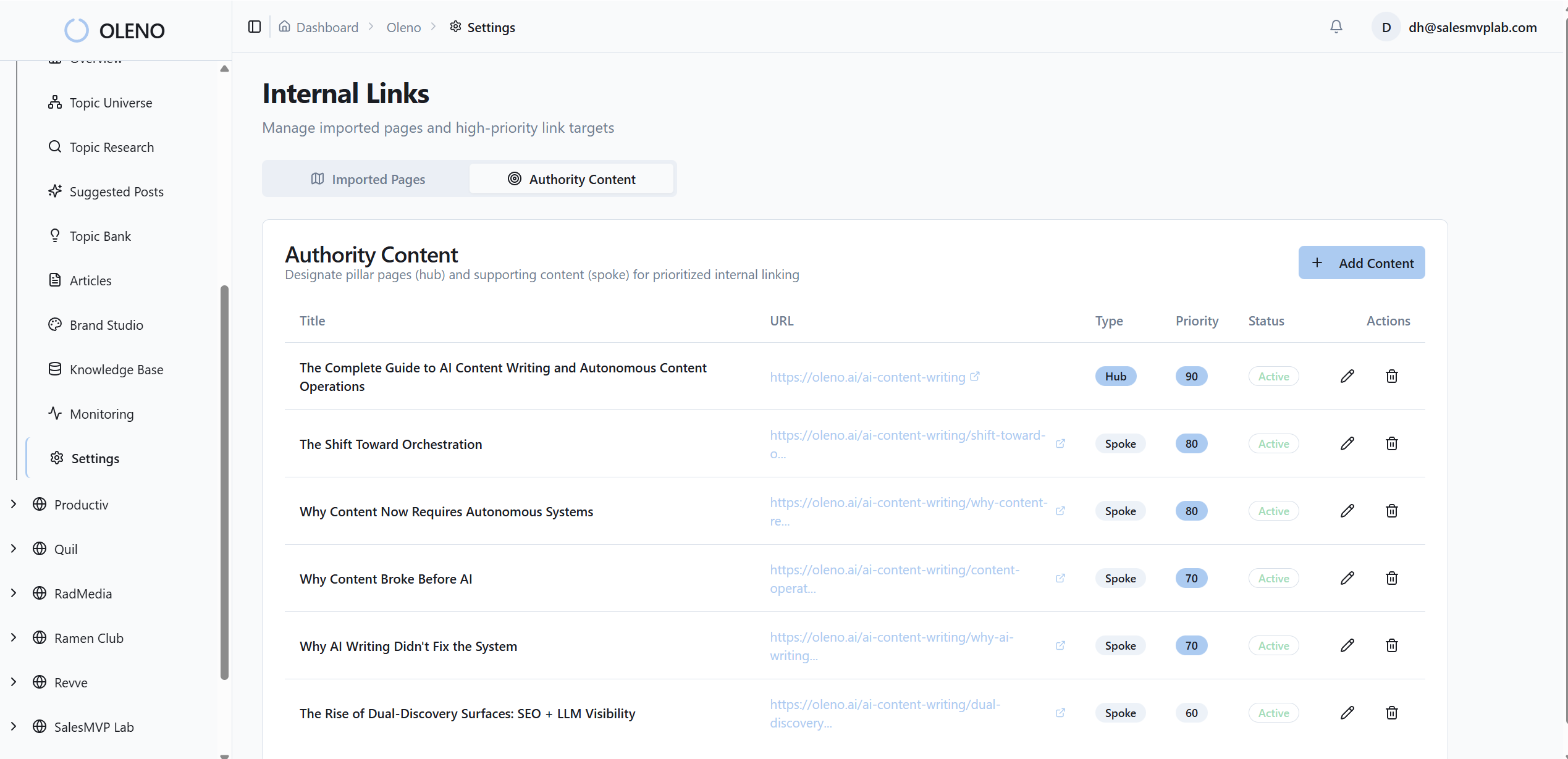
When a change is needed, version history and idempotent delivery let you update or rollback safely—no broken pages, no scramble. Oleno also records KB retrieval events, QA scoring, retries, and publish attempts so decisions are explainable later. The result: when someone asks “where did this claim come from?” you can answer with evidence, not memory. That’s how Oleno reduces the 3am corrections and the “worried” customer emails and gives your team a faster, safer path to publish.
If you want your drafts to carry their own receipts—and your pipeline to enforce them—Oleno was built for that. Try Oleno For Free.
Conclusion
You don’t fix factual drift with more editing. You fix it by moving accuracy upstream: encode the facts, enforce retrieval rules, make drafts carry provenance, and gate quality before publish. That’s how you keep speed and earn trust at the same time. Whether you implement this yourself or let Oleno run it, the outcome is the same: less rework, clearer evidence, faster shipping.
About Daniel Hebert
I'm the founder of Oleno, SalesMVP Lab, and yourLumira. Been working in B2B SaaS in both sales and marketing leadership for 13+ years. I specialize in building revenue engines from the ground up. Over the years, I've codified writing frameworks, which are now powering Oleno.
Frequently Asked Questions