How to Build Topic Clusters: Map, Prioritize, and Link for SEO
Topic clusters don’t fail because the theory is wrong. They fail because the execution is messy: vague pillars, overlapping articles, and links pointing wherever someone guessed on a Tuesday. I’ve lived that mess. At Steamfeed, volume carried us for a while. At Proposify, we ranked like crazy but couldn’t connect content to the product story cleanly enough for sales to care.
Here’s the fix. Treat clusters like a system, not a campaign. Map coverage. Label saturation. Enforce cooldowns. And make internal links deterministic, not editorial. When you do, authority compounds. It’s slower than a splashy content “sprint,” but it’s way more durable. And your team stops spending Fridays fixing cannibalization they created on Wednesday.
Key Takeaways:
- Authority grows when each page has a distinct job and points cleanly to its pillar
- Topic Universe beats spreadsheets by tracking coverage, saturation, and cooldowns over time
- Deterministic internal links prevent mislinks, fabricated URLs, and orphan pages
- Cooldowns and information gain scoring reduce rework and duplicate coverage
- Snippet-ready sections, schema, and brand visuals improve citation and credibility
- Systemize the pipeline end to end so humans decide direction, not fix structure
Why Most Cluster Projects Stall And Dilute Authority
Most cluster projects stall because teams chase volume, not coverage clarity. Authority compounds when every page expands net-new surface area and reinforces a defined pillar. The moment you let duplicates, fuzzy mappings, or ad-hoc links in, you split signals and slow the whole flywheel.
The Metrics That Actually Prove Authority, Not Volume
If you measure cluster progress by page count and keyword volume, you’ll publish faster, and dilute authority faster. The better metrics live at the cluster level: coverage status and saturation labels that tell you where to add, refresh, or pause. That’s the difference between building an asset and feeding a treadmill.
Tie each cluster to a canonical pillar and give every page a job description. New how-to? Great, define its anchor and where it sends equity. Refreshing an explainer? Good, confirm it still maps to the pillar and doesn’t duplicate a near-match URL. Even widely shared playbooks like HubSpot’s guide to topic clusters get clearer when you apply this stricter lens: not “more posts,” but “distinct roles.”
Why Does Classic Pillar Theory Break In Production?
Pillar-and-cluster theory looks clean on a whiteboard. Production breaks it. You publish across teams, quarters, and goals. Without canonical pillar mapping, cooldowns, and deterministic linking, you create two outcomes you didn’t mean to: page conflict and mixed signals. That’s how a helpful “supporting” post starts outranking your pillar.
You need operational guardrails you can enforce at the brief and QA stages, not after publishing. Map each new draft to the pillar at approval. Enforce a cooldown before re-covering the same idea. And verify link directions during QA, not the night before launch. Even thorough overviews like Search Engine Land’s 2025 topic cluster explainer assume you’ll execute the rules. Most teams don’t, at least not consistently.
What Does Deterministic Linking Change?
Deterministic linking eliminates the single biggest source of cluster drift: human guesswork. When internal links are injected from a verified sitemap with exact-match anchors, you stop creating fabricated URLs, random anchors, and orphan pages. Pages point to the right pillar every time. It’s boring in the best way.
This also protects your best assets from internal competition. Supporting posts link up to the pillar, not sideways into other supports. The rule is clear, and the code enforces it. If you need a refresher on the fundamentals and why anchors matter, skim this concise topic cluster SEO strategy overview. We built Oleno around these guardrails so your team focuses on story, not link policing. Ready to operationalize this without spreadsheets? Try Using an Autonomous Content Engine for Always-On Publishing: Try Using an Autonomous Content Engine for Always-On Publishing
The Real Root Cause Of Noisy Clusters
Noisy clusters don’t come from bad writers. They come from keyword-first workflows that miss intent, lifecycle, and product alignment. Start with a Topic Universe that maps your sitemap and knowledge base into canonical pillars. Then treat keywords as attributes that confirm the fit, not the driver of the decision.

What Traditional Keyword-First Workflows Miss
Keywords don’t know your product, your sales motion, or your onboarding gaps. The same term can mean three different things across use cases and lifecycle stages. When keywords lead, you over-publish near-duplicates, wedge content into the wrong pillar, and create link patterns that make sense only in a spreadsheet.
Start by mapping your sitemap and KB into a Topic Universe. Group by solution area and intent first, then layer keywords inside those boundaries. This keeps a “demo request” article out of your “how-it-works” cluster and prevents a “compare alternatives” piece from leaking into your “setup guides.” You’ll plan less by vanity volume and more by coverage gaps.
The Hidden Complexity Behind Coverage And Saturation Labels
Coverage isn’t binary. You need thresholds and labels, underserved, healthy, well-covered, saturated, that steer decisions. Underserved means create net-new. Healthy means refresh the pillar. Well-covered means prioritize elsewhere. Saturated means pause and revisit in a quarter. Add a cooldown so you don’t rewrite the same thing next week.
This feels strict the first month. Then the benefits show up. Fewer duplicate drafts. Cleaner link graphs. Clearer briefs. Your writers stop asking “which page should this link to?” because the answer lives in the rules. Your editors stop debating where a draft belongs because the pillar mapping was decided before writing began.
Why Clusters Must Be Mapped To A Topic Universe, Not A Spreadsheet
Spreadsheets drift. They don’t enforce rules at the moment decisions are made. A Topic Universe is living logic: it groups topics, tracks status, enforces cooldowns, and prioritizes gaps. It feeds your brief templates automatically so guidance is baked in, not pasted in Slack after the damage is done.
When the Topic Universe becomes your single source of truth, you eliminate “we didn’t know that page existed” mistakes. The system knows, because it ingested your site and KB. It also knows what’s saturated and what just moved to “refresh.” That’s how you keep cluster execution aligned over quarters, not just sprints.
The Hidden Costs Of Ungoverned Cluster Execution
Ungoverned clusters drain hours and split signals. Manual overlap checks, ad-hoc link audits, and cleanup sprints steal time from narrative work. The costs show up as wasted spend, decaying CTR, and quiet cannibalization that takes quarters to unwind.
Engineering Hours Lost To Manual Mapping And Audits
Let’s pretend you ship 20 posts per month. You spend two hours per piece checking overlap, picking link targets, and trying to prevent cannibalization. That’s 40 hours monthly, 480 hours a year, on guardrails a system could enforce. And you still miss things because humans are bad at remembering old slugs.
Codify the rules and get those hours back. Canonical pillar mapping lives in the brief. Cooldowns and saturation gates live in the pipeline. Internal links are injected from a verified sitemap after QA. Humans decide the story and the examples. The system handles structure and link hygiene.
The Cascading Impact On Cannibalization And Decaying CTR
Two pages fighting for the same query confuse everyone, especially search engines. CTR drops as the “right” result bounces around with a sibling that shouldn’t have been created. Ranking volatility looks like an algorithm update when it’s really an internal signal problem.
Saturation labels and canonical link directions reduce that noise. Support pages should flow equity up to the pillar. “How-to” should not prop up “vs.” and “alternatives” pages. When the map and the links align, you consolidate authority and stabilize CTR. Simple rules, consistently applied, beat heroic editing.
A Quick Math Check On Wasted Output
Let’s pretend 25% of monthly articles repeat coverage. At 20 posts, that’s five wasted. If one post costs 600 dollars all-in, that’s 3,000 dollars gone this month. Repeat that for a quarter, and you’ve buried a meaningful tool budget in duplicate content.
You can’t eliminate waste entirely, but you can cap it. Information gain scoring at the brief stage flags “nothing new here” outlines before drafting. Cooldowns stop the “we already did this” reruns. Even high-level references like Moz’s topic cluster primer point in this direction; the difference is enforcing it every time. Want a faster path than manual checks? Try Generating 3 Free Test Articles Now: Try Generating 3 Free Test Articles Now
The Frustration Of Competing Pages And Missed Signals
The emotional cost is real. You finally win a snippet, then a “helpful” internal post steals it with a sideways link. Or a last-minute redirect breaks your breadcrumbs and schema, and the SERP goes wobbly. You don’t just lose traffic, you lose confidence.
When Your Best Post Loses Its Snippet Because You Linked The Wrong Way
You had the featured snippet. Then a newer page linked laterally, picked up exact-match anchors, and outranked your own pillar. It feels unfair because both pages were yours. But the crawler doesn’t care who wrote it, only which page your internal signals favored.
Deterministic linking prevents that. If support always points up, and anchors match the pillar title, you reduce accidental “vote splitting.” In practice, that means fewer 1 a.m. Slack threads about why the graph flipped. Your team sleeps better, and your pillar keeps its seat.
Why This Erodes Trust With Sales And Leadership
When traffic is up but pipeline is flat, execs start asking hard questions. I saw this at Proposify. We ranked everywhere, but too much content sat too far from the product story. Clusters screamed “authority” to SEOs and “noise” to the sales team.
Pull product alignment into the cluster model. Tie clusters to solution areas. Add brand visuals in the solution sections so a reader can see the product while they learn. Sales recognizes the story. Leadership sees the throughline. You haven’t turned content into a brochure, you’ve made it legible.
A Production-Ready Way To Build Topic Clusters That Compound
A production-ready cluster system starts with a Topic Universe, adds coverage labels and cooldowns, and enforces deterministic linking. Briefs include information gain scoring and snippet-ready structure. The result isn’t perfection, it’s predictability you can run every week without whiplash.
Step 1: Create A Topic Universe
Ingest your sitemap and knowledge base. Dedupe URLs and generate candidate topics mapped to canonical pillars. Group by solution area and intent so new ideas don’t drift into unrelated themes. The output is a living topic graph that decides what to write next, what to refresh, and what to pause.
This replaces spreadsheet guesswork with rules the pipeline can actually enforce. It also reduces editorial arbitration because the pillar boundaries are defined up front. Writers still bring stories and examples. Editors still shape narrative. But the map is settled before the draft exists, which saves an enormous amount of rework later.
Step 3: Set Coverage And Saturation Metrics
Define thresholds for underserved, healthy, well-covered, and saturated at the cluster level. Add a 90-day cooldown before re-covering a topic so freshness doesn’t become duplication. Compute a simple coverage score that blends gap size with business impact, and publish the formula so prioritization is transparent.
These labels govern your create, refresh, or pause decisions without weekly debates. They also educate stakeholders. When someone asks for “another guide on X,” you can point to the saturation label and the cooldown timer. The rules aren’t personal, they’re how the system protects authority.
Step 6: Implement Deterministic Linking And Canonicalization
Set linking rules once and make them non-optional. Use only verified URLs from your sitemap. Match anchor text to page titles. Enforce canonical mapping back to pillars. Place links within natural sentences, not footers or “related links” blocks. Then inject links after QA so drafts can focus on the narrative.
This is how clusters pass equity predictably without human link spreadsheets. It also prevents fabricated slugs and protects against last-minute anchor changes. The side effect you’ll appreciate in a month: orphan pages disappear because the system has to account for everything it links.
How Oleno Operationalizes Topic Clusters End To End
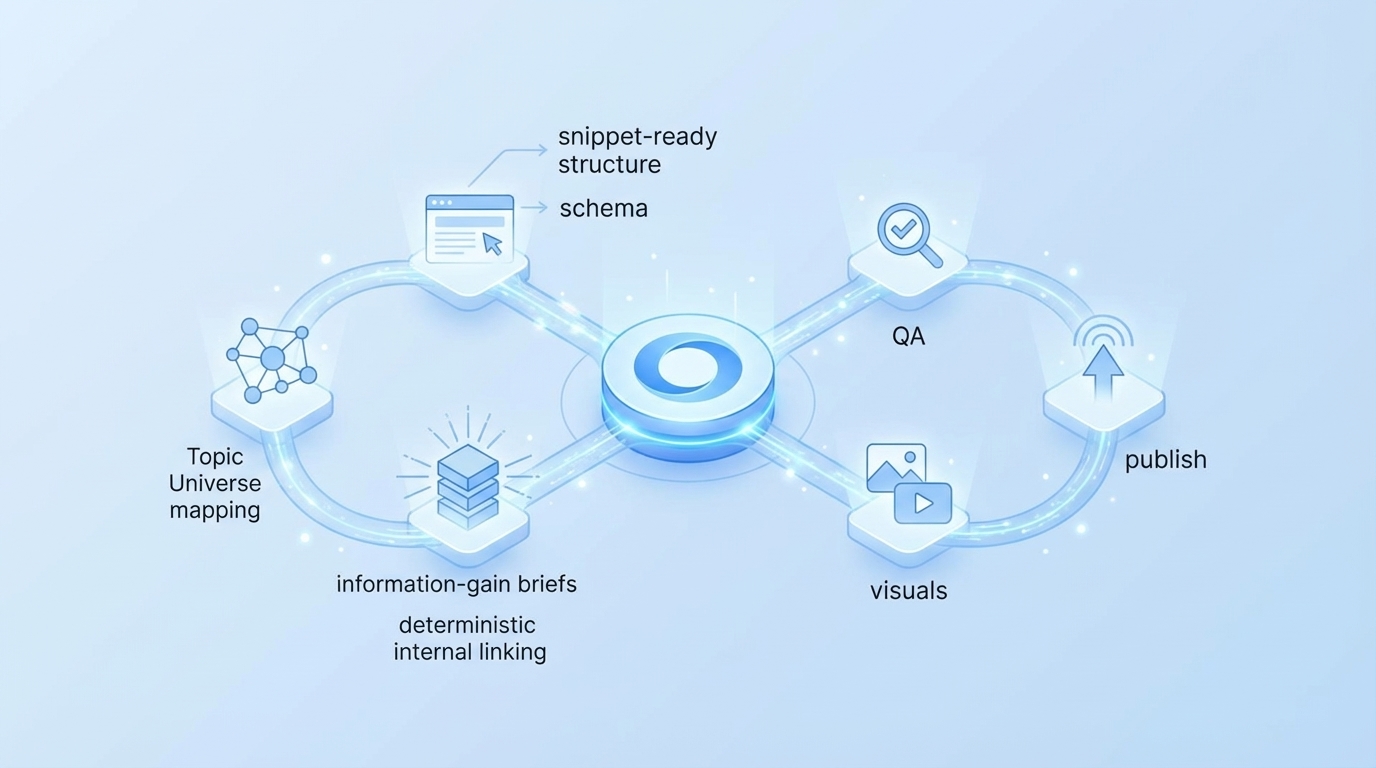
Oleno turns the cluster blueprint into a closed-loop system: Topic Universe mapping, information-gain briefs, deterministic internal linking, snippet-ready structure, schema, visuals, QA, and publishing. You get fewer conflicts, less rework, and pages that look like your brand and read like experts wrote them.
Automating Topic Clusters With Oleno
Oleno maps your sitemap and knowledge base into a Topic Universe, labels clusters by coverage, and enforces a 90-day cooldown so you don’t re-cover ideas too soon. It then generates information-gain briefs that include competitive gaps and a 0–100 uniqueness score, which reduces duplicate coverage before a single paragraph is written. During drafting, Oleno keeps your brand voice intact and opens every H2 with snippet-ready paragraphs to improve citation eligibility.
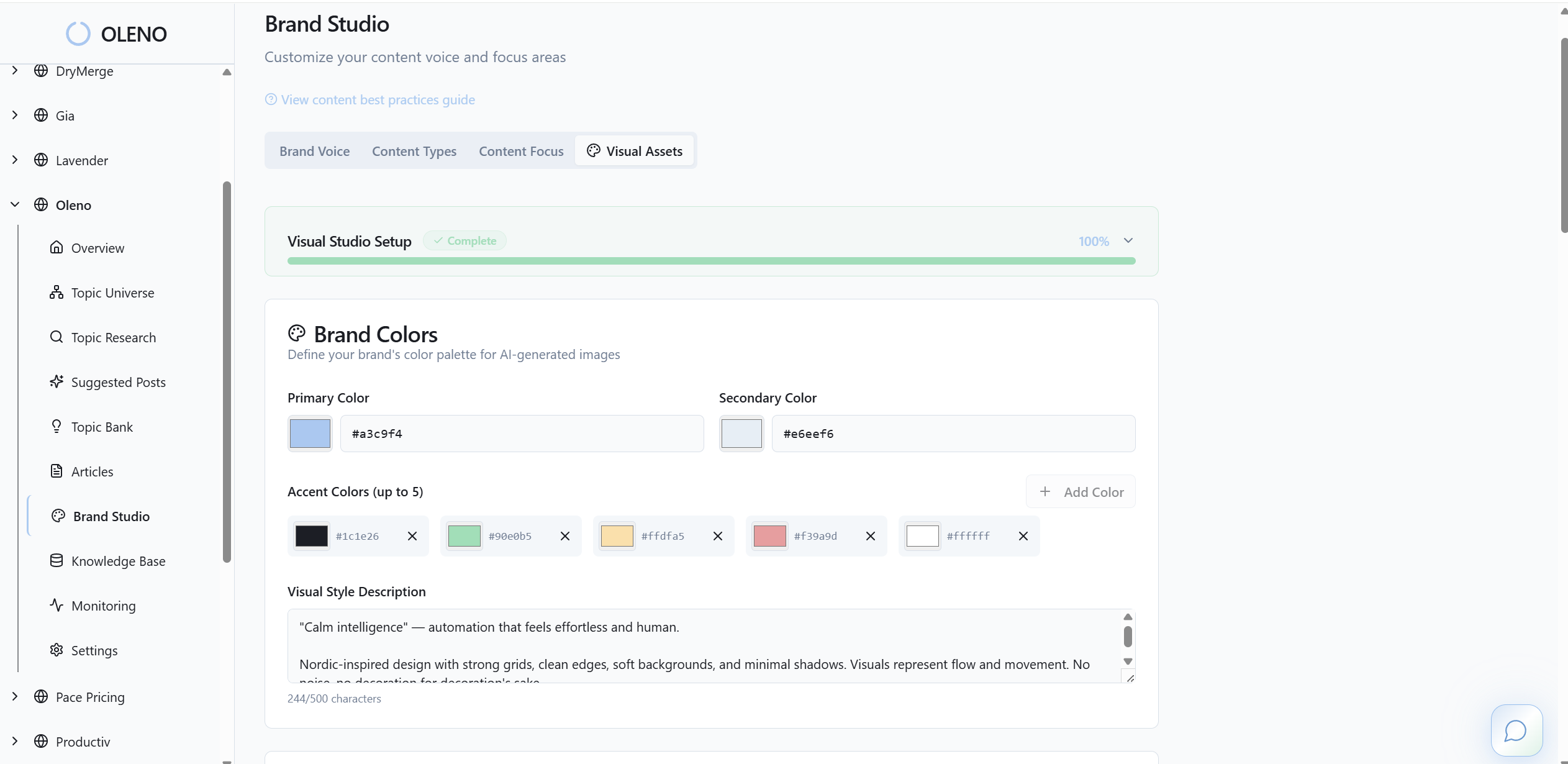
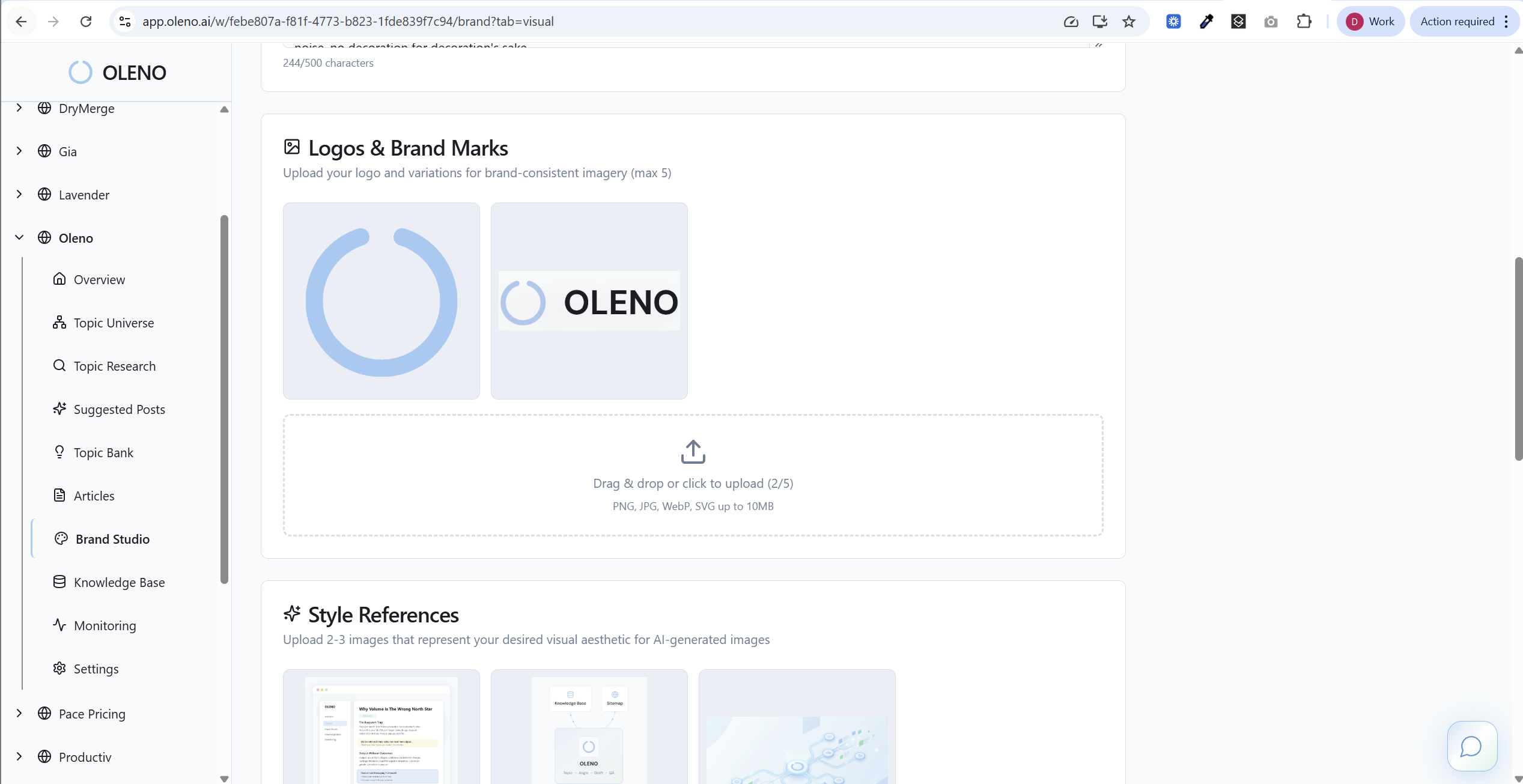
After QA, Oleno injects 5–8 deterministic internal links from your verified sitemap with exact-match anchors, no fabricated URLs, no sideways leaks. Visual Studio inside Oleno adds a hero and 2–3 brand-consistent images and prioritizes product visuals in solution sections. Schema for Article, FAQ, and BreadcrumbList is generated automatically. Finally, Oleno publishes to WordPress, Webflow, or HubSpot with mapped fields and duplicate protection, so you avoid 3 a.m. template fixes. If the hidden costs earlier made you wince, lost hours, cannibalization, wasted posts, this is where you get them back. Ready to see the pipeline run end to end? Try Oleno for Free: Try Oleno for Free
Conclusion
Clusters work when the system works. Map topics to canonical pillars. Label saturation. Enforce cooldowns. Make internal links deterministic. And ship pages that are easy to cite, by humans and machines. Do that, and you’ll spend less time fixing cannibalization and more time telling the story only you can tell.
About Daniel Hebert
I'm the founder of Oleno, SalesMVP Lab, and yourLumira. Been working in B2B SaaS in both sales and marketing leadership for 13+ years. I specialize in building revenue engines from the ground up. Over the years, I've codified writing frameworks, which are now powering Oleno.
Frequently Asked Questions