How to Choose a Content Stack for Agencies in 2026

Waiting 6 weeks on a stitched-together tool stack is pretty normal. That's also why so many agencies hit a ceiling at 8 to 12 active content clients, even when demand is there.
If you're weighing Oleno or best-of-breed point tools, you're probably not really choosing software. You're choosing where the work lives, where the context lives, and who pays the tax every time something gets missed.
Agency owners run into this faster than in-house teams do. You have more brands, more reviewers, more product nuance, and way less tolerance for sloppy execution. One client wants sharp category content, another needs buyer enablement, another needs SEO pages at volume. Same agency. Totally different standards.
The stack decision matters because bad fit compounds. A few extra review cycles per asset doesn't sound fatal. But spread that across 20 articles, 6 accounts, 3 strategists, and a couple of freelancers, and now you've built a business around frustrating rework. That's expensive. It's also hard to spot at first.
After reading this, you should be able to separate tool count from system quality, evaluate where point tools still make sense, and figure out which stack fits your agency model without talking yourself into unnecessary complexity.
Key Takeaways:
- Agencies usually don't break because they lack tools. They break because client context, brand rules, and QA live in too many places.
- A stitched point-tool stack can work well when you have 1 to 3 core services, strong operators, and low account variation.
- Once your team manages multiple B2B clients with distinct voices, the editing tax often becomes more important than subscription cost.
- A good evaluation should test handoffs, review cycles, and context retention over a 30-day workflow, not just feature checklists.
- If your agency is trying to scale delivery 3x to 5x without proportional hiring, stack design becomes an operating decision, not a software decision.
For agencies that already feel this pain and want to pressure-test a more unified setup, you can request a demo.
Why Agency Tool Decisions Usually Get Expensive Fast
The main buyer problem isn't choosing between "all-in-one" and "specialized." It's that agencies often buy tools by task, while clients experience the work as one system.
Back in the day, when I was running a high-volume content operation, one thing became obvious pretty quickly. Volume by itself didn't create leverage. Shared context did. You can have great writers, great strategists, and solid SEO people, but if each person is rebuilding the brief in their own head every time, output slows down and quality drifts.
That drift gets worse in agencies because every account has its own product truth, positioning, competitors, and approval style. A writer opens one doc, the strategist checks another, the editor remembers something from a kickoff call, and the client reviewer adds a comment that should've been captured three weeks ago. That's not really a talent problem. It's a system problem.
Let's pretend an agency has 10 retained content clients and ships 12 assets a month per client. If each asset burns an extra 25 minutes of back-and-forth because brand context isn't encoded cleanly, that's 50 hours a month gone. Not catastrophic on paper. Very real on payroll.
The Hidden Cost Shows Up In Review Loops, Not In Software Invoices
Software spend is visible, so buyers obsess over it. Review waste usually isn't, which is why it slides.
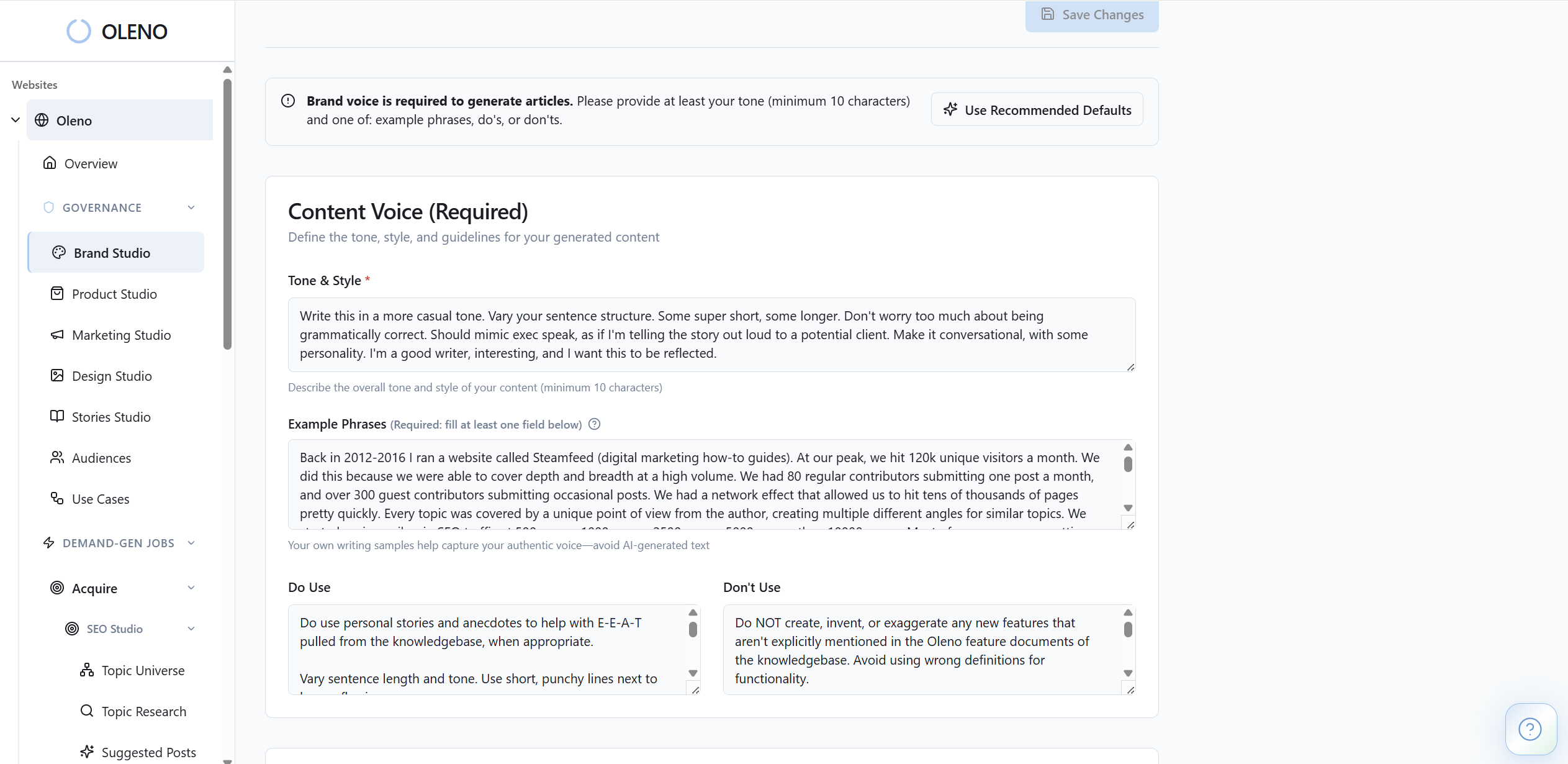
A point stack can look cheaper at first because each line item feels manageable. One tool for briefs. One for drafting. One for optimization. One for publishing. Maybe a spreadsheet tying it together. But the handoff tax lives between those tools, and that's where agencies lose margin. The invoice isn't the full cost.
A useful test is what I call the 4-Handoff Rule. If one asset has to cross more than 4 meaningful handoffs before publish, quality issues and delays tend to rise. Not always. But often enough that you should investigate hard.
Agencies Feel The Context Gap More Than In-House Teams
In-house teams usually fight one brand deeply. Agencies fight many brands at once.
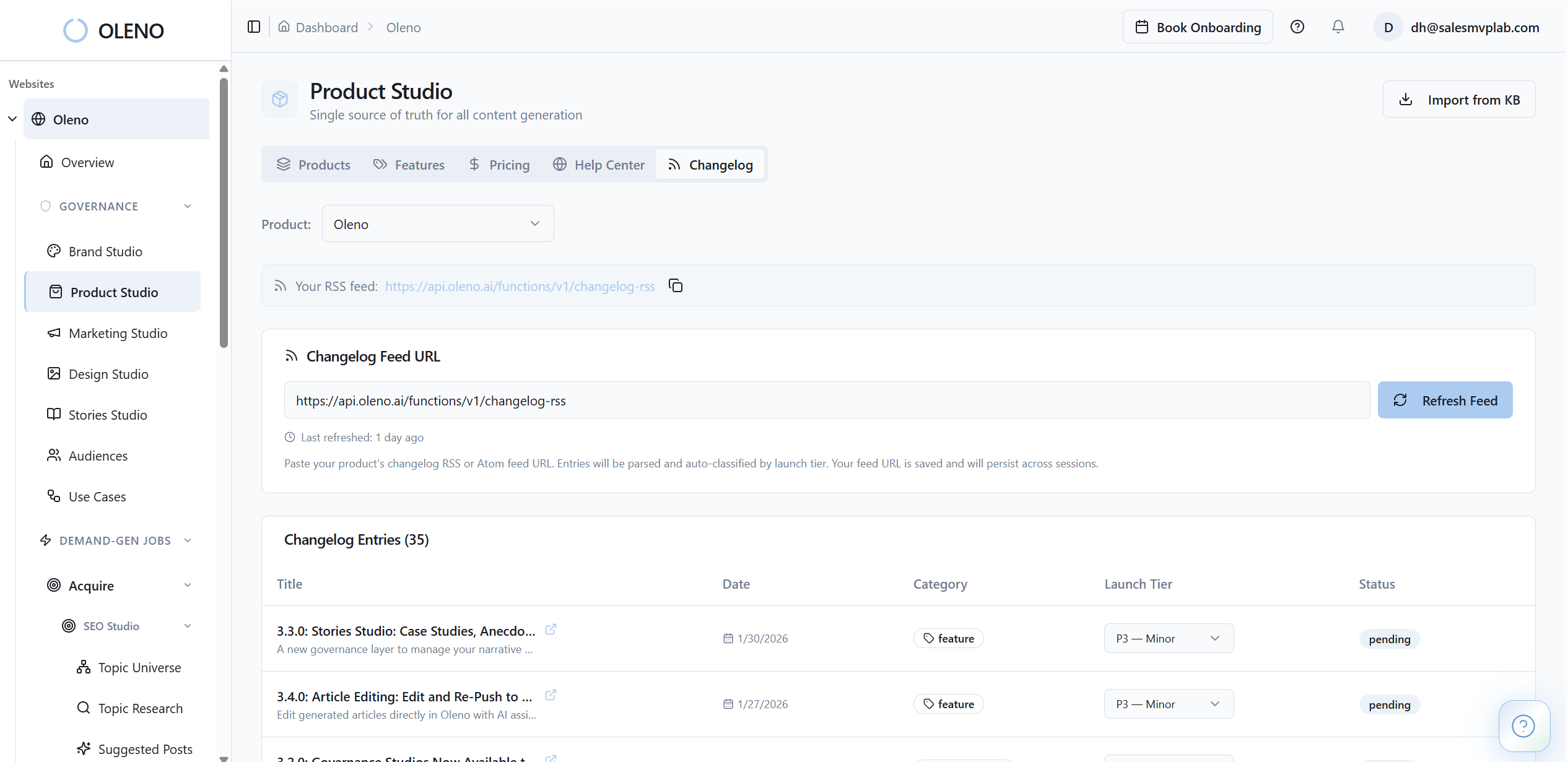
That's a very different operating environment. You don't just need content output. You need isolated client context, clear boundaries, and a way to stop Account A's messaging from bleeding into Account B's content. For agencies serving multiple B2B clients, that separation matters as much as generation quality.
And that's the real question that sets up the rest of this decision: are you buying specialized tools for isolated tasks, or are you buying a system that holds client truth together from planning through publish?
What Actually Matters When You Compare The Two Approaches
The best evaluation criteria aren't the flashy ones. Buyers usually start with feature lists, but agencies should start with failure points.
If a stack can't hold brand voice, product facts, audience nuance, and review logic close to the work itself, your team ends up compensating manually. That's why two stacks that look similar in a demo can create very different delivery economics 60 days later.
Brand Separation Is A Hard Requirement For Agencies, Not A Nice-To-Have
For a single-brand team, loose context management might be survivable. For an agency, it creates risk.
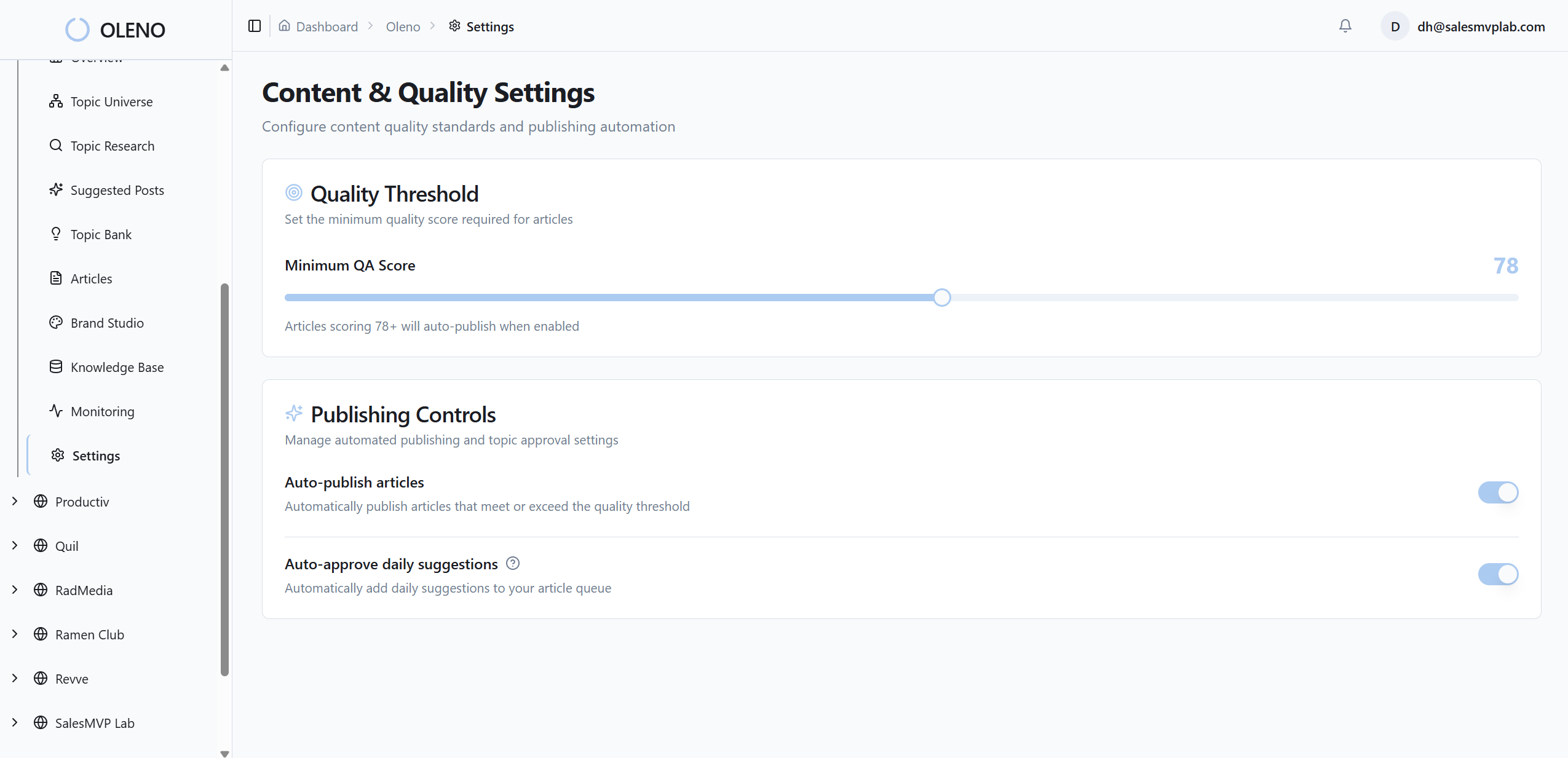
You need to know whether each client's strategy, positioning, product truth, and audience inputs stay isolated. Not partially isolated. Actually isolated. If that boundary is weak, your writers and editors become the last line of defense. That's a bad place to put margin.
This is one of those cases where the status quo has merits. Best-of-breed tools can absolutely give you sharper depth in one function. Fair point. But if your agency's core headache is cross-client context management, deeper point performance in one task may not solve the bigger issue.
The Editing Tax Is Usually The Real Budget Line
Most buyers compare subscription fees. Smart buyers compare review time.
The Editing Tax framework is simple: if a faster drafting process creates enough cleanup work that final hours stay flat or increase, the stack isn't really saving time. It's just moving labor downstream. Agencies feel this quickly because clients don't pay extra for internal correction.
A decent threshold to watch is this: if more than 30% of produced assets require major structural rewriting after first draft, your stack is probably under-capturing context. Minor edits are normal. Full rework is a warning sign.
Workflow Compression Beats Tool Depth In High-Volume Environments
A specialized tool might be stronger at one point in the chain. That doesn't automatically make the stack stronger.
What matters is how many steps your team can compress without losing control. Planning, voice control, product detail, QA, and publishing all touch the same asset. If each stage requires a separate environment and a separate interpretation of the brief, your throughput gets pinned by coordination.
I've seen agencies make this mistake a lot. They buy depth when what they really need is continuity. Different thing.
Verification Matters More Than Generation Once Client Stakes Rise
A lot of agency buyers still focus on who can generate faster. That matters, sure. But as client accounts get more strategic, verification starts to matter more than first draft speed.
Can the system verify against defined voice? Can it catch drift before the client does? Can it reduce worried-about review moments where your team wonders if something subtle but important is off? That's usually where trust gets won or lost.
If you want to pressure-test how a more unified workflow handles that kind of verification work, it can be useful to request a demo after you've defined your criteria first.
How To Evaluate Oleno Versus Point Tools Without Getting Distracted
A clean evaluation process matters because demos tend to overweight surface polish. Buyers need to simulate the messy middle, where agencies actually live.
The fastest way to get this wrong is to compare screenshots, prompt quality, and pricing pages without running a live workflow. You need to evaluate the stack against the job your agency gets paid to do.
Start With A 30-Day Workflow Test, Not A Feature Tour
Run one real client workflow for 30 days. That's long enough to expose friction and short enough to stay practical.
Use one account with real complexity. Multiple personas. Product nuance. Competitive positioning. A picky reviewer helps. Then track five things across the month:
- time from brief to first draft
- review rounds to client-ready
- amount of factual or positioning correction
- time spent moving content between systems
- percentage of assets published on schedule
One interruption here matters: don't let your internal champion "clean up" the process quietly, or you'll evaluate the operator instead of the stack.
Score The Stack On Context Retention, Not Just Output Quality
A pretty first draft can fool you. Context retention is harder to fake.
Ask this on every asset: did the system preserve the original client strategy all the way through execution, or did your team have to manually re-inject it? That's the Strategy-to-Execution Test. If human memory is doing most of the bridging, the stack is thinner than it looks.
A simple scoring model works well here:
| Evaluation Area | What To Measure | Red Flag Threshold |
|---|---|---|
| Context Retention | How often strategy must be manually re-explained | More than 2 major reminders per asset |
| Review Load | Number of internal correction rounds | More than 3 rounds before client review |
| Brand Control | Voice or positioning drift | Drift appears in over 20% of assets |
| Workflow Friction | Tool switches per asset | More than 5 meaningful switches |
| Delivery Predictability | On-time publish rate | Below 85% over test period |
Test For Multi-Client Switching Cost
Agencies don't work in a neat, single-brand lane. Your team jumps between accounts all day.
So test that directly. Have one strategist or editor move between three client workflows in the same week. Then look at error rate, time to orient, and the amount of re-reading needed before useful work starts. If the stack makes people rebuild context from scratch every time, scaling headcount won't fully solve it.
This is where agencies often discover a weird truth. A stack can be strong in isolation and weak in rotation. And rotation is the real job.
Make One Person Own The Evaluation Math
Committees tend to buy complexity because everyone defends their favorite tool.
One operator should own the final scorecard, with input from strategy, content, and account management. I prefer a weighted model where context retention and review reduction count for at least 50% of the final score. Why? Because those two factors usually drive labor cost hardest in agency delivery.
If you weight "feature richness" above "work saved," you'll probably end up with an impressive mess.
The Buying Mistakes That Push Agencies Into The Wrong Stack
Most bad stack decisions aren't irrational. They're just incomplete.
Buyers usually optimize for the part they feel most acutely that week. Cost. Draft quality. Speed. Team preference. Then six months later, another constraint shows up and the whole system starts dragging.
Buying For The Demo Instead Of The Operating Model Backfires
Demo environments are clean. Agency operations aren't.
If you buy based on which tool produces the nicest single output in a controlled setting, you may miss the bigger issue: how the stack behaves across planning, production, QA, and publish with multiple clients in motion. That's where margin gets created or lost.
There's a fair case for point tools here, especially if your agency has a strong ops lead and highly repeatable service packages. I'm not dismissing that. But if your business depends on a lot of client-specific nuance, the polished demo can be a trap.
Overvaluing Specialist Depth And Undervaluing System Fit Creates Rework
Specialist tools often win isolated contests. That's normal.
But agencies don't sell isolated contests. They sell outcomes across a chain of work. If one tool is excellent at content scoring, another is excellent at drafting, and another is excellent at publishing, you still have to ask whether the full chain reduces effort or adds it.
A useful decision rule is this: if combining multiple strong tools increases manager oversight instead of reducing it within 45 days, the stack fit is off. Strong components. Weak system.
Assuming Headcount Will Solve Process Problems Usually Gets Expensive
A lot of agencies respond to delivery headaches by hiring around the problem.
Sometimes that's necessary. Sometimes it's just covering for missing structure. More writers won't fix scattered context. More editors won't fix recurring voice drift. More PM time won't fix a stack that makes every handoff manual.
I learned this years ago in content operations. As the team grows, context doesn't scale automatically. It tends to fragment. And once it fragments, senior people spend their time translating strategy instead of pushing the business forward.
Ignoring Client-Facing Confidence Signals Hurts Retention
This one gets missed all the time.
Clients don't inspect your internal stack. They do feel the symptoms. Repeated clarification questions. Slightly off messaging. Slow turns. Strange inconsistencies between assets. Those are confidence leaks. And confidence leaks tend to show up before churn conversations do.
When the stack is wrong, the client experience gets subtly shaky. That's usually the warning shot.
A Decision Framework Agency Buyers Can Actually Use
You don't need a philosophical answer here. You need a repeatable buying framework your team can apply without getting pulled into opinion fights.
I like simple models. They travel well inside executive teams. So use this one: Complexity, Context, Control, and Cost. The 4C Stack Test.
The 4C Stack Test Makes The Trade-Offs Visible
This framework scores each option from 1 to 5 across four dimensions. Then you multiply Context and Control by 2 if you're running a multi-client B2B agency. Those are usually the two that break first.
| Dimension | What It Means | Point Tools Tend To Fit Better When | Unified Platform Tends To Fit Better When |
|---|---|---|---|
| Complexity | How many moving parts your team can realistically manage | You have a small service menu and strong operators | You want fewer moving parts across accounts |
| Context | How well client knowledge stays attached to the work | Client context is simple and reusable | Each client has distinct voice, product, and buyer nuance |
| Control | How reliably the stack can enforce standards | Human review is cheap and manageable | Review capacity is tight and drift is costly |
| Cost | Total operating cost, not just software | Labor impact stays low despite tool sprawl | Labor savings outweigh higher platform spend |
This isn't math for math's sake. It surfaces what you're actually buying.
Use These Self-Assessment Questions Before You Decide
If you answer yes to 4 or more, a more unified stack is probably worth serious consideration:
- Are you managing more than 5 active content clients at the same time?
- Does each client require distinct voice, positioning, and product nuance?
- Do senior people still spend a lot of time correcting strategy translation?
- Are review cycles slowing delivery more than drafting time?
- Do you want to scale output in the next 12 months without proportional hiring?
- Are clients buying strategic content, not just commodity production?
If you answer no to most of these, point tools may still be the cleaner fit. That's valid. Not every agency needs a consolidated system.
What A Reasonable Recommendation Looks Like
A reasonable recommendation is conditional, not ideological.
If your agency is earlier-stage, has low workflow complexity, and wins mainly through specialist execution in a narrow service line, a best-of-breed point stack may be the better buy. It can keep costs tighter and let strong operators pick the strongest tool for each job.
If your agency is managing multiple B2B clients, fighting context switching daily, and trying to grow without linearly growing payroll, a unified platform will often deserve a harder look. That's especially true when your review burden is already acting like a hidden tax on margin.
Why Oleno Gets Considered In This Decision
Oleno usually enters the conversation when an agency stops asking, "what's the best tool for this task?" and starts asking, "how do we keep strategy attached to execution across clients?"
That distinction matters. Based on the public positioning and available product areas, Oleno is built around planning, brand control, jobs, publishing, and use-case-specific execution paths. For an agency buyer, that suggests a more consolidated operating model than stitching together separate planning, drafting, QA, and publishing tools. The appeal isn't that separate tools are wrong. It's that too many disconnected tools can create translation loss.
For agencies serving multiple accounts, the relevant question is whether that tighter model reduces review burden and preserves client-specific context better over time. That's what you should test. Not broad claims. Actual workflow behavior over a live period.
If that's the problem you're trying to solve, the practical next step is to compare your current process against a unified setup with your own client workflows and your own reviewers. You can book a demo and use the 4C Stack Test above as the scorecard. That's a much better buying motion than trusting anyone's opinion, including mine.
About Daniel Hebert
I'm the founder of Oleno, SalesMVP Lab, and yourLumira. Been working in B2B SaaS in both sales and marketing leadership for 13+ years. I specialize in building revenue engines from the ground up. Over the years, I've codified writing frameworks, which are now powering Oleno.
Frequently Asked Questions