How growth SaaS teams evaluate AI content quality without creating more review chaos

How growth SaaS teams evaluate AI content quality without creating more review chaos
If you want to understand how growth saas teams should evaluate AI content quality, start here: the real issue usually isn't the prompt. It's the system behind the prompt. That's what decides whether a draft sounds like your company, stays accurate, and actually saves time instead of quietly creating more work for everybody involved.
I've seen this pattern a lot. Small marketing teams usually don't fail because they ran out of ideas. They fail because every draft turns into a fresh argument about voice, facts, structure, approvals, and whether the thing is usable at all. And once that starts happening, the cost stacks up fast.
You lose hours in rework. You miss launch windows. Leadership starts wondering if content is worth the effort. And if you're the Head of Marketing wearing six hats, that pain gets real in a hurry.
The smartest buyers in this category usually aren't asking for "more AI." They're asking a better question: can this system consistently produce work that sounds like us, supports pipeline, and reduces review burden instead of expanding it?
Key Takeaways:
- High AI content quality usually comes from strong inputs, clear review standards, and a repeatable process. Not from swapping prompts every Tuesday.
- A weak evaluation process can burn 5 to 10 hours a week in editing, rewrites, and approval churn for a lean SaaS team.
- Buyer-side criteria matter more than feature noise. You want to assess output quality, review burden, and consistency under real publishing pressure.
- If a vendor can't show how quality holds across product pages, comparison pages, and FAQ content, that's a real risk.
- Small teams usually need a system more than another writing tool, because strategy breaks down when execution resets every quarter.
Why how growth SaaS teams approach AI content quality usually breaks first
Most quality problems don't start with the model. They start with the operating system around it. That's the part people skip. And it's usually the part that matters most once deadlines pile up and the quarter gets messy.
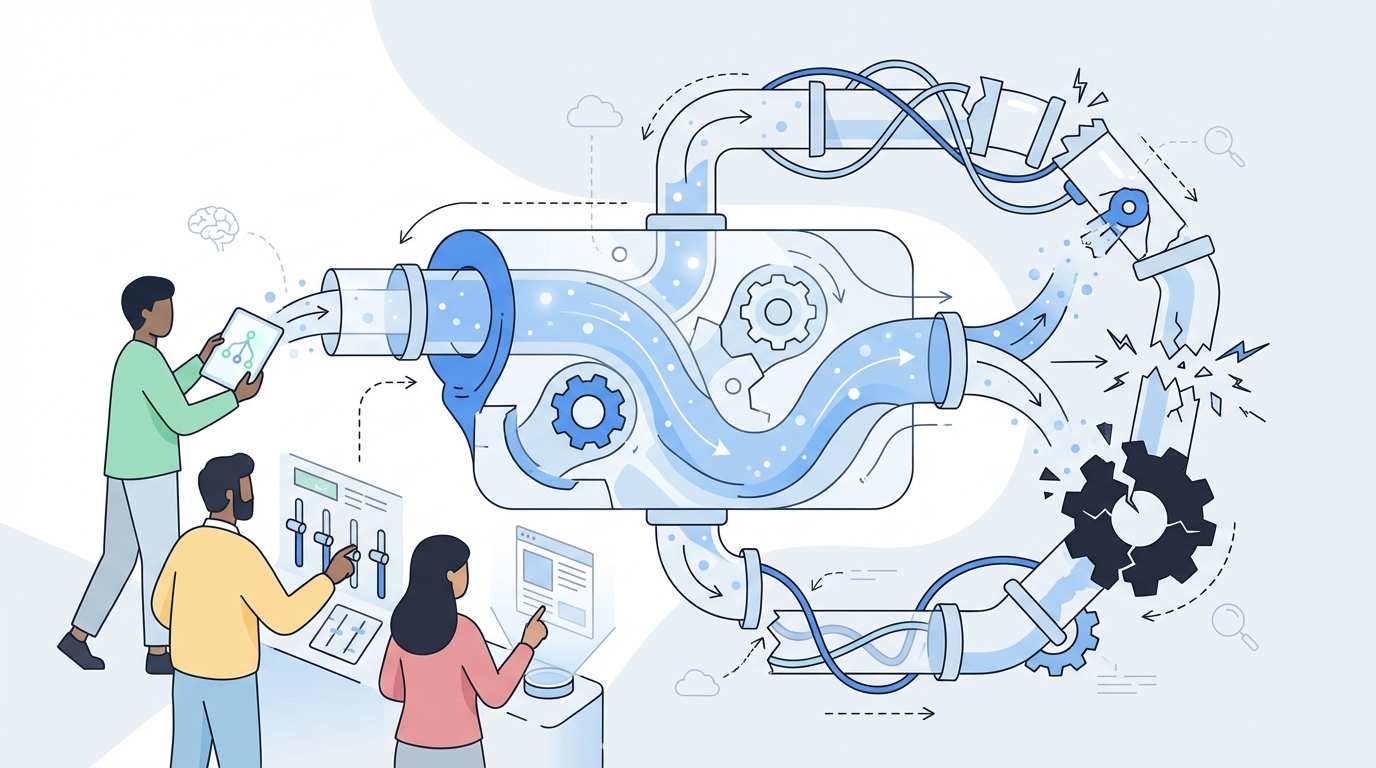
AI content quality breaks down when a team expects speed to solve what is really a system problem. Most growth SaaS teams already know what they want to say. The harder part is getting that message to show up consistently across content types, writers, reviewers, and deadlines. That's where quality starts slipping.
Back when I was running content at smaller SaaS companies, this happened all the time. At first, one strong marketer can hold the bar on their own. They know the customer. They know the product. They can hear when a sentence sounds off. Then the company grows a bit, launches pile up, and suddenly that same person is in meetings all day while somebody else is trying to write from partial context. Quality drops. Not because the new person is weak. Because the system is weak.
Small teams usually don't have a writing problem
Small SaaS teams usually have a context problem.
The Head of Marketing knows the nuance behind the product, the buyer objections, the positioning choices, and the claims legal won't love. AI doesn't know any of that unless you feed it the right structure, source material, and guardrails.
That gap creates a weird loop. The draft comes back sounding close enough to be tempting, but off enough that you can't publish it. So you edit it. Then somebody else edits it. Then product weighs in. Then sales says the angle is wrong. You didn't remove work. You just pushed it downstream.
The real cost is approval churn
Approval churn is usually the hidden tax.
A rough AI draft may look cheap on paper, but if it creates three rounds of review and one full rewrite, you didn't really save time. You created the illusion of speed.
Let's say your team publishes four pieces a month. If each draft triggers two extra review rounds at 45 minutes each, that's six extra hours right there. Add fact checks, voice rewrites, and stakeholder comments, and you're easily at 10 or 12 hours. For a lean team, that's not minor. That's a blocked week.
Consistency gets harder as content expands across the funnel
This gets more obvious once you're not just writing blog posts.
Growth SaaS teams need launch pages, comparison pages, FAQ content, nurture assets, sales support pieces, and the occasional thought piece from an exec who definitely has opinions and definitely has no time. Quality control across that mix is hard enough with humans. Add AI and it gets harder if the system isn't tight.
A lot of buyers underestimate this. They test one prompt on one article and think the problem is solved. Usually not. The better question is whether quality holds across ten different asset types when the quarter goes sideways.
What actually matters in how growth SaaS teams evaluate AI content quality
The best evaluations are boring in a good way. They focus on reliability, editing time, factual discipline, and fit by content type. That's what tells you whether the tool helps your actual workflow or just looks good in a demo.
AI content quality should be evaluated through output reliability, review burden, factual discipline, and channel fit. Buyers get distracted by draft speed because it's easy to notice in a demo. But draft speed isn't the thing that determines whether your team can publish consistently every week.
This is where a lot of software evaluations go sideways. The demo shows a decent article in five minutes, everyone nods, and nobody asks what happens on article seven, article thirty, or during launch week when nobody has time to babysit the output. That's the real test.
Output reliability matters more than one good draft
One strong draft proves almost nothing.
Output reliability means the system can generate usable work repeatedly, not just once. A buyer should want to see whether the same setup produces solid work for a product page, a comparison article, and a buyer FAQ without the voice falling apart.
Why does that matter? Because inconsistent quality breaks trust internally first. The CEO stops believing the content will sound right. Product starts rewriting everything. Sales stops sharing the pages. Then the program stalls, even if the tool can technically generate text.
Review burden tells you whether the tool saves time
Review burden is one of the clearest evaluation criteria because you can feel it almost immediately.
If the output still needs line-by-line rewriting, the tool may still be useful. But it isn't solving the main business problem for a lean team.
Some buyers focus too hard on whether the first draft is 70 percent right or 80 percent right. Fair enough. But the practical question is simpler: how long does a competent reviewer need to turn this into something publishable? If the answer is still an hour or more per piece, look closer.
Factual discipline protects brand credibility
B2B SaaS content doesn't have much room for invented claims.
A softer consumer brand can get away with vague copy. A SaaS company talking about integrations, product behavior, pricing logic, or use cases usually can't. You don't need a flashy system here. You need one that reduces the odds of saying something false, overstated, or hard to defend.
That matters for trust. It matters for internal politics too. Nobody wants to be the marketer who shipped the page sales had to apologize for.
Channel fit matters more than generic quality
"Good writing" is too vague to be useful.
The content has to fit the job. A comparison page should sound different from an FAQ page. A product launch piece should sound different from a demand capture page. That's why buyers should evaluate quality by content type, not by generic samples.
If your team lives on comparison pages and launch content, don't spend the whole evaluation looking at top-of-funnel blog posts. That's not where your risk is.
How growth SaaS teams should evaluate a system before they buy
The most useful evaluation is not a product tour. It's an operating test. Run your real workflow through the system, use your real source material, and score the output with your normal reviewer standards. That's how you find the hidden problems.
You should evaluate an AI content system by running your own workflow through it, using your own source material, with your own reviewer standards. Vendor-controlled demos can be useful, sure. But they rarely show where quality starts wobbling under real operating conditions, especially when evaluating how growth saas teams.
The teams that get this right usually ask a better question. Not, "Can it write?" More like, "Can we trust the output enough to reduce review time without lowering the bar?" That's a much smarter buying question.
A three-part test usually reveals the truth
You don't need a giant process to see what's real.
A simple three-part test reveals a lot:
- Generate one bottom-funnel piece, like a comparison page or use-case page.
- Generate one structured answer piece, like an FAQ or buyer guide section.
- Generate one messaging-sensitive piece, like a launch asset or founder-style article.
That mix matters. One content type can hide weaknesses that another exposes.
Honestly, this is where a lot of tools start to show cracks.
After the drafts are generated, review them against a short scoring sheet:
- Did the draft stay on-message?
- Did it avoid factual drift?
- Did the structure fit the content type?
- How much editing time did it really need?
- Would you publish this with normal review, or did it trigger rescue mode?
Discover how teams pressure-test AI content quality on real workflows
Use your actual reviewers, not just the buyer
This part gets skipped a lot, and it's a mistake.
If product, sales, or an exec usually comments before publishing, include them in the evaluation. A tool that looks strong to the buyer may still create headaches for the rest of the team.
You want to see whether the system reduces cross-functional friction. That's part of quality. If reviewers stop leaving the same comments over and over, that's a strong signal. If every piece still turns into a long comment thread, well, you learned something useful.
Compare the editing time, not just the draft time
Draft time is easy to show. Editing time is where the money goes. So track both.
A simple version looks like this:
| Evaluation Metric | Draft A | Draft B | What To Watch |
|---|---|---|---|
| Time to generate first draft | 10 min | 12 min | Usually less important than it looks |
| Time to review and edit | 75 min | 25 min | Often the deciding factor |
| Stakeholder comments | 14 | 4 | High comments usually signal trust issues |
| Factual corrections needed | 6 | 1 | Repeated corrections are a warning sign |
| Publish readiness | Low | Medium to High | Useful shorthand, not the only measure |
A table like this keeps the conversation grounded. Without it, software buying turns into opinions pretty quickly.
Common mistakes in how growth SaaS teams buy AI content tools
Most bad buying decisions in this category follow the same pattern. Teams test the easy stuff, trust a polished demo, and confuse draft volume with real throughput. Then they find out the human review burden never actually went away.
Buyers usually make mistakes when they evaluate AI content tools through demos, generic prompts, or top-of-funnel samples that don't reflect the real publishing burden. The result is predictable. They buy speed, then discover the quality controls still live entirely in human review.
I've seen this in a bunch of forms. Different teams. Same movie.
Buyers often test the easy content first
Testing easy content first creates false confidence.
A broad educational article is usually more forgiving than a comparison page, product page, or FAQ that has to stay tight on facts and positioning. That sounds obvious, but teams still do it all the time.
They test the content type with the fewest land mines, then act surprised when the harder pages fall apart later. If your pipeline depends on mid-funnel and bottom-funnel content, that's where the evaluation should start.
Generic prompts create generic conclusions
Generic prompts usually lead to generic conclusions.
If you don't test with your real positioning, product nuance, and audience language, you're not evaluating quality. You're evaluating whether a general model can write a decent internet article. That might still be interesting. It just isn't enough to justify a buying decision, especially when evaluating how growth saas teams.
A better test includes:
- your positioning language
- your real buyer objections
- your product facts
- your editorial standards
One missing input can throw the whole thing off.
Teams underestimate internal trust as a quality metric
Internal trust is a massive quality metric, and buyers miss it because it doesn't show up on a feature sheet.
If leadership doesn't trust the output, the system won't get adopted deeply enough to matter. You can usually spot this early. Watch how quickly reviewers start editing tone, softening claims, or rewriting openings. That's not random preference. That's a sign the content doesn't sound like the company yet.
Buyers confuse volume with progress
More drafts do not automatically mean more throughput.
If the team generates twice as much but publishes the same amount, nothing really improved. Sometimes it got worse, because now the team is sorting through more mediocre material.
This is the part people don't always want to hear. Sometimes less output with tighter quality control is the smarter path, especially for a small SaaS team. Volume without trust becomes backlog.
A practical decision framework for how growth SaaS teams choose better
Small teams don't need a giant procurement process. They need a repeatable way to score whether a system reduces friction, holds quality across formats, and fits the way the team already works. Keep it practical. That's usually enough.
A useful buying framework should help you decide whether the system reduces review time, holds quality across content types, and fits the way your team already works. You don't need some giant procurement machine for this. You do need a repeatable process.
If I were running this with a lean SaaS team, I'd keep it direct. Score the product on the things that actually affect publishing cadence and internal trust. Ignore the rest until later.
A simple scorecard keeps the team honest
Use a 1 to 5 score against a short list of criteria:
| Criteria | Why It Matters | Score 1 Means | Score 5 Means |
|---|---|---|---|
| Voice Consistency | Protects brand trust | Needs heavy rewriting every time | Usually sounds close to publishable |
| Factual Accuracy | Reduces risk and rework | Frequent corrections needed | Few corrections under normal review |
| Content Type Range | Supports real GTM needs | Works for one format only | Holds up across several key formats |
| Review Burden | Determines real time savings | Editing takes longer than expected | Review is shorter and more focused |
| Team Fit | Affects adoption | Creates extra coordination work | Fits current workflow with modest change |
This isn't fancy. That's the point.
Run one weekly publishing scenario
Don't just test one isolated draft. Test a realistic batch.
For example:
- Generate a comparison page.
- Generate a feature launch article.
- Generate two FAQ entries.
- Review all four with the normal stakeholders.
- Measure total editing and approval time.
That gives you something closer to operating reality. And operating reality is where software earns its keep.
Decide based on friction removed, not features added
The cleanest buying question is still this: what friction does this remove from our current content process?
If the answer is vague, keep digging. A lot of teams buy category features they won't use because the feature list feels reassuring. But the real win for a 20 to 150 person SaaS company is often narrower than that. Less rework. Fewer approval loops. More consistent weekly output. More confidence in what gets published.
Start reducing review-heavy content workflows with Oleno
Where Oleno fits in a practical evaluation
Oleno fits best when the team isn't just asking for AI text generation, but for a tighter way to keep demand gen execution consistent without scaling headcount at the same rate.
That's a more specific buying case. And honestly, for the right team, it's the useful one.
What I'd look at with Oleno is pretty straightforward. Can Oleno support the kind of narrative consistency your team needs across launch content, comparison content, FAQs, and other GTM assets? Can Oleno reduce the amount of frustrating rework that usually lands back on the Head of Marketing? Can Oleno give your team a more repeatable way to generate and verify content before it hits the usual approval chain?
Those are practical questions. Oleno doesn't need to be all things to all teams for the evaluation to make sense. It just needs to fit the operating problem you actually have.
Oleno fits best when you're trying to make content execution more consistent, not just faster.
The next step for how growth SaaS teams test real workflow fit
The next move is simple: stop evaluating theory and run one real deadline through the system. That's where trust, quality, and review time show up clearly. And that's usually where the buying decision gets a whole lot easier.
The next step is to test one real content workflow, with one real publishing deadline, and see what happens to quality, trust, and review time. That will tell you more than another generic walkthrough ever will.
If you're evaluating this category seriously, bring the hard stuff. Bring the comparison page that keeps getting stuck. Bring the product launch draft that keeps bouncing between marketing and product. Bring the FAQ set your sales team wishes already existed. That's where quality gets exposed.
Oleno is worth evaluating in that context because the problem growth SaaS teams are trying to solve usually isn't, "how do we get text faster?" It's, "how do we keep content quality high without turning the Head of Marketing into the final rewrite layer for everything?" Different problem. Better buying lens.
Ready to test your actual content workflow and see what holds up? Book a demo
Conclusion for How growth saas teams
If you really want to understand how growth saas teams should buy AI content software, don't overcomplicate it. Measure consistency. Measure editing time. Measure trust. See whether the system holds up across the content types your pipeline actually depends on.
That's it.
Because in practice, how growth saas teams win with AI content isn't about generating more drafts. It's about building a process that produces publishable work without dragging everybody back into the same review spiral every single week.
About Daniel Hebert
I'm the founder of Oleno, SalesMVP Lab, and yourLumira. Been working in B2B SaaS in both sales and marketing leadership for 13+ years. I specialize in building revenue engines from the ground up. Over the years, I've codified writing frameworks, which are now powering Oleno.
Frequently Asked Questions