How to Replace Prompt Chains with a KB-Grounded Orchestration Pipeline

Back when I ran Steamfeed, we hit 120k uniques on volume plus structure. Not fancy hacks. A repeatable way to produce depth and breadth at pace. Later, at PostBeyond, I could crank 3–4 solid posts a week because I used a strict writing framework. As the team grew, quality drifted. Context got diluted. Edits piled up. The problem wasn’t writing speed; it was the lack of a system that carried intent from topic selection all the way to “publish.”
I’ve also seen the other side. At Proposify, we ranked like crazy but too much content was detached from the product story. Demand-gen suffered because the narrative never cleanly bridged to what we actually solved. At LevelJump, we had founder insights and velocity from recordings, but we missed the structure search engines and AI assistants prefer. If this sounds familiar, you don’t need bigger prompts. You need a pipeline that holds the line.
Key Takeaways:
- Prompt chains write words; pipelines ship outcomes
- KB-grounded retrieval and QA gates prevent drift and rework
- Deterministic steps (linking, schema, publishing) cut failure modes dramatically
- Information gain scoring raises originality before a draft exists
- Treat content like operations: versioned, observable, reversible
- You’ll save senior time by turning recurring fixes into rules and code
Why Prompt Chains Stall Before Publish
Why Do Prompts Fail When You Try To Scale?
Prompts help you draft faster, but they don’t remember your rules tomorrow. At scale you need persistent memory, consistent structure, and hard gates. Otherwise you get voice drift, hallucinations, and formatting roulette. A larger prompt won’t solve that, the failure is architectural, not lexical.

Here’s the uncomfortable truth: the model doesn’t own outcomes. Your system does. Without KB retrieval before synthesis, “facts” wander. Without brand and phrasing constraints, tone wobbles. Without a QA gate, issues slip downstream and cost real time. Retrieval-first, governed pipelines exist for a reason, the research community backs that direction with retrieval-centric architectures research.
What Does A KB-Grounded Pipeline Change In Practice?
A lot. You introduce persistent brand memory, deterministic layout, and non‑negotiable quality checks. Claims get anchored to your knowledge base, structure follows a known pattern, and drafts don’t move forward unless they pass. It’s not “chat,” it’s a factory line that still produces creative, on‑brand content.
This is where Brand Studio and your KB do the heavy lifting. Tone, phrasing, banned terms, structure, enforced. Facts, retrieved and verified in context. Then a QA-Gate scores structure, information gain, snippet readiness, and narrative order. If it fails, it loops. If it passes, only then do you add links, schema, and visuals. That’s a pipeline, not a prompt. For teams used to ad‑hoc processes, this may feel strict. It’s actually liberating because it removes chaos. See the broader discipline in structured pipeline evaluation patterns.
The Real Fix Is A KB-Grounded Pipeline
What Traditional Approaches Miss
Most teams bolt AI onto old habits. Topic ideas in spreadsheets. Research in tabs. Drafts in chat. Images later. Publishing by hand. Each step can work in isolation. Together? It’s brittle. The cracks show up as duplicate angles, shallow coverage, and disconnects from product truth.
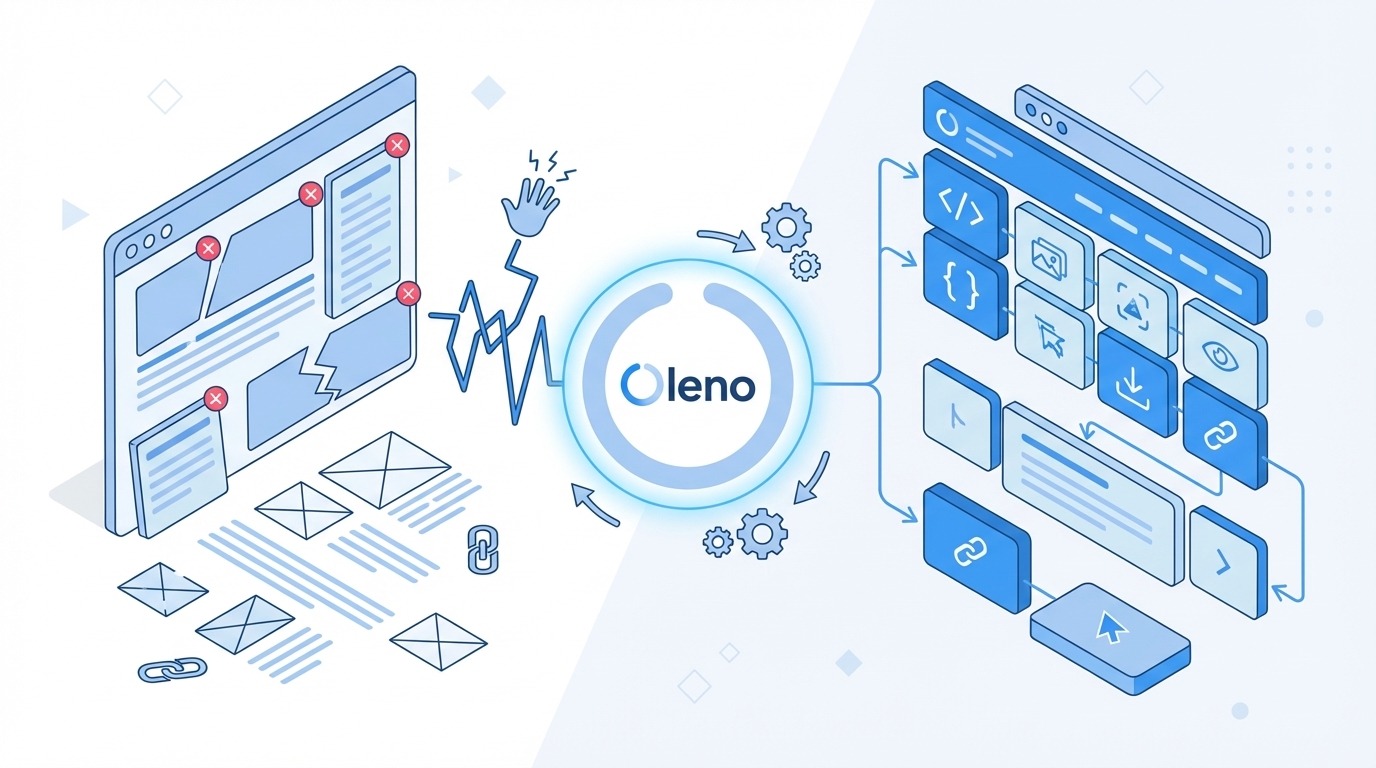
Reframe the job as a system. Choose topics intentionally with coverage rules so you don’t over-publish one cluster and starve another. Enforce differentiation before writing using information gain scoring. Refuse to draft until the KB is loaded and constraints are active. The order of operations matters more than the model. Take that from someone who’s shipped both ways, one scales, one frays.
Deterministic Routing Beats Fancier Prompts
Instead of begging models to behave, route content through stages with rules. Internal linking is code-based, not “remember to add 5 links.” Schema is generated and validated programmatically, not guessed by a writer under deadline. Voice is a linter, not a bullet point in a brief. If an input is missing, the stage fails fast. Good. You catch issues when they’re cheap. Governance here isn’t paperwork, it’s how you avoid rework and incidents. If you want a framework lens, look at governance literature on execution discipline like information systems governance research.
The Hidden Costs Of Ad-Hoc Prompting
Engineering Hours Lost To Rewrite Loops
Let’s pretend you ship 20 articles a month. Each one needs 90 minutes of cleanup, voice drift, missing internal links, schema fixes, screenshots that don’t match the section. That’s 30 hours of senior time. At 90 an hour, roughly 2,700 every month in avoidable work. And that’s a conservative estimate.
Put a real QA-Gate in the middle with an 85+ pass threshold and you flip the economics. Structure, brand alignment, KB accuracy, and snippet readiness get scored before anything moves. Bad drafts don’t trickle downstream. You cut the loop count, not by heroics, but by refusing to pass low-signal work. This is basic quality engineering, the same logic behind pre‑release gates and reproducibility in other disciplines, echoed in quality gates and reproducibility research.
The Cascading Impact On Publishing Reliability
Manual linking and schema aren’t “minor cleanup.” They’re where incidents hide. Stale URLs. Invalid JSON‑LD. Mis‑mapped CMS fields. One bad publish and you’re rolling back, chasing ghosts, and explaining misses to sales. It’s not fun, and it chips away at trust.
Deterministic placement and validation changes the risk profile. Links come from verified sitemaps with exact‑match anchors. Schema is generated and validated before delivery. Publishing is idempotent: send the same payload twice, get one live post. Fewer noisy incidents. Fewer late nights. More time on narrative and differentiation, which is where humans add value.
The Frustration Of Editing What Should Be Code
When Your Biggest Launch Slips Because Of Avoidable Edits
You’ve been there. Launch post is 90 percent done. The draft misses schema. Visuals are off‑brand. Links point to two outdated pages. Two days slip, and now product marketing is worried about the sequence and sales wants to know what happened. The edit list reads like a script your system should have enforced.
Map visuals and links through code, not prompts. Make voice enforcement a linter, not a wish. Set a minimum QA score and treat it as a gate, not a guideline. The goal isn’t to make writers robots; it’s to let them focus on story while the machine handles structure. That’s the work you can and should codify.
The Midnight Rollback Story No One Wants
A malformed schema snippet. A duplicated publish. Those are “simple” issues until they’re not and your team is on a midnight rollback, nerves spiking, reputations on the line. This is where idempotency and retries matter. Where validation runs before anything touches your CMS. Where logs explain what happened so you can fix without a witch hunt.
You don’t need dashboards to make this safe, you need predictable stages and auditable events. The system should keep the receipts: what went in, what came out, what it tried, and when it retried. The payoff isn’t a nicer report. It’s fewer incidents and faster recovery when something does go sideways.
Build The New Flow With Deterministic Guardrails
Step 1: Map Your Knowledge Base And Sitemap
Start by indexing your docs and sitemap with embeddings and rich metadata, doc type, product area, and recency. Define retrieval policies: two sources for product claims, one for definitions, freshness windows for fast‑moving topics. Make the registry dynamic so new corpora can be included without code changes.
Every retrieval event should be logged and attached to sections. When a sentence makes a claim, you can see what supported it. This isn’t about proving you’re right to the world, it’s about making your own pipeline debuggable. You’ll spend less time arguing about opinions and more time improving sources.
Step 2: Design The Topic Universe And Prioritization
Cluster topics into pillars using your KB and site content. Track coverage and saturation by cluster. Enforce cooldowns so a hot topic doesn’t drown out everything else. Layer in product relevance and intent so you’re not ranking for ideas you’ll never convert.
The net effect is simple: you always know what to write next, and you avoid duplicate angles that add nothing new. Topic selection stops being a guessing game and becomes a controlled feed into your pipeline. That’s how authority accrues over time.
Step 3: Generate Briefs With Information-Gain Scoring
Automate briefs that analyze top coverage, extract common sections, and propose your unique angle. Compute an information gain score that tells you if the outline adds anything new. Low‑gain briefs get flagged, re‑angled, or rejected before a single paragraph is written.
Make the brief the contract the draft must follow. Include 3–5 authoritative external link candidates with suggested anchor text, and define the opening sentences for every H2. When the draft starts, it’s following a negotiated plan, not freestyling. Want to pressure‑test this approach on your own topics? Want a no‑pressure way to see the flow? Try a short run and compare edit load. If you’re curious, you can Try Generating 3 Free Test Articles Now.
If you want to try using an autonomous content engine for always-on publishing, try Request a demo now., it’s an easy way to see whether orchestration beats the prompt-plus-edit loop in your stack.
Step 4: Draft With KB Retrieval Enforced
Write section by section with retrieval first, then synthesis. Keep context windows clean: only pass the citations needed for the current section. Track which snippet supports which claim where it matters. Leave links and schema out for now, you’re optimizing for clarity and structure, not formatting.
Store retrieval metadata so QA can verify sources later without guesswork. If a section can’t retrieve enough support, it fails and loops. It’s not punitive, it’s how you keep accuracy tied to your own corpus instead of hoping a longer prompt will “stick.”
How Oleno Automates This Pipeline End To End
Deterministic Internal Links And Schema In Oleno
Oleno injects internal links only from your verified sitemap, 5–8 per article, with anchor text that matches page titles exactly. Placement happens at natural sentence boundaries, which keeps the prose readable and prevents the “SEO dump” vibe. Fabricated URLs aren’t possible because only verified addresses are eligible. Predictable, safe, and frankly, one less checklist for a human.
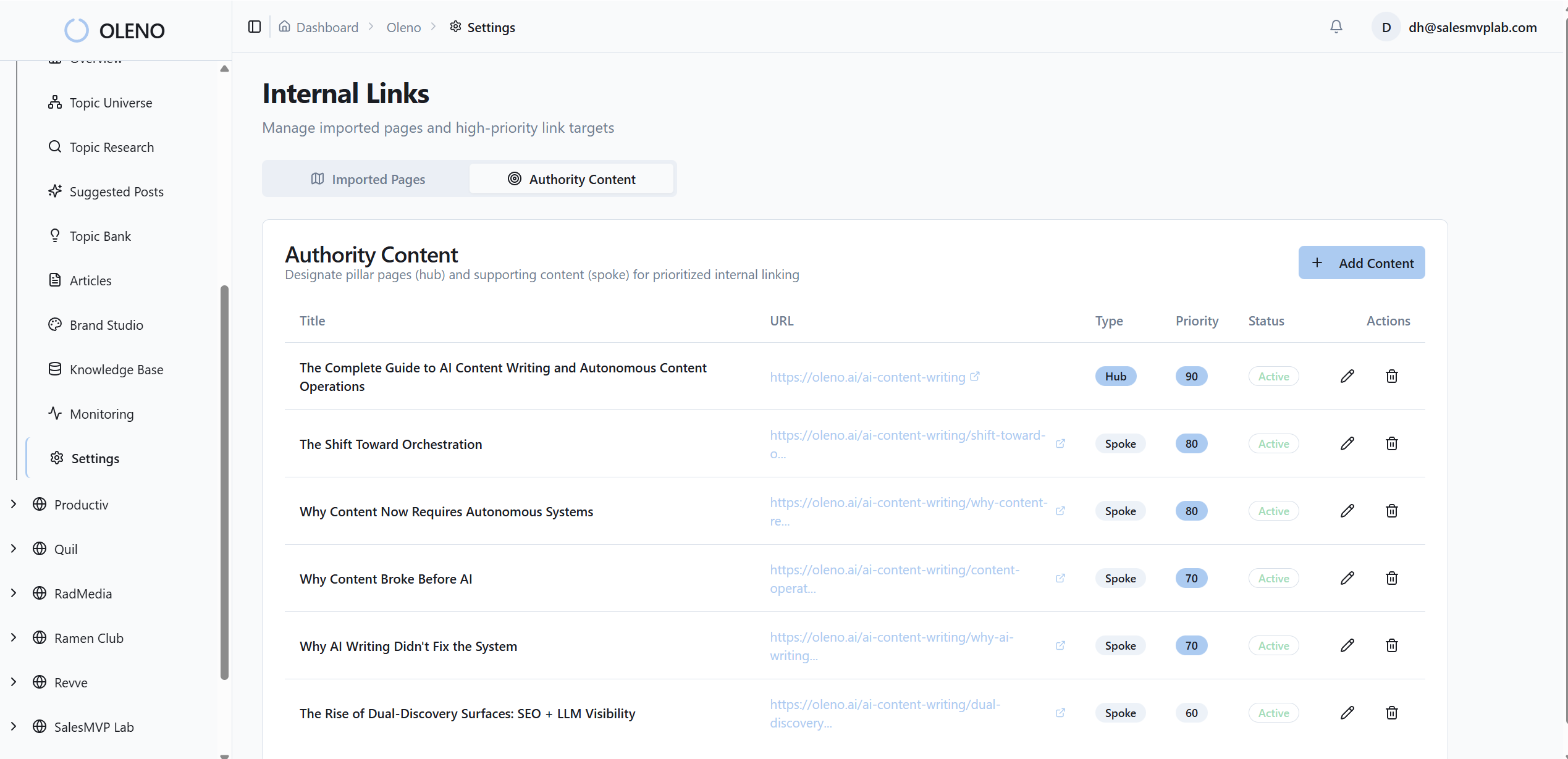
On schema, Oleno generates JSON‑LD for Article, FAQ, and BreadcrumbList automatically, then validates it before delivery. That reduces the two most common failure modes: malformed objects and outdated fields. Your team stops wrestling with markup and focuses on what to say, not how to say it to a parser.
Publishing With CMS Connectors And Idempotency
Publishing is a last‑mile risk area. Oleno maps fields to WordPress, Webflow, and HubSpot, converts markdown to CMS‑ready HTML, and prevents duplicate publishes by design. If a delivery fails, it retries intelligently. You choose draft or live modes per article, and the system handles the mechanics without ceremony.
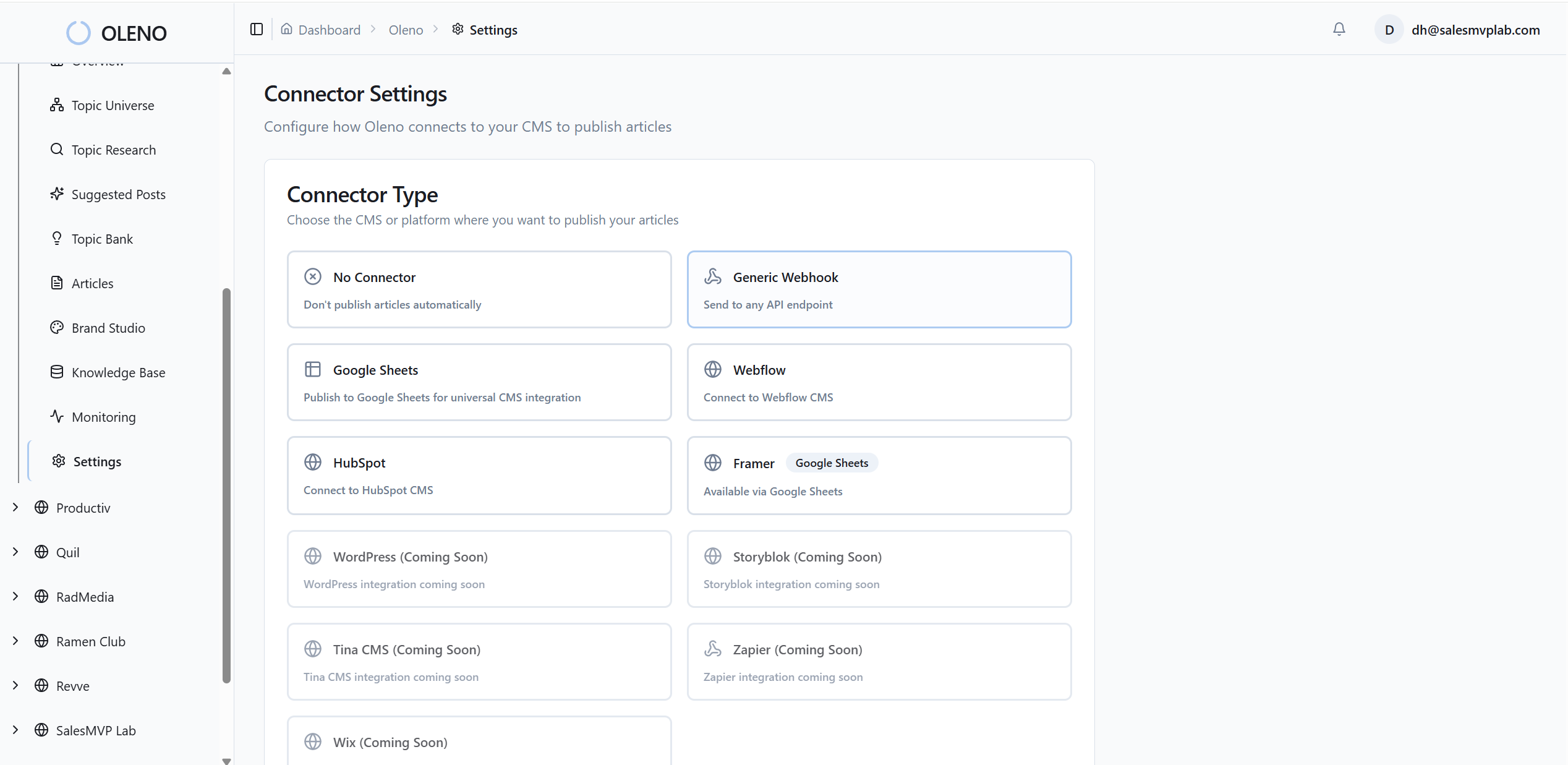
The benefit isn’t theoretical. This is where midnight rollbacks come from, mis‑mapped fields, partial publishes, duplicate posts. Idempotency, retries, and duplicate prevention reduce incidents you shouldn’t be having in the first place. Your ops team will thank you, and your calendar will breathe again.
How Oleno Enforces Voice, Structure, And Visuals
Two capabilities anchor consistency. Brand Studio applies tone, phrasing, banned terms, and structure rules across the pipeline. It’s how articles read like you, not like “AI.” Visual Studio generates brand‑consistent hero and inline images, matches product screenshots to the right sections, and writes alt text and filenames automatically. Product visuals get prioritized in solution sections so your audience sees the software where it helps the most.
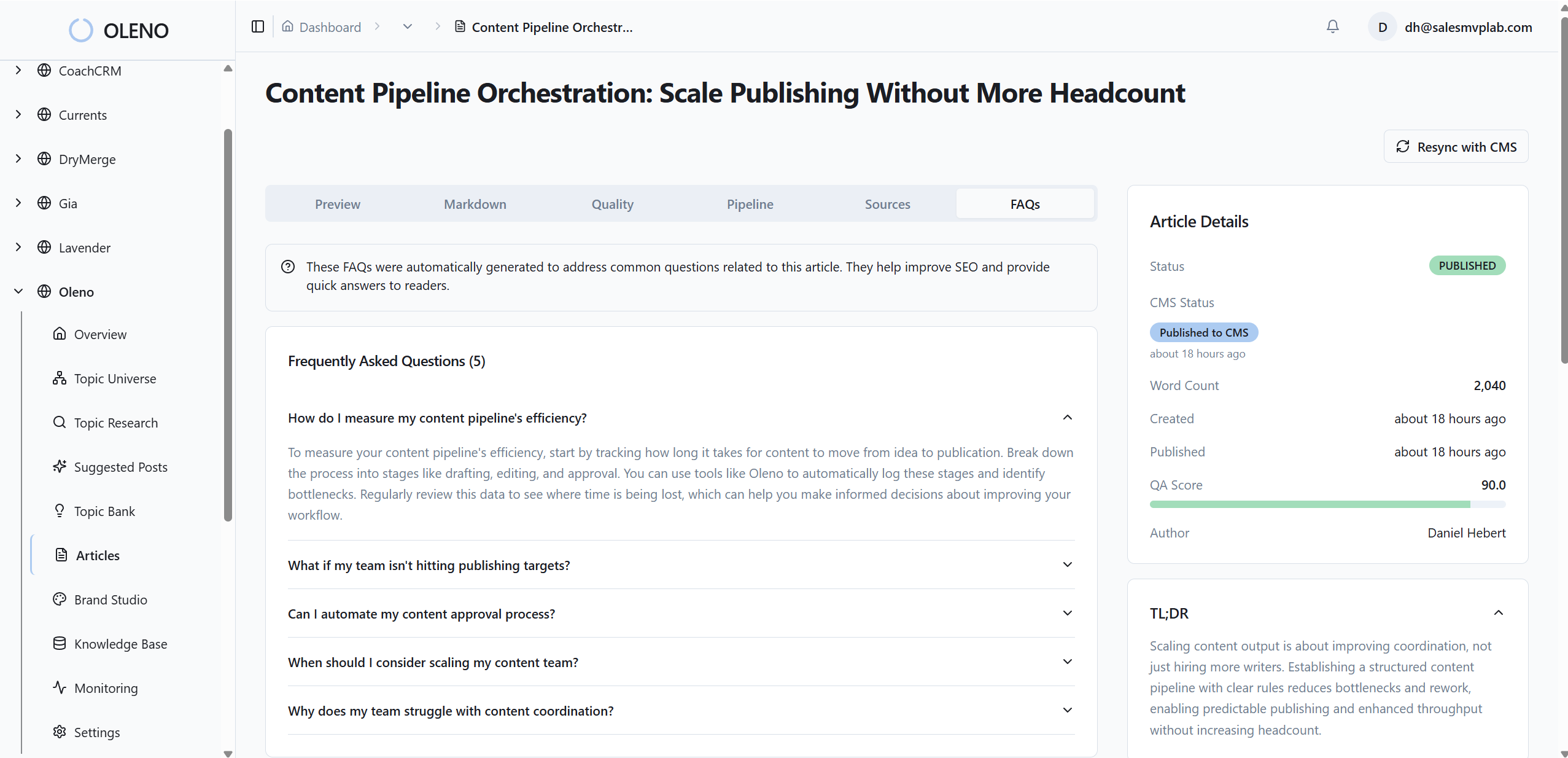
Oleno doesn’t add dashboards or performance analytics. It runs the system that ships accurate, differentiated, on‑brand content, daily. If you want to see the full pipeline turn your topics into publish‑ready articles, you can Try Oleno For Free. It’s a straightforward way to compare orchestration against your current prompt‑plus‑editing routine.
Conclusion
Most teams think their content problem is writing. It isn’t. It’s that strategy, differentiation, structure, visuals, and publishing live in different places with different owners and no single pipeline to carry intent to the finish line. When you treat content as a system, KB‑grounded retrieval, brief‑first differentiation, QA gates, deterministic enhancements, idempotent publishing, you trade frustrating rework for predictable throughput. You won’t remove judgment or craft. You’ll make room for it. And that’s the point.
If you want a pragmatic next step, pick one cluster, map the KB, and run a three-article experiment with enforced briefs and an 85+ QA gate. Measure edit hours before and after. If the edit load drops and snippet quality rises, you’ve proven the idea. If it doesn’t, you still learned where your KB and governance need work. Either way, you stop guessing and start measuring.
We’ve seen teams move from constant firefighting to calm, repeatable publishing in a matter of months. It takes work up front, sure, but the payoff is predictable cadence, fewer late-night fixes, and more time for the signals that matter, like product storytelling and demand capture. If you want help running that experiment or just want to compare notes from someone who’s shipped both ways, try Request a demo now. and see how the orchestration compares to your current prompt-plus-edit routine.
About Daniel Hebert
I'm the founder of Oleno, SalesMVP Lab, and yourLumira. Been working in B2B SaaS in both sales and marketing leadership for 13+ years. I specialize in building revenue engines from the ground up. Over the years, I've codified writing frameworks, which are now powering Oleno.
Frequently Asked Questions