How to Write Snippet-Ready H2s: 3-Sentence Templates for Snippets

Most teams treat section openers like warmups. A sentence or two to ease in, then the real content. That’s backwards. If a crawler or an assistant lifts anything, it’s your H2 chunk. So write those openers like they’re the product. Answer the question, set the rule, show one example. Then build the rest around it.
I learned this the hard way. Years of founder-led content, smart takes, and late edits that never quite landed the snippet. Once we flipped the order, opener first, three sentences, 40–60 words, we shipped faster and got quoted more. Not every time. Enough to notice pipeline move.
Key Takeaways:
- Lead every H2 with a 40–60 word, three-sentence opener: answer, context, example
- Prioritize extractability over length and keyword density
- Quantify rewrite loops and missed snippets to build urgency for change
- Use microcopy rules to keep openings clean, scannable, and citable
- Systematize enforcement so the rule survives busy calendars and team changes
Treat H2 Openers As Primary Copy Assets
A snippet-ready H2 opener answers the implied question in three tight sentences. Sentence one delivers the answer, sentence two sets a constraint, and sentence three gives a concrete example. Keep it between 40 and 60 words so assistants and search can lift it cleanly without mangling meaning.

Why section-first writing changes extractability
If you write the opener first, you force clarity before momentum carries you into filler. It’s a small discipline shift with outsized returns. Editors stop debating tone and start verifying the answer. The rest of the section becomes support, not discovery. That’s the difference between “quotable chunk” and “wandering intro.”
I’ve seen this turn late-night rewrites into five-minute fixes. When your first paragraph already nails the answer, everything downstream gets easier, lists, diagrams, and examples align instead of scatter. This isn’t about writing shorter. It’s about making the most liftable part of the page do its job on the first pass.
And yes, it’s a mindset shift for teams used to storytelling ramps. Keep the ramp. Just move it under the opener. The story still lands.
What is a snippet-ready H2 opener?
It’s a self-contained paragraph that can stand on its own without the rest of the section. The pattern is simple: answer, constraint, example. The constraint is what most people skip, but it’s what stabilizes extraction. The example keeps models from drifting. Short, specific, consistent.
When your team standardizes this shape, you stop reinventing mini-structures in every section. The opener becomes a deliverable you can review in isolation. Drafts get faster. Reviews get sharper. Publishing gets safer.
Could you bend the rule occasionally? Sure. But set the baseline first, then earn your exceptions.
Where conventional intros go wrong
We bury the lede. We chase clever. We hedge. That reads fine to humans after two paragraphs. It’s tough on machines that need a bounded, citable unit. If a model needs to stitch context from three places, you’ve already lost extractability.
A cleaner path: name the thing, define the limits, show one example. You’ll still have room for voice, just not in the first three sentences. If you want a north star, align your openers with Google’s Creating Helpful Content guidance. Clear purpose. Straight answers. Minimal fluff.
If that feels rigid, it is. Rigid in the right spot saves flexibility everywhere else.
Ready to skip the theory and see structured openers in live drafts? Try it hands-on: Try Oleno For Free.
Extractability Beats Length And Keyword Density
Search and AI assistants favor compact answers with tight scope and a stabilizing example. Short paragraphs reduce misinterpretation; clean sentence boundaries reduce extraction errors. Length helps only if it clarifies, otherwise it dilutes. Aim for clarity first, then expand with support assets that fit the snippet type.

What search and AI are really trying to extract
They’re not grading style. They’re resolving a question quickly and safely. That’s why the three-sentence opener works: it’s a contained unit with a defined boundary. The constraint sentence signals “this is the full scope, not a teaser.” The example stops drift into adjacent meanings.
If your opener bloats with qualifiers and half-ideas, assistants start guessing. Guessing hurts you twice, first in snippet capture, then in misquotes you have to correct later. Keep the language plain. Present tense. One clause per sentence. Good prose isn’t the inverse of precision.
A small, practical test: can someone paste your opener in Slack and get zero follow-up questions? If yes, you’re close.
Chunk-first structure, not paragraph sprawl
Think in chunks. Each H2 is a self-contained block that answers one question end-to-end. Opener first, then the asset that best supports the answer: short list, small table, or a single diagram. Keep sentence boundaries clean, no nested clauses or semicolon chains that break extractors.
The format matters, but your opener still carries the weight. For list snippets, one line that names scope, then 5–10 items with crisp labels. For tables, one line that defines rows and columns, then a 3x3 or 3x5 grid. For paragraph snippets, stick to the three-sentence pattern. If you need a reference, see SEOZoom’s snippet best practices.
One more nudge: if you can’t draw the section on a napkin, it probably won’t snippet well.
The Hidden Cost Of Sloppy H2 Openers
Flabby openers trigger rewrite loops that burn calendar and patience. Editors request clarity; writers defend style; deadlines slip. Each loop adds micro-delays across a content pipeline. The fix is cheap: three sentences, 40–60 words, enforced consistently. It’s policy, not preference.
Rewrite loops that burn calendar and trust
You know the dance. “Can we tighten this?” “What’s the actual answer?” “Do we have an example?” Multiply that exchange by six sections per article and a few stakeholders in the doc. Suddenly, you’re spending more time aligning on phrasing than solving for intent.
A standard opener format strips out 80% of the debate. Editors don’t argue taste; they check a rule. Writers don’t guess expectations; they fill a shape. It’s not about turning people into robots. It’s about saving the creative energy for the parts that deserve it.
The intangible cost is morale. People don’t love rewriting the same line five times.
Let’s pretend you ship 8 posts a month
Assume six H2s per post and 15 minutes of rework per H2 when openers wander. That’s 12 hours a month rewriting the first paragraph of sections before you even touch visuals or schema. At a 100-dollar blended hourly rate, you’re eating 1,200 dollars monthly in preventable edits.
That’s just the surface. Delays ripple. Publishing stacks up. Snippet opportunities go to whoever shipped a cleaner answer. Over a quarter, one missed paragraph snippet per post is 12 lost “boxed answers.” That changes who starts the conversation. If you want a deeper dive on snippet dynamics, skim SEO Sherpa’s featured snippet breakdown.
Still dealing with this manually every sprint? There’s a faster path to consistent openers: Try Generating 3 Free Test Articles Now.
When Your Best Article Gets Ignored
The best ideas still get skipped when the openers wobble. Models quote the clean block at the top of a section, not the brilliant paragraph four scrolls down. A simple enforcement rule turns “almost there” pieces into reliably citable pages, which protects calendar and team energy.
The pre-publish scramble you do not need
It’s 7pm. Draft looks good. But every opener wobbles, half-answer, no constraint, vague example. You trim, tweak, and still don’t feel great. Publishing slips to tomorrow. Repeat that twice a week and you’ve built a system that steals evenings.
A rule helps because it removes subjectivity. Does it answer? Is the scope clear? Is there one example? If not, fix before you move on. You don’t need new tools for this. You need a standard everyone honors.
And a team agreement not to “fix it later.” Later never arrives.
A quick story from the trenches
Early on, we pushed volume with founder-led content. Smart ideas, strong takes. Weak structure. We ranked, but the snippets landed elsewhere. The fix wasn’t headcount. It was enforcing three-sentence openers and writing sections first. At PostBeyond, that discipline alone let a tiny team punch above its weight.
Same pattern at LevelJump. Small team, no time. We recorded ideas, transcribed them, and then rebuilt the openings. Clarity jumped. Edits dropped. Not perfect. Measurably better. That’s enough.
I’ve made this mistake at scale and in scrappy teams. The rule travels well.
The Three-Sentence H2 Template And Microcopy Rules
Use a three-sentence opener: answer, constraint, example, in that order. Keep it 40–60 words total with present-tense, active-voice sentences. Avoid parentheticals and semicolons. Include one example only to stabilize meaning. This shape fits paragraph snippets and keeps list or table snippets grounded.
Direct answer sentence: what to say and how long
Lead with the answer in 12–20 words. Name the decision or definition plainly. Avoid hedging unless your domain truly demands it. Present tense and one clause per sentence keeps it clean. If a keyword fits naturally, use it once, don’t force it.
A good test: can your sales leader read sentence one and nod without asking for more context? If not, you’re probably still setting up. Resist the urge to “earn attention” here. You earn trust by answering fast.
Small teams benefit most. The first sentence eliminates needless back-and-forth.
Context sentence: narrow scope and criteria
Follow with a boundary in 12–20 words. State the constraint that governs correctness, word limits, sentence order, or table dimensions. This is the line that reduces drift and tells assistants what’s inside the box. Use no more than one comma or colon.
If you’re writing a how-to, your constraint might be steps or tools. For listicles, the count. For tables, the rows and columns. This sentence does invisible work: it protects meaning during extraction.
Keep it boring. The constraint is a rule, not a flourish.
Example sentence: anchor a concrete use case
Close with a single example in 12–20 words. Mirror a common scenario and keep values realistic. One example is enough to stabilize meaning without inviting extra lines into the pull. Resist stacking.
For list snippets, preview the item count and style: “This list includes seven rules with 10–15 word labels.” For tables, define two columns: “Compare audience type and word limit across three use cases.” Keep it practical, not theoretical.
If readers can picture it, you’re done.
QA checklist and passing thresholds for 40–60 word openings
You need a bar. Otherwise, your “standard” turns into friendly suggestions people ignore when things get busy. The checks are simple: three sentences, 40–60 words total, answer-context-example order, one example, minimal punctuation. If any check fails, fix before you proceed.
This isn’t pedantry. It’s a safeguard. The moment you allow four sentences “just this once,” the rule collapses. The point is predictability, not perfection. Lock the section until it passes, then move on.
You’ll thank yourself on publish day.
How Oleno Enforces Snippet-Ready H2s Across Your Workflow
Oleno bakes the three-sentence opener into briefs, drafts, and QA so the rule survives busy weeks. Drafts open every H2 with answer, context, example in 40–60 words. QA checks 80-plus criteria and blocks publish if a section drifts. Publishing preserves sentence boundaries, links, and schema.
Brief-to-draft enforcement with snippet-ready paragraphs
It starts in the brief. The template specifies the opener’s word limit, sentence order, and example requirement. When drafting, Oleno generates that paragraph first for every H2, using your brand voice and knowledge base facts. Writers don’t need to remember rules; the system applies them.
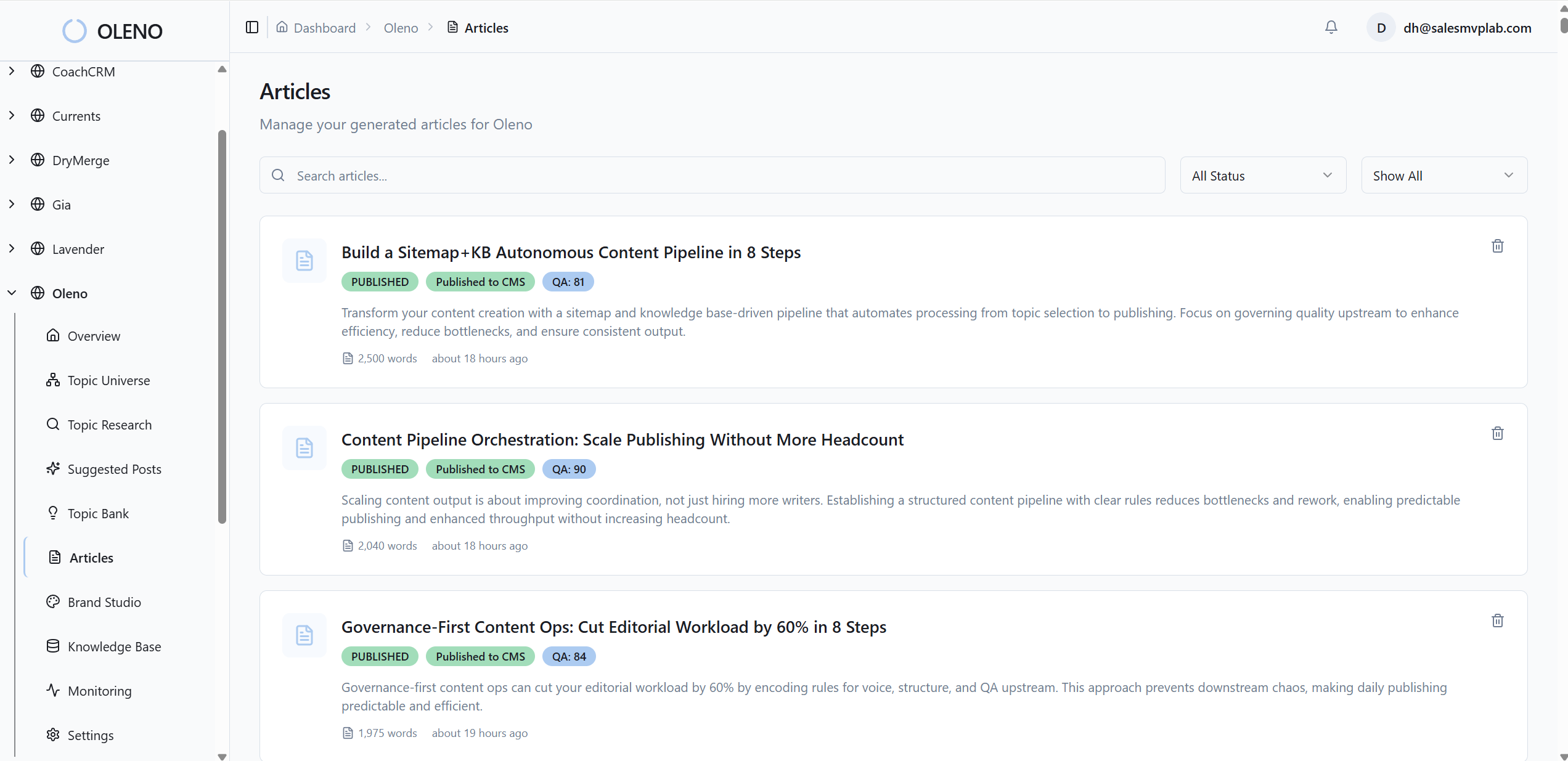
The practical shift is big: editors review each opener as a standalone asset before reading the rest. If it passes, the section flows. If it fails, you fix a small unit, not a page. That single change trims rework without policing style.
Fewer surprises. Cleaner first drafts. Faster handoffs.
QA Gate that catches drift before publish
Every draft goes through an automated QA Gate that checks structure, snippet readiness, and clarity. Minimum passing score applies, and failed criteria trigger refinement before the piece can ship. If an opener is 68 words, out of order, or missing an example, it’s flagged and corrected.
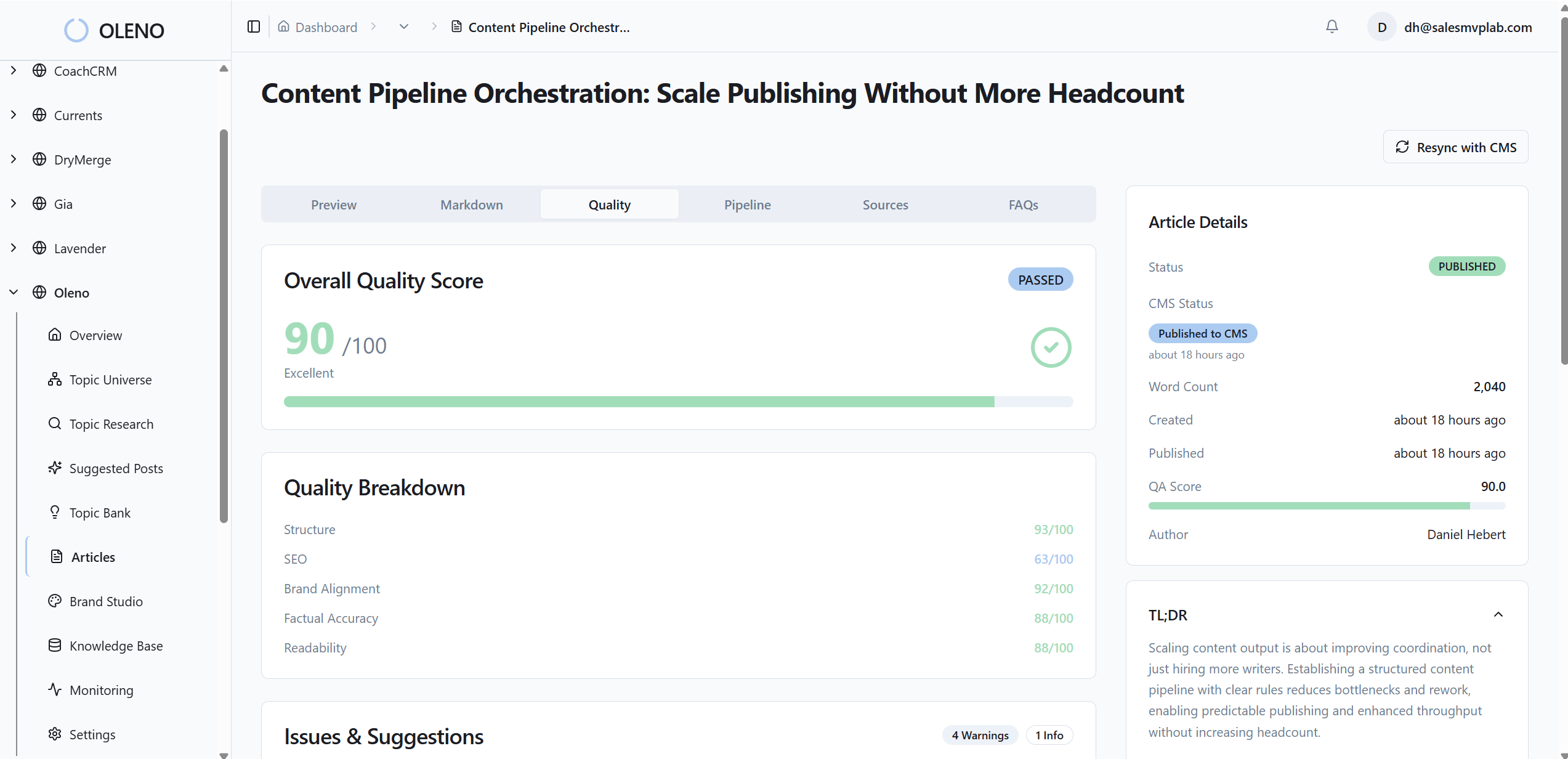
This is where you get predictability. Humans don’t have to be the rulebook. The system won’t allow near-misses to slip into production. It’s not punitive. It’s how you protect calendars and avoid the 7pm scramble we talked about earlier.
You’re buying back time you were spending on preventable edits.
Integrates with publishing so rules stick
passing QA isn’t enough if publishing breaks the structure. Oleno injects internal links deterministically and generates JSON-LD schema, then ships to your CMS with mapped fields. Sentence boundaries stay intact, and the 40–60 word openers go live exactly as written.
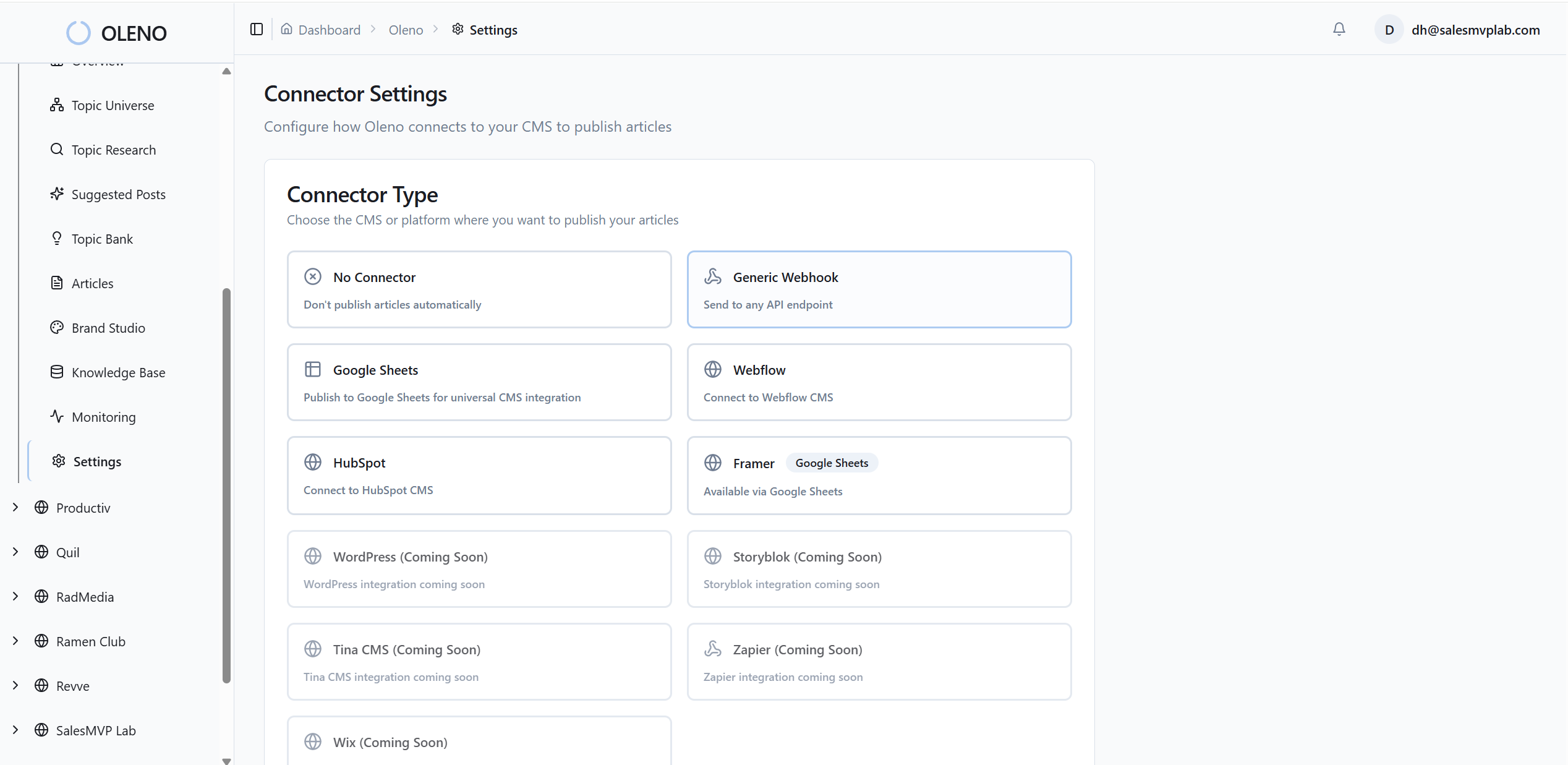
No last-mile formatting surprises. No broken paragraphs from manual edits. Visuals land where they belong, and alt text is handled. You can keep your focus on the next article, not on fixing the one that should already be working for you.
If you want to see an always-on version of this in your stack, no strings: Try Using An Autonomous Content Engine For Always-On Publishing.
Oleno ties back to the costs we quantified earlier. Those 12 hours a month in opener rewrites? The brief template and QA Gate remove most of them. Those missed paragraph snippets per post? The opener rule gives you a fair shot every time. Oleno isn’t promising perfection. It’s enforcing the basics at scale so your team stops paying the busywork tax and starts compounding authority.
And it does it using specific, concrete capabilities you can point to: Topic Universe determines what to cover next so each opener maps to intent; Brief Generation locks the three-sentence pattern; Draft Generation writes in your voice with knowledge-base grounding; QA enforces the checks; Publishing connectors deliver clean, structured pages with schema and visuals aligned.
Want to test this on your next three posts without changing your workflow? Try Oleno For Free.
Conclusion
Here’s the simple trade. You can keep debating intros and fixing half-answers in Slack, or you can standardize the one paragraph that gets quoted most. Treat H2 openers like assets. Answer, constrain, example. Then let a system enforce it every time. Fewer rewrites. Cleaner citations. More time for the parts only you can write.
About Daniel Hebert
I'm the founder of Oleno, SalesMVP Lab, and yourLumira. Been working in B2B SaaS in both sales and marketing leadership for 13+ years. I specialize in building revenue engines from the ground up. Over the years, I've codified writing frameworks, which are now powering Oleno.
Frequently Asked Questions