Human-in-the-Loop Orchestration: Build Deterministic AI-to-Reviewer Workflows

I learned this the hard way: more AI prompts don’t fix demand gen. They create output. Then they shove judgment into an uncoordinated human queue. Reviews pile up. Quality wobbles. Narrative drifts. If you want a reliable engine, you need human-in-the-loop orchestration that treats review like a system, not a favor someone squeezes in between meetings.
At Steamfeed, volume worked because the system worked. At PostBeyond, I could ship 3-4 posts a week solo because I had a framework and tight review loops. As teams grow, that loop frays. People lose context. Edits bounce around. Publish dates slip. It’s not a content problem. It’s an orchestration problem.
Key Takeaways:
- Treat review as a system with contracts, queues, and SLAs, not ad-hoc favors
- Define job contracts so AI outputs meet reviewer expectations on the first pass
- Route work to the right reviewer with batching to cut context switching and waste
- Enforce SLAs, retries, and safe rollback so publish dates are predictable
- Track provenance from claim to source so reviewers verify, not rewrite
- Use idempotent publishing to prevent duplicates and messy collisions
- Aim for 50–70% faster review turnaround without sacrificing governance
Prompted Output Isn’t Demand Gen: You Need Human-in-the-Loop Orchestration
Prompt-only workflows produce text fast, but they fail to produce reliable demand generation. Reliability requires a system that coordinates inputs, reviews, and publishing with clear rules. Without that, you trade speed for quality debt, delays, and brand drift that compound over time.
Why Prompts Create Review Debt
Prompts create variability by design, which means reviewers can’t predict what will land on their desk. When outputs swing in tone, structure, or claim accuracy, review time balloons. I’ve seen teams stack three rounds of edits on a simple article because no one shared the same bar for “done.” Multiply that by 20 pieces a month and you’ve got a problem.
A predictable review cycle needs predictable inputs. If the draft doesn’t follow your brand voice rules or cite product truths correctly, reviewers must fix mistakes that should have been prevented upstream. That’s rework. It’s also a quiet tax on your velocity target.
The fix starts with how you define the job. If reviewers know what to expect and creators know what to meet, the edit loop shrinks. Contracts, not vibes.
Consistency Beats Volume In GEO
LLMs reward brands that sound the same, believe the same, and define the product the same across hundreds of assets. Randomized outputs hurt you because they muddle the signal. You can’t fake consistency at the end with a heroic edit. It has to be built in.
Most teams try to crank volume and hope it balances out. It doesn’t. GEO looks for strong, repeatable patterns, not one-off brilliance. Consistency is an orchestration outcome, not a copy trick.
When the system keeps tone, structure, and product truth steady, reviewers catch fewer surprises. That’s where speed comes from. Not from pushing harder, but from removing avoidable rework.
The Real Bottleneck: Reviews Without Orchestration, Not Writing Speed
The real bottleneck in content operations is unstructured review, not the time to draft. The queue is invisible, SLAs are fuzzy, and routing is random. That chaos eats the week, creates missed handoffs, and forces leadership to micromanage dates instead of outcomes.
The Queue Problem, Not The Draft Problem
When everything is urgent and nothing has a ticket, reviewers grab whatever is loudest. Quiet work waits. Important work gets blocked behind easy edits because there’s no ordering rule. The result is predictable: missed launches, annoyed stakeholders, and confused writers.
You don’t need more reviewers. You need a visible queue with priority rules, owners, and due dates. Put a clock on it. Make the path from draft to publish observable. Once people can see the line, behavior changes fast.
I’ve watched teams shave days off cycle time just by eliminating hidden work. No AI upgrade required. Only a real queue.
Where Quality Slips Without Guardrails
Without governance, small misses become big rewrites. A vague claim slips past. A product term gets used loosely. A call-to-action feels off. None of those alone sink a post, but together they erode trust and force heavy edits later.
Guardrails keep quality from decaying as scale rises. Encoded rules for voice, claims, and structure move decisions upstream. Review then verifies, it doesn’t reinvent. That’s a different job, and it’s much faster.
The side effect is brand equity. When every asset sounds like you, the market starts to recognize you faster. That recognition is compounding interest.
What Orchestration Actually Coordinates
Orchestration gives each unit of work a contract. It routes the work to the right reviewer based on scope. It sets an SLA. It enforces ready-for-review checks so reviewers don’t waste time flagging basics. Then it publishes predictably.
It’s not glamorous. It works. The payoff isn’t a slightly better paragraph. It’s a machine that doesn’t break when you add 10 more pieces to the plan.
You’ll know it’s working when people stop asking “what’s the status” and start asking “what’s next.”
The Hidden Cost of Ad Hoc Reviews: Time, Errors, and Lost Signal
Unstructured reviews cost time, create errors, and mute your brand signal. Teams lose hours per asset to context switching and avoidable back-and-forth. Errors creep in when provenance is unclear and publishing is manual. The brand signal fades when fixes vary by reviewer.
Time Lost Per Asset Adds Up
Every context switch adds minutes. Reviewers bounce from a product deep dive to a top-of-funnel post with no prep, then back again. I’ve measured 15–30 minutes lost per switch, which compounds across a day. Four reviews can easily burn two hours of overhead before any real edit happens.
SLAs lock expectations, but you need intake rules too. If drafts don’t include sources, voice checks, and product claim boundaries, reviewers spend their time hunting, not editing. That’s a waste you can remove with a gate.
SLOs are normal in ops for a reason. Apply the same discipline to content. Even Google’s SRE approach treats service objectives as first-class constraints for reliability, not nice-to-haves. You can borrow that mindset for content review and scheduling too. See the Google SRE guide on SLOs, especially when evaluating human-in-the-loop orchestration.
Risk, Rewrites, And Brand Drift
When product claims aren’t tied to sources, reviewers argue style instead of verifying truth. That leads to ego battles and slow decisions. Worse, inaccuracies slip to publish. One bad claim in a feature page can spiral into multiple corrections and awkward sales follow-ups.
Provenance fixes this. Tie each non-obvious statement to a known source so reviewers can check, not debate. W3C’s provenance model exists to show where data came from and who touched it. The same principle applies to content. The W3C PROV recommendation is a useful reference for how to think about it.
The longer you run without provenance, the more your brand voice splinters. Small tweaks feel harmless in isolation. Together, they confuse readers and search engines.
Operational Incidents From Publishing Errors
Manual publishing introduces a special kind of pain: duplicates, partial posts, wrong images, wrong slugs. I’ve seen teams publish two versions of the same article on launch day because drafts lived in three places. Fixing that isn’t a copy edit. It’s an incident.
Idempotent publishing patterns from API design translate well here. Make the publish action safe to retry so failures don’t create duplicates. Stripe popularized this with idempotency keys for requests. The principle is simple and strong. Read more in Stripe’s docs on idempotent requests.
When publishing is safe, the team stops fearing the button. That confidence buys you speed.
What Review Chaos Feels Like When You’re On The Hook for Human-in-the-loop orchestration
Review chaos feels like late nights and second-guessing. You’re juggling opinions, chasing missing sources, and explaining slips to sales. It’s a grind that quietly drains the team and pushes leaders into the weeds.

The Friday Night Rewrite
You know the one. A big post is due Monday. It’s 6 pm on Friday. A stakeholder just added a comment thread that blows up the angle. Now you’re rewriting sections, begging for clarifications, and trying to guess what the “real” bar is.
I’ve been there more times than I’d like to admit. It’s not a writing problem. It’s lack of a contract. If the angle, claims, and voice were locked earlier, Friday night would look different. You’d be reviewing, not reinventing.
That’s the difference a system makes. It protects your time when it matters most.
The Slack Pileup And Second-Guessing
When review is unmanaged, Slack becomes the queue. Messages flood in. Threads fork. No one knows which comment matters most. People start doing the safe thing: sand down anything opinionated. Then the post reads flat.
Flat content doesn’t create demand. It doesn’t get cited by LLMs either. The cost isn’t just time. It’s missed pipeline because the work lost its edge.
A calm queue and a clear SLA cut that noise. People trust the process, so they stop shouting.
A Deterministic Human-in-the-Loop Orchestration Model That Scales
A scalable review model defines job contracts, manages a real queue, batches context for reviewers, and uses safe retry and rollback to keep publishing on schedule. It keeps humans in the loop for judgment, and it removes everything that doesn’t require judgment.
Define The Contract For Each Job
Start by writing the contract for each job type. What must be true before review starts? What sources back each claim? What voice and structure rules apply? If the contract isn’t met, it doesn’t enter the queue.
I like to include acceptance criteria that reviewers can check in under three minutes. Binary beats subjective. If a draft misses the mark, it bounces automatically with a clear reason, not a vague comment.
Over time, these contracts become reusable parts. They make new contributors productive without handholding.
After you lock the concept, summarize it as a simple checklist that creators attach up front. Keep it short and hard to argue with.
Route Work Through A Real Queue
Next, put all review work in one visible queue with owners and deadlines. Sort by priority and due date. Give reviewers the ability to pull the next right item without thinking.
Routing matters. Product posts go to product-savvy reviewers. Competitive pages go to PMM. Thought leadership goes to someone who knows the founder’s voice. You’ll never get the same speed if everything goes to the same person.
Set SLAs by job type. Hold to them. If something will miss, the queue should say it early. Surprises are what kill trust, especially when evaluating human-in-the-loop orchestration.
Also, set intake limits. Don’t flood reviewers with ten items due the same day. A good queue protects people from your ambition.
Batch Context, Then Decide Quickly
Batch similar reviews to cut context-switching waste. Five SEO articles in a row will take far less time than jumping between five unrelated assets. That single move can cut review minutes by half.
Make provenance part of the batch. Place sources and key claims where reviewers can see them at a glance. Then coach reviewers to decide fast. Either accept with light edits or bounce with precise reasons. No mushy middle.
For reliability, adopt sane retry rules. Backoff and jitter patterns from distributed systems keep retries from thundering the queue. AWS has a great write-up on this. See the AWS guidance on exponential backoff with jitter.
To make this teachable, here’s the flow I use once the paragraphs above are in place:
- Verify contract items are complete, including sources and voice checks
- Assign to the right reviewer by job type and due date
- Batch similar items for that reviewer’s next block
- Review against acceptance criteria, then voice, then clarity
- Approve or bounce with exact reasons and links to fixes
- Publish with an idempotent request so retries are safe
Ready to cut your review backlog in half? Request a Demo
How Oleno Makes Human-in-the-Loop Orchestration Real
Oleno encodes the rules, routes the work, and keeps the pipeline honest. Governance captures voice, product truth, audiences, and stories so creators and AI start from the same playbook. Then deterministic pipelines move each job from brief to draft to QA to publish with quality gates that block anything below the bar.

Governance That Travels With Every Piece
Brand Studio keeps tone, vocabulary, and structure aligned across assets, so drafts arrive already close to your voice. Product Studio centralizes approved features, limits, and use cases, which eliminates the risky “did we just invent a capability” mistake. Knowledge Archive grounds claims in your real sources, so reviewers verify, they don’t hunt.
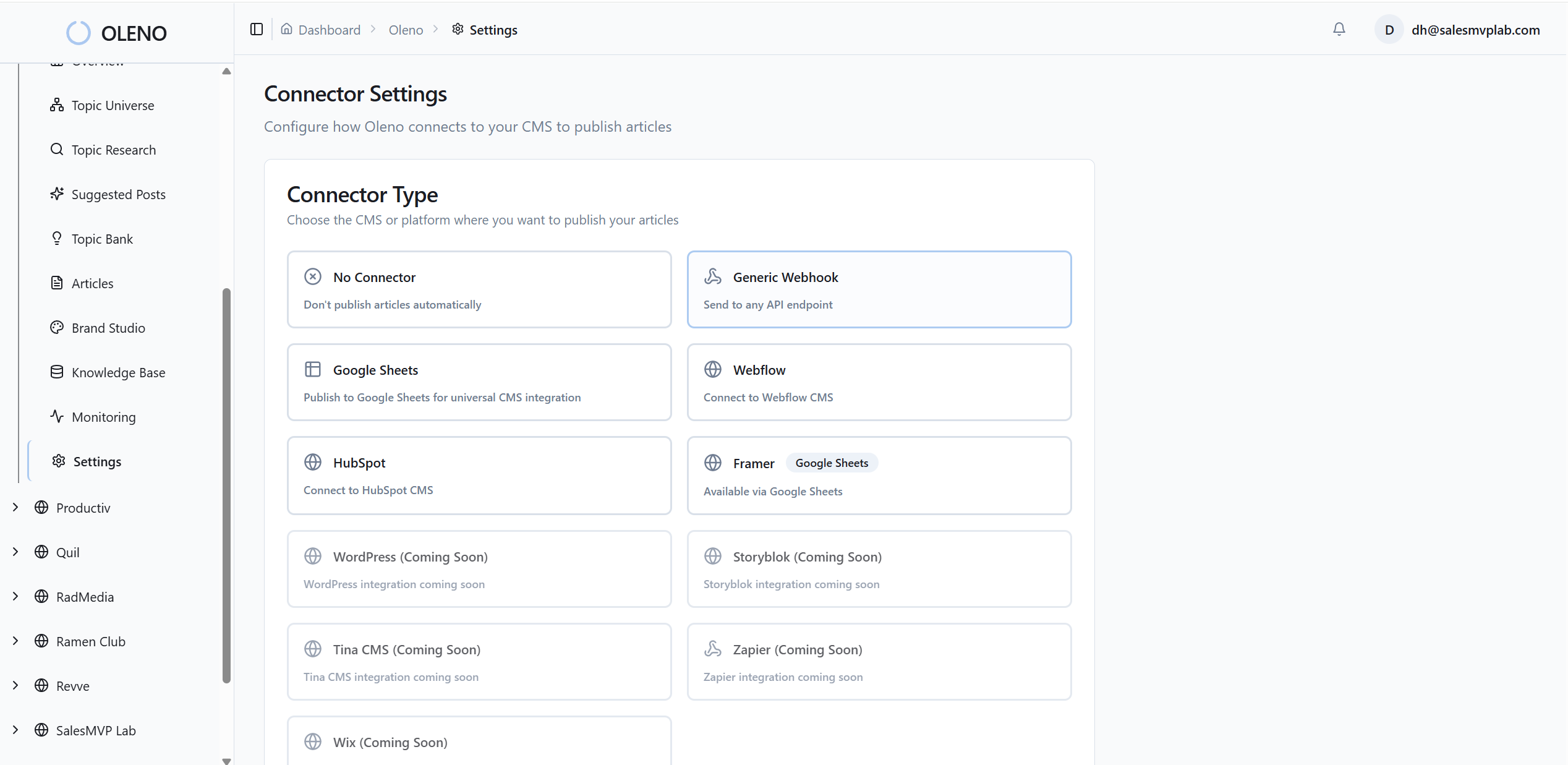
Audience & Persona Targeting frames the same topic differently for different buyers. That saves editors from late rewrites caused by generic angles. The net effect is fewer surprises at review, which shortens cycles.
This directly addresses the review-time waste we talked about earlier. When truth and voice are encoded, rework drops.
Execution Without Manual Babysitting
Programmatic SEO Studio and Product Marketing Studio run blueprinted jobs with locked outlines, so structure is predictable and SEO basics are already covered. The Orchestrator schedules work against quotas, which keeps cadence steady without PM traffic-copping.
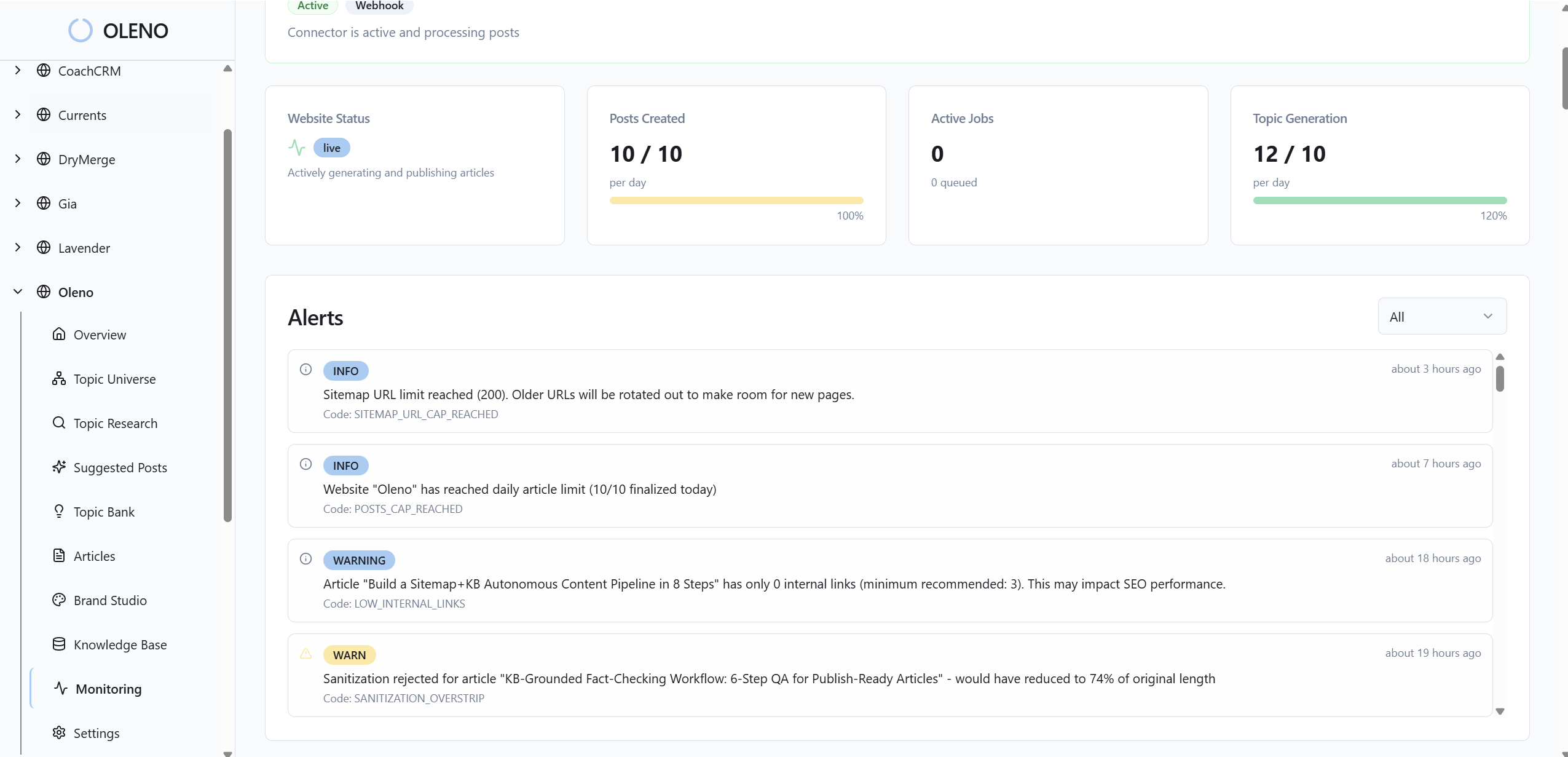
Quality Gate scores each draft for voice, structure, grounding, and GEO-ready elements. If it fails, Oleno auto-revises or blocks it from the queue. Reviewers get higher-quality inputs by default. That’s where the 50–70 percent review time reduction shows up for real teams.
CMS Publishing pushes approved content directly to your CMS in draft or live mode with idempotent behavior, which means safe retries and no accidental duplicates. That kills the “two versions went live” incident risk you can’t afford.
Cut review turnaround by 50 to 70 percent. That’s what Oleno delivers. Book a Demo
Quality You Can Trust Before Publish
Marketing Studio injects your market point of view so the narrative stays consistent. Stories Studio weaves real anecdotes, which makes thought leadership feel lived-in without a separate rewrite pass. Topic Universe ensures you always have the next best piece in the pipe.
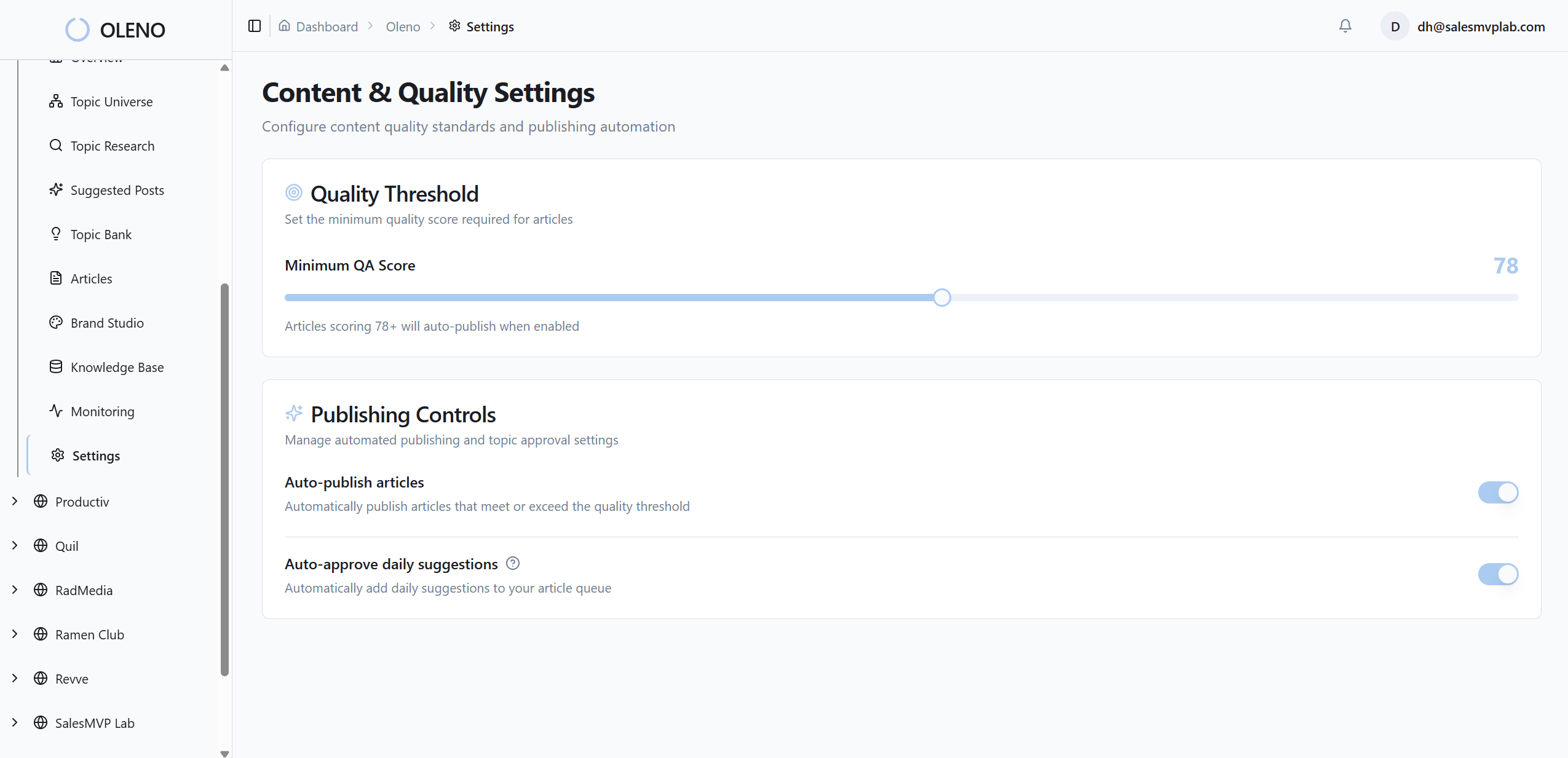
Health Monitor and the Quality Gate give you visibility into cadence and quality trendlines. Leaders stop guessing whether the engine is healthy. They can see it.
When reviewers trust upstream checks, they edit for clarity and impact, not basic correctness. That’s how you scale judgment without burning weekends.
Want to see these guardrails in your stack? Request a Demo
Conclusion
Prompting looks productive because drafts appear fast. But without human-in-the-loop orchestration, you push judgment into an uncoordinated queue and pay for it with delays, errors, and drift. The fix is a deterministic pipeline that treats review like operations: contracts, routing, batching, SLAs, provenance, and idempotent publish.
Do that and you’ll cut review time by 50–70 percent, protect your brand signal, and publish on schedule. More important, you’ll build a system that keeps working when the calendar gets messy. That’s the lever small teams need.
About Daniel Hebert
I'm the founder of Oleno, SalesMVP Lab, and yourLumira. Been working in B2B SaaS in both sales and marketing leadership for 13+ years. I specialize in building revenue engines from the ground up. Over the years, I've codified writing frameworks, which are now powering Oleno.
Frequently Asked Questions