Hybrid LLM Orchestration to Cut Content Automation Cost & Latency
Most teams throw a giant model at every content task and call it “automation.” It looks efficient until the bill arrives and schedules slip. I learned this the messy way—first cranking out posts solo at PostBeyond, then watching a small team at LevelJump fight deadlines because everything depended on a single, slow, expensive step.
Here’s the thing. The work isn’t one big problem. It’s a set of small, different jobs that don’t all deserve a trillion-parameter brain. When we finally separated classification, extraction, templating, and synthesis—and routed them by rules, not vibes—cost dropped and latency stabilized. You can get there. It just takes a system you can run daily.
Key Takeaways:
- Single-LLM pipelines waste tokens and time; route by task, not habit
- Define routing policy upfront: inputs, allowed models, SLOs, QA checks
- Cache aggressively and batch small tasks; escalate only on low confidence
- Track costs and latency per task class; tune thresholds weekly
- Enforce QA-as-code so cheaper routes stay safe and on-brand
- Use staged canaries and rollbacks so model updates don’t blow up your calendar
Why Single-LLM Pipelines Break At Scale
Single-LLM pipelines break at scale because they use the same heavyweight model for trivial and complex tasks alike. Token inflation, retries, and cold starts compound into schedule slips and bloated invoices. A common example: sending dedupe checks and template fills to the premium model instead of a small specialist or a cache.
What Happens When Every Task Hits A Big Model?
Route everything to a large model and you pay twice. First in tokens, then in time. I’ve seen teams burn hours waiting on “smart” paraphrases and extractors that a cheaper model—or a deterministic rule—could do in milliseconds. The fix isn’t a fancier prompt. It’s deciding which jobs are repetitive, bounded, or template-driven and keeping them off the premium path.
Start by listing your pipeline tasks and labeling each as deterministic, repetitive, or ambiguous. Deterministic and repetitive should default to small models or cache. Ambiguity earns a larger model only when confidence dips below threshold. When we made that shift, the “why is everything slow?” meetings disappeared. The queue shortened. The bill followed.
The Failure Modes You See In Production
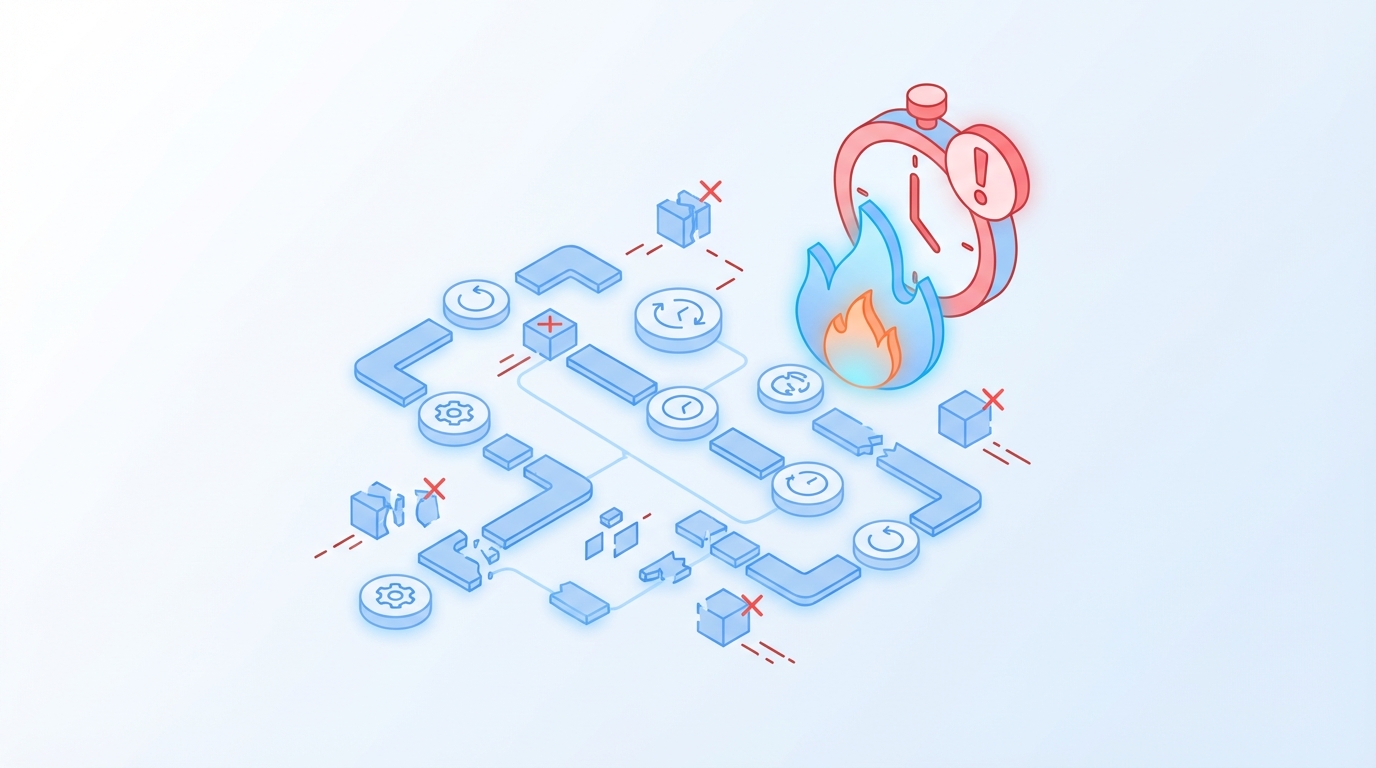
The biggest issues rarely announce themselves. Token explosion from long contexts turns a simple pass into a multi-dollar mistake. Retry storms on transient 429s amplify both cost and delay. Cold starts push p95 latency beyond your publish window. And subtle voice drift creates hidden rework you only notice at proofreading time. You think writing is slow. It’s mostly routing waste.
Instrument what matters per task: inputs, outputs, and retries. Then watch percent escalated, p95 latency, and tokens-per-output trend week over week. If you want a snapshot of real-world constraints and routing patterns, CrossML’s orchestration guide is a helpful reference. Use it to sanity-check your own metrics, not to copy someone else’s topology.
Why Prompt Tweaks Do Not Fix Systemic Waste
I’ve tried it. New template, clever few-shot, kinder system prompt. It feels better for a week. It doesn’t stop you from overusing the premium model. Prompting pushes judgment onto humans every time the work runs. You’ll keep paying in meetings and edits.
Move decisions upstream into policy. Define when to use a small specialist, when to serve from cache, and when to escalate. Encode QA gates that block publish if something drifts. That’s how cost and latency drop without sacrificing quality. When we did this at small-team scale, the stress went down immediately. Less rework. Fewer late nights.
Want to stop paying the “big model tax” on easy tasks? Try the policy-first approach with real guardrails. If you’re ready to test it on your content pipeline, Try Oleno For Free.
The Real Constraint Is The Task Graph, Not The Model
The real constraint isn’t the model; it’s the task graph—what jobs you’re running, in what order, under what rules. Set policy once, then let the router pick the cheapest path that meets quality. A practical case: small-model classifiers first, cached snippets for repeats, large-model synthesis only when ambiguity is high.
Who Should Decide Model Selection In Production?
Humans set the policy. The router applies it. That split matters. If you’re making model choices at 5pm, you’re already behind. Write guardrails as code, not slides. For each task, define inputs, allowed models, budget limits, latency SLO, and QA checks required before publish. Give the router room to choose the lowest-cost path that satisfies those contracts.
This keeps judgment upstream and repeatable. You don’t want a “smart” model freelancing brand voice or claims text. You want consistent decisions that match reality. When we did this, we stopped rewriting content after the fact. The system prevented drift instead of asking humans to catch it.
Design A Hybrid Topology You Can Operate
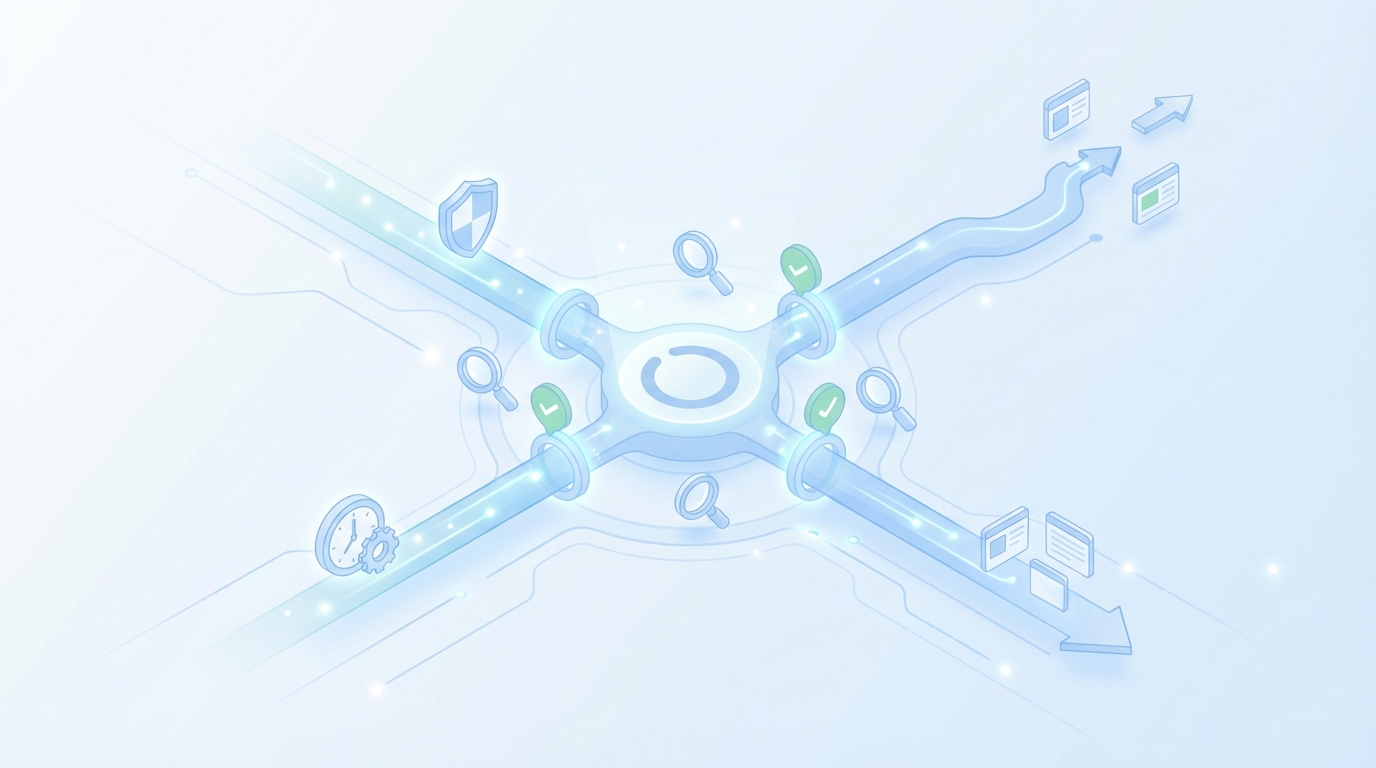
Split work across three paths. Small specialists handle classification, rewriting, dedupe, and extraction. Cached micro-inference serves known patterns and approved templates. Large LLMs handle reasoning-heavy synthesis or ambiguity. Keep backends swappable. Run open weights for bulk traffic, call frontier APIs for difficult edges.
Operations will thank you for simplicity. Keep the topology boring enough that on-call doesn’t need a flowchart. For routing patterns and agent coordination ideas, the IBM LangChain + Granite tutorial offers useful patterns—even if you don’t adopt their exact stack.
Boundary Conditions For Safe Downgrade And Escalate
Set confidence thresholds and exit criteria. If a small model returns low confidence or fails a deterministic lint, escalate. If a large model output fails grounding, retry once on the same tier, then fall back to a structured template you’ve already approved. Publish only what passes QA gates. No heroics in production.
Predictability beats cleverness when deadlines loom. I’ve shipped templated sections when synthesis was flaky, then queued a refresh after the spike. Nobody complained. The message was clear, on-brand, and accurate. That’s the job.
The Hidden Costs Draining Your Budget And Time
Hidden costs show up as token bloat, retry storms, and idle GPUs you didn’t realize you were paying for. Run the math per task class, not just “overall spend.” A typical pattern: hybrid routing plus semantic caching halves large-model passes without hurting quality. Track it weekly. Adjust thresholds. You’ll see it in the bill and in your calendar.
Run The Math On Tokens, Retries, And Idle GPUs
Let’s pretend you ship 300 posts a month. A single-LLM pass at 20k tokens per article is 6M tokens, plus context inflation on retries. Hybrid routing with semantic caching and small-model prechecks often cuts the large-model pass count by half or more. I’ve seen teams report up to a 70% API cost reduction from caching alone when their content mix repeats patterns frequently.
Don’t take averages at face value. Track cost per output per task class. Extraction versus synthesis. Paraphrase versus outline. It’s the only way to know where your tokens go. For a succinct overview of knobs to turn—caching, batching, and KPI design—AIMultiple’s LLM automation guide is a solid checkpoint.
Latency Taxes That Slow Publish-Ready Pipelines
Latency hides in queues. Batching saves cost, then adds delay. Cold starts and autoscaling ramps cause p95 spikes that blow past your publish window. Set latency SLOs per task. Pre-warm busy routes. Batch where quality doesn’t degrade. Parallelize where sequence matters. A 15-second save on four upstream tasks returns a meaningful hour at the end of your day.
Here’s the nuance. You don’t need to chase p50. You need p95 and p99 to behave. When we tuned for tail latency instead of averages, editors stopped waiting around for “just one more check.” The calendar got predictable. Stress came down.
How Do You Measure Quality Without Slowing Down?
Use QA-as-code. Grounding checks, voice linting, structural compliance, and claim control run fast if they’re deterministic. Sample a small percent for human review to catch drift. Report pass rates by task and by model tier. If small models fail specific checks repeatedly, route that pattern to the mid tier instead of escalating everything to the top.
This is where most teams slip. They either over-review and stall, or under-review and clean up later. The middle path—automated gates plus targeted sampling—keeps throughput high and quality trustworthy. We’ve done this with small teams that can’t afford manual review at volume. It holds.
The Frustration When Content Ops Miss Deadlines
Missed deadlines rarely come from one big incident. It’s a stack of small delays—retry here, cold start there, manual fix at the end—that roll a 3pm ship into a 9pm fire drill. I’ve been there more times than I’d like. Policy and guardrails shrink those swings so the team keeps their evening.
The 3pm Post That Turns Into A 9pm Fire Drill
You plan to ship at three. A model update lands. Latency creeps, quality slips, and your editor is stuck doing manual triage. This is why you route by policy, not vibes. Canary models behind feature flags. If the canary underperforms, roll back without touching templates. Your calendar shouldn’t depend on a surprise model release.
We learned to separate variables. Don’t change models and templates in the same window. Keep rollbacks instant. When we followed that rule, incidents got boring. That’s a compliment in operations.
Risk Controls That Keep Quality When Things Degrade
Graceful degradation protects the brand. If the premium path fails, publish the cached template with grounded facts, then queue a refresh for later. If visuals fail, skip them and ship text. Keep every fallback safe by design. That’s how you avoid frustrating rework and preserve trust when your system is under strain.
It’s not defeatist. It’s pragmatic. The worst version of this is publishing something clever but off-brand. The second worst is missing the window entirely. Fallbacks avoid both.
What Should You Alert On During Production?
Alert on SLO breaches that matter: p95 latency per task, QA pass rate dips, spikes in escalations, and cache-miss rate changes. Don’t wake the team for transient blips. Tie alerts to error budgets you set in advance. When the budget burns too fast, throttle volume, tighten routing, or pause risky tasks until the system stabilizes.
I prefer weekly reviews to ad-hoc reactions. The cadence forces improvements instead of firefighting. Your team needs that rhythm as volume grows.
Still dealing with these swings manually? It doesn’t have to be that way. If you want the system to handle structure and cadence while your team focuses on story, Try Using An Autonomous Content Engine For Always-On Publishing.
A Hybrid Orchestration Pattern That Balances Cost And Latency
A balanced pattern routes by confidence and complexity, caches aggressively, batches small tasks, and canaries model changes through staged rollouts. Keep SLOs per task and error budgets visible. The result isn’t flashier content. It’s predictable shipping at a saner cost.
Route By Confidence And Complexity, Not By Opinion
Define a scoring function that uses confidence, input complexity, and budget to pick a path. For example: small model for classification above 0.9 confidence, cached snippet for repeated FAQs, escalate to large LLM when synthesis requires three or more sources. Log the chosen path so you can tune thresholds without guessing.
This isn’t over-engineering. It’s how you stop arguing in meetings about “what feels right.” Numbers win. When we moved to confidence-based routing, escalations dropped and outcomes got less volatile. People noticed the calm, not the code.
Cache And Batch Like You Mean It
Combine three layers. Exact-match caching for identical requests. Semantic caching for near-duplicates. Template caching for standard sections like FAQs and TL;DRs. Batch small-model tasks where sequence doesn’t matter to hide latency. Keep large-model passes isolated so a single slow call doesn’t block everything.
Framework choices help here, but topology matters more than tooling. If you’re comparing stacks and tradeoffs, this orchestration toolkits comparison outlines patterns that support caching, batching, and routing without locking you in. Pick the simplest stack your team can operate daily.
Canary Model Changes With Staged Rollout
Introduce new models through flags and traffic splits. Start at 5 percent, measure QA pass rates, cost per output, and p95 latency. If deltas hold for a week, raise to 25 percent, then 50. Keep rollback instant. Never change model and template in the same window. One variable at a time so you can trust the conclusions.
We made this a rule after learning the hard way. It’s tempting to roll a shiny model with a new structure. It’s also how you end up debating which change broke what at 8pm. Keep changes surgical.
How Oleno Operationalizes Your Hybrid Model Strategy In Content Pipelines
Oleno turns hybrid policy into daily execution by encoding governance, enforcing QA gates, and controlling publishing cadence. You define voice, product truth, and claim limits once. Oleno keeps every output grounded in those rules—regardless of the route—so cheaper paths don’t drift and escalations still stay on-brand.
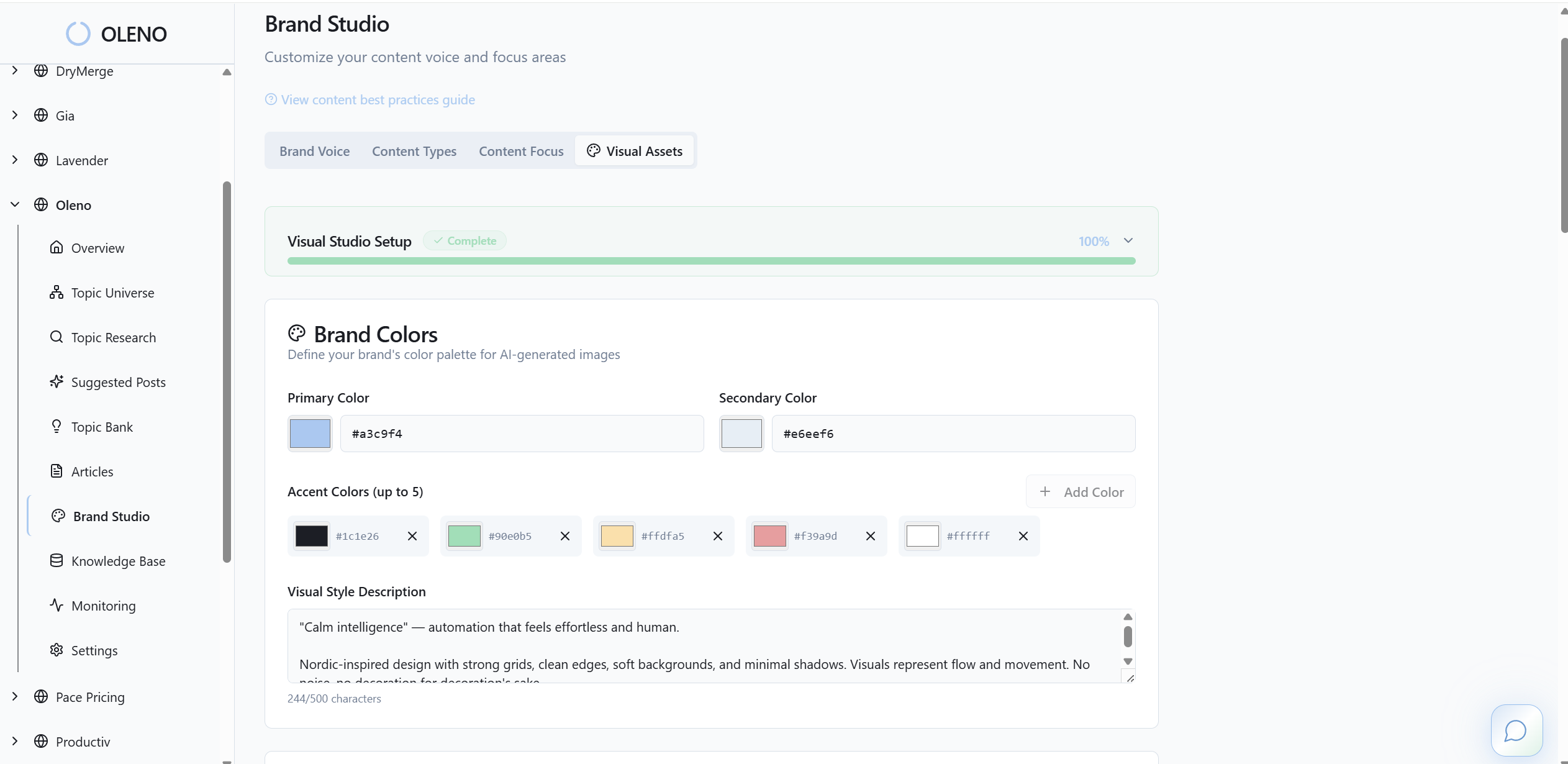
Oleno starts with governance-as-code. You set voice, terms to avoid, CTA placement, and product claim boundaries. That’s what keeps content accurate and safe when small models or templates handle bulk traffic. Then the QA gate blocks anything that doesn’t meet narrative structure, grounding, and clarity checks. If a route fails, Oleno triggers revision or a safe fallback you’ve pre-approved. No guesswork at publish time.
Publishing control matters just as much. Oleno publishes directly to your CMS with idempotency and retry safeguards, so you avoid duplicates and handle transient errors without manual edits. If upstream latency spikes, cadence doesn’t collapse—you can throttle volume, reschedule, or prioritize jobs with a couple of inputs. For teams juggling launches, sales requests, and support, that reliability feels like breathing room.
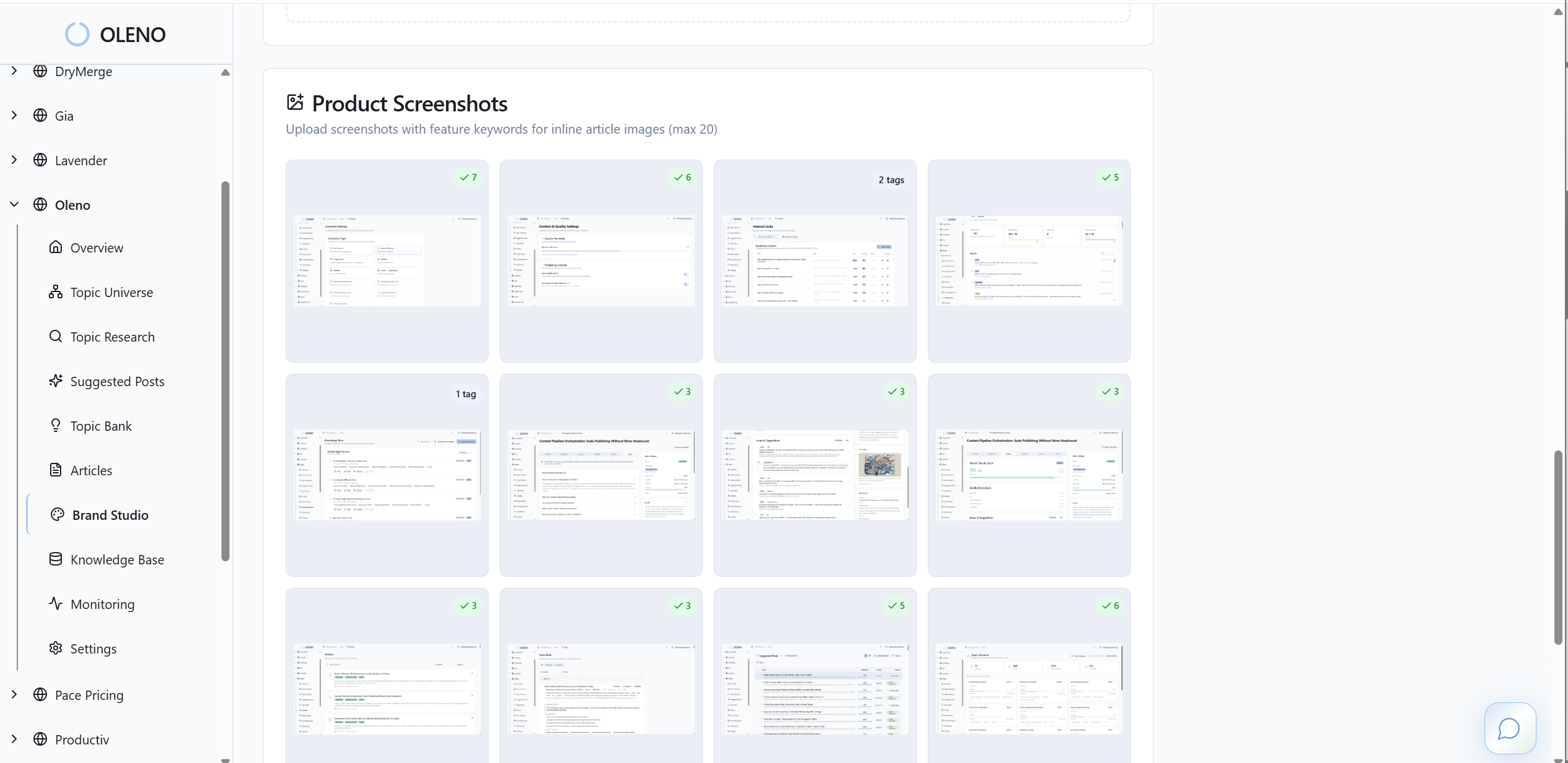
As volume grows, manual review won’t catch everything. Oleno’s operational view surfaces quality trends, common failure patterns, and targeted sampling to catch what automation misses. That feedback loop helps you adjust routing thresholds and budgets without hand-waving. It’s steady, not flashy. And it means a small team can run continuous demand gen instead of sprinting and stalling.
If you want to see how a governance-first, QA-gated pipeline handles real publishing schedules, Try Generating 3 Free Test Articles Now. It’s a simple way to pressure-test your policies before you commit.
Conclusion
You don’t fix cost and latency by prompting harder. You fix them by running content as a system: clear policies, hybrid routing, aggressive caching, QA-as-code, and boring rollouts. I’ve watched small teams go from reactive to steady by making these choices once and letting the system carry the weight. Do that, and you’ll ship more, argue less, and stop paying big-model prices for simple jobs.
About Daniel Hebert
I'm the founder of Oleno, SalesMVP Lab, and yourLumira. Been working in B2B SaaS in both sales and marketing leadership for 13+ years. I specialize in building revenue engines from the ground up. Over the years, I've codified writing frameworks, which are now powering Oleno.
Frequently Asked Questions