Implement a Brand-Voice Rule Engine for Autonomous Content Pipelines

Most teams treat “brand voice” like a PDF you email to writers and hope for the best. That works until you add AI, multiple contributors, and a publishing schedule that doesn’t care how busy you are. Then the PDF is a suggestion. And suggestions don’t hold up against deadlines.
Here’s the line I draw. If voice can’t be enforced by code, it won’t survive scale. Not because people don’t care, but because memory and manual reviews buckle under volume. You need voice as rules, not vibes. And those rules need teeth—deterministic checks, rewrites, and hard stops when drafts drift.
Key Takeaways:
- Treat brand voice as runtime policy that’s enforced at every stage
- Prompt-only guardrails drift as volume rises; policy-as-code stabilizes tone
- Enforce structure first to prevent most tone problems upstream
- Quantify drift costs (time, cadence, conversion) to build urgency
- Build a rule engine: measurable primitives, declarative schema, staged enforcement
- Use a blocking QA gate with auto-remediation to protect cadence without rework
Ready to skip the theory and see a governed engine run? Try Generating 3 Free Test Articles Now.
Why Static Style Guides Fail In Autonomous Pipelines
Static style guides fail because they’re advice, not enforcement, and autonomous pipelines need enforcement to stay consistent. As output scales, small deviations compound without a mechanism that catches and fixes drift early. Think runtime rules, not reference docs, like a linter that blocks unbranded drafts before they move.

What is a brand voice rule engine and why does it matter?
A brand voice rule engine translates your tone, lexicon, rhythm, and structure into checks that run automatically at Angle, Brief, Draft, and QA. It doesn’t “feel” your brand; it verifies conformance against explicit rules and rewrites what it can. When rules are codified, you get fewer debates and more consistent output.
Most teams don’t lack taste. They lack a way to make taste operational. The engine closes that gap by turning subjective preferences into measurable primitives—word choices, sentence length ranges, banned transitions, CTA posture. That’s how you stop copy that “reads fine” but doesn’t sound like you. It’s not glamorous, but neither is rework.
There’s nuance here. Machines won’t catch every edge case. But they’ll catch 80% of predictable drift so humans can focus on narrative. If you want a primer on how models interpret tone components (lexicon, syntax, cadence), this breakdown on how LLMs interpret brand tone and voice is a useful frame.
Why prompt-only guardrails collapse at scale
Prompts drift. People tweak them. Models vary responses. Teams copy old threads and introduce subtle changes. At 5 drafts a month, maybe you notice. At 60, you don’t—until the voice “kind of” sounds like you and “kind of” doesn’t. That in-between is where trust erodes and edits multiply.
The fix isn’t a better prompt library. It’s adding a runtime linter with a declarative ruleset and hard failure modes. Write rules once. Version them. Enforce them everywhere. When a draft violates a rule, the system rewrites or blocks with a clear reason. Less debate, more throughput, fewer “this doesn’t sound like us” comments.
I’ve seen teams set “tone: confident, helpful” and call it governance. That’s not policy. That’s a wish. You need measurable constraints and checks. For a practical angle on keeping voice intact with AI, this guide on maintaining brand voice with generative AI gets the balance roughly right.
The runtime constraint you actually need
Voice isn’t a preference. It’s a contract. The contract says: we use these words, avoid those, write at this rhythm, and follow this structure. Encode it. Then wire it into the pipeline so drafts can’t bypass it. No pass, no publish. Support auto-remediation to cut rework while maintaining control.
What matters is determinism. If today’s draft passes and tomorrow’s similar draft fails, you’re back to arguing taste. Deterministic checks build trust. Humans know what will pass. Writers self-correct. Editors stop playing defense. And when exceptions are truly warranted, you approve them with intent, not accident.
If you’re wondering where product fits: tools like Oleno treat these constraints as governance that the execution engine respects by default. The rules aren’t guidance. They’re operating conditions. That distinction stabilizes output at scale.
Voice Drift Comes From Gaps In The Pipeline
Voice drift happens because most teams centralize enforcement at the end instead of distributing it across stages. Early, lightweight checks catch cheap errors; late, blocking gates prevent escapes. When checks are missing or uneven, drift sneaks in through Angle, expands in Draft, and becomes expensive in QA.

Where do most teams try to enforce voice?
Usually right before publishing. One big review. Lots of comments. A scramble to fix. It’s late and expensive. Voice needs progressive enforcement: a thin linter during Angle to confirm audience and positioning; a stricter Brief check to lock structure; Draft-time rewrite hooks for lexicon and rhythm; a blocking QA gate for anything that remains.
This was my pattern for years: rely on editorial chops at the end. It worked when I wrote most of the content myself. As teams grew, quality became variable because early stages didn’t constrain the work. Adding light checks upstream didn’t slow us down—it sped us up because fewer drafts reached QA with fundamental problems.
The hidden complexity inside “tone”
Tone isn’t one slider. It’s a bundle: lexicon, formality, sentence length, paragraph density, transitions, CTA posture, and even where you place caveats. Saying “be confident” is meaningless to a system. Saying “average sentence length 15–18, max 28; discourage ‘furthermore’; allow contractions; prefer active verbs like ‘publish’ and ‘verify’” is enforceable.
Examples are your friend. Provide canonical paragraphs that represent “on voice,” then teach the system to match those features, not copy the words. The more precision you give the engine, the less you’ll argue over vibes. And the faster new contributors will match your voice without a month of back-and-forth.
The Hidden Costs Of Voice Drift At Scale
Voice drift costs you time, cadence, and trust. It shows up as extra edits, delayed publishes, and content that ranks but doesn’t convert because it doesn’t sound like you. Quantify it, and the case for policy-as-code becomes obvious. Leave it fuzzy, and you’ll keep paying the soft tax forever.
How do you quantify the cost of drift?
Let’s pretend you publish 60 posts in a quarter. Ten percent need voice fixes at 45 minutes each—27 hours. Add context switching for editors and writers, and you lose another 10 hours. That’s a full working week gone. And it’s the least controversial math here.
Now layer in opportunity cost. Some “on-intent” posts won’t pull their weight because tone is off just enough to dampen trust. It’s not dramatic. It’s a subtle leak—lower dwell, fewer demos, slower nurture. These costs compound quietly. You feel them in pipeline later, not in this sprint.
Compounding impact on pipeline velocity
Every late-stage fix hits cadence. Miss a publish date, and your distribution schedule gets choppy. Choppy schedules reduce reach because channels reward consistency. Miss again, and someone inevitably says “let’s just ship it.” That decision trades short-term relief for long-term cleanup and creates a backlog of post-publication edits.
This is where automated, deterministic checks help. They’re not faster for the sake of speed; they’re faster because they remove ambiguity. And predictability is what preserves cadence over quarters, not heroics in the last 48 hours. There’s some macro thinking on where automation is heading here: a 2026 view on autonomous marketing workflows. Worth a skim.
The SEO and LLM visibility hit
Unbranded tone doesn’t just “feel off.” It affects behavioral signals and how structured your content looks to machines. LLMs tend to surface content that’s coherent, consistent, and predictably formatted. Stabilizing headers, paragraph size, and CTA placement won’t guarantee visibility, but it usually improves retrievability and snippet potential.
I don’t overpromise here. It’s a pattern, not a promise. If your structure is predictable and your voice is consistent, you give both humans and models less to doubt. That trust translates into more time on page and a smoother path to action. You’ll rarely regret engineering that stability.
The Frustration Of Fixing Voice After The Fact
Fixing voice late is frustrating because it’s emotional, not just mechanical. Writers feel second-guessed. Editors become bottlenecks. Schedules slip. When rules live in heads instead of code, you rely on reminders and taste. That’s exhausting. Encode decisions once and let the system carry the load.
The rework nobody budgets for
You know the moment. Draft looks fine. Then you read it out loud and think, “That’s not us.” Now you’re rewriting intros, cutting filler transitions, replacing five-dollar words, and moving CTAs. None of that was on the calendar. Multiply it by a dozen pieces and you’ve got a schedule problem.
Here’s the mental shift: treat voice decisions like product constraints. If “no exclamation marks” is a rule, encode it. If “one-sentence punch before a longer paragraph” is your rhythm, encode it. Machines can do the easy fixes automatically and flag the hard cases for humans. That alone removes a chunk of the headache.
A short story from the field
We once scaled output with a tiny team. Volume was fine, but voice drifted as more hands touched drafts. We started small—ban a few terms, standardize CTA text, constrain sentence length. Drift dropped quickly. Not perfect, better. Then we added structure checks tied to our narrative framework. That’s when cadence stabilized.
The interesting part? Morale improved. Writers knew where the rails were. Editors stopped playing bad cop. And we shipped more consistently without working more hours. The system didn’t replace judgment; it protected it from the repetitive stuff.
Still dealing with last‑minute rewrites every week? Try Using An Autonomous Content Engine For Always-On Publishing.
Build A Runtime Brand Voice Rule Engine For Your Pipeline
A runtime rule engine turns voice from guidance into enforcement. Define measurable primitives, model them as data, and run checks at each stage with clear severities and auto-fixes. The goal isn’t control for its own sake—it’s fewer surprises, fewer edits, and a steadier publishing rhythm.
Define voice primitives your engine can measure
Start with what the system can actually verify. Preferred terms. Banned terms. Allowed transitions. Sentence length ranges. Paragraph size. Formality scale. CTA patterns. Target rhythm (short punchy, then longer). Represent them as data so checks are unambiguous and tests are possible.
When you write these down, you expose gaps. “We like confident but not aggressive” turns into concrete rules about verbs, qualifiers, and hedges. That’s useful for humans too. New contributors ramp faster because they’re responding to specifics, not trying to decode taste from examples.
Then codify it as a simple schema:
- preferred_terms, banned_terms
- sentence_length targets
- CTA rules (placement, voice, capitalization)
- structure expectations (H2/H3 cadence, paragraph length)
Interjection. Don’t overfit. Start small and iterate.
Design a declarative rule schema with clear severities
Use a JSON schema so policy is versioned, testable, and reviewable. Each rule should include an id, type (lexical, rhythm, structure), severity (error, warn), and an optional auto-fix strategy. Errors block. Warns inform. Keep it boring and explicit so engineers and editors can collaborate without translation errors.
For example, a structure rule might require a single CTA in the final third of the piece with title case text. A lexical rule might replace “amazing” with a preferred alternative or flag it for edit. Over time, you’ll move more rules from warn to error as you trust the system.
Architecture note: treat rules like configuration checked into version control. Review changes. Test them against a content sample before rollout. If you want a systems view of wiring this into your factory, this piece on architecting an autonomous content pipeline maps the moving parts well enough.
Integrate enforcement at Angle, Brief, Draft, and QA
Place the lightest checks early and the heaviest at the end. Angle lint confirms audience, POV, and CTA posture. Brief lint locks H2/H3 structure and banned terms. Draft hooks run real-time rewrites for lexicon and sentence length. The QA gate blocks on any remaining errors and either auto-remediates or routes to human review.
Make rejection deterministic. If severity equals error, fail fast with a useful message and rule_id. No debate, no “but this time is different.” Add pre-commit checks in your content store so off-brand drafts never enter the queue. The point is to protect cadence while raising quality, not to slow the team down.
How Oleno Enforces Brand Voice End To End
Oleno turns your voice rules into operating conditions for the entire pipeline. Governance defines tone, lexicon, and structure. Studios run job-specific execution. The operational layer enforces QA gates and publishing control. The result isn’t perfection—it’s predictability you can manage and improve.
Brand voice rules configured once, enforced everywhere
You configure tone, preferred terms, words to avoid, CTA style, and structure in Oleno’s governance layer. Those rules apply automatically from Discover through Publish, so every Angle, Brief, and Draft inherits the same standards without copy-pasting guidelines. That reduces manual edits and quietly eliminates a lot of drift.
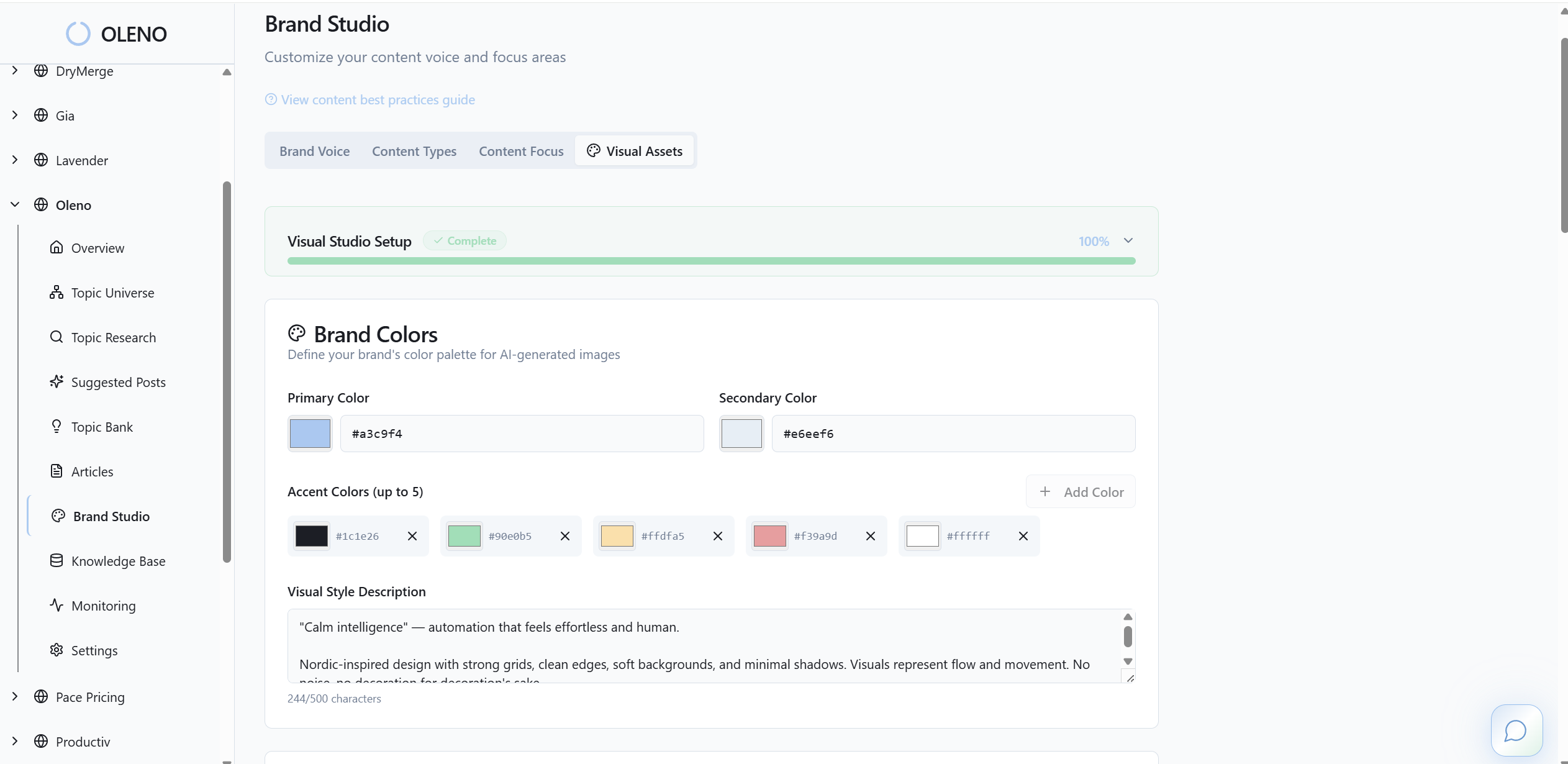
Because the rules live at the system level, they persist when priorities shift. Launch next week? Different job running this month? Doesn’t matter—voice enforcement doesn’t depend on who’s writing. That steadiness is what small teams need when the calendar gets messy.
QA gate with auto-remediation and publish control
Oleno blocks publishing on voice, narrative, clarity, grounding, and structure failures. When it’s safe, it revises automatically until the draft passes. When it’s not, it routes to human review with specific violations, not vague feedback. That’s how you avoid the late-stage scramble and keep a reliable cadence.
Tie this back to the costs: those 27 hours of quarterly rework get cut because the system handles the repetitive fixes and prevents off-brand drafts from escaping. You shift time to story and messaging decisions while the machine polices structure and tone.
Studios and operational layer keep rules in the loop
Studios in Oleno are job-based: acquisition content, category education, evaluation, product education, customer proof. Each job runs the same deterministic pipeline and quality gates. The operational layer provides cadence control and publishing governance so rules aren’t bypassed when things get busy.
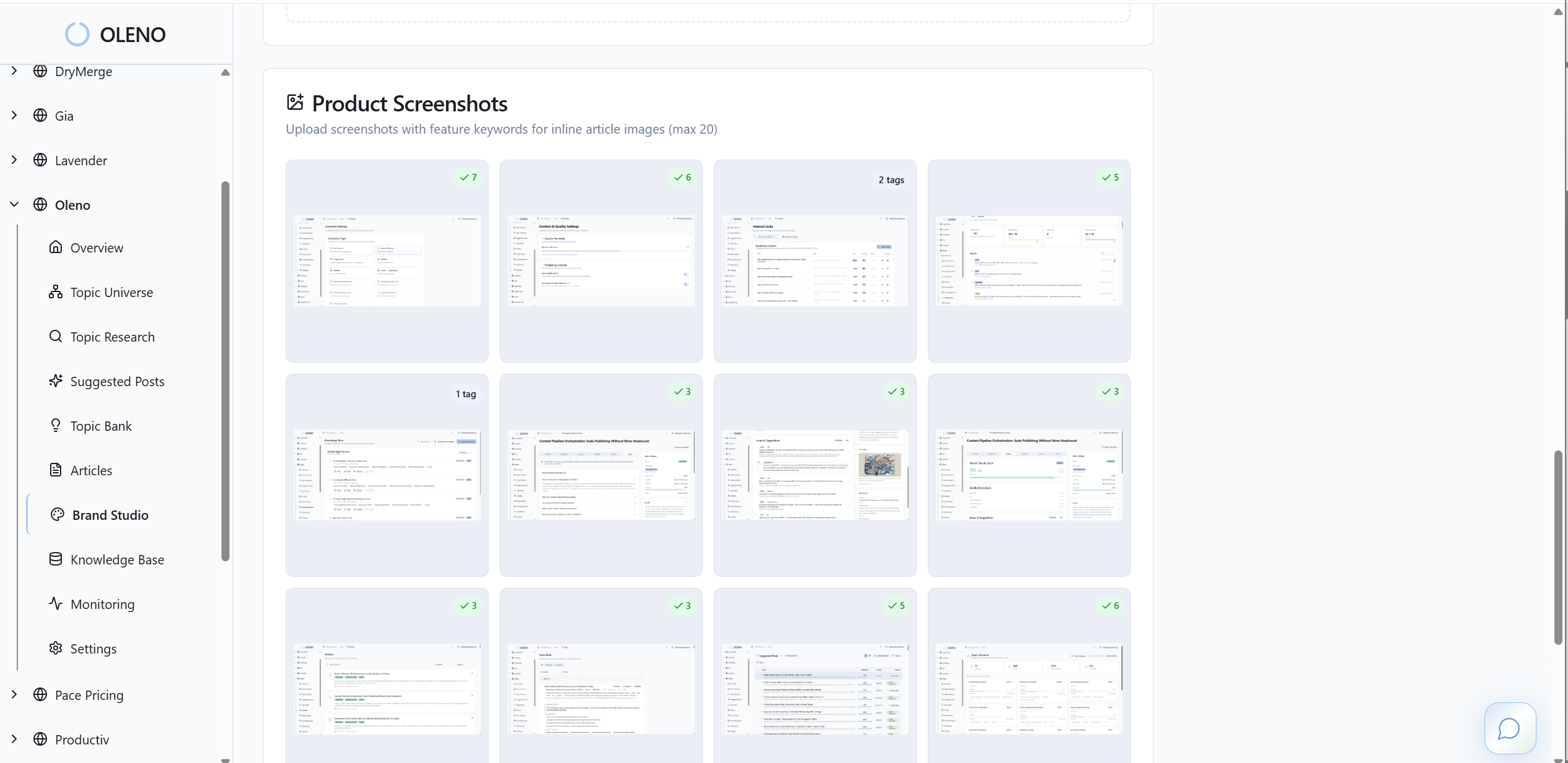
This is the difference between “tools that help you write” and “a system that runs demand gen.” Oleno sits in the second category on purpose. It doesn’t replace your strategy. It executes it, consistently, with the voice you defined. Want to feel this in your workflow next week? Try Oleno For Free.
Conclusion
Voice drifts when it’s treated like guidance instead of policy. The fix isn’t more careful editing. It’s encoding tone, rhythm, and structure as rules the system enforces at every stage. Start small—measure what matters, wire light checks early, block hard late. You’ll ship more consistently, argue less, and sound like yourself at scale.
About Daniel Hebert
I'm the founder of Oleno, SalesMVP Lab, and yourLumira. Been working in B2B SaaS in both sales and marketing leadership for 13+ years. I specialize in building revenue engines from the ground up. Over the years, I've codified writing frameworks, which are now powering Oleno.
Frequently Asked Questions