Implement Content Lineage: Provenance & Audit Trails for CMS
Most teams treat content like a finished artifact. It gets edited, approved, and shipped. Then something breaks, a number is off or a quote gets questioned, and the whole machine grinds to a halt while you dig through Slack, Google Docs, and calendar invites. I’ve lived that mess. It never feels small in the moment, because it never is.
When you add lineage to your content model, you change the room. Reviewers stop guessing. Legal stops blocking everything “just in case.” Editors can move faster without playing risk roulette. And you, as the person on the hook, can answer “where did that come from?” in under a minute. Not an hour. That’s the difference.
Key Takeaways:
- Treat claims as first-class objects with IDs, sources, timestamps, approvers, and versions
- Capture lineage events where they happen and project them into a single store you can query
- Quantify the cost of audits without lineage and make it visible to leadership
- Add lineage checks to your pre-publish QA gate so issues surface early
- Start with a minimal schema and a phased rollout, then layer in graph views as queries grow
- Expose lineage inside your CMS and via a reviewer API for legal and compliance
Why Traceability Becomes Your Editorial Safety Net
Traceability turns content from a black box into an auditable system. By attaching sources, timestamps, approvers, and versions to each claim, you reduce investigative work and make reviews repeatable under pressure. In practice, this means fewer escalations and faster decisions when numbers or quotes are questioned mid-launch.
The blind spot most teams ignore
Most teams treat content like a final asset, not data with history. The moment a claim is questioned, everything slows while you hunt through docs, Slack, and emails. I’ve been there with product pages, pricing notes, and competitive comparisons, and it always costs more time than you think.
Lineage fixes the root cause. When every claim has an ID, a source URI, a retrieval timestamp, and an approver attached, you can verify in minutes. You can also spot drift. If a sentence changes but the source didn’t, you catch it before it ships. That changes behavior, because editors know the system will ask for proof.
The best part is how it shifts energy. Instead of heroic investigations, you build a habit of attaching evidence as you write. The audit trail becomes the default, not an afterthought when the room gets tense.
What is content lineage and why does it matter?
Content lineage is the chain of custody for statements. Think claim_id, source URI, retrieval timestamp, who approved it, the diff of changes, and release version that shipped. You’re adding context that machines and humans can reason about, so reviews stop being opinion wars.
Why it matters is simple. Reviewers can verify any claim fast, legal can check citations without holding the entire queue, and retrieval systems, if you use them, can point to real evidence, not guesses. It’s not about being fancy, it’s about lowering the cost of trust so the team keeps moving when it counts.
When lineage lives with the content, not in scattered tools, it becomes a safety net. You don’t punish writers, you protect the brand. And you stop paying the tax of uncertainty every time a number gets pulled into a deck.
Ready to cut audit time from hours to minutes? See the workflow end to end and Request A Demo.
The Root Causes of Missing Lineage in Production
Missing lineage comes from fragmentation, not laziness. Drafts live in one place, edits in another, approvals in a third, and publishing in a fourth. Unless you capture events at the point of change and route them into a single lineage store, you’ll keep losing context between steps.
Fragmented tools create gaps you cannot query
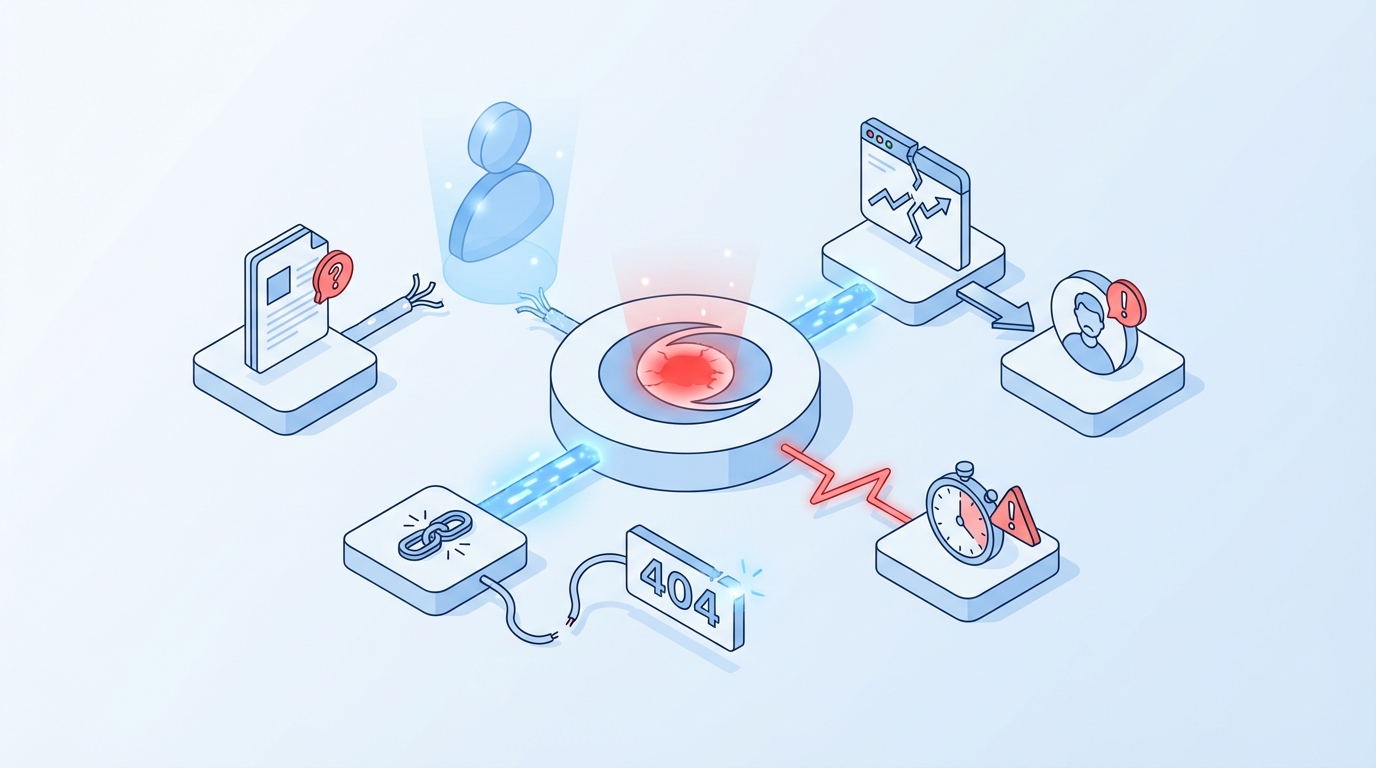
Authoring in Google Docs, editing in your CMS, review in email, citations in Notion. None of it links reliably, and even careful teams drop context when work gets busy. Telling people to “be more diligent” doesn’t fix the system. You have to capture events where they happen, attach stable IDs, and route them into one place you can query.
I like to think of it as operational telemetry for content. You’re not turning writers into engineers, you’re giving editors the same traceability that product teams expect in code. Standards thinking helps here. Healthcare has been moving in this direction for years, and you can borrow ideas from the way CMS documents API interoperability standards. Not the exact schema, but the discipline of events, identifiers, and auditability.
Once your events exist, queries get easy. “Show me every claim changed since last publish.” “List claims referencing Source X across the site.” Without events, those questions turn into multi-hour Slack archeology.
Where lineage is lost across the pipeline
You lose lineage at handoffs and silent edits. Draft handoff without tracked changes. Copy edits that rewrite a claim but keep the old source. Manual publish actions that don’t record which version shipped. Image or data updates that bypass the article model entirely. If the event isn’t emitted, it never happened, at least to your system.
Close the gaps with hooks and approvals. Add editor plugins that collect sources where the claim is added, pull requests for significant changes with approver identity, and webhooks on publish that link the CMS version to the lineage record. You’re not locking people down, you’re making the process observable.
One note that trips teams up. IDs matter more than templates. Add stable claim and change IDs you can track across drafts, instead of trying to infer diffs later. It’s much cheaper to attach an ID at creation than to reconstruct intent after the fact.
The Hidden Costs Draining Your Content Budget
The cost of missing lineage shows up as delays, rework, and credibility hits. It also shows up as missed windows when legal stalls a launch or leadership pulls the plug until numbers are verified. Those moments aren’t free. They tax the whole funnel.
The audit scramble that burns hours
An audit without lineage turns into a scavenger hunt. Editors pause publishing. PMMs hold releases. Legal wants proof. Meanwhile, your SEO momentum stalls, campaign timing slips, and sales gets jittery quoting content they’re not sure they can defend. The cost isn’t just time. It’s missed windows and a trust dip inside the team.
Back when I was running content and sales enablement side by side, these scrambles always knocked something else off the plate. We’d borrow time from outreach or onboarding to run an internal investigation. That trade adds up. It’s the kind of tax leadership doesn’t see until a quarter misses.
You don’t have to guess about this either. If you measure it once, it becomes very clear very fast.
What does this cost in plain numbers?
Let’s pretend your editor rate is 70 per hour. Two editors plus a manager spend 6 hours tracing two claims across five tools. That’s 3 people times 6 hours times 70, or 1,260. Do that twice a month and you’re at roughly 30,000 a year. Soft cost, but real, and it blocks higher leverage work.
You’ll also pay opportunity cost. A day lost chasing a citation is a day not spent on a launch page, a customer story, or a high-intent comparison. If you’re a small team, those tradeoffs punch above their weight. You feel it in pipeline two or three months later.
Security and compliance compounds the stakes. Centralized, queryable lineage aligns with how many orgs are already thinking about data provenance. If you’ve seen efforts like the CMS security data lake approach on Snowflake, you know the pattern. One source of truth, clear events, consistent review.
Why RAG and legal reviews require lineage
If you run retrieval-augmented generation for drafts or quotes, reviewers need to see the exact chunk, the doc it came from, and the timestamp it was pulled. Without that, you risk unverified statements sliding through. Legal can’t sign off quickly. Product teams get nervous. Your brand carries the risk.
A small lineage field set and a reviewer API make these checks routine. Not heroic. It’s also how you keep your AI story honest. If a tool is allowed to generate a sentence, it should be required to show its homework. That pattern maps neatly to regulated contexts too, where audit trails are expected and often required, as seen in briefs around mandates like the CMS Fifth Mandate for payers.
Still chasing citations across five tools? Stop the scramble and Request A Demo.
When It Hurts Most For Your Team
You’ll feel the lack of lineage at peak moments. A VP asks for a source mid-review. A last-minute edit swaps a number, no source attached. A major customer questions a quote on your website. With lineage, these moments are quick checks. Without it, they become mini-crises.
When a VP asks where a claim came from
You’re in review. The VP asks, “Where did we get that 38 percent?” Silence. Slack threads fly. Confidence dips. You either revert the claim or delay the post. With lineage, you click the claim, open the source, and confirm timestamp and context in under 60 seconds. The conversation moves on.
This is less about being right, more about being sure. Leaders aren’t trying to derail work. They’re trying to avoid a public correction later. Lineage lets you satisfy that instinct fast. You also build credibility as the person who can answer on the spot.
And if the source is weak, you find out early, not after the page ships. That’s the point.
The 3am fix that derails launch day
A late edit removes a key sentence. No one captures the replacement source. By morning, the article is live, social is queued, and sales is already quoting it. Now you’re rushing to patch while the clock ticks. If lineage were enforced at pre-publish, that draft would have been blocked, or at least flagged with a visible warning.
I’ve watched last-minute edits create follow-on messes. Not because anyone was careless, but because the system didn’t ask for proof at the right time. You don’t need more meetings. You need the editor to see a red badge next to the claim that changed without a source update.
The launch still happens. It just happens without the 3am panic.
What happens when your biggest customer questions a quote?
If a major customer emails support and asks for a citation, the longer you stall, the riskier it feels. With lineage surfaced in the CMS, the editor can copy the source link and timestamp in under five minutes. If it doesn’t check out, you roll back with confidence and a visible history.
This matters when your space is sensitive or regulated. Public directories and healthcare data have already seen pushback around accuracy and source of truth. If you followed the debate around national directories and responses to requests for information, like the CMS RFI on a National Healthcare Directory, you’ve seen how provenance becomes the conversation. It’s not just a nice-to-have.
The brand risk isn’t loud. It’s slow erosion. Lineage helps you keep the trust you already earned.
A Practical Model To Implement Content Lineage End To End
Implement lineage by modeling claims, capturing events at the point of change, and making lineage visible in the CMS and via an API. Start small with a relational store, then add projections as queries grow. The job is to make proof cheap and publishing predictable.
Design a minimal lineage schema for claims, sources, and versions
Start with a minimal schema. Claims table with claim_id, article_id, text_hash, start_offset, end_offset, and status. Sources table with source_id, uri, title, publisher, access_method, and checksum. A join table, ClaimSource, with claim_id, source_id, retrieved_at, snippet, and confidence. Versions table with article_id, version, change_id, editor_id, and approved_at.
Two keys make this work. Stable IDs you can carry across drafts, and timestamps on every event. The offsets or text hashes help you survive copy edits while keeping joins small. Don’t overcomplicate it. You can always add fields later, such as source_fragment_id or page, when you need more precise anchors.
If you want reference architecture thinking, browse how broader interoperability efforts document their fields and flows. The structure in indexes like the CMS Standards and IGs resources can inspire how you design yours. Different domain, similar discipline.
Capture events with webhooks, editor hooks, and event sourcing
Emit events at authoring, review, and publish. Good primitives are claim.created, claim.updated, claim.approved, article.versioned, and article.published. Use CMS editor plugins to collect source URIs and snippets as claims are added. Add a Git-like change_id so humans can reason about a set of edits. Route all events to a durable log, then project them into your lineage store.
If an event fails, retry with idempotency keys so duplicates don’t appear. This is boring plumbing that pays off every week. It also sets you up to block risky publishes later, because the system can see what changed and what’s missing. When in doubt, capture the event and add the check next sprint.
One trick that helps adoption. Show editors their own events in the sidebar. When people can see their trail, they’re more likely to keep it clean.
Expose lineage in CMS UI and a reviewer API
Make lineage visible where work happens. Add a side panel showing claim cards, source link, retrieval timestamp, and an approval badge. If a claim changed without a source update, show a warning. Keep it simple. The goal is to help an editor verify two or three claims in under five minutes.
Provide a reviewer API, for example GET /lineage/claims?article_id, with pagination and filters. Legal can plug this into their own tools and run checks without asking your team to export spreadsheets. Add deep links to specific claims by anchor id so people can share precise references.
This is where you’ll feel the operational benefit. When lineage is visible and queryable, reviews speed up. And when reviews speed up, publishing stays on cadence. That’s the engine you’re trying to protect.
How Oleno Surfaces And Verifies Content Provenance Across Your CMS And APIs
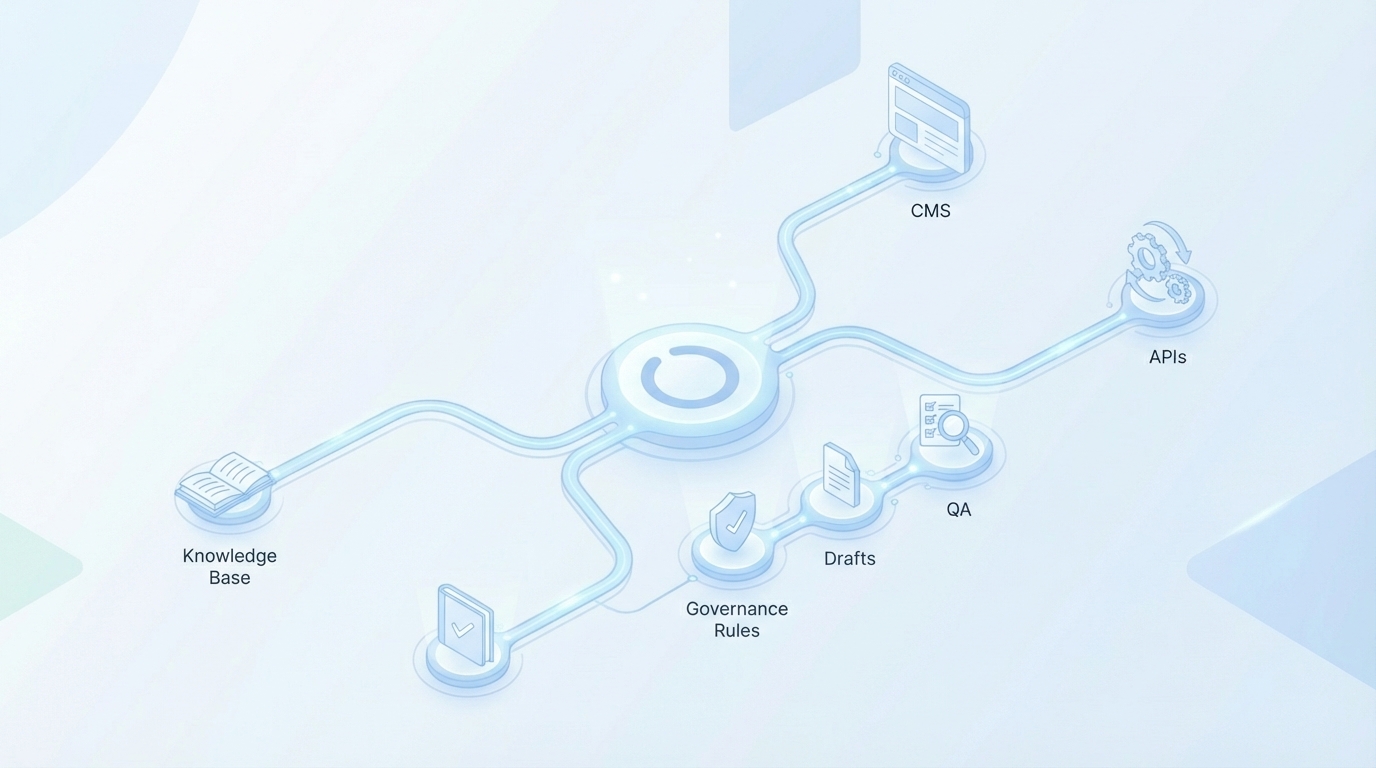
Oleno bakes lineage into the execution layer. Governance rules define what’s allowed, drafts are generated against your verified knowledge, QA enforces lineage fields pre-publish, and CMS publishing links versioned content to the audit trail with idempotency. The intent is simple, make proof cheap and reliable.
Knowledge grounding and product truth anchor every claim
Oleno starts from your approved product descriptions, claims, and use cases. You define the product truth and the boundaries of what’s allowed. Drafts are generated within those constraints, which cuts down on risky statements before a human ever edits a sentence. Reviewers see clean diffs with changes tied back to internal knowledge, not vague internet citations.
This is also how you stop drift. When narrative and claims live in governance instead of people’s heads, the system applies the same rules every time. Editors write faster because they’re not guessing which version of a claim is acceptable. And the lineage links give legal a direct line to the source of truth.
You don’t remove judgment. You remove guesswork.
QA gate enforces lineage fields before publish
Nothing ships until required lineage fields pass. Oleno’s QA gate checks for source URIs, retrieval timestamps, and approved status on each claim. If something’s missing, the draft is auto-flagged and routed back to the right step. The editor sees exactly what to fix and why it matters.
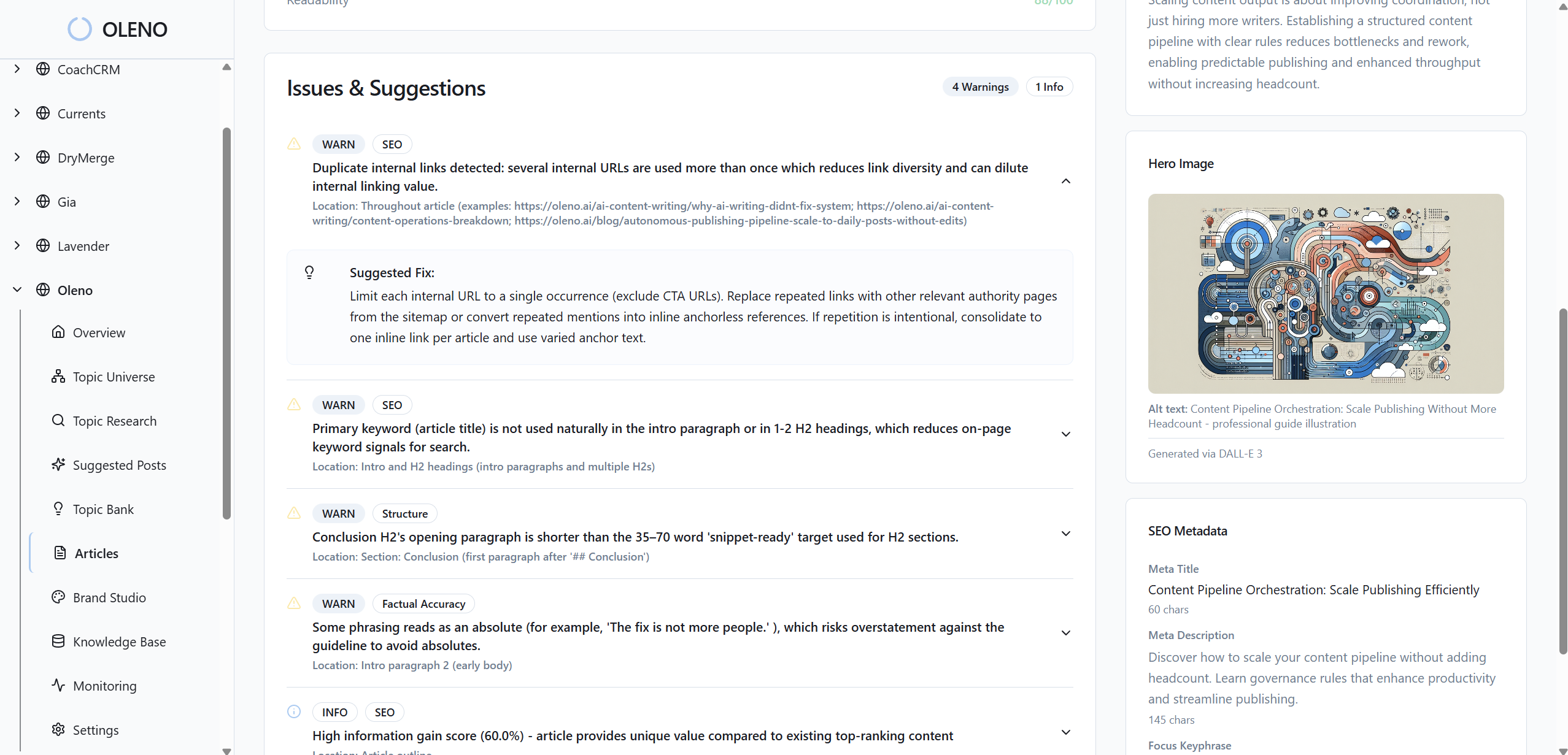
This isn’t meant to slow you down. It does the opposite. Pre-publish checks are cheaper than post-publish scrambles. We learned this the hard way when launches slipped because a single claim couldn’t be verified under pressure. A visible, enforced QA gate turns frustrating rework into a predictable checklist.
If you’re working in regulated or sensitive categories, this pattern lines up nicely with how compliance teams want to operate. Think guardrails first, then an audit trail that proves they worked.
CMS publishing with idempotency, webhooks, and no duplicates
Oleno publishes directly to your CMS with idempotency keys, so restart-safe retries don’t create duplicate posts. Webhooks capture article.published and link that CMS version to the lineage record. If a network hiccup happens, the system retries without minting new entries. You get a tight loop between the audit trail and the live asset.
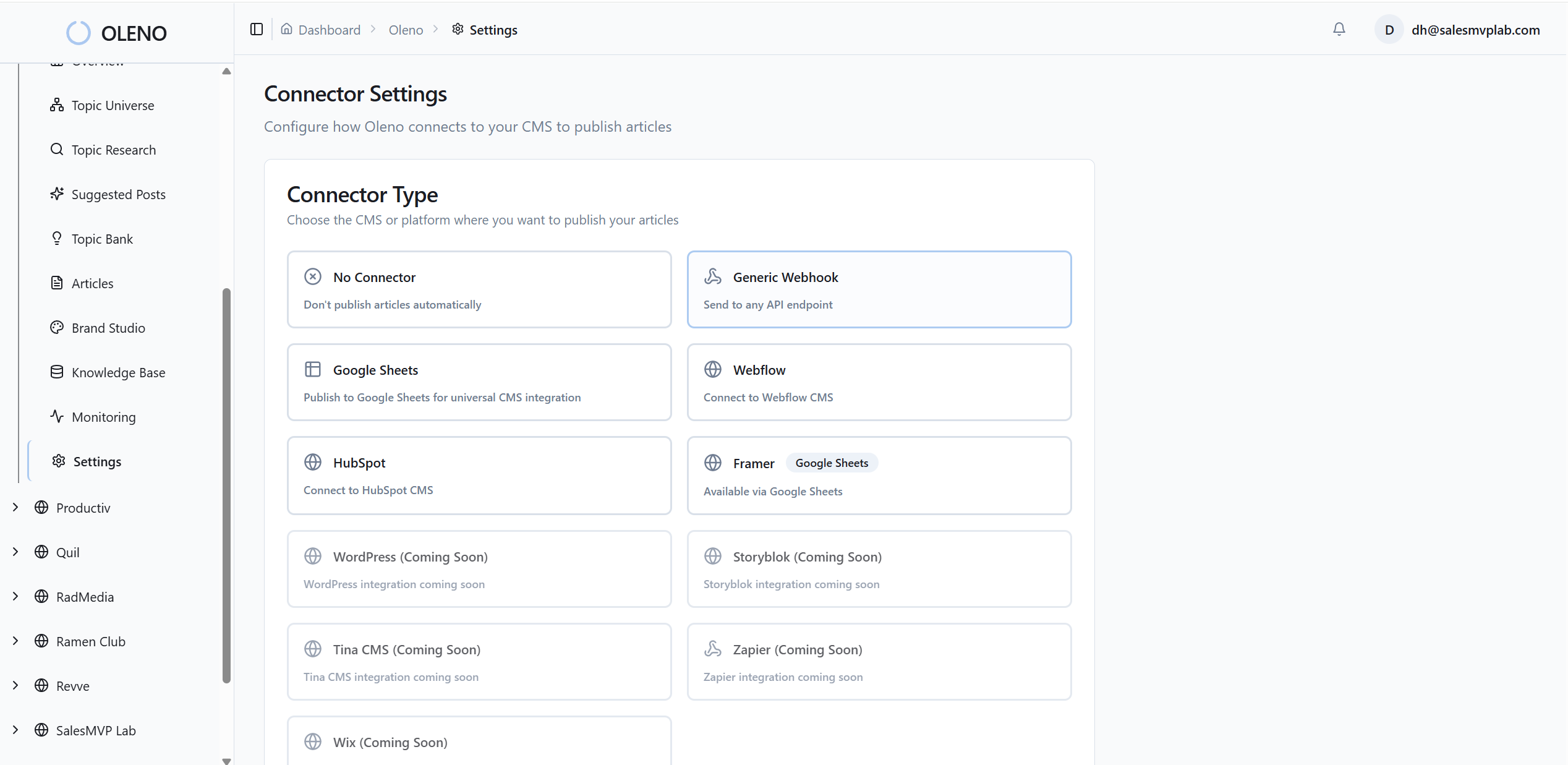
This matters when you scale. As the volume of content increases, manual review becomes impossible. With idempotent publishing and webhooks in place, the lineage remains accurate without human babysitting. Editors can ship, and you can still answer “what changed and when” with certainty.
For teams that want to align with broader integration practices, this setup mirrors patterns in formal interoperability guidance, like how API IGs emphasize event capture and version control. Different job, same reliability principle.
3x faster reviews with fewer escalations. That’s what Oleno is built to deliver. See it in your stack and Request A Demo.
Conclusion
Lineage isn’t about controlling writers. It’s about giving editors, reviewers, and leaders a shared way to verify claims without slowing the whole machine. Model claims as data, capture events where they happen, and make lineage visible in the CMS. That’s the new way.
Oleno turns those ideas into an operating rhythm. Governance sets the rules, drafts are grounded in approved knowledge, QA enforces lineage pre-publish, and CMS publishing ties live versions back to the audit trail. So when pressure shows up, you don’t scramble. You verify and ship.
About Daniel Hebert
I'm the founder of Oleno, SalesMVP Lab, and yourLumira. Been working in B2B SaaS in both sales and marketing leadership for 13+ years. I specialize in building revenue engines from the ground up. Over the years, I've codified writing frameworks, which are now powering Oleno.
Frequently Asked Questions