Improving Content Marketing Efficiency with Best Practices

Improving content marketing efficiency is not about writing faster. It is about reducing the hidden rework tax that creeps in once more than a few people touch the process. If you are still herding briefs, drafts, and approvals by hand, the system, not the talent, is what is slowing you down. I learned this the hard way at a couple of startups, and I still see it every week with scaling SaaS teams.
Once headcount grows, coordination quietly becomes your biggest cost. Meetings expand. Reviews multiply. Edits boomerang. You do not feel the pain on a single post. You feel it across a quarter. That is why improving content marketing efficiency, for real, starts with how the work moves, not how a single person writes.
Key Takeaways:
- Efficiency breaks at handoffs, not in writing. Fix workflow and governance first.
- Encode fundamentals once, then run them everywhere: voice, POV, product truth, audiences, use cases.
- Replace ad‑hoc prompts with a deterministic pipeline from topic to publish.
- Put quality checks at the front, not the end, to cut rework.
- Run a weekly cadence with executive visibility so momentum never stalls.
- Use numbered, locked outlines to kill ambiguity and speed reviews.
- Treat “coverage” as a system: Topic Universe, not keyword lists.
Why Improving Content Marketing Efficiency Breaks After Headcount Grows
Efficiency stalls because coordination overwhelms creation once multiple contributors touch each asset. Each handoff adds context loss, each review adds delay, and every rewrite compounds cost. The result is slower cycle time, more variance in voice, and a calendar that lurches instead of runs steadily.
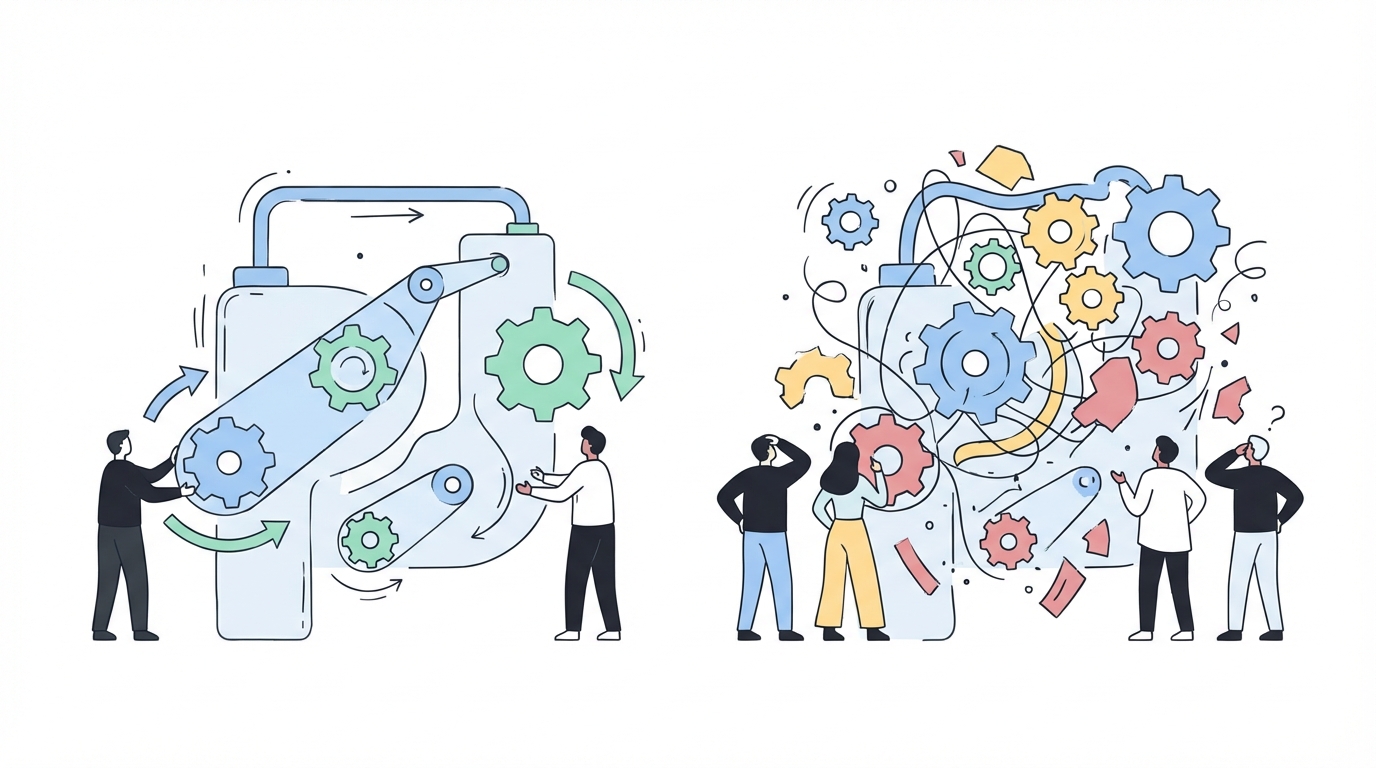
The Hidden Tax In Handoffs
The biggest loss is not obvious. It is the micro‑decisions writers make without enough context, which then trigger edits later. When PMM context lives in slide decks, and voice rules live in someone’s head, you get guesswork. Guesswork looks fine on day one. It turns into late‑stage rewrites on day ten. I have sat in those 90‑minute review calls where everyone has a point, and no one has the rules.
Most teams think the fix is better editors or stricter approvals. That is a band‑aid. The real fix is removing ambiguity before writing starts. When the input is unambiguous, drafts converge faster. When inputs are fuzzy, you burn hours debating tone and claims that should have been settled upstream. The tax is real and it compounds.
Common signals you are paying this tax:
- Rewrites after executive review that change the angle entirely
- Slack threads arguing product claims that should be documented
- Writers asking for “examples that sound like us” on every brief
Volume Without Governance Creates Waste
High output sounds good until you look at variance. Ten posts that all read like different companies do not compound. They confuse. Without a governance layer, each contributor carries their own version of voice, positioning, and product truth. That is how you end up with an educational post that fights the category narrative you pitched last week.
I have seen teams hit a publishing goal and miss the point. They flood the calendar, then wonder why pipeline did not budge. The mistake is optimizing for activity over alignment. Volume without governance creates work that does not stack. It looks busy. It does not move anything important.
Watch for these drift patterns:
- Three definitions of the same feature across posts
- Mixed POV on the market, sometimes even in the same article
- Approval notes that contradict earlier guidance
The Root Cause Is Fragmented Execution
The problem is not ideas. It is a fragmented system that treats content, SEO, PMM inputs, and distribution as separate efforts. When these pieces do not share the same source of truth, every asset becomes a one‑off. People compensate with more reviews. More reviews feel safe, then silently kill momentum. You know that feeling when everything is “almost ready” for two weeks? That one.
You can see the drag in time studies too. Knowledge workers spend a big chunk of their week on “work about work,” chasing updates and clarifications instead of moving forward. Reports like Asana’s Anatomy of Work have hammered this for years, and marketers are not immune. The cost is not just slower shipping. It is lost trust between teams when drafts bounce around without clear rules. It is draining.
Reference for context on coordination overhead: the Asana Anatomy of Work research summarizes how coordination crowds out actual work across functions.
How To Build A System For Improving Content Marketing Efficiency
You get real efficiency by making the rules explicit, then running them through a deterministic pipeline. Think “governance first, then execution,” not the other way around. The goal is to remove ambiguity upfront, reduce handoffs, and give executives a clean line of sight into cadence and quality.
Make Fundamentals Explicit, Then Encode Them
Start by writing down what never changes. Voice. Tone. Phrases you prefer and avoid. Your enemy framing. Old way vs new way. Core product definitions and what features do not do. Audiences and the use cases that matter for each. Most teams say they have this. Most teams have a few slides and scattered docs. That is not the same as an enforceable rule set.
When these fundamentals live in a governed source that content can pull from, drafts stop slipping. Your educational post no longer undercuts your category stance. Your product article no longer adds features that do not exist. I know this sounds like extra work at first. It is the work that saves you from the expensive part later.
To encode the right things, capture:
- Voice and tone rules with examples that sound like you
- Product truth, including boundaries and unsupported cases
- Audience segments, personas, and the jobs they are trying to do
Centralize Voice And Product Truth Before You Scale
It is tempting to add writers first and “clean up” later. That is how drift takes root. Centralize voice and product truth before you scale contributors. Give writers and editors a single place to check claims, vocabulary, and tone. Then hold drafts to that standard at the start of the process, not at the end.
In my experience, the fastest teams are not the ones with the best editors. They are the ones with the fewest surprises in review. When PMM updates a claim, it should update everywhere, not just in one person’s notes. You want a living, governed artifact that your pipeline trusts by default. That is how you shrink cycles without losing accuracy.
Signals you are ready to scale:
- Approved product definitions exist with boundaries, not just headlines
- Voice examples are findable, and writers use them unprompted
- Review notes cite rules, not personal taste
Design A Single Source Of Topics
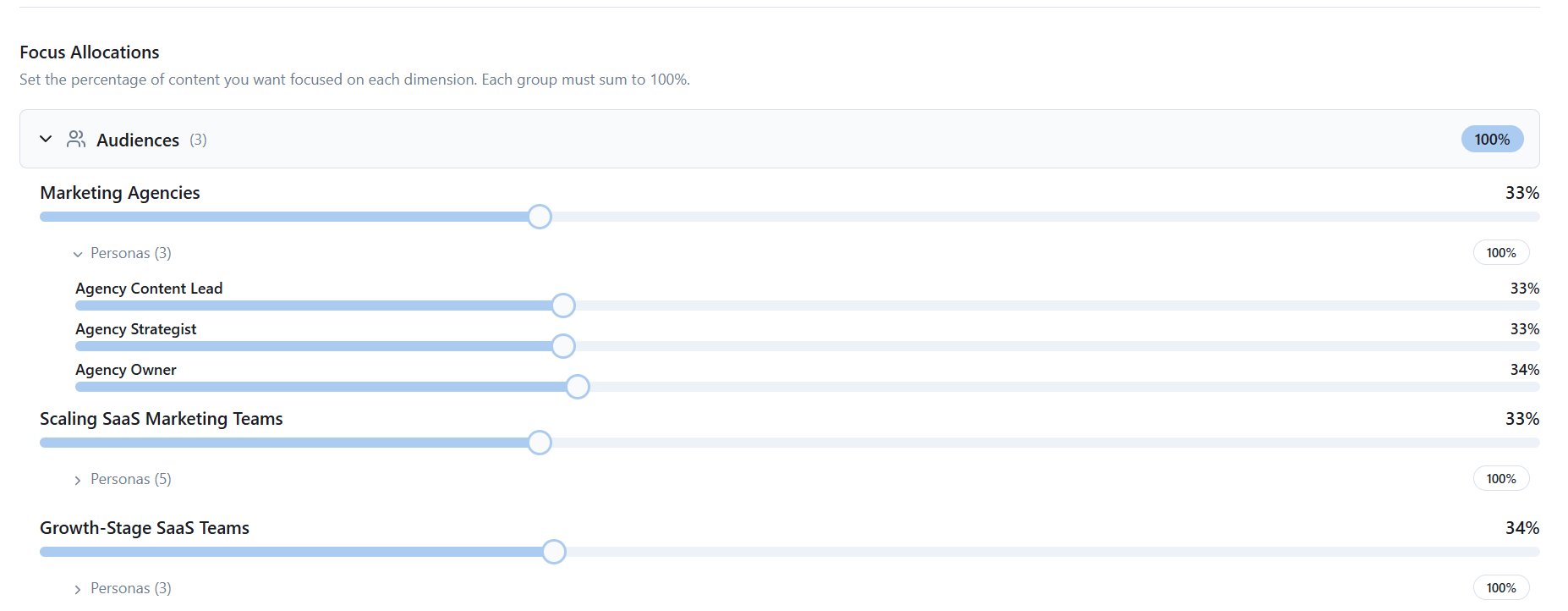
Keyword lists rot. Topic universes grow. Build a single source of topics that expands by audience, use case, and product coverage. The point is to avoid one‑off ideas and maintain systematic coverage across your narrative, not just high‑volume queries, especially when evaluating improving content marketing efficiency.
To build a topic universe that compounds:
- Seed it with core definitions, comparisons, and use‑case content you must own
- Enrich each topic with audience, persona, and product tags for routing
- Score coverage gaps and auto‑promote high‑priority items to the calendar
- Track state from “idea” to “published” so nothing stalls in limbo
A unified topic bank keeps you from chasing shiny objects. It also lets you prove coverage to leadership when they ask why a specific segment or use case did not get attention this quarter.
Build A Deterministic Draft To Publish Pipeline
Treat your pipeline like manufacturing. The same shape every time. No detours. The outline locks. Section purpose is clear. Geo‑friendly structures up front. Direct answers first. Then, quality checks that are codified, not “vibes.” People can still add craft. They just add it within a stable frame.
A reliable pipeline looks like this:
- Topic selected with tags, not ad‑hoc choice
- Brief generated with locked H2/H3 structure and first‑sentence answers
- Draft created from governed inputs, not fresh prompts
- QA against voice, product truth, and structure before human review
- Publish to CMS on a set schedule with zero last‑minute scrambles
Once you lock this in, velocity stops fighting quality. They move together.
Instrument Quality Checks Upfront
Quality at the end is quality at risk. Pull checks forward. Validate claims against your product truth before humans see the draft. Score voice alignment before asking an exec for time. Check GEO patterns early so sections are citation‑ready. You are not removing human judgment. You are saving it for calls that actually need judgment, especially when evaluating improving content marketing efficiency.
A quick rule of thumb I use: if a check can be made objective, automate it. Voice rules, banned phrases, structure, claim boundaries, first‑sentence answers. These are objective. Save review energy for nuance: story choice, angle, examples.
Give Executives Real Visibility And Weekly Cadence
Momentum is a leadership problem as much as a workflow problem. If your VP cannot see cadence, quality trends, and coverage gaps at a glance, they will micromanage individual posts. That slows everything down. Show the system. Show the numbers. Hold a weekly rhythm that proves the engine is running.
I like a standing weekly snapshot: what shipped, what is locked for next week, quality scores, gaps by audience or use case, and a short note on narrative progress. It keeps attention on the machine, not the anecdote. When executives see the system, they stop rewriting intros at 10 pm.
Stop losing weeks to rework. Start shipping on a schedule. Request a Demo
For broader market context on what content marketers say actually works, CMI’s ongoing studies are useful reference points: see the Content Marketing Institute research hub.
From Manual Coordination To Governed Execution In 30 Days for Improving content marketing efficiency
A governed engine replaces prompts and piecemeal tools with a system that encodes strategy, runs a pipeline, and gives leaders real visibility. Oleno exists for exactly this use case, so teams can sustain output without adding headcount or drowning in reviews.
Encode Strategy And Product Truth Automatically
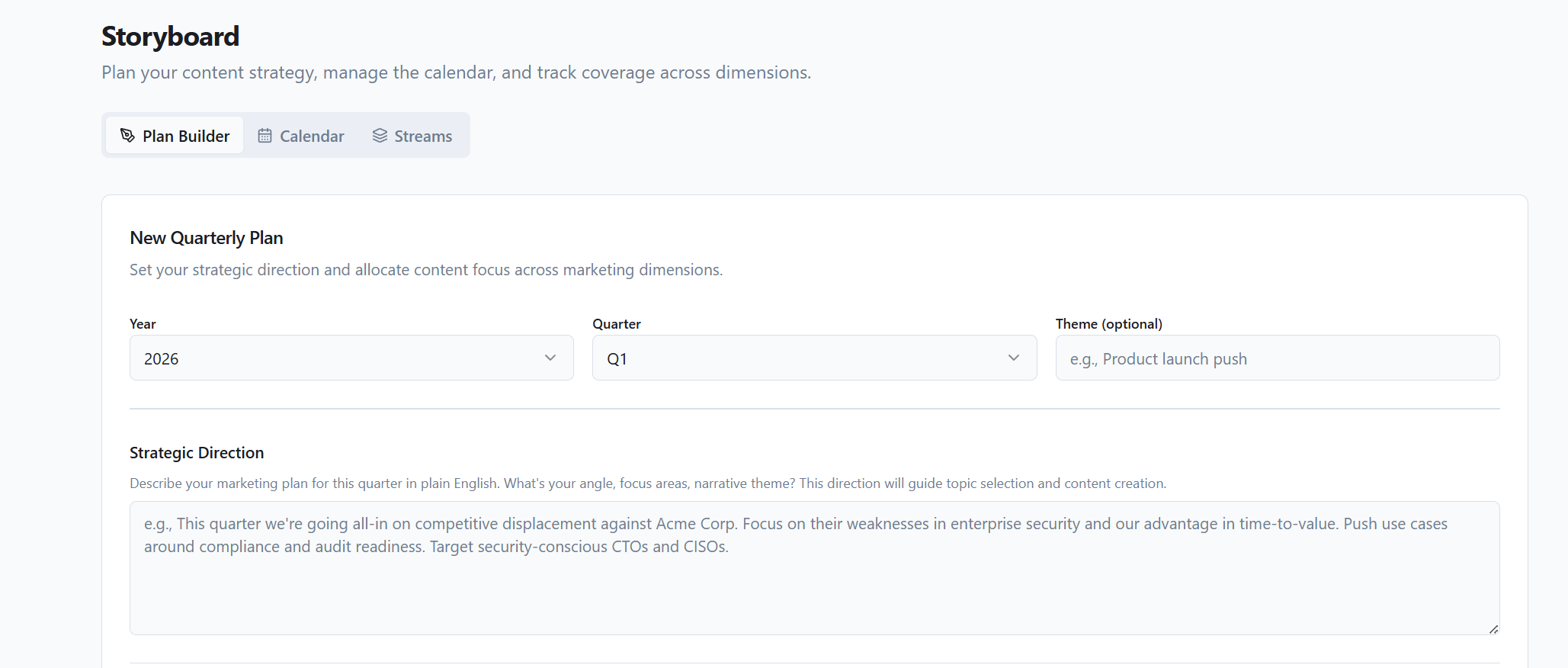
Oleno’s Marketing Studio and Product Studio turn your fundamentals into guardrails the pipeline can trust. Marketing Studio loads your point of view, enemy framing, and narrative structures into briefs and drafts so every piece argues your position consistently. Product Studio centralizes approved feature descriptions and boundaries, then cross‑checks outputs against that source so claims stay accurate without PMM policing every paragraph.
When those two studios are in place, ambiguity drops. Writers and AI draw from the same voice and product truth. Review notes stop debating definitions, because the definitions are already applied. The result is fewer loops, cleaner drafts, and less risk of a surprise rewrite late in the cycle.
Core capabilities in action:
- Marketing Studio: encodes category stance, key messages, and the old way vs new way pattern so drafts align with your POV
- Product Studio: prevents invented features by grounding every claim in approved product truth, including what features do not do
- Quality Gate: evaluates structure, voice, and grounding before human review so you spend cycles on nuance, not basics
Run The Pipeline And Prove It
Oleno’s Orchestrator schedules topics, executes blueprinted jobs, and maintains your cadence, while the Executive Dashboard shows output, quality trends, and coverage gaps in real time. That combination is the antidote to “almost ready” purgatory. The Orchestrator stops calendar stalls. The Dashboard gives leaders confidence they can trust the engine and focus on outcomes instead of line‑edits.
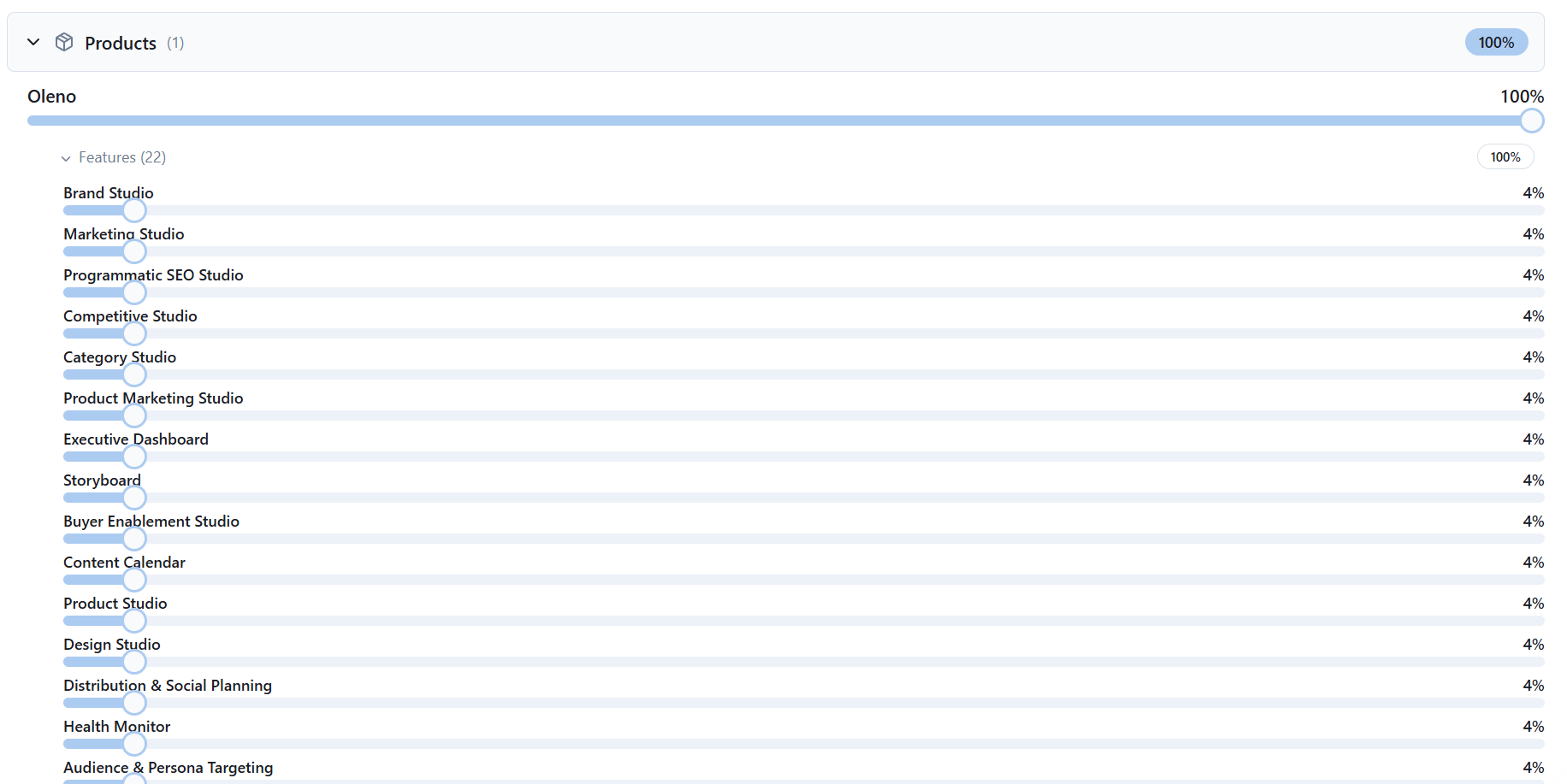
If SEO acquisition is a priority, Programmatic SEO Studio discovers and organizes topics, then runs a locked outline that is GEO‑ready by design. You move from sporadic posts to steady coverage across audiences and use cases. The effect is compounding visibility without a hiring spree.
Ready to see the pipeline run itself? Book a Demo
For budgeting perspective, Gartner’s CMO Spend and Strategy research highlights why teams are seeking operating leverage over headcount growth. See the overview for context: Gartner CMO Spend and Strategy Survey.
The Path Forward To Improving Content Marketing Efficiency
Efficiency is a system choice, not a sprint. Make your fundamentals explicit, encode them, then run a deterministic pipeline with quality checks up front and executive visibility by default. When you do that, content stops being a series of hero efforts and starts acting like a machine that compounds.
Steady weekly output, zero drift, accurate claims. That is the bar. If you want to operate that way, not just talk about it, Request a Demo.
About Daniel Hebert
I'm the founder of Oleno, SalesMVP Lab, and yourLumira. Been working in B2B SaaS in both sales and marketing leadership for 13+ years. I specialize in building revenue engines from the ground up. Over the years, I've codified writing frameworks, which are now powering Oleno.
Frequently Asked Questions