Information-Gain Brief Template: Create Differentiated Content Briefs

Most teams treat a brief like a checklist. Keywords, headers, a few links, then go. Looks tidy. But it doesn’t stop you from repeating what’s already out there, which is why your edits drag and half your drafts never ship. I’ve been on both sides, solo marketer shipping fast and exec trying to fix duplication after the fact. One is stressful. The other is expensive.
Here’s the shift. The best briefs aren’t prompts; they’re gates. They measure what your draft adds versus what the SERP already covers. If the delta is small, you stop. Early. That single move protects your roadmap, your writers, and your pipeline. It also makes approvals boring, which is secretly what you want.
Key Takeaways:
- Use briefs as gates that block low-differentiation drafts before anyone writes
- Build a 5-minute SERP gap matrix to spot repeats and thin coverage
- Assign a 0–100 Information Gain Score with go/revise/no-go thresholds
- Force evidence up front with citation notes and snippet-ready claims
- Clarify ownership for no-go decisions to avoid frustrating rework
- Tie briefs to cluster strategy to reduce cannibalization and link dilution
Why Briefs Should Be Gates, Not Prompts
Briefs should filter for originality before writing begins. Treat information gain like a preflight check: compare what exists to what you plan to add, then decide to proceed or stop. Teams who gate early cut rewrites and avoid calendar churn, for example, skipping a “101” piece the SERP already saturates.
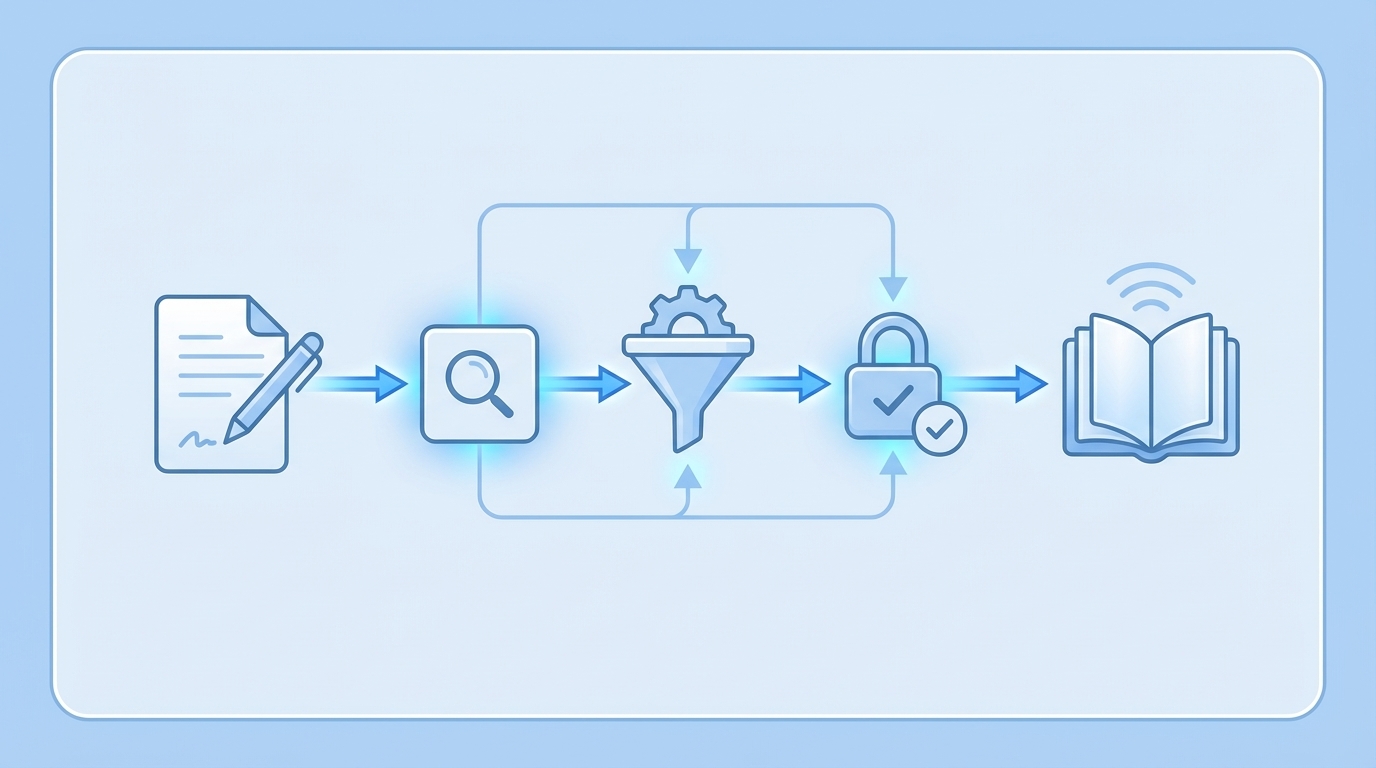
What is information gain and why should you care?
Information gain is the measurable delta your draft will add to the market. You stack your outline against current coverage, score uniqueness, and decide to proceed only if you’re adding something new. It’s not perfect math, but it does something your gut rarely does consistently: create a visible stop rule.
When you adopt this mindset, priorities shift. You stop asking “Can we rank?” and start asking “Should we write this at all?” The answer is often no. And that’s healthy. At PostBeyond, I could write fast, but we still tripped over repeats, because the brief didn’t force originality. The fix wasn’t more editing; it was a gate.
The practical impact shows up immediately:
- Fewer late-stage arguments about “we’ve covered this”
- Faster approvals because evidence is in the brief
- Cleaner topic clusters with less overlap
- Real interjection. You’ll publish less often at first, and that’s fine if each piece compounds authority.
The trap of keyword-only briefs
Keyword-heavy briefs look organized. They rarely force originality. They optimize for matching, not adding, which is how you end up with a polished post that contributes nothing new. Strong briefs ask, “What’s missing and how will we prove it?”
Shift the goal from volume to delta created. Bake in a quick comparison against the top results and require evidence notes next to your claims. Set a go/no-go rule tied to a score, not opinions. If you want a primer on the concept, this overview of information gain from Exploding Topics lays out why “new information” beats keyword matching.
Why briefs as filters protect your roadmap
A filter brief blocks low-value drafts from entering production. That saves hours and reduces publish delays, but it also protects your clusters from cannibalizing themselves. Two articles covering the same ground means split relevance, scattered internal links, and weaker anchors.
You will still say yes to strong ideas, just with more confidence. And when you say no, it happens in minutes, not weeks. Editors stop playing referee. Writers stop guessing. Even your stakeholders relax because the decision criteria are visible in the brief.
Ready to kick the tires on a gated brief process without reinventing your stack? Spin up a test and see how it feels to say no early. Try Generating 3 Free Test Articles Now.
Measure Originality Before You Write
Measure originality by comparing your outline against the current SERP and scoring the delta. A lightweight gap matrix plus a 0–100 Information Gain Score gets you there in minutes. For example, tag missing angles like “implementation pitfalls” or “evidence thresholds” and avoid rehashing the 101s everyone already covers.

What do traditional briefs miss?
Most briefs miss a measurable originality check. They skip the competitive snapshot and ignore evidence fields, so writers start on assumptions and editors chase proofs later. That’s why drafts feel “fine” but limp in review, nothing is provably new.
Add three simple elements and momentum changes. First, a five-minute SERP gap matrix that codifies common headers, claims, and missing angles. Second, a uniqueness score from 0 to 100 with a one-line rationale. Third, mandatory evidence notes tied to each key claim. Together, they show if your outline contributes something new or just paraphrases the market.
If you want a deeper dive into the concept from an SEO lens, this guide on information gain in SEO by Clearscope breaks down how “net new” content correlates with relevance and usefulness.
How do you build a 5-minute SERP gap matrix?
Keep it scrappy. Open the top 5–8 results. List common H2s and recurring claims in one column, then missing or underdeveloped angles in another. Tag what you’ll add and what you’ll avoid. You’re hunting obvious gaps, not running an audit.
In practice, you’ll see patterns fast. “What is X” sections everywhere. Thin “how to implement” guidance. No cost or time benchmarks. Almost no side-by-side comparisons. Now decide: will your piece add depth in those thin spots, or are you just repeating definitions? It’s a quick yes/no that saves a week later.
Define the brief objective clearly
Write three lines at the top of the brief: audience segment, conversion intent, and target outcome. Example: “Director of Content. Decision support. Book a demo.” This frames the delta you must create and prevents outlines that might rank but never tie back to outcomes.
I’ll add one more field when stakes are high: primary job-to-be-done. It keeps the narrative honest. If you’re writing for leaders trying to cut waste, your piece needs cost math and governance rules, not just tips. Clarity at the top makes scoring straightforward later.
The Hidden Costs Of Publishing Repeats
Publishing repeats burns time, budget, and internal link equity. If 30% of your monthly posts add little, you’re spending hours on content that won’t compound. The downstream costs include design cycles, review churn, and clusters cannibalizing themselves, which you can prevent with earlier no-go calls.
Let’s pretend your team ships 20 posts per month
Let’s pretend you ship 20 posts monthly and 30% repeat what exists. If each post costs six hours across research, writing, and editing, you burn 36 hours on content that adds little. That’s a week of work. Add design time and stakeholder reviews and the waste compounds quickly.
When I ran Steamfeed, scale meant both depth and breadth. The moment we strayed into duplication, performance flattened and editing swelled. We got back to growth by enforcing variety and unique angles inside clusters. It wasn’t magic; it was a gate.
A quick model:
- 20 posts x 6 hours = 120 hours
- 30% repeats = 36 hours lost pre-design
- Add 1 hour per post for design = +6–10 hours
- Add 2 hours of review churn on repeats = +12 hours
- That “small overlap” becomes two weeks of team time
Duplicate coverage dilutes internal links and cannibalizes
Repeats split relevance across near-duplicate pages. Internal links scatter, anchors lose intent, and crawl equity leaks. You can fix most of it with consolidation and canonical choices, but the least expensive fix is earlier: say no during the brief.
This isn’t hand-wavy SEO theory. When your cluster has three “how to build a brief” posts, each earns a slice of the anchor text, and none becomes the definitive target. A single, differentiated piece will collect links, context, and authority faster. The math benefits compound every month you avoid duplication. For a conceptual grounding, the University of Washington paper on information gain explains why new information carries outsized value in decision systems.
The review loop that burns hours
Edits drag when originality is unclear. A SME comments “we covered this.” The writer reshuffles edges. The editor asks for new data. Another week gone. I’ve lived this. At PostBeyond, we could write fast, but repeats still slowed us down. The cost is mostly coordination, not typing.
You can break the loop with a visible score and decision owner in the brief. If the score is below threshold, you pivot or stop, no debate. It feels stricter at first. Then your calendar becomes predictable, and morale rebounds. Writers know why their work moves (or doesn’t), and editors stop chasing ghosts.
The Friction Your Team Feels Every Week
Friction shows up as momentum loss, not just missed deadlines. When someone says “we already wrote this,” confidence drops and drafts stall. Clear ownership for the no-go call and a visible uniqueness score reduce emotion and speed decisions, especially after two rewrites.
When a senior says we already wrote this
That moment kills momentum. The team hears “start over” and the calendar slips. A brief with a visible uniqueness score and evidence links changes the conversation. It’s not “I think,” it’s “the score is 52, and we’re missing concrete evidence.”
Practically, it moves debate from taste to criteria. You either raise the score by adding a missing angle and proof, or you stop now and redirect energy. That’s leadership’s real job, protecting focus. And yes, it feels tough the first few times you say no. The relief comes later when throughput steadies.
Who calls the no-go and when?
Decision clarity matters. The strategist or editor should make the no-go call after the SERP matrix and scoring are complete. Not the writer mid-draft. Not the CMO on publish day. That single governance rule prevents scope creep and keeps approvals clean.
Spell it out in the template: role, criteria, and timing. If the score is under 70, revise. Under 50, reject. Capturing a one-line rationale creates a record you can reference without reopening arguments. If you like operational docs, the structure in Figma’s PRD template is a useful mental model for “who decides and when.”
What happens to momentum after two rewrites?
Momentum disappears. Writers avoid risky drafts. Editors get cautious. Stakeholders hover. You can fix that by gating earlier. A crisp pass or fail in the brief phases down the emotion and keeps throughput steady.
I’ve made this mistake. Twice. The cure wasn’t pep talks; it was moving quality checks from the end to the beginning. Less whiplash for writers. Fewer fire drills for editors. And more trust because decisions follow the same rules every time.
Still wrestling with rework and duplicates? There’s a simpler path to always-on, original content. Try Using an Autonomous Content Engine for Always-On Publishing.
Build An Information-Gain Brief That Enforces Differentiation
An information-gain brief forces originality through objective fields. Start with audience, intent, and outcome; add a quick gap matrix; then score uniqueness with thresholds. Require snippet-ready claims and evidence notes so editors can approve, or stop, without emotional debates.
Set the brief objective with audience, intent, and outcome
Start with three fields: audience, conversion intent, and target action. Add stage of awareness and primary pain if it helps. Keep it tight, two sentences max. This anchors your angle and clarifies what counts as meaningful delta.
If the objective is unclear, stop. Do not outline yet. You’ll avoid the “ranks but doesn’t convert” problem that sneaks into otherwise solid pieces. A clear objective also makes your no-go rationale simple: “Great idea, wrong outcome for this audience right now.”
Score thresholds and evidence fields that force proof
Calculate a 0–100 Information Gain Score considering novel angles, depth, unique data, and structure. Set thresholds like 70+ proceed, 50–69 revise, 0–49 reject. The exact number matters less than the rule. Include a one-line rationale and a single action if below threshold.
Then design fields that force proof: snippet-ready H2s, one to two key claims per section, and citation notes for each claim. Require 3–5 authoritative external sources in the brief, not after drafting. If you need a simple explainer to share with stakeholders, Backlinko’s overview of information gain is a helpful reference you can cite in training.
How Oleno Enforces Information Gain From Brief To Publish
Oleno enforces differentiation from brief through publish with built-in gates. It generates a structured brief with competitive snapshots and an Information Gain Score, routes drafts through 80+ QA checks, injects deterministic internal links, and adds snippet-ready openers and brand visuals, so originality and clarity survive to the final page.
A single pipeline that scores, gates, and ships consistently
Oleno starts with brief generation that includes SERP-style research and a 0–100 Information Gain Score. Low scores trigger warnings so teams revise or stop before writing time is burned. Drafts then pass an automated QA gate across 80+ checks, structure, snippet readiness, brand alignment, and information gain. Below-threshold items trigger refinement loops, not meetings.
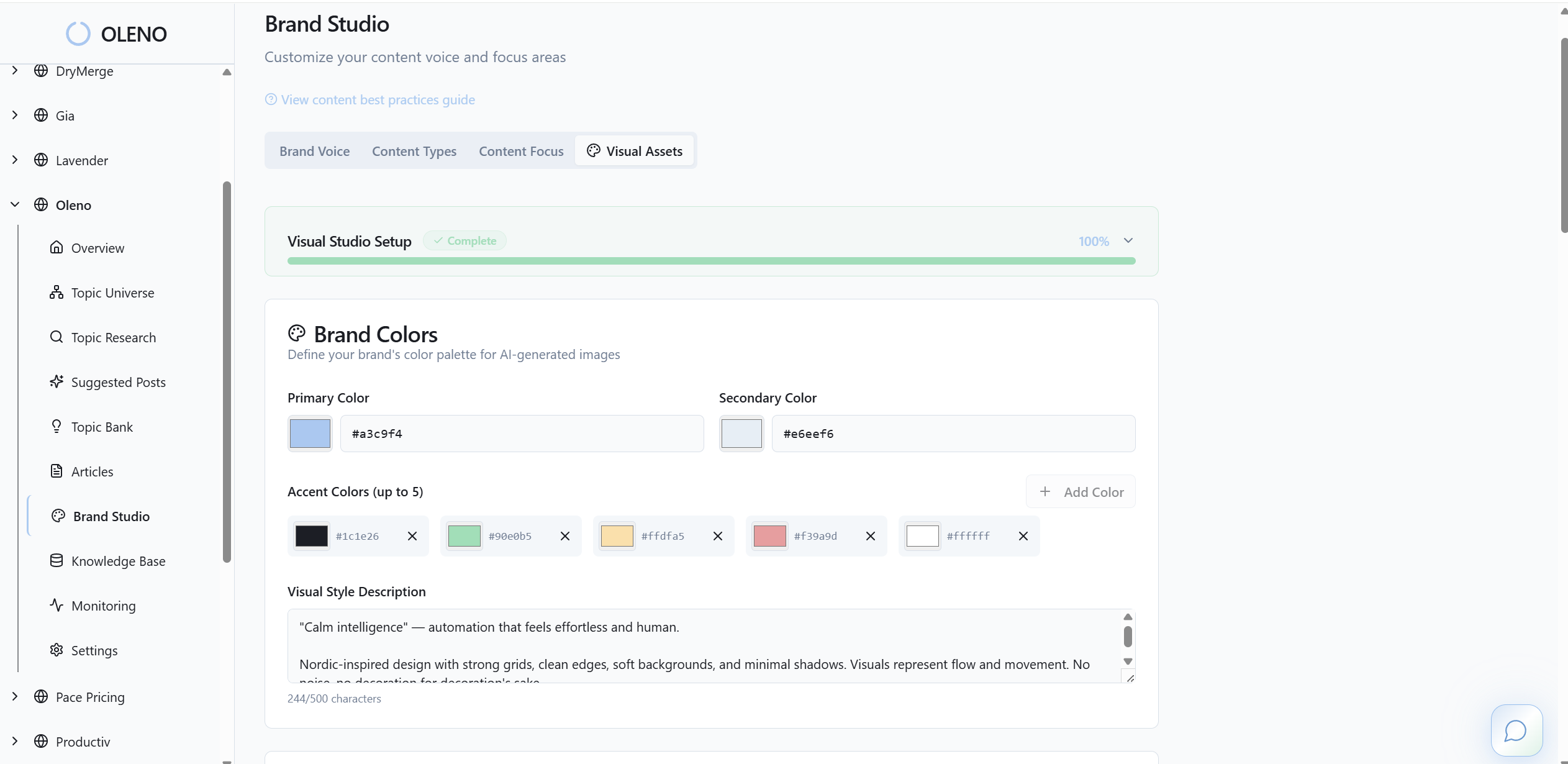
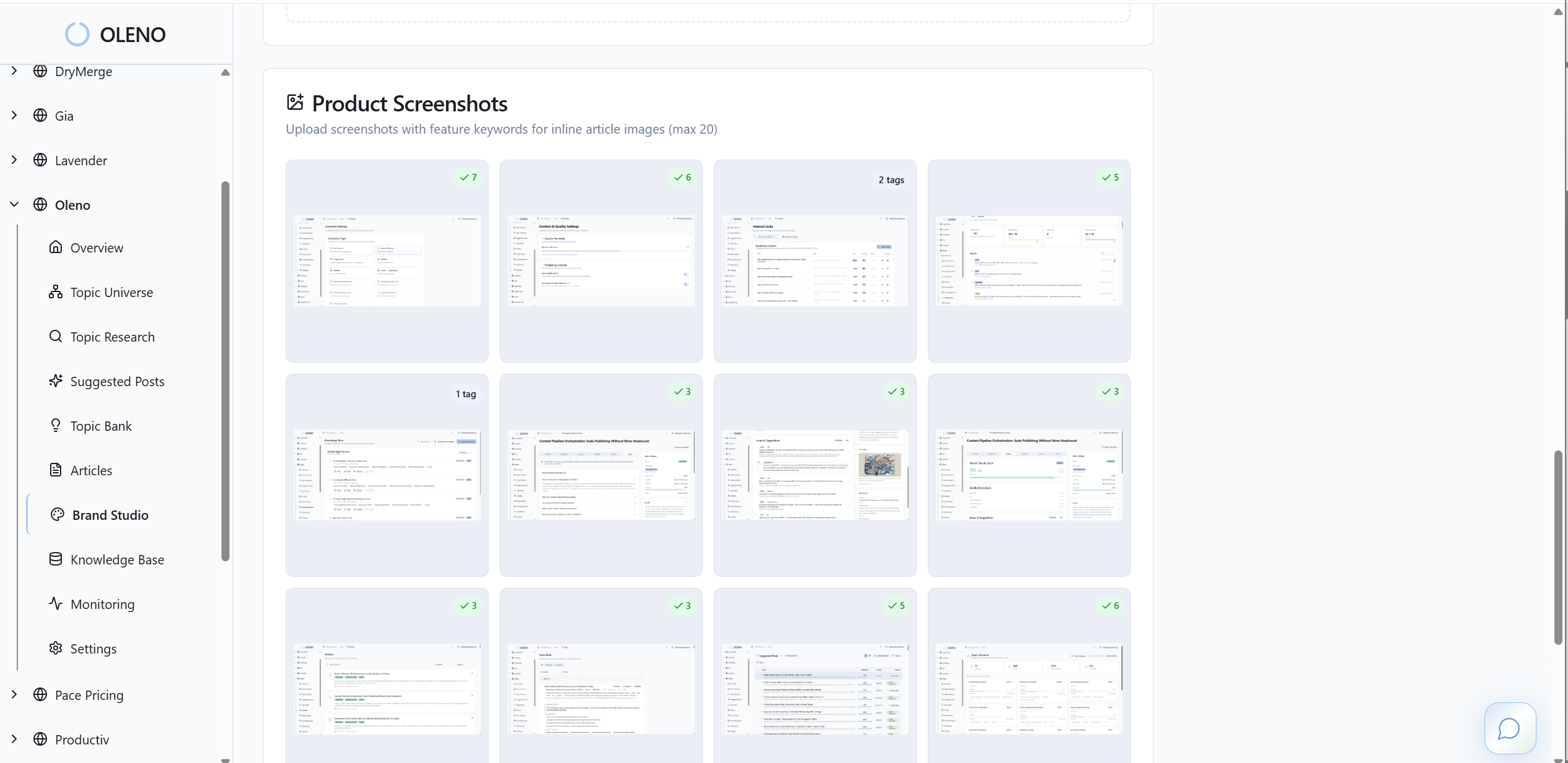
Two accuracy rails finalize the output. First, internal links are injected deterministically from verified sitemaps with exact-match anchors placed in context. Second, every H2 opens with a 40–60 word direct answer, making sections citable and skimmable. Visual Studio adds 2–3 brand-consistent images and matches product screenshots to relevant sections, prioritizing solution content, while alt text and filenames are handled automatically. The result isn’t just a “finished draft.” It’s a publish-ready article that reflects the gate you set at the start.
Here’s how this addresses the earlier costs:
- Time waste shrinks because low-gain ideas are stopped early
- Review churn drops as QA enforces structure and clarity
- Cannibalization risk declines with cleaner linking and stronger single pages
- Brand trust improves when visuals and tone are consistent by default
If you’re ready to turn “measure originality” from a meeting note into a system, Oleno makes the gates real. Try Oleno for Free and watch the stop rules, and the publish button, work the same way every time.
Conclusion
You don’t need more drafts. You need fewer, better starts. Gate ideas with a five-minute gap matrix, score information gain, and require proof in the brief. Then let a system carry that intent through QA, links, and visuals so your final page still reflects the original delta. That’s how teams reduce rework, protect clusters, and build authority that compounds.
About Daniel Hebert
I'm the founder of Oleno, SalesMVP Lab, and yourLumira. Been working in B2B SaaS in both sales and marketing leadership for 13+ years. I specialize in building revenue engines from the ground up. Over the years, I've codified writing frameworks, which are now powering Oleno.
Frequently Asked Questions