Information-Gain Briefs: 6 Steps to Prevent Repetitive Articles

Back when I ran Steamfeed, we hit 120k monthly visitors on the back of breadth plus depth. Not genius. Just structure and volume working together. Here’s the pattern I learned the hard way: repetitive ideas don’t show up at publish. They sneak in at intake when briefs don’t force novelty.
Same story at PostBeyond. I could write fast and well, but the team struggled when briefs were just “keyword + length.” We shipped decent words that didn’t add anything new. That wasn’t a writing problem. It was a briefing problem. Fix the gate, and the rework falls away.
Key Takeaways:
- Gate repetition at the brief, not the draft
- Score information gain and refuse low-differentiation outlines
- Map your own coverage first to avoid cannibalization
- Force “what’s new” and source candidates into the template
- Enforce cooldowns when clusters saturate
- Use snippet-ready openers so the most useful sections get cited
Why Repetition Starts Before Anyone Writes
Repetition starts at intake because most teams gate at the draft, not the brief. Without novelty requirements, similar ideas slip into the queue and multiply downstream. The fix is upstream: require uniqueness proof, map coverage, and gate on a threshold before any assignment. Example: cancel briefs that mirror your existing “how-to” pillar.
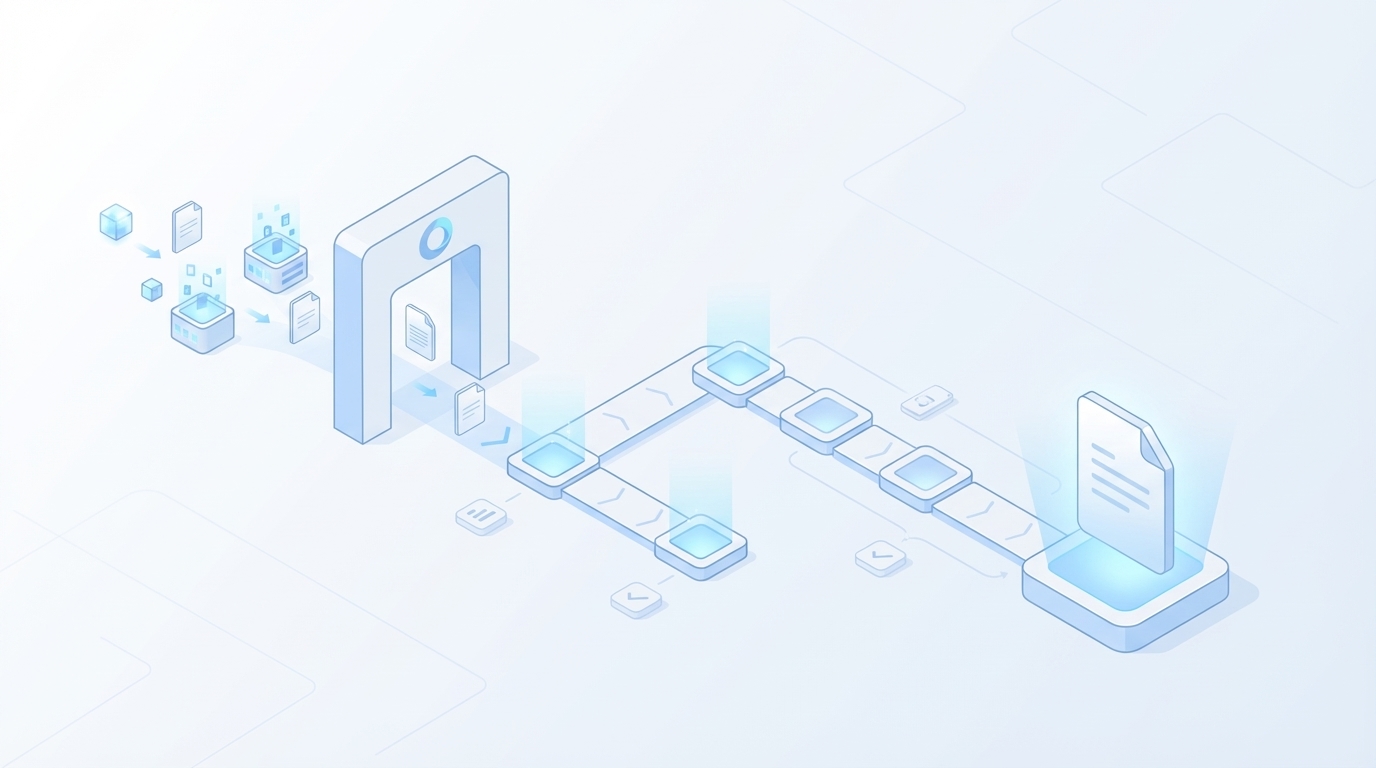
The gating failure no one sees
Most pipelines treat a brief like a permission slip—topic, keyword, length, done. That’s why duplicate ideas reach writers and only get spotted in editorial. The edit room becomes a triage bay. The move is simple: treat intake as the quality gate. If novelty isn’t proven, nothing moves. Saves time, saves morale.
I’ve watched teams over-optimize prompts while the intake door stayed wide open. It feels productive. It isn’t. The minute you require a novelty claim, a coverage snapshot, and a passing score, ghost duplicates stop crossing the line. Writers thank you for clarity. Editors stop playing hall monitor.
What is information gain and why does it matter?
Information gain is the measurable newness your piece adds to what already exists. You can estimate it at the brief using KB retrieval, SERP analysis, and a few weighted heuristics for proprietary data, contrarian angles, and niche specificity. Gate on that score. Miss the threshold? Rescope or park the idea.
Think of it as a forcing function. You’re not judging vibes; you’re verifying difference. If you want a primer, the concept is well explained in Backlinko’s guide to information gain. Use it as inspiration for your own scoring rules, then bake those rules into intake.
Why “write faster” keeps failing
“Write faster” accelerates repetition when briefs are weak. You just produce more of the same, sooner. The root cause is an outline that doesn’t demand novelty, sources, or structure built for citation. So you get volume without differentiation—and editors drowning in déjà vu.
At PostBeyond, I could crank out posts fast because I had context and a framework. When we scaled, speed exposed the briefing gap. The fix wasn’t another writer. It was a brief that forced a unique angle up front. Once we switched, quality rose and throughput didn’t suffer. Turns out constraints create good drafts.
Ready to skip theory and operationalize this? See what gating looks like end to end. Try Oleno for Free.
The Real Root Cause of Duplicate Content
Duplicate content happens because briefs chase keywords and length instead of enforcing novelty and overlap checks. Teams don’t map their own library, don’t compare drafts to clusters, and rarely demand a “what’s new” claim. Add those requirements and the problem shrinks. Example: block “101” outlines when your cluster is already saturated.

What traditional briefing misses
Most briefs are a shopping list of topics with no proof of difference. No coverage map. No link to existing claims. No demand for data or expert quotes. That’s how teams publish five versions of the same idea, each with a different intro and the same conclusion. Everyone’s busy; no one moves the narrative forward.
Fixing this isn’t fancy. Require three things: what’s new, which sources, and where it departs from your current library. If a brief can’t answer those, it’s not ready. It’s a topic with lipstick. You’ll save the writer eight hours and your editor two—not to mention the design swings that come later.
How do KB embeddings change coverage analysis?
Embeddings turn a gut check into a coverage map. Embed your KB and sitemap, then retrieve semantically similar pages for any candidate outline. Cluster them, highlight overlaps, and call out gaps. Now you can point to exactly where your proposed section repeats an existing claim—and where it can add something useful.
This moves decisions from opinion to verification. Instead of “we think we’ve covered this,” you can say “this new outline overlaps 70% with last quarter’s guide.” That clarity speeds approvals and reduces friction. If you want another angle on the concept, this breakdown on information gain and topical depth by InLinks is helpful.
The hidden complexity of consensus outlines
Top SERP results usually converge on the same structure. If your outline mirrors that consensus, your draft will too. So bake a “non-consensus section” into the brief: one proprietary data point, an industry-specific example, or a buyer reframe. Make that section mandatory and clearly labeled, not a nice-to-have.
I’ve seen teams unintentionally rebuild the SERP—same H2s, same claims—then wonder why it didn’t move the needle. This isn’t about being contrarian for sport. It’s about giving the reader (and machines) a reason to reference you. One section that moves the decision is worth more than five that repeat the chorus.
The Costs of Repetition You Can Quantify
Repetition burns time, budget, and authority. Every low-gain draft costs writer hours, editor hours, design cycles, and opportunity to cover net-new topics. It also dilutes signals across similar URLs and teaches machines that you’re redundant. Example: two pages targeting the same query cannibalize each other’s potential.
Time and budget burned on low-gain drafts
Let’s pretend a writer spends 8 hours on a draft that adds nothing new. Multiply by 10 topics in a quarter. Add 3 hours of editorial and 1–2 hours of design swaps per piece. You’ve just invested 120–150 hours into content that doesn’t compound. That’s a month of output gone sideways.
The cost isn’t just payroll. It’s the opportunity cost of the topics you didn’t cover—the ones that would have built authority in an underserved cluster. Gate early, and you reallocate those hours to pieces that move the narrative, not pad the calendar. This is how teams get lean without getting quiet.
The cannibalization and dilution problem
When two articles target the same query or repeat each other’s claims, signals split. One might rank; the other sits. Internal linking gets awkward. Editors start hedging. Worst case, both underperform because search and AI assistants don’t see a reason to prefer either. They look interchangeable.
The remedy is upstream: score overlap against your library, enforce cooldowns on saturated angles, and prune or consolidate where it helps clarity. If you need a broader context on why this matters for topical depth, this perspective on information gain in SEO by Sara Taher is a useful read.
When AI summarizes you without attribution
If your draft restates the consensus, assistants will cite the canonical sources. Not you. You haven’t earned the reference. The way to increase your odds is predictable: plan one or two sections with original data, niche specificity, and snippet-ready clarity right in the brief.
You won’t control who gets cited. But you can control how referenceable each section is. Direct answers. Supporting context. A tight example. When you do this across your library, you build a body of work machines can lift cleanly. Sections designed to be referenced tend to be, over time.
The Editorial Pain You Can Avoid This Quarter
Brief-level gating reduces rejected drafts, backlog panic, and morale hits. It gives writers clarity, editors leverage, and leaders fewer surprises. You won’t fix everything overnight, but the chaos eases quickly. Example: a “didn’t clear threshold” rejection is fair and actionable, unlike “vibe was off.”
When a well-written draft still gets rejected
We’ve all seen it. Strong voice. Clean structure. Adds nothing. The rejection hurts—even when it’s right—because it feels subjective. Gating earlier removes that sting. It turns a fuzzy “no” into “score didn’t pass; outline overlaps existing pillar by 65%.”
Writers prefer objective rules. Editors need them. And leaders get a cleaner pipeline. You don’t kill creativity; you direct it where it’s additive. The difference shows up in fewer rewrites and faster approvals. Small change. Big relief.
The 3am backlog triage
I’ve been there. We queued too many lookalike topics and had to ship under deadline. Editors burned out, and good ideas got rushed. The fix wasn’t heroics. It was a gating checklist that blocked low-gain outlines and forced a novelty claim at intake.
You’ll feel the difference in two weeks. Cleaner backlog. Fewer “urgent” edits. More pieces that actually move decisions. If you want a broader primer on the concept, the overview from Exploding Topics on information gain is a good frame for internal training.
Who benefits most from brief-level gating?
Editors cut rework and get leverage. Writers gain clarity and fewer late-stage surprises. Leadership sees fewer fire drills and a library that compounds. Even SEO wins because clusters stop cannibalizing each other and internal links make sense again.
This is the quiet compounding few teams notice until the stress drops. You’re not promising instant traffic. You’re promising fewer dead ends, which is how authority builds. Predictability is a feature. Especially for creative work.
Still dealing with déjà vu drafts and 11th-hour edits? Move the gate upstream. Try Generating 3 Free Test Articles Now.
The New Way: Gate With Information-Gain Briefs Before Any Draft Is Assigned (6 Steps)
The new way is simple: enforce information gain at intake with a scored brief, coverage map, and decision gates. You don’t need perfect models; you need consistent rules and a queue that respects them. Example: set a passing score and cancel below-threshold outlines automatically.
Step 1: Build a coverage map with KB embeddings
Index your knowledge base and sitemap, then embed each page. For a candidate topic, retrieve the top semantically similar pages and visualize overlaps. Label clusters by saturation: underserved, healthy, well-covered, saturated. Attach that map to the brief so editors and writers see the ground truth.
Two benefits show up immediately. First, you avoid guessing whether you’ve covered an idea. Second, you uncover where a new angle could live without cannibalizing your own assets. This alone prevents half the redundant outlines I see in review queues.
Step 2: Cluster topics and competitive SERP to spot overlap
Pull the top results for your primary query and cluster headlines, H2s, and recurring claims. Compare that to your coverage map. Highlight consensus sections in red and gaps in green. Your brief should call out one non-consensus section on purpose—the piece that moves beyond where competitors stop.
This isn’t about chasing the SERP; it’s about seeing the pattern you need to break. The cluster forces you to design difference into the outline. When the writer hits that section, they’re not guessing. They’re executing a plan to add something new.
Step 3: Calculate an Information-Gain score and set thresholds
Use a 0–100 scale. Start with heuristics: percent of outline sections not found in your KB, number of proprietary data points, number of expert quotes, and presence of a contrarian stance. Weight them, compute a score, and set a passing threshold—say 65. Below-threshold briefs pause or get rescoped.
You’ll tweak weights over time. That’s fine. The point is to move from subjective approval to a consistent rule. Scorecards also enable better conversations: “Add one proprietary data point and we pass.” That’s clearer than “make it fresher.”
Step 4: Design a brief template that forces novelty and sources
Make novelty claims a required field. Ask for three external source candidates with URLs and context, snippet-ready H2s, and one proprietary data insertion point. Add a short angle paragraph that states what’s new and who benefits. You’re forcing a writer to think like an editor before a word is written.
This template becomes a shared language. Editors enforce it. Writers lean on it. New teammates ramp faster. And when you do assign, the draft comes back closer to done because the constraints did the heavy lifting up front.
Step 5: Add decision gates to flag low-gain outlines
Create simple rules. If score < threshold, rescope or cancel. Borderline? Require a new data point or an industry-specific example to pass. If cluster shows saturation, enforce a 90-day cooldown before re-covering the angle. And log every override so exceptions stay rare and visible.
Decision gates remove ambiguity. They turn editing opinions into predictable outcomes and free up human attention for narrative quality, not structural hygiene. Less arguing. More clarity. Faster flow.
Step 6: Operationalize post-brief ops with queueing and QA checks
Approved briefs enter a queue with assignment rules. Attach brief-level QA checks: snippet-ready openers present, external sources valid, novelty claim explicit, and one unique section that challenges consensus. These checks travel with the brief into draft and QA, not just intake.
When the brief is tight, drafting speeds up, editing gets lighter, and publishing stops feeling like a gauntlet. You’re not doing more work. You’re front-loading the right work.
How Oleno Enforces Information Gain Before Anyone Writes
Oleno enforces information gain by scoring briefs, mapping coverage, and gating low-differentiation work before drafting begins. It structures sections for citation and uses deterministic steps for links and schema. The result is fewer redundant drafts and more sections designed to be referenced. Example: below-threshold briefs never reach writers.
Brief generation with competitive research and scoring
Oleno generates structured briefs that analyze top-ranking content, identify missing perspectives, and compute an Information Gain score. Low-differentiation briefs are flagged early, which means you gate work before any writing time is burned. Editors see where the outline overlaps your library and where it can add something new.
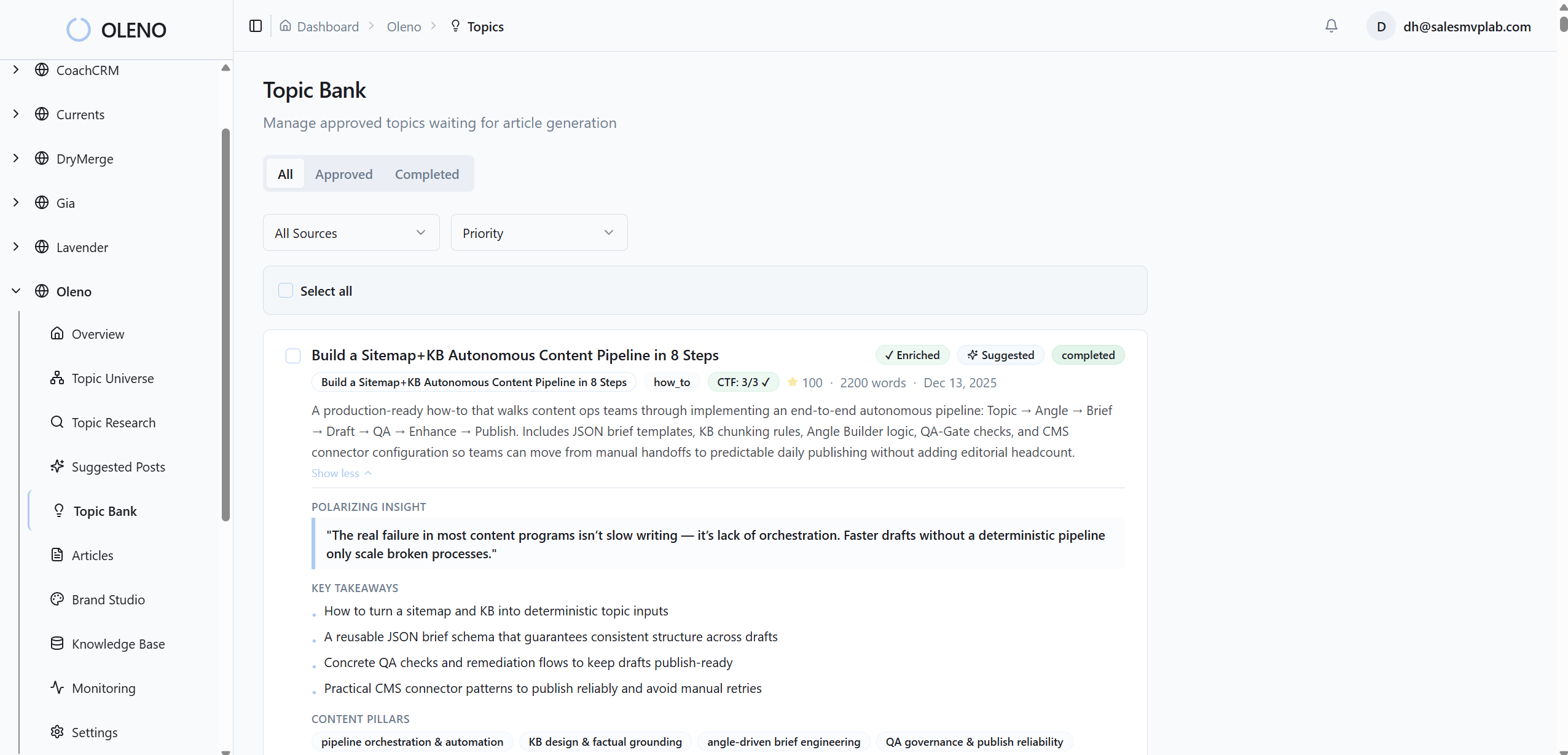
This shifts the burden from post-facto editing to pre-commit verification. Oleno rewards higher-gain articles during QA, so the system nudges the pipeline toward novelty by design. Not hype. Just consistent enforcement of rules that produce better drafts.
Topic Universe coverage controls and cooldowns
Topic Universe maps clusters across your KB and sitemap, labels saturation states, and prioritizes under-covered areas. It also enforces cooldowns before re-covering similar ideas, which reduces internal overlap and keeps cannibalization in check. Editors get a live sense of where authority is building and where repetition would creep in.
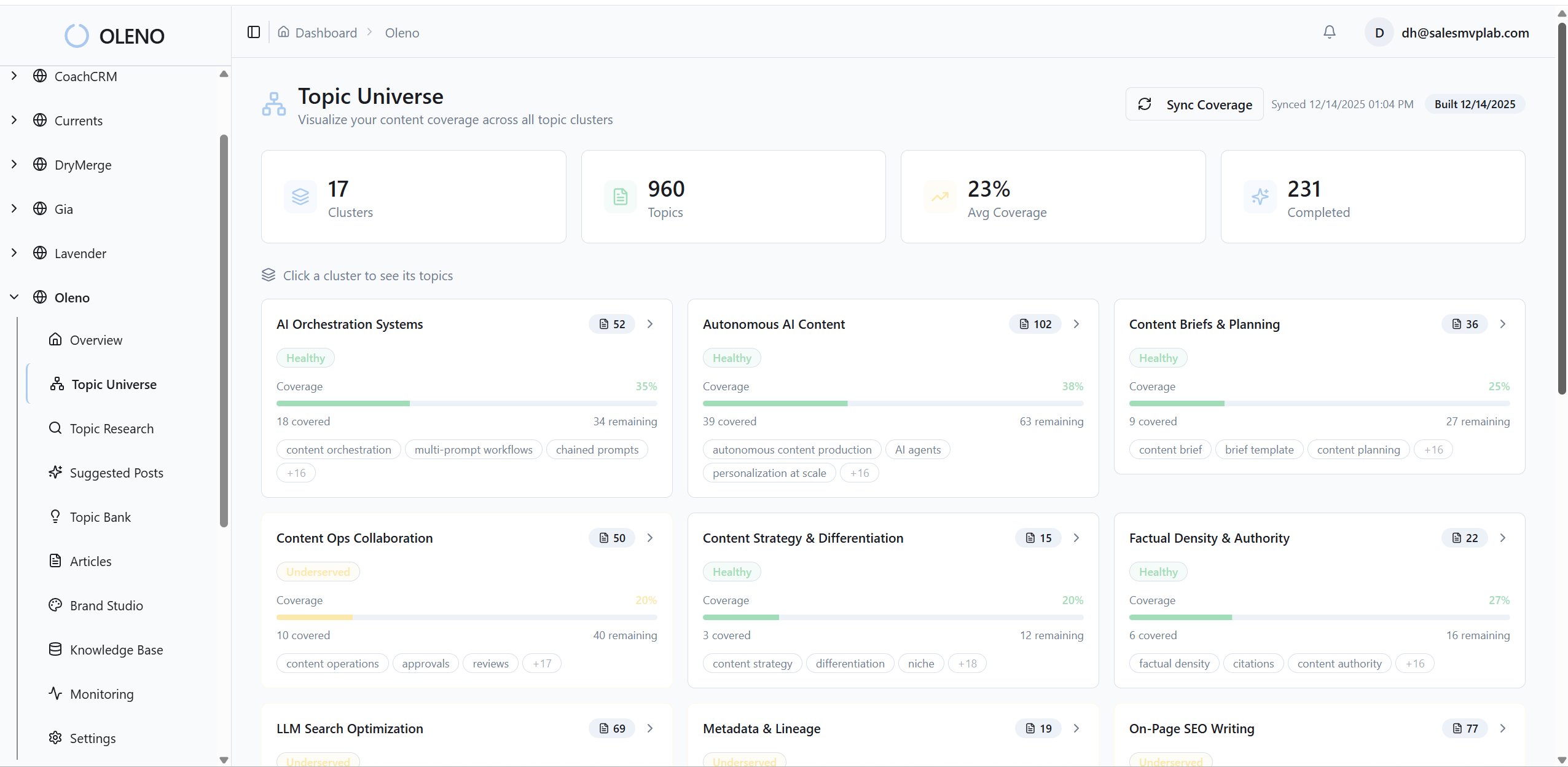
You’re not staring at dashboards or rank charts. You’re operating a system that decides what should be written next to build authority, then prevents you from over-publishing the same angles. Coverage clarity replaces guesswork.
Snippet-ready structure plus automated QA gate
Every H2 opens with a 3-sentence, snippet-ready paragraph—direct answer, supporting context, practical example. Oleno’s QA gate evaluates 80+ criteria including information gain and snippet readiness. If a draft drifts toward shallow, consensus language, the system refines and re-tests until standards are met.
This matters for discoverability and for readers. Sections that stand alone cleanly get cited more often and understood faster. You’re not promising outcomes; you’re increasing the odds by making content easy to reference.
Deterministic internal linking and publishing connectors
After text is approved, Oleno injects 5–8 internal links from your verified sitemap, generates JSON-LD for articles/FAQ/breadcrumbs, and ships to your CMS through connectors. Links and schema are code-driven, not guesswork, which reduces manual cleanup and avoids broken or duplicated posts.
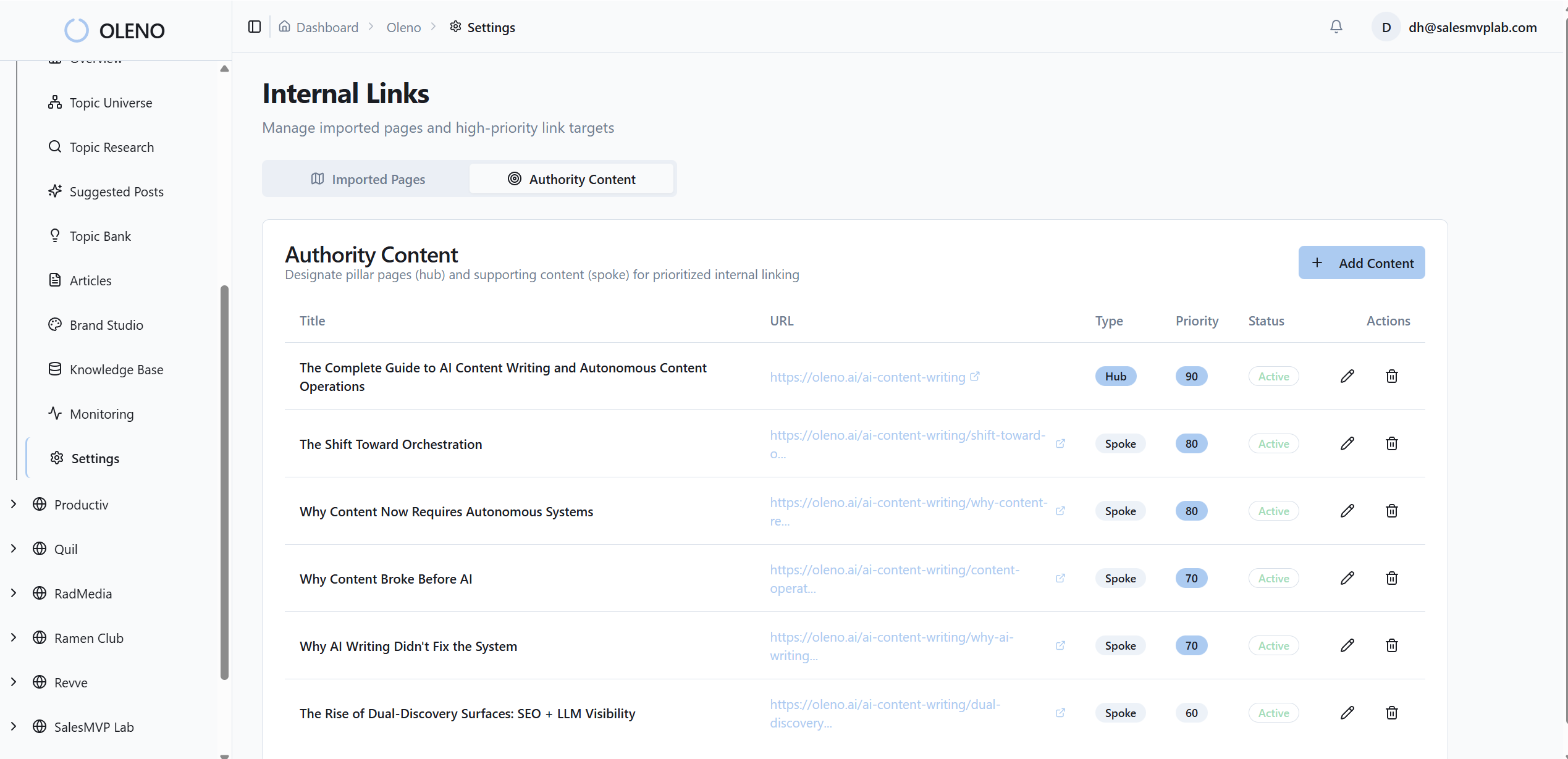
Publishing becomes predictable. Visuals, links, and structure are aligned before the article ever lands in your stack. Your team spends time on story and strategy—not on hunting anchors or fixing formatting.
Prefer to see the pipeline instead of reading about it? Spin up a test. Try Using an Autonomous Content Engine for Always-On Publishing.
Conclusion
Here’s the thing. You don’t beat repetition with speed. You beat it by moving the quality gate to the brief and enforcing information gain before anyone writes. Do that, and drafts get sharper, edits get lighter, and your library starts compounding instead of colliding. If you want the system to do the heavy lifting, Try Oleno for Free.
About Daniel Hebert
I'm the founder of Oleno, SalesMVP Lab, and yourLumira. Been working in B2B SaaS in both sales and marketing leadership for 13+ years. I specialize in building revenue engines from the ground up. Over the years, I've codified writing frameworks, which are now powering Oleno.
Frequently Asked Questions