Information-Gain Briefs: Checklist to Prevent Generic Content

You can crank out more content and still feel invisible. Effective the rise of dual-discovery surfaces: strategies I’ve done it. At Steamfeed we published at crazy volume and still had to wrestle for differentiation on every page. Speed’s intoxicating. Sameness is the hangover. Try Oleno (https://oleno.ai/demo/)
Here’s the uncomfortable truth. If your brief doesn’t force new information, your draft can’t be original. Doesn’t matter how talented the writer is. Or how punchy the headline reads. The gate has to move upstream, before anyone types a paragraph.
Ready to get started? Request a demo now..
Key Takeaways:
- Stop greenlighting briefs without a provable unique thesis and evidence
- Score information gain pre-draft; reject or rework low-signal angles
- Automate SERP, KB, and sitemap inputs to avoid drift and cannibalization
- Track rewrite hours and collisions as leading indicators of authority drag
- Use a standards-first checklist to normalize decisions, not vibes
- Enforce cooldowns so you don’t re-cover topics out of habit
Why Publishing More Still Produces Generic Content
Publishing more produces generic content when briefs recycle what’s already ranking and never force a new angle. The root issue is upstream, no requirement for net-new insight, so drafts rehash the SERP. You see it in cloned H2s, identical FAQs, and the same three examples everyone cites.
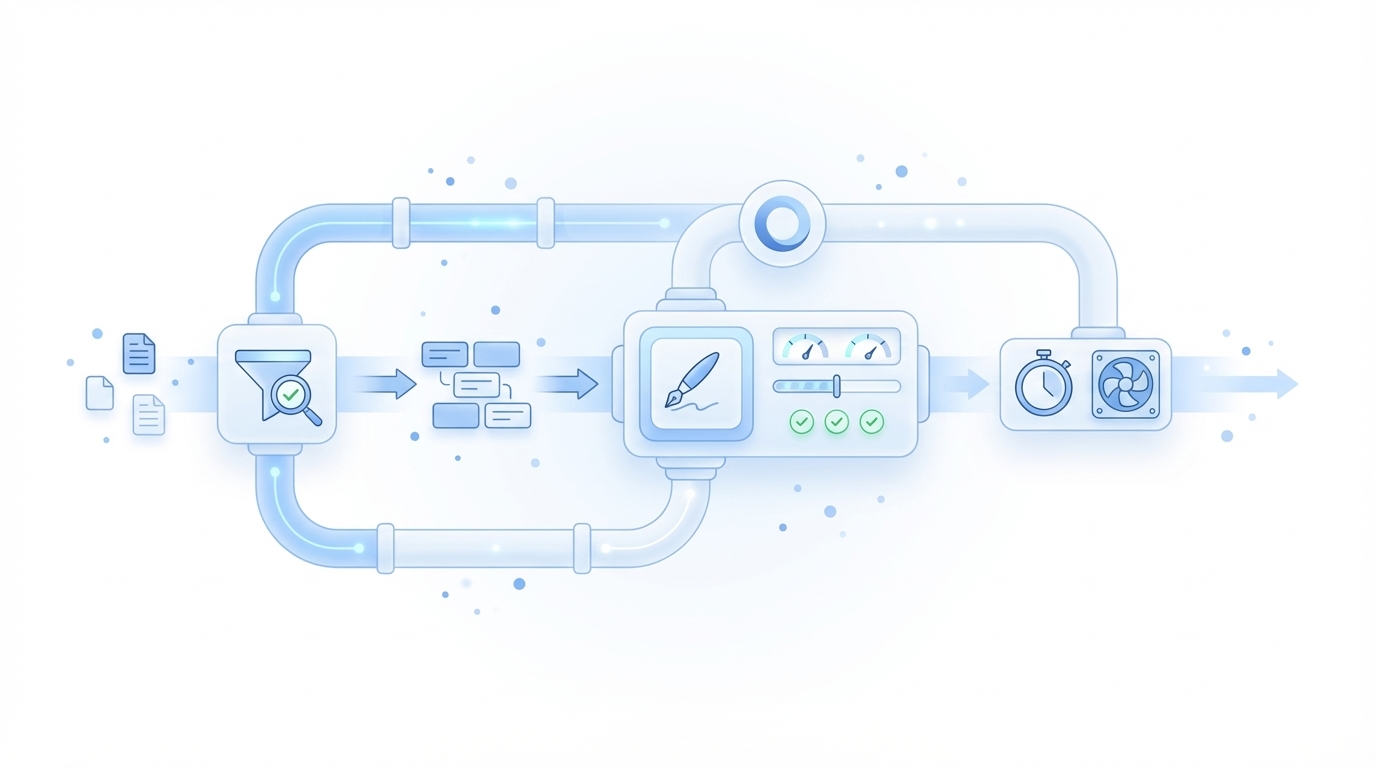
The Patterns That Trick Teams Into Thinking They Are Unique
Teams mistake velocity for originality. You cover the topic map, including the shift toward orchestration, mirror the top 10’s subheads, and sprinkle in “best practices.” It looks thorough on paper. It reads like everyone else live. The brief feels safe because it echoes the SERP, which is exactly why it’s doomed to blend in.
Another tell: examples travel from one post to the next like souvenirs. The same case study. The same stat. The same frameworks with new adjectives. When your outline could be completed by a competent generalist with no access to your product, data, or customers, you’ve already lost the plot. Pause. Change the angle or don’t ship.
What Is Information Gain And Why It Beats Word Count?
Information gain is the amount of net-new, decision-moving insight your page adds versus what already exists. That’s it. Not more words. Not broader coverage. New. You can assess this by comparing coverage gaps, adding owned data or process details, and forcing a unique thesis that changes how a reader acts.
The idea isn’t new; it’s just ignored. If you want a crisp definition and framing, read the breakdown from Animalz on information gain. Use it as a lens, not a scoreboard. Your question before drafting becomes simple: what will a reader learn here that they cannot get elsewhere? Write that down first.
Audit Signals That Scream Generic
Certain signals predict sameness with embarrassing accuracy. Recycled H2s from the top results. Identical FAQs. Vague claims without sources. Tool-agnostic advice that dodges specifics. No diagrams, no proprietary steps, no product-linked decisions. If your brief checks those boxes, it’s headed for the pile you swore you’d avoid.
The fix isn’t complicated, it’s disciplined. Make the brief prove novelty with evidence. Add owned data or a concrete process. Replace generic “tips” with steps and outcomes. And when that isn’t possible, including why ai writing didn't fix, reject the topic. Interjection. You don’t have to publish everything you outline.
The Real Bottleneck Is Upstream Differentiation, Not Draft Speed
The bottleneck isn’t how fast you write. It’s whether your brief forces a unique angle before writing begins. Draft speed hides the problem for a week or two. Then the rework bill shows up. Designers, editors, and PMs pay it with their calendars.

Where Conventional Brief Templates Fall Short
Conventional briefs collect ingredients, keywords, competitor links, word count, without requiring a recipe. So writers default to “cover the bases” instead of “advance the conversation.” The template rarely demands proof of a unique thesis, owned evidence, or the exact gaps you’ll close. That’s how generic drafts become inevitable.
Tighten it up. Require a one-sentence thesis you can’t copy-paste from the SERP. List the proprietary inputs you’ll include, data points, product screenshots, or steps only your team can document. And add a binary rule: if those fields are weak or empty, the brief doesn’t advance. No exceptions. It sounds strict. It’s just clear.
Why Pre-Write Audits Must Be Automated
Manual diligence slides under deadlines. One PM forgets the sitemap scan. Another skips the SERP heading scrape. Drift creeps in, and over time you’re shipping polite rewrites with nice formatting. The antidote is automation. Make the system run the same checks every time, regardless of who’s busy.
Codify three inputs: SERP scrape for H2s/FAQs, knowledge base retrieval to mine owned insights, and sitemap collision checks. Store the results on the brief as structured fields. Treat it like standards, not vibes, similar to how implementation guides like Microsoft’s “Information protection” planning for Power BI bake governance into steps. Evidence first, drafting second.
When Should You Reject A Topic Outright?
Set hard gates. Reject when uniqueness signals fall below threshold, your KB yields no angle, or adjacent pages already satisfy intent. Defer if the cluster is saturated and you’re just itching to “add something.” Cooldowns help here. Put the topic on ice for 90 days and come back when you have new data or features.
A standards mindset keeps this from getting personal. Borrow the clarity of frameworks like the InformUSA Standards: define the criteria, document the decision, and move on. It’s not a judgment of the writer. It’s a protection of the system.
The Cost Of Low-Originality Content Adds Up Fast
Low-originality content burns time in revisions, fractures clusters with cannibalization, and dilutes authority. The hard costs are meetings, edits, visuals, and publishing. The soft cost is trust, internally and with buyers. Small drags compound. That’s what hurts.
Time Lost To Rewrites And Slow Approvals
Let’s pretend you ship 20 posts this quarter and 40% are low gain. Each weak draft triggers two extra review cycles at 45 minutes per pass. That’s roughly 24 hours of senior time. One work week, gone. And that’s before the “quick” edits for imagery and structure that somehow take days.
This is why draft speed can be a trap. You “saved” two hours on writing and spent ten reworking a piece with no angle. You know the Slack choreography, “can someone add a chart?”; “do we have a quote?”; “what’s our POV?”. All fixable upstream. Far cheaper upstream, too.
Cannibalization, Thin Updates, And Sunk Publishing Costs
Duplication doesn’t just confuse search engines. It confuses you. Internal links scatter, clusters look messy, and now you’re doing thin refreshes to patch intent gaps you created. You still pay for visuals, schema, and publishing, real steps with real costs, on a page that won’t rank or convert meaningfully.
Over time, that mess kills momentum. Editors stop trusting briefs. Writers hedge in generic territory because it feels safer. Product loses patience. When your system rewards shipping anything, it inevitably ships everything. And you start to wonder why the “winners” don’t resemble the plan.
How Do You Quantify The Drag On Authority?
Track three inputs: percent of briefs rejected for low information gain, collisions detected during sitemap scans, and average QA passes per draft. When those rise, expect ranking volatility and fewer LLM citations. None of this has to be fancy. It just has to be consistent.
Use these as leading indicators for capacity planning. If rework climbs, slow new topics and fix the gate. If collisions surge, enforce cooldowns. If QA passes spike, review your template. The goal isn’t analytics heroics. It’s to protect the team from preventable thrash. For a deeper framing of originality’s impact, see Animalz on information gain.
The Moment You Feel It: Rework, Slack Pings, And Shrinking Trust
You’ll feel the problem before you can measure it. Threads get long, including why content now requires autonomous, weekends get short, and the “we’ll fix it in edit” playbook gets louder. It’s not a bad team. It’s a fuzzy system. Clarity fixes this.
A Short Story About The 3rd Revision In A Week
I’ve lived this, multiple times. At PostBeyond, I could write 3–4 strong posts a week because I owned the context and a strict writing framework. As the team grew, drafts started drifting. Slack pings multiplied. By Friday, we’d park a “solid” draft because the angle was generic. Sound familiar?
Every time, the root cause was upstream. We hadn’t forced a differentiating thesis, the KB evidence wasn’t there, or the topic collided with an existing page. A simple gate would’ve saved the week. Not heroics. A rule that weak briefs don’t advance. It feels strict. It’s actually kind.
What Buyers Notice When Every Article Sounds The Same
Readers don’t owe you patience. If your page mirrors the first two results, they bounce or stick with the source they already trust. Assistants do the same at scale, quote the most unique, clearest source. The fix isn’t louder prose. It’s new information and cleaner structure, section by section.
An article should change how a buyer decides. That could be a proprietary process, a product screenshot tied to a step, or a data point that reframes risk. If you’re not giving that, your piece is ambient noise. Nice to have. Easy to skip.
A Practical Checklist To Design Information-Gain Briefs That Block Generic Topics
An information-gain brief blocks generic topics by encoding evidence of novelty before writing begins. You automate inputs, score signals, and enforce pass/fail rules. The brief becomes a gate, not a suggestion. Writers get clarity. Managers get velocity. Everyone saves time.
Configure Audit Inputs: SERP Scrape, KB Retrieval, Sitemap Scan
Start with ingestion. Your system should pull the top results’ H2s, FAQs, and cited stats, retrieve semantically relevant passages from your knowledge base, and scan your sitemap for potential collisions. Then it should write all this to the brief as structured fields, not paragraphs that get ignored under pressure.
Those fields power every decision downstream. If competitors_headings[] looks identical to your outline, your novelty is low. If kb_facts[] returns nothing, you lack owned angles. If internal_collisions[] isn’t empty, you’re setting up cannibalization. Evidence doesn’t slow you down, it accelerates useful rejection.
Design The Information-Gain Score With Signals And Sample Weights
Scoring isn’t magic. It’s a weighted recipe that nudges behavior. Start with components like novel subheads vs. SERP (30), including ai content writing, unique data or examples sourced from KB (30), proprietary process steps (20), internal collision risk inverse (10), and citation quality (10). Scale to 100 and set a passing bar, say 70.
Two tips. First, tune weights for your reality; don’t worship my sample. Second, score the brief, not the draft. This steers ideation, not cleanup. If you want practical signal ideas and weighting inspiration, the walkthrough from Clearscope on adding information gain is a solid companion.
Build The Brief Template With Required Fields And Rejection Rules
Make uniqueness non-optional. Require fields for a unique thesis, a gap summary with cited URLs, KB evidence with anchors, a proprietary steps outline, and planned visuals tied to sections. Then write the rejection rules right into the template: missing KB evidence, planned H2 overlap above threshold, or info_gain below 70.
When a brief fails, don’t hand-wave. Capture remediation notes: what changed, what evidence was added, what H2s were replaced. This is the “standards” mindset applied to content. It’s boring on paper. It’s beautiful when your Slack stays quiet on Thursdays.
Want a system to run these checks for you every time? You can try using an autonomous content engine for always-on publishing.
How Oleno Enforces Information Gain Before Anyone Writes
Oleno enforces information gain with a structured pipeline that scores uniqueness before drafting, validates section-level clarity during QA, and prevents repeat coverage with cooldowns. It’s deterministic where correctness matters, so generic content gets blocked early and publishing stays clean.
Brief Generation With Competitive Research And Information Gain Scoring
Oleno generates structured briefs, analyzes the top-ranking coverage to find common subheads and missing angles, then calculates an Information Gain Score from 0 to 100. Low-gain outlines trigger flags with clear warnings, so you stop generic drafts at the gate and redirect effort to higher-signal topics. No drama. Just decisions.
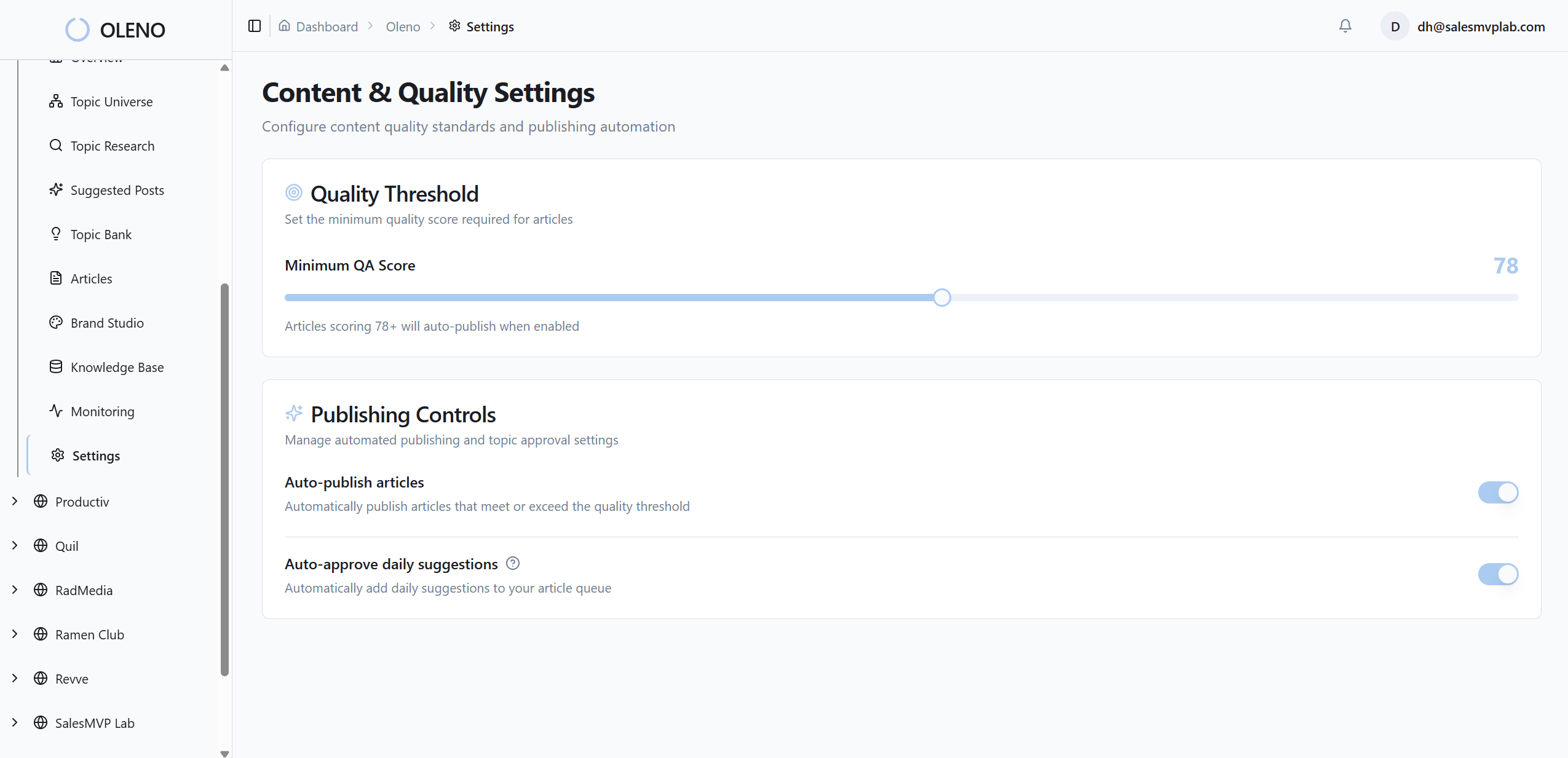
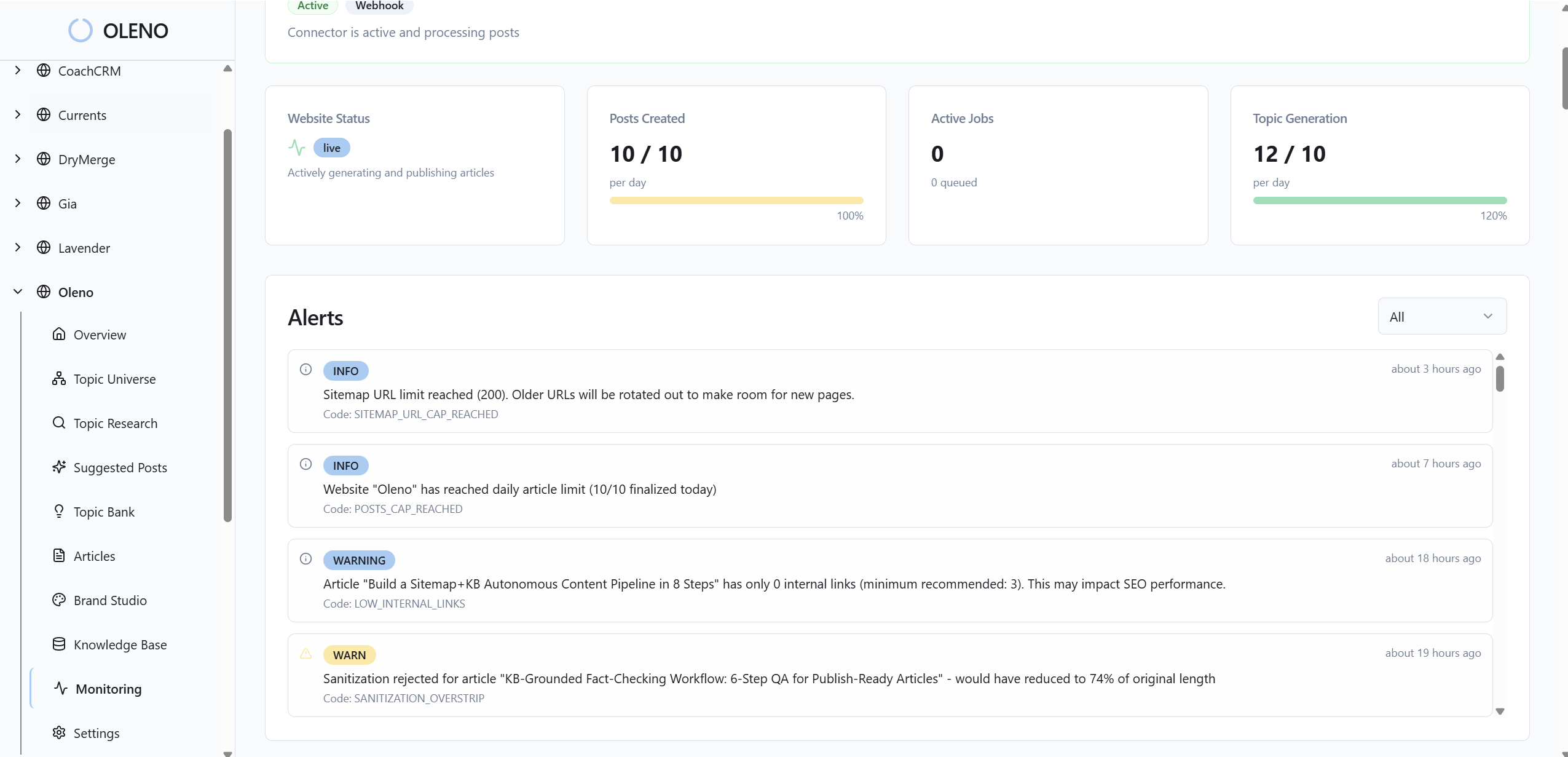
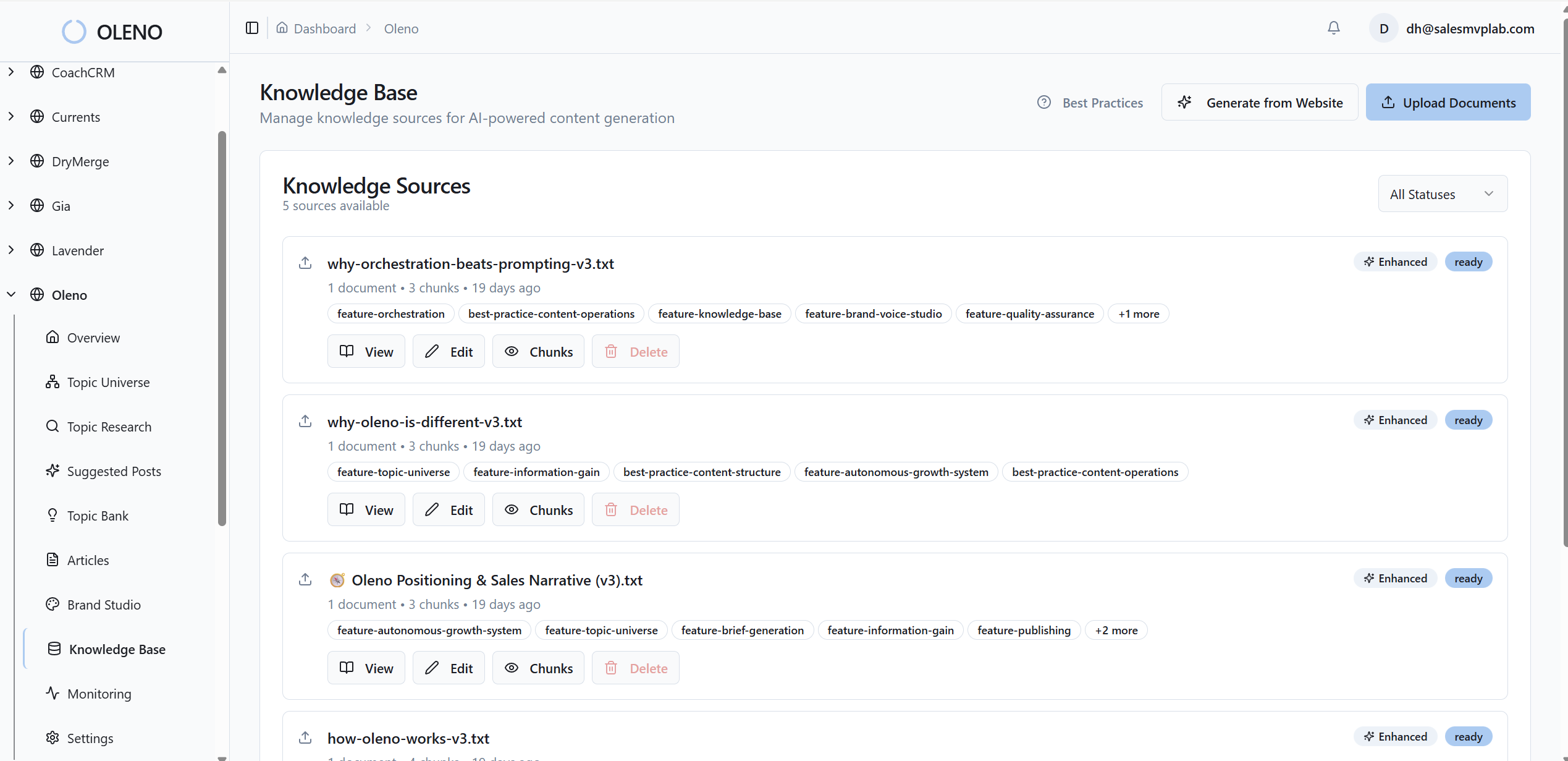
From there, the draft follows the brief exactly, brand voice enforced, knowledge base facts injected, and sections sized for snippet capture. Every H2 opens with a direct answer so each section stands alone cleanly, which also improves LLM quoteability. If your team wants the full pipeline story, see how complete articles get generated end to end.
Oleno also keeps the system clean after the draft: internal links are injected deterministically from verified sitemaps with exact-match anchors, schema is generated programmatically, and publishing uses mapped fields to avoid duplicates. That removes post-draft thrash that hides upstream problems and keeps signals consistent, for both search and assistants. Curious how this lifts visibility across surfaces? Here’s how SEO and LLM discovery work together.
Oleno ties back to the costs you’re feeling. The QA gate checks information gain, snippet-ready structure, and clarity, reducing review loops. Topic Universe enforces 90-day cooldowns to avoid collisions and cannibalization, so your clusters strengthen over time. Visuals are handled by Visual Studio, keeping product screenshots and brand imagery consistent without last-minute design hunts.
If you want to see the pipeline applied to your topics with real briefs and scores, you can Request a demo.
Conclusion
You don’t fix generic content with louder writing or longer drafts. You fix it by moving the gate upstream and making novelty provable before anyone writes. Score information gain, enforce rejection rules, and let a system run the checks every time. Less rework. Sharper coverage. More authority, earned piece by piece.
About Daniel Hebert
I'm the founder of Oleno, SalesMVP Lab, and yourLumira. Been working in B2B SaaS in both sales and marketing leadership for 13+ years. I specialize in building revenue engines from the ground up. Over the years, I've codified writing frameworks, which are now powering Oleno.
Frequently Asked Questions