Information-Gain Briefs: Prevent Duplicate Content & Build Authority

Most teams don’t publish duplicates because they’re careless. They do it because the decision to write happens before anyone proves there’s something new to say. I’ve made that call too many times. You see a topic, it feels “strategic,” you brief it loosely, and three weeks later you’re editing style, not substance.
Back when I ran Steamfeed, volume plus quality worked because every contributor brought a new angle. At PostBeyond, the opposite problem showed up. As we scaled, the context lived in my head, and drafts drifted toward familiar talking points. The fix wasn’t better editing. It was gating topics earlier with a proof of novelty. No proof, no draft.
Key Takeaways:
- Gate topics with information gain before a single sentence is written
- Score briefs against SERP coverage, claim-level novelty, and source diversity
- Freeze or merge cannibalizing pages; don’t “rewrite and hope”
- Make unique claims non-optional in the brief
- Enforce QA before publish and idempotent CMS publishing to prevent duplicates
Ready to see what a pre-brief gate looks like in practice? Try a small experiment and Try Generating 3 Free Test Articles Now.
Why Differentiation Must Happen Before Drafting
Differentiation has to be proven before drafting because editing can’t invent novelty after the fact. A simple information gain test on the brief prevents recycling the same claims, sources, and examples. Think of it as a go, no-go decision, not a style review, like deciding not to write your fifth “ultimate guide.”

The real failure mode is topic selection, not editing
Editing polishes sentences. Topic selection determines whether those sentences deserve to exist. If your process green-lights ideas without proving what is new at the claim level, you’ll publish lookalikes. That shows up later as cannibalization, flat traffic, and a nagging sense that everything sounds the same. It’s not a craft problem. It’s an upstream decision.
We flip the burden of proof. The brief must show explicit deltas against current SERP coverage before anyone writes. We’re talking H2 intent gaps, original claims, new data, and source diversity. If that map is thin, stop. It’s faster to say no than to fund weeks of frustrating rework.
What is information gain and why should you care?
Information gain is a measure of how much net-new value your piece adds versus what already ranks. Practically, you compare planned claims and structure to the top results, then quantify where you’re adding unique depth, evidence, or perspective. It’s not magic. It’s a checklist with teeth and a threshold you can defend.
You can borrow solid patterns here. MarketMuse outlines coverage-driven approaches in Content Writing For Information Gain. Animalz introduced the framing and why it matters for authority in their information gain breakdown. The point isn’t the formula. It’s making novelty measurable and non-negotiable.
The Real Causes Of Duplicate Content And Authority Stall
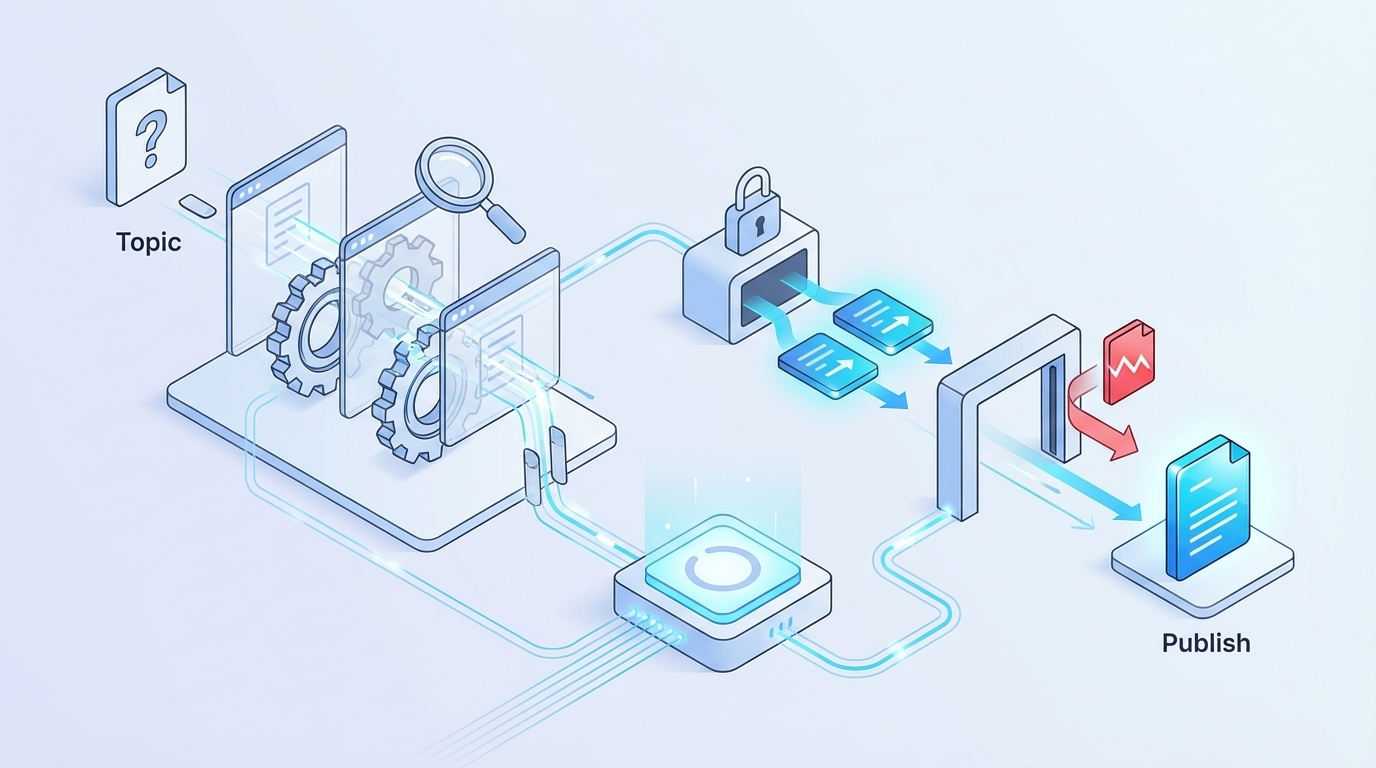
Duplicate content and authority stall happen when teams ideate by keyword and intuition, not by claim-level maps. Without a rules-driven scan of SERP coverage, you can’t see overlap in assertions, citations, and examples. The fix is a pass/fail gate on the brief that ties to thresholds, not taste. Think “prove it or pause it.”
What traditional approaches miss
Keyword lists drift toward familiar angles. Content calendars reward throughput. Both quietly push you to reshuffle the same arguments with new phrasing. What’s missing is a structural scan that extracts top-ranking headings, claims, and sources, then compares your outline to that map. You can’t manage what you don’t measure.
When we started doing this rigorously, the pattern jumped out. We weren’t duplicating words. We were duplicating decisions. Same logic, same examples, same citations. A claims map turns that invisible overlap into a red flag you can’t ignore. And once you see it, you stop writing sooner.
Angle novelty beats word count
Longer doesn’t save a duplicate angle. If anything, it amplifies the sameness. Angle novelty shows up as three things: new assertions that affect decisions, new evidence that raises confidence, and a framing that changes how a buyer evaluates options. That’s what earns citations and snippets. Not 2,000 more words.
Make those unique claims non-optional in the brief. If you can’t source or defend them, you don’t have an angle yet. Push the topic into cooldown, do more research, or pivot the framing. Length becomes a byproduct of proving something new, not a goal.
The Cost Of Publishing Lookalike Articles
Publishing lookalike articles drains time, budget, and authority. You burn hours drafting and editing, then spend more undoing cannibalization. Rankings wobble. Conversions soften. Leadership loses trust. Most of this cost is avoidable with a pre-brief IG gate and a clear stop rule. Small guardrails, big savings.
Engineering and editorial hours sunk into rework
Let’s pretend your team ships four near-duplicates in a quarter. Each burns six hours writing, two editing, one publishing. Call it nine hours to ship, plus another 27 across three revisions to fix overlap and structure. That’s over 100 hours with no net authority gain. Everyone’s frustrated. Nothing moves.
A pre-brief IG check would’ve stopped at least two of those drafts. Fewer cycles. Less rework. Better morale. And yes, lower costs. If you want a sanity check from outside your bubble, see McGill’s guidance on duplicate content. It’s basic, but the downstream pain is real.
When pages cannibalize each other, rankings and conversions decay
Cannibalization forces search engines and LLMs to pick a winner. Signals split. Internal links scatter. Snippet eligibility gets muddy. The instinct is to rewrite and reship. That often makes it worse. Freeze instead. Merge where it makes sense. Enforce cooldowns on saturated intents while you design a differentiated follow-up.
A simple saturation rule protects your strongest asset: one page per intent until proven otherwise. If you don’t have three non-overlapping claims and fresh sources, you’re not ready. Give it time. Or change the angle entirely.
Still spending cycles on lookalike fixes? You don’t need more edits. You need a different pipeline. If that’s what you’re after, Try Using an Autonomous Content Engine for Always-On Publishing.
The Frustration Of Hitting Publish And Seeing Nothing Move
If your fourth article on a topic underperforms your second, it’s not because the writer got sloppy. It’s because the new piece added nothing new. That’s an upstream decision issue. The fix is enforcing claim-level novelty in the brief or pausing until you have it. Edit less. Decide better.
When your fourth article on the same topic does worse than the second
You’ve been there. I have too. At LevelJump, we could spin up founder-led content fast, but our best pieces struggled when we added “one more post” without a different hook. Under the surface, we were repeating the same scaffolding, just with fresh sentences. Buyers felt it. So did search.
The relief came from treating novelty as binary. Either the brief proved new claims and sources, or it didn’t exist. When we paused instead of pushing through, our strongest URLs steadied and new posts actually moved something. Less content. More progress.
The 3am Slack about a duplicate page that slipped through
Someone spots a near-identical H2 set, the same case study, or a reused external citation. Now you’re fixing canonicals, redirects, and internal link paths. It’s not fun. Put the QA earlier. Check angle overlap and claim inventory as part of brief approval, not after someone clicks publish.
Make the checklist specific: three unique claims, source variance, snippet targets, and internal link intent. If anything is missing, it’s a no. You’d be surprised how many “emergencies” disappear when the gate moves upstream.
How To Operationalize Information-Gain Briefs With Measurable Gates
Operationalizing IG briefs means turning novelty into a rule, not a hunch. Calibrate authority goals by pillar. Automate SERP coverage scans. Score the brief across coverage delta, claim novelty, and source diversity. Then template the brief with required unique claims. Pass or pause. No gray area.
Calibrate authority goals and pillars before topics flow
Set the rules first. Define authority pillars, acceptable overlap, and desired outcomes. Then assign IG thresholds by pillar, higher for core money pages, slightly lower for exploratory coverage. Add rules for citation diversity and snippet targets. This gives you a yardstick you can apply at scale.
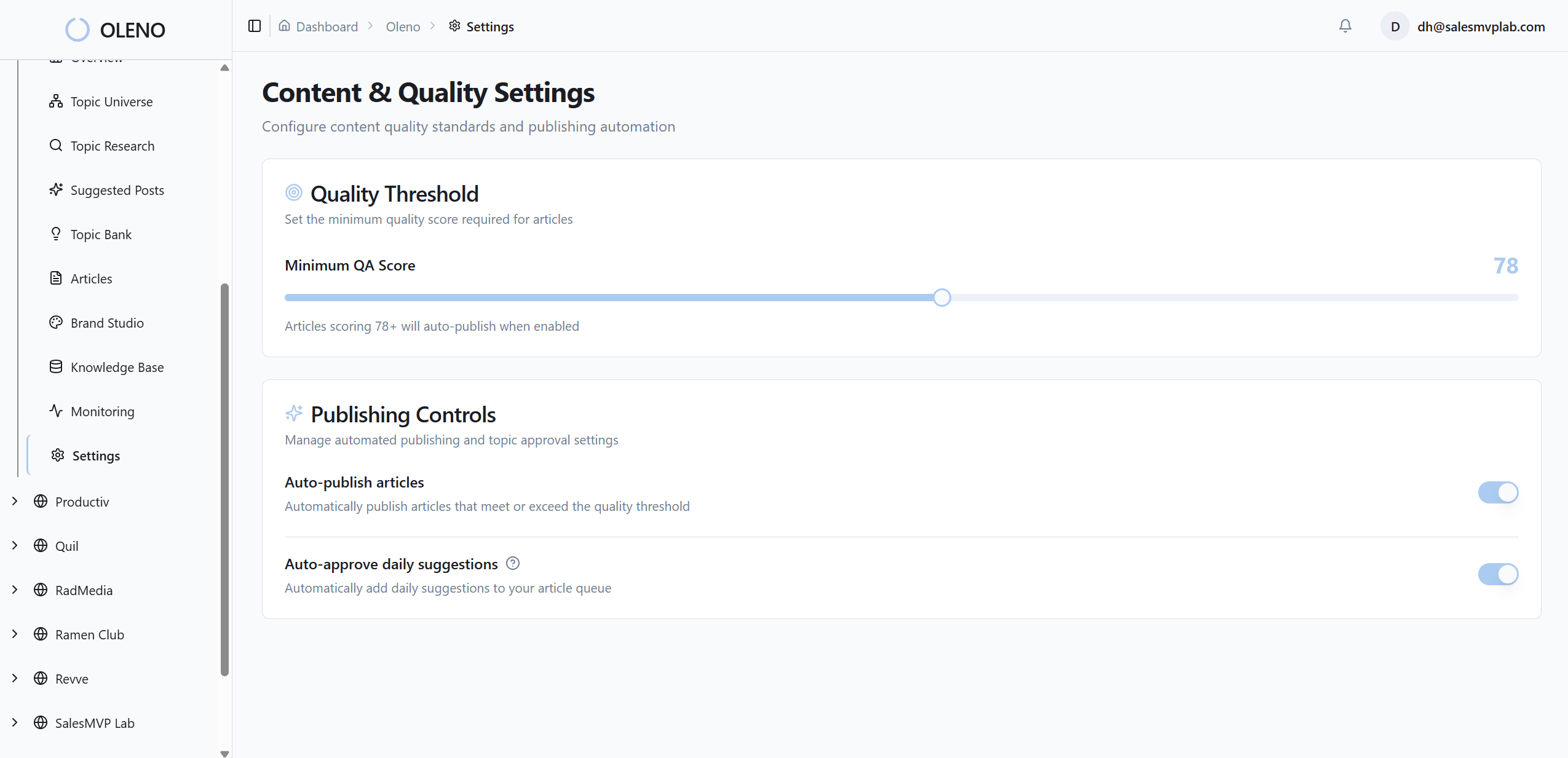
Assign a brief approver with real stop power. Their job isn’t wordsmithing; it’s governance. If research can’t produce new claims or sources, it doesn’t ship. That clarity cuts rework and keeps your best URLs strong. You’ll say no more often. That’s the point.
Automate a competitive scan that captures coverage and claims
Script the scan. Pull the top results, extract headings, mine claims, list cited sources, and capture unique examples. Tag each element by type (definition, framework, case data, contrarian take). Then map your planned outline against that coverage. It turns “I think” into “we know.”
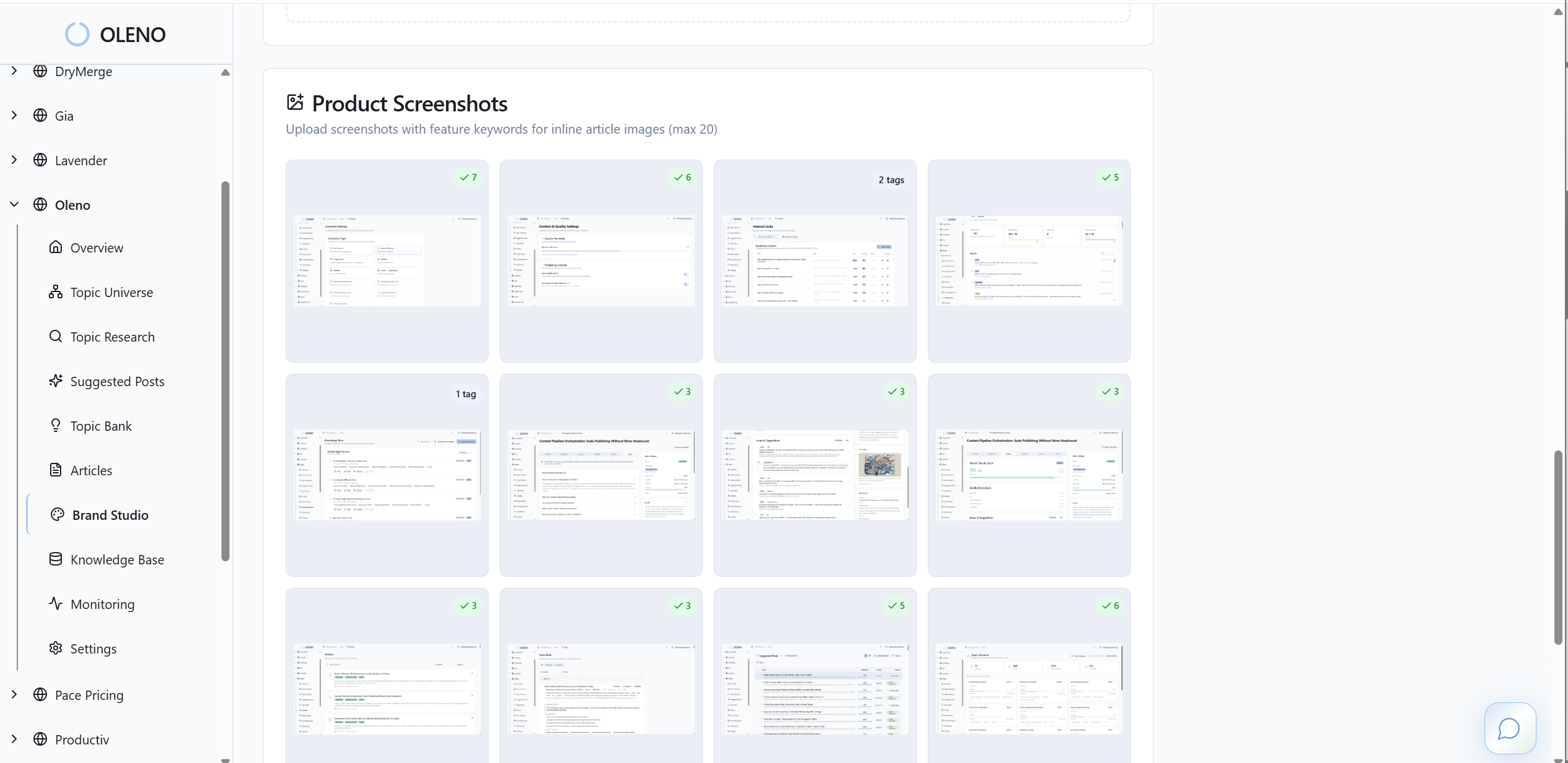
The deliverable is simple: a coverage matrix with visible overlap and gaps. You’ll quickly see where a contrarian angle could live, where new data would win, or where you’re forcing a post into a saturated intent. That’s the decision moment. Write or wait.
Compute an information gain score you can defend
Roll it up into a score with reasons and flags. Combine coverage delta, claim novelty, and source diversity. Add tie-breakers like original data, diagrams, or firsthand experience. Then set three bands: pass, revise with remediation prompts, or fail with cooldown guidance. No vibe checks. Just rules.
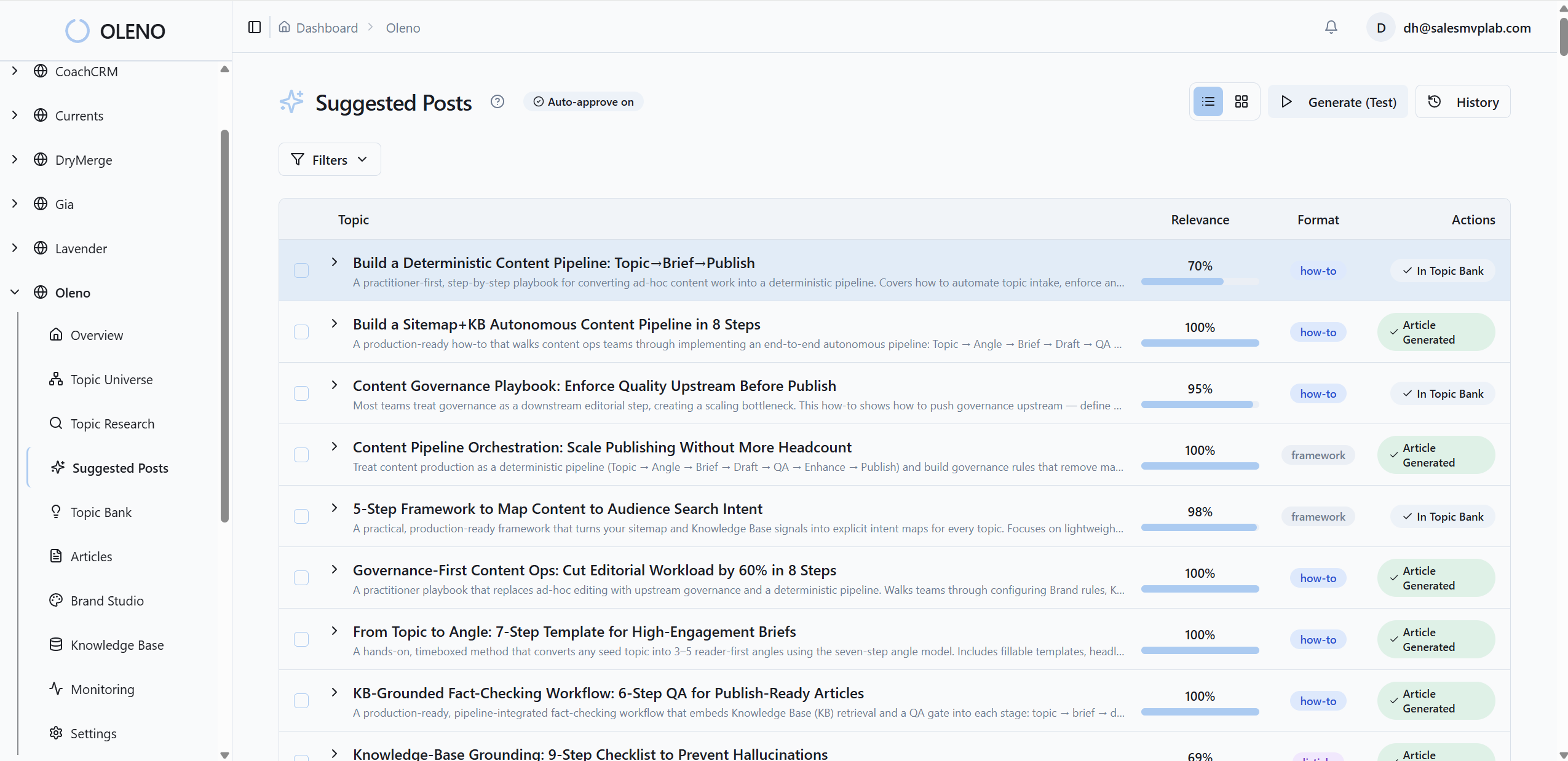
When the score passes, generate a rigid brief: required unique claims, external source candidates, snippet-ready H2 prompts, and internal link targets. Make the claims non-optional. If you can’t source one, remediate or change the angle. The draft exists only after the brief clears the bar.
For deeper tactics on IG scoring, the patterns in Content Writing For Information Gain and Animalz on information gain are useful starting points.
How Oleno Enforces Information Gain From Topic To Publish
Oleno enforces information gain by design, not by reminder. Topics are scanned for gaps and overlap. Angles and briefs are locked with unique claims before writing starts. QA blocks low-gain drafts. Publishing is idempotent to avoid duplicates. The result is fewer near-duplicates and less cleanup work.
Topic Universe prevents duplicate and overlapping ideas
Oleno analyzes your sitemap and knowledge base to detect gaps and overlap before a topic is even proposed. Weak or redundant ideas are blocked. That protects your strongest URLs and ensures every new post extends coverage instead of competing for the same intent. You’re not guessing; the system just says no more often.
From there, angle and brief generation lock in differentiation up front. Structure is defined, narrative is set, and unique claims are anchored to your knowledge base. If an angle doesn’t clear the bar, it doesn’t move forward. Publishing velocity improves because you stop funding drafts that never should’ve existed.
QA Gate blocks low-gain drafts and triggers remediation
Every article passes a QA Gate that checks narrative structure, brand voice, clarity, SEO placement, LLM readability, and factual grounding. If a draft misses, Oleno revises and retests automatically. Publishing is blocked until it passes. That’s time you get back from not managing endless edit loops.
When it’s ready, direct CMS publishing uses idempotent operations to avoid duplicate entries and respect your daily quota. Draft or live modes are supported. No copy-paste, no misfires, fewer accidents. It’s not flashy. It’s just reliable.
If your team wants to test the gate on real topics, spin up a quick run and Try Generating 3 Free Test Articles Now. When you’re ready to keep it running, Try Oleno for Free and let the pipeline handle the structure while your team focuses on strategy.
Conclusion
You don’t fix duplicate content with better prose. You fix it by refusing to draft until novelty is proven. Score the brief. Enforce unique claims. Freeze saturated intents. Then let a system run those rules every day. That’s how authority compounds, one “no” at a time, so the right “yes” actually moves the needle.
About Daniel Hebert
I'm the founder of Oleno, SalesMVP Lab, and yourLumira. Been working in B2B SaaS in both sales and marketing leadership for 13+ years. I specialize in building revenue engines from the ground up. Over the years, I've codified writing frameworks, which are now powering Oleno.
Frequently Asked Questions