Storyboard Planning Balances Coverage and Publishing Cadence

You don't usually lose the quarter because you ran out of ideas. You lose it because inside storyboard planning that sits between strategy and shipping, and that layer is usually weak, manual, or missing. So the quarter starts with big goals, then by week 3 you're back to choosing topics one by one and hoping the mix works out.
That gets expensive fast. A 1-3 person marketing team can't afford constant resets, funnel gaps, and frustrating rework. I've seen this pattern a lot with growth-stage SaaS teams: strong intent, decent ideas, no durable planning system. By the time you notice you're overproducing top-of-funnel and underproducing product-led content, the month is mostly gone.
Oleno is built around that gap. Not just writing faster, but turning strategic direction into a balanced plan that can actually hold up when the quarter gets messy. If you're trying to cover multiple audiences, use cases, and funnel stages without adding headcount, that's the real job.
Key Takeaways:
- Most small SaaS content plans break because priorities change faster than the planning system can absorb.
- A workable plan should allocate effort across audiences, use cases, funnel stages, and themes before drafting starts.
- Storyboard uses percentage-weighted focus and a coverage matrix to turn quarterly priorities into a publishable plan.
- When connected to the orchestrator, planning stays tied to weekly and monthly output targets instead of living in a spreadsheet.
- Teams already stretched thin often need a planning system more than they need more content ideas.
If you want to see what that looks like in practice, you can request a demo.
Why Most Content Plans Break Mid-Quarter
Content plans break because they were never really plans. They were lists. A spreadsheet of topics feels organized in week 1, but it starts to fall apart the second priorities move, leadership asks for a launch push, or sales needs evaluation content that wasn't accounted for.
Most Content Plans Break When Priorities Change Mid-Quarter
A lot of lean teams build the quarter backward. They start with topic ideas, assign a rough publish date, then try to force strategy into that list after the fact. That's the wrong sequence. If your team hasn't already decided how much of the quarter goes to acquisition, evaluation, and product-led content, the loudest request wins.
Let's make it concrete. A Head of Marketing at a 60-person SaaS company starts the quarter with a target of 12 articles. Four weeks later, two launch requests show up, one comparison page becomes urgent, and sales wants battlecard-adjacent content for objections they're hearing on calls. Now the original plan is broken. Not because anyone did bad work. Because there were no allocation rules holding the mix together.
I think this is where people misdiagnose the problem. They say the team needs more output. Usually they need a better planning structure first. Back at PostBeyond, I could write 3-4 high quality blog posts a week when all the context lived in my head. As the team grew, that fell apart. More people didn't automatically create more throughput. They created more translation loss.
Publishing Cadence Collapses When Coverage Decisions Stay Manual
Manual coverage decisions don't just create gaps. They create rhythm problems. When you pick topics article by article, cadence becomes a mood, not a system.
The hidden cost shows up in two places. First, you get uneven funnel coverage. Most teams default to top-of-funnel because it's easier to brief, easier to write, and safer politically. Second, publishing becomes spiky. You might publish 4 pieces in 10 days, then nothing for 2 weeks. Search doesn't compound well off that pattern. Neither does demand gen.
There's a simple diagnostic I like here. Look at your last 12 published pieces and count three things: how many were top-of-funnel, how many were product-led, and how many were built for a clearly named audience or use case. If more than 50% sit in top-of-funnel, or fewer than 3 map to a real buying or product workflow, your planning layer is weak. That's usually the issue.
And when the planning layer is weak, the quarter feels heavier than it should. You spend Monday deciding what to make, Tuesday rewriting the brief, Wednesday second-guessing the choice, and Friday wondering why pipeline impact still feels fuzzy.
Better Planning Starts With Rules, Not Topic Lists
Good planning is mostly allocation. Not inspiration. The teams that sustain output don't rely on heroic weekly decisions. They decide the mix first, then let execution flow from that mix.
Good Planning Starts With Allocation Rules, Not A Giant Spreadsheet
A durable content plan starts by answering a few boring but high-value questions. How much of this quarter goes to acquisition content versus evaluation content? Which audience gets the biggest share? Which use cases are under-covered? How much publishing capacity do you actually have if nothing goes perfectly?
That last part matters more than people admit. If your team can realistically ship one publish-ready piece a week, don't build a plan that needs three. Sounds obvious. It still happens all the time. Teams confuse ambition with capacity, then feel behind by week 2.
The planning mechanism should be simple enough to survive pressure. For most lean B2B teams, I think four allocation buckets are enough to start:
- 40-50% for acquisition content
- 20-30% for evaluation and comparison content
- 20-30% for product-led or use-case content
- 10-15% reserved for reactive work or launch-driven shifts
Not forever. But it's a good starting benchmark. If you have fewer than 2 people touching content, keep reactive capacity above 10%, because surprises will hit and you won't have buffer otherwise.
Coverage Only Compounds When Cadence Is Designed Into The Plan
Coverage without cadence is just a backlog. Cadence without coverage is noise. You need both.
Back in 2012-2016, when I ran Steamfeed, we hit 120k unique visitors a month because we had both breadth and depth at high volume. We saw traffic jumps at 500 pages, 1000 pages, 2500 pages, 5000 pages, then 10000 pages. Most of those pages got fewer than 100 views a month. Still worth it. Why? Because the catalog compounded. Breadth plus consistency created long-tail coverage that kept paying us back.
Small teams obviously won't publish like that. Fair point. They shouldn't try to. But the principle still holds. If your plan doesn't deliberately create steady weekly output while widening coverage over time, you stay reactive forever.
That's also why prompting alone usually disappoints people. Prompting can generate text quickly. It doesn't decide what should exist next, or how to keep the full mix balanced, or how to pace output so the quarter doesn't collapse. Speed is useful. Reliability is what compounds.
If you want a closer look at that shift from ad hoc work to a governed system, you can request a demo.
How Storyboard Turns Strategy Into A Working Plan
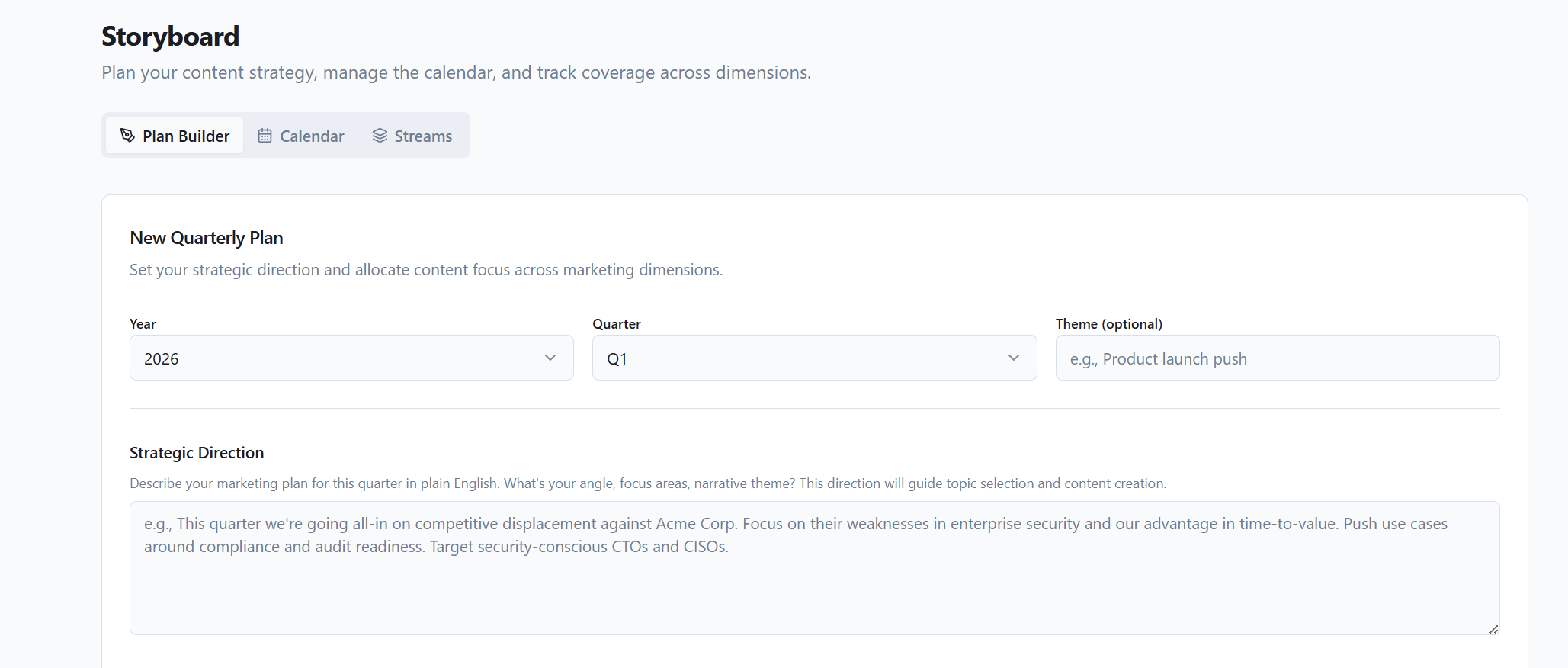
Storyboard is Oleno's strategic content planning engine. It takes strategic focus, applies weighted allocation across key dimensions, and turns that into a materialized plan with a visual calendar teams can actually use instead of leaving strategy trapped in a static doc.
Storyboard Turns Strategic Priorities Into Weighted Publishing Decisions
This is where Oleno gets named because this is where the mechanics matter. Storyboard handles weighted allocation across audiences, personas, products, and use cases, then tracks coverage across those dimensions. In plain English, you decide what deserves more attention before the articles get generated.
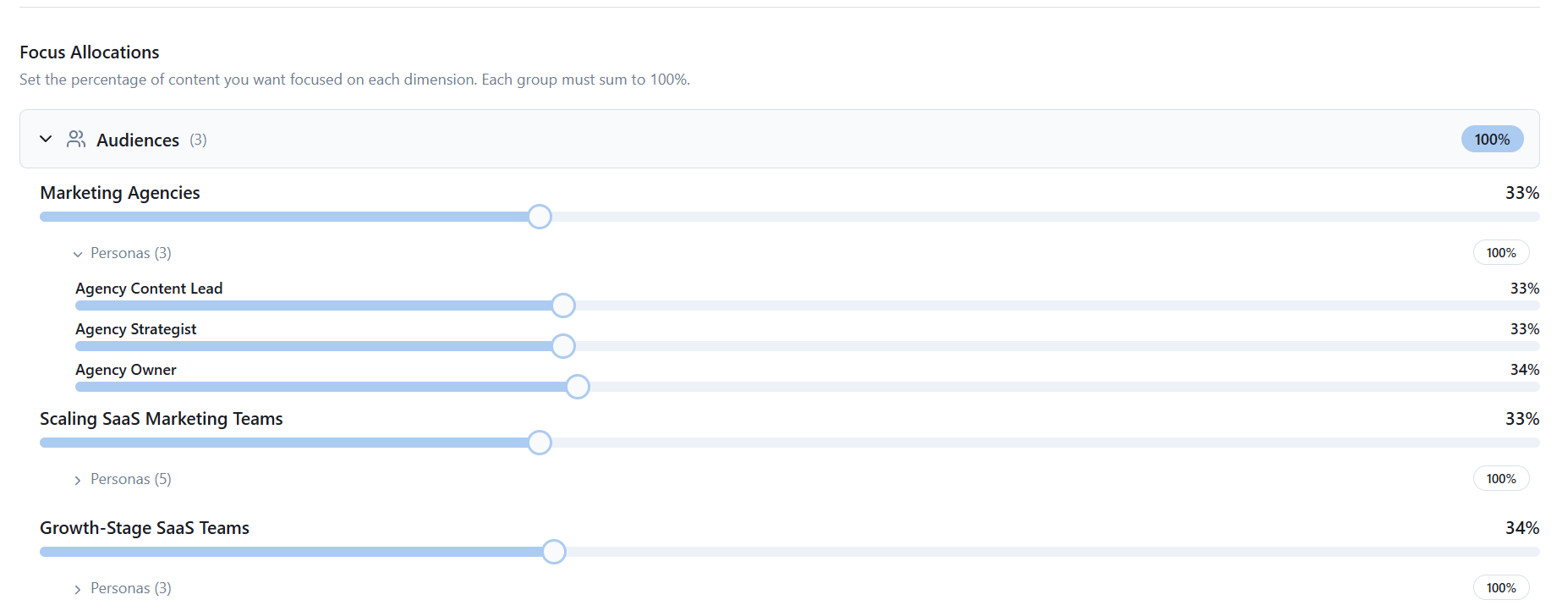
That means you can weight by audience, persona, product, or use case. If the focus is heavily on founders and heads of marketing in growth-stage SaaS, you can reflect that in the plan. You're not choosing every article by hand. You're shaping the mix the system should produce.
I like this because it forces a harder question upfront: what should exist next? Not what's easiest to write next. Different question. Much better question.
A practical rule here: if one audience or use case is supposed to drive the plan, it should usually receive enough weight to stay visible in the calendar. Otherwise, it tends to get diluted by reactive requests. You can still cover other areas, but now the tradeoff is visible.
Topic Scoring Helps The Plan Favor What Should Exist Next
A plan only works if it can connect strategy to actual topic selection. That's where topic scoring matters. Storyboard scores topic bank candidates against coverage gaps, so the plan can favor eligible content that fits current priorities instead of pulling random ideas from a pile.
That changes the nature of planning. You're no longer managing a giant spreadsheet where every topic looks equally valid. The plan has a point of view. Some things should be created sooner because they close coverage gaps or align with the weighted focus.
There's a useful diagnostic here too. If your current topic bank feels like 100 ideas with no clear order, the issue isn't ideation. It's prioritization logic. That's usually why teams keep rewriting plans. The list doesn't tell them what matters now.
We saw a version of this problem in the early days of building Oleno. The founder story is pretty straightforward. Last summer, a manual GPT workflow was taking 3-4 hours a day: prompting, copy-pasting, moving drafts into the CMS, repeating the same motions over and over. The output wasn't the hardest part. The system around the output was the headache. That's why the product expanded beyond a writing layer into planning, orchestration, QA, and publishing.
Orchestration Keeps The Plan Tied To Weekly And Monthly Targets
Planning breaks when it doesn't connect to operations. A plan by itself is nice. A plan tied to weekly and monthly publishing targets is useful.
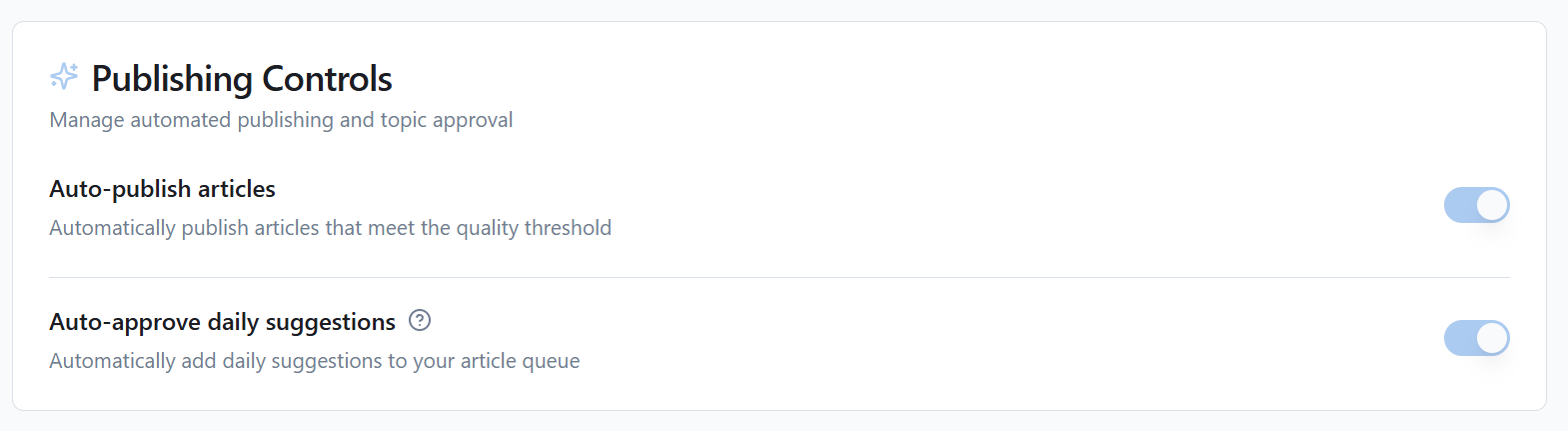
That's where Storyboard connects naturally to the rest of Oleno. Storyboard materializes a balanced calendar and makes the tradeoffs visible through drag-and-drop scheduling, stream views, status filters, and coverage tracking. Once topics are approved, the Orchestrator can schedule those approved topics and run them through the pipeline while respecting cadence settings.
That matters because the real failure mode for most teams isn't lack of strategy. It's strategy-execution drift. They know what they want to do. They just can't hold the line once launches, internal requests, and daily work start pulling attention away.
And yes, there is a tradeoff. A system like this won't give you the same freeform spontaneity as making weekly topic calls from scratch. That's valid. If your entire strategy changes every 72 hours, you may prefer looser planning. Most post-PMF SaaS teams don't need more looseness though. They need fewer resets.
What This Looks Like For A Tiny SaaS Marketing Team
The easiest way to understand storyboard is to look at a small team that keeps getting dragged back into manual planning. That's where the benefit becomes obvious.
A One-Person Marketing Team Can Stop Choosing Topics Article By Article
Picture a Head of Marketing at a growth-stage SaaS company with one coordinator and no dedicated PMM. Every quarter starts with solid intent. They want SEO content, comparison pages, feature education, and sales-supporting pieces. Then the real quarter starts.
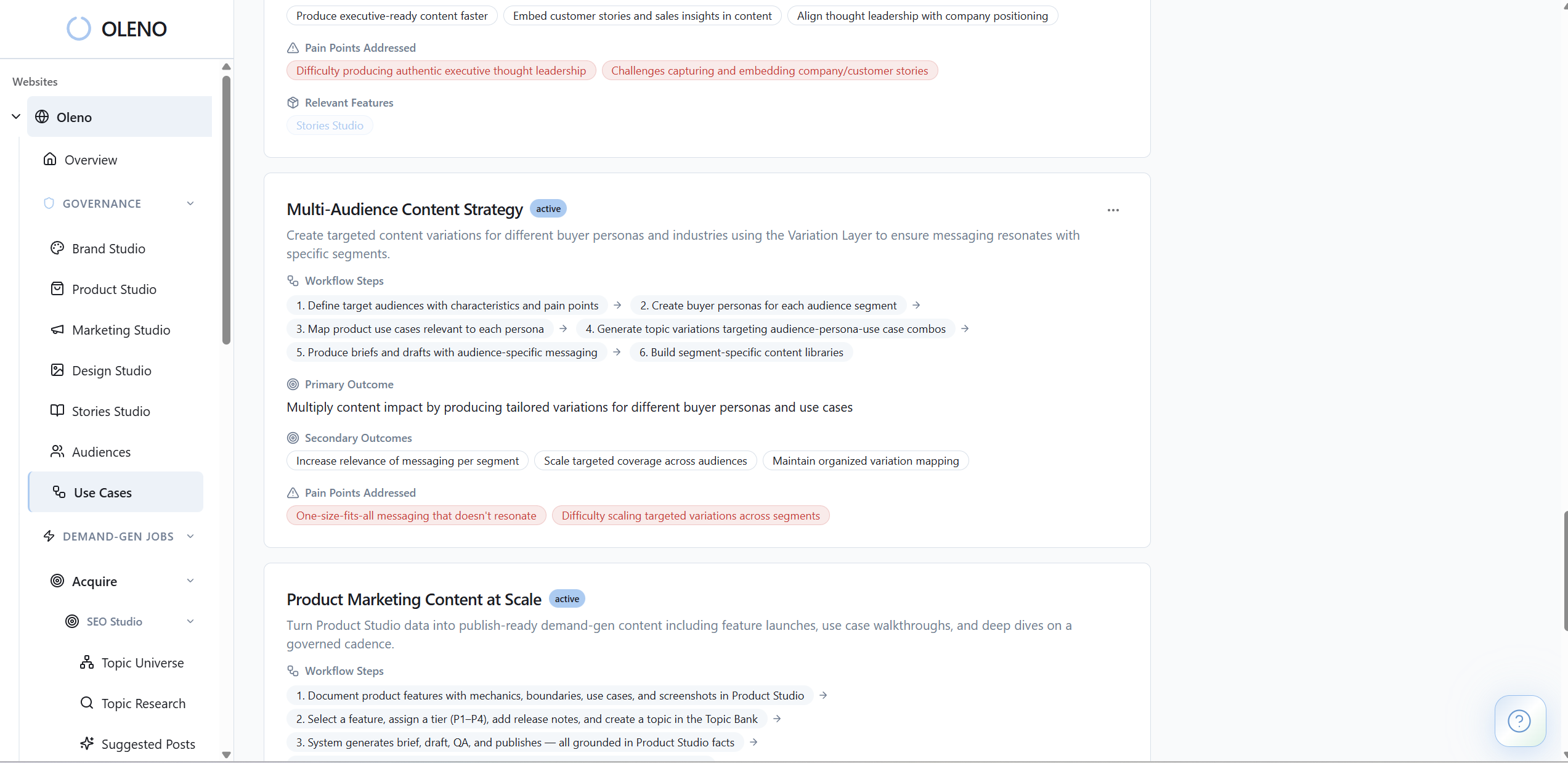
Monday morning, they're in leadership meetings. Tuesday, sales asks for a comparison page. Wednesday, product wants launch support. Thursday, an agency draft needs cleanup because it sounds generic. Friday, nothing ships. Sound familiar?
Before a structured planning layer, content choices happen one article at a time. That almost always leads to overproduction of easy educational pieces and underproduction of the assets that help evaluation. It's not because the team doesn't understand the funnel. It's because manual planning under pressure defaults to the fastest visible task.
With storyboard, the quarterly focus gets allocated first. Then topic universe surfaces eligible topics that fit that focus, and the orchestrator keeps the output moving against weekly and monthly targets. So instead of deciding from scratch every week, the team is working from a pre-shaped lane.
Balanced Planning Reduces Gaps Across Audiences And Funnel Stages
Let's pretend this team was publishing 5 articles a month on average, but the pattern was ugly: 4 top-of-funnel posts, 1 product-adjacent piece, almost nothing for evaluation, and no stable cadence. That's common. It looks productive from a distance. It doesn't produce balanced demand gen.
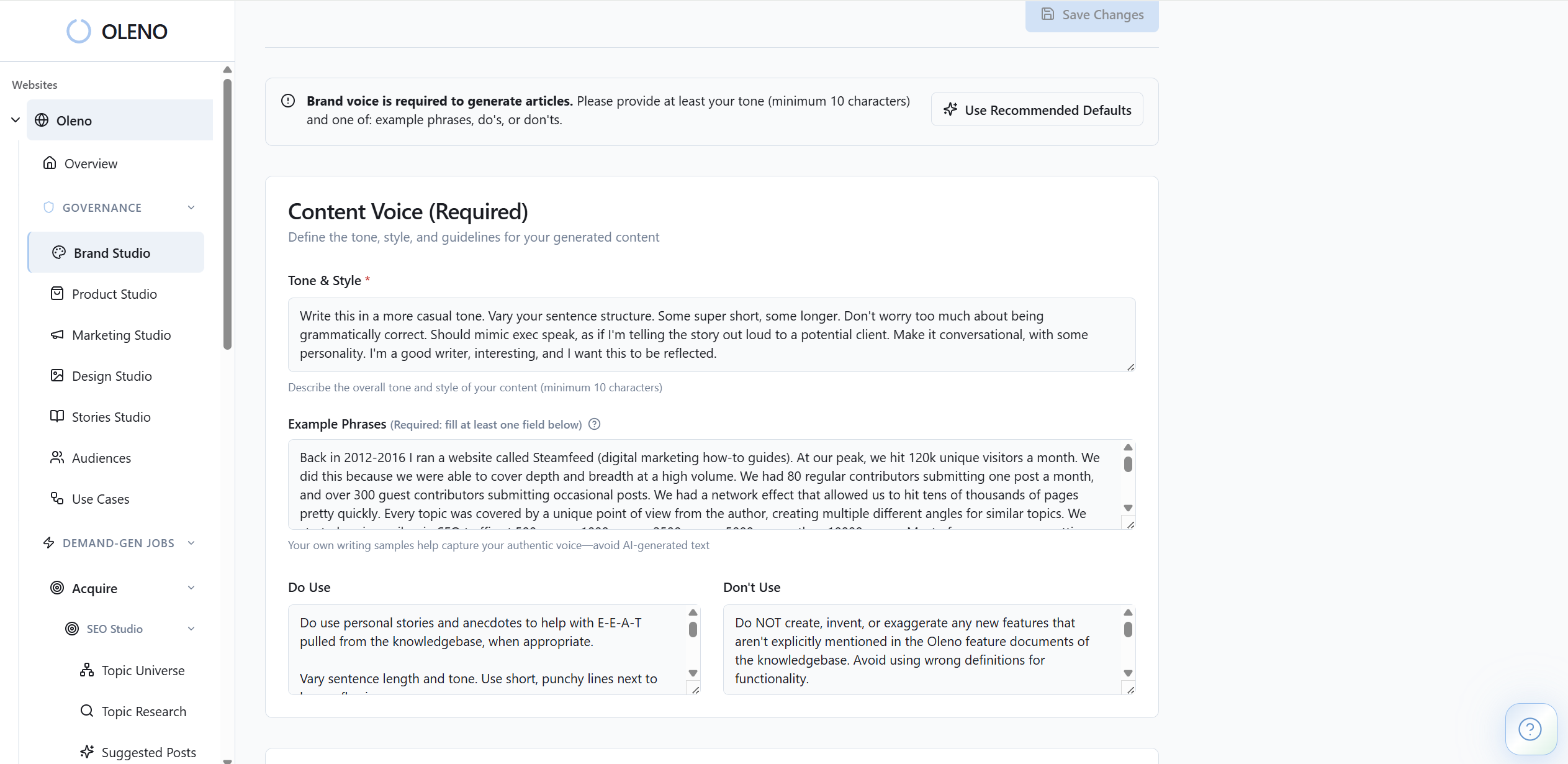
A more deliberate planning setup might shift that quarter toward something like:
- 40% acquisition content for core audience education
- 25% evaluation content for bottom-of-funnel search
- 20% product-led use case content
- 15% reactive or launch support content
That kind of mix doesn't guarantee results. It does something more useful first. It reduces blind spots.
And when Oleno is running that plan, the team doesn't need to manually coordinate every next step. Storyboard sets the quarterly allocation. Topic universe informs what should exist next. The orchestrator keeps the queue tied to cadence. Programmatic SEO Studio, Product Marketing Studio, or other job-based pipelines can then execute within that shaped plan. That's the important part. Planning and execution stop living in separate universes.
For growth-stage teams, even moving from sporadic publishing to one dependable publish-ready article a week is a real operational win. In broader Oleno use cases, teams have moved from 4-8 monthly articles to 20-40+ without adding headcount. Storyboard isn't the only reason that happens, but it's one of the reasons the output mix stays coherent instead of turning into random activity.
Storyboard Improves Planning, Not Your Judgment
This is the section people usually skip. They shouldn't. Boundaries matter, especially with planning software, because it's easy to pretend the system solves more than it does.
Planning Discipline Does Not Replace Strategic Judgment
Storyboard helps allocate focus and pace execution. It doesn't decide your market position for you. It doesn't know whether leadership is chasing the wrong audience, whether your message is too broad, or whether the quarter's priorities are politically driven instead of commercially smart.
You still have to make those calls.
In my experience, that's actually a good thing. Most CMOs and heads of marketing don't want control handed over to a black box. They want the system to carry the operational burden while they keep hold of the strategic decisions. That's a much healthier split.
A simple rule: if you can't explain in one sentence who the quarter is for and what business outcome the content should support, don't expect the planning layer to rescue you. Fix the strategic brief first.
Storyboard Cannot Fix Weak Positioning Or Missing Source Truth
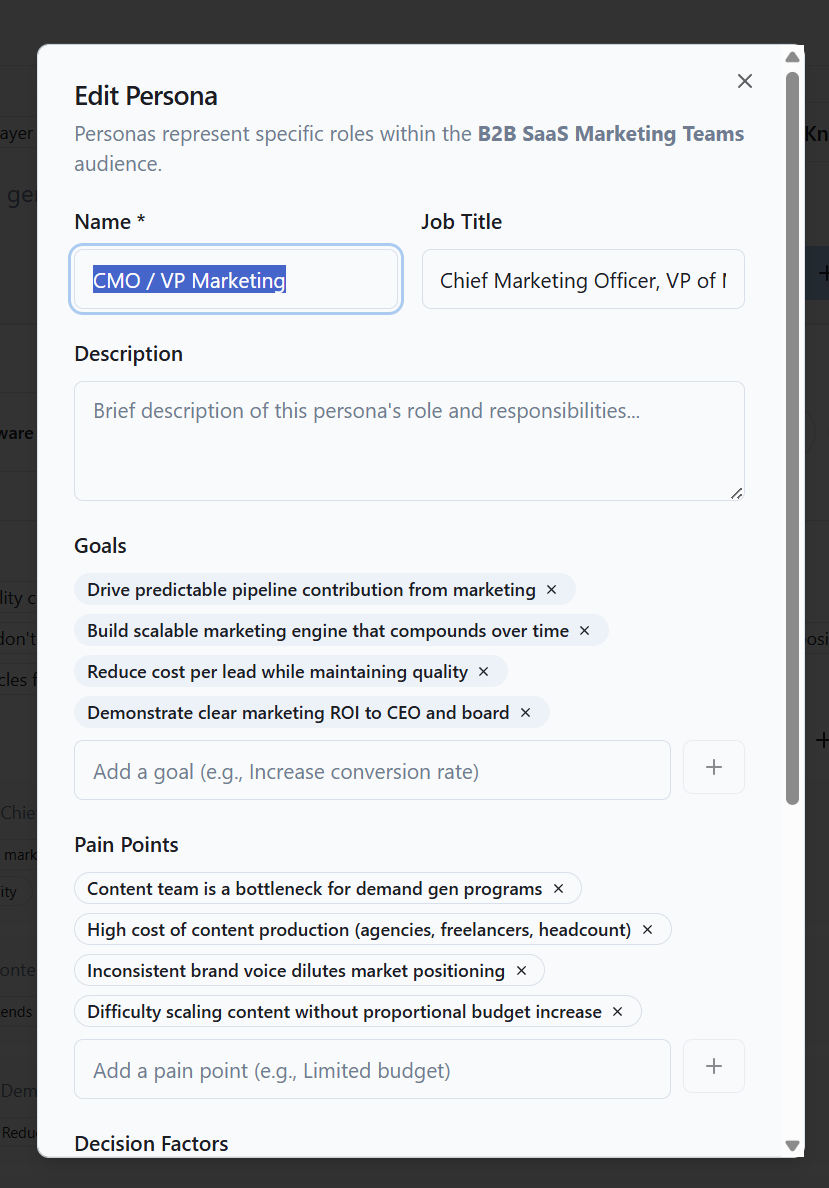
This is probably the bigger boundary. Storyboard depends on strong inputs from the rest of the system. If your brand voice is fuzzy, your product claims are outdated, your audiences aren't clearly defined, or your use cases are vague, the planning will still reflect that weakness.
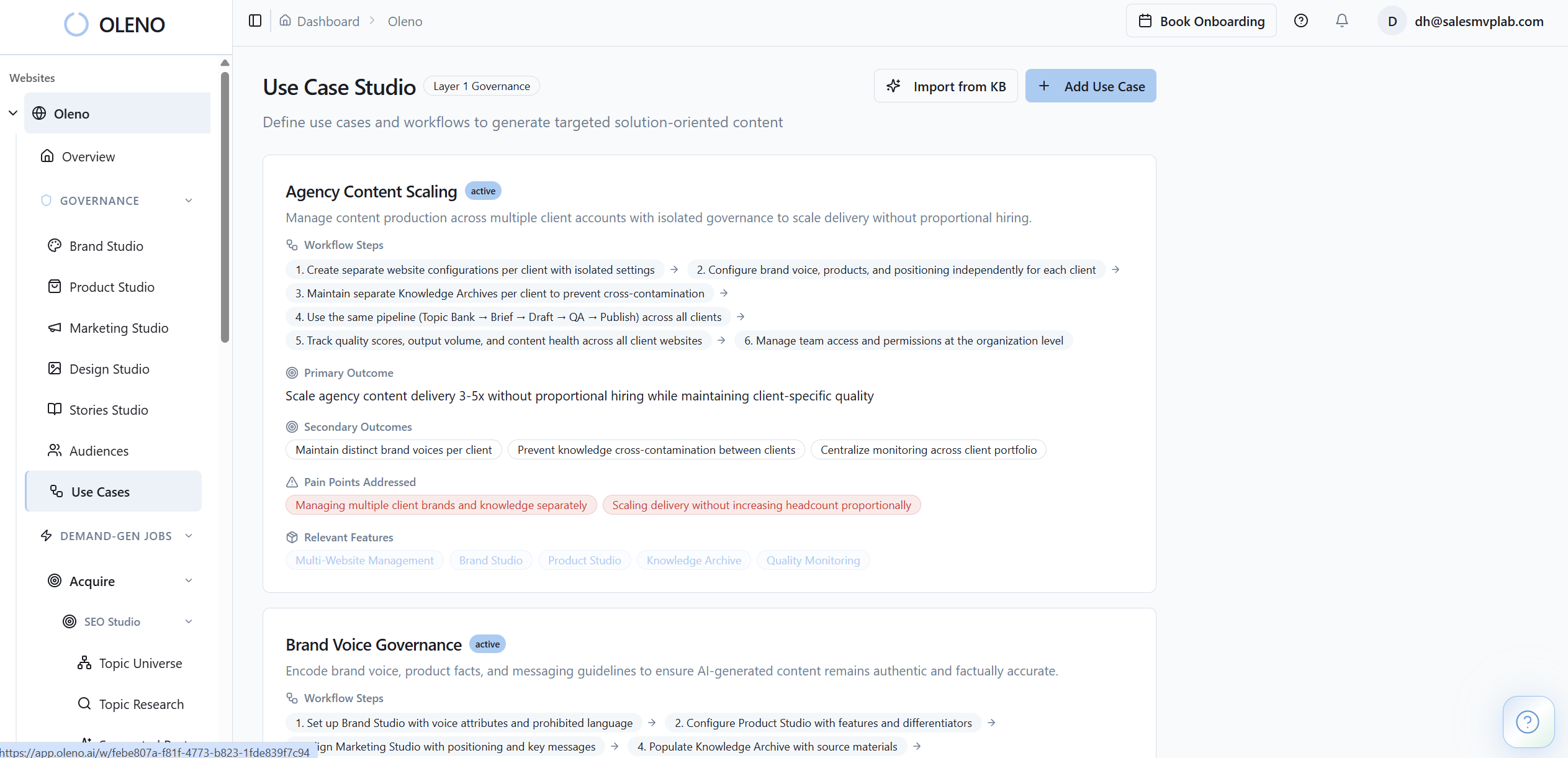
That's why Oleno starts with setup across things like brand studio, marketing studio, product studio, audience & persona targeting, and use case studio. The planning layer needs source truth underneath it. Otherwise you're just systematizing confusion.
It's the same issue a lot of teams hit with AI writing tools. They blame the draft. The draft is often just exposing messy inputs. Critics of structured systems sometimes say a good marketer should be able to improvise around that. Fair enough in a pinch. But if you're trying to sustain output over quarters, improvisation becomes debt.
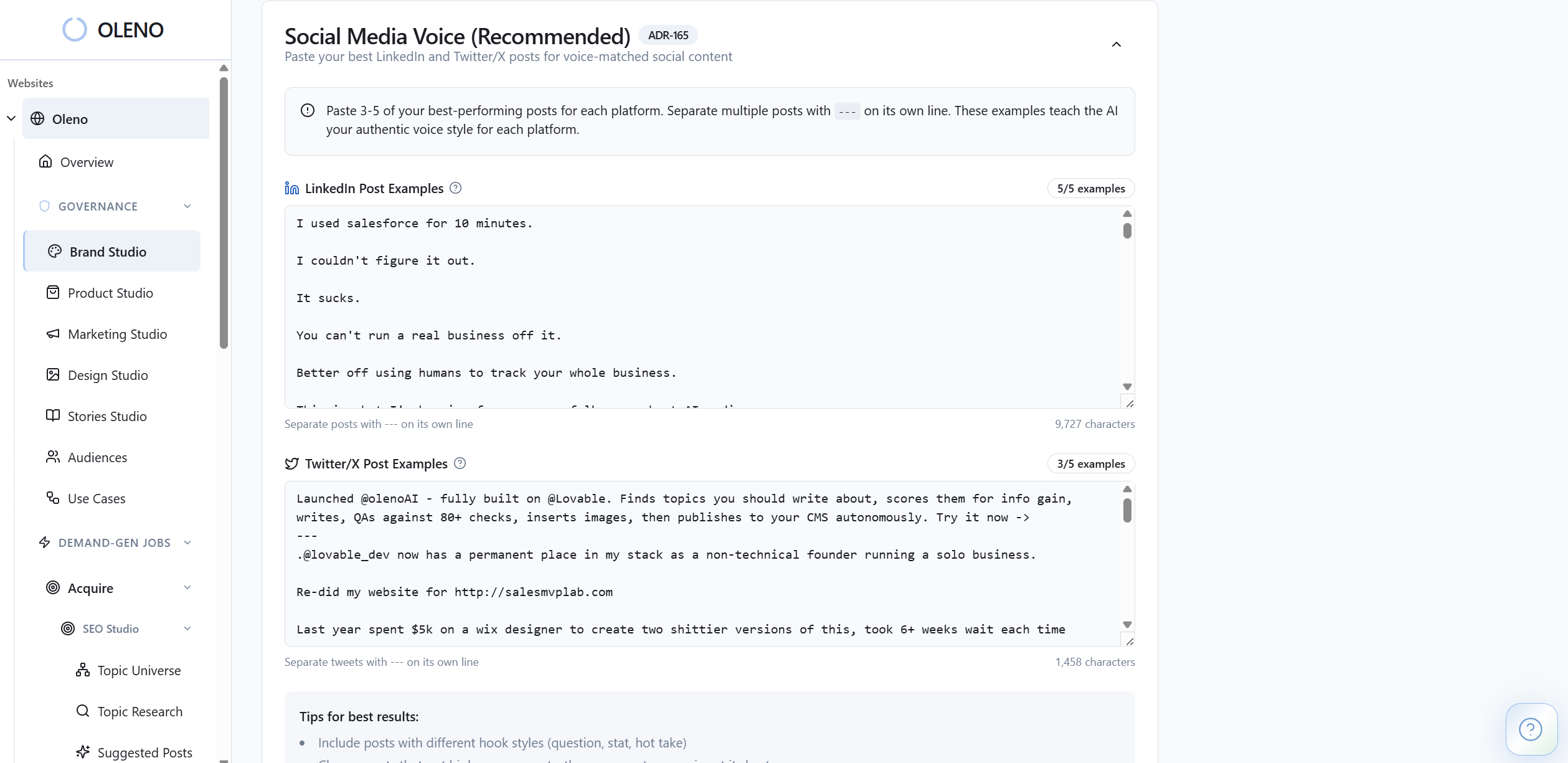
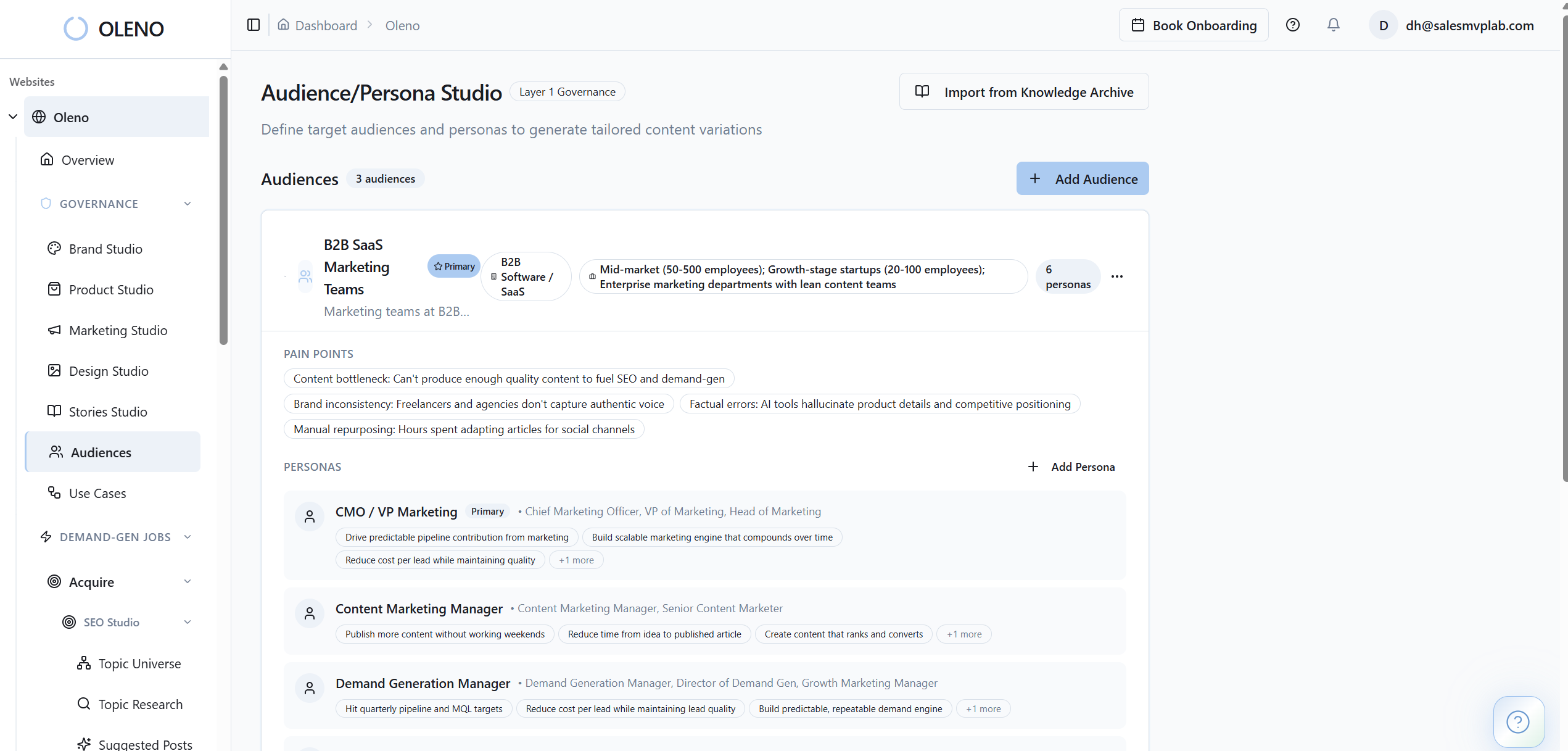
One more honest boundary: there aren't screenshots or video assets available for this feature in the current set, so the right way to explain it is through mechanics and operating logic, not a fake UI walkthrough.
The Next Step Is Turning Strategy Into An Operating System
Planning gets real when it survives contact with the week. That's the whole point. If quarterly strategy still has to be manually translated every Monday, you don't really have a system yet.
Teams That Plan Coverage Intentionally Publish More Consistently
The teams that keep shipping aren't always the ones with the biggest content budget. A lot of the time, they're the ones that got more disciplined about allocation, pacing, and source truth. They stopped treating planning like a document and started treating it like operating logic.
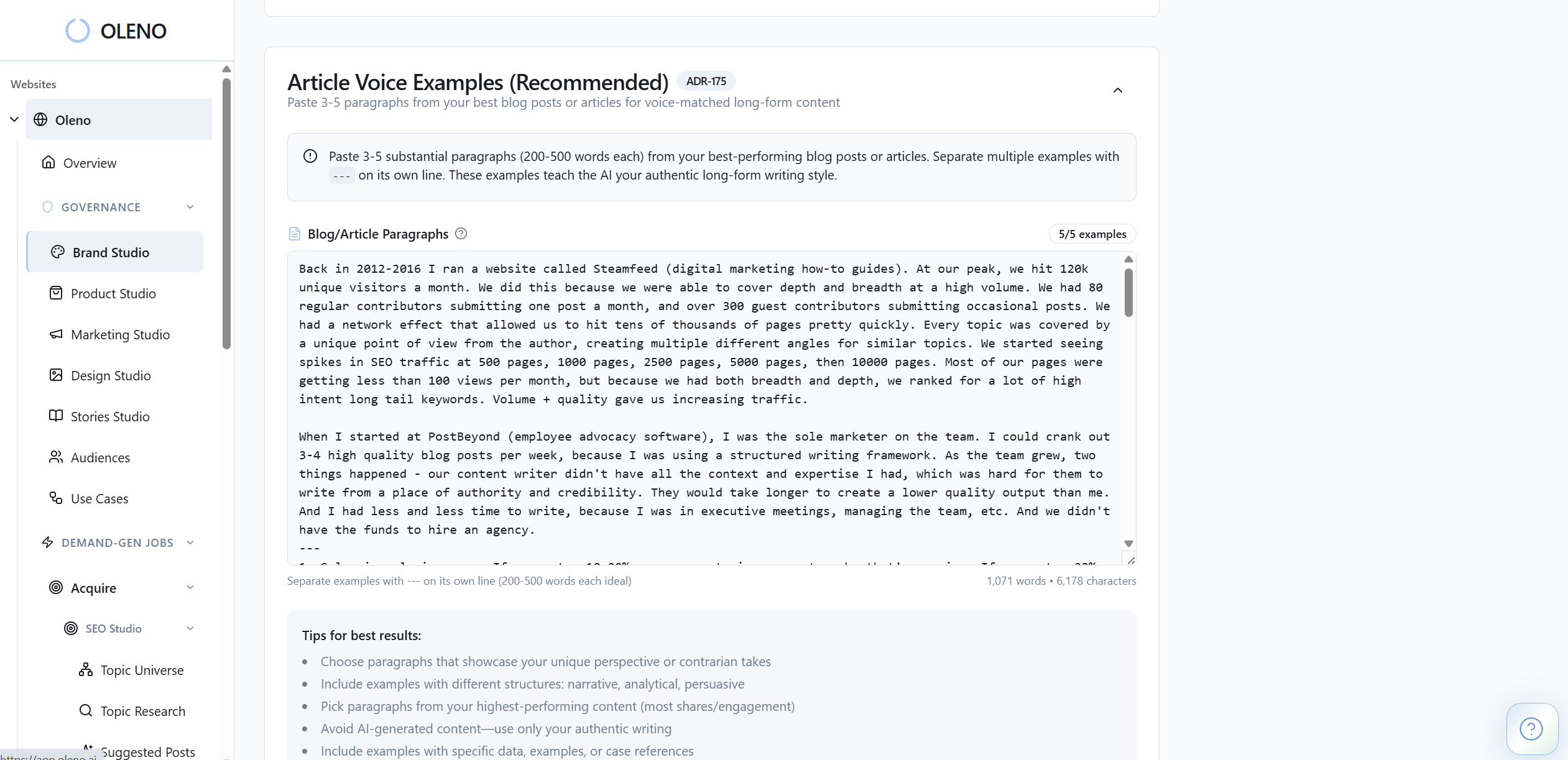
If that's what you're trying to build, book a demo. Seeing how storyboard, topic scoring, and the wider Oleno system connect is usually the fastest way to tell whether this fits your team.
The Next Step Is Turning Strategy Into An Operating System
Oleno is strongest when storyboard planning, governed inputs, execution studios, and the orchestrator work together. That's the shift from "we have a strategy deck" to "we have a content system that keeps moving."
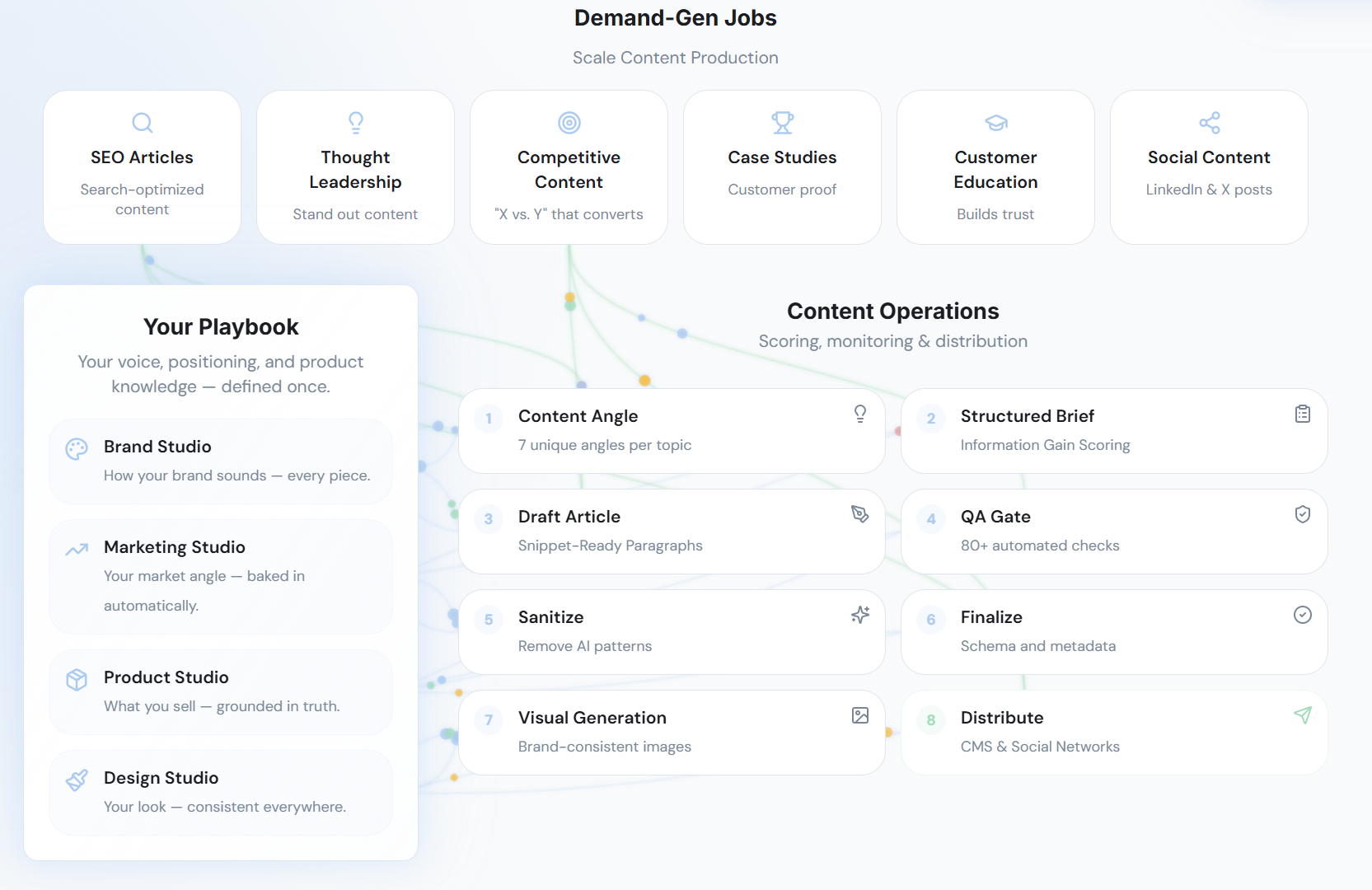
And for a lean B2B marketing team, that's usually the real goal. Not more ideas. Not more prompts. More reliable execution against the strategy you already worked hard to define.
About Daniel Hebert
I'm the founder of Oleno, SalesMVP Lab, and yourLumira. Been working in B2B SaaS in both sales and marketing leadership for 13+ years. I specialize in building revenue engines from the ground up. Over the years, I've codified writing frameworks, which are now powering Oleno.
Frequently Asked Questions