Interactive Calculators & Quizzes: SEO Differentiation Playbook

Most teams publish another “ultimate guide” and wonder why nothing moves. You don’t have a content problem. You’ve got a sameness problem. Search systems reward unique surfaces, not one more clone article dressed in a different H2.
Here’s the shift. Articles answer general questions. Micro‑tools answer my question. The minute you create a specific input → output experience with a shareable URL, you’ve given people (and crawlers) something they can cite, revisit, and link to. That’s how calculators and quizzes keep earning while posts flatline.
Key Takeaways:
- Treat calculators, quizzes, and selectors as indexable assets with stable, shareable result URLs
- Design deterministic logic and reproducible outputs so others feel safe citing your results
- Plan prerendered result views, schema, and internal links on day one to avoid “launch and pray”
- Map tool type to business KPI and SERP intent before you wireframe
- Budget for performance and crawlability first, layer interactivity second
- Surround the tool with supporting content and systematic internal linking
Ready to put structure behind your tool ecosystem? Try Oleno for the supporting content, not the widget. Try Oleno For Free
Why Your Clone Articles Plateau While Micro‑Tools Keep Earning
Micro‑tools outperform clone articles because they create unique inputs, deterministic outputs, and indexable result URLs people can cite. That generates linkable moments and fresh query surfaces over time. Think “mortgage calculator” versus “how to calculate a mortgage”, one is a reference, the other is a commodity.

The signal that static posts cannot create
Static posts compress nuance into one answer. Tools expose nuance through inputs. That difference matters. When someone can enter their numbers and get a specific result, you’ve created something link‑worthy and revisit‑able. Editors can point to a number. Communities can debate assumptions. Sales teams can embed a link in a thread and keep the context.
Most teams miss the compounding effect. Each input set becomes an excuse to share. That’s not “engagement.” That’s a persistent surface that earns links, anchors internal navigation, and clarifies intent. We saw this at scale years ago: volume gets you breadth, but unique surfaces deliver durable authority. Tools deliver surfaces.
What is an indexable tool and why does it matter?
Indexable means a crawler can fetch a stable URL, read a prerendered result, and understand it via structured data. Not an iframe. Not a hash route that renders only after JavaScript. A real page with content, schema, and obvious internal links. When the result view stands on its own, it can rank, earn links, and be cited safely.
If you’re unsure where to start, follow Google’s guidance on structuring pages so machines understand them. Their overview of structured data is a good baseline for what to expose and how to keep it consistent: Google’s intro to structured data.
The Hidden Root Cause of Flat Rankings with Tools
Flat rankings come from misalignment: fun ideas that don’t serve a KPI, fuzzy logic that can’t be cited, and render strategies crawlers can’t read. Align tool type to intent, lock deterministic logic, and give every result a stable, readable URL. For example, pair “ROI calculator” with funnel‑bottom keywords already rewarding calculators.

Which tool type matches your KPI?
Start with outcomes, not novelty. If you need qualified demos, an ROI or pricing estimator attracts purchase‑stage intent. If you need segmentation data, a quiz that returns a plan (and captures email) makes sense. If you need product fit, a selector tells people where to start. Then sanity‑check the SERP: do calculators or quizzes already win for those terms?
Aligning to intent prevents the post‑launch regret of, “Cool tool, wrong audience.” It also clarifies inputs. An ROI calculator implies costs, benefits, time horizon, and assumptions you’ll need to defend. A plan‑builder implies preferences and constraints. The KPI determines the math, not the other way around.
Deterministic logic beats fuzzy outputs
If two people with the same inputs get different outputs, no one will link to it. Write the logic as a spec. Define inputs, units, valid ranges, rounding, and edge cases. Document formulas with citations if you’re using industry standards. Version the logic and expose the version ID on the result page so outputs are reproducible over time.
Determinism builds trust. It also speeds revisions. When your math changes, you can declare it, re‑run unit tests, and publish a changelog. Editors can cite v1.3 with confidence. Partners can embed, knowing the same link returns the same answer tomorrow.
The Costs You Only See After Shipping
The expensive mistakes show up after the applause fades: rework from inconsistent math, links that point to generic pages because results aren’t indexable, and performance debt that suppresses visibility. Each one compounds. Fixing them later costs dev hours, credibility, and momentum you can’t easily buy back.
Rework from non‑reproducible math
Let’s pretend you ship a pricing estimator that rounds differently on mobile and desktop. Support tickets spike. Partners refuse to link because their screenshot doesn’t match your current output. You burn two sprints rewriting logic, then scramble to publish a correction. That’s not just dev time, it’s lost trust and decayed outreach.
Codify your math. Write unit tests for sample inputs and expected outputs. Expose inputs and version on the page so you can cite precisely in docs and emails. Publish change logs when logic evolves. Reproducible results keep your team out of the rework spiral.
Lost link equity from non‑indexable results
Fifty niche sites want to cite your ROI output. If the result only exists in client‑side state, all those citations will point to a generic landing page. Lower relevance, weaker anchor text, fewer rankings. Give each result state a stable URL and prerendered HTML that displays inputs, output, and an explainer so link equity lands on the exact experience it references.
If you’re deciding how to render, learn the tradeoffs. Server‑side rendering creates a crawler‑readable snapshot by default, which simplifies indexability for result pages: MDN on server‑side rendering.
Still dealing with brittle launches and cleanup sprints? Put the content system on rails so at least the ecosystem ships on time. Try Using An Autonomous Content Engine For Always-On Publishing
When a Great Tool Goes Nowhere
Great tools stall when teams ship for the demo instead of the web. No schema, no crawlable result view, no internal links. You get a spike, then silence. The fix isn’t more promotion, it’s designing for discoverability before you write a line of code. I’ve seen the costly aftermath. You don’t want that week.
The executive demo that misleads the team
I’ve been there. Small team, slick demo, high‑fives. Looked great in the boardroom, then flatlined in the wild. Why? We hid it from crawlers. No schema, no link strategy, no shareable results. Then the frustrating rework started. Week two was duct‑taping canoncials, re‑routing URLs, and rewriting copy to explain the math we should’ve documented up front.
Planning indexability at the start would’ve saved the sprint. It also would’ve preserved credibility with sales, who had already pitched the tool as a resource to prospects. Nothing undermines trust faster than “it works in the demo.”
What happens when your biggest prospect cannot share results
A sales lead runs your calculator. They try to send the outcome to procurement. The link reloads the default page. Confidence drops. The deal slows. In some cases, your champion screenshots the result and pastes it into a slide, stripping any link equity you might have earned and freezing the context.
An indexable result URL would have made sharing instant and traceable. It would also have seeded passive links inside their company knowledge bases and wikis. That’s the compounding behavior you want.
A Practical Build Plan That Makes Tools Rank and Stick
A tool that ranks is built like a mini product: KPI‑aligned, deterministic, and indexable from day one. Map the job, model the math, prerender the result, and structure the surrounding content. Do this, and your “calculator” becomes an evergreen reference, not a one‑week campaign.
Map problem to tool, keywords, and “result” queries
Start with a KPI and a SERP scan. If the page‑one pattern favors “calculator” or “estimator,” you’re looking at a math‑forward build. If you see quizzes and plan builders, that’s a segmentation play. Outline the job to be done, the inputs you truly need, and the one primary output users care about. Then draft H2 framing and FAQs that match how people ask the question.
Define a result URL pattern you can share and index. For example, stable routes with query params or path segments that reflect normalized inputs. This sets you up to pass both the “share this with a colleague” test and the “crawler can render this” test.
Model inputs and logic so outputs are reproducible
Write a math spec, not just a UI spec. Document input validation, units, defaults, ranges, rounding rules, and edge cases. Add unit tests for a dozen representative input sets so you can catch drift immediately. Version the logic and surface that version on the result page so citations stay precise.
If your formulas rely on published standards, cite them in an “explain your math” section. That section becomes a trust anchor and a natural link target for editors who want to justify referencing your outputs.
How do you make results pages crawlable?
Render a server snapshot or prerendered HTML that shows the specific result, a summary of inputs, and a short explainer. Give each result a stable route and a canonical policy that prevents duplication. Then progressively enhance with client‑side interactivity for speed and UX. Keep the core content present without user interaction.
When you introduce JavaScript, follow the basics so crawlers can see what matters. Google’s guidance on JavaScript SEO is clear about rendering, routing, and content visibility: JavaScript SEO fundamentals. On performance, set and monitor a budget, Core Web Vitals aren’t just UX, they influence visibility: Core Web Vitals overview.
How Oleno Powers the Content System Around Your Tools
Your engineering team builds the calculator. Oleno handles the content system that surrounds it, topic selection, consistent structure, quality enforcement, and publishing reliability, so the tool doesn’t launch into a vacuum. Think spokes, not a one‑off page. The result is a discoverable ecosystem, not a lonely widget.
Programmatic metadata and schema for the ecosystem
Use Oleno to ship the explainer posts, FAQs, and comparisons that make your tool easier to understand and discover. Articles are structured consistently, making it straightforward to layer Article and FAQ schema via your CMS templates. That reduces avoidable rich‑result failures because headings, FAQs, and summaries appear where machines expect them.
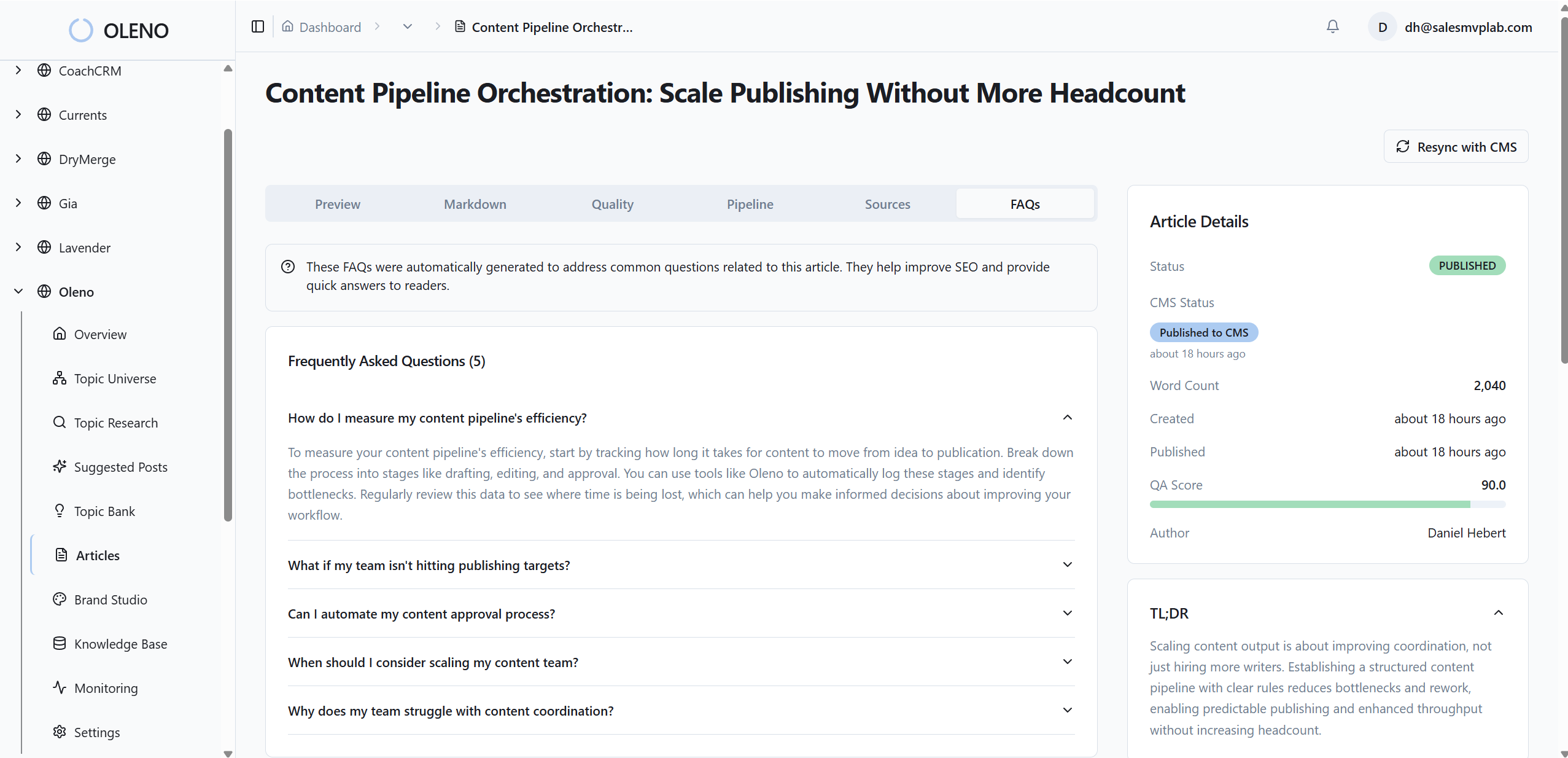
Oleno keeps the narrative clean and the on‑page structure predictable. Your team applies site‑wide JSON‑LD patterns knowing the content shape is stable. For guidance on the schema side, anchor to Google’s docs and validate before you roll changes: Intro to structured data.
Internal linking and topic coverage around the tool
Oleno determines what content should exist and generates briefs with internal linking opportunities, so your supporting pieces funnel authority into the tool and its result pages. Create spokes like “how to interpret [result],” “cost factors,” and “methodology,” then link systematically from relevant articles and product pages. No more orphaned tools.
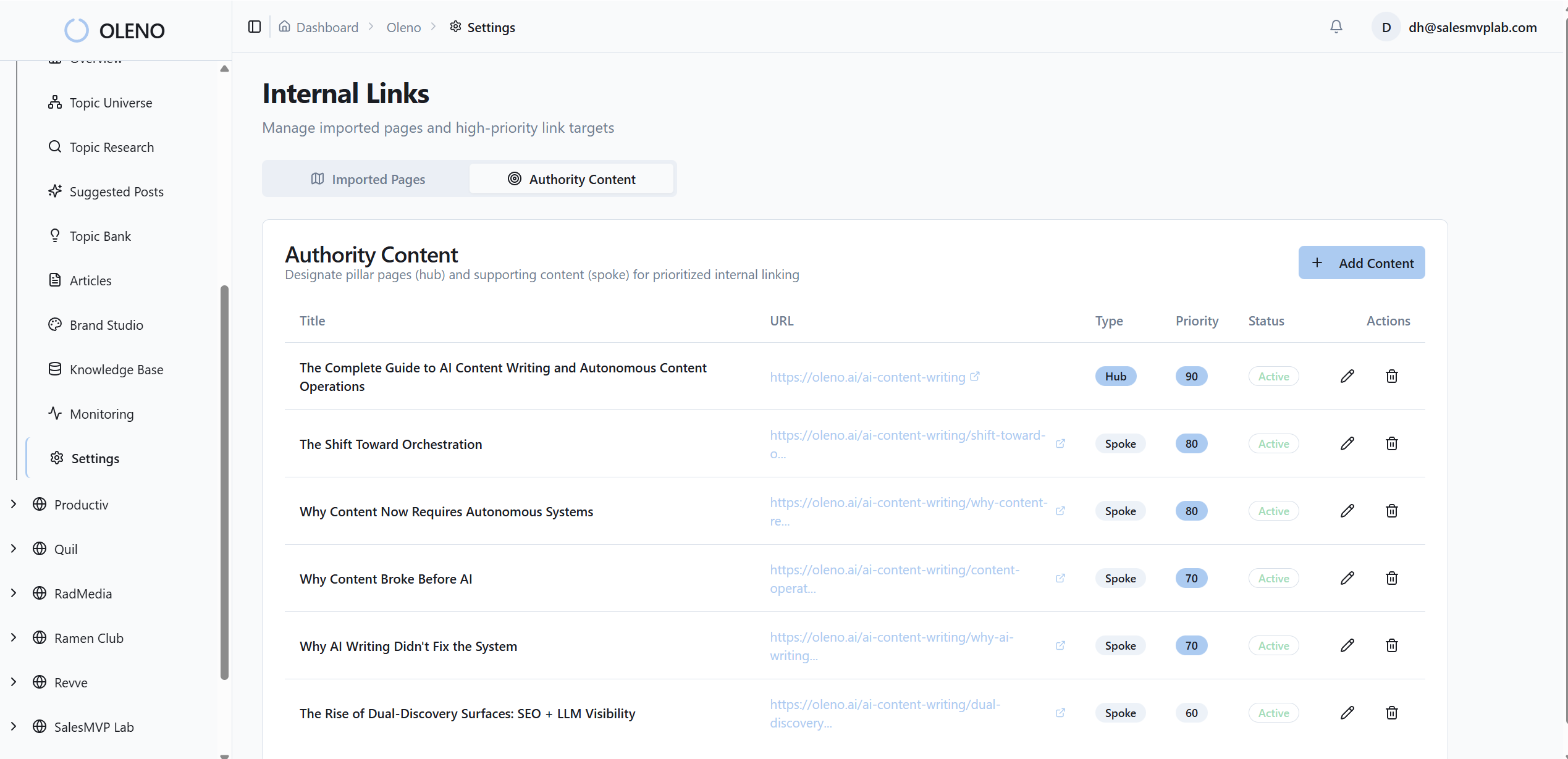
Topic discovery prevents duplicate efforts and identifies gaps you can fill with adjacent content. Over a few weeks, you get a cluster that earns links on its own and consistently points back to the tool.
Publish supporting content reliably to your CMS
Oleno publishes directly to WordPress, Webflow, HubSpot, Storyblok, and more, draft or live. Idempotent publishing prevents duplicates and broken permalinks. That means your explainer posts, FAQs, and launch narratives arrive on schedule, in your voice, without manual copy‑paste.
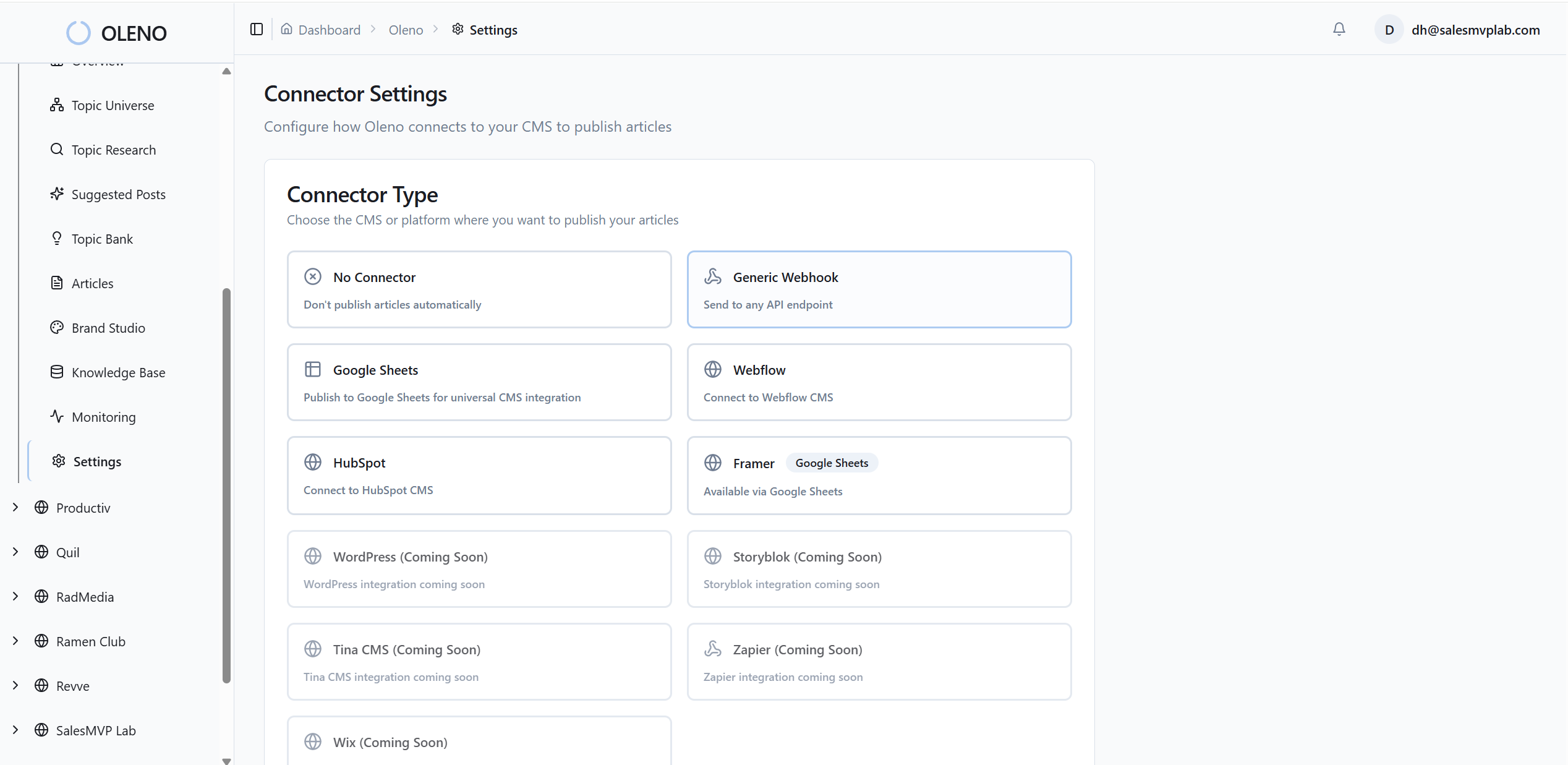
Quality isn’t a suggestion here. Every article passes an automated QA gate for structure, voice, SEO placement, LLM readability, and knowledge‑base grounding before it ships. The outcome isn’t “more content.” It’s a dependable cadence of on‑brand assets that guide people from the tool to the next step.
Want to see the system support your tool launch without adding headcount? Try Generating 3 Free Test Articles Now
Conclusion
You don’t need another guide that says the same thing as everyone else. You need assets that answer a specific question, produce a trustworthy result, and can be cited with a link. Build the tool like a product, deterministic, indexable, fast, and surround it with a system that publishes the right content, reliably. Your articles stop plateauing. Your micro‑tools keep earning. And your team stops rewriting what should’ve been designed right the first time.
About Daniel Hebert
I'm the founder of Oleno, SalesMVP Lab, and yourLumira. Been working in B2B SaaS in both sales and marketing leadership for 13+ years. I specialize in building revenue engines from the ground up. Over the years, I've codified writing frameworks, which are now powering Oleno.
Frequently Asked Questions