Jobs-as-Code for Content: Versioned Pipelines to Run Continuous Output
Treating content as ad‑hoc tasks is why pipelines break. Jobs-as-code for content fixes that by turning every repeatable task into a versioned spec that runs the same way every time. Instead of more meetings, you get fewer. Instead of more editing, you get fewer rollbacks. I learned this the hard way, scaling output without a system. It looked busy. It wasn’t leverage.
If you want a steady cadence without burning your team out, you need jobs, specs, and gates. Not more prompts. Not more tools. A small team can feel big when their work runs like code. That’s the punchline. And it’s why I keep pushing jobs-as-code for content with every client I coach.
Key Takeaways:
- Jobs-as-code for content replaces ad‑hoc tasks with versioned, repeatable job specs
- Minimal job spec: intent, inputs, locked outline, acceptance criteria, QA rules
- CI pipeline for content: linting, grounding, claim checks, publish only on pass
- Rollback and audit shrink coordination, cut rework, and prevent narrative drift
- Versioned jobs unlock traceability, safer A/B rollout, and faster iteration
- Expect 40–60% less manual coordination and 50–70% fewer quality rollbacks when you make this shift
Why Jobs-as-Code for Content Beats Ad-Hoc Execution
Jobs-as-code for content wins because it removes variability from the critical path, then enforces quality before anything ships. You encode how work should run, you version it, and you route every piece through the same checks. Think pipeline, not project. Think system, not sprint.
Ad-hoc work creates coordination debt
Ad-hoc execution feels fast at first, then slows everything down. Every new piece restarts the debate about voice, structure, and sources. You trade speed for judgment calls, then judgment calls for meetings. The debt compounds. The worst part is you can’t see it in your tools, only in your calendar.
What I’ve seen work is simple. Write down the job. Make the spec the single source of truth. Decide what inputs are allowed, what outline is locked, what claims can pass, and what must block. If your team can’t point to a spec, they’ll point to each other. That’s how drift starts, and it shows up everywhere.
Versioned jobs let you scale without meetings
Versioning is the unlock. When the spec changes, you bump the version. Old jobs finish on their version, new jobs start on the new one. No midstream arguments. No “which template did you use” moments. You get traceability by default, and you stop relitigating choices in Slack.
A simple pattern I like:
- Lock the outline and headings for each job type
- Freeze claim boundaries and product truth at draft time
- Require QA pass on voice, structure, and grounding before handoff
The Real Bottleneck: Coordination Debt, Not Writing Speed
The real bottleneck is coordination, not drafting speed. Drafts are cheap. Reviews, re-briefs, and approvals are expensive. Without a system, every new contributor adds context gaps, and context gaps add rework. Speed masks the cost for a bit. Then the backlog hits.
Where the debt comes from
Debt starts with missing guardrails. Writers don’t have product boundaries. PMM’s nuance never makes it into the brief. Stakeholders jump in late and change direction. You patch it with heroic edits and late nights. It repeats because nothing upstream changed. You feel busy. You’re actually bleeding time.
Coordination debt also hides in tools. Docs live in too many places. Voice rules are in someone’s head. Approvals live in email. Every handoff loses signal, and only a few people can fix it. That centralizes power and slows publishing. It’s a fragile way to run.
What changes when you treat work like code
When you adopt jobs-as-code, the conversation changes. You don’t debate the piece. You improve the job. You update inputs, rules, and acceptance criteria, then re-run. People stop guessing the standard because the standard is encoded. Consistency improves because the pipeline enforces it, not a heroic editor.
You also earn the right to measure. Failed QA means a job or input issue, not a person issue. That’s a better place to coach from. It’s calmer too.
The Hidden Cost of Manual Pipelines Without Jobs-as-Code
Manual pipelines waste hours you can measure, create rollbacks that erode trust, and cause missed coverage that kills compounding. You feel the pain in your calendar, your Monday standup, and your funnel. Without jobs-as-code, you’re paying a tax on every piece.
Time loss you can measure
Context switching alone is brutal. Research from Gloria Mark at UC Irvine shows it takes about 23 minutes to recover after an interruption, which adds up fast across a week of reviews and edits. You see it when pieces bounce between PMM and content, then back to the writer. Every bounce resets focus and burns time. That’s pure waste.
It’s not just time. It’s momentum. When a job stalls waiting on voice fixes or product claims, everything behind it bunches up. The team loses the rhythm that produces great work. And once momentum breaks, your calendar starts to fill with status updates, which don’t fix the root cause. They just eat the day. You can feel the drag.
Reference if you want to go deeper: [Gloria Mark’s research on interruptions].
Quality rollbacks and brand risk
Rollbacks look like fixes, but they’re expensive failures. You ship a draft, leadership flags off‑brand language, and you rewrite whole sections. That rewrite changes meaning, and now product wants a say. You haven’t improved quality. You’ve created a second, parallel creative process after the fact.
The brand risk is quiet but real. Inconsistent vocabulary confuses readers. Overreaching claims create legal reviews you didn’t plan for. One overstatement in a comparison post can set you back weeks. That is preventable if you set product truth and claim boundaries upstream, then block on them, especially when evaluating jobs-as-code for content.
Missed coverage and lost compounding
Thin coverage kills compounding. You skip topics because each one feels heavy to produce. You chase new ideas instead of deepening clusters you already own. The result is a shallow library that never gets cited by AI systems or linked by humans. You worked hard, and you still lose.
You can reverse this with a pipeline that prefers coverage, not novelty:
- Prioritize job types that expand clusters you already rank for
- Reuse approved definitions and voice blocks across pieces
- Run refresh jobs on aging content with the same QA rules
What Constant Rework Feels Like To A Marketing Team for Jobs-as-code for content
Constant rework feels like running with a parachute. You’re moving, but you’re dragging weight you can’t cut. The week starts with good intent, then vanishes into edits, approvals, and last‑minute rewrites. People get tired. Leaders lose the plot. The engine stops feeling like an engine.
Late-night edits and vague feedback
You know the drill. It’s 9:30 PM, and you’re rewriting an intro because someone said it “doesn’t sound like us.” You hop between tabs, hunting for the right phrase. The feedback isn’t wrong, but it’s not actionable. You fix the sentence, not the system. Next week, same note, new piece.
I’ve been there more times than I care to admit. The fix wasn’t talent. It was upstream clarity. Once voice, terms, and no‑go phrases were encoded, those notes disappeared. Not overnight, but fast.
Leaders lose trust in the engine
When content is unpredictable, leaders stop trusting dates. You defend quality. They hear delay. The team goes defensive. That’s a bad loop to sit in. Trust comes back when the pipeline reduces variance. Jobs finish on their version. QA blocks real risks. Review becomes spot checks, not rewrites.
You want leadership saying yes to more bets. Predictability earns that.
How To Implement Jobs-as-Code for Content
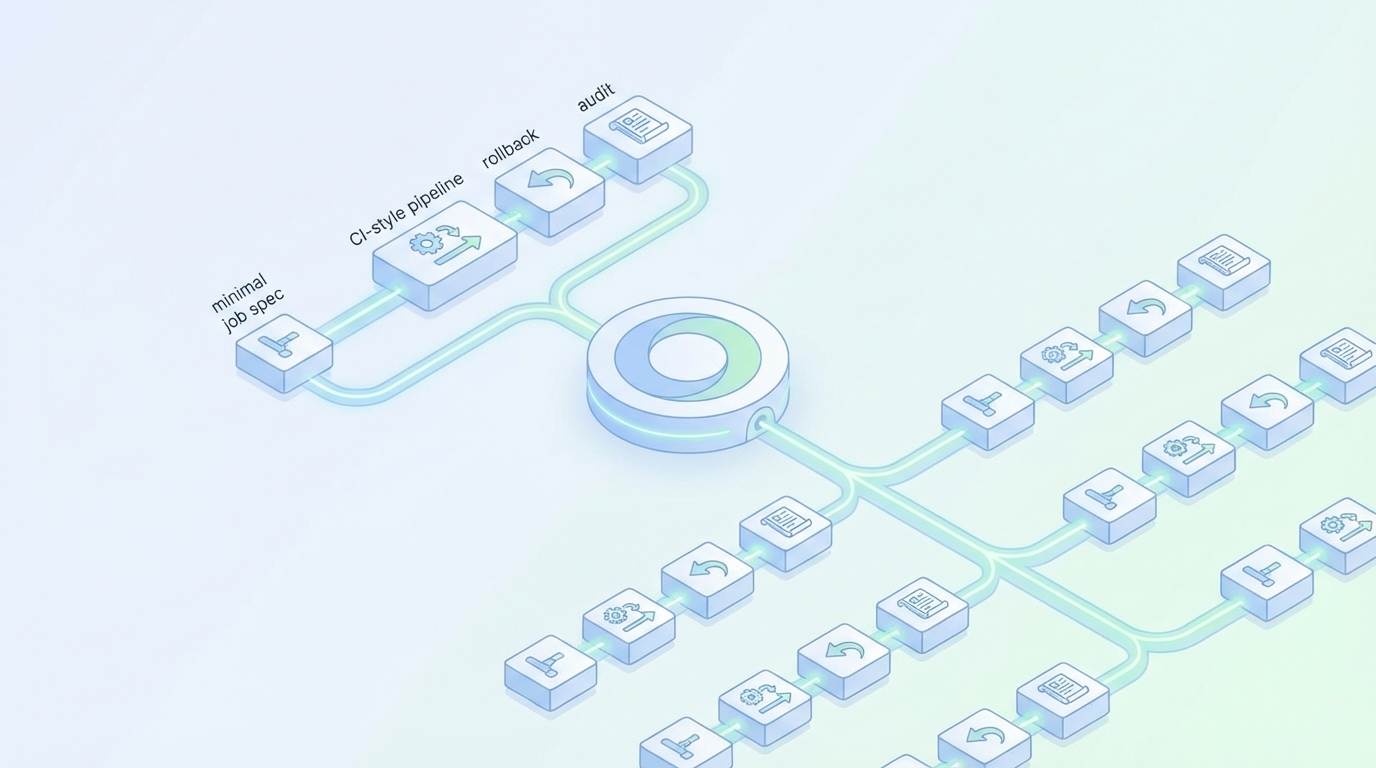
You implement jobs-as-code by writing a minimal job spec, wiring a CI-style pipeline around it, and adding rollback plus audit. Start small. One job type. One pipeline. Get it reliable, then multiply. You’ll feel the difference in two weeks.
Write a minimal job spec
A good spec is short, clear, and findable. It encodes intent, inputs, outline, claims, and acceptance criteria. Writers don’t guess. Reviewers don’t invent standards midstream. Everyone sees the same truth before work begins.
Keep it production-ready, not perfect. You’ll version it as you learn. Here’s a simple sequence to ship v1:
- Define the job’s purpose and the audience in one paragraph
- List required inputs, allowed sources, and banned sources
- Lock the section outline and H2/H3 claim pattern This is particularly relevant for jobs-as-code for content.
- Write acceptance criteria, including voice, grounding, and SEO rules
Build a CI-style content pipeline
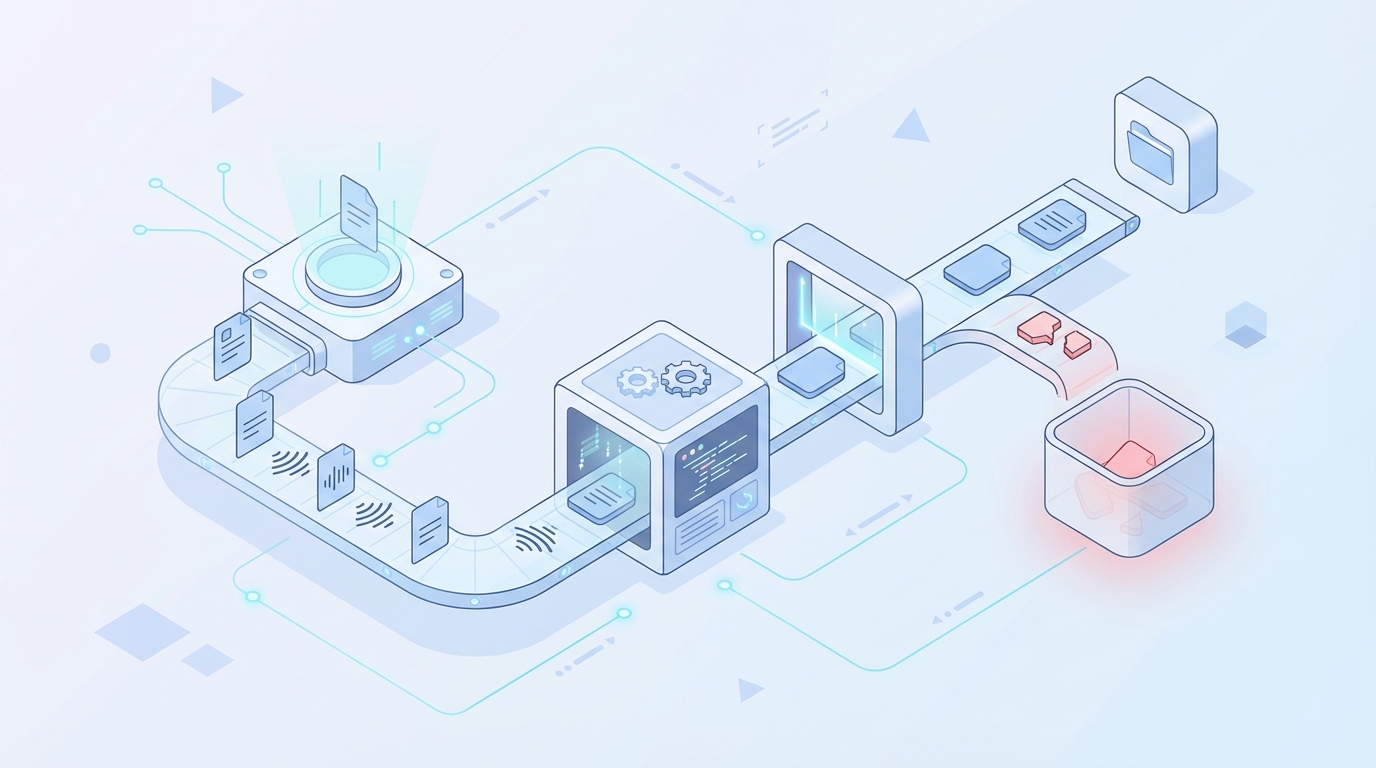
Treat content like software moving through checks. That mindset forces clarity. Lint for structure. Check voice against examples. Ground claims in approved sources. If it fails, it doesn’t move. No exceptions. You’ll publish less in week one, then more forever.
CI/CD isn’t just for code. The pattern translates cleanly to content. If you want a primer on the model you’re borrowing, read AWS’s definition of CI/CD. The idea is the same: automate the checks that humans are bad at doing consistently.
Add rollback and audit
Rollbacks are guardrails, not punishments. If a piece fails after publication, revert and log the reason. Then fix the spec or the pipeline, not just the article. Audits keep you honest. Sample work weekly, look for drift, and tune the rules. That loop tightens quality faster than any meeting.
Practical moves that work:
- Keep a change log on the job spec with who, what, and why
- Tag failures by root cause, then fix the cause in the pipeline
- Review diffs against voice exemplars, not memory
Ready to cut coordination time in half? Request A Demo.
How Oleno Operationalizes Jobs-as-Code for Content
Oleno makes the jobs-as-code approach real by encoding voice and product truth as governance, running deterministic pipelines, and blocking anything that fails quality gates. You set the rules once. Oleno applies them at brief, draft, and QA, then keeps cadence steady without extra headcount.
Governance as code, not guidelines
Guidelines drift. Governance holds. Brand Studio centralizes tone, vocabulary, CTA rules, and exemplar snippets so every draft sounds like one company. Product Studio stores approved features, limits, and claims so content stays accurate without guesswork. Audience & Persona Targeting merges segment language and use-case context into briefs and drafts, so pieces resonate instead of reading generic. Knowledge Archive grounds generation in your real sources, which kills hallucinations and cuts research time.
Put together, this is governance as code. Not memos. Not tribal knowledge. The system loads these constraints automatically at the right stages, and QA scores outputs against them.
Deterministic pipelines and quality gates
Programmatic SEO Studio runs locked-outline jobs from topic through publish, so acquisition content scales without resets. Topic Universe maintains a rolling pipeline of high-fit topics, which means coverage grows intentionally. The Orchestrator schedules jobs to your quotas, executes the steps in order, and keeps work moving. Quality Gate evaluates voice, structure, grounding, and clarity before anything reaches review. If a piece fails, it’s auto-revised or blocked. No manual triage pile.
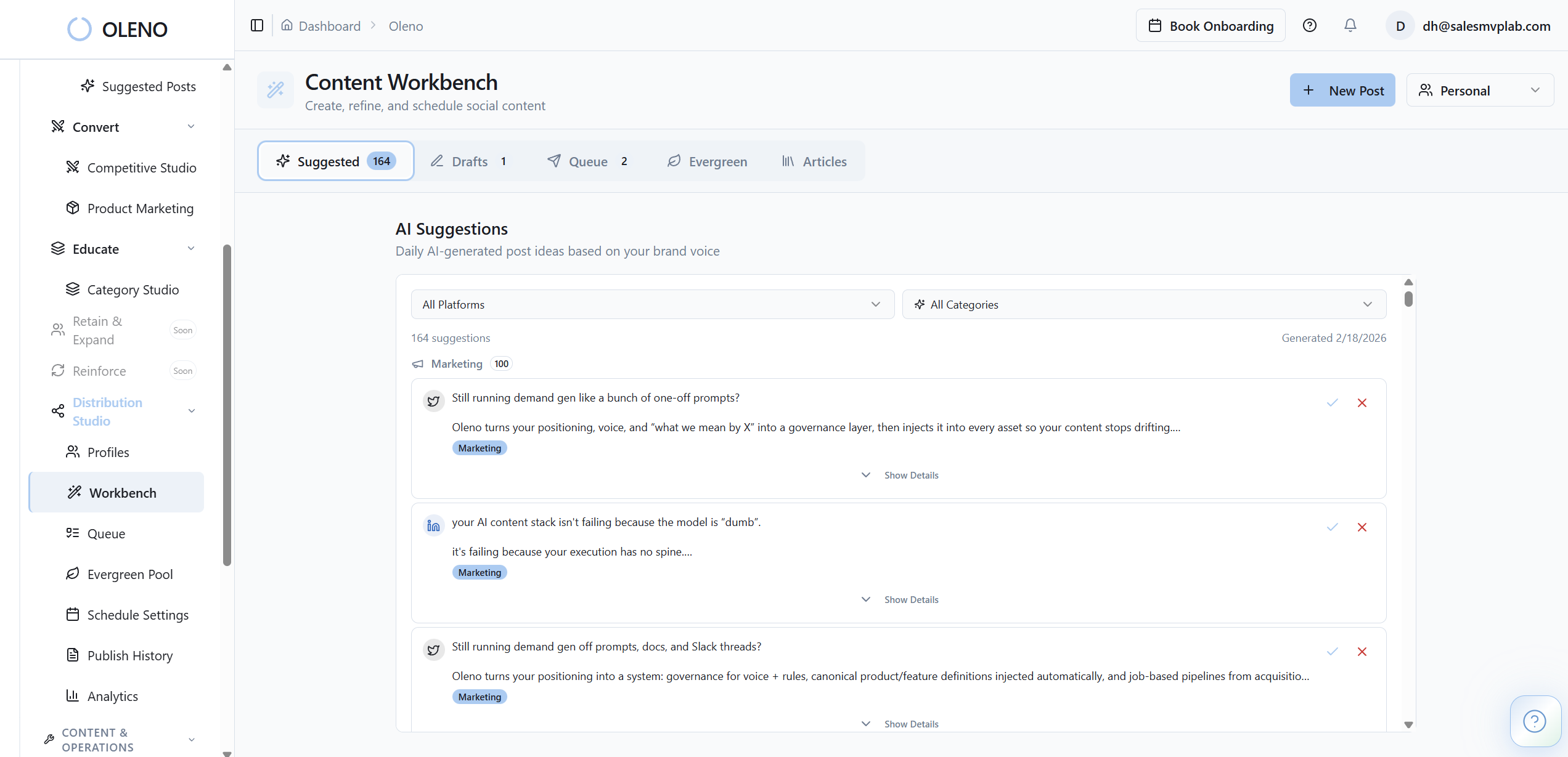
You get fewer meetings, fewer rewrites, and a steadier cadence. That’s leverage. Not luck.
Proof in cadence and safety
You can see the system working. The Executive Dashboard shows output trends, quality scores, and coverage gaps, so leaders get signal without micromanaging. Distribution & Social Planning turns published articles into platform-ready posts, keeping the downstream rhythm going without new workstreams.
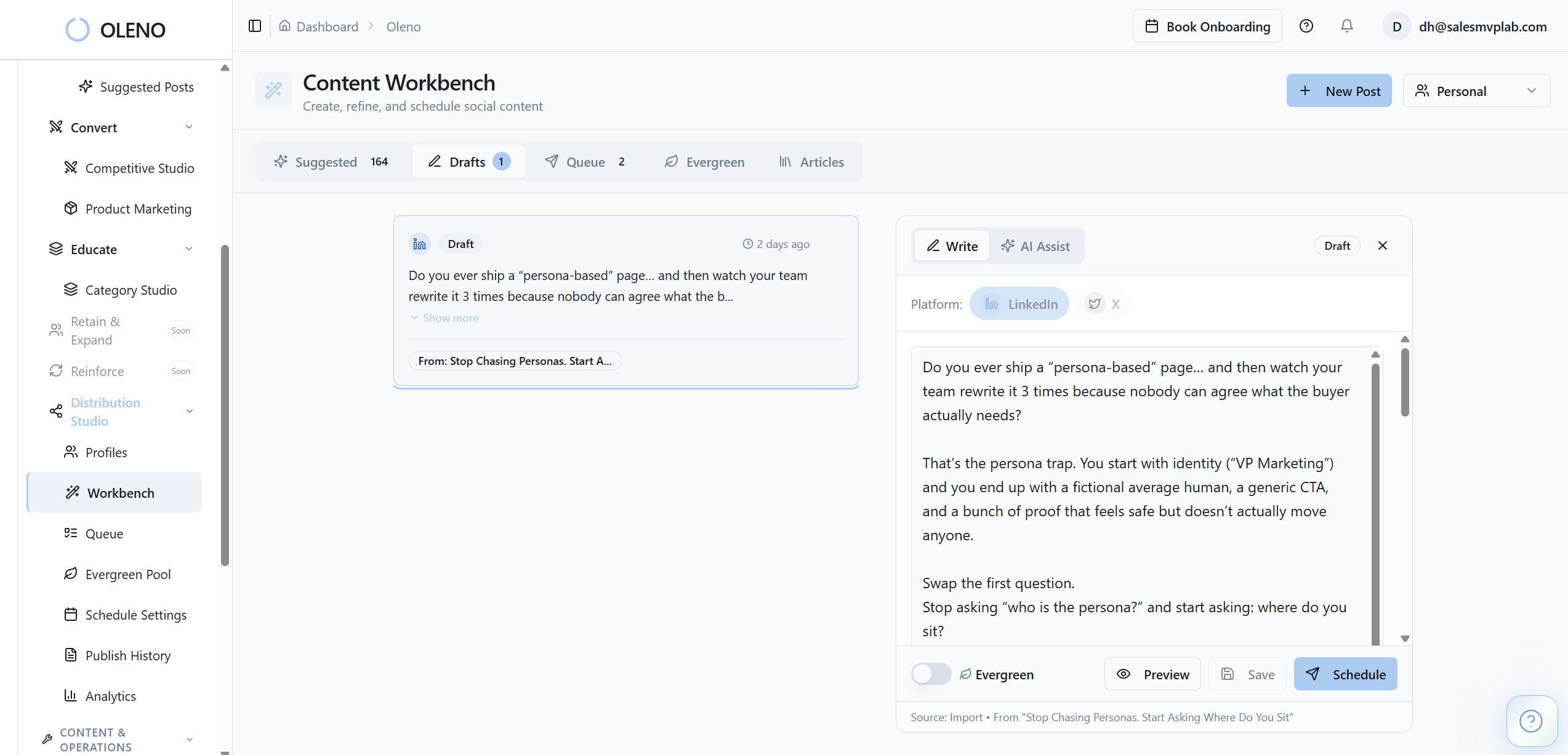
Remember the costs above, the bounces, rollbacks, and missed coverage. Oleno attacks those directly. Teams routinely cut manual coordination by 40–60% and reduce quality rollbacks by 50–70% once governance, pipelines, and gates are in place. That’s the jobs-as-code payoff.
3x steadier cadence, fewer edits, safer claims. That’s what Oleno delivers. Request A Demo.
Conclusion
Jobs-as-code for content turns chaos into a system you can trust. You write the spec, wire the checks, and let the pipeline carry the weight. Coordination drops. Quality rises. Cadence stabilizes. Most teams never lack ideas. They lack a way to run those ideas the same way every time.
If your goal is predictable publish reliability and compounding coverage, start here. Minimal specs, CI checks, rollback, audit. Then scale. You’ll feel it first in your calendar, then in your results. Want to see the Orchestrator run your pipeline end to end with governance and gates already wired in? Book A Demo.
About Daniel Hebert
I'm the founder of Oleno, SalesMVP Lab, and yourLumira. Been working in B2B SaaS in both sales and marketing leadership for 13+ years. I specialize in building revenue engines from the ground up. Over the years, I've codified writing frameworks, which are now powering Oleno.
Frequently Asked Questions