Legal‑Safe Content Governance: Fast Legal Review Pipeline for Marketers

Legal reviews slow content velocity not because lawyers move slow, but because we throw everything at them without a filter. We treat a casual benefits paragraph and a regulated promise like the same legal risk. They aren’t. So the queue bloats, cycle times stretch, and launches wobble.
I’ve been on both sides of this. As the sole marketer, I could move fast until approvals piled up. As a sales leader, I watched great content stall on a single phrase. The fix isn’t “faster legal.” It’s a system that routes based on risk so everyone works on what matters.
Key Takeaways:
- Build a claim taxonomy and triage rubric so low-risk items auto-pass and high-risk items get focus
- Encode governance as rules inside your workflow, not PDFs nobody remembers under pressure
- Standardize submissions with evidence and jurisdiction metadata to cut back-and-forth
- Automate low-risk checks in your CMS to reduce legal volume without increasing risk
- Set SLAs, escalation paths, and a known fast-track to protect critical dates
- Use versioning and rollback so last-minute edits don’t create tomorrow’s risk
Why Legal Reviews Slow Down Content Velocity
Most teams slow down because everything goes to legal by default, regardless of risk. A basic claim and a forward-looking statement shouldn’t wait in the same line. Create clear risk paths so lightweight checks handle routine content and counsel focuses on true risk. For example, a new blog with approved language shouldn’t block a product launch.

The Real Bottleneck Is Triage, Not The Lawyers
The queue isn’t long because legal is unhelpful. It’s long because we hand them a mixed bag with no labels attached. When everything is “urgent,” nothing is. The move is to design a simple gate first, then route on risk. That takes sorting work out of inboxes and puts it where it belongs, upstream.
Teams that implement triage quickly learn two things. First, a surprising share of the workload is low risk and can be handled by automated checks against approved language and product truth. Second, high-risk claims finally get the uninterrupted attention they deserve. This is how you shrink average response times without asking counsel to work nights. It’s system design, not heroics.
What Is A Claim Taxonomy And Why Does It Matter?
A claim taxonomy is your shared language for risk. You define types, product truth, market comparisons, regulated promises, forward-looking statements, and tie each to substantiation and review rules. Now creators know what evidence to attach while drafting. Legal knows exactly what to look for. And low-risk items can auto-pass on rules.
This is where “governance as rules” earns its keep. You encode the taxonomy into templates and validators, so a comparative claim gets flagged and routed, while a routine explainers post cruises through with a light touch. The taxonomy removes debate about “is this risky?” by making the criteria explicit. It’s clarity, not control for control’s sake.
Why Blanket Review Policies Create Avoidable Queueing
“All content goes to legal” sounds safe on paper. In practice, it floods the queue with routine items and creates batch spikes around launches. The cost isn’t just time, it’s rework. People tinker while waiting, introduce new claims, then restart the clock. You end up with more risk, not less.
Shift to “what must be reviewed, what can ship after checks.” Add exceptions for regions and mediums. Two side effects emerge fast: cycle time drops, and counsel’s focus improves. If you need a primer on the building blocks of content governance, this overview from Contentful on what content governance is is useful context. A policy that routes risk, not volume, is the real safety net.
Ready to see a risk-tiered flow in action? We can walk you through a working pipeline. Request A Demo.
The Missing Piece Is A Risk-Tiered System, Not More Reviews
A risk-tiered system separates writing from legal burden by embedding risk signals into the workflow. Templates flag claim types. Validators enforce evidence rules. Low-risk items clear automatically, while high-risk ones route with full context. An example: a product feature blurb uses approved language and ships; a competitive comparison gets counsel time.

What Traditional Workflows Miss About Claim Variability
Most workflows treat every sentence like it has the same risk profile. That’s how you end up reviewing everything. It’s also how you slow down. A benefits paragraph that mirrors approved product truth shouldn’t compete for legal time with a forward-looking statement about roadmap.
Decouple content structure from claim risk. Use templates that capture the exact claim text and flag the type inline. Include evidence slots so marketers attach substantiation while they write. The writing experience stays fluid, while the system quietly layers in the metadata counsel needs to make fast, confident calls.
The Hidden Complexity Behind Substantiation And Jurisdictions
A harmless line in one region can be restricted in another. That’s the trap. If jurisdiction metadata isn’t captured at the claim level, regional exceptions hit you at the worst time, right before publish. The fix is to map claim types to local rules and sources, then have the pipeline apply the right checks per region.
It sounds bureaucratic. It’s actually what keeps momentum. When the system knows “this claim in this region needs this qualifier,” it either passes or routes with everything legal needs attached. Guidance from tools like Templafy on content governance can help teams formalize those basics. The payoff is fewer frantic edits and no last-minute surprises.
How Governance-As-Rules Shifts The Workload Left
Governance stuck in PDFs is invisible during drafting. Governance encoded as rules gives instant, actionable feedback. Blocklisted phrases are highlighted. Missing citations are flagged. Unapproved product claims are stopped at the source. Legal becomes the last line of assurance, not the first line of QA.
This is the mindset shift. You don’t ask people to remember rules while the clock is ticking; you put the rules where they work. When creators see pass/fail reasons and suggested rewrites in-line, they keep moving. Fear recedes because the boundaries are clear and helpful, not hidden and punitive.
The Costs You Can Measure When Everything Waits For Legal
The costs show up in days, dollars, and trust. Wait time extends campaign timelines, revisions create rework, and last-minute edits fuel compliance debt. A simple dashboard, wait time, revision rounds, slip rate, makes the tradeoffs visible. One example: a 4-day legal wait plus 2 days of revisions multiplies quickly across a 20-asset month.
Time Lost And Campaign Slip Risk, A Simple Math Example
Let’s pretend you publish 20 assets per month. Average legal wait is 4 days, revisions add 2 more. That’s 120 asset‑days of delay. If each asset connects to 0.2 opportunities on average, your quarter just stretched, pipeline included. You can argue the inputs; you can’t argue the arithmetic.
Track three numbers: average legal wait, revision rounds per asset, and slip rate on planned publishes. If you prefer a broader operational lens, thinking in terms of avoiding “content chaos” as described by dotCMS is a good frame. The moment you see the deltas between risk tiers, prioritization gets easier.
The Cascading Impact On Trust, Brand, And Compliance Debt
Slow reviews train teams to bypass policy or ship changes at the last minute. That’s how inconsistent claims sneak in. Over time, those mismatches become audit findings and escalation headaches. Compliance debt rarely screams day one. It compounds, then bites when the stakes are high.
The counterintuitive truth: speeding up the low-risk path increases safety. Counsel spends their time on the few items that truly need it. The system catches routine risks automatically. Your brand voice stays intact because writers aren’t hacking sentences at 6 p.m. to beat a deadline. It’s calmer, yes, but more importantly, it’s cleaner.
Where Manual Back-And-Forth Burns Legal Hours
Ping‑pong tickets happen when submissions are incomplete. Emailed screenshots, missing sources, unclear claim owners, it’s all avoidable. Standardizing submissions with required fields and validators upstream turns “What is this?” into “Approved.” Legal hours shift from deciphering to deciding.
Make submission rules explicit and friendly. Require exact claim text, region, source link, product truth reference, owner, and desired publish date. Push automated validators before tickets are created. You’ll see fewer tickets, cleaner tickets, faster decisions. The calendar thanks you. So does counsel.
Still managing review queues by email threads? There’s a better way to operate week after week. Request A Demo.
The Human Side Of Waiting On Approvals
The rational costs are real. The emotional ones drive behavior. Teams lose confidence when one phrase stalls a launch. People ship edits at 3 a.m. and create tomorrow’s risk. The fix is predictable paths, visible checks, and the ability to roll back safely. Confidence is an operational outcome.
When A Launch Freezes On A Single Phrase
We’ve all watched a comparative line stall a campaign. The team rewrites under pressure, versions get muddled, and someone suggests a “quick fix” that invents a new risk. One sentence held the date hostage. Not fun.
Predefine alternatives for high‑risk phrasing and publish a fast‑track with time‑boxed legal response. When the path is known, decisions accelerate without compromising review. The message stays intact because you’re swapping in an approved alternative, not improvising. The payoff isn’t just speed, it’s stability under pressure.
The 3am Fix That Creates A New Risk Tomorrow
Last‑minute edits without governance often invalidate earlier approvals elsewhere. You fix one phrase and accidentally break a qualifier on a related page. Now you’ve got two problems, today’s and tomorrow’s. The remedy is boring and powerful: treat publishing like a release, not an upload.
That means versioning, approvals tied to specific text, and a rollback plan you can execute in minutes. If a claim changes post‑approval, you revert confidently, not surgically. It’s how you stop “emergency” from becoming your team’s default operating mode. Your future self approves this message.
How Do You Keep Creators Moving Without Fear?
Creators move faster with guardrails than with guesswork. Show pass/fail checks in the editor. Explain why something fails and provide a suggested rewrite. Give an evidence checklist so sources are attached as they write. The more feedback happens early, the less fear shows up late.
Tools that enforce governance visibly, not just silently block, change the tone of the work. People stop asking, “Will legal like this?” and start seeing, “Here’s what to fix.” For a definition‑level backdrop, Acrolinx’s content governance guide is a solid primer. The goal isn’t to slow creativity. It’s to keep it in bounds without anxiety.
Build A Fast, Legal-Safe Review Pipeline That Scales
A scalable pipeline has four layers: taxonomy and triage, standard submissions, automated low‑risk checks, and clear SLAs with fast‑tracks. You’re building a decision system, not a new inbox. For example, auto‑pass low‑risk blog updates while routing comparative ads with full evidence attached.
Map Risk With A Claim Taxonomy And Triage Rubric
Start by listing every common claim type across your content. Assign each a risk tier and evidence rule. Define jurisdictions, owners, and routing logic. Low risk auto‑passes after checks; medium gets spot‑checked; high routes to counsel with a complete dossier.
Keep the taxonomy visible where people work, in templates and tickets, so it’s used, not just documented. Version it like any policy. Update rules as your product, markets, and regulatory context evolve. When the rubric is living, your process keeps pace without another reorg.
Design Submission Templates That Cut 60 Percent Of Back-And-Forth
Make a one‑page form with required fields. Include exact claim text, claim type, region, sources, screenshots, the product truth link, and the approver you need. Pre‑fill what the CMS already knows, asset URL, owner, scheduled date. Add a checklist for blocklisted terms and required qualifiers.
Two things happen fast. First, creators internalize what “ready for review” really means. Second, legal gets what they need in one pass. You’re not reinventing approvals; you’re removing mystery. Fewer clarifying emails. Cleaner decisions. Fewer slips.
Automate Low-Risk Checks In Your CMS And Docs
Add validators for banned phrases, required qualifiers, and source presence. Detect comparative claims and route using your rubric. Attach approved language and product truth automatically where it applies. Run these checks before a legal ticket even exists.
The outcome is a thinner queue that’s richer in context. Low‑risk content publishes on SLA without human review. High‑risk items hit counsel with everything attached. No heroics. No guessing. Just a pipeline doing what pipelines do.
Define SLAs, Escalation Paths, And Emergency Fast-Tracks
Publish a simple SLA per risk tier. Add auto‑escalation when a timer hits. Maintain a rota for on‑call counsel and a known emergency path with criteria, not vibes. Track KPIs like legal wait time, blocked publishes, and legal hours saved so you can tune rules, not just behaviors.
Review performance monthly. If cycle time spikes, ask whether rules or taxonomy need adjustment. If escalations climb, inspect submission quality. This is a system you steward, not a policy you hope people remember. It gets better because you measure it.
How Oleno Enforces Governance And Speeds Legal Review
Oleno turns governance into enforceable rules, so routine content passes automatically and high‑risk claims route with full context. It centralizes product truth, applies QA gates before publishing, and publishes to your CMS with versioning and no duplicates. That’s how you get faster and safer at the same time.
Product Truth And Claim Control Make Drafts Legally Safer
Start with truth. Oleno centralizes approved product descriptions, boundaries, and allowed claims, then uses that source during drafting. Writers pull from accurate language by default, which lowers risk of invented features or overreach. The fewer risky edits you make later, the fewer legal cycles you need.
Because claim boundaries live in the system, not just docs, marketing works from the same baseline legal already approved. That alignment shows up as cleaner submissions and quicker decisions. It also dovetails with your taxonomy, legal defines once, creators benefit daily.
QA Gate Before Publishing Blocks Risky Content Automatically
Oleno can be configured so content does not ship unless it clears Oleno’s QA gate. Voice, narrative, accuracy, and grounding checks run on every piece, and claim‑level validators detect banned terms, missing citations, and unapproved comparisons. Low‑risk pieces auto‑pass and publish on SLA. High‑risk items route with the evidence attached.
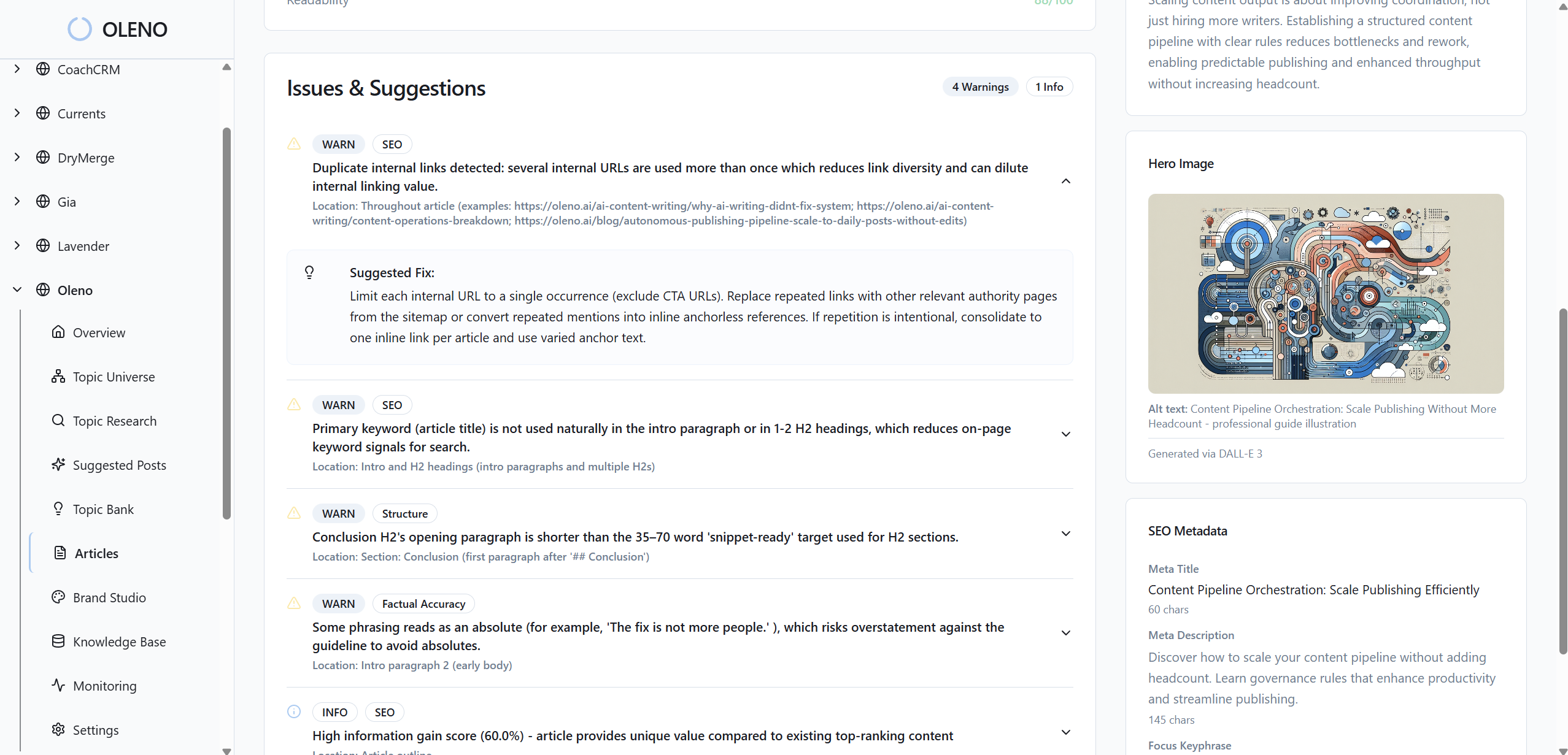
This is where you reclaim the time you lost to ping‑pong. Those 120 asset‑days of delay you modeled earlier shrink because routine checks stop creating tickets. Counsel’s attention goes to the assets that actually need legal judgment. The throughput gain isn’t theoretical, you feel it in your calendar.
Want to try the workflow with your own rules and content? Spin up a workspace in minutes. Try Oleno For Free.
CMS Publishing With Versioning And Idempotency Reduces Release Risk
Oleno publishes directly to your CMS as drafts or live without creating duplicates. Pair that with a simple rollback playbook and you treat content like code, intentional releases, fast reversions when needed, and clear provenance for audits. That’s how you avoid the 3 a.m. “quick edit” that creates tomorrow’s mess.
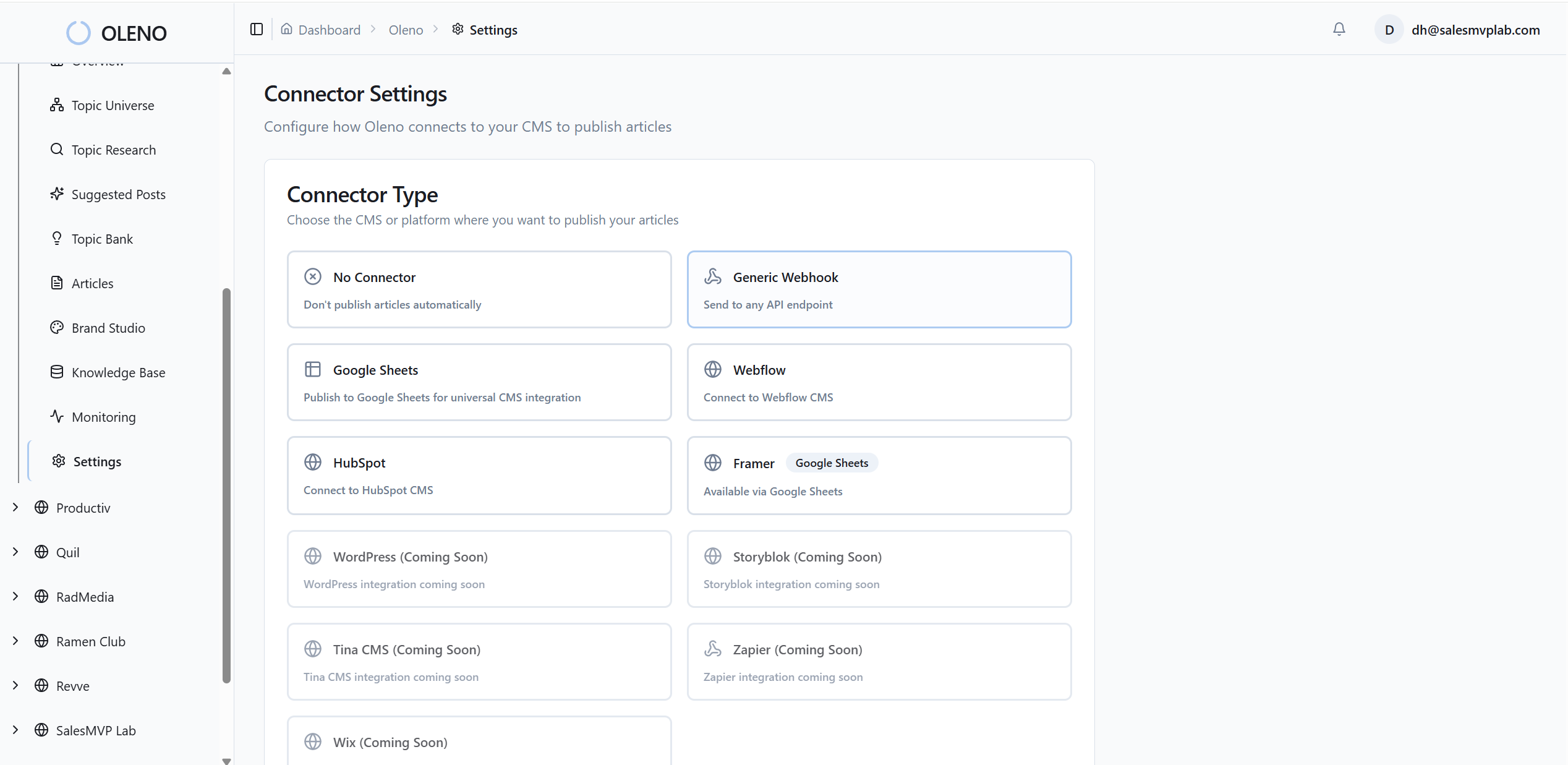
Version control and idempotent publishing matter when teams move fast. Approvals tie to specific text. If a claim changes, you know exactly what to revert and how. Operations stays predictable even when priorities shift, which they will.
Knowledge Base Grounding Reduces Rework And Review Cycles
Grounding beats guessing. Oleno lets you attach internal docs, help articles, and approved messaging as drafting context. That reduces factual drift at the source and surfaces the right citations before a ticket exists. Marketers submit cleaner claims with evidence already in place. Legal validates faster.
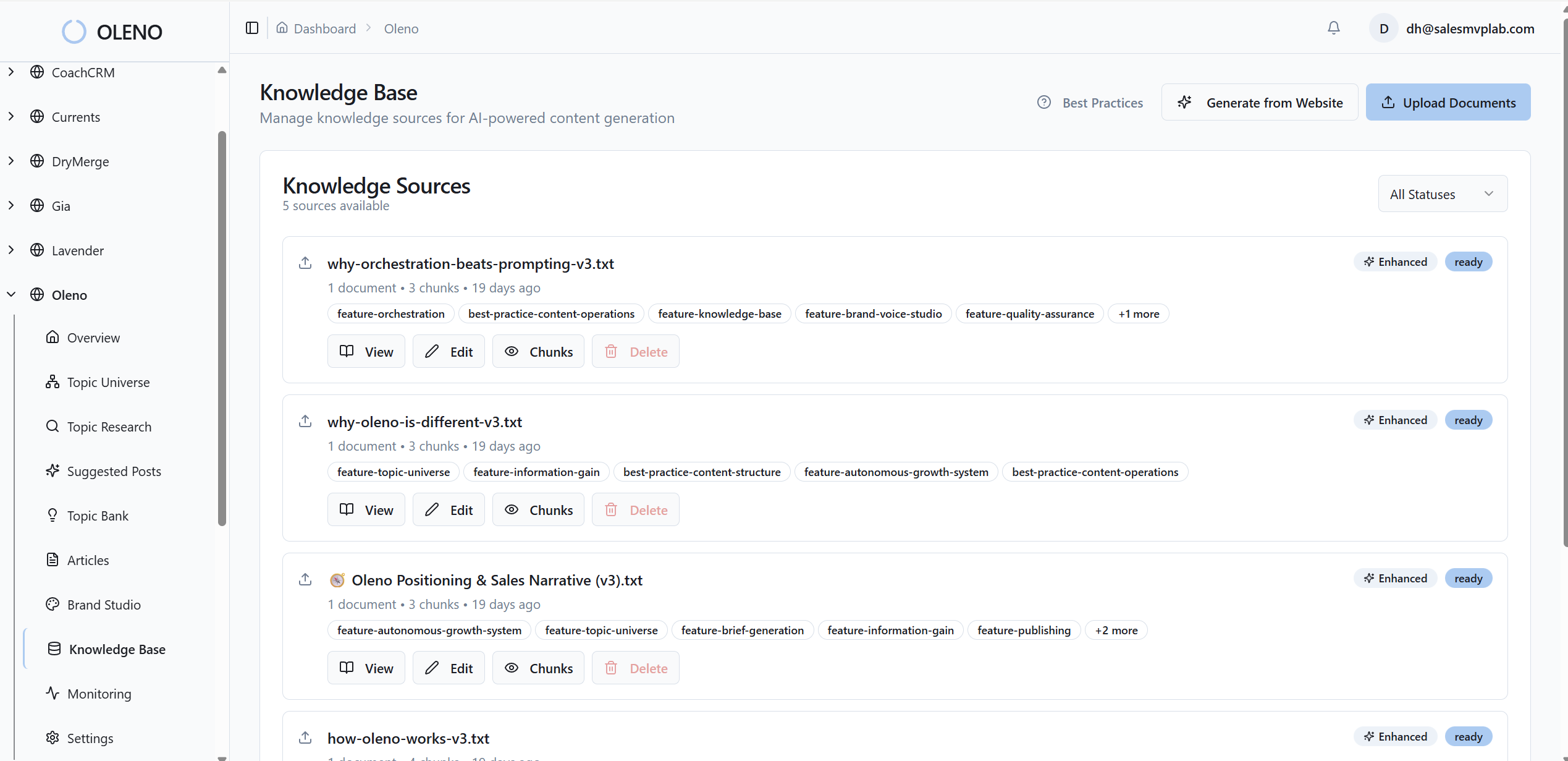
Over time, that feedback loop compounds. As your knowledge base grows, drafts get sharper and review friction falls. You’re not just moving faster; you’re building a durable system that keeps working when people get pulled into other work. Oleno shows up the same way every day.
If you want to see how governance‑as‑rules plays out across a full demand‑gen pipeline, including the legal path, we can walk through real examples from setup to publish. Request A Demo.
Conclusion
Here’s the trade: move from “all content goes to legal” to “claims flow through a risk‑tiered system.” You’ll shrink queues, protect launch dates, and give counsel time for the hard calls. Start with a taxonomy, encode rules where people write, standardize submissions, and automate low‑risk checks.
Do that, and legal becomes the last line of assurance, not the first line of QA. Your team keeps momentum. Your brand stays consistent. And when pressure hits, as it always does, you’ve got a release process, not a scramble.
About Daniel Hebert
I'm the founder of Oleno, SalesMVP Lab, and yourLumira. Been working in B2B SaaS in both sales and marketing leadership for 13+ years. I specialize in building revenue engines from the ground up. Over the years, I've codified writing frameworks, which are now powering Oleno.
Frequently Asked Questions