LLM-Powered Lead Scoring: A Playbook for Demand Gen Teams

Most demand-gen teams treat lead scoring like a checkbox. A few profile fields, a couple pageview thresholds, maybe an email click, and they call it done. The problem is those rules miss what the content says about intent. That is why llm-powered lead scoring matters. It reads the meaning inside interactions so you stop sending noisy MQLs to your SDRs.
Static systems miss nuance. A product page scroll is not the same as a pricing deep dive. Comments on a webinar Q&A say a lot more than a form fill. I’ve watched teams burn months tweaking points while reps complain about junk leads. You don’t need more knobs. You need a way to convert language and behavior into signals you can trust.
Key Takeaways:
- Map content interactions to intent, fit, and urgency so scores reflect reality, not just clicks
- Use llm-powered lead scoring to extract meaning from notes, chats, forms, and page patterns
- Calibrate with rules you already trust, then let LLMs add the missing semantic layer
- Route with SLAs, suppress the junk, and give SDRs cleaner queues in weeks, not quarters
- Monitor drift, bias, and failure modes with simple checks and weekly sample reviews
- Expect a 30–50% cut in low-quality MQLs and better SDR-to-opportunity rates in 6–10 weeks
Why Static Scoring Fails And How LLM-Powered Lead Scoring Fixes It
Static scoring fails because it treats all interactions like equal points, while llm-powered lead scoring reads the content and extracts intent. Rules catch surface behavior, LLMs capture meaning like problem severity, buyer role, and timing language. Put simply, semantics convert activity into sales-ready signals.
Static Rules Miss Intent
Rules see “visited three pages.” They don’t see the paragraph someone highlighted on your pricing FAQ that says “annual discount” or the question they asked in chat about “SOC 2 evidence.” Most teams end up with inflated scores that look good in a dashboard and feel wrong to a rep. I’ve lived that mismatch, and it drains trust fast.
Even when you add fields like company size or industry, the score still ignores what they actually said. Email replies, demo notes, webinar questions, chatbot transcripts, form free-text, all of it carries intent weight you can’t encode in a few if-then blocks. Without semantics, you reward motion, not motivation. That is the real leak.
Heavyweight Models Stall Out
Some teams swing the other way, try a year-long ML project. Data scientists get involved, sample sizes look thin, and labeling becomes a second job no one wants. The model ships late, drifts early, and still needs human guardrails. I get why leaders try it, but the cost is high and the payoff is late.
LLM augmentation sits in the middle. You keep the rules that work, then layer meaning on top, like “mentions migration timeline” or “names a competitor gap” or “asks security approval steps.” It is practical. It ships fast. And it slots into the flows you already run.
The Real Problem Behind Noisy MQLs
The problem isn’t lead scoring as a concept. The problem is scoring that ignores semantics, source credibility, and sales context. When scoring can’t tell curious from committed, SDRs waste time, marketing loses trust, and pipeline gets thin.
The Hidden Signal Is In Content
Content holds the clues. Chat logs show urgency. Form answers reveal use case. SDR notes capture objections in plain language. Product docs viewed tell you where they’re stuck. When you extract those words into structured fields, the score starts to mean something. It stops being a math trick and starts being buyer reality.
Most stacks collect this data already. It sits scattered across CRM notes, marketing automation, chat tools, webinar platforms, and CS tickets. The fix is not buying more tools. The fix is reading what you already have, then turning it into features your score can use.
Scoring Needs Semantics And Context
Semantics tells you what they mean. Context tells you why it matters. A CMO saying “we need to unify analytics before next quarter” hits very different than an intern saying “I’m exploring tools for a blog post.” Same page visits, opposite intent. Your score needs both signals if you want SDRs to trust it.
That means adding fields like “role-from-text,” “timeline-from-text,” “problem-verb-strength,” and “security-red-flags.” It also means weighting those features by funnel stage and campaign source. A pricing page view from a retargeting click is not the same as a pricing page view after a competitor-comparison page.
Judgment Belongs In The Loop, Not The Rules
Reps know when a lead feels right. Managers know when a region behaves oddly. Instead of trying to hardcode all that judgment, capture it as feedback. Mark good fits, mark misses, then teach the system what you meant. You keep control, the model learns faster, and the score gets sharper without a rebuild.
The Cost Of Getting Scoring Wrong
Bad scoring costs time, morale, and money. Reps chase dead ends. Leaders doubt marketing. Pipeline conversion drops a few points and suddenly the quarter looks shaky. You can measure that drag.
Time And Money You Can Measure
Every low-quality MQL that hits an SDR queue costs follow-up time, and those minutes multiply. If a rep spends 8 minutes per junk MQL across calls, emails, and notes, 200 junk MQLs a month is more than 26 hours gone. Sales teams already spend heavy time on non-selling work, and it adds up, as reports like the Salesforce State of Sales have shown across years, especially when evaluating llm-powered lead scoring.
Now spread that lost time across a quarter. Across two regions. Across a hiring push. You start to see why “just add more points for pricing” doesn’t move the needle. You are paying for noise.
Pipeline Health And SDR Morale
Low trust in scores pushes reps to create side lists and back-channel intel. They skip system tasks. Managers get inconsistent data. Meetings devolve into debates about what counts. I’ve seen SDRs roll their eyes at “hot leads” that bounced last week. Once that culture sets in, fixing the math is not enough. You have to show a better signal, quickly.
Data Debt That Compounds
Bad inputs today become worse models tomorrow. Notes get thin. Disposition reasons are vague. Campaign tags are sloppy. Everyone is rushing. Then you try to run a new model and realize the ground truth is missing. A smarter approach starts to capture better labels on day one, so you do not dig the same hole twice. Research from McKinsey points to marketing gains when AI augments judgment, not replaces it, which is exactly what you want here.
What It Feels Like To Chase Bad Leads for Llm-powered lead scoring
If you’ve been in this seat, you know the feeling. The calendar is full, the numbers look fine, but the deals are thin. That is what bad scoring does, and it wears teams down.
The Day In The Life
Picture a Monday. SDR opens the queue, dials three “hot” leads, and finds a student, a competitor, and a partner fishing for pricing. They log notes anyway, because they have a metric to hit. Then a real buyer emails at 4:45 pm and gets a follow-up the next morning. It is not laziness. It is triage based on a broken signal.
Leaders see activity and think volume will save the quarter. Reps feel the grind and look for shortcuts. Marketing tweaks the score again, hoping to find the magic number. Everyone is working. Progress is not.
Leadership Whiplash
One week, “We need more at the top.” Next week, “Quality only.” Then “Focus on this campaign,” followed by “Why are we ignoring inbound?” Without trustworthy scoring, strategy swings hard and often. Teams adjust, get whiplash, and stop believing the next change will help. A better signal calms the room.
How To Build LLM-Powered Lead Scoring, Safely
You can ship llm-powered lead scoring in weeks by translating content into structured signals, then calibrating with simple guardrails. Start small, use what you have, and let the score learn from real outcomes. The goal is practical lift, not a research paper.

Translate Interactions Into Signals
Start with the content you already capture. Chat logs, form answers, email replies, demo notes, and page patterns. Map each source to three buckets: intent, fit, and urgency. Pull short text spans, run a constrained LLM pass, and store outputs in new fields like “stated-problem,” “buying-timeline,” and “role-from-text.” Keep the outputs short and checkable.
Two rules help. First, prefer extraction over generation. Second, attach provenance so you can trace a score back to the sentence that drove it. When reps ask “why is this hot,” you can show the line that matters.
Calibrate With Guardrails
Pure LLM scoring without rules can drift. So keep the rules that work: ICP firmographics, blocked industries, known spam domains, required titles. Then add LLM features with capped weights. If the LLM output is missing or low confidence, the base score still behaves. If it is strong, the lift is clear and explainable.
A simple weekly loop keeps you honest:
- Sample 25 scored leads across segments
- Ask SDRs which ones felt right or wrong
- Review the text spans that drove high scores
- Adjust weights and regexes, not just prompts
Route And Learn In Weeks, Not Quarters
You do not need a giant data migration to see value. Start with one segment, one inbound source, and one SDR pod. Add intent notes to the lead layout. Route by score bands with clear SLAs. Track downstream conversion. In two to three sprints, you will see if junk volume drops and meetings improve. Tools like HubSpot’s lead scoring overview lay out the basics if you need a quick primer before layering semantics.
Ready to stop chasing junk and start routing real intent? Request a Demo, especially when evaluating llm-powered lead scoring.
How Oleno Makes LLM-Powered Lead Scoring Practical
Oleno enables the new approach by encoding governance, extracting meaning from your knowledge, and enforcing a QA gate before anything routes. You keep your scoring rules, then Oleno adds a semantic layer grounded in your brand, product truths, and audience definitions. The result is a score reps trust, tuned to your reality.

Governance Makes Scores Trustworthy
Governance is the difference between clever and credible. Oleno’s Brand Studio locks tone and term choices so extracted fields use language your team recognizes. Marketing Studio captures the point of view you want to reinforce, which shapes how intent is interpreted across content types. Product Studio keeps claims and use-case boundaries tight, so the model will not infer interest in features you do not support.
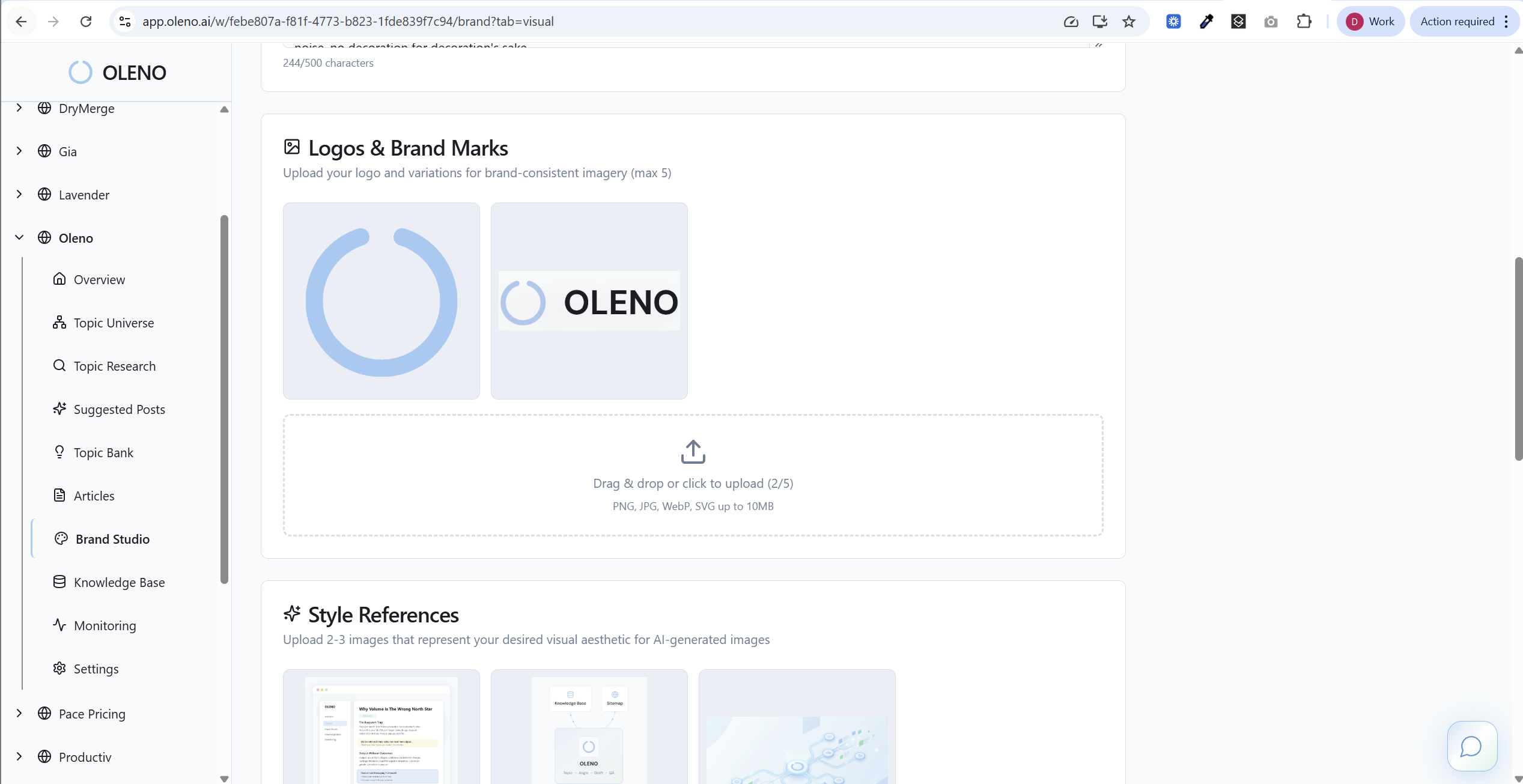
In practice, that means fields like “stated-problem” pull from your approved language, not vague summaries. It also means sensitive claims about security or compliance stay within allowed boundaries. Earlier we talked about junk time and lost trust. Governance is how you claw it back.
QA And Measurement Keep It Honest
Oleno enforces a non-negotiable QA gate. Before a scored lead routes, checks validate voice alignment, structure, clarity, and factual grounding against your Knowledge Archive. If something fails, Oleno asks for a targeted revision and re-runs checks. Measurement & System Health then tracks cadence, quality trends, and common failure patterns so you spot drift early.
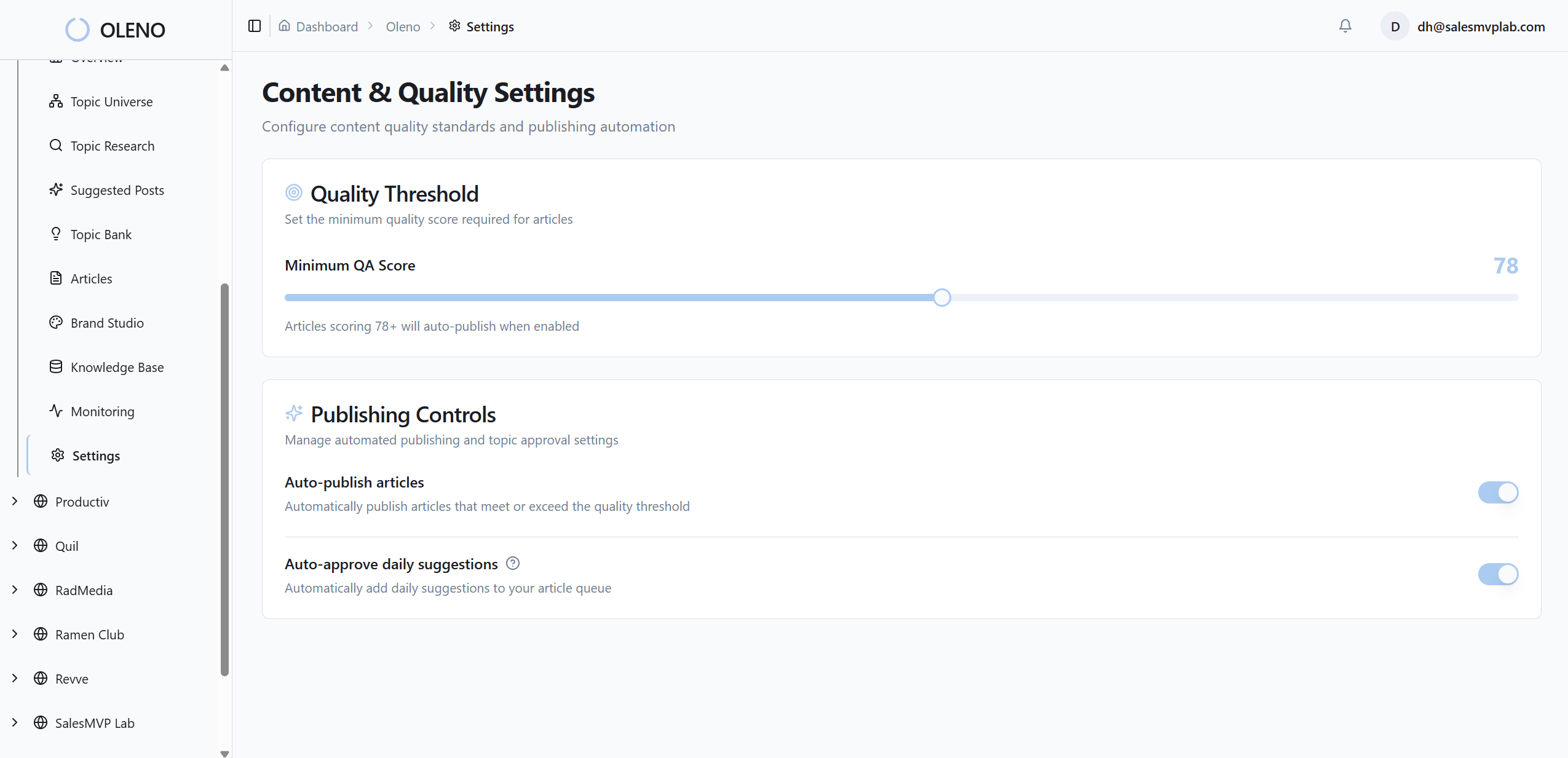
That loop matters. In Rational Drowning, we quantified the time lost to junk leads. Automated QA reduces those misses by catching bad extractions before they hit a queue, and the measurement layer shows if quality is slipping week over week. You do not guess. You see it.
Want to see governed scoring fields, confidence, and provenance right in your flow? Request a Demo.
From Signals To Sales Motion
Signals mean nothing if they do not change behavior. Oleno’s Knowledge Archive Grounding centralizes your product docs, playbooks, and customer stories, which gives the LLM concrete text to pull from. Audience & Persona Targeting ensures the extracted fields reflect who you sell to, not a generic reader. Programmatic SEO Content is not the scoring engine, but it shows how Oleno runs structured, governed jobs end to end. The same discipline applies here.
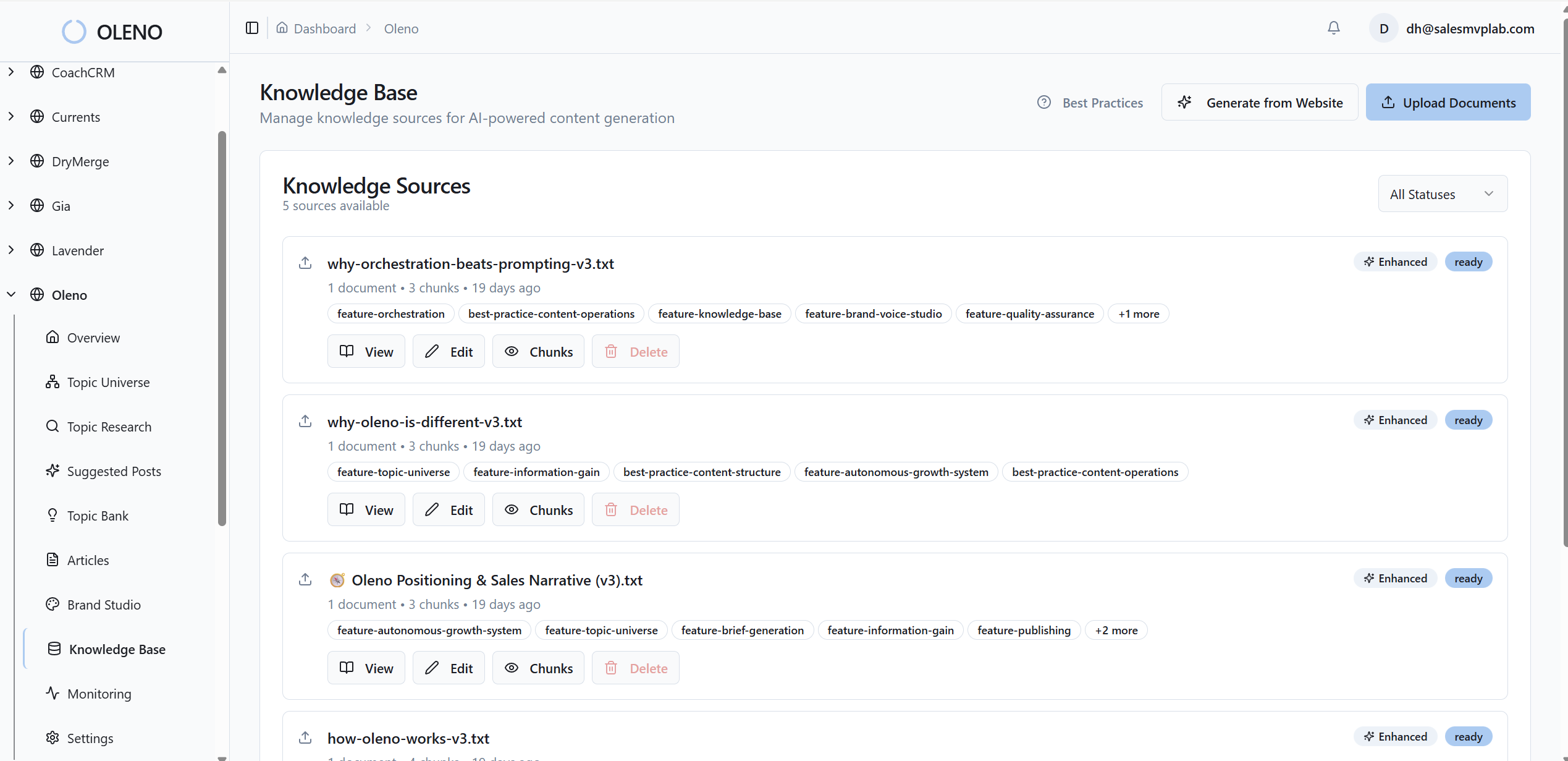
Put it together and the experience shifts. Reps open a lead and see “mentions migration in 30 days,” “asks SOC 2 steps,” and “compares to Competitor X” with source links. Managers see fewer junk MQLs. Marketing sees cleaner conversion. Oleno ties the new way to your real system, without asking you to rebuild the stack.
If you are ready to cut low-quality MQLs by 30–50% and lift SDR-to-opportunity conversion in 6–10 weeks, start the conversation. Book a Demo.
Conclusion
Static rules or heavy ML alone will not fix lead scoring. The fix is adding a semantic layer that reads what buyers say and do, then turning that meaning into structured, governed signals your score can use. Start with the content you already collect, calibrate with the rules you trust, and route with clear SLAs.
I like this because it is fast to prove and hard to argue with. In a couple sprints, you can show fewer junk MQLs, cleaner SDR queues, and real movement on conversions. That is the job. And if you want a system that bakes in governance, QA, and measurement so the lift sticks, Oleno is built for it.
About Daniel Hebert
I'm the founder of Oleno, SalesMVP Lab, and yourLumira. Been working in B2B SaaS in both sales and marketing leadership for 13+ years. I specialize in building revenue engines from the ground up. Over the years, I've codified writing frameworks, which are now powering Oleno.
Frequently Asked Questions