Longitudinal Content Metrics: Dashboard to Measure Authority Over Time

Most marketing teams celebrate the wrong wins. I’ve done it too. At Proposify, we ranked for a bunch of topics that didn’t map to the product. Looked great in search. Didn’t move pipeline. You feel busy, you get praise in Slack, and yet sales sees no lift. That’s the pattern to break.
When you treat content like isolated projects, you end up optimizing for spikes. Spikes don’t compound. Authority does. And authority lives at the cluster level, the theme, not the single URL. Once you see it, you can’t unsee it. Your dashboard should tell that story over quarters, not weeks.
Key Takeaways:
- Shift measurement from article wins to cluster-level authority over rolling windows
- Track coverage, saturation, snippet eligibility, and citation share to understand compounding impact
- Enforce cooldowns to prevent over-publishing and cannibalization within clusters
- Use deterministic page-to-topic mapping so cluster scores aren’t noisy
- Smooth signals with 28-56 day windows and add decay to avoid reacting to noise
- Build alerts that trigger decisions: refresh, pause, or expand, not vanity tweaks
Ready to skip the theory and see a system run end to end? Try Generating 3 Free Test Articles Now.
Why Article-Level Wins Create a False Sense of Progress
Article-level metrics highlight spikes, not compounding authority. Weekly rank swings mask cluster decay, misdirect refresh work, and reward clickbait that doesn’t convert. The better signal is longitudinal: rolling coverage, snippet-ready sections, citation share, and engagement by cluster. Think “themes earning trust steadily,” not “one post popped.”

What Is Content Authority Over Time?
Authority over time is a slow, compounding signal measured at the topic-cluster level. You aggregate coverage, saturation, snippet eligibility, citation share, internal link centrality, and engagement, smoothed over 28-56 days. It’s longitudinal by design, similar to how longitudinal content analysis tracks change across repeated observations.
Most teams don’t measure this way because dashboards default to last-click pages and weekly ranks. That’s noise. When we ran Steamfeed, big spikes meant little. What mattered was steadily covering a cluster from multiple angles and seeing authority lift across dozens of pages, not just one.
Why Single-Post Metrics Hide Cluster Decay
Single-post metrics look fine until the cluster rots underneath. You can over-publish the same angle, under-cover key subtopics, and slowly lose external references, all while one page keeps a top-5 rank for months. That’s survivorship bias.
If you only stare at page-level data, you miss the decay pattern: falling information gain within the cluster, fewer snippet-ready sections net-new, and declining internal link centrality to the pillar. A rolling cluster view exposes that trend early, before pipeline impact shows up as “mysterious.”
When Should Teams Switch To Cluster Tracking?
Switch when you publish weekly or more, run multiple clusters, or feel whiplash between rank jumps and revenue. In other words, before the pain hits your forecast. Cluster tracking gives you a defensible, longitudinal view of compounding authority.
If your roadmap debates single URLs in standups, you’re late. Move to clusters. You’ll make cleaner calls: refresh a decayed leader, pause saturated angles, expand underserved subtopics. Execution gets calmer. Outcomes get clearer.
Authority Lives At The Cluster Level, Not The Page
Authority compounds when clusters are intentionally covered, not when single pages spike. You need simple, defensible formulas for coverage, saturation, and a cluster authority score. Treat snippet eligibility and citation share as directional inputs, and smooth everything with rolling windows. This reduces knee-jerk reactions to weekly swings.

Coverage And Saturation Formulas That Scale
Keep coverage simple: coverage = published_topics_in_cluster ÷ planned_topics_in_cluster. You decide the planned set during strategy, not in the dashboard. Saturation is the governor. Use labels like underserved, healthy, well-covered, and saturated so decisions are tied to reality, not vibes.
The 90-day cooldown matters. Without it, you re-cover the same idea too fast and cannibalize internal equity. We used cooldowns to let content “breathe” even when we wanted to chase momentum. It kept us from creating five versions of the same article in a quarter. Less rework. Better compounding.
What Is The Cluster Authority Score Formula?
Start with a weighted blend of normalized signals, then calibrate quarterly. A practical baseline: Cluster Authority = 0.35 coverage_normalized + 0.25 citation_share + 0.15 snippet_eligibility + 0.15 engagement_per_session + 0.10 internal_link_centrality. Normalize with min-max inside the cluster. Smooth with a 28-56 day rolling average.
You’ll tweak weights by cluster. A product-led cluster might emphasize engagement_per_session, while a thought leadership cluster leans on citation_share. The point isn’t perfection. It’s consistency. Make the score explainable to your team, then adjust deliberately, not weekly.
Snippet Eligibility And Citation Share At Cluster Level
Snippet eligibility is a proxy for “are we packaging answers so people and machines can cite us?” Count sections that follow a snippet-ready structure and generate impressions. Citation share is the proportion of external citations or inferred mentions pointing to your cluster vs. named competitors.
Neither metric is absolute. Treat both directionally. If eligibility rises and citation share ticks up over two months, you’re compounding. If they stall while you publish more, your angles are probably repetitive. That’s a signal to raise the information gain bar before the next brief.
For teams who want methodological depth, the broader field of longitudinal research methods offers useful smoothing and cohort ideas you can adapt to content.
The Hidden Costs Of Misleading Metrics
Misleading metrics push teams into busywork. You refresh pages that are seasonal, tweak schema that wasn’t the issue, and pause clusters that needed expansion. The costs are real: writer hours, design cycles, and the big one, opportunity cost against under-covered, high-intent themes.
Engineering Hours Lost To Manual Rework
Let’s pretend you publish 20 posts a month. Chasing rank swings triggers 6 unnecessary refreshes. Each one burns 5 hours across a writer, an editor, and a reviewer. That’s 30 hours gone. Depending on rates, you just spent $750–$2,250 for a net-zero cluster effect.
Worse, those hours displace a high-information-gain brief that could’ve shored up an underserved subtopic. You didn’t just waste time; you delayed compounding. That’s invisible on a page report. It’s obvious on a cluster trend line that stayed flat.
How Do False Positives Drain Budget?
False positives happen when normal seasonality looks like decay. You pile on tests, screenshots, schema edits, and internal links for a page that didn’t need it. Then the actual weak cluster gets starved of attention. You pay twice.
Dashboards that ignore assists make this worse. Last-click posts get over-funded; middle-of-funnel explainers get cut. The result is lower conversion density in priority clusters, even as “top pages” look healthy. If you must track assists, do it at the cluster level so the score reflects paths, not just destinations.
The academic cautionary tale is familiar: dashboards can distort decisions if you optimize the wrong proxies. See examples of misaligned incentives in dashboard pitfalls research. The parallel in content is obvious.
Still dealing with this manually week after week? There’s a cleaner way to run the system. Try Using An Autonomous Content Engine For Always-On Publishing.
The Frustration Of Spikes That Do Not Compound
Spikes feel good and fix nothing. Without cooldowns and cluster views, teams chase swings, cannibalize their own equity, and burn cycles on rework. The pattern ends when you let clusters breathe, raise the differentiation bar, and watch quarterly lifts instead of weekly noise.
A Short Story About Chasing Rank Swings
At Proposify, we ranked for SDR team management while selling proposal software. The posts were excellent, high traffic, happy vanity metrics. Sales impact? Thin. We were building authority in the wrong neighborhood.
You’ve probably felt this. The calendar stays full, the graphs look fine, yet pipeline doesn’t budge. That gap is alignment plus structure. Authority isn’t a spike on a mismatched keyword; it’s consistent coverage on a cluster that maps to your solution, packaged so sections are citable.
Why Teams Feel Whiplash Without Cooldowns
No cooldowns means you re-cover ideas too fast. Internal links get messy, cannibalization creeps in, and suddenly you’re “fixing” three pages that compete with each other. It’s avoidable. Cooldowns force patience and let you separate noise from decay.
The side effect is cultural. Cooldowns lower the temperature in planning meetings. You stop arguing about single URLs and start managing the system: refresh decayed leaders, pause saturated angles, expand underserved subtopics. Rework drops. Morale rises.
Build A Production-Ready Authority Dashboard
An authority dashboard tracks clusters longitudinally. Ingest GSC, analytics, backlinks, internal events, and crawl data. Map pages to topics and topics to clusters deterministically. Smooth signals with rolling windows and decay. Surface alerts that trigger real decisions: refresh, pause, or expand.
Which Data Sources Should You Ingest And How Often?
Start with five inputs: Google Search Console queries and impressions; web analytics sessions and engagement time; backlink counts or referring domains; crawl data for internal links and structure; and product events for trials or signups. Daily extracts for GSC and analytics work well. Weekly for crawl and links. Hourly if your internal events support it.
Debounce alerts so you’re not reacting to every blip. And keep the warehouse clean: stable schemas, documented transforms, versioned models. If you’re new to structuring longitudinal datasets, tooling guides like the study tutorial on longitudinal structures can provide mental models worth adapting.
Rolling Windows, Decay Modeling, And Saturation Scoring
Use 28-56 day rolling windows to smooth volatility. Add an exponential decay so older events carry proportionally less weight: weight = e^(−lambda × days_since_event), with lambda in the 0.03–0.06 range. That keeps last quarter informative without letting it dominate.
Compute saturation weekly. Flag clusters sliding from healthy to well-covered while information gain falls, those are candidates to pause or demand a new, differentiated angle. If you haven’t built a deterministic page-to-topic map yet, do it now; otherwise your cluster scores will double-count and your alerts will misfire.
How Oleno Feeds Your Authority Dashboard
Oleno doesn’t run analytics. It runs the upstream system that produces credible, differentiated, structured content, and the clean metadata your dashboard can ingest. Topic Universe prevents over-publishing, Information Gain lifts differentiation, and snippet-ready structure plus deterministic internal linking improves your cluster signals.
Where Does Oleno Plug Into Your Stack?
Oleno outputs the ingredients your dashboard needs without adding yet another reporting layer. Topic Universe maps clusters, tracks coverage and saturation, and enforces a 90-day cooldown before re-coverage. That one rule alone reduces duplicate angles and cannibalization, the root of so much frustrating rework.
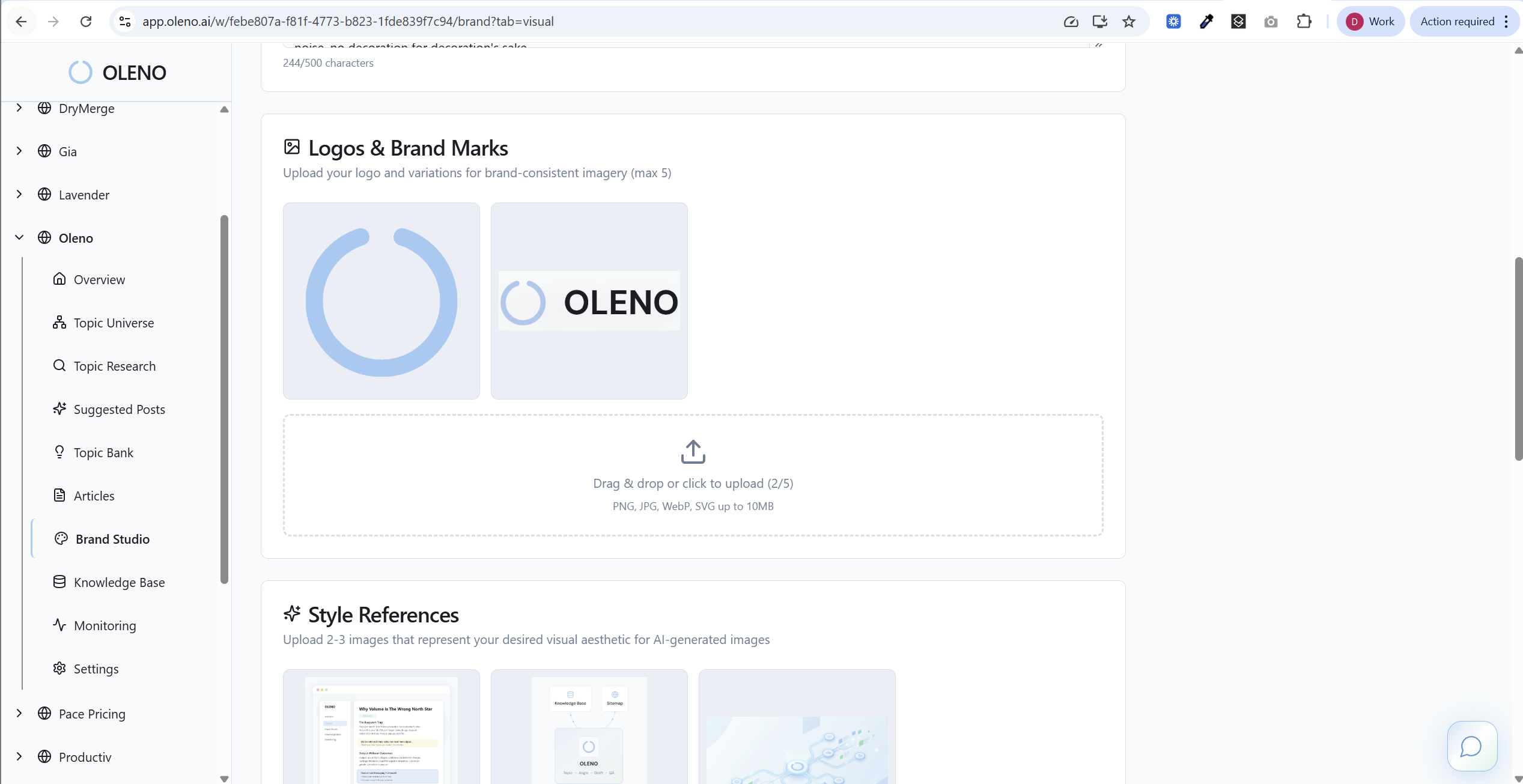
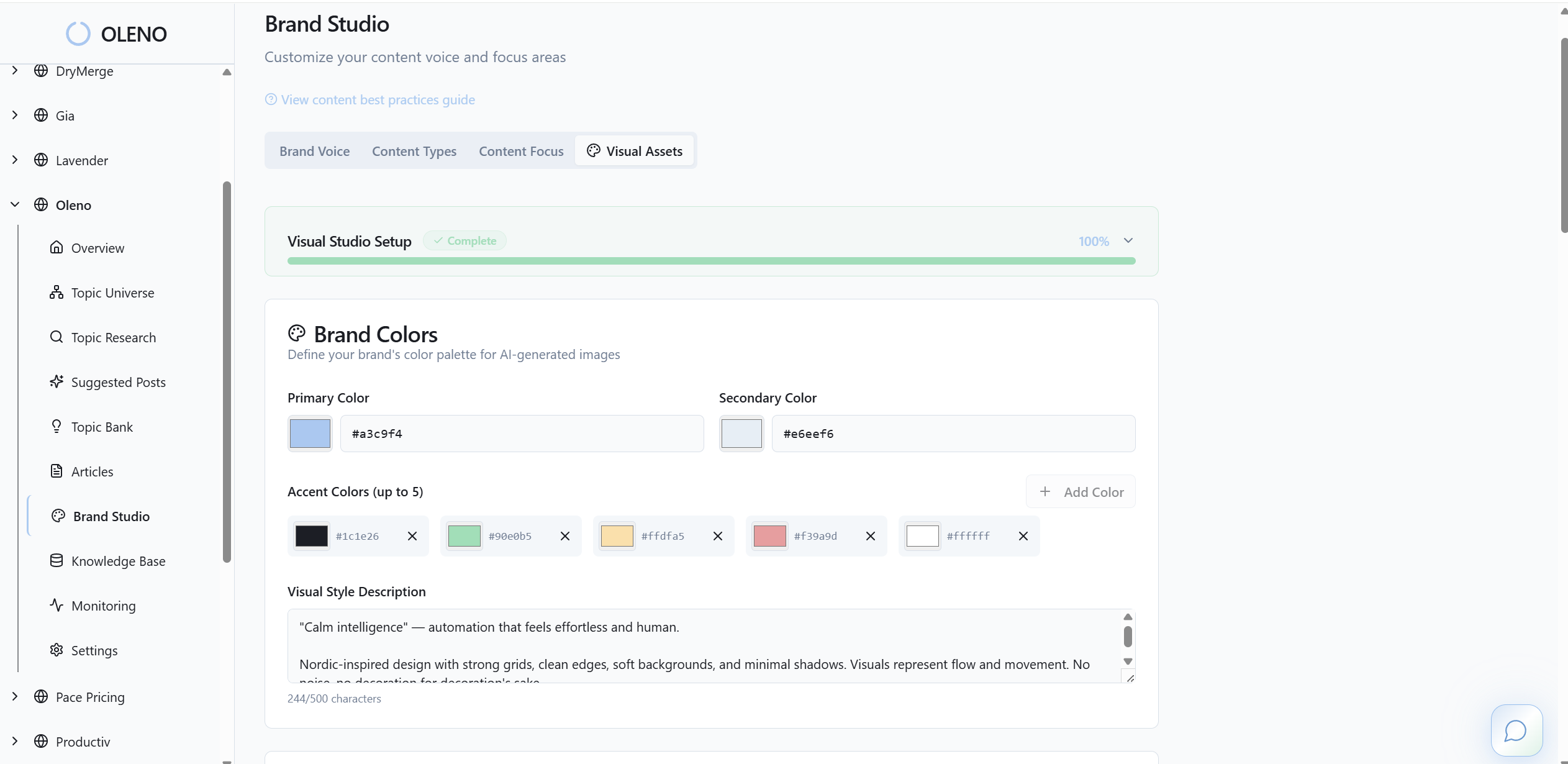
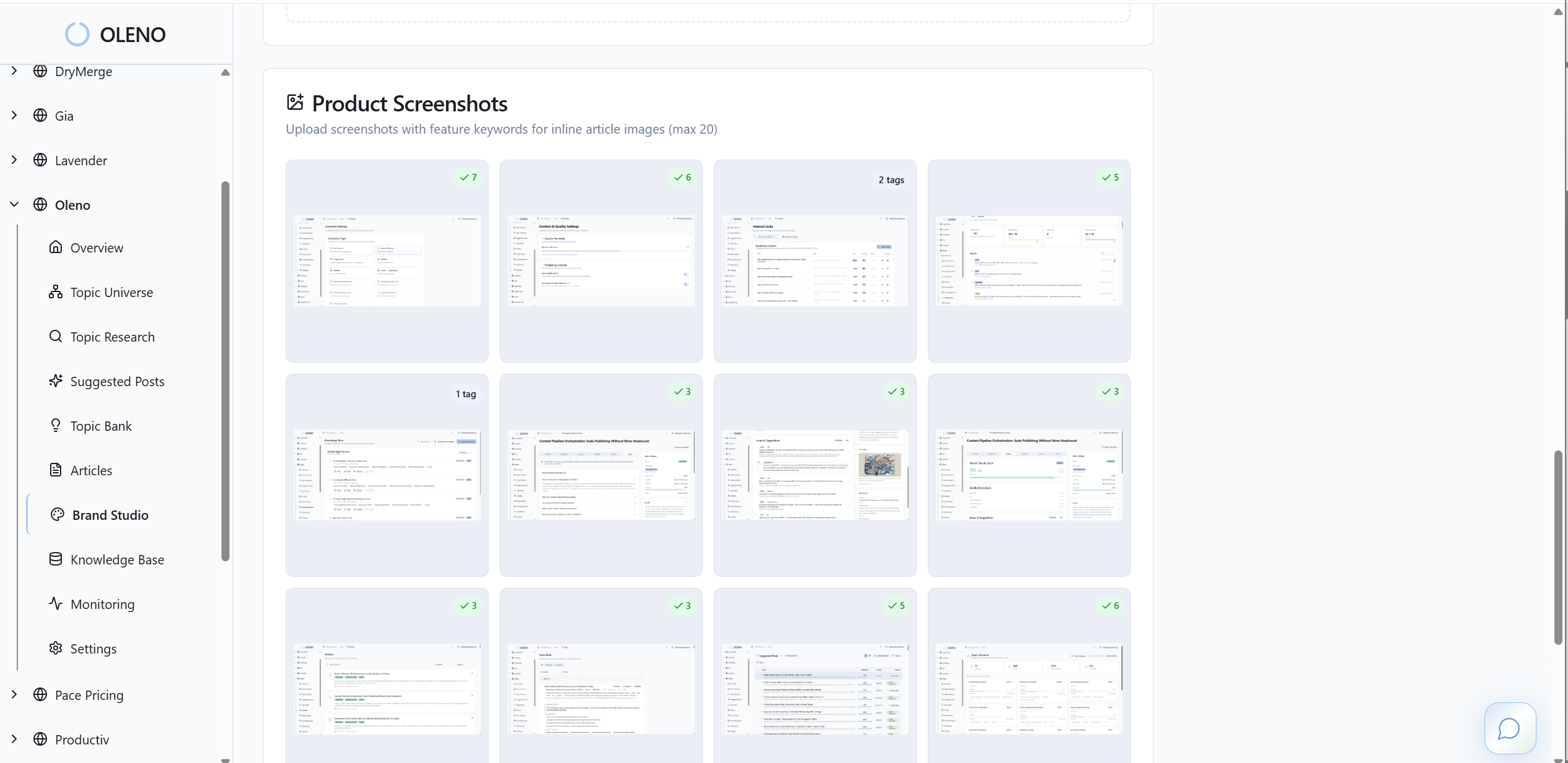
Brief generation includes competitive research and Information Gain Scoring, which flags low-differentiation outlines before writing starts. That upstream filter leads to more citable sections and higher snippet eligibility, two inputs your cluster score can use directionally. Deterministic internal linking and schema are generated programmatically, so your crawl data reflects intentional structure rather than ad hoc fixes.
Here’s the practical flow: your CMS already holds Oleno outputs, structured sections, schema, and content fields. Your warehouse joins those with Search Console, analytics, backlinks, and product events. Then your dashboard computes cluster coverage, saturation, authority scores, and assists at the cluster level. Oleno focuses on what ships; your dashboard explains how it compounds.
If you want the upstream to run without human orchestration, Oleno’s system handles strategy, writing, visuals, QA, internal links, schema, and delivery, end to end. Less coordination. Fewer resets. More compounding outcomes. Curious what that feels like in your stack? Try Oleno For Free.
Conclusion
If page-level wins keep winning meetings but not the quarter, it’s a measurement problem and a system problem. Measure authority where it compounds, clusters, and run an upstream that enforces differentiation, structure, and cooldowns. When you do, the graph moves slowly, then steadily. Busy turns into progress. Spikes turn into signal.
About Daniel Hebert
I'm the founder of Oleno, SalesMVP Lab, and yourLumira. Been working in B2B SaaS in both sales and marketing leadership for 13+ years. I specialize in building revenue engines from the ground up. Over the years, I've codified writing frameworks, which are now powering Oleno.
Frequently Asked Questions