Low-Headcount Content Ops: How One Strategic Writer Can Multiply Output

I’ve seen small teams hire two more writers and ship less. Not because people got lazy, but because coordination swallowed the calendar. Everyone edits the same paragraph. Nobody owns the narrative. The drafts slow down, the rework piles up, and you start to wonder if hiring was the wrong call.
I’ve also seen the opposite. One strategic writer with the keys, a short set of rules, and a clear cadence. No fancy headcount plan, just tight governance and an ops rhythm that keeps publishing steady. The work compounds week after week because the decisions are made once, then reused. That’s where leverage sits.
Back when I ran Steamfeed, volume came from contributors. At PostBeyond and LevelJump, volume came from structure. And at Proposify, I learned the cost of content that doesn’t point back to the product. The pattern is consistent. Fragmentation kills momentum. A system fixes it.
Key Takeaways:
- Headcount doesn’t equal output. Coordination tax and narrative drift quietly erase gains
- One strategic writer can run demand gen if rules, jobs, and cadence are locked
- Governance reduces rework by turning subjective edits into reusable rules
- Organize by jobs tied to the funnel, not formats, to avoid random content
- Encode voice, claims, and structure so QA, not meetings, guards quality
- A deterministic flow from Discover to Publish keeps throughput predictable
- Oleno runs this as a system: governance first, job-based studios, QA gate, and CMS publishing
Why More Headcount Often Lowers Output In Small Teams
Most small teams slow down when they add more people to content, because the coordination tax climbs faster than word count. Reviews multiply, narrative drifts, and the backlog turns reactive. A single owner with authority and a clear rule set usually ships more, with fewer cycles. I’ve lived this at three SaaS companies.

The coordination tax quietly beats word count
More people means more opinions. That’s not the problem. The problem is fragmented decisions spread across Slack, docs, and manager calendars. Two reviewers say opposite things, so your writer fixes both, then rewrites again when legal flags a claim. Hours vanish without moving the story forward. Even with talented folks, the machine grinds.
I’ve watched a solo writer produce 3 to 4 strong posts per week because structure removed guesswork. Then the team grew, and velocity dropped. The new writer didn’t have the same context, so they took longer and needed heavier edits. Meetings ballooned. The fix wasn’t more hands. It was giving one owner the narrative and removing decision friction up front. For a broader perspective on operational pitfalls, see Upland Kapost’s guide to common content operations challenges.
What looks like scale becomes noise without a narrative
Daily publishing looks productive on a weekly report. It feels like progress. But if each piece points in a different direction, nothing compounds. I saw this at Proposify. We ranked for topics that didn’t connect to the product story. Traffic came in, but pipeline didn’t move. That gap is a narrative problem, not a keyword problem.
Without a clear “why,” teams chase formats and trends. The result is a feed that’s busy instead of useful. Narrative governance forces focus. It decides what you believe, what you refuse to say, and how each piece supports the buying journey. That’s how output turns into momentum for a lean team.
What if one strategic writer owned the narrative?
Give one person the keys, with product truths at their fingertips. They own the angle, the voice, and the structure. Pair them with a light-touch ops lead and an on-call product reviewer for claim safety. Decide once how you sound and what’s true, then let the owner drive a consistent cadence. Fewer cooks, fewer meetings, better work.
In my experience, this reduces review cycles immediately. Subjective edits drop because shared rules do the heavy lifting. You’re no longer debating phrasing in month three of the quarter. You’re publishing on schedule, and every piece reinforces the last. If you want to see what this looks like when it runs as software, not spreadsheets, we can walk through it live. Ready to skip the back-and-forth? Request A Demo.
Make The System Do The Work, Not People
You scale content with rules, not heroics. Governance turns recurring edits into policy, so the same decisions don’t get remade in every doc. Organize work by jobs tied to the funnel, so every asset has a purpose. Then run a predictable pipeline that ends in a QA gate. That combination is what reduces rework reliably.

Governance is leverage, not red tape
Governance gets a bad rap. People hear it and picture committees and long PDFs. In practice, it’s a compact set of decisions that removes friction. Voice guidelines that include preferred phrases and banned terms. Product truths with approved claims and boundaries. Structural patterns that match how you want to be found and cited.
You decide wording once. Then you reuse it everywhere. That’s how one writer sounds like a brand instead of a person. Review time drops because you’re enforcing clarity, accuracy, and narrative rules upstream. It’s the opposite of micromanagement. It’s leverage. If you want a third-party take on why style rules matter, see Nielsen Norman Group on the value of style guides.
Jobs over formats, or why teams stop shipping random content
Formats are outputs. Jobs are reasons. When you organize the backlog around jobs like acquisition, category education, buyer evaluation, and product explainers, prioritization gets easier. It’s clearer why a piece exists and what it must do, which makes tradeoffs faster and edits sharper.
I’ve seen teams reduce rework by simply tagging each asset to a job and writing to that job’s constraints. Acquisition content does not wander into thought leadership. Evaluation content uses claim-safe tables and plain comparisons. The writer’s choices get narrower, which paradoxically speeds them up.
How do you encode decisions once so they apply everywhere?
Take feedback you give often, and turn it into specific checks. Capture voice patterns, phrases to avoid, and CTA styles. Define approved features and claim boundaries. Lock structure patterns that make content both SEO-safe and LLM-readable. Then require a quick self-check before anything enters review.
The goal is fewer subjective debates and more consistent output. It also frees your product reviewer to focus on claims only. Over time, the checklist becomes muscle memory. The system carries the burden, not the meetings.
The Real Cost Of Ad Hoc Content
Ad hoc content looks fast until you price the rework. Most of the waste hides in review queues, legal checks, and contradictory edits. Put numbers on it, and the drag becomes obvious. Shift decisions into policy, and the hours come back fast. That’s where a QA gate changes the math.
Let’s put numbers on the rework so you can see the drag
Let’s pretend your writer spends 10 hours per article. Without rules, two review cycles add 4 hours, plus 2 more cleaning voice drift and claim edits. That’s 16 hours. Put out three articles a month, and you burn 18 hours in edits alone.
With governance, you cut edits in half. Down to 12 hours per piece. Over three articles, that’s 12 hours back. Enough capacity for a fourth asset or for reuse that actually ships. Do that for a quarter, and you’ve effectively added a month of output without hiring.
Bottlenecks hide in review queues, not drafting
Drafting usually isn’t the problem. Waiting for comments, reconciling conflicting feedback, and chasing approvals eats days. The fix is upstream. Pre-locked structures and claim-safe language reduce subjective edits. A single owner keeps the narrative tight. A QA gate catches voice, structure, and accuracy before humans review.
You’ll still have feedback. It just focuses on ideas, not phrasing. That moves the piece forward instead of sideways. Over time, publishing cadence becomes predictable because the process is predictable. That reliability is what compounds.
Where does your week actually go?
Run a quick audit with last month’s assets. List hours by step and the number of handoffs. You’ll see clusters around review and corralling stakeholders. Those are policy problems, not talent problems. Pull those decisions into your governance.
Give the writer final editorial call on voice and structure, inside the rules. Keep your product reviewer focused on claims only. Put SLAs on reviews so work keeps moving. You’ll feel the calendar relax by week two. If you want the process to run itself and stop depending on “who’s available,” there’s a software way to do it. Still dealing with manual gates? Request A Demo.
Operating Without A Net Is Exhausting
Last-minute fixes burn trust. Voice drift confuses buyers and sales. Work stalls when the one person with context gets pulled into a launch. A system with pre-publish checks and a steady cadence reduces anxiety. It also protects quality when life happens.
The 3am fix you regret
We’ve all done it. You spot a risky claim or a broken image and push a fix at 3am. It’s stressful and risky. The better path is a pre-publish gate that enforces voice, structure, clarity, and claims. The piece passes or it doesn’t. If it fails, it gets remediated before it can go live.
This shifts the job from heroics to process. The writer sleeps. The article ships right the first time, more often. And your leadership team stops pinging you on Sundays because the system already caught the same issues they would have flagged.
Voice drift erodes trust faster than you think
When content sounds different every week, readers tune out. Sales doesn’t know what to share. Your CEO asks, “Why doesn’t this feel like us anymore?” That lack of consistency creates doubt. You fix it by locking voice rules, encoding banned terms, and using repeatable narrative patterns.
The difference is noticeable. Your assets feel like they belong together. They reinforce each other. And internally, people stop rewriting every headline because the voice is settled.
What happens when your writer is in customer meetings all week?
Work stops if the system depends on a person. It keeps going when it depends on rules. If your writer gets pulled into a launch or a sales sprint, a prepped backlog, locked briefs, and a QA gate mean you can resume next week without re-learning decisions.
You reduce restart cost, and your cadence survives short-term chaos. That’s how small teams keep shipping when priorities shift. It’s also how you avoid the quarterly reset that kills compounding.
Build A One-Writer Content Engine With Clear Roles, Rules, And Cadence
One strategic writer can run demand gen if you give them authority, guardrails, and an operational rhythm. Keep roles minimal, encode decisions into rules, and protect a weekly cadence. Then orchestrate a deterministic pipeline that ends in a quality gate and reliable publishing.
Step 1: Define the minimal org and decision rights
Keep it lean. One strategic writer owns narrative, structure, and final editorial calls within the rules. A part-time ops lead owns cadence, QA policy, and CMS checks. A product reviewer approves claims only. Document who decides what, and set SLAs.
Example monthly time budget:
- Writer: 32 hours
- Ops: 8 hours
- Product reviewer: 2 hours
Interjection. If you need heavy stakeholder input, capture it once in governance, not every week.
Step 2: Encode voice, claims, and narrative as rules
Create a short brand voice profile. Include tone, preferred phrases, and banned terms. Lock CTA styles. Add product truth, approved features, and claim boundaries. Choose one narrative pattern so sections stay consistent across assets. Turn recurring feedback into checks the writer runs before review.
This reduces subjective edits, tightens the story, and protects legal. Over time, it becomes your teaching doc for new teammates and freelancers.
Step 3: Choose the jobs and set a weekly cadence
Pick two jobs to start, like programmatic SEO for acquisition and product explainers for education. Aim for one publish-ready asset every other week at first. With governance and QA, one writer can usually hit three assets per month in roughly eight hours per week.
Document the cadence and protect it on the calendar. Volume grows naturally as the rules mature.
Step 4: Orchestrate the pipeline from topic to publish
Run a deterministic flow. Discover topics from your sitemap and knowledge base. Angle it to your POV. Generate a locked brief. Draft section by section. Pass QA. Then publish. No ad hoc detours.
If a check fails, revise against the rule, not opinion. That’s how speed and quality can coexist in a small team.
Step 5: Enforce QA and publish to CMS reliably
Automate what you can. Check voice and structure compliance, clarity, repetition, and grounding before anything ships. Publish with idempotency so you never duplicate posts. Create a short post-publish checklist for metadata and schema.
Your writer focuses on the thinking, not the plumbing. Your ops lead keeps the machine humming.
Step 6: Reuse without chaos
Turn each publish into three derivatives with clear rules. Two short social posts, one email snippet, and an optional image set. Keep reuse inside the same voice and claims governance. The ops lead schedules, the writer approves quickly.
Repurposing becomes a system, not a scramble. And your pipeline coverage increases without new drafting time. For additional perspective on content operations at scale, see Content Marketing Institute’s overview of content operations.
How Oleno Runs A One-Writer Content System
Oleno is built to run demand generation as a system, not a series of one-off drafts. You set governance once, enable the jobs you need, and let a deterministic flow create publish-ready content on a steady cadence. Quality is enforced automatically before publishing to your CMS.
Governance-first setup that locks voice and truth
Oleno starts with your brand voice, narrative rules, and product truth. You define tone, preferred terms, banned phrases, and approved product statements. Those decisions apply everywhere, automatically. That reduces subjective edits and legal risk, which directly addresses the review bottlenecks we quantified earlier.
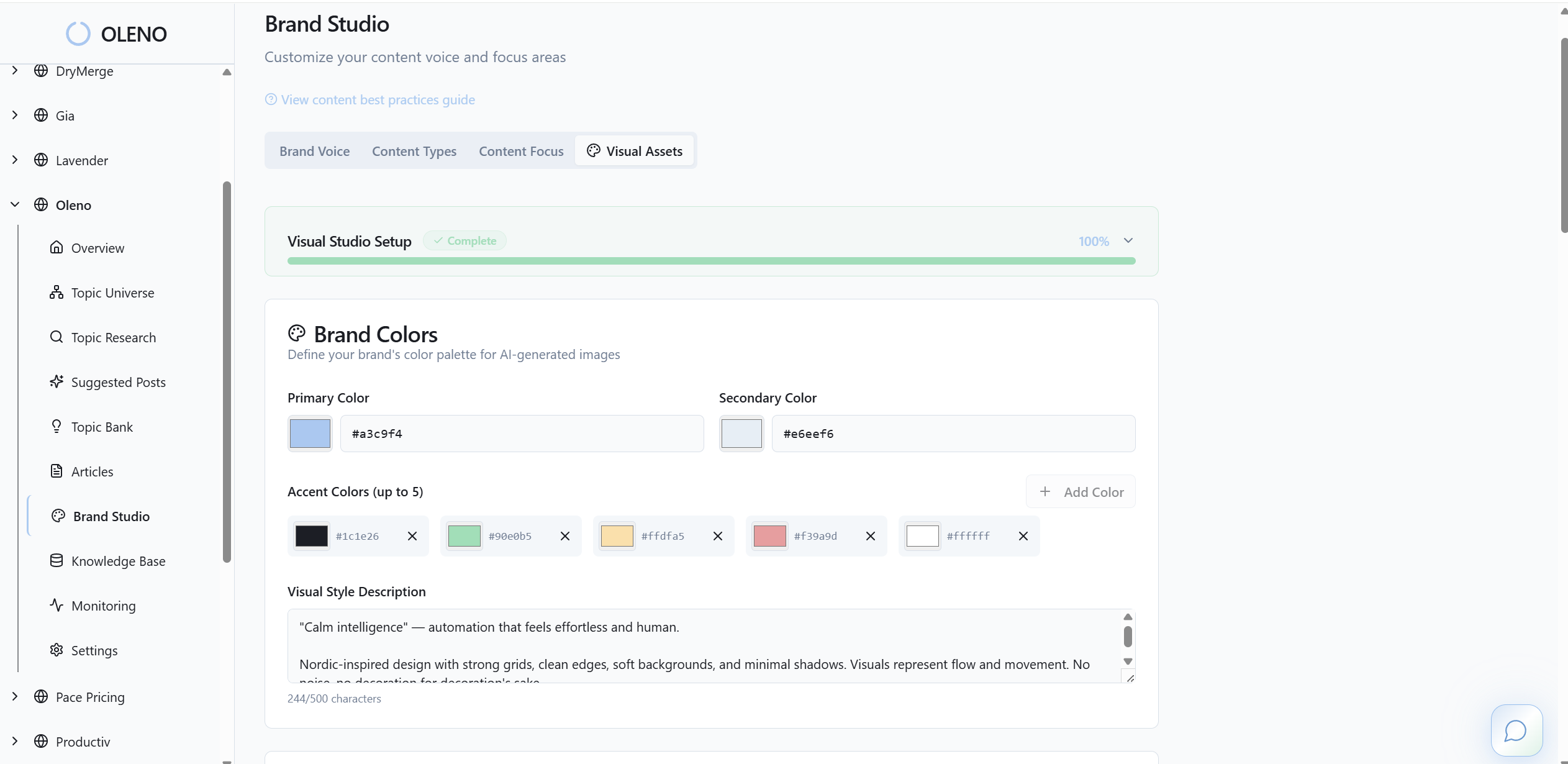
Because governance sits upstream, your one-writer model feels like a brand. Not a person. And as output grows, consistency holds.
Job execution studios that match your funnel
You enable the jobs you actually need, such as programmatic SEO, frameworks and guides, comparisons and alternatives, and product explainers. Each studio follows the same Discover to Publish flow with constraints designed for its purpose. Acquisition content won’t drift into thought leadership. Evaluation pieces use structured comparisons and fairness rules.
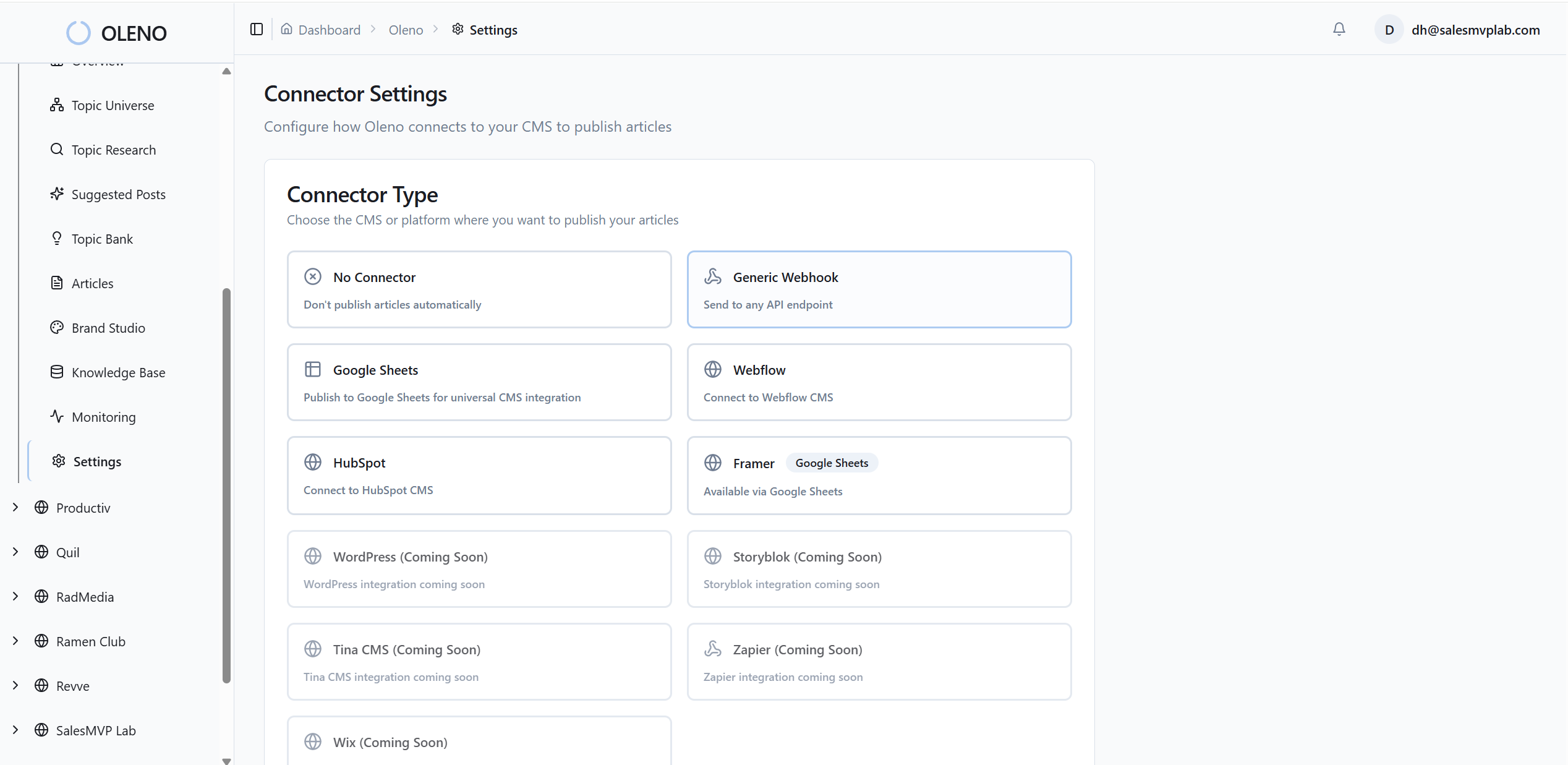
Oleno keeps the backlog tied to the funnel, so the writer runs jobs that map to pipeline, not random formats.
Automated QA and direct CMS publishing
Oleno runs a QA gate before anything goes live. It checks voice alignment, structure, clarity, repetition, grounding, and SEO-safe formatting. If a check fails, it’s remediated before publish. Then Oleno publishes directly to your CMS, with protection against duplicates.
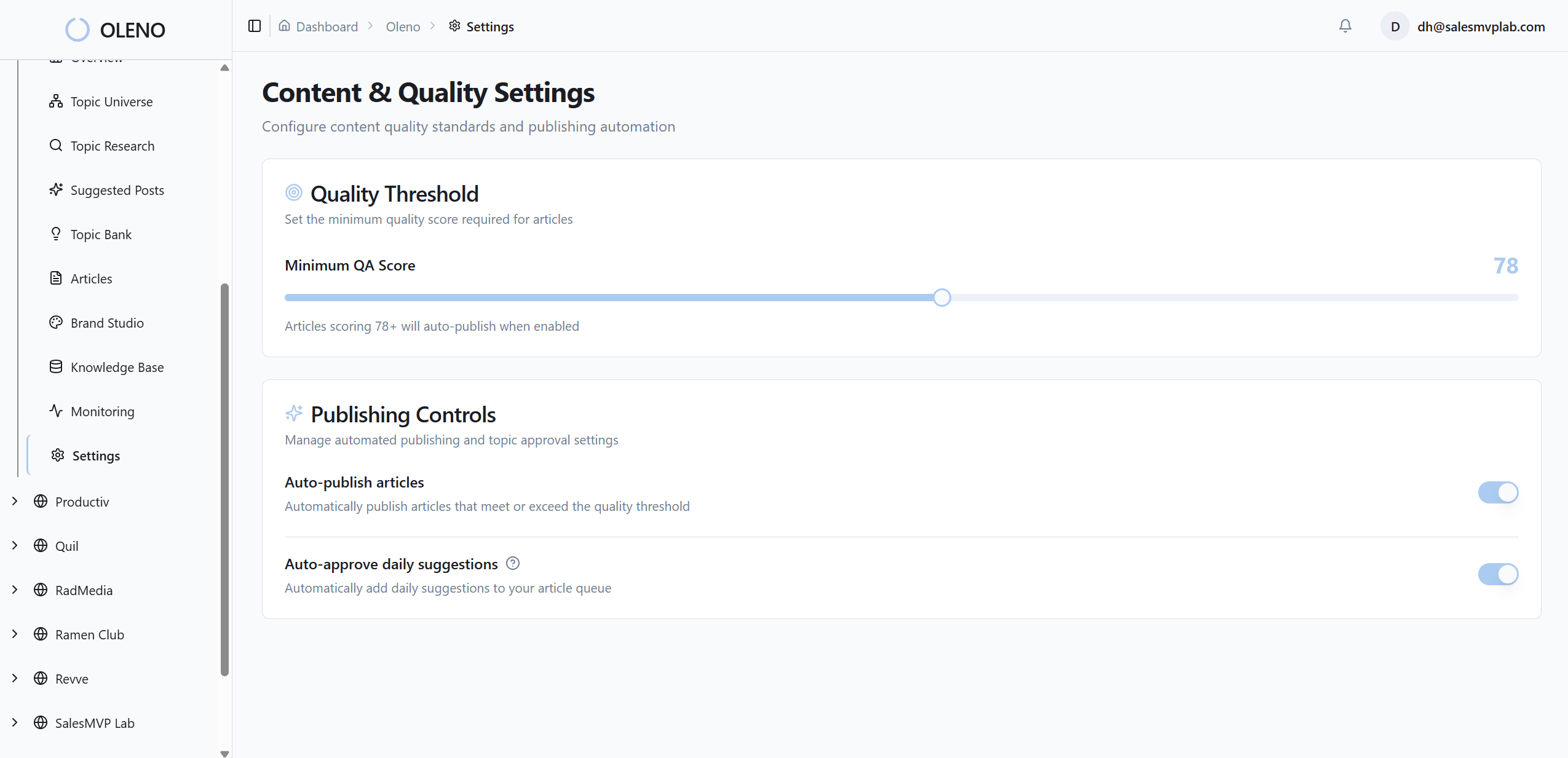
That means fewer late fixes, fewer 3am edits, and a more predictable cadence. It’s the same time you get back in our rework math, just baked into the system.
Optional distribution and system health to keep cadence steady
You can reuse approved content across channels with cadence rules and formatting patterns. Measurement and system health show whether the engine keeps running, where quality wobbles, and which checks catch the most issues. It’s operational visibility, not vanity metrics.
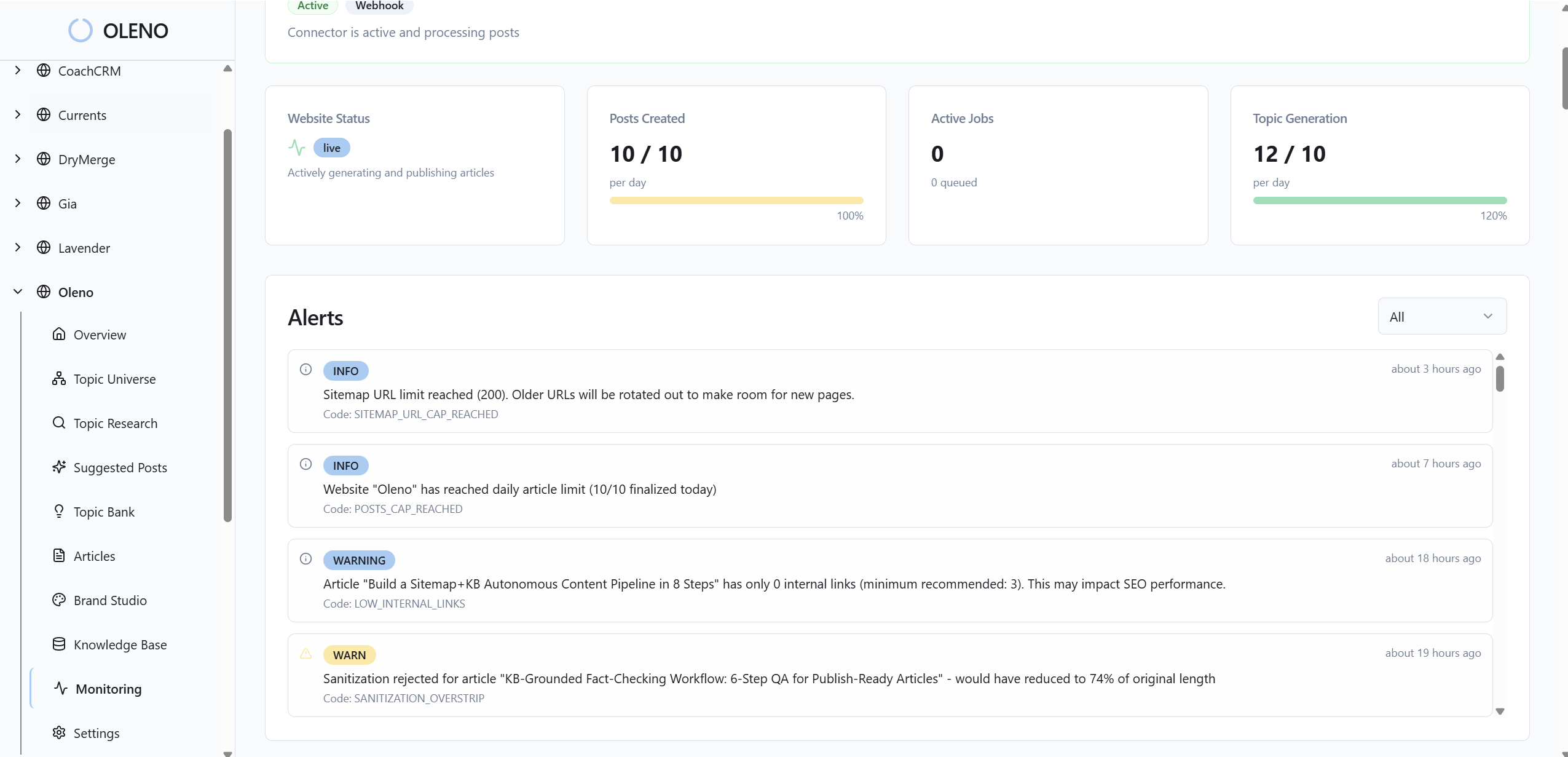
The net effect is a one-writer engine that stays on schedule, even when priorities shift. Strategy stays human. Oleno runs the system. If you want to see the governance setup, job studios, QA gate, and CMS publishing in action, we can show it end to end. Let Oleno handle the busywork so your writer can focus on the thinking. Request A Demo.
Conclusion
Small teams don’t lose because they lack ideas. They lose because execution gets fragmented, drift creeps in, and review work multiplies. A one-writer model works when rules do the heavy lifting, jobs tie to the funnel, and a deterministic pipeline keeps quality high.
Do that, and output compounds without adding headcount. Encode decisions once. Let the system carry the burden. Then give your writer the keys and protect the cadence.
About Daniel Hebert
I'm the founder of Oleno, SalesMVP Lab, and yourLumira. Been working in B2B SaaS in both sales and marketing leadership for 13+ years. I specialize in building revenue engines from the ground up. Over the years, I've codified writing frameworks, which are now powering Oleno.
Frequently Asked Questions