Microcontent Library: Single‑Source Blocks That Compile for Every Channel

Repurposing whole articles feels productive, but it is wasteful and fragile. You burn hours copying, pasting, and rewording, then you still risk voice drift and errors on every channel. The real leverage comes from a microcontent library and a deterministic compiler that assembles the right blocks for each channel, every time.
I learned this the hard way. Early on, I would manually slice posts into social, email, and landing page bits. Looked fine on paper. In practice, it was a mess. Too many one-offs. No shared rules. Missed deadlines. When we switched to a governed set of reusable blocks plus a compiler mindset, prep time fell by more than half. Output went up. Quality held.
Key Takeaways:
- Stop repurposing full articles. Build a small, reusable microcontent library and assemble per channel.
- A 7-to-12 block library can cover 90% of needs once you lock assembly rules and guardrails.
- Add a simple metadata schema so blocks compile predictably by channel, persona, and use case.
- Automated QA gates catch voice drift and grounding errors before anything ships.
- Expect a 60–80% cut in per‑channel prep time and a 3x boost in cross‑channel output.
- The outcome is reliability: fewer rewrites, lower risk, and a cadence you can trust.
Polarizing Insight
Repurposing whole articles is the wrong goal, because articles are outputs, not building blocks. The right goal is a block-first system that compiles content on demand for each channel. Think like engineering: small, reusable primitives, clear contracts, and deterministic assembly, which beats ad‑hoc rewrites every time.
Why Repurposing Whole Articles Breaks at Scale
Whole-article repurposing multiplies friction. Each new channel asks for a different length, hook, tone, and angle, so you keep rewriting the same idea from scratch. That waste adds up daily, and the real cost shows up later when quality drops as volume rises. You end up paying with trust and time.
I have seen teams crank out pages, then drown trying to squeeze them into social and email. The longer the piece, the more brittle the repurpose. A tiny change in context forces a cascade of manual edits. A block-first approach avoids that trap altogether by designing for reuse at the start, not the end.
The Compiler Mindset Beats “Rewrite It Again”
A compiler assembles valid pieces based on rules. Marketing can work the same way. Instead of telling a writer to “make this into a thread,” you define the valid inputs, the constraints, and the output patterns. Then you assemble consistently. Predictable in, predictable out. Fewer mistakes. Less rework.
You do not lose creativity with this. You focus it. Writers invest energy in the primitives that travel everywhere: claims, hooks, proof lines, examples, and CTAs that fit your voice. Then the system handles the heavy lifting while humans tweak exceptions, not the baseline.
Reframe
The real problem is not writing speed, it is assembly without rules. Most teams push judgment onto people at the last step, which guarantees drift, review loops, and missed windows. Put the judgment into the system earlier with governance and metadata, and the last mile gets easy.
Your Bottleneck Is Missing Contracts, Not Missing Talent
When blocks lack contracts, every channel publish becomes a custom job. You ask, “How long is a LinkedIn hook?” or “What tone for our newsletter?” each time. That is a recipe for delays and inconsistency. Contracts remove guesswork up front, so teams move faster with less risk.
I like to treat each block like a component with shape, purpose, and constraints. If it does not declare its limits, someone will discover them at 10 pm before a launch. That is the expensive moment. Put shape and limits in metadata, and that late scramble disappears.
Metadata Is The Glue
Length, tone, persona, canonical status, and reuse rules turn loose text into programmable blocks. With those fields in place, you can route and assemble without debate. No arguments about voice. No mystery about what can be reused where. The system enforces it.
Keep the schema tight. Five to seven fields are usually enough. Go deeper only when a field changes output behavior. Complexity for vanity’s sake creates overhead. Simplicity scales.
Rational Drowning
Manual repurposing wastes time, increases risk, and fails under load. Teams lose hours per asset on low‑value editing and approvals, while voice drift and factual misses creep in. The costs compound across channels and quarters until cadence stalls and trust erodes.
The Hidden Cost of Manual Repurposing
Every manual handoff adds minutes you never budgeted. Five edits at 12 minutes each sounds small, but it adds up across channels and weeks. Knowledge workers can spend up to 20% of time searching or reworking content, which is pure waste for lean teams, per McKinsey research.
That is only the visible cost. The invisible one is speed debt. The faster you try to go, the more rework you create. You never feel it on day one. You feel it when you miss the window on a launch because approvals got stuck correcting tone in a tweet.
Where Voice Drift Sneaks In
Drift rarely shows up as a single bad sentence. It spreads through small edits across channels. A softer verb here, a missing claim there, a joke that is off-brand in the newsletter. Over a month, the message feels fuzzy. Over a quarter, the market stops recognizing you, especially when evaluating microcontent library.
Brand consistency is not vanity. It is a recognition signal. The more you drift, the more you pay to re‑introduce yourself. That is an avoidable cost when voice rules and examples guide the work at the block level.
Volume Without Governance Fails
Speed alone looks like growth, then breaks under scale. Teams publish more, but quality slips and error rates rise. In surveys, marketers cite content creation and distribution as top challenges every year, which tracks with the lived reality reported in the CMI 2024 B2B Content Marketing report.
If your cadence depends on heroics, it will fail the moment priorities shift. A governed system holds when people get pulled into launches or headcount changes. That is the difference between activity and a marketing engine.
Emotion for Microcontent library
It is tiring to juggle rewrites, approvals, and last‑minute “can you tweak the tone” requests. You start to resent the work. You stop taking swings on bigger pieces because you know the back half will eat your week. That is not a creative job anymore. That is triage.
What It Feels Like When The System Is Broken
You wake up to Slack pings about a post that “feels off.” You cannot explain why, you just know it does. So you fix it, then three more show up. Meanwhile, the landing page waits, the newsletter draft ages, and you cancel your afternoon block because approvals dragged.
I have lost weekends to this treadmill. It is not a craft problem. It is a systems problem hiding as craft. Once the system holds the rules, your calendar opens up again. You get to do the interesting work, not the endless cleanup.
Leaders Lose Trust When Output Feels Random
Executives do not need to read every line. They need to trust that what ships sounds like the company and tells the right story. When every Tuesday is a new surprise, leaders clamp down. More reviews. More meetings. Slower everything.
That spiral is hard to escape once it starts. The fix is visible reliability. Ship on a schedule. Stop the drift. Show the system catches mistakes. Trust follows output that behaves.
New Way
The new way is a governed microcontent library plus a compiler that assembles channel‑ready outputs from a small set of reusable blocks. You define blocks once, encode metadata and voice rules, then assemble deterministically for each channel. QA gates keep quality high, so cadence holds without heroics.

Define the Microcontent Library
Start with 7 to 12 reusable blocks that cover most of your needs. Think hooks, claim lines, proof points, short anecdotes, benefit statements, CTA variants, and summary riffs. These are not pulled from thin air. They are written on purpose, with examples that match your voice.
You are aiming for channel‑agnostic primitives. A strong hook travels from a long‑form article to a LinkedIn post to a slide header. A tight proof line can anchor a tweet or sit under a feature callout. Invest in blocks that can survive many shapes.
Encode a Lightweight Metadata Schema
Give each block a tiny contract so the system can assemble without guessing. Store length ranges, tone, persona alignment, use‑case tags, and a canonical flag that tells editors what not to rewrite. Add reuse notes when a block has edge conditions.
Keep it simple. Over‑specifying invites confusion. Under‑specifying invites drift. Aim for just enough information for a machine to make a good first pass and a human to make a great final pass.
Build Deterministic Templates By Channel
Define assembly rules per channel, then stick to them. A LinkedIn post might be Hook, Insight, Proof, CTA. A newsletter blurb might be Hook, Summary, Proof, Link. A product feature card might be Benefit, Proof, CTA. The compiler pulls the right blocks and formats them to spec.
You are not removing creativity. You are boxing the variability where it belongs. Humans write better hooks and sharper claims when they are not also deciding structure on the fly, especially when evaluating microcontent library.
To implement the new approach:
- Map your top channels and codify their assembly patterns.
- Draft 7 to 12 blocks that align to those patterns.
- Add metadata fields that affect assembly and tone.
- Set guardrails for reuse and canonicals.
- Pilot on one campaign, measure prep time, then expand.
QA Gates Protect the Output
Put an automated gate between assembly and publish. It should check voice rules, claim boundaries, factual grounding, structure, and basic SEO or readability for each channel. If something fails, send it back with targeted fixes, not vague notes.
You want the gate to feel like a safety net, not a speed bump. Once people trust the gate, they stop second‑guessing and start shipping on schedule.
Stop juggling rewrites. Start running a compiler with governance behind it. Request a Demo
Solution
Oleno turns the microcontent library approach into a reliable operating system. You encode voice, narrative, product truth, and audience details once, then the system assembles channel‑ready outputs with quality checks before anything goes live. The result is less waste, fewer mistakes, and a cadence that holds even when priorities shift.

How Oleno Makes The New Way Practical
Oleno is built for small teams that need consistent, on‑brand output without adding headcount. You define your rules, the system enforces them, and publishing keeps pace. The compounding effect shows up fast: less time on rewrites, more time on high‑leverage work, and near‑zero voice drift.
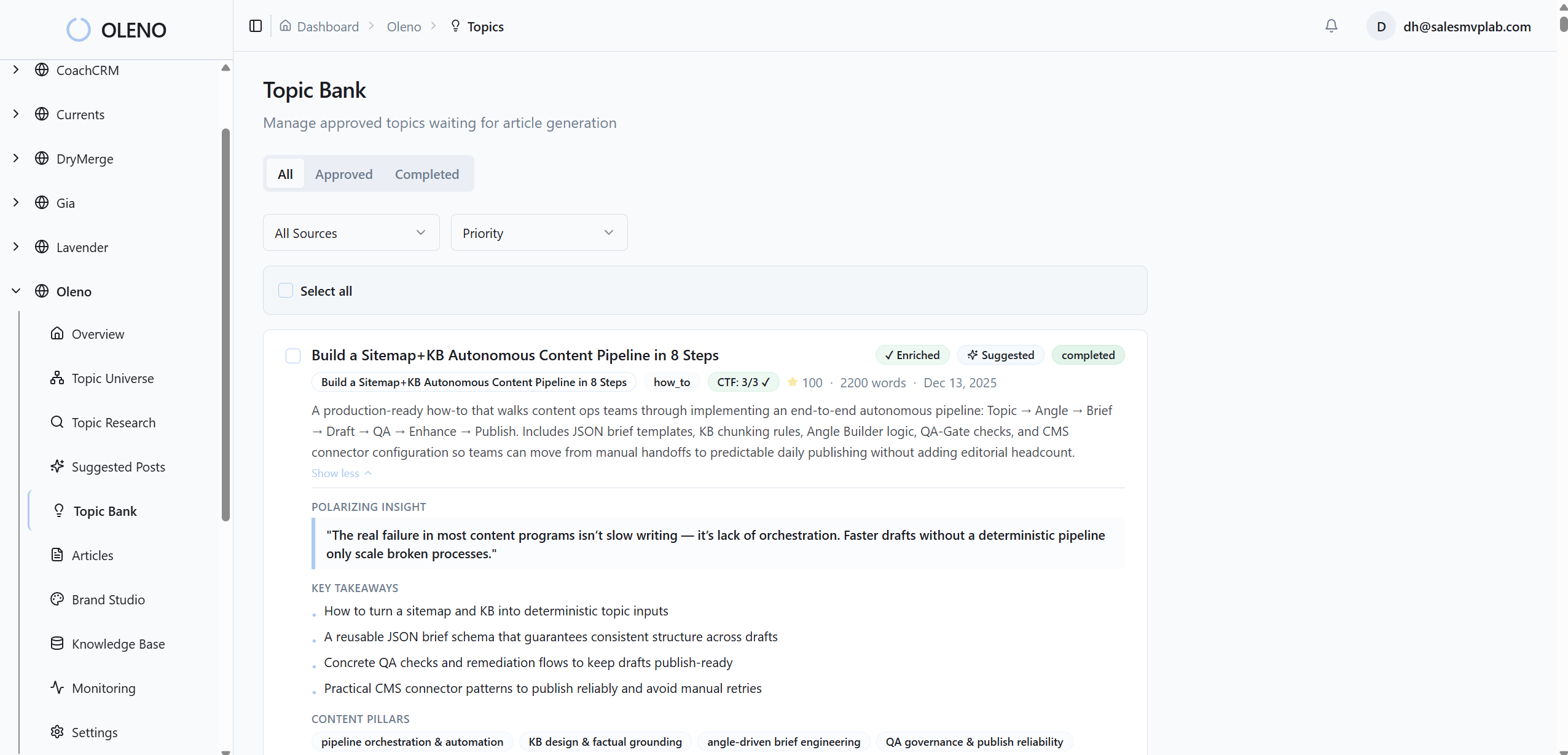
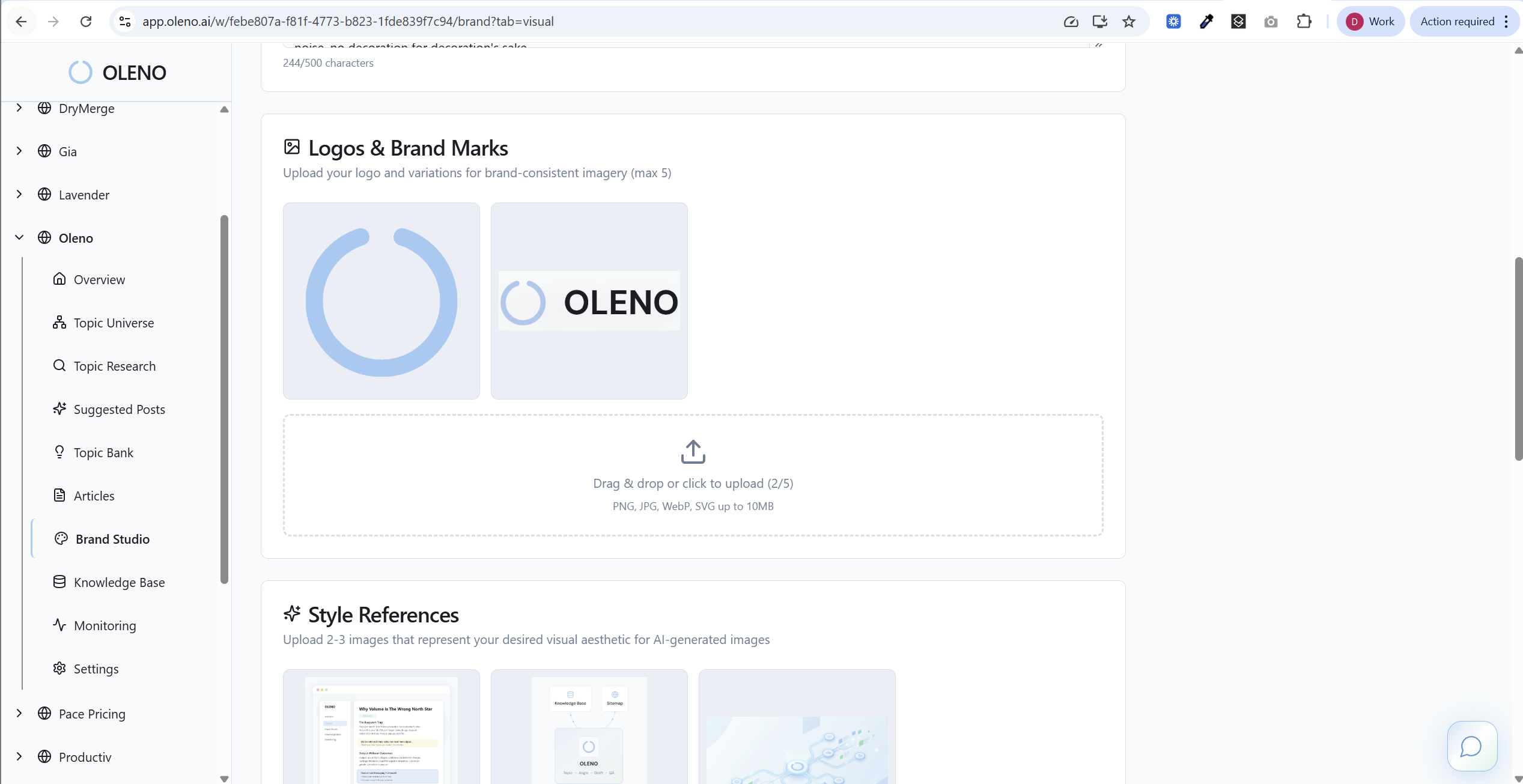
- Brand Studio: Encodes tone, terminology, structure rules, and CTA style so every block and assembly sounds like you without constant coaching.
- Marketing Studio: Captures your message pillars and point of view, then injects them into briefs and drafts so claims and angles stay aligned.
- Quality Control (QA Gate): Enforces voice, structure, grounding, and clarity before publish. Failed checks trigger targeted revisions and re‑runs until it passes.
- Knowledge Archive Grounding: Centralizes approved product facts and stories, then grounds claims against that source so you do not risk invented features.
- Distribution and CMS Publishing: Repurposes approved long‑form into channel posts and pushes drafts or live posts to your CMS, so cadence stays steady.
We built Oleno to remove the costs you feel daily. The extra 45 minutes per asset spent rewriting intros. The vague edits that create three more rounds. The social post that sounds wrong and triggers a meeting. With Brand Studio and the QA gate in place, those issues drop fast, and teams routinely see 60 to 80 percent reduction in per‑channel prep time. Mid‑funnel assets stop drifting because Marketing Studio and the archive keep claims tight.
60 to 80 percent less prep time, consistent voice, and grounded claims. That is the delta Oleno aims to deliver. Request a Demo
Why This Holds Under Pressure
Systems win when calendars get messy. Oleno’s governance stops the slow leak of drift as volume rises, while the QA gate blocks risky outputs before they reach customers. Distribution and CMS publishing keep cadence while you handle launches or hiring.
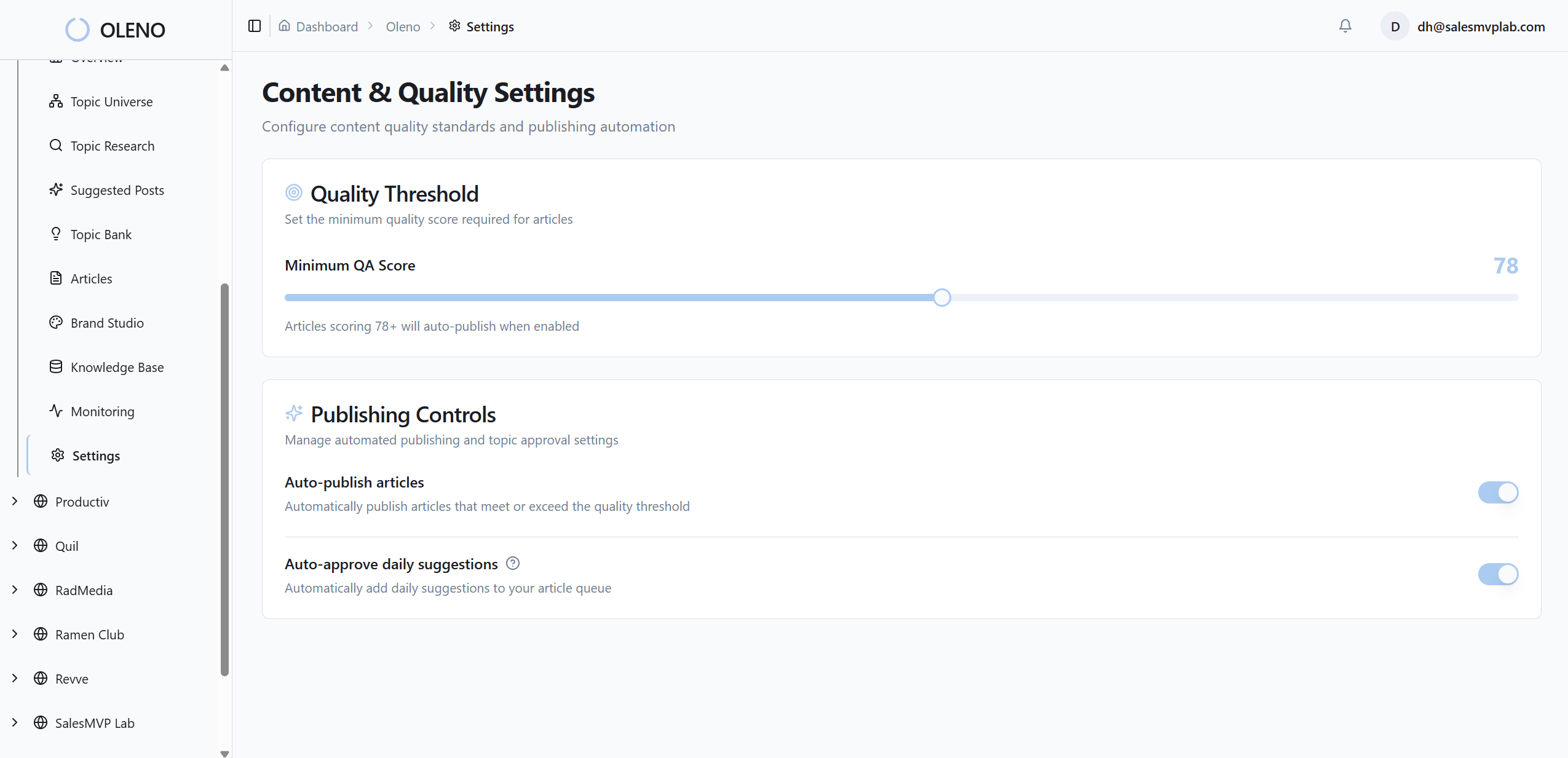
Leaders get confidence because the output behaves. Writers get time back because the heavy lifts are defined and automated. The system compounds every week it runs clean.
Before you wrap this, if you want to see your blocks and rules wired into a working compiler, we can walk through it live. Book a Demo
Conclusion
The old way asked you to repurpose at the end. The new way designs for reuse at the start. A small, well‑governed microcontent library plus deterministic assembly will cut prep time by 60 to 80 percent, scale output 3x with the same team, and push voice drift close to zero.
If you are tired of firefighting and missed windows, start with the blocks. Define 7 to 12 primitives, add a simple schema, lock channel patterns, and put a QA gate in the middle. Once the system holds, you will feel it. Your calendar will, too. And your market will finally hear a clear, consistent story everywhere you show up.
References:
- The productivity drag of knowledge work is well documented by McKinsey.
- Distribution and creation remain top challenges in the CMI 2024 B2B Content Marketing report.
- For broader channel and creation trends, the HubSpot State of Marketing offers useful benchmarks.
About Daniel Hebert
I'm the founder of Oleno, SalesMVP Lab, and yourLumira. Been working in B2B SaaS in both sales and marketing leadership for 13+ years. I specialize in building revenue engines from the ground up. Over the years, I've codified writing frameworks, which are now powering Oleno.
Frequently Asked Questions