Move Beyond Prompts: Build an Orchestrated AI Content Pipeline

You can crank out a decent draft with a clever prompt. You’ve probably done it a hundred times. It feels fast. It looks productive. Then the real work shows up: edits, structure fixes, links, visuals, schema, one more pass on tone. Suddenly the “fast” draft spent two days in Slack.
I’ve been on both sides. Solo marketer shipping four posts a week with a tight framework. Later, a team where great writers and designers shipped beautiful content that didn’t map to demand. Volume without a system creates the same outcome every time: rework, drift, and doubts about what to publish next.
Key Takeaways:
- Replace prompt roulette with a governed pipeline that starts at strategy and ends at publish
- Quantify the cost of ad hoc drafts so you know what to fix first
- Map a Topic Universe to prevent over-coverage and random ideation
- Enforce differentiation before drafting with Information Gain scoring
- Write from your knowledge base and codify brand voice to cut “frustrating rework”
- Treat links, visuals, and schema as code to remove publishing errors
- Add a QA gate with thresholds and refinement loops to make reliability boring
Why Prompt-Only Writing Breaks Under Scale
Prompt-only systems fall apart at scale because they start from zero context, every time. You get variable tone, shaky accuracy, and drafts that skip operational steps like links, schema, and visuals. The result is predictable: more editing, more risk, and an output that is hard to reproduce under pressure.
Audit your current prompt workflow
Start with a simple swimlane: Topic to Draft to Edit to Publish. Mark where brand voice lives, where facts come from, and where humans must intervene. Those handoffs create delays, risk, and drift. Score your last ten articles across accuracy, voice, structure, links, and publishability, then record rework hours when any category lands below 80.
Tag where prompts reset context. If every draft restarts from scratch, mark it red. Those red cells explain volatile quality and why scale collapses. Your goal is to remove red with persistent systems, not cleverer prompts. If you need a mental model shift, scan orchestration shift and why speed without systems underperforms in why ai writing didn’t fix the system.
Why do ad‑hoc prompts create hallucinations?
When drafts are generated without retrieval from a governed knowledge base, models fill gaps probabilistically. That looks creative until it conflicts with your docs. Fix the root cause with chunked KB content, strict retrieval, and section-level grounding. Tone drift is similar. Without shared memory, voice rules live inside prompts, not systems, so they fluctuate run to run.
Publishing breaks because “draft” gets treated like “done.” Prompts do not inject internal links deterministically, they do not generate JSON-LD reliably, and they rarely place visuals with intent. Treat those as code. Your error rate drops, and timelines stop slipping. As AI volume rises, the stakes go up. See the scale signal in Graphite’s analysis of AI content output growth.
A quick baseline that stings
Let’s pretend your team spends 2.5 hours per post on fixes. Ten posts a month is 25 hours. Over a quarter, that is 75 hours of senior time redirected from strategy to cleanup. That is the baseline cost of being ad hoc. It will not get better as you ship more.
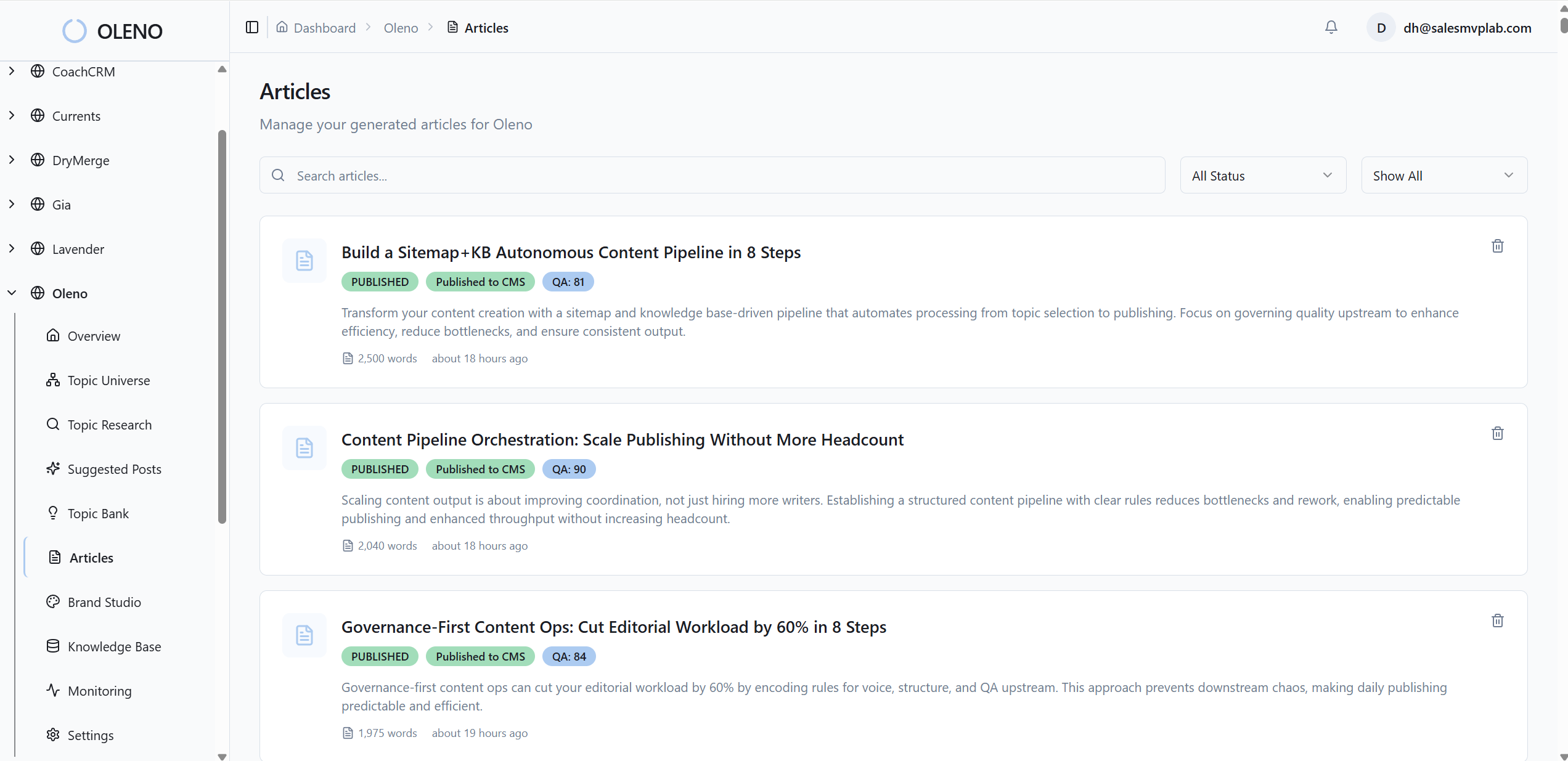
Curious what this looks like in practice? Try generating 3 free test articles now.
Fragmentation, Not Speed, Is the Real Bottleneck
The speed problem is a mirage. Fragmentation is the thing that slows you down. Strategy lives in slides, research in tabs, voice in a one-off prompt, visuals in a drive, and publishing in a CMS that someone has to fight. You can write faster and still lose time because the workflow is disconnected end to end.

Step 2: Map your Topic Universe (ingest KB + sitemap, cluster, set saturation rules)
Build a live inventory of what you should publish next. Ingest your sitemap and KB, then cluster topics into pillars. Label each cluster Underserved, Healthy, Well-covered, or Saturated. Enforce a 90-day cooldown on re-coverage so you do not trample the same idea twice in a quarter.
Define acceptance rules. Prioritize Underserved and Healthy clusters unless cooldowns expire. Store decisions with metadata: source doc, last coverage date, saturation state, and next review date. This turns ideas into controlled coverage and removes guesswork. If you need a systems view, read the hub on ai content writing and the daily feed in topic discovery.
What is a topic universe and when should you use it?
A Topic Universe is a live map of everything you could write, grounded in your own site and knowledge. You use it daily to prioritize, throttle, and avoid cannibalization. It is not a quarterly spreadsheet. It is a control surface. If you see duplicates, drift, or random ideation, you needed this yesterday.
Interjection. This is the shift most teams miss.
The mindset echoes good governance in other domains. Transparency and provenance matter, which is why frameworks like MIT Sloan’s guidance on data provenance in AI are useful parallels for content systems.
Why this shift matters right now
When leadership asks, “What’s next?” you should answer with a rule, not an opinion. Topic coverage gets smarter as you publish. Clusters cool down, gaps rise, and re-coverage becomes intentional. Authority compounds when execution is coordinated daily, not when individual articles spike.
The Hidden Costs of Staying Ad Hoc
The costs are not abstract. They show up as hours and risk. Rewrites due to duplication. Edits to shoehorn product into an off-topic piece. Publishing delays because visuals are late or links are broken. Do this enough and you will slow-roll an entire quarter.
Step 3: Automate brief generation with Information Gain scoring and templates
Write fewer throwaway drafts by enforcing differentiation before you type paragraph one. Build a structured brief template with fields for angle, competitive coverage, missing perspectives, outline, and external sources. Auto-analyze top results to identify overlaps and gaps. Calculate an Information Gain Score from 0 to 100 and set a floor, say 60.
If a brief lands below your floor, revise the angle or discard it. Include three to five authoritative citations with proposed anchor text and why each helps originality. Record why a brief failed so you can fix upstream topic selection later. This is where you defend against shallow content, not in the edit bay. For a deeper control point, see briefs as engine and the broader system view in autonomous systems.
The simple math on rework
Let’s pretend five low-gain ideas get flagged per month. Each would have taken two hours to fix or would be binned after writing. You just saved a day of rework, every month, before writing starts. Across a year, that is two full workweeks back. Research backs the risk side of this too. See the links between structure, trust, and misinformation in Nature’s social science review on AI-generated content quality.
Make Drafting Boringly Reliable
Boring is good. Drafting should feel like a checklist you trust, not an adventure. Ground claims in your KB, enforce voice through rules, and keep the draft clean of links and images until post-processing. The first pass should be predictable enough that editing is refinement, not rescue.
Step 4: Draft from your KB and enforce brand voice
Write section by section with retrieval from your governed knowledge base, not the open web. Require snippet-ready openers for every H2: a direct answer, a short supporting fact, and a quick example, in 40 to 60 words. Keep images, links, and schema out for now. Make text correct and complete first.
Codify voice with a brand studio or linter. Centralize banned phrases, word bank, cadence patterns, and example paragraphs. Remove subjective edits by turning them into rules. The goal is the same punchy style, every time, without an editor rewriting paragraphs for tone. If you need tactics, grab the playbook in brand voice enforcement and pair it with strong retrieval in knowledge base accuracy.
How do you enforce brand voice without hand‑editing?
Make rules executable. Apply them at brief time and draft time, then validate in QA with pass or fail criteria. Keep a small library of “gold” examples and anti-patterns. Models mirror patterns. Give them the right mirrors. Track violations per draft and tighten or relax rules based on signal, not taste.
I have seen this shift reduce “frustrating rework” to almost zero. The moment we moved voice rules upstream, the second round of edits became about clarity and examples, not tone. That is the pivot you want.
A personal note on consistency
When I led content as a team of one, I could keep voice consistent because all context lived in my head. As we added people, that context fractured. The fix was not more meetings. It was encoding examples and rules so anyone could sound like us without guessing.
Ship With Determinism, Not Hope
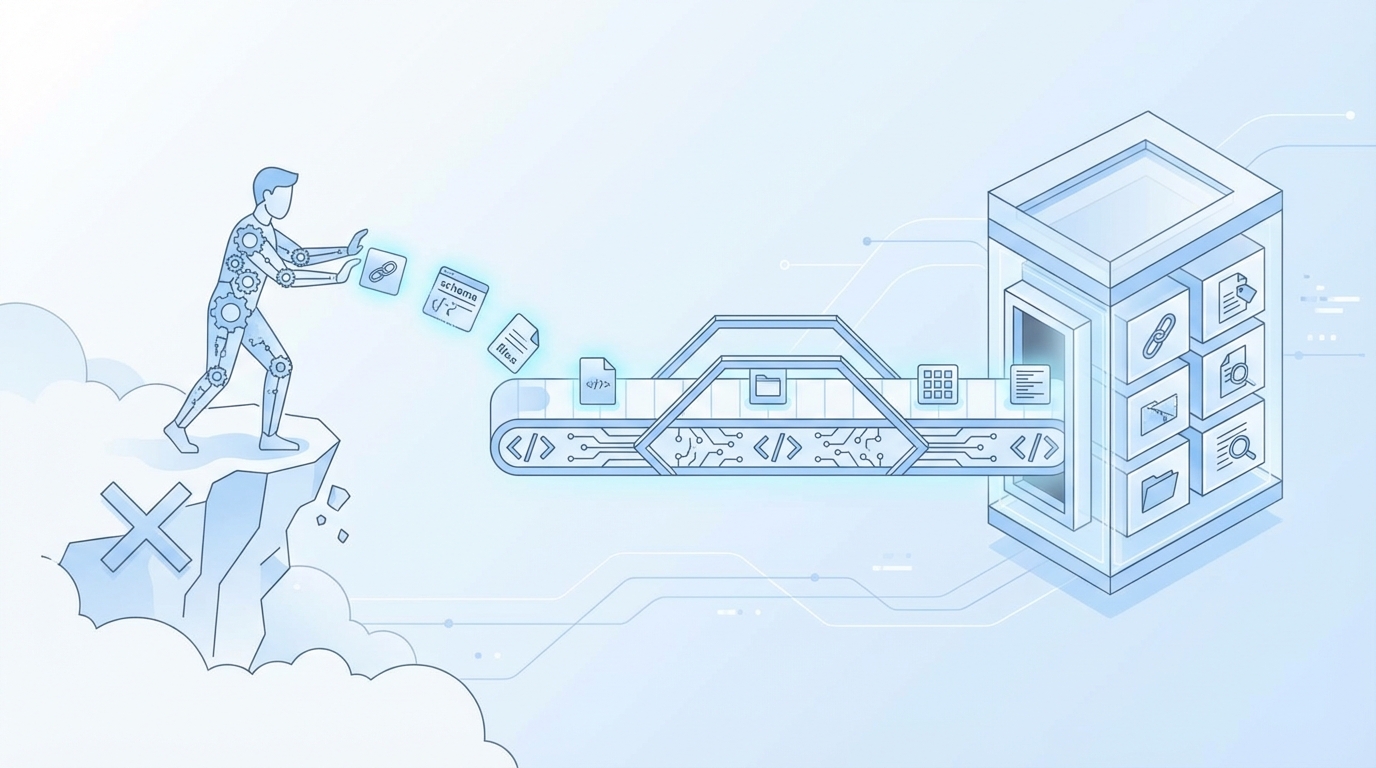
Publishing should not be a cliff dive. Move the fragile pieces out of prose and into code. Internal links, schema, visuals, filenames, alt text, and field mapping are deterministic tasks. Make them reliable and idempotent. When they are wrong, retry. When they are right, you ship.
Step 5: Post-process with code: inject internal links, JSON‑LD schema, and visuals
Treat finishing steps like a build. Select five to eight internal URLs from your verified sitemap only. Place links at natural sentence boundaries, with anchor text that matches the destination title. Generate Article, FAQ, and BreadcrumbList JSON-LD automatically. Create a hero image and two to three inline visuals from your brand asset library and place them where they add clarity.
Validate link targets exist. Validate schema. Generate descriptive alt text and filenames. Keep creativity in the prose, keep accuracy in code. That split removes a whole class of errors that usually sneak in late. If you want the why behind structured data, read why schema still matters.
Step 6: Add a QA gate with scores, thresholds, and refinement loops
Quality should not rely on an editor’s mood. Build a rubric with 80 or more checks across structure, clarity, brand alignment, information gain, snippet readiness, visuals, links, and schema. Set a minimum pass score of 85. If a draft fails, refine and re-test until it passes or hits a max loop count.
Weight categories to your risk profile. In regulated content, push KB accuracy and banned terms higher. In product content, push visuals and internal links higher. Log every failure reason. If the same category keeps failing, fix the upstream rule, not the downstream draft. For the governance pattern, use the checklist in qa systems. Also see the human-in-the-loop perspective in ACM’s research on quality control in AI systems.
When should a draft fail the gate?
You fail when differentiation drops below your floor, when section openers aren’t snippet-ready, when claims cannot be traced to the KB, or when visuals do not match section semantics. You also fail when internal links land below five, schema cannot validate, or banned terms cross your tolerance. Publish later, not broken.
Ready to eliminate avoidable clean-up cycles? Try using an autonomous content engine for always-on publishing.
How Oleno Automates This End‑to‑End
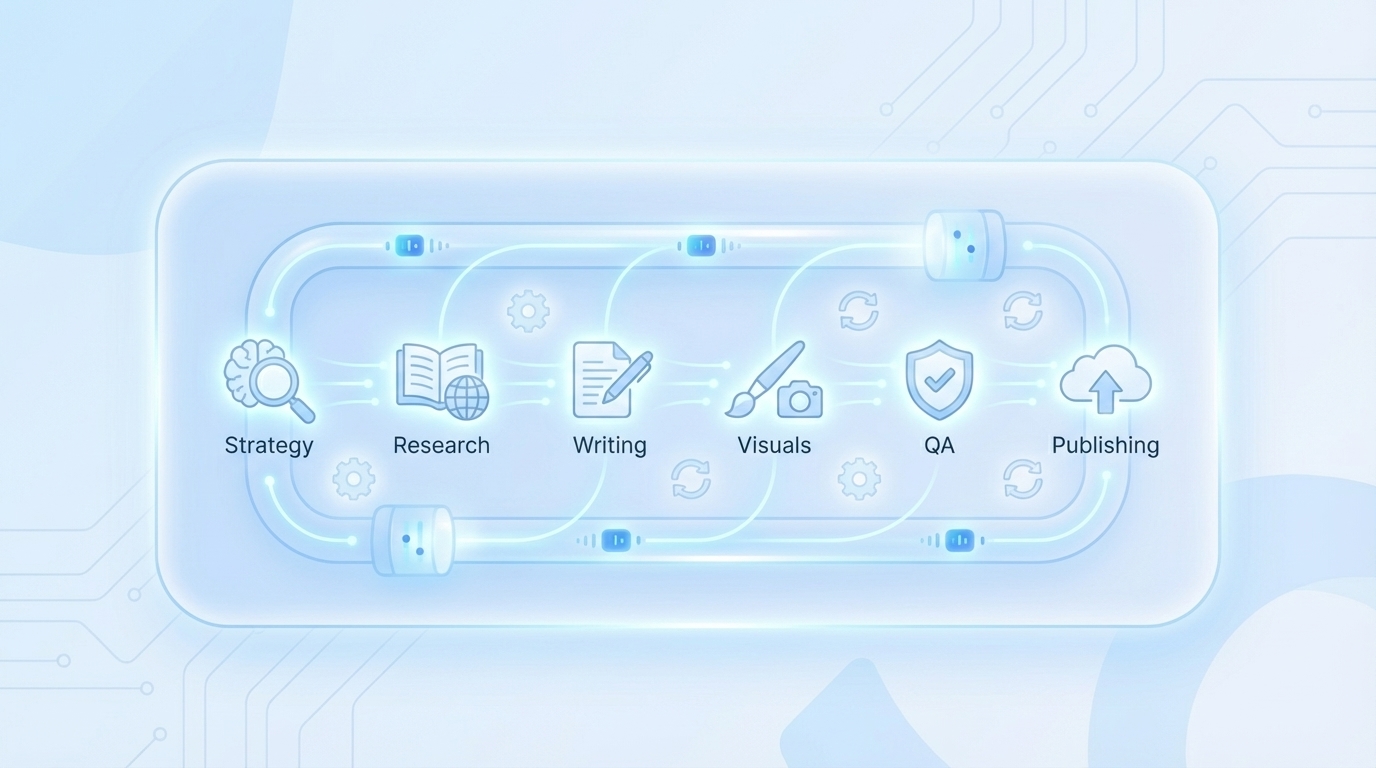
Oleno turns the framework above into a daily, closed-loop system. Strategy, research, writing, visuals, QA, and publishing run in one governed pipeline with logs and retries. You get a consistent, on-brand article that is ready to ship, not a draft that needs half a dozen people to finish.
Step 7: Connect CMS, logging, retries, and governance in Oleno
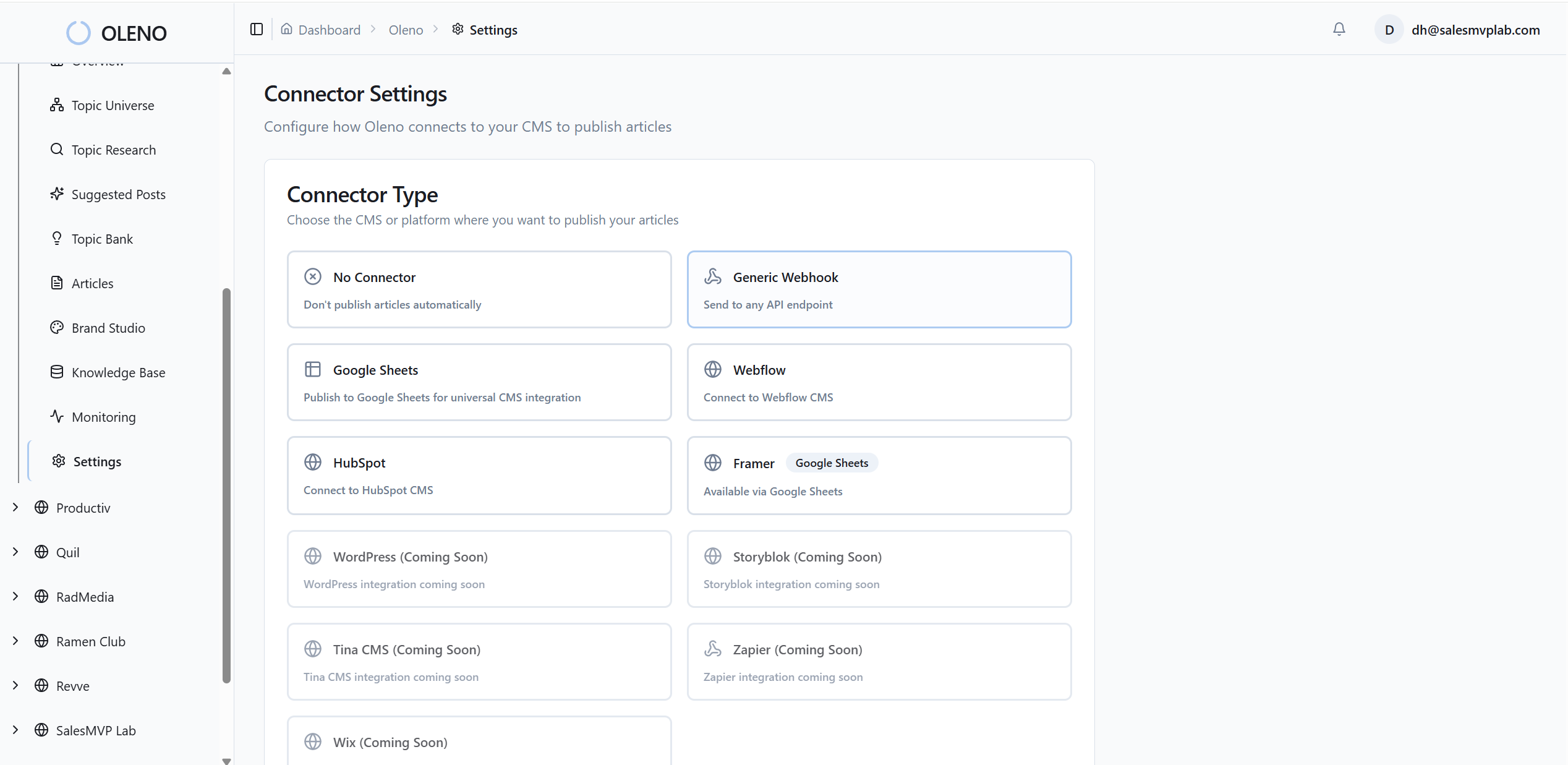
Oleno maps fields for WordPress, Webflow, or HubSpot, then delivers as draft or live while preventing duplicates. If a publish attempt fails, Oleno notifies and retries without creating dupes. Version history captures inputs, outputs, retrieval events, QA scores, and publish attempts so you can audit decisions without adding process.
You configure the knobs once. Topic Universe rules for clusters, saturation, and cooldowns. Brief thresholds for minimum Information Gain. QA pass mark of 85 or higher. Image generation rules for hero plus two to three inline visuals. Internal link targets restricted to your verified sitemap. Keep governance simple and opinionated. The connectors side is documented in publishing pipeline and integrations. The audit mindset aligns with themes in MIT Sloan’s piece on AI transparency and the operational scale noted by Graphite’s AI content report.
Who should own the pipeline?
Give each stage a clear owner. Marketing owns outcomes. Content Ops owns rules and QA. Engineering owns connectors and retries. Writers evolve into knowledge curators who shape the KB, examples, and anti-patterns. Editors become governance designers who tune the rubric and thresholds. Leadership sets cadence and coverage priorities through Topic Universe, not a pile of ad hoc requests.
This is where Oleno shines. Remember the 2.5 hours of average rework per post? Oleno eliminates much of it by moving accuracy and voice into governed steps, not human heroics. Oleno’s Topic Universe prevents over-coverage with clusters and cooldowns. Oleno’s brief stage calculates Information Gain and flags low-differentiation outlines before writing. Oleno’s draft generation uses your brand voice and KB to write long-form articles with snippet-ready openings. Oleno’s Visual Studio generates brand-consistent hero and inline images, matches product screenshots to relevant sections, and creates alt text automatically. Oleno injects 5 to 8 internal links from your verified sitemap, generates valid JSON-LD for Article, FAQ, and BreadcrumbList, and enforces a QA gate that blocks publishing until the pass mark is met. That 2am “broken link” or “off-brand image” escalation has fewer places to hide when Oleno owns the handoffs.
Want to see this system in your stack without a long setup? Try Oleno for free.
What changes for your team
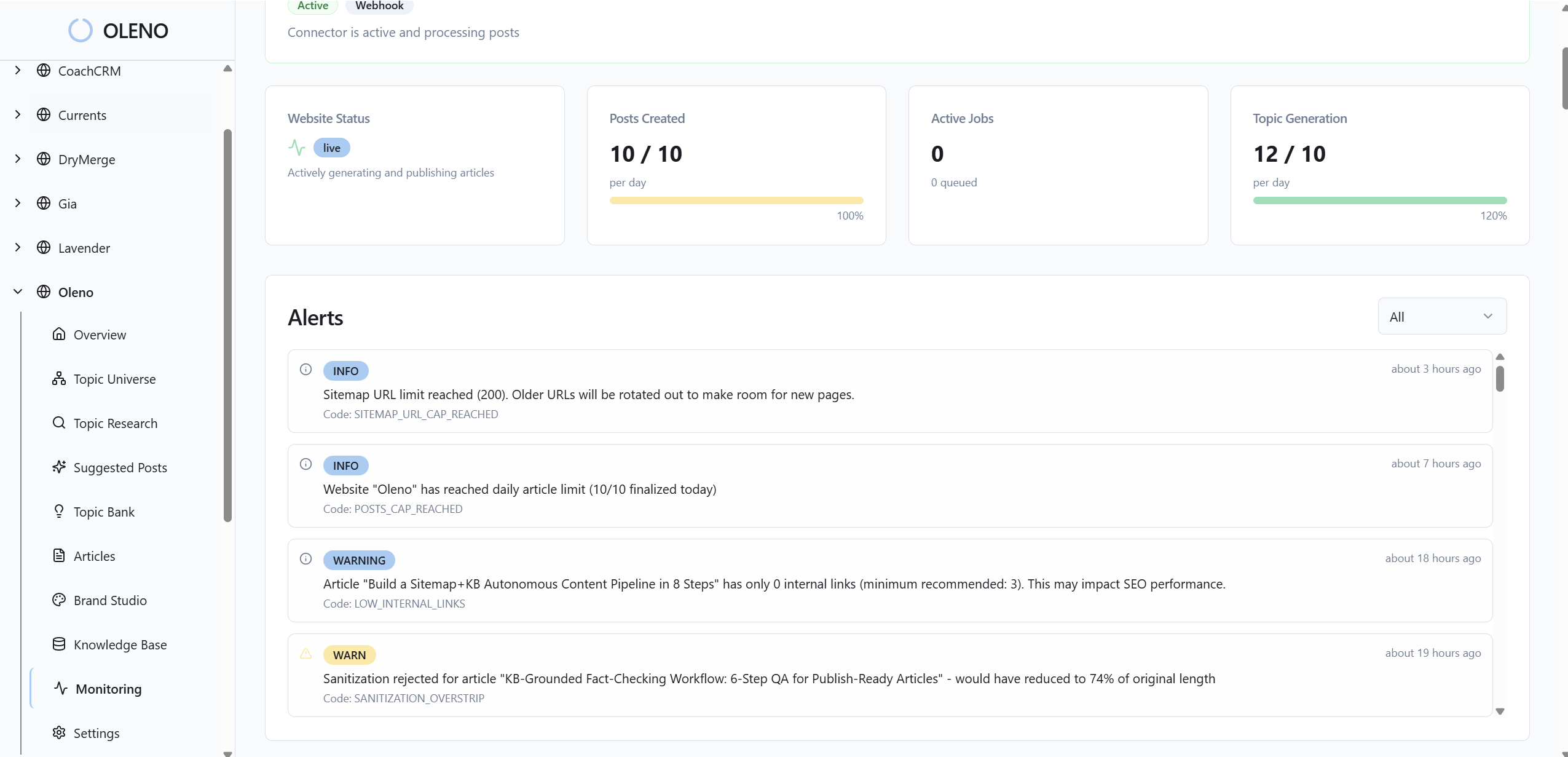
Publishing becomes daily, not occasional. Topics flow from rules, not gut calls. Visuals arrive with the draft, not a design request. QA is automated and loud enough to prevent silent failures. The logs help you adjust the system, not critique individual writers. That is how authority compounds over time.
Conclusion
Most teams try to fix content by writing faster. That rarely works. The friction hides in the system, not the paragraph. When you replace ad hoc prompts with an orchestrated pipeline, you control what gets written, how it looks, and how it ships. Errors shift left. Edits get lighter. Publishing stops breaking.
You do not need more clever prompts. You need a governed flow that starts at strategy and ends at publish with checks you trust. Map your Topic Universe. Enforce differentiation before drafting. Draft from your KB with voice rules. Treat links, visuals, and schema as code. Add a QA gate that refuses to ship broken work. Do that consistently, and your content stops being a project. It becomes infrastructure.
About Daniel Hebert
I'm the founder of Oleno, SalesMVP Lab, and yourLumira. Been working in B2B SaaS in both sales and marketing leadership for 13+ years. I specialize in building revenue engines from the ground up. Over the years, I've codified writing frameworks, which are now powering Oleno.
Frequently Asked Questions