Multi‑Brand CMS Versioning: Branching, Merge, and Rollback Patterns
Multi-brand sites look clean on the surface. Then a rollback hits, and you learn three brands quietly share a component, two teams tweaked the same snippet, and the “fix” ripples into places nobody expected. I’ve been in those war rooms. Smart people, broken structure. The content model and versioning patterns didn’t match how the brands actually operate.
What makes this tricky is the gap between intent and implementation. You plan for independence, but copy-paste shortcuts and shared partials creep in. You plan to roll back a single page, but translations, images, and templates live in different systems with their own version histories. If your CMS doesn’t enforce isolation and provenance, rollbacks turn into archaeology.
Key Takeaways:
- Treat brand and market boundaries as enforced namespaces, not folders
- Use branch-per-brand or branch-per-market to isolate history and reduce noisy merges
- Model dependencies explicitly so rollbacks restore coherent sets, not partial states
- Build policy checks that block risky publishes before they ship
- Keep a release manifest that pins templates, strings, and assets for clean rollbacks
- Make rollback a command with staged rollouts, not an emergency procedure
Why Separate Brand Sites Create Hidden Coupling That Breaks Rollbacks
Separate brand sites often drift into hidden coupling when shared components and copy-paste reuse slip past governance. That coupling breaks single-brand rollbacks because shared fragments move together. You need hard isolation via namespaces, branch-per-brand history, and protected templates to keep rollbacks scoped and predictable.
The coupling that copy-paste introduces
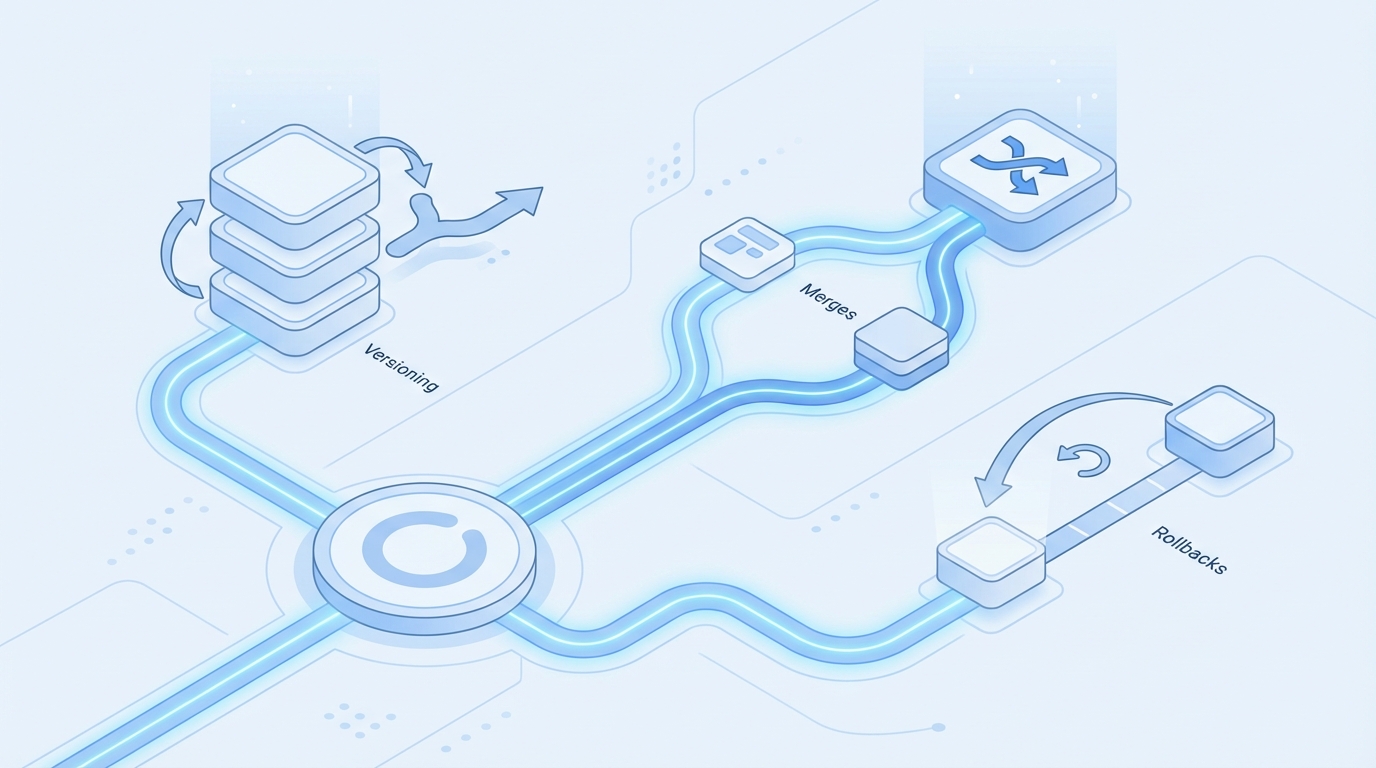
Copy-paste feels fast. You solve today’s request and move on. But every paste that isn’t backed by a versioned, isolated component creates invisible threads between brands. Later, a designer changes a “shared” hero block in one brand, and the others inherit a bug. Nobody planned it. The structure allowed it.
The fix isn’t more meetings. It’s isolation rules in your schema and CMS API that refuse cross-brand writes by default. Tie content keys to brand_id, market_id, and locale. Enforce tenancy at the storage layer, and require explicit, reviewable merges to move changes between brands. Then set your templates to look up only the right namespace so there’s no accidental bleed.
You still share when it’s worth it. You just share intentionally, with a versioned package that can be pinned per brand. That one change, making coupling explicit, saves hours of frustrating rework when you need to roll back only one site.
What does good multi-brand versioning require?
Write the non-negotiables as checks your platform must pass. Per-brand isolation and tenancy with enforced IDs. Branching that maps to ownership. Version history with diff and blame. Reversible deploys and clear audit trails. Approvals that match your SLAs, not a generic queue that blocks everyone.
I like to keep this list short and blunt. If your CMS can’t tag and restore by release, rollbacks will be guesswork. If it can’t diff rich text and component bindings, approvals will be slow or wrong. If it can’t block risky publishes when a shared component changes, you’ll keep firefighting.
You don’t need perfection. You need predictable, reviewable change. Set the bar there, and the merge and storage decisions get much easier.
Why one main branch is not enough
One main branch jams unrelated brands, markets, and hotfixes into the same timeline. That creates noisy diffs and unsafe merges. You can’t see who touched what with confidence, and a simple backport turns into a scavenger hunt.
Branch-per-brand or branch-per-market gives you independence where cadence differs. Protect main for release tags only. Use explicit merges with review gates when something truly needs to cross. The pattern has been battle tested in software for years, and the tradeoffs are well documented in Martin Fowler’s branching patterns. The twist for content is ownership and preview, which matter even more than they do for code.
Ready to skip the theory and see a system run this for you? Request A Demo.
The Real Root Causes Of Multi-Brand Versioning Failures
Multi-brand versioning fails when boundaries are cosmetic, dependencies are implicit, and merges ignore content-specific rules. The root cause isn’t effort. It’s that folder structures and generic branching don’t reflect how content, templates, and translations actually move in production.
Why namespace boundaries beat folder conventions
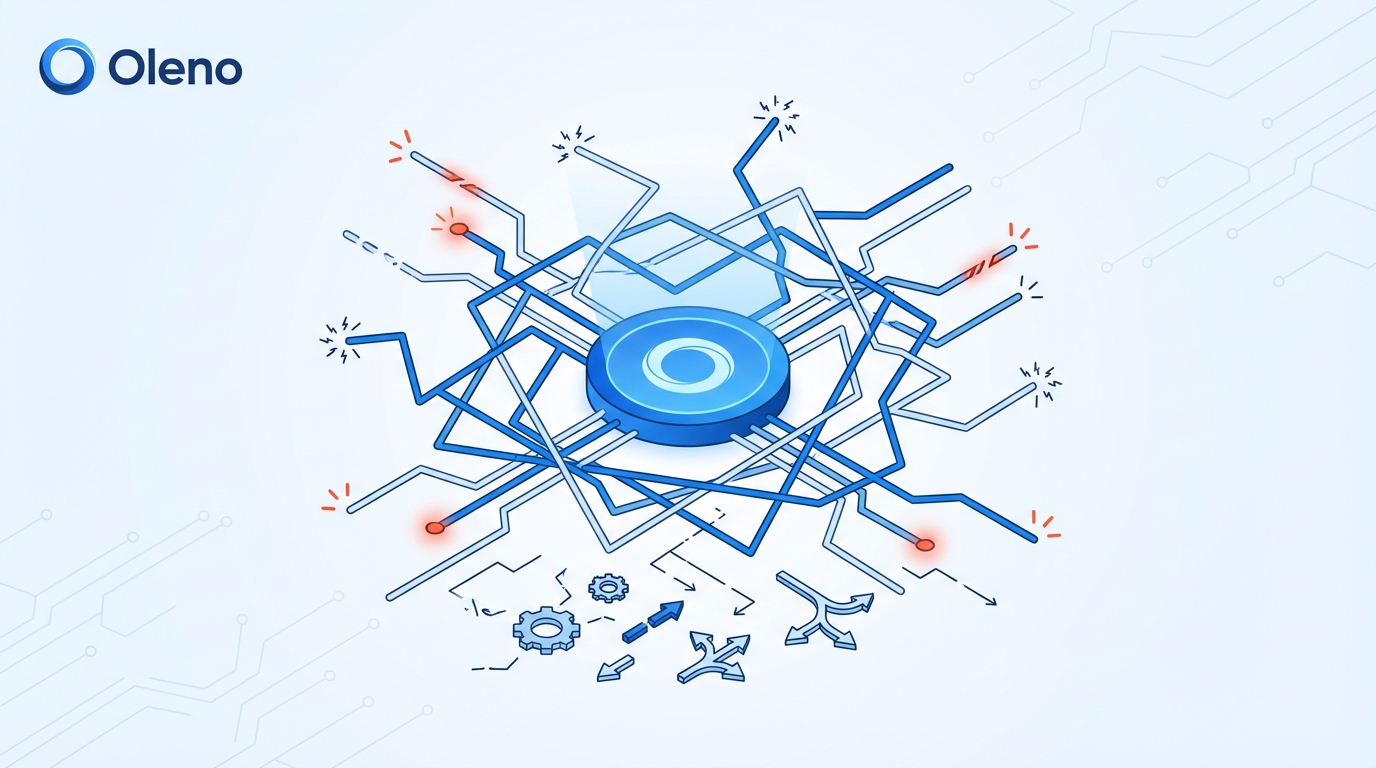
Folders look like boundaries. They’re not. Anyone can misplace a component, a script can write to the wrong path, and a shared include can jump folders with a single import. Namespaces enforced at the schema and API level stop cross-brand writes at the door.
Attach brand_id, market_id, and locale to every content key. Route reads and writes through tenancy-aware services. Expose folder paths as a UX convenience only. When your CMS enforces these rules, rollbacks and selective deploys become math, not guesswork. When it doesn’t, you’re relying on discipline that won’t hold under pressure.
I’ve seen teams resist this because it feels heavy. Fair. But light rules now beat heavy review later.
What traditional branching misses in CMS
Git-style branches help, but content isn’t just text. It has references, translations, and preview environments. A clean feature branch that ignores dependency rules looks fine in review, then breaks pages at render when a template version doesn’t match a component binding.
Define merge policies for asset references, translation keys, and template bindings. Your CMS should validate referential integrity before the merge, not after the release. If a translation key is missing, block. If a shared component changed structure, require approval from the platform owner. Mark Heath’s write-up on branching and merging anti-patterns covers why “trunk-like” flows fail when dependencies are implicit.
The hidden complexity of content dependencies
Templates, components, and localized strings drift at different speeds. That drift creates non-obvious conflicts a human reviewer won’t catch. Model dependencies explicitly. Store component versions alongside page versions, and include dependency hashes in your version metadata.
When you do this, two things happen. Your merges surface real conflicts early, with context. And your rollback playbooks restore a coherent set, not a partial snapshot that renders fine in staging and fails in production. It’s the difference between a five-minute revert and a 3am bug hunt.
The Hidden Costs Draining Your Release Budget
Multi-brand teams pay a hidden tax when merges are manual, provenance is weak, and approval rules are vague. The hours add up quietly. The real cost shows up in delayed launches, missed SLAs, and teams losing trust in the release process.
Engineering hours lost to manual merges and rework
Let’s pretend you’ve got three brands shipping weekly. Two hotfixes and one promo collide. Without automerge rules and enforced branches, engineers burn 6 to 10 hours reconciling content references and translation keys. Add two reviewers, one failed deploy, and you’ve lost a sprint day.
The kicker is rework. A hotfix lands, touches a shared component, and now brand B needs a second approval cycle. That’s another 3 to 5 hours across people. This isn’t about speed for speed’s sake. It’s about eliminating avoidable debt with guardrails a machine can enforce.
Perforce’s guidance on branching strategies ties this back to flow efficiency at scale. The lesson carries over to content when you treat components like packages and brands like products.
Compliance and audit exposure when versions go missing
Auditors ask simple questions. Who approved what, when, and why. If your CMS can’t show lineage, approvals, and a diff of claims, you invite friction. Store provenance events with actor, timestamp, and reason. Tag releases with immutable IDs. Pin content to a release manifest.
You’re not promising perfection. You’re making audit-friendly rollbacks and investigations practical within your SLAs. It calms legal reviews and keeps marketing from pausing a whole sprint just to reconstruct what changed.
How rollout SLAs break under cross-brand merges
One merge that touches a shared component can push a low-risk brand past its SLA because another team needs review time. That’s when “small” changes start to feel unpredictable. Isolate shared components into versioned packages, or pin them per brand and upgrade intentionally.
Your release math becomes predictable again. Reviews happen in the right place. And SLAs stop getting hostage to unrelated work.
Stop losing sprints to manual merges. Start shipping on a predictable cadence. Request A Demo.
The Release Night You Keep Firefighting
Release nights go sideways when hotfixes propagate unintentionally, rollbacks don’t align across systems, and ownership is unclear during conflicts. The fix is boring: scoped releases, manifests that pin versions, and routing conflicts to the right owners automatically.
When hotfixes land in the wrong brand
It happens. A quick fix ships to multiple brands because a shared component auto-deployed. The intent was local. The impact was global. Prevent this with protected branches, pre-publish tenancy checks, and release tags scoped to brand.
If a hotfix needs propagation, treat it like a backport merge with a tracked approval, not a silent copy. You’ll keep rollback scoped and fast, and you won’t surprise a brand owner with a change they never reviewed. Componize’s guidance on branch and merge strategies for CCMS maps cleanly here.
The 3am localization rollback that will not apply
Translations live in a TMS, images on a CDN, templates in your CMS. A rollback that doesn’t align versions across those systems fails at runtime. Build a release manifest that pins versions for page JSON, components, strings, and assets.
Roll back using the manifest, not guesswork. Stage the rollout by brand. Run smoke tests that render critical templates with pinned versions. It’s unglamorous. It saves hours when you need it most.
Who owns approval when conflicts happen?
If ownership lives in Slack, you’ll debate while the clock runs. Define ownership in workflow. Brand managers approve brand branches. Localization approves translation merges. Platform approves shared components. Route conflicts to the owner automatically with blocking status checks.
The goal isn’t more process. It’s speed with accountability. Clear rules, fewer meetings.
A Production-Ready Versioning Architecture For Multi-Brand CMS
A production-ready approach combines enforced namespaces, branch-per-brand or market, explicit dependency modeling, and release manifests. The result is predictable merges, scoped rollbacks, and approvals that fit your SLAs. You’ll trade a bit of setup for a lot less firefighting later.
Choose and enforce your branching and namespace model
Pick branch-per-brand for independence. Use branch-per-market when localization cadence differs. Some teams run a hybrid, with release branches for global campaigns that need coordination. Protect branches with required checks, and keep main as release-only with tags.
Enforce brand_id and market_id in your content keys and APIs so coupling can’t sneak in. This gives you safe sandboxes and predictable promotions. It also shortens the distance between “found a bug” and “rolled back cleanly.”
Design your version metadata and storage strategy
You need context to make good decisions fast. Store semantic version, author, change_context, brand_id, market_id, locale, dependency_hashes, and release_id. Delta diffs are cheaper for storage and faster for history views. Snapshots are simpler for rollback and audits.
Most teams do both. Deltas for day-to-day history and previews. Periodic immutable snapshots for compliance and quick restore. That dual model makes reviews tighter and emergencies calmer.
Automate merges with rules and human-in-loop approvals
Define merge policies by content type. Automerge safe fields like copy edits. Require approval for structural changes or shared components. Add conflict adapters per field. Last-writer-wins for non-critical metadata. Semantic merge for rich text. Hard conflicts for schema changes.
Route conflicts to owners with a focused UI. Don’t drown reviewers in noise. Show the diff, the dependency impact, and the release manifest change. Keep it human, but only where it counts.
Build a rollback playbook with checks and staged rollouts
Make rollback a command, not an emergency. Use release manifests. Tag each deploy. Run pre-checks on dependency integrity. Stage rollouts by brand. Add health checks and smoke tests that render critical templates with pinned versions.
Capture audit events so you can explain why rollback happened and what changed. It won’t remove all risk. It will make the outcomes far more predictable.
How Oleno Supports Safe Versioning, Merges, And Rollbacks
Oleno turns the rules above into a repeatable system. You define governance, approvals, and publishing rules once. The engine applies them every time, so content ships on a steady cadence without constant coordination. The practical benefit is fewer late-night surprises and cleaner rollbacks when you need them.
Content lineage and audit trails you can trust
Oleno records provenance across the pipeline, capturing who changed what and why as work moves from brief to draft to publish. That supports brand-level approvals and clear diff context when merges get tricky. Pair lineage with release tagging in your CMS so every publish event is audit-friendly. Oleno keeps the history consistent so investigations are faster and rollback decisions tie back to real changes, not hunches.
I like this because it shifts review from memory to evidence. You spend less time reconstructing and more time resolving.
Policy checks that block risky publishes
Before anything goes live, Oleno enforces the rules you set, from voice and product truth to structural checks. If a shared component changed, if a claim falls outside approved boundaries, or if a dependency looks unsafe, Oleno can block publishing until required checks pass. You translate approval gates into policy, then the system runs them every time. Less frustrating rework, fewer surprise cross-brand overwrites, and a lot less anxiety around Friday deploys.
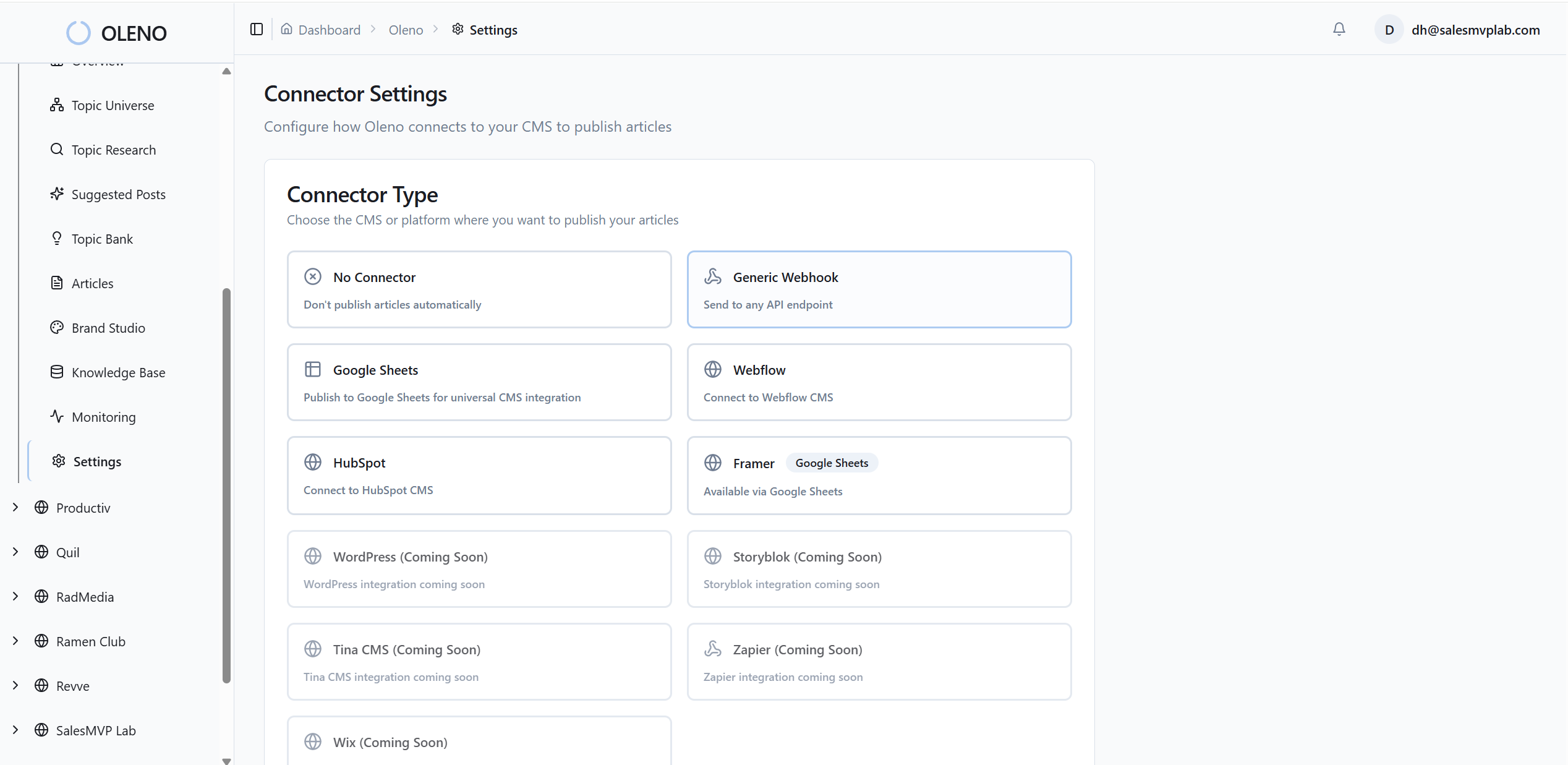
CMS publishing with idempotency and controlled rollouts
Oleno publishes directly to major CMSs and supports idempotent operations to avoid duplicate or partial writes. Combine that with your branch model and staged rollouts for safer deploys. If you need to revert, your release steps are repeatable, and the platform won’t surprise you with side effects from prior runs. It’s not glamorous, but it’s what reduces risk when multiple brands ship weekly.
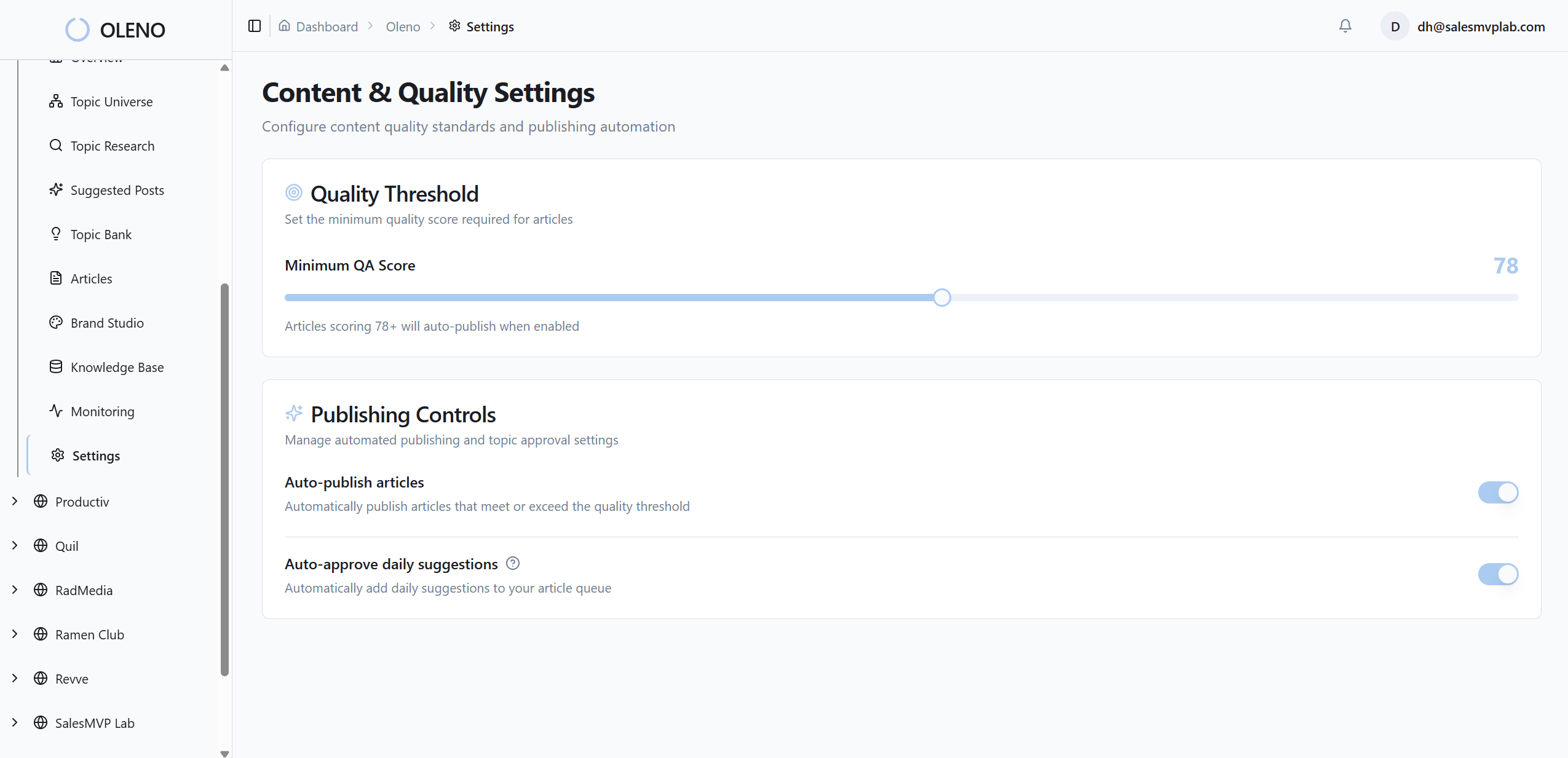
Operating signals that keep quality steady
You define SLAs for publish success and set an error budget for acceptable failures. Oleno provides the governance and QA enforcement so your content engine stays within those bounds. Visibility into output and quality trends lets you spot drift early, tie it back to where it started, and adjust policies. It’s about predictable operations across brands rather than chasing perfect uptime.
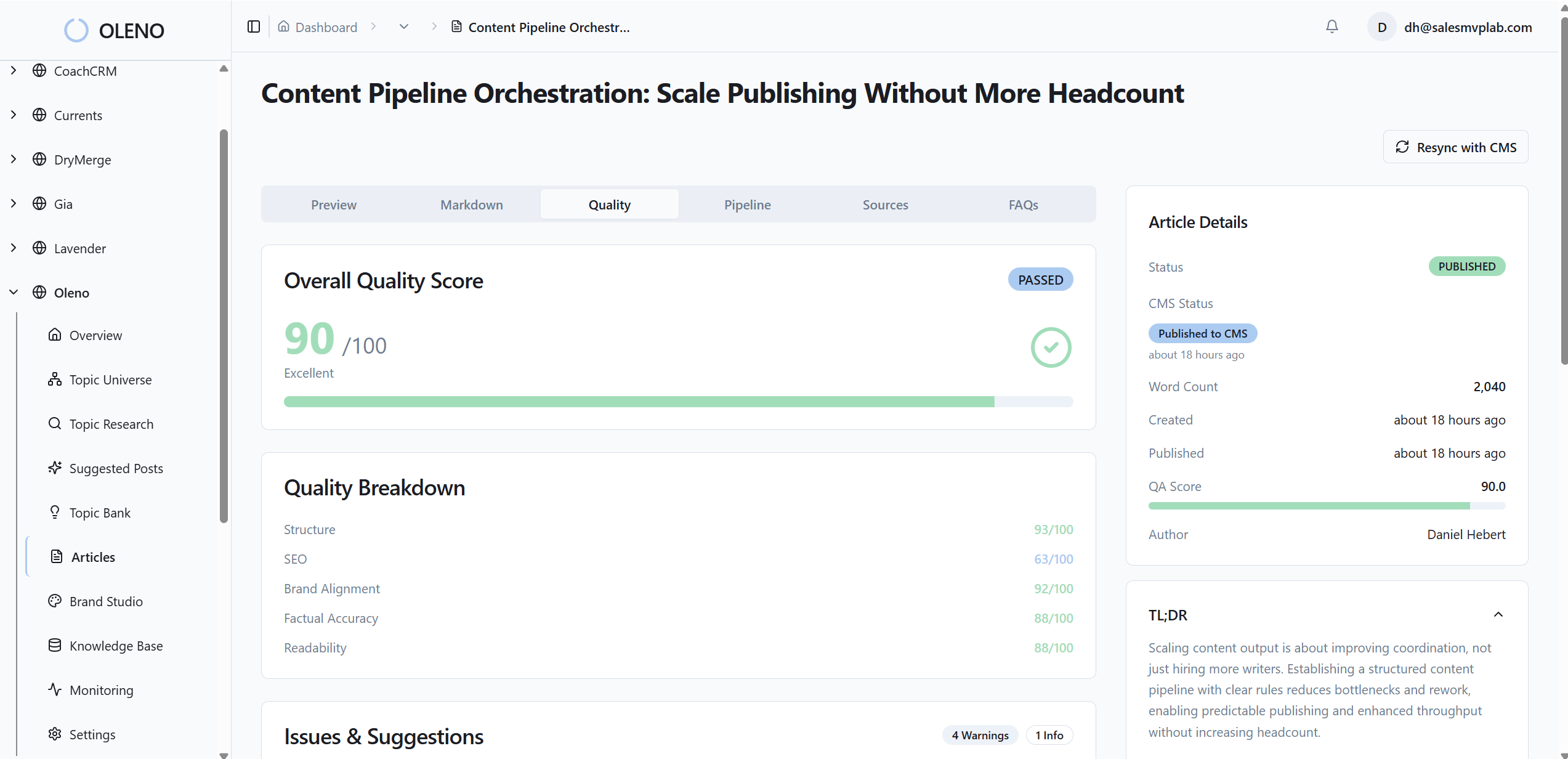
3x fewer emergency rollbacks within a quarter. That’s the kind of stability Oleno aims for. Want to see it with your setup? Request A Demo.
Conclusion
Multi-brand versioning breaks when structure is loose and boundaries are implied. You don’t fix that with more heroics. You fix it with enforced namespaces, branch-per-brand history, dependency-aware merges, and release manifests that make rollbacks boring again. Encode the rules once, let the system run them daily, and keep humans focused on decisions only they can make. When you do that, release night stops being a gamble and becomes a routine.
About Daniel Hebert
I'm the founder of Oleno, SalesMVP Lab, and yourLumira. Been working in B2B SaaS in both sales and marketing leadership for 13+ years. I specialize in building revenue engines from the ground up. Over the years, I've codified writing frameworks, which are now powering Oleno.
Frequently Asked Questions