Niche Language Playbook: 10 Steps to a Distinct Brand Voice
Language feels off. The article reads fine, the design looks fine, the SEO checklist is green, yet something still blurs your brand. Same product, different nouns. Same promise, different verbs. People walk away remembering… nothing specific.
A simple shift: Distinctiveness is rarely about adjectives or “friendly vs. authoritative.” It’s your nouns and verbs, used intentionally, early, and often. You own a handful of phrases, place them on purpose, and build recall with repetition. When language gets systematic, your funnel gets simpler and your publishing gets faster.
Key Takeaways:
- Define five phrases you want to own, then place them intentionally in H1s, first H2s, and opening paragraphs
- Measure voice drift by tagging core terms, approved synonyms, and banned phrases across 20–30 assets
- Quantify rework, then gate publishing on a minimum voice alignment score to stop expensive drift
- Tie nouns to visuals so screenshots, alt text, and filenames reinforce the same language
- Use snippet-ready openings for every H2 to improve quote-ability for both search and LLMs
- Create exception codes to handle edge cases without weakening your rules
- Review metrics monthly and update the lexicon deliberately, not by preference
Why Differentiation Lives In Your Words, Not Tone
Distinctive brands win attention because their language forms patterns people can’t miss. You choose a few phrases, repeat them in the places that matter, and reduce everything else. That consistency compounds. A product page that says “pipeline” up top and uses it throughout beats “workflow” in one section and “hub” in another.

What is niche language and why does it matter?
Niche language is your operating system, not your style guide. It is the set of terms you want associated with your brand and product, repeated with intent across priority placements. Define five phrases people should remember, then decide where they appear first, where they appear most, and where they never appear.
Start by mapping the category’s overlap. Run a simple side-by-side word cloud of your site versus the top five competitors to spot sameness. If your core nouns and verbs mirror theirs, you blend. Reduce shared terms. Elevate owned terms. Distinctiveness comes from consistent term placement, not from warmer adjectives.
Note: You still need familiar phrasing for search. Pair query language in titles with your distinct terms in body sections. You are not choosing either or, you are sequencing both so people find you, then remember you.
The hidden cost of sounding similar
Similarity slows everything. When readers cannot tell you apart in one scroll, funnel friction creeps in. Drafts bounce between editors, reviews stall, CTAs get tweaked to match whatever noun survived paragraph three. Quantify it: count off-brand synonyms per 1,000 words and how many edits it takes to fix them.
The visual layer pays the price too. If copy says “workspace” in one post and “hub” in another, your screenshots, captions, and alt text drift. That hurts retrievability for search and for assistants that cite sections. Align the nouns and the images follow. The outcome is quiet but real: fewer edits, faster approvals, cleaner recall.
For extra context on tone versus clarity, see NN/g’s research on tone of voice and user perception. It shows tone matters, but clarity and consistency drive trust.
How do you know you’re ready to systematize language?
It's time when patterns repeat. Editors are rewriting the same phrases weekly. Creators are asking “which term should I use?” in Slack. Product marketing is re-explaining naming in every brief. That is not a one-off mistake, it is a governance gap. Codify once, publish faster and safer everywhere.
If your team needs proof that systems outpace one-off fixes, compare this against your own operations. The autonomous systems case shows why coordination, not speed alone, drives authority.
Treat Language As A System You Can Measure
You can measure language the same way you measure coverage or defects. Start with drift, then coverage, then placement. The math is simple. The discipline is what matters. Make the numbers visible and your team will adjust without endless meetings.

What should you measure first?
Start with voice drift. Sample 20–30 recent assets across channels and tag term usage: core terms, approved synonyms, banned phrases. Calculate drift rate as off-brand instances divided by total term instances. If drift sits above 15 to 20 percent, either rules are missing or ownership is fuzzy.
Coverage is next. Of your five core phrases, how many appear in the first 200 words of each asset? Track first-use placement. Aim for eighty percent or more of assets introducing at least one core term up top. That early exposure shapes memory and reduces rewrites later.
Where do rules live so they stick?
Rules only stick where work starts. Put them in the brief and in the template. Add a term-first block that forces core nouns and verbs into the H1, the first H2, and the opening paragraph. Include “never use” with concrete examples. Keep the sheet short enough to scan, but clear enough to remove ambiguity.
If you are building language governance into the way you ship, anchor it to an orchestration approach. Process beats preference. A simple rule enforced early prevents five edits later.
Curious what this looks like in practice? Try generating 3 free test articles now.
The Hidden Costs Of Voice Drift You Can Stop
Voice drift looks harmless until you count the hours and the missed recall. Small inconsistencies pile into real costs. The fix is not heroic editing. It is fewer choices and earlier placement. Prevent, then publish.

The hidden cost of rework
Suppose your team ships twenty pieces per month. If forty-five minutes per piece goes to editing phrasing and fixing inconsistent nouns, you are burning fifteen hours monthly, roughly one hundred eighty hours yearly. At a seventy-five dollar loaded hourly cost, that is thirteen thousand five hundred dollars. Not catastrophic, but steady and unnecessary.
And that is just editorial time. Add creative time for redoing captions and alt text, and a few hours of PM bandwidth to chase approvals. Drift compounds across channels. If this sounds familiar, the content operations breakdown will mirror the friction you are feeling.
Why does drift hurt discoverability?
Mixed naming fractures how machines index your content. Search engines and assistants look for consistent patterns. If “workflows” and “pipelines” alternate without intent, your entity footprint is fuzzy. You rank or get cited less often than you should. Align the lexicon and structure sections for snippet capture to improve quote-ability.
There is a human layer too. People process inconsistency as uncertainty. Data on branding and recall from sources like Huddle Creative’s branding statistics and NN/g’s tone and voice guidance both point to the same direction: consistent language supports trust and recognition.
The Playbook: Steps 1–3
You do not fix drift by asking writers to “be more consistent.” You fix it by giving them fewer choices and clearer placements. Audit. Define. Map. Three steps that shrink debate and speed up shipping.
Step 1: Audit, sample, tag, and quantify drift
Pull a stratified sample: five web pages, five blogs, five emails, five ads. Build a two-column sheet labeled “intended term” and “found variants.” Tag each instance as core, approved, or banned. Compute off-brand rate. Capture first-use placement and CTA language to see where drift clusters.
Then build a source-of-truth comparison. Include product copy, sales decks, and onboarding emails. If the website says “orchestration” and sales uses “automation,” choose one or define context rules. Note every contradiction and decide once. That single decision prevents fifty micro-edits next month.
Step 2: Define, create a tiered lexicon
Create four tiers. Tier 1, core terms that must appear. Tier 2, approved synonyms used sparingly. Tier 3, context-only terms for FAQs or competitor comparisons. Tier 4, banned. For each term, add a definition, do and do not examples, and first-use preferences. Keep it to one page per term so it gets used.
Verbs matter as much as nouns. Choose verbs that set posture, like enforce, verify, publish, measure. Ban mushy verbs that create ambiguity. Verbs drive narrative clarity and CTA cohesion. If you want more perspective on brand voice foundations, skim SmashBrand’s brand voice development guide.
Step 3: Map, tie terms to archetypes and personas
Map terms to archetypes and personas. For product pages, require core nouns in H1 and H2. For thought leadership, introduce them by section two. Align personas to term depth, from lite explanations to expert shorthand. Remove gray areas with a should or should not matrix so people are not guessing mid-draft.
Examples help here. “Banned term appears only inside a quote or a competitor mention.” “Context-only term is limited to FAQs and support docs.” Ambiguity creates drift. Clarity returns hours to your week.
The Playbook: Steps 4–7
Codify the rules where creators start. Then make the rules enforceable, visible, and mirrored in images. That is how the system holds, even when deadlines push.
Step 4: Codify, brief templates and style snippets
Add a term-first block to every brief: core terms, approved synonyms, banned phrases, and first-use placements. Include two or three style snippets that demonstrate sentence rhythm and preferred structure. Make the examples short enough that people reuse them, not bookmark and forget.
If you want a deeper walkthrough of rule design, see the internal primer on a brand studio rules setup. It shows how tone, phrasing, and banned terms can be enforced in practice without overcomplicating the workflow.
Step 5: Enforce, QA rules and thresholds
Translate rules into checks. Fails if a banned term appears. Warns if first use is missing by the first H2. Passes at or above an eighty-five voice alignment score. Gate publishing on the score. Do not debate after the draft, enforce before it ships. Humans review edge cases. Rules catch the rest.
Add exception codes. Not all violations are equal. E01 is a competitive quote. E02 is a legal requirement. Every exception is logged with owner and expiry date. If a code repeats, update the rule or schedule training. For perspective on why rules beat prompts, read this contrast on why AI writing falls short. And if you are building tooling, a brand voice linter is a simple starting point.
Step 6: Visuals, mirror language in imagery
Write a micro-guideline for visuals. If the copy uses “pipeline,” hero images avoid generic laptops and show flows, stages, or connectors. Tag product screenshots with the same terms you enforce in copy so captions and alt text align. This is small work that pays off.
Generate alt text rules. Use a pattern like core noun plus action verb plus context, then keep filenames consistent. Visual retrievability improves when copy and images share the same nouns and verbs. As a reminder, the goal is consistency, not decoration.
When should you expand the lexicon?
Add terms when product positioning shifts, not when one creator prefers different phrasing. Vet additions monthly. Test new terms in controlled placements first, FAQs or comparison tables, then graduate the winners to core. You want deliberate growth, not drift by preference.
Ready to reduce editing cycles with enforceable rules? Try using an autonomous content engine for always-on publishing.
Steps 8–10 And How Oleno Operationalizes Them
Systems need feedback. Measure a few things that matter, run a simple governance cadence, and structure for citations. That is how you get recognized by both people and machines without chasing dashboards all day.
Steps 8–10, measure, roll out, and calibrate for citations
Track four numbers monthly: voice drift rate, first-use coverage, QA pass rate at first attempt, and exception count by category. Use a simple sheet and a thirty-minute review. Invite creators to flag unclear rules. Update the lexicon when exceptions cluster, not when opinions get loud.
Run a short training once, then a quick weekly standup for a month to handle edge cases. Assign owners for the lexicon, templates, and QA rules. Publish change logs and effective dates. Consistency needs time in market, which is why a ninety-day cooldown before reworking core terms helps adoption stick.
Calibrate for quote-ability. Open every H2 with a forty to sixty word direct answer that uses one core term. Add FAQs and schema when relevant. Keep paragraphs scannable and self-contained. This structure increases eligibility for featured snippets and AI citations, which aligns with research like Cognizant’s perspective on voice interfaces.
How does Oleno make this easier?
Remember the editing tax and the 85-score gate you wanted. Oleno operationalizes those patterns so you do not manage them by hand. In practice, Oleno’s Brand Studio enforces tone, phrasing, and banned terms at every stage, while QA-Gate evaluates drafts against 80 plus criteria, including information gain and snippet readiness, before anything ships.
Here is how the system reduces drift and increases recall. Oleno’s brief generation includes competitive research and an Information Gain Score, which flags undifferentiated outlines early. Drafts open every H2 with snippet-ready paragraphs that follow a 3-sentence structure for direct answers, context, and examples. Visual Studio aligns images with your language rules, associates product screenshots to relevant sections, and auto-generates alt text and filenames, so your nouns match across copy and visuals.
Deterministic internal linking guarantees 5 to 8 links per article from your verified sitemap, with exact-match anchor text to page titles, no fabricated URLs. Schema markup is generated automatically and passed through the CMS connector, so structure and meaning stay intact. Topic Universe uses a ninety-day cooldown to prevent over-coverage, which supports consistent term placement over time, not just per article.
If you are moving toward always-on publishing, the payoff is fewer choices and clearer placements at scale. That is the point of ai content operations. Want to see the pipeline run end to end without manual prompting? Try Oleno for free.
Conclusion
Language is infrastructure. When you treat it that way, speed and distinctiveness stop fighting each other. You define five phrases you want to own, enforce them where drafts begin, and give creators fewer choices, not more. Rework drops. Approvals move. Recall improves.
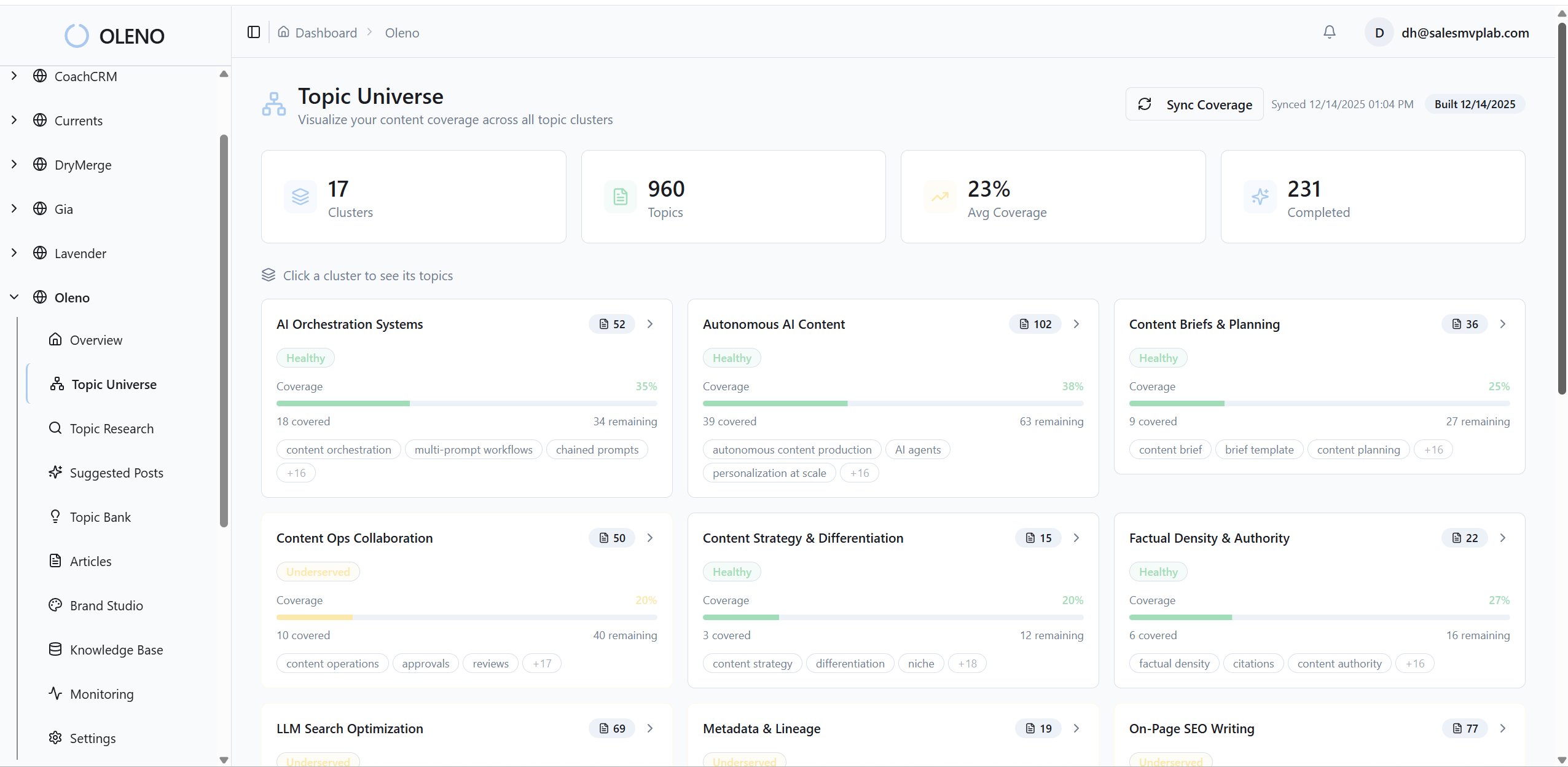
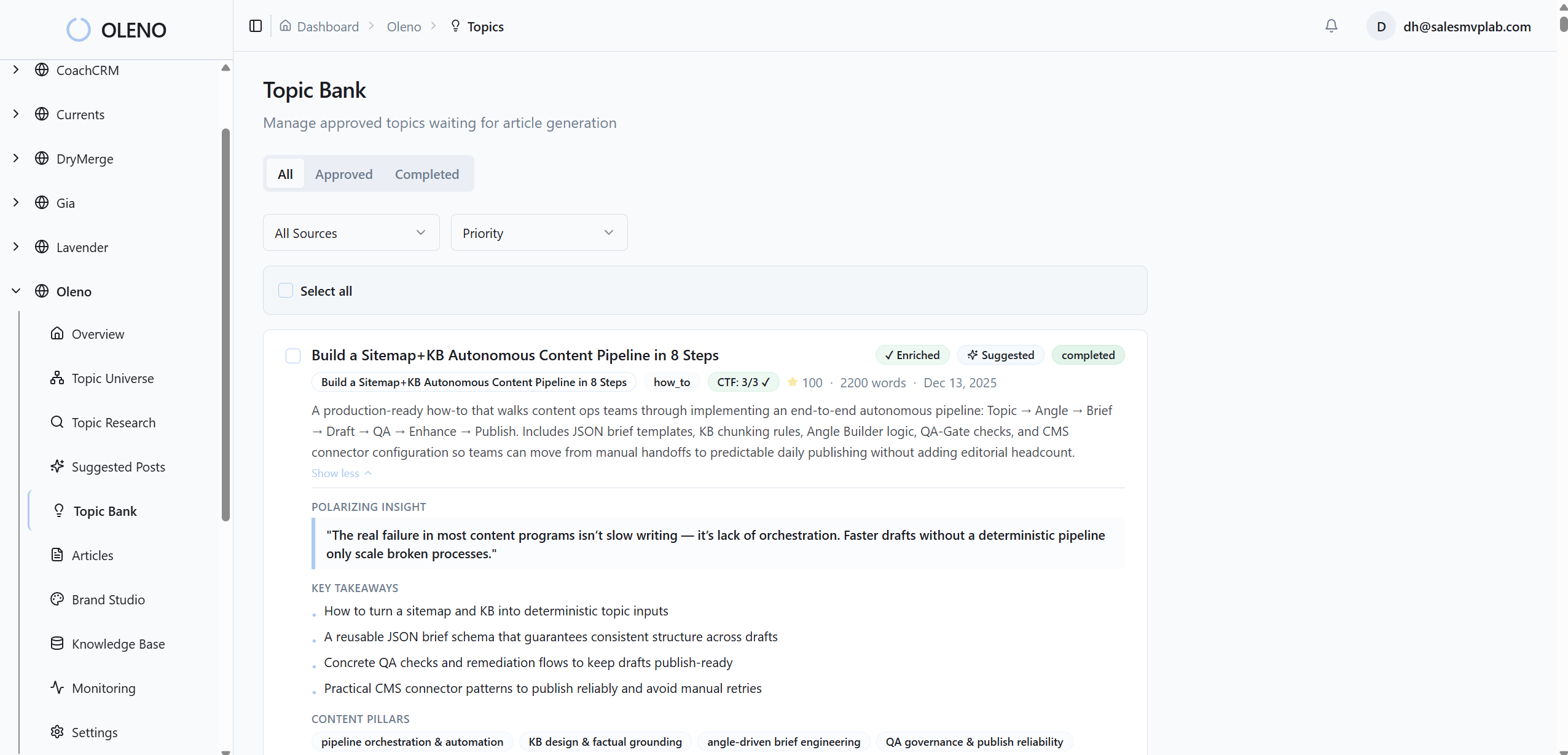
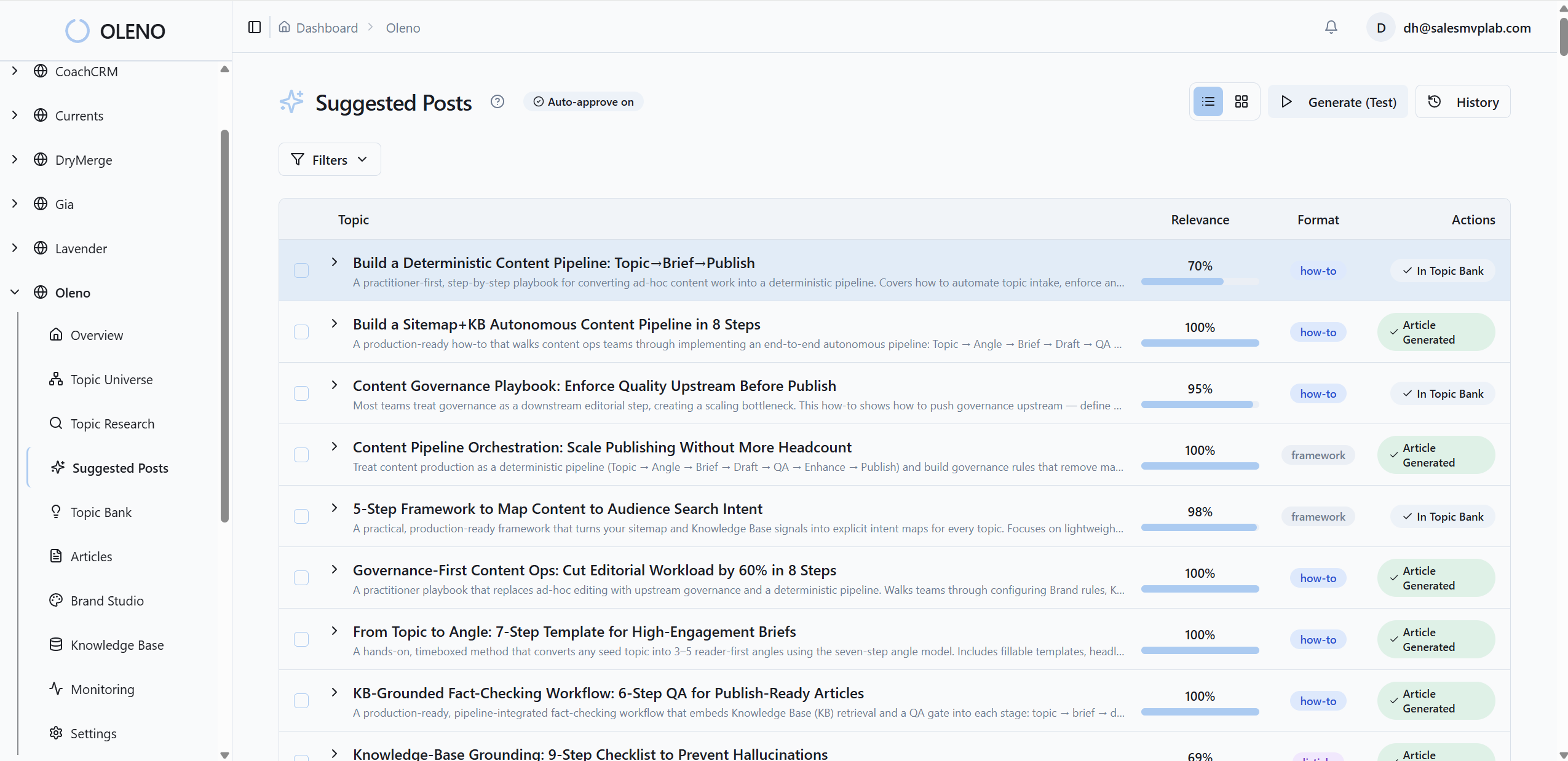
You can start small. Audit twenty assets. Decide the nouns. Gate on a score. Then build the loop that keeps those decisions in place. If you want the system to do the holding for you, consider how Oleno’s briefs, QA-Gate, Visual Studio, and deterministic publishing turn rules into repeatable outputs. The details are the difference. The language is the brand.
About Daniel Hebert
I'm the founder of Oleno, SalesMVP Lab, and yourLumira. Been working in B2B SaaS in both sales and marketing leadership for 13+ years. I specialize in building revenue engines from the ground up. Over the years, I've codified writing frameworks, which are now powering Oleno.
Frequently Asked Questions