Oleno vs Outrank: Complete Comparison Guide

Back when I was doing SEO the hard way, the thing that kept biting us wasn’t “can we write more.” It was “can we keep quality, voice, and accuracy while we scale past the first 50 posts.” That’s the real fork in the road with Oleno vs Outrank: one is a traffic automation bet, the other is a governed production bet.
If you’re a small team trying to publish consistently and you’re okay doing some manual cleanup, Outrank can be a solid fit. If you’re trying to scale comparisons, alternatives, and demand-gen content without playing whack-a-mole on brand voice and made-up claims, that’s where Oleno is intentionally built differently.
Quick Reference: Oleno vs Outrank
| Factor | Oleno | Outrank | Who benefits |
|---|---|---|---|
| Primary goal | Governed, repeatable demand-gen content at scale | Automated long-form SEO content aligned to SERP signals | Teams needing strict brand/claims control vs teams prioritizing traffic volume |
| Quality control | Brand/Product/Marketing Studios + Knowledge Archive + QA Gate before publishing | On-page scoring and SERP-aligned outlines; manual review advised for accuracy (Outrank AI SEO Content Generator) | Regulated or brand-sensitive orgs vs fast-moving SMBs |
| Workflow model | Deterministic pipeline (Discover → Angle → Structure → Create → Validate → Publish) | Keyword plan → SERP brief → Generate → Optimize → Publish (Outrank overview) | Ops leaders who want predictability vs creators optimizing for speed |
| Acquisition formats | SEO Studio + Competitive Studio (comparisons, alternatives, long-form) | Long-form articles plus SEO workflow tooling (Outrank AI SEO Content Generator) | Teams running structured acquisition programs vs blog-first teams |
| Publishing | Idempotent direct publishing to WordPress, Webflow, Storyblok, HubSpot | One-click publishing to WordPress, Webflow, Notion; API (Outrank site) | Ops teams concerned with duplicate-free, reliable deployment |
| Starting price | from $449/mo (SEO + Social), tiers up to $449/mo (Full-Funnel GEO) to $1,349/mo (Narrative Control) | $49/mo promo ($99/mo standard) (Outrank AI SEO Content Generator) | Predictable post-per-day budgets vs lowest monthly sticker price |
Key Takeaways:
- Outrank fits SMBs that want SERP-driven long-form drafts fast, then plan to edit and fact-check before publishing (Outrank overview).
- Oleno fits B2B teams that need repeatable output with governance, so voice drift and invented claims don’t scale with volume.
- If you care about live on-page scoring cues in the editor, Outrank leans harder into that positioning (Outrank AI SEO Content Generator).
- If your plan includes lots of comparisons and “alternatives” pages, Oleno’s production system is built around those acquisition formats, not bolted on later.
Oleno vs Outrank: Who each platform is really built for
Oleno is built for B2B teams that want a repeatable, governed content engine, while Outrank is built for smaller teams that want an automated SEO workflow anchored in SERP analysis and fast publishing. Outrank talks a lot about producing long-form SEO content and shipping it quickly as part of an end-to-end flow (Outrank AI SEO Content Generator). Oleno is more “set the rules once, then run production without babysitting.”
If you’ve never scaled content past a few posts a week, this can sound like splitting hairs. It’s not. The moment you try to publish at volume, all the annoying stuff compounds: tone drift, random claims, duplicate angles, and the classic “why does this article sound like it was written by a different company.”
Evaluation criteria that actually predict outcomes
The criteria that predict whether you’ll be happy in 90 days are governance, repeatability, and publishing hygiene, not just draft quality. Outrank positions itself as an “all-in-one” style SEO content workflow with SERP-driven generation and publishing (Outrank overview). Oleno is basically saying, “Cool, but can you do that at 300 pages without your brand turning into soup?”
I like to think of it like this. If the tool helps you create one good post, that’s nice. If it helps you create 200 good posts that all sound like you, don’t contradict each other, and don’t invent product features, that’s a different level of problem.
Here’s what I’d put on the scorecard when you’re comparing AI SEO content platforms:
- Governance controls: Can you encode voice and product boundaries, or is it mostly prompt discipline?
- Repeatable structure: Do outputs come out consistent enough that editors can move fast?
- Accuracy workflow: Does the system actively block questionable claims, or does it just produce and hope?
- Duplication protection: Does it prevent cannibalizing yourself as you scale?
- Publishing reliability: Does publishing create duplicates or messy CMS cleanup work?
Quality risks and governance requirements most teams overlook
The biggest risk with scaling AI content isn’t that a draft is mediocre. It’s that a draft is confidently wrong, and you publish it 50 times before you notice the pattern. Outrank itself frames the workflow around SERP alignment and generation, and it’s reasonable to assume you still want a human in the loop for factual checks, especially for B2B product details (Outrank AI SEO Content Generator).
Another thing people don’t talk about enough is brand voice at scale. Early on, your “voice” is just you rewriting things. Later, it’s a content manager, a freelancer, maybe a PMM doing drive-by edits, and suddenly nobody agrees on what “on brand” even means. That’s where governance stops being a nice-to-have.
So ask yourself: if you doubled output next month, would your QA workload double too? If the answer is yes, you don’t really have a scalable system yet. You have a faster keyboard.
What to evaluate beyond “can it write a long post?”
You should evaluate governance, workflow friction, and operational reliability beyond long-form generation, because “it can write 3,000 words” is table stakes now. Outrank markets long-form generation, 30-day planning, and publishing as a packaged flow (Outrank AI SEO Content Generator). The deeper question is what happens after the draft.
I’ve seen teams lose months here. They crank out content, rankings wobble, editors get overwhelmed, and then they quietly slow down again. Not because they ran out of ideas. Because the system created too much cleanup work.
Evaluation criteria that actually predict outcomes
The practical stuff that predicts outcomes is boring. But it’s also the stuff that decides whether you stick with a tool.
- How many touchpoints does one article require? If every post needs three rounds of edits, you just moved the bottleneck.
- How predictable is the output format? Predictable doesn’t mean “cookie cutter.” It means your editor knows what they’re looking at.
- How does it handle comparisons and alternatives? These pages are high intent, but they’re also where factual mistakes and claim drift get expensive.
- How does publishing work in real life? One-click is nice. Idempotent publishing (no accidental duplicates) is nicer when you’re producing at volume.
Outrank’s positioning leans into being an end-to-end SEO workflow for small teams, including publishing and SEO guidance (Outrank overview). That can be exactly right if you’re trying to get from 0 to consistent output without hiring.
Quality risks and governance requirements most teams overlook
Most teams underestimate how often AI-generated content “sounds” right but is still risky. The risk shows up in a few predictable places:
- Invented product details in B2B SaaS content (features, integrations, pricing)
- Overconfident competitive claims that don’t match reality
- Soft plagiarism where the structure mirrors the SERP too closely
- Voice drift across authors, languages, and months
Outrank emphasizes SERP analysis and on-page optimization as part of its process, which is helpful for alignment, but SERP alignment isn’t the same thing as product truth (Outrank AI SEO Content Generator). If your content touches revenue, you want a system that treats accuracy like a first-class requirement, not an afterthought.
Outrank deep dive: strengths, gaps, and value
Outrank’s core strength is packaging SERP-driven content planning, long-form generation, and publishing into one workflow that’s approachable for small teams. Its own materials focus on AI SEO content generation, planning, and publishing as a single path from keyword to live post (Outrank AI SEO Content Generator). That’s a pretty compelling promise if you’re under-resourced.
Outrank also shows up a lot in “alternatives” roundups, which gives you a hint about the market it’s competing in and the audience it’s attracting (Outrank alternatives comparison). People want speed, and they want something that feels more guided than raw prompting.
Outrank: key strengths for SERP-driven content
Outrank is strong when your primary job is to ship SEO blog posts consistently and you want the tool to guide structure based on what’s already ranking. That SERP anchoring is front-and-center in their “AI SEO content generator” positioning (Outrank AI SEO Content Generator). For SMBs, that can be exactly the right trade.
A few strengths that show up repeatedly in how Outrank positions itself:
- End-to-end workflow from planning to publishing (Outrank overview)
- SERP-informed briefs and structure, which can reduce “blank page” time (Outrank AI SEO Content Generator)
- Publishing options that include common destinations like WordPress and Webflow (Outrank site)
If you’re the only marketer, this matters. You don’t want seven tools and a complex process. You want momentum.
Outrank: limitations and where teams add manual work
Outrank’s limitations, at least for bigger B2B teams, usually come down to governance and accuracy workflows. Outrank’s pitch is speed and SERP alignment. That’s not the same thing as “this will never say something that violates product positioning” or “this will never make up a feature.” Outrank doesn’t present a dedicated claims governance layer in the way governance-first systems do, so the burden shifts back to humans (Outrank AI SEO Content Generator).
Also, when you scale beyond a blog-first strategy into comparisons, alternatives, and category education, you start caring about consistency across a library. That’s where manual work sneaks in:
- Editors building a shadow “rules doc” to keep voice consistent
- PMMs doing recurring fact-check passes
- SEO managers policing duplicate angles across posts
- Someone cleaning up the CMS when processes collide
None of that is a knock on Outrank. It’s just what happens when your content program matures.
Outrank: pricing and value for SMBs vs teams
Outrank is priced in a way that makes it easy for smaller teams to start, with marketing that highlights a promotional $49/month and a standard $99/month subscription (Outrank AI SEO Content Generator). That’s a very different budget conversation than output-based pricing tied to cadence.
If you’re publishing a handful of posts per month, flat monthly pricing is comforting. If you’re publishing daily, you start asking a different question: what does it cost us in time to edit, govern, and fix mistakes? That’s why you’ll see mid-market teams willing to pay more for systems that reduce rework, even if the sticker price looks higher.
How Oleno is Different: Outrank is built around SERP-driven generation and a fast path to publishing (Outrank AI SEO Content Generator). Oleno is built as a governed production system where voice, product claims, and narrative rules are defined once (Brand, Product, Marketing Studios), then a QA Gate blocks publishing until those rules are met. That matters when you’re scaling comparisons and alternatives and can’t afford claim drift.
Byword vs Oleno: programmatic SEO in practice
Byword is built for bulk and programmatic SEO output, while Oleno is built for programmatic output plus governance and operational guardrails. Reviews and write-ups of Byword tend to emphasize scaling lots of pages with templates, workflows, and production mechanics (Byword deep-dive review). That’s the right lens for Byword.
This is where it gets real. Programmatic SEO is amazing when it works, and brutal when it doesn’t. If you publish 500 thin pages, you don’t just waste time. You can end up with a site that’s harder to fix than it was to create.
Byword: strengths for bulk, template-driven pages
Byword’s sweet spot is high-volume generation where you’ve already decided the structure and you need the machine to fill in the blanks across many keywords. The deep-dive style reviews focus on scaling, batch workflows, and the mechanics of publishing at volume (Byword deep-dive review). That’s a good sign if your strategy is “lots of pages, consistent format.”
Where Byword usually wins:
- Bulk generation workflows for large keyword sets (Byword deep-dive review)
- Template-driven scaling where you control variables and repeat patterns
- A production mindset, not just a writing assistant mindset
The trade is that bulk output tends to surface the “okay, but is this actually true for our product?” problem faster, especially in B2B.
How Oleno is Different: Byword leans hard into bulk page creation and programmatic workflows (Byword deep-dive review). Oleno adds a governance layer on top of programmatic output, so voice, product claims, and positioning don’t get decided in the editor at the last minute. In practice, that means fewer “we have to rewrite 40 pages because we changed messaging” moments.
Surfer vs Oleno: optimizer vs producer
Surfer is primarily an on-page optimization suite with an editor that nudges you toward what’s ranking, while Oleno is a production system designed to generate and publish governed content at scale. Surfer’s updates and guides focus on platform capabilities around content optimization and keeping up with changes in the product (Surfer January 2025 update). Oleno’s bet is that you need repeatable production, not just better optimization.

I’m not anti-optimizer. Sometimes an optimizer is exactly what you need, especially if you already have writers and you want to squeeze more performance out of existing pages. But if you’re trying to create a category library from scratch, optimization tools can become a slow treadmill.
Surfer: when optimization beats generation (and when it doesn’t)
Surfer shines when you have a draft (human or AI) and you want it to better match on-page patterns seen in the SERP. Their own materials and third-party guides focus heavily on how to use the editor and apply recommendations (How to use Surfer SEO). If you’re updating existing posts, this can be a clean workflow.
Where Surfer is a strong fit:
- Updating and auditing existing content libraries (Surfer January 2025 update)
- Teams that already have writers and editors
- SEOs who want tighter on-page feedback loops during editing (How to use Surfer SEO)
Where it can be a miss is when you need production cadence more than optimization. You can end up optimizing drafts that never ship because the team is stuck in score-chasing mode. I’ve seen that movie. It’s not fun.
How Oleno is Different: Surfer is oriented around optimization and editing workflows, especially in the content editor experience (How to use Surfer SEO). Oleno is oriented around producing governed drafts through a deterministic pipeline, then publishing them reliably through direct CMS connections. If your bottleneck is “we can’t ship enough content without voice and accuracy drifting,” a producer-style system tends to fit better.
AirOps vs Oleno: custom workflows vs deterministic engine
AirOps is built for teams that want to design custom content workflows, while Oleno is built for teams that want a defined, repeatable production engine with governance baked in. AirOps is often described and positioned as a workflow builder for AI Search Optimization, and it’s getting attention in that “AI search” narrative (AirOps funding and AEO positioning). Different bet.

If you have an ops-minded team and you love building internal systems, AirOps can look like a playground. If you’re already stretched thin, “playground” can turn into “another thing we maintain.”
AirOps: customization power vs setup cost
AirOps’ advantage is flexibility. You can map your own process, wire steps together, and build something that matches your org’s quirks. That’s exactly why there’s usually a setup cost, whether that’s time, expertise, or both. Their positioning around AI search optimization reinforces that they’re building for teams that want to measure and engineer outcomes across AI engines, not just publish posts (AirOps funding and AEO positioning).
I’ll give the counterpoint too, because it’s fair. Some teams need that flexibility. If you’ve got custom review steps, unique compliance checks, or weird data sources, a workflow builder can be the right tool.
But if your goal is “we need 5 posts a day, consistently, and we can’t babysit the process,” setup-heavy flexibility can be the wrong trade.
How Oleno is Different: AirOps leans into customizable workflows and AI search optimization positioning (AirOps funding and AEO positioning). Oleno leans into a deterministic execution engine where governance is encoded once and the pipeline runs the same way every time. If you want repeatability with fewer moving parts, that difference matters.
Jasper vs Oleno: creative breadth vs governed depth
Jasper is built as a broad marketing content platform with collaboration and templates, while Oleno is built to produce governed, repeatable demand-gen and SEO acquisition content. Jasper’s pricing and packaging is widely discussed in third-party pricing breakdowns, and it’s commonly framed around creator and team use cases (Jasper pricing references). That’s consistent with its “marketing platform” identity.
Jasper is often a favorite when the mandate is “we need lots of different marketing assets.” Oleno is more “we need a content engine that doesn’t break when we scale.”
Jasper: collaboration strengths and SEO trade-offs
Jasper tends to be compelling for teams that care about collaboration, workflows, and creating across formats. Pricing write-ups put the Creator plan around $49/month (with variations depending on billing) (Jasper pricing references). That makes it easy to trial for an individual, then expand.
The trade-offs usually show up in SEO-specific depth and site-level production mechanics. Jasper can absolutely produce blog drafts, but it’s not primarily an SEO production engine with the same emphasis on deterministic publishing and duplication protection. For some teams, that’s fine. For others, it becomes “we’ve got a great creative tool, but we still need an SEO machine.”
How Oleno is Different: Jasper is a broad marketing platform with strong collaboration and lots of creative surface area (Jasper pricing references). Oleno is narrower on purpose, it’s built around governed demand-gen production, comparisons, alternatives, and direct CMS publishing with idempotency. If your main goal is scaling acquisition content without voice drift, that design choice is the point.
Why teams choose Oleno for governed, repeatable demand generation
Teams choose Oleno when they care more about predictable, governed output than infinite flexibility, and when content is tied directly to pipeline and product positioning. Outrank is optimized for speed, SERP alignment, and a guided SEO workflow for small teams (Outrank overview). Oleno is optimized for “we can’t afford to publish off-brand or inaccurate stuff at scale.”
This difference is why the product exists at all. The founder story is basically: building SEO with a pile of GPTs and copy-paste into a CMS is a time sink, so Oleno started as an autonomous content engine that could queue topics, write, QA, and publish without daily manual labor. That’s not theory. That’s pain turned into software.
How Oleno enforces voice, claims, and accuracy by design
Oleno enforces voice, claims, and accuracy by separating “what’s allowed” from “what gets generated,” then blocking publishing when outputs violate those rules. That’s what the Studios and QA Gate are doing in practice. You’re not relying on every writer, prompt, or late-night edit to remember the rules.
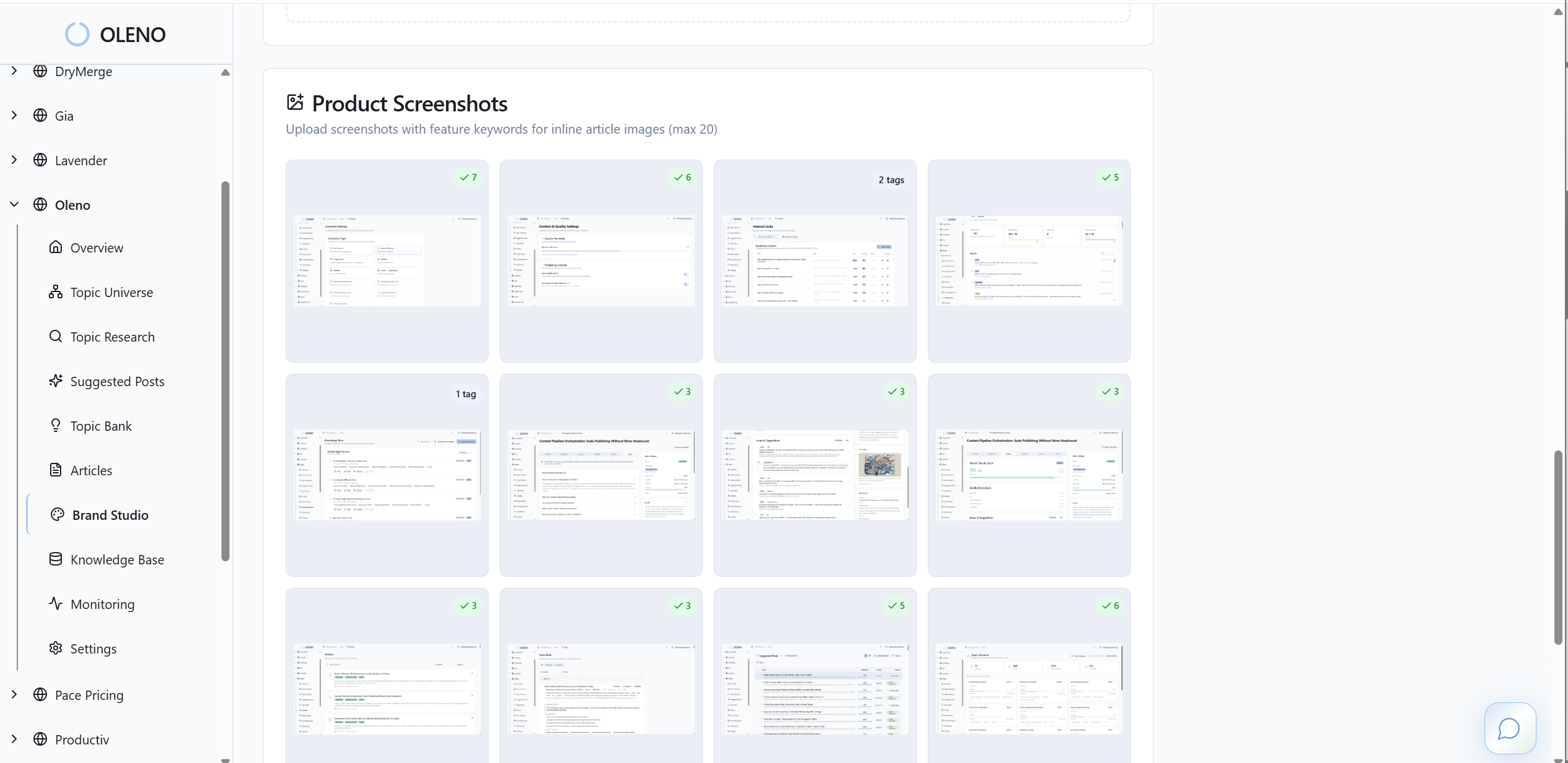
In plain terms, Oleno is built around:
- Brand Studio: voice rules and examples, so tone stays consistent at volume
- Product Studio: boundaries for what you can claim, so you don’t accidentally publish fiction
- Marketing Studio: narrative and positioning consistency, so you don’t contradict yourself across the library
- Knowledge Archive: grounding material, so drafts aren’t guessing
- QA Gate: a checkpoint that blocks publishing until the content clears the bar
- Deterministic pipeline: the same stages every time, so ops gets predictable
This is the part that sounds “process-y” until you’ve lived the alternative. When you’re publishing comparisons and alternatives, a single wrong sentence can create weeks of cleanup.
Use-case fit: programmatic SEO, comparisons, and category education
Oleno fits best when you’re building a real acquisition library, not just a blog. Programmatic SEO is one lane, but the big wins for B2B often come from evaluation-stage content: comparisons, alternatives, and category education that answers buyer questions cleanly.
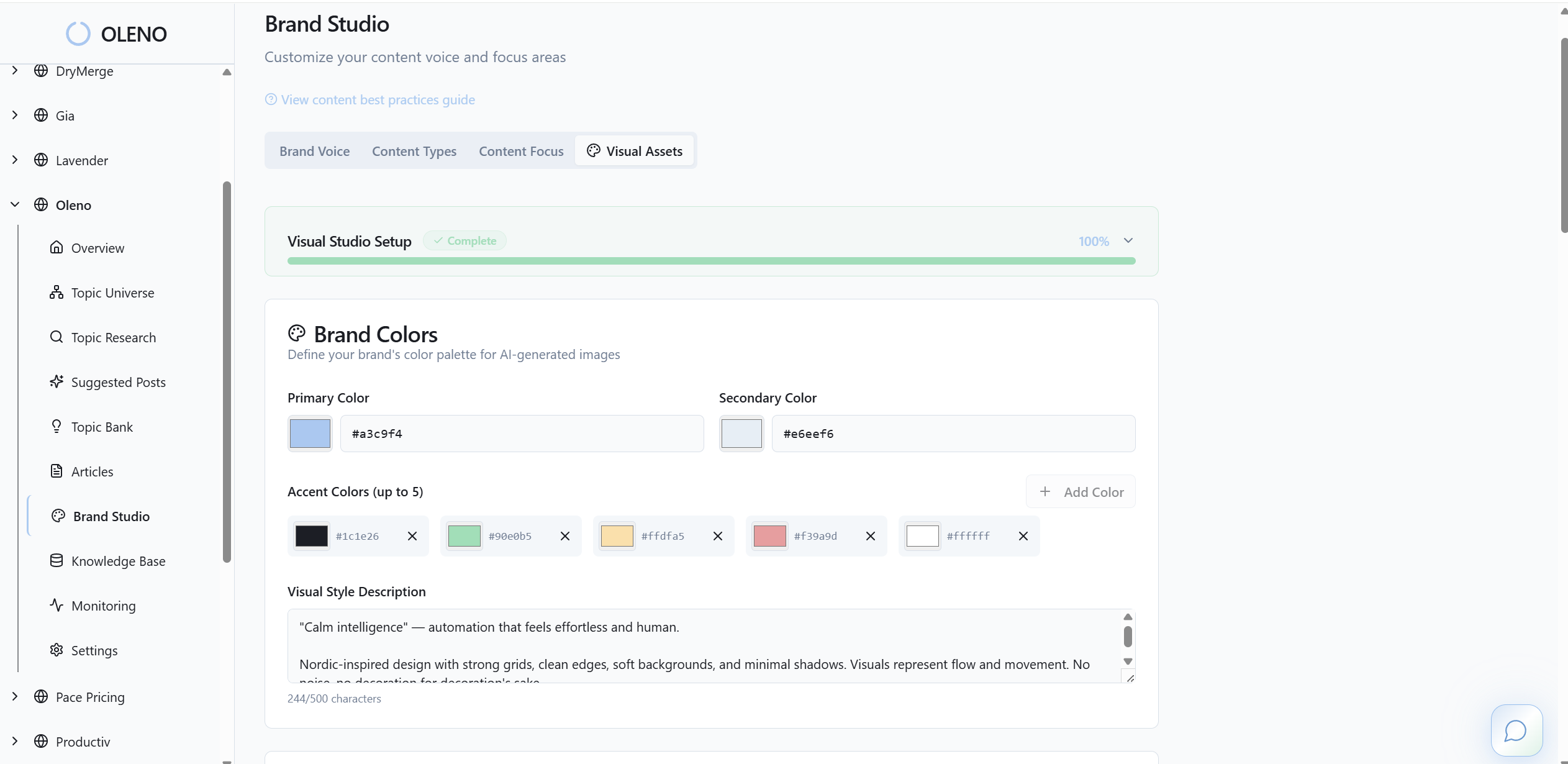
Outrank is positioned strongly around SEO blogging workflows for small businesses and general content generation (Outrank overview). Oleno leans into specific acquisition formats, especially where governance matters:
- Comparisons and alternatives that need consistent claims and careful differentiation
- Category education that can’t drift in voice every time you publish
- Programmatic libraries where duplication and cannibalization become real risks
- Demand-gen content where accuracy and positioning map directly to revenue
If your content team is already a bottleneck, this stuff matters. You don’t need “more ideas.” You need a system that reduces coordination costs.
Getting started and pricing: from 1 to 10 posts/day
Oleno’s pricing is tied to output cadence, starting at from $449/month for 1 post/day and scaling up to $449/mo (Full-Funnel GEO) to $1,349/mo (Narrative Control), with enterprise options beyond that. Outrank is positioned with a lower monthly entry point, including a promotional $49/month and a standard $99/month subscription (Outrank AI SEO Content Generator). You’re basically choosing between “flat fee” and “cadence-based production.”
One personal opinion here. Cadence-based pricing looks expensive if you’re thinking like a solo creator. It looks pretty reasonable if you’re thinking like a content ops lead who’s currently paying in human hours. Because the real cost is editing, governance, and cleanup.
If you want to see whether the governed production model fits your team, you can request a demo and walk through how you’d encode voice, claims, and your typical comparison structure.
Decision Grid: Key Criteria, Trade-offs, and Buyer Impact
| Criteria | Why it matters | Oleno | Outrank | Buyer takeaway |
|---|---|---|---|---|
| Brand voice enforcement | Prevents off-brand, inconsistent tone across volume | Brand Studio with voice rules and exemplars applied at every step | Voice preservation during generation; relies more on prompts/editing (Outrank AI SEO Content Generator) | If voice drift hurts trust, stronger governance helps |
| Product claims accuracy | Avoids invented features and misstatements | Product Studio sets allowed claims and boundaries; QA Gate blocks violations | No equivalent claims gate presented; manual fact-checking advised for accuracy (Outrank AI SEO Content Generator) | Critical for B2B SaaS with strict messaging |
| Factual grounding | Reduces hallucinations and rework | Knowledge Archive grounds briefs/drafts; QA checks grounding | SERP-driven outlines; variable factual control (Outrank overview) | If accuracy drives revenue, prioritize grounding |
| Predictability of outputs | Reliable cadence and structure reduce coordination costs | Deterministic engine with locked structures in SEO/Competitive Studios | High speed but structure varies by SERP/template (Outrank AI SEO Content Generator) | Choose predictability for ops efficiency |
| Duplicate prevention | Prevents cannibalization and wasted budget | Coverage and duplication protection in SEO/Competitive Studios | Keyword planning helps; explicit duplicate controls less visible (Outrank overview) | Important for programmatic libraries |
| Publishing reliability | Avoids accidental duplicate posts and cleanup work | Idempotent CMS publishing (WP, Webflow, Storyblok, HubSpot) | One-click publishing to common platforms (Outrank site) | Ops teams value idempotency |
| Acquisition formats coverage | Comparisons/alternatives drive evaluation-stage traffic | Competitive Studio built for comparisons and alternatives | Primarily long-form article generation (Outrank AI SEO Content Generator) | If BOFU is key, format coverage matters |
| Audience/persona variation | Improves conversion by segment | Variation Layer injects persona and use-case context into briefs/drafts | Multilingual support emphasized; persona targeting not framed as core (Outrank overview) | If segmentation matters, pick built-in variation |
| On-page optimization | Aligns content to ranking factors | SEO Studio with locked-structure briefs and long-form drafts | Real-time scoring and SERP alignment positioned as core (Outrank AI SEO Content Generator) | If you need live scoring cues, Outrank leans into it |
| Team scale and roles | Multiple stakeholders need guardrails | Governance plus QA Gate reduces back-and-forth | Unlimited users highlighted; governance relies on process (Outrank overview) | Larger teams benefit from automated guardrails |
| International content | Reach new markets efficiently | Brand-governed variations; publish via CMS locales | 150+ language support and localization positioned as a strength (Outrank overview) | For pure language scale, Outrank is strong |
| Budget model | Match spend to output cadence | Tiered per posts/day: $449/mo (SEO + Social); $449/mo (Full-Funnel GEO); $1,349/mo (Narrative Control) | Flat monthly (promo $49; standard $99) (Outrank AI SEO Content Generator) | Pick cadence predictability vs lowest sticker price |
If you’re at the stage where you’re tired of debating this in a spreadsheet, just book a demo. The fastest way to get clarity is to map your current workflow and see where governance and QA would actually remove work.
What I’d do if I were buying this for my team
Oleno is the safer bet when you’re scaling B2B acquisition content that can’t afford factual errors, voice drift, or messy publishing, while Outrank is the simpler bet when you want SERP-driven drafts and a guided SEO workflow at a lower entry price. Outrank’s public positioning is clear: generate SEO content with SERP alignment and publish quickly (Outrank AI SEO Content Generator). Oleno’s bet is equally clear: governed production that stays stable as you scale.
If you’re early, don’t over-engineer it. Shipping content consistently matters. If you’re scaling, don’t under-estimate governance. Fixing a messy library later is a cost most teams don’t budget for, and it’s a grind.
If you want to pressure-test Oleno against your real use case (comparisons, alternatives, category pages, demand-gen sequences), request a demo and we’ll walk through how the Studios, Knowledge Archive, QA Gate, and idempotent publishing fit into your current stack.
The “right” tool is the one that matches your stage. Early stage wants momentum. Growth stage wants systems.
About Daniel Hebert
I'm the founder of Oleno, SalesMVP Lab, and yourLumira. Been working in B2B SaaS in both sales and marketing leadership for 13+ years. I specialize in building revenue engines from the ground up. Over the years, I've codified writing frameworks, which are now powering Oleno.
Frequently Asked Questions