Operational Brand Lexicon: 7-Step Playbook to Embed Niche Language

Your brand’s language doesn’t fall apart because people forgot how to write. It falls apart because nobody agrees where and how the terms should show up, and the pipeline does nothing to enforce it. You get “sounds right” drafts, long comment threads, and the same synonym fights every week. Speed alone won’t fix that. Structure will.
This is an operational problem, not a copy problem. The fix is a governed lexicon that maps terms to surfaces, then enforces frequency and bans. We’ll walk the full system: two-pass foundation, rulebook, wiring into briefs and drafts, QA gates, and publish-time checks. For a deeper proof that speed-only approaches miss the point, see ai writing limits.
Key Takeaways:
- Turn your lexicon into enforceable rules across briefs, H2 openers, snippets, and metadata
- Build a term matrix with frequency thresholds and banned variants by surface
- Wire rules into briefs and retrieval so writers and LLMs don’t guess
- Add early draft checks, then QA scoring with pass/fail gates before publish
- Validate in CMS with warnings or blocks for missing terms or banned synonyms
- Version the lexicon, run quarterly reviews, and use cooldowns to stabilize language
- Pilot with 10–15 terms, measure first-pass adherence, then expand intentionally
Why Your Brand Language Gets Lost (And How To Fix It)
Brand language gets lost when terms drift across surfaces and nobody enforces where they belong. The hidden cost shows up as rework, slow reviews, and diluted phrasing that blurs your position. A simple rule set tied to each surface makes adherence visible and fixable. For example, require your core term once in the H2 opener.

What’s At Risk When Terms Drift?
Term drift creates real friction. Searchability dips, editors send drafts back for frustrating rework, and your distinct phrasing gets sanded down during reviews. Let’s pretend 20% of drafts need language fixes. That alone can add hours per article when you include comments, rewrites, and second-pass approvals.
Define the cost early, then set an adherence target that triggers action when you miss it. Treat drift like a leak, not a typo. Capture the surfaces that matter most, then write pass/fail rules so reviewers stop debating style and start checking compliance. You are not chasing perfection. You are reducing needless churn.
Here is where it often shows up: briefs, H2 openers, snippet lines, alt text, metadata, and CTAs. Give each surface a crisp rule. Make the short, snippet-ready paragraph do the heavy lifting up top.
Curious what this looks like in practice? You can Request a demo now.
Where Do Inconsistencies Creep In?
It is usually a familiar pattern. Vague briefs. Fuzzy definitions. No banned-synonym list. Drafts that “sound right” but dodge your niche terms. Add explicit rule placements so writers and LLMs know where terms must appear. Brief H1 and H2, section openers, the TL;DR, and internal links should not be guesswork.
Version sprawl makes it worse. If the lexicon lives in slides, docs, and Slack, it will diverge. Consolidate into a single source of truth and make each pipeline step, from brief to publish, pull from it deterministically. If you want background on where operations break down, skim the content operations breakdown.
How Do You Quantify The Problem?
Use a term matrix. Rows are canonical terms, columns are surfaces. Add allowed frequency bands and banned variants, then score each draft by surface adherence. Roll that up to an article score and a monthly score so you can see trends. Set thresholds that reflect intent, not wishful thinking.
For example, “Use ‘data observability’ once in the H2 opener and once in the TL;DR. Ban ‘monitoring’ unless you are explicitly referencing third-party tools.” If the score dips below your minimum, trigger an enforcement loop. The idea lines up with guidance in the Stanford case study on Lexicon Branding and echoed in Brandingmag on linguistic devaluation.
Build The Lexicon Foundation In Two Passes
Build your lexicon in two passes: audit high-impact terms, then define them with contexts, bans, and frequency. Start small so teams can learn the rules without getting buried. Ten to twenty terms beat two hundred that invite confusion. A clean foundation reduces review pain and keeps language consistent.

Step 1: Audit High-Impact Terms
Inventory the niche terms already in use across product, sales, and docs. Create a matrix with the canonical term, definition, allowed contexts, banned synonyms, and frequency thresholds per surface. Pull 50–100 recent pages and compute baseline usage and variance. You will see which terms move meaning, and which create noise.
Prioritize by impact. Focus on the few terms that truly differentiate your position. Flag harmed variations, especially look-alikes that change intent. Tie each to a ban rule with a short reason. Then set realistic frequency targets per section. One mention in an H2 opener can do more than five scattered mentions in body copy.
Step 2: Define Terms, Contexts, And Bans
Write definitions in plain language. Two parts work well: what it means, what it does not mean. Add one or two example sentences for H2 openers and one for snippet lines to remove ambiguity. Pair each term with allowed modifiers and banned synonyms so drift gets blocked early.
Specify context gating. For instance, allow “governed pipeline” in QA sections only, avoid it in product comparison sections. Add frequency bounds by surface, such as exactly one mention in the H2 opener and one to two per 500 words in the body. That keeps the language present without turning it into noise. If you want framing on lexicon research approaches, skim Lexicon Branding research.
What Is A Term Matrix And Threshold?
Think spreadsheet first. Columns include the canonical term, definition, allowed contexts, banned variants, example H2 sentence, snippet sentence, alt text pattern, and frequency by surface. It should be usable by humans now, while being easy for a rules engine to read later.
Thresholds set the “how often” guardrails. If you repeatedly exceed them, expect pushback from editors and readers. Adjust quarterly after you have enough scoring data, not weekly. Stability helps writers, reviewers, and LLMs converge on the same patterns. For a deeper theoretical angle, the Mimesis article touches how language choices influence meaning over time.
Turn Definitions Into Enforceable Rules
Definitions alone do not stop drift. Enforcement does. Bind terms to surfaces and give each section a pattern that removes guesswork. The simplest version is a 40–60 word H2 opener with a direct answer, one sentence of context, and a quick example. Include the canonical term once. No more, no less.

Rulebook For Briefs, H2 Openers, And Snippet Lines
Convert definitions into rule specs that your brief and draft templates can use. In the brief, require the term in the H1 and the first H2 opener. In the draft, use the approved snippet sentence verbatim. Ban specific synonyms in the body unless scoped exceptions apply. The goal: your snippet-ready H2 opener does the heavy lifting.
Bind rules to surfaces. Ask for the canonical term once in the opener, once in the TL;DR, and a controlled number of times in the body. Mirror the snippet pattern across sections so each one stands alone cleanly. If you want to see how teams govern voice and banned terms at scale, this primer on brand studio governance is helpful.
Ready to make the rules enforceable without babysitting every draft? You can try using an autonomous content engine for always-on publishing.
Template: Definitions, Allowed/Disallowed, Examples
- Definition: one to two sentences in plain language
- Allowed contexts: bullets that state where the term fits
- Banned synonyms: list with short reasons, so editors agree
- Example sentences: H2 opener, snippet, and one CTA microcopy
Add an interjection. Keep it human.
Add “if/then” flags for edge cases. For example, “If audience is technical, allow ‘observability pipeline.’ If audience is executive, prefer ‘visibility pipeline,’ never ‘monitoring’ unless talking about third-party tools.” These small boundaries reduce ad-hoc edits downstream.
How Do You Handle Edge Cases Without Over-Policing?
Write exception clauses with clear scope and sunset dates. If you relax a ban for a launch, set the expiry in the rule itself. Add a log entry so the default returns to strict when the window closes. Keep a “question bin” so editors can submit real-world corner cases that get resolved in the next rules refresh.
This keeps your lexicon useful, not brittle. Rules should make decisions faster, not create more meetings. And it preserves credibility when things change, because the system shows its work and closes loops.
Wire The Lexicon Into Your Pipeline
Rules only stick when they flow through the pipeline automatically. Teach the brief. Ground the draft. Add early checks. Make it hard to publish something that dodges your language. That is the operational discipline most teams skip, then they wonder why their phrasing drifts.
Inject Rules Into Brief Generation
Add lexicon fields to your brief schema. Include required canonical terms per section, the banned list, an example H2 opener, a snippet sentence, and a small adherence checklist. This sets expectations before anyone types a paragraph. If a term is not in the brief, it will rarely show up in the draft.
Make the term matrix queriable by topic. When a topic is approved, pull the relevant term set into the brief automatically. Reduce human lookup, reduce misses. This shift is part of the broader content orchestration shift, where the pipeline, not a prompt, coordinates outcomes.
Tag The Knowledge Base For Reliable Retrieval
Annotate Knowledge Base chunks with canonical term IDs and “allowed context” tags. Retrieval should bring back definitions and example sentences when the draft engine hits those sections. Pair that with minimal negative prompts via metadata to avoid banned synonyms bleeding in. Your goal is predictable retrieval of approved phrasing at the right moment.
Constrain Draft Generation With Lexicon Guards
Guide the draft engine to follow your H2 opener pattern. One canonical term, one sentence of context, one example. Use example sentences as targets, not hard locks, so prose stays human while the term stays present. Insert early draft checks. If a required term is missing or a banned synonym appears, trigger an auto-revise pass before human review.
If you want a research angle on why controlled terminology improves clarity and consistency, this controlled language study on terminology consistency lays out the case in a neutral, measurable way.
QA, Scoring, And Publish-Time Enforcement
Quality is a gate, not a vibe. Score each surface for adherence, fail fast when the rules are missed, and route exceptions with precise notes. Then validate in the CMS so nothing slippery makes it live. Do not tie this to traffic. Tie it to publish readiness and editorial sanity.
Step 5: Automated QA + Human Triggers
Build checks that score each surface. The H2 opener includes the canonical term once. The snippet includes it once. The body stays within frequency bounds. No banned synonyms. Fail a check, and the system revises automatically. If it still misses the mark, route to a human with clear failure notes.
Use a minimum passing score to ship. Aim for a high bar, then tune as you collect data. Many teams run a brand voice linter alongside structural checks, something like this brand voice linter. If you want a bigger argument for governance, the autonomous systems case frames why automation keeps you honest.
Step 6: CMS Checks, Auto-Replacements, Warnings
Add pre-publish validators in your CMS flow. Confirm required terms appear in critical metadata fields and the TL;DR. If an error is detected, block publish or downgrade to draft with actionable warnings. Use cautious auto-replacements only in low-risk areas like alt text. Avoid silent edits in body copy.
Keep a log so you can fix upstream rules instead of patching symptoms. If you want a practical pattern library for this layer, study these cms governance checks.
What Metrics Prove Adherence?
- Per-article lexicon score
- Percent of drafts passing on first run
- QA loops per article
- Section-level miss types, such as missing term or banned synonym
Post-publish, sample quarterly for regression and refresh thresholds based on new product language. A useful north star is 90% or better first-pass adherence without manual edits. For supporting context, see the Capstone on brand language governance.
How Oleno Operationalizes And Governs Your Brand Lexicon
Oleno embeds your lexicon into the pipeline so your language shows up where it should. The system pulls from one source of truth, enforces banned terms and frequency bands, and validates section patterns before publishing. You keep control of phrasing without line-editing every draft. That is the point of autonomous content operations.
Integration Points You Can Turn On Day One
Remember the repetitive rework you wanted to eliminate. Oleno centralizes the term matrix in your Knowledge Base so briefs and drafts pull the same definitions, example H2 openers, and snippet sentences. During draft generation, Oleno enforces brand voice constraints and banned terms, then validates the structure with snippet-ready H2 openers before anything ships.
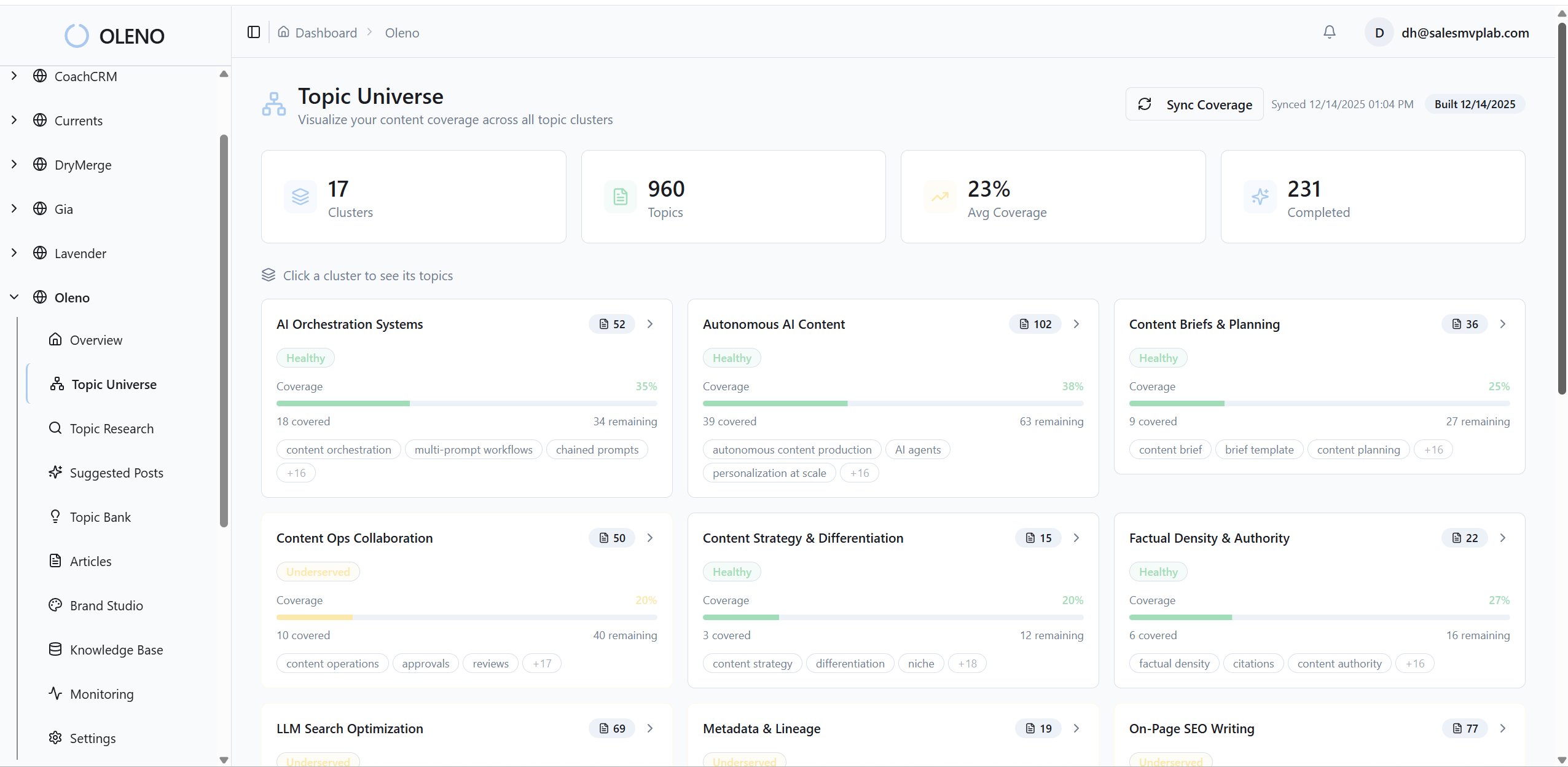
Oleno’s deterministic steps keep things predictable: snippet-ready structure at every H2, code-based internal linking from your verified sitemap, programmatic schema generation, and CMS delivery via connectors. The Quality Assurance and enhancement loops score drafts against more than 80 criteria, including structure and information gain, then refine when the bar is not met. Articles do not publish until quality thresholds are met. Teams using Oleno avoid the back-and-forth edits that waste time and blur meaning.
Governance: Versioning, Onboarding, Cooldowns
Treat the lexicon like code. With Oleno, you can version your term matrix, keep a changelog, and onboard new contributors with examples and counter-examples embedded in the workflow. Topic cooldowns prevent constant rehashing while language stabilizes. Quarterly reviews, guided by QA data, let you tighten or relax thresholds in a controlled way.
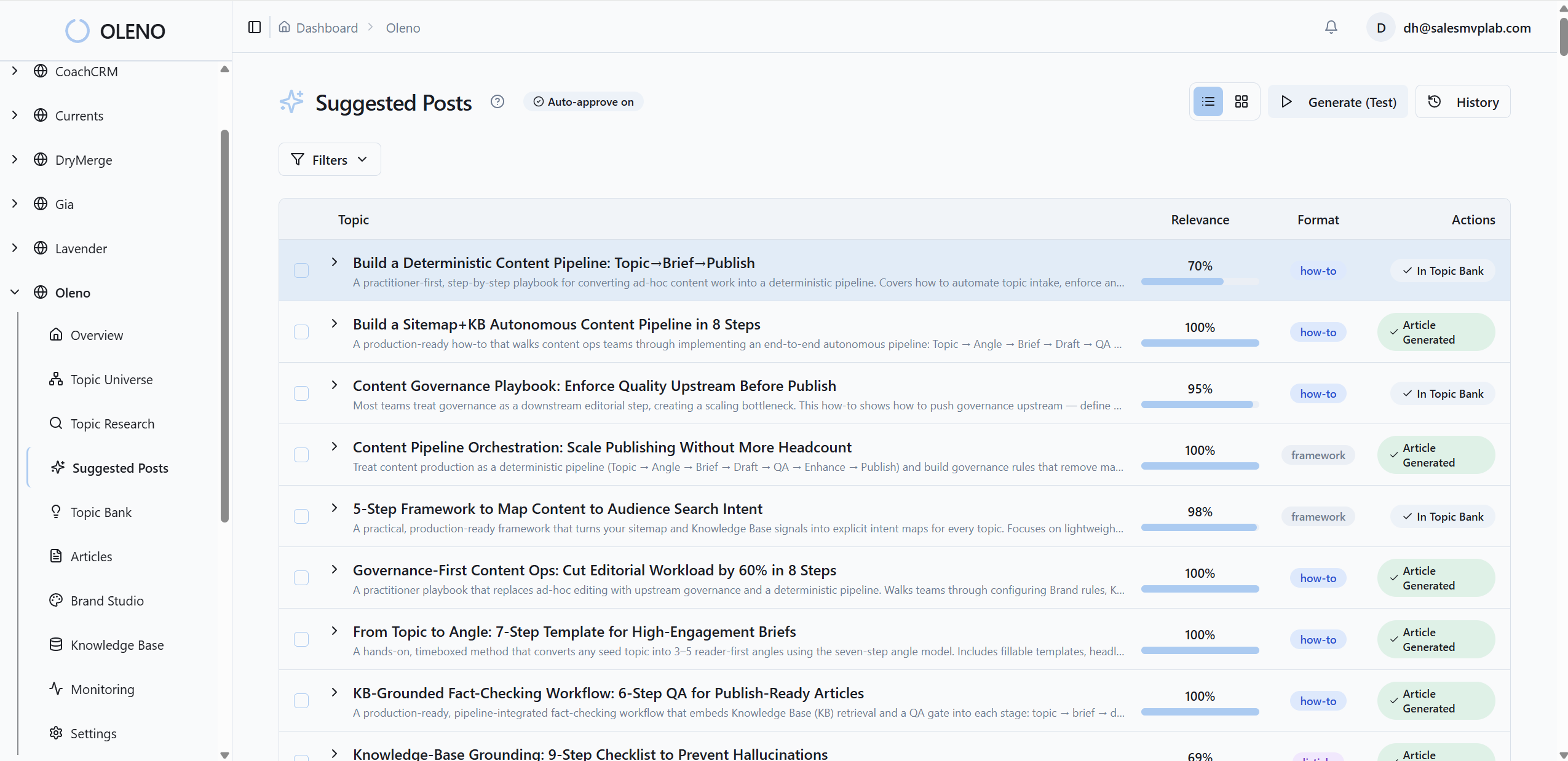
Oleno’s approach keeps creativity in writing, and accuracy in code. Internal links are injected from verified sitemaps, schema is generated programmatically, and publishing maps fields automatically. This supports the day-to-day governance you need without dragging teams into manual checklists.
Example Rollout Plan For A 30-Day Pilot
Start small and prove it. Weeks one and two, audit and define 10–15 terms, add templates, update brief schema, and tag Knowledge Base chunks. Weeks three and four, enable early draft checks, set QA thresholds, and wire CMS validators. Publish 6–10 articles to baseline adherence and rework time.
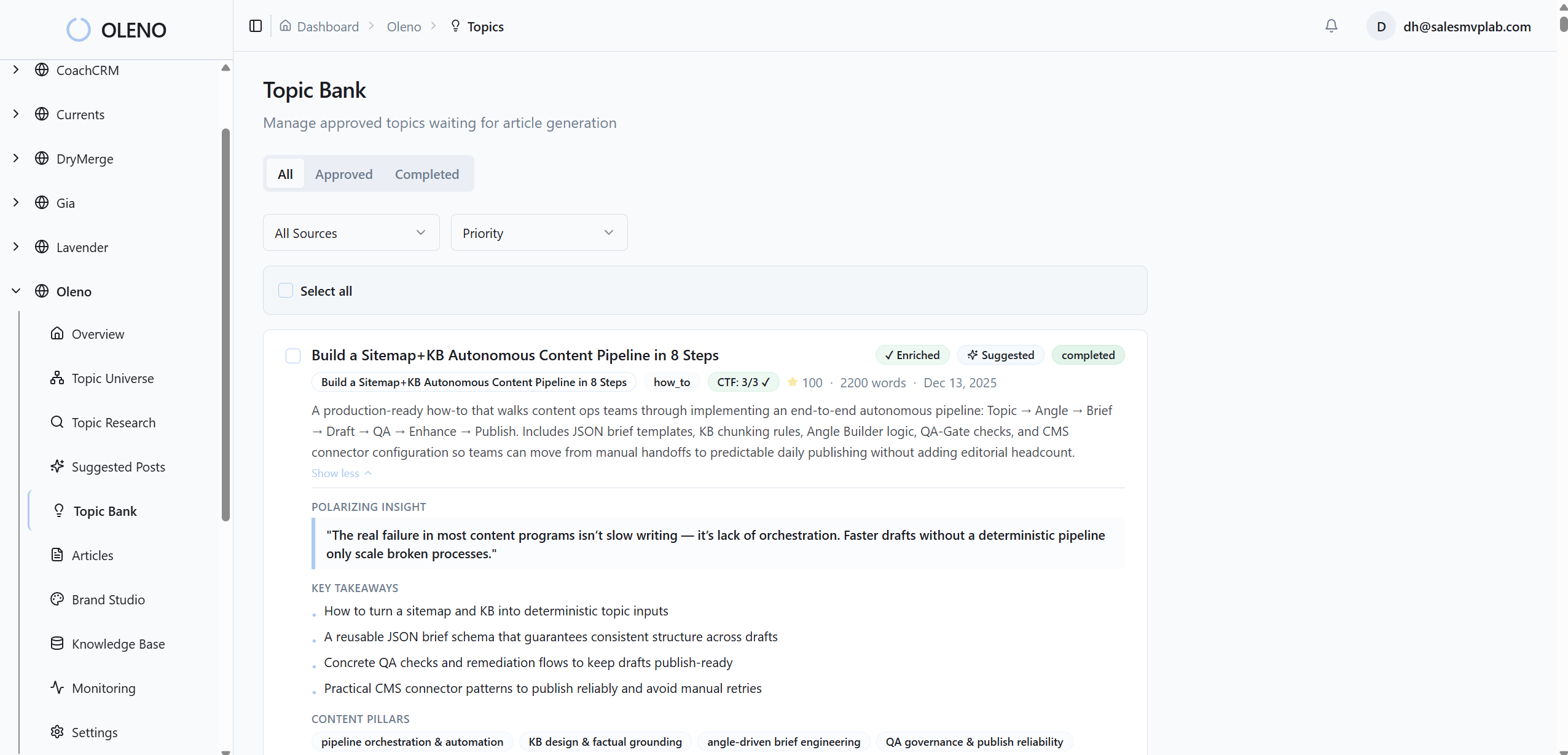
Then measure. First-pass adherence, QA loops, and editor time saved. If you are clearing your bar without heavy editing, expand to 25–30 terms next quarter and formalize the review ritual. If you want to try this without a long setup, you can Request a demo.
Conclusion
You do not fix language drift with willpower. You fix it with a lexicon that lives in your workflow, shows up in the brief, guides the draft, gets scored in QA, and is validated at publish. Small rules, enforced consistently, beat big guidelines nobody reads.
Start with ten to twenty terms. Bind each to surfaces with frequency and bans. Wire rules into briefs and retrieval so writers and LLMs stop guessing. Score adherence before publish and keep the CMS honest. If you want help turning that into an everyday operation, you can Request a demo now.
About Daniel Hebert
I'm the founder of Oleno, SalesMVP Lab, and yourLumira. Been working in B2B SaaS in both sales and marketing leadership for 13+ years. I specialize in building revenue engines from the ground up. Over the years, I've codified writing frameworks, which are now powering Oleno.
Frequently Asked Questions