Operationalizing Deterministic Internal Linking to Maximize Content Value

Most teams treat internal links like seasoning—sprinkle a few and hope for flavor. That works until your library grows and the seasonings don’t match, including the rise of dual-discovery surfaces:, half the jars are mislabeled, and someone’s convinced paprika belongs in a dessert. I’ve watched good content lose momentum because the links underneath it were ad hoc.
Here’s the truth. Links aren’t copy edits. They’re infrastructure. When anchors drift and URLs are guessed, you don’t just miss a few connections—you distort your site’s signal. That’s why deterministic internal linking matters. It removes judgment where correctness matters and makes link quality a system, not a mood.
Key Takeaways:
- Treat internal linking like code: rules, a registry, and enforcement in publishing
- Use a verified sitemap as the only source of truth for allowed URLs
- Lock anchors to page titles and inject 5–8 contextual links per article
- Move correctness out of editorial and into the pipeline with QA gates
- Review operational KPIs weekly and adjust policy, not individual drafts
Why Manual Internal Linking Breaks At Scale
Manual internal linking breaks because judgment doesn’t scale. As your library grows, anchors drift, URLs go stale, and link placement becomes inconsistent. A deterministic approach fixes this by defining rules once, enforcing them every time, and using a verified sitemap to prevent fabricated or broken URLs. Think consistent anchors, clean edges, and fewer headaches.

Why letting writers choose links creates risk
Give ten writers ten linking opinions and you’ll end up with ten patterns that don’t play well together. Some will prefer partial-match anchors, others will guess slugs, and a few will link to old campaign pages because they’re easy. None of that builds a reliable graph. It builds roulette.
The fix is simple in concept and hard to do by hand: remove judgment where correctness matters. Centralize rules for link volume, anchor text, and allowed URL types. Enforce those rules in publishing, not during drafting. Let writers focus on narrative. Let the system handle structure. As a guardrail, send people to a single, living policy—not a doc graveyard or scattered checklists. For conceptual grounding, I like how Yoast’s internal linking guide anchors clusters in plain English.
What does deterministic linking actually mean?
Deterministic linking means you define the rules once and they’re applied the same way, every time. No exceptions based on who’s editing that day or how many tabs someone has open. The system uses only URLs in a verified sitemap, anchor text equals the target page title, and 5–8 contextual links are injected per article.
Why those choices? Because they’re auditable. If a link appears that isn’t in the registry, it fails. If anchor text doesn’t match the page title, it fails. Edge count too low or too high? It fails. That’s how you prevent fabricated or broken URLs from ever entering your site. It feels strict. Good. Strict prevents drift. Human edits still matter—just at the architectural level: which hubs exist, which clusters get emphasis, and how navigation supports discovery.
The Root Cause No One Owns: Missing Link Governance
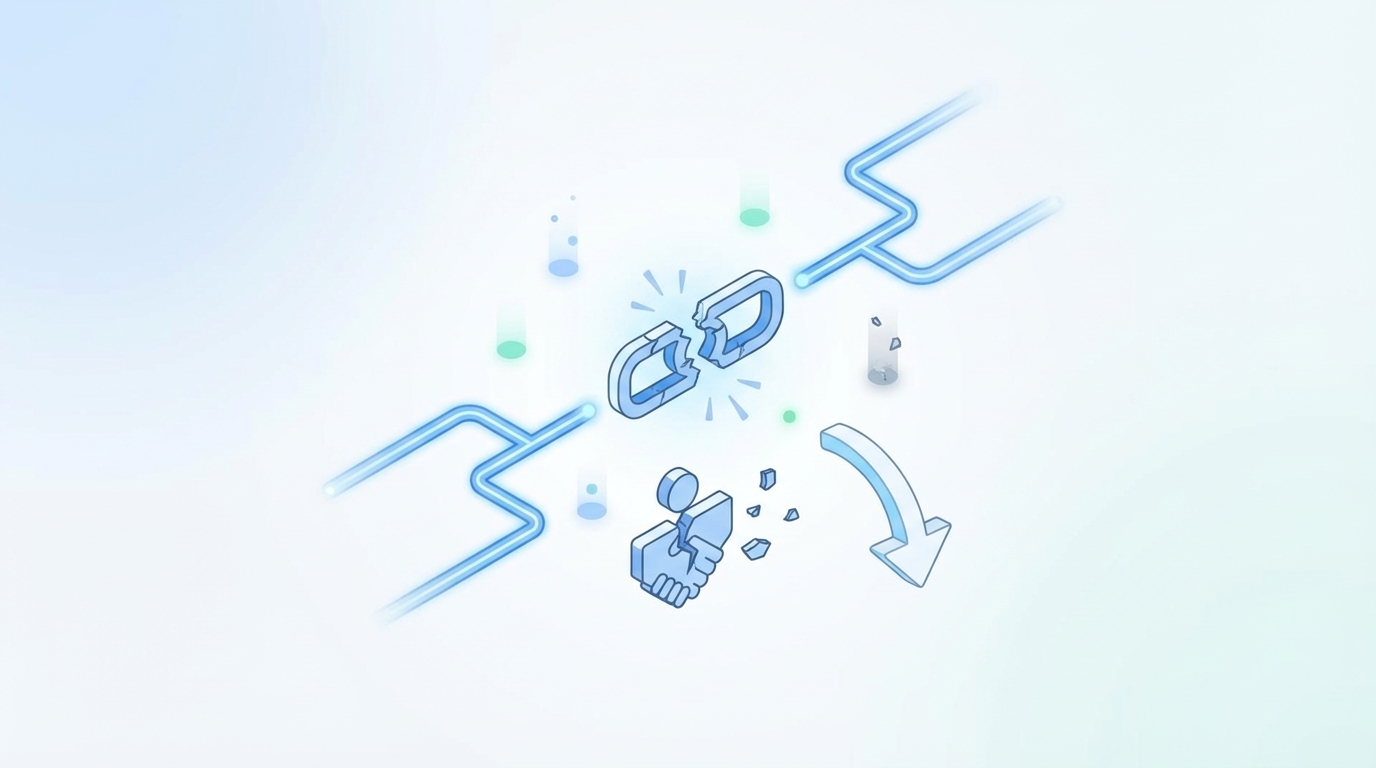
The core issue isn’t forgetfulness. It’s the absence of ownership. Without a written, testable policy, your link graph becomes accidental—anchors vary, edges point to old pages, and pillar content underperforms. Governance solves this by defining rules, assigning owners, and tying enforcement to publishing. Clear policy turns intentions into consistent execution.
What should your policy include?
A good policy reads like a playbook, not a manifesto. Start with link volume per article (e.g., 5–8), allowed link types (pillar, product, reference), and anchor rules (exact match equals target page title). Add context placement guidelines—pillar edges higher on the page, peer edges within relevant sections—and a disallow list for outdated pages.
Make it testable: specify verification checks (status codes, including the shift toward orchestration, anchor compliance), pass thresholds, and who gets notified when something fails. Include an audit cadence and escalation path for exceptions. If it’s not written, it won’t be followed. If it can’t be tested, it won’t be enforced. I’ve seen teams gain speed just by reducing “it depends” decisions to “the policy says.”
How do you align pillars, clusters, and edges?
Map hubs first. Then define cluster spokes. Only then do you decide how edges flow. Strong edges run from pillars to spokes using exact-match anchors. Favor above-the-fold placement for pillar edges so they’re consistently seen, crawled, and passed along.
Use contextual edges between peers to reinforce relevance within a topic. Avoid circular linking that bounces readers and crawlers around unrelated clusters. When in doubt, ask: does this link strengthen the primary story of this page? If not, it’s noise. Document examples and anti-examples directly in the policy so no one has to guess.
Who should own the rules?
One owner. Not a committee. Think systems-oriented content ops lead or a marketer who loves structure. SEO provides input, editorial keeps the reader experience intact, and engineering (or your platform team) implements the code path. QA gates enforce it, and publishing connectors apply it every time an article ships.
When ownership is clear, changes are controllable. Want to increase pillar emphasis next quarter? Adjust edge weights in policy, not one-off in drafts. Need to retire a campaign page? Remove it from the registry and it disappears as a target everywhere automatically. That’s governance at work.
The Hidden Cost Of Non-Deterministic Links
Non-deterministic links bleed value quietly. Orphan pages don’t earn citations, vague anchors confuse retrieval systems, and crawl budget gets wasted chasing dead ends. Pretend you’ve got 200 articles with six links each and 20 percent are weak or broken. That’s 240 bad edges—each one eroding authority and creating rework you didn’t plan for.
The crawl equity and retrieval penalty
Search engines and LLMs read structure. When edges are weak or noisy, your signals are diluted. Crawlers miss sections that deserve attention. Snippet eligibility drops. Retrieval becomes fuzzy because anchors don’t map cleanly to destination topics.
Deterministic links create predictable pathways through your content. That means cleaner indexing, stronger section-level retrieval, and fewer dead-end clicks. If you want a grounded primer on internal link impact and mistakes to avoid, the walk-through in Ahrefs’ internal links guide covers both strategy and execution angles without jargon.
Engineering and editorial time sinks
Every fabricated URL becomes a ticket. Every ambiguous anchor becomes a thread. Multiply that by dozens of posts a month and you’ve got a recurring tax on your team. None of that work advances the narrative, including why ai writing didn't fix, the product story, or pipeline. It’s maintenance born from inconsistent rules.
Move correctness out of editing and into code. Writers should worry about the story. Editors should worry about clarity. The system should handle link verification and injection. When you separate responsibilities like that, throughput climbs because you’ve removed one of the most error-prone tasks from human hands.
When Links Undermine Trust, Everyone Feels It
Broken or misleading links don’t trigger bug reports. They trigger bounces. Prospects miss deeper product narratives, sales loses micro-moments to connect, and the team’s confidence dips. I’ve seen content teams question their own work not because the ideas were weak—but because the links undercut the experience. Trust slips a little with every off-target edge.
What happens to demand signals?
Vague anchors lead people sideways, not deeper. Pillars that should carry buyers closer to your solution get fewer visits. Attribution flattens. You can’t force demand, but you can reduce friction. Strong, consistent internal links reduce friction by guiding readers from problem to framework to solution—on your site, not the open web.
When anchors match titles and edges are intentional, your product stories show up more naturally in the journey. The narrative feels coherent. Prospects click again because the previous click paid off. That’s the microeconomics of trust in a content system.
Can you fix this without slowing the team?
Yes. If you move enforcement to the pipeline. Drafts first. Links later. Writers focus on making the argument. Editors tune for clarity. The system injects links at natural sentence boundaries and checks status codes before publish. Throughput improves because you’re not asking tired humans to type perfect slugs at 4 pm on Thursday.
If your current setup is ad hoc, start by codifying the rules, then automate the checks. You don’t have to boil the ocean. Just remove the failure modes that repeat every week and you’ll feel the lift across the team.
The New Playbook: Implement Deterministic Internal Linking
Implement deterministic linking by treating it as a governed subsystem: a verified URL registry, strict anchor rules, and pipeline enforcement. Define 5–8 contextual links per article, use exact-match title anchors, and block anything outside your registry. Keep humans for strategy and structure; let the system do the typing and verifying.
Define your rule set and link taxonomy
Write the policy in plain language. Set link volume per article (e.g., 5–8). Require anchors to equal the target page title. Limit cross-cluster links to preserve topical integrity. Whitelist link types (pillar, product, reference). Document placement preferences: pillar edges above the fold, peer edges in relevant sections.
Add anti-examples so everyone knows what “wrong” looks like. Then publish it as a single source of truth—no dueling docs. Interjection. If your team debates anchor casing, the policy isn’t specific enough.
Instruction: draft a one-pager with rules, examples, and anti-examples; review with SEO and editorial; publish it as the single source of truth.
Build a verified URL registry from your sitemap
Pull your sitemap daily, normalize URLs, and dedupe. Tag each page with title, cluster, and link-type metadata. This registry is the only allowed source for internal links. If a page isn’t in the registry, it doesn’t get linked. That constraint removes 90 percent of the guesswork instantly.
Expose a read-only list in your team workspace so editors can reference it and spot obvious gaps. It’s surprising how often this step alone reveals stale pages silently siphoning links they shouldn’t get.
Instruction: store the registry in your CMS or a simple data store your injector can read; expose a read-only view to editors.
How do you prevent fabricated or broken URLs?
Route link selection through the registry. During injection, match anchors to titles exactly and reject any URL not present. Add a pre-publish check that crawls targets for 200 status and fails the article if any link doesn’t pass. Tie the failure to the content owner so someone feels responsible to fix upstream causes, not patch symptoms.
Interlock verification with publishing, not editing. Humans miss things. Code runs every time. And if you want a straightforward reminder of anchor and placement fundamentals, Google’s SEO Starter Guide keeps the advice practical and durable.
Instruction: set a pass threshold—ideally 100 percent link verification—and make failures visible to the content owner.
How Oleno Enforces Deterministic Internal Linking End To End
Oleno enforces deterministic internal linking by moving selection and verification out of drafting and into the pipeline. We scan your verified sitemap, select 5–8 relevant pages, inject links at natural sentence boundaries, and match anchors to page titles. QA gates verify structure and link correctness before publishing to your CMS. No guesswork, fewer incidents, cleaner signals.
Verified sitemap registry and exact-match anchors
Oleno imports your sitemap, validates URLs, and treats it as the authoritative source. During injection, anchor text equals the destination page title. That removes guesswork and keeps anchor semantics consistent across your library. No partial matches because someone prefers a shorter word. No linking to pages that aren’t in your site map.
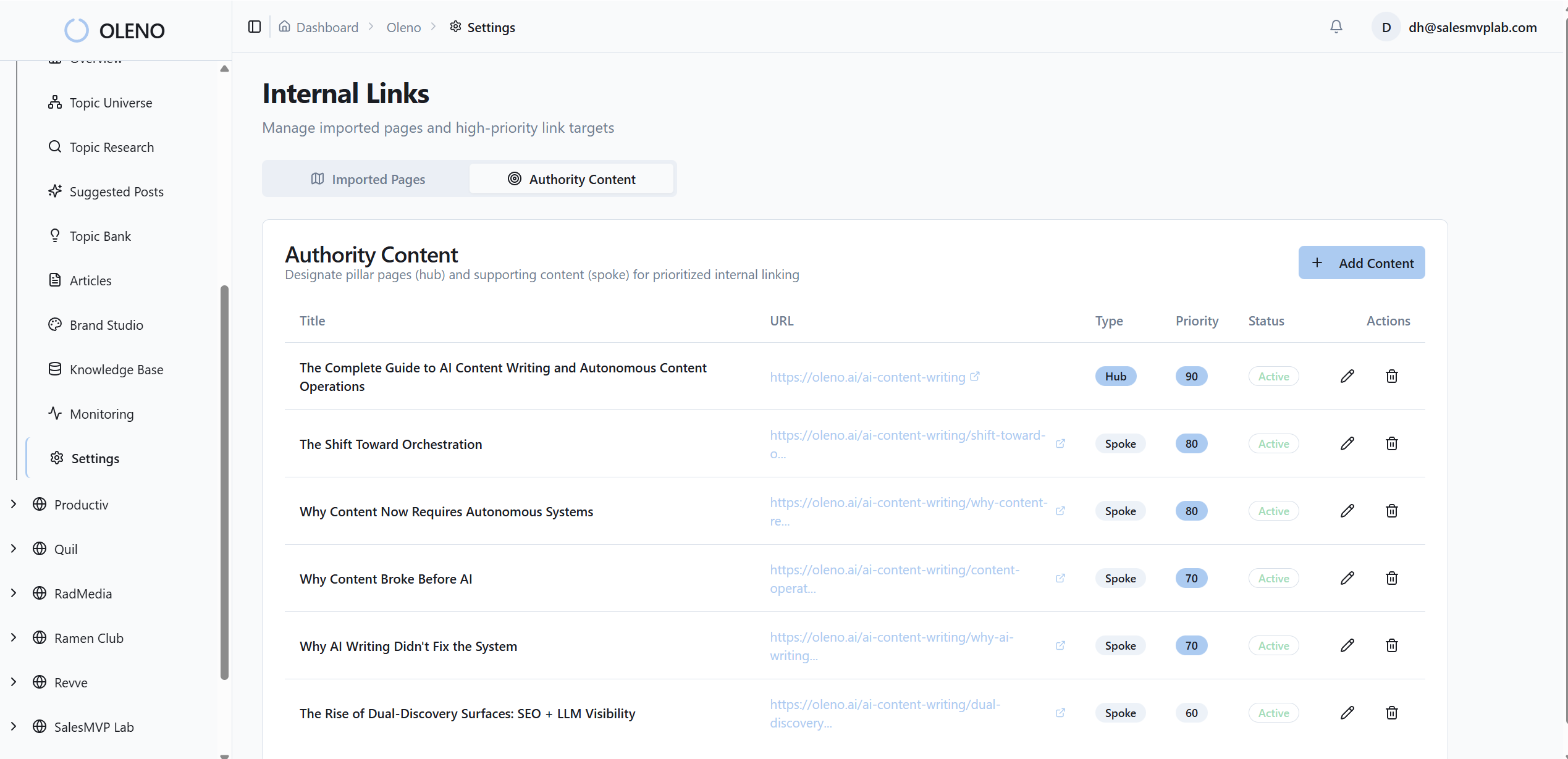
Benefit: predictable signals for search and retrieval systems, fewer broken-link incidents, and anchors that actually mean what they say.
Contextual link injection after drafting
Oleno adds links after text and visuals are finalized, not during drafting. The injector respects sentence boundaries and section context, so links reinforce the narrative rather than hijack it. You get the best of both worlds: natural prose from your writers and consistent structure from the system.
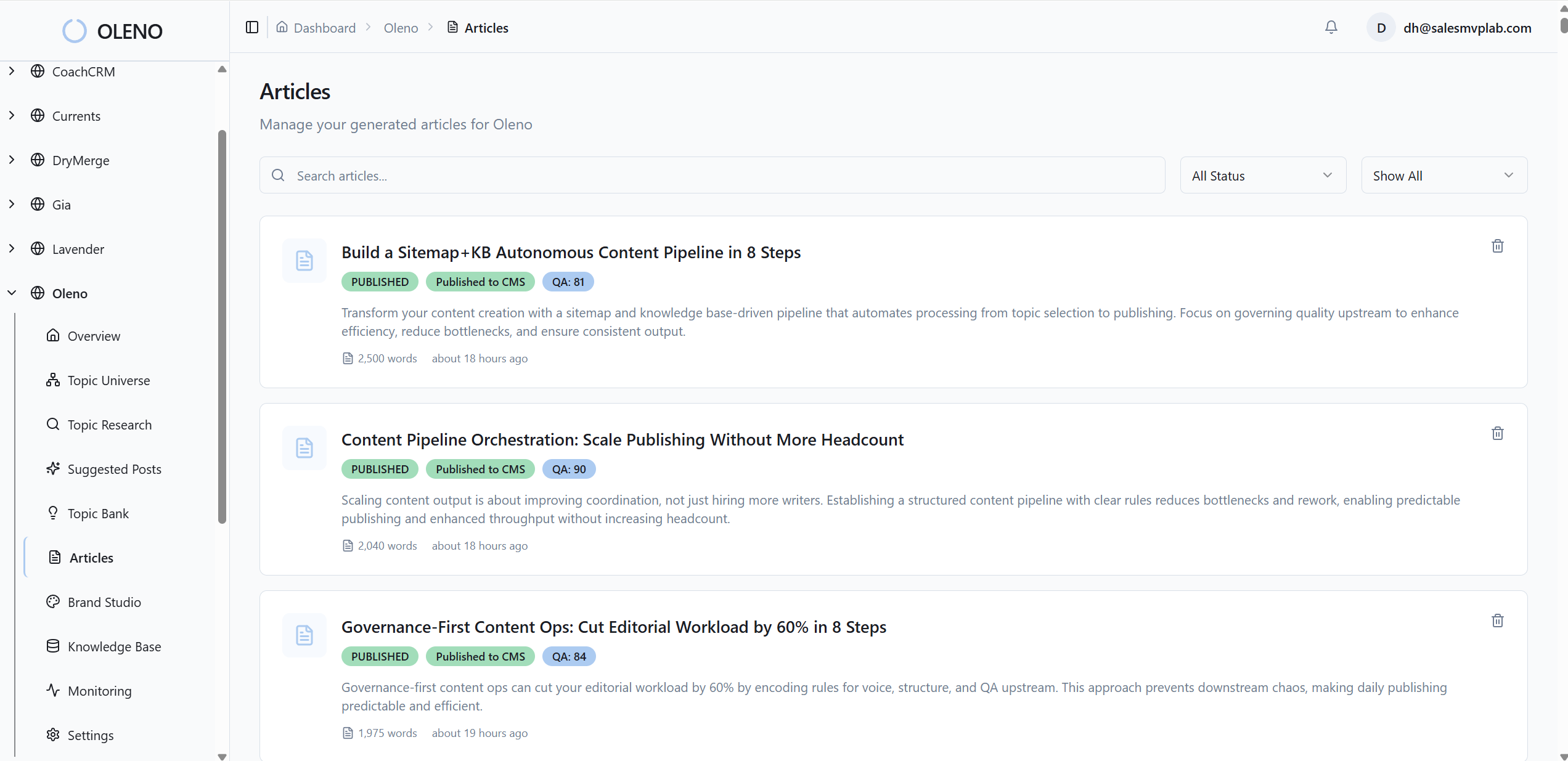
Benefit: better reader flow, stronger section-level retrieval, and a noticeable drop in rework tickets tied to “can we fix the links?”
Want to see what this looks like in practice? Try Using an Autonomous Content Engine for Always-On Publishing.
Quality gate and publishing connectors
Before anything ships, Oleno’s QA gate checks link count, anchor compliance, and status codes alongside structure, visuals, and schema. If a link fails, the article doesn’t publish. When it passes, connectors deliver CMS-ready HTML with links, images, and metadata set correctly. No manual handoffs. No last-minute fixes.
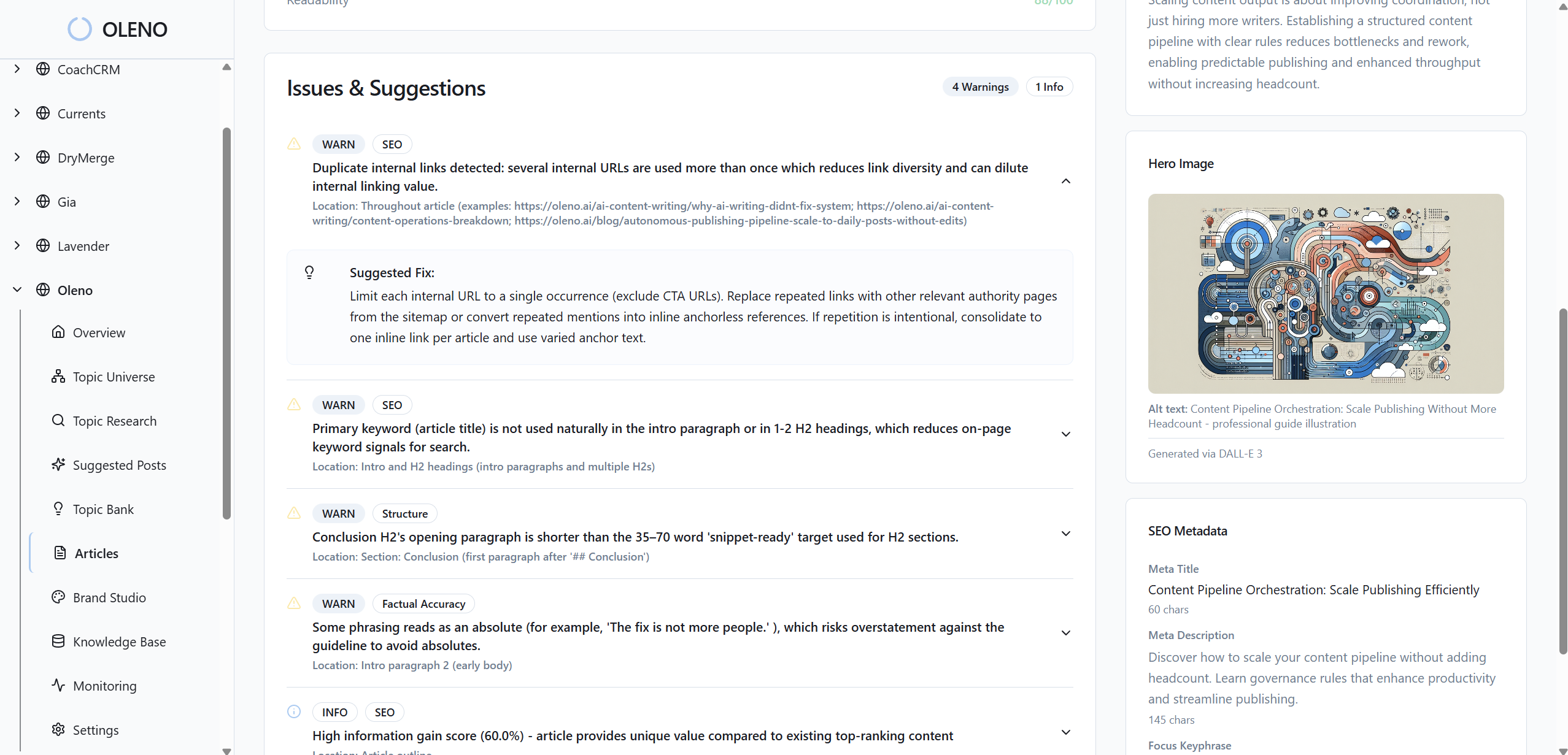
Benefit: fewer incidents post-publish, a clean audit trail, and a library that compounds authority without constant link cleanups. If you’re ready to stop playing link roulette and start enforcing rules that scale, Try Oleno for Free.
Conclusion
If links are part of your infrastructure, treat them like code. Define the rules, build a verified registry, and enforce everything at publish time. You’ll cut frustrating rework, strengthen retrieval signals, and give your team time back for the stories that matter. Deterministic internal linking isn’t glamorous. It’s dependable—and that’s exactly what your content system needs.
About Daniel Hebert
I'm the founder of Oleno, SalesMVP Lab, and yourLumira. Been working in B2B SaaS in both sales and marketing leadership for 13+ years. I specialize in building revenue engines from the ground up. Over the years, I've codified writing frameworks, which are now powering Oleno.
Frequently Asked Questions