Orchestrate AI for Publishing: Cut Manual Publish Time 80%
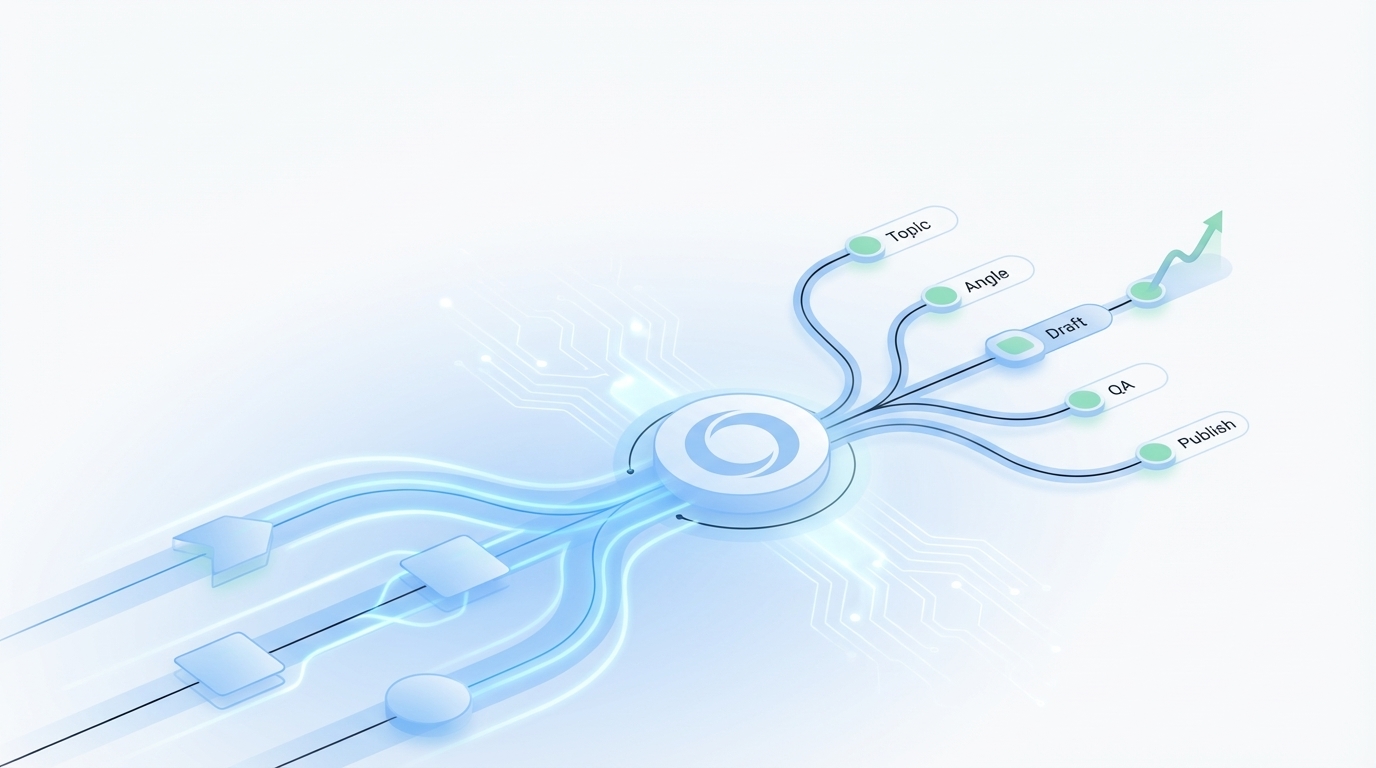
You do not have a publish-speed problem. You have a coordination problem. The draft is usually fine. What slows you down are the handoffs, the edits, and the late-stage fixes that never seem to disappear. Same thing with content, again and again.
The fix is not another tool on top of the pile. It is a pipeline that runs the same way every time, with your brand voice, facts, visuals, links, schema, and CMS mappings encoded as rules. That is how you cut manual publish time by something meaningful without crossing your fingers at go-live.
Key Takeaways:
- Replace tool sprawl with a governed pipeline that encodes rules as pass/fail checks
- Log your last five publishes, quantify failure modes, and automate the top offenders first
- Treat visuals, links, and schema as required outputs, not last-mile tasks
- Use deterministic linking, schema generation, and mapped CMS fields to prevent rework
- Make publishes idempotent with content hashes, retries, and stored state
- Keep humans for nuance and edge cases, not robotic checks
- If you want the pipeline done for you, use Oleno to run topic-to-publish end to end
Why Tool Lists Keep You Stuck In Manual Publishing
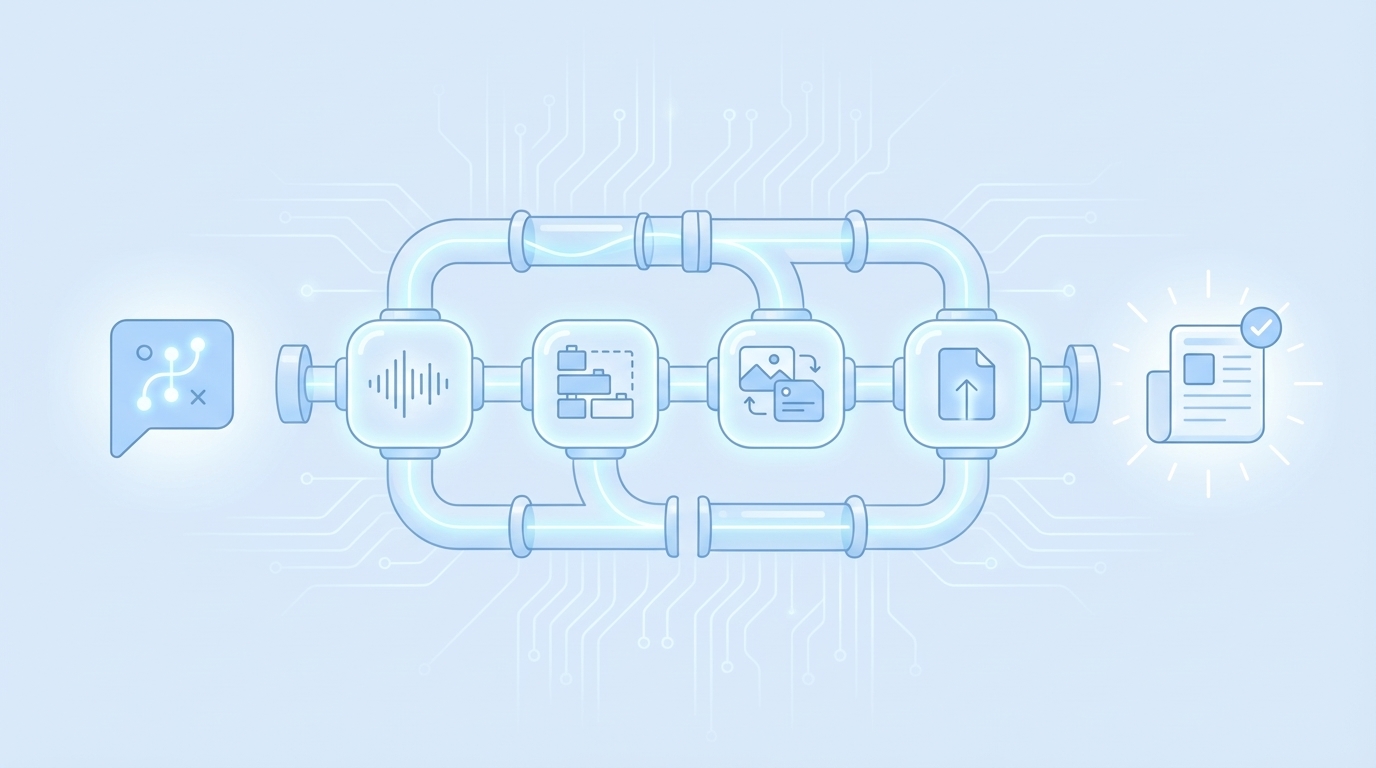
Most teams add tools to go faster, then watch publish time stall. The issue is fragmentation, not speed, because every extra interface creates another place for work to leak. A fixed pipeline removes that tax by turning recurring edits into rules, then running the same sequence every time.
Trace Your Last Five Publishes
Start with a simple audit. Reconstruct each publish from idea to live, list every handoff and “quick fix,” then tag what could have been encoded upstream. You will see the same patterns, like tone cleanups, fact checks, link inserts, schema glue, and CMS field rework. Those become backlog items for gates, not reminders.
The trick is to place each fix where it belongs. Voice checks live before drafting, KB grounding during drafting, link and schema injection after text but before CMS, and final QA as a real pass/fail. If you want a primer on why speed alone is not enough, this is the core of the orchestration shift. The point is not more output. It is fewer late surprises.
Log Failure Modes With Numbers
Run a one-week failure mode log. Categorize delays by voice, factual drift, internal links, visuals, and CMS errors. Capture frequency and minutes lost. Rank the categories and shift the top two from human judgment to code. Measurement beats hunches.
There is support for this kind of change in adjacent fields. The Wiley press release on AI-driven automation describes streamlining article placement with mapped, automated steps. That is the theme here. If you need the end-to-end view of autonomous content, skim ai content writing to see how a single system avoids the glue work entirely.
Curious what this looks like in practice? Try generating 3 free test articles now.
Publishing Is A Pipeline, Not A Pile Of Tools
Publishing gets fast when you define non-negotiables, then encode them as checks inside a staged pipeline. Preferences fade under pressure, tests do not. A pipeline owns sequence and state, so retries are safe and outcomes are predictable.
Define Outcomes And Constraints
Write your rules in plain English first. Voice constraints and banned terms. KB grounding requirements. Snippet‑ready openings for every H2. Required schema types. Internal link count and placement. CMS fields that must be mapped. Then turn each into a test. No check, no publish.
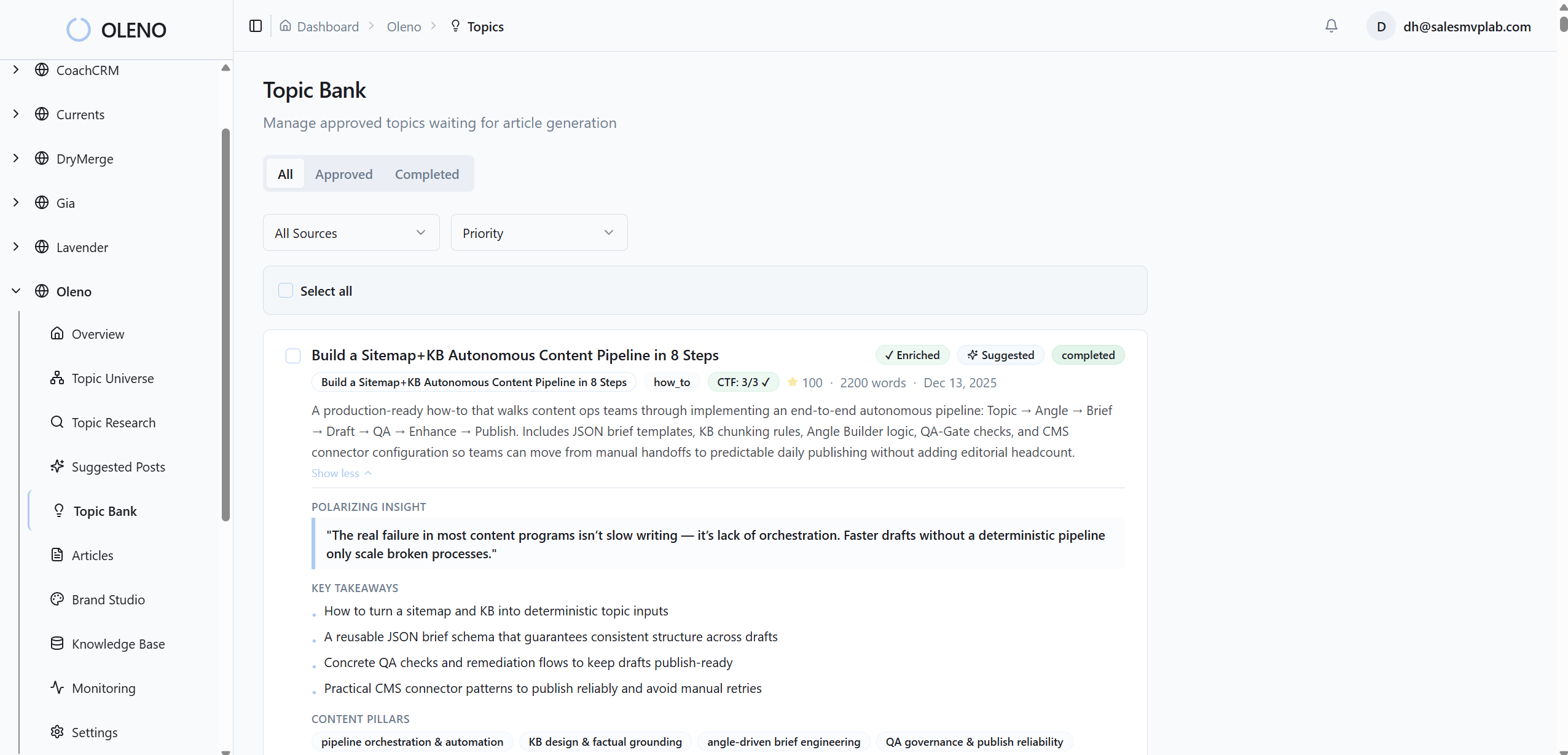
Set initial thresholds you can actually pass, like QA score ≥ 85, 5–8 internal links, and 40–60 word H2 openings. Tighten later as your inputs mature. This is how you move from ad hoc reviews to an autonomous systems mindset that removes robotic work from humans and elevates the rest.
Map The Stages End To End
Draw the flow with inputs, outputs, and artifacts, then keep stages idempotent. A practical map looks like Topic → Brief → Draft → QA → Visuals → Linking → Schema → Publish. Brief produces an outline, external sources, and an information gain score. Draft is text only. QA either passes or triggers refinement loops. Linking uses verified URLs. Schema emits JSON‑LD. Publish maps fields into your CMS.
Own the queue and state transitions with one orchestrator, then use event-driven workers for each stage. If a worker reruns, it should produce the same output or a deterministic improvement without duplicating posts. This matches orchestration patterns seen in multi-agent pipelines, like those summarized in arXiv’s orchestration patterns for LLM systems, and aligns with the mapped automation described in the Wiley press release. For a practical content variant, see the deterministic content pipeline.
The Hidden Costs Draining Your Publish Budget
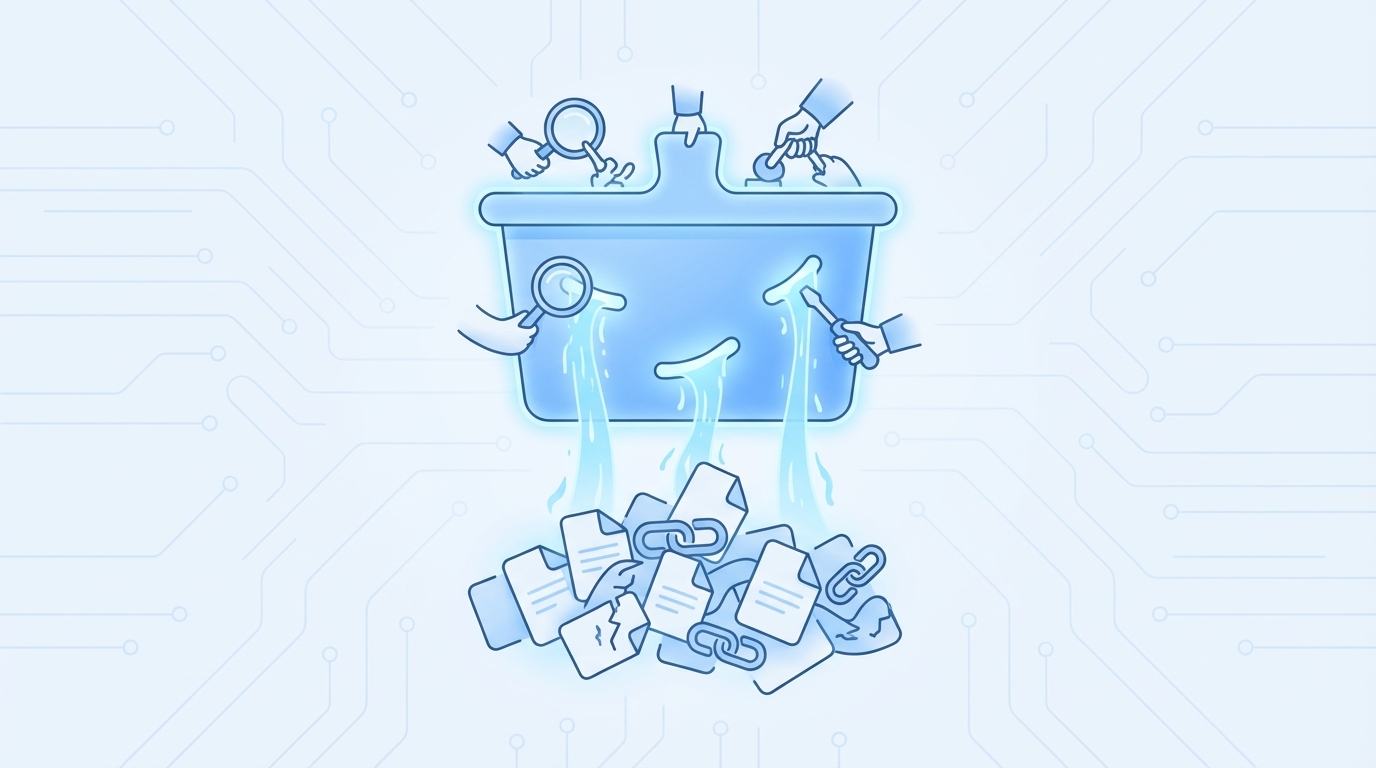
The budget killer is rework, not drafts. Time leaks during links, schema, CMS formatting, and voice edits that should never reach your CMS. A small math exercise shows why a pipeline matters.
Let’s Pretend You Publish 20 Articles A Month
Assume 3.5 hours of manual cleanup per article for links, schema, images, voice edits, and CMS formatting. That is 70 hours a month. At a blended $85 per hour, roughly $5,950. If strict QA gates eliminate half, and deterministic linking plus schema remove another quarter, you have a credible path toward 80% time reduction. Not guaranteed. Directionally achievable when you enforce rules.
Now add failure overhead. One botched publish weekly for broken schema or a duplicate, two hours to diagnose and roll back. Roughly eight hours monthly. Idempotent publishes, versioned artifacts, and rollback policies shrink this to minutes. The bigger return is focus, not just cost. It mirrors what automation often does in other domains, where time shifts from manual tasks to higher-value work, as noted in research on labor reallocation like the NBER working paper on automation and productivity.
Where Rework Multiplies (And How To Defuse It)
Voice changes ripple across every paragraph. Encode tone, phrasing, and banned terms with a brand linter before drafting. Structure fixes repeat forever if the outline is weak. Require snippet‑ready H2 openings and enforce differentiation at the brief using an information gain metric. Stop bad drafts at the gate. It is kinder to your team and cheaper for the business.
Move checks where they belong. Have QA remove AI‑sounding language and confirm visuals, links, and schema meet thresholds before anything touches your CMS. If you want a starter list of checks to encode, here are practical examples from a real gate: qa gate checks. For a reminder on why fast drafts alone do not fix outcomes, read why ai writing fails. There is also emerging evidence that structured, reproducible processes improve throughput and reliability, as seen in research on editorial workflows like Frontiers’ analysis of process automation and quality.
What Manual QA Really Feels Like For Your Team
Manual QA looks harmless on a checklist. In practice, it drains attention. Writers revisit drafts days later. Editors smooth voice inconsistencies by hand. CMS specialists fix links, alt text, and schema at 6pm. It creates fatigue, not quality.

The Fatigue Behind “Quick Reviews”
Context switching is the hidden headache. People jump back into a draft that no longer lives in their head, then push pixels around instead of making judgment calls. Codify rules wherever judgment is repeatable. Keep human review for ambiguous calls, product nuance, and anything with real risk.
You will not scale empathy with checklists, so reduce the number of low-value decisions. If a rule can be expressed, it can be tested. Structured, reproducible processes are a known path to fewer surprises, a theme echoed in reproducibility literature like the PMC discussion on structured methods and consistency and in applied automation efforts that reduce toil, such as Berkeley Lab’s work on AI and automation in scientific pipelines.
Turn Reviews Into Gates (Not Opinions)
Convert your review template into machine-checkable policies. Validate structure and heading patterns, enforce snippet‑ready openings, verify link counts and schema presence, and confirm KB-backed claims exist where needed. Treat 85 as the pass threshold. Auto‑refine until passing. Humans review samples for drift, not every sentence.
Make visuals first class. Generate brand‑consistent hero and inline images with enforced alt text and filenames. Prioritize solution sections for product visuals. If visuals fail style constraints, regenerate them automatically. Voice and phrasing rules live in a brand linter, like the kind outlined in brand studio. And for why snippet‑ready openings matter for search and AI references, here is a quick primer on dual visibility.
Interjection.
Build The Deterministic Pipeline That Ships Without Cleanup
A pipeline that ships clean does not rely on heroics. It relies on state discipline, deterministic steps, and safe retries. Determinism beats bigger prompts.
Architecture Blueprint You Can Implement This Quarter
Use a queue per stage and an event bus for transitions. Schedule workers for brief generation, draft writing, QA, visuals, internal linking, schema, and CMS publish. Persist artifacts and QA scores with versioning, plus an audit log of inputs, outputs, retries, and publish attempts. The deterministic pipeline comes from strong boundaries between creative work and code-based post processing.
Separate creative from code. Draft generation writes text only. Post-processing workers insert visuals, links, and schema using rules and verified sources. Publishing converts markdown to CMS-ready HTML and maps fields explicitly. If a task fails, it retries with backoff and idempotency keys to prevent duplicates. For a deeper dive on field mapping and safe shipping, see deterministic cms publishing.
How Do You Make Publishes Idempotent?
Generate a stable content hash and use it as your idempotency key. The publish worker checks the key before writing, updates if present, or skips. Store CMS IDs and slugs in a state store. Keep both “safe draft” and “publish live” modes, then flip when pass rates stabilize. Always maintain rollback by storing previous versions and ensuring you can rehydrate the last good state quickly.
This is the linchpin that turns retries from scary to safe. It is the difference between hoping a broken publish will not happen again and knowing your system prevents it by design. For practical retry and webhook patterns, review idempotency patterns.
Ready to eliminate boring last‑mile work? Try using an autonomous content engine for always-on publishing.
How Oleno Automates The Topic-To-Publish Pipeline
Oleno runs a fixed pipeline that turns strategy into published, brand-complete articles. It encodes your voice and facts, structures content for citation, injects visuals and metadata, and publishes with mapped fields. The aim is predictable outcomes without daily coordination.
What Oleno Handles Out Of The Box
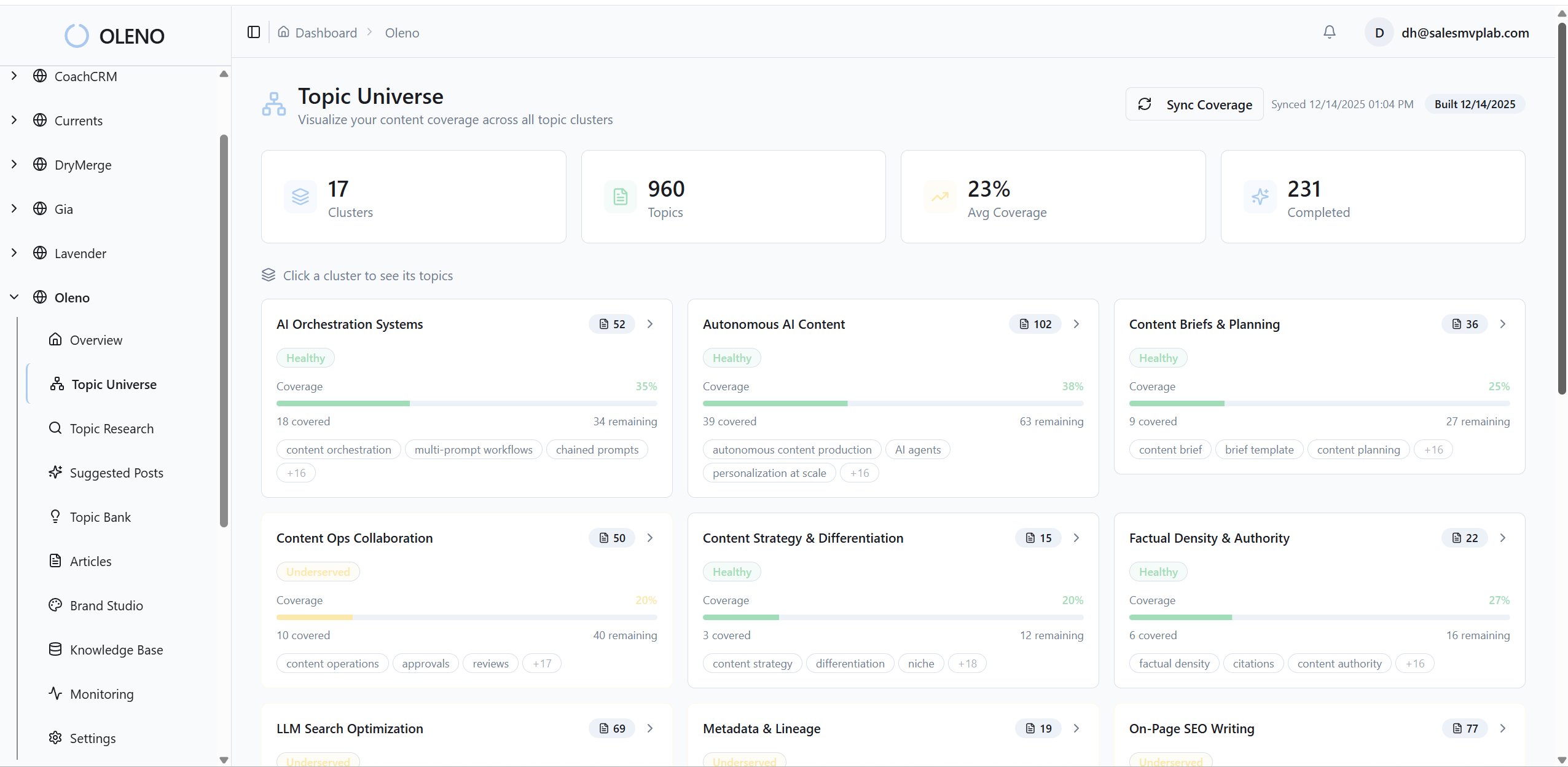
Oleno covers the full path from topic to live. A topic prioritization system suggests and prioritizes topics, then Brief Generation performs competitive research and calculates an information gain score to prevent shallow coverage. Draft Generation produces long-form text aligned to brand voice and KB facts. Every H2 opens with a snippet‑ready paragraph for clarity and citation.
From draft to live, Visual Studio generates brand‑consistent hero and inline images with alt text, deterministic internal linking injects only verified URLs from your sitemap, and schema markup is generated automatically for Article, FAQ, and BreadcrumbList. Quality Assurance and enhancement loops evaluate 80 plus criteria and refine until passing. Publishing connectors convert to CMS‑ready HTML, map fields, support draft or live modes, and prevent duplicates. For the broader view of this system, start at content operations system.
When Should You Still Keep A Human In The Loop?
Early calibration matters. Keep reviewers on periodic samples until your pass rates sit comfortably above the threshold. Use their input to tighten brand rules and KB curation. For regulated or high-stakes content, route to a human gate after QA pass, so reviewers focus on nuance, not mechanics. The pipeline still handles visuals, links, schema, and field mapping.
This is how teams move from drafts to dependable daily output without stress. If you want to see how to roll out safely, here is a practical guide to scaling: autonomous publishing pipeline and a breakdown of where the old model creates rework, content operations breakdown.
Why This Cuts Manual Publish Time
Remember the 3.5 hours of cleanup per article. Oleno reduces that load by moving repeatable fixes into the pipeline. Voice and phrasing are normalized by QA gates. Internal links are injected deterministically from verified sitemaps. Schema is generated programmatically. CMS publishing maps fields and prevents duplicates by design. Teams often see a substantial cut in last‑mile minutes because cleanup tasks never reach the CMS.
It is not magic. It is orchestration. Oleno uses features like topic prioritization, information gain scoring, Snippet‑Ready Paragraphs, Visual Studio, deterministic internal linking, schema auto‑generation, and Publishing & Connectors to enforce consistency. Oleno also keeps internal logs of inputs and outputs to enable safe retries and versioning, not to track performance or visibility. The practical outcome is steadier publishing with fewer surprises.
Want to see the pipeline run end to end on your content? Try Oleno for free.
Conclusion
Tool lists feel productive. Pipelines are productive. When you encode your rules as checks, break work into deterministic stages, and make retries safe, publish speed goes up while rework drops. People focus on judgment and clarity. The system handles the rest.
You can assemble this yourself, step by step, by defining constraints, mapping stages, and implementing idempotent publishes. Or you can let Oleno run the pipeline from topic to live, with voice, visuals, links, schema, QA, and publishing handled as one flow. Either way, you stop paying the fragmentation tax and start shipping clean by default.
About Daniel Hebert
I'm the founder of Oleno, SalesMVP Lab, and yourLumira. Been working in B2B SaaS in both sales and marketing leadership for 13+ years. I specialize in building revenue engines from the ground up. Over the years, I've codified writing frameworks, which are now powering Oleno.
Frequently Asked Questions