Orchestrated AI Content Pipelines: Build Draft-to-Publish Workflows
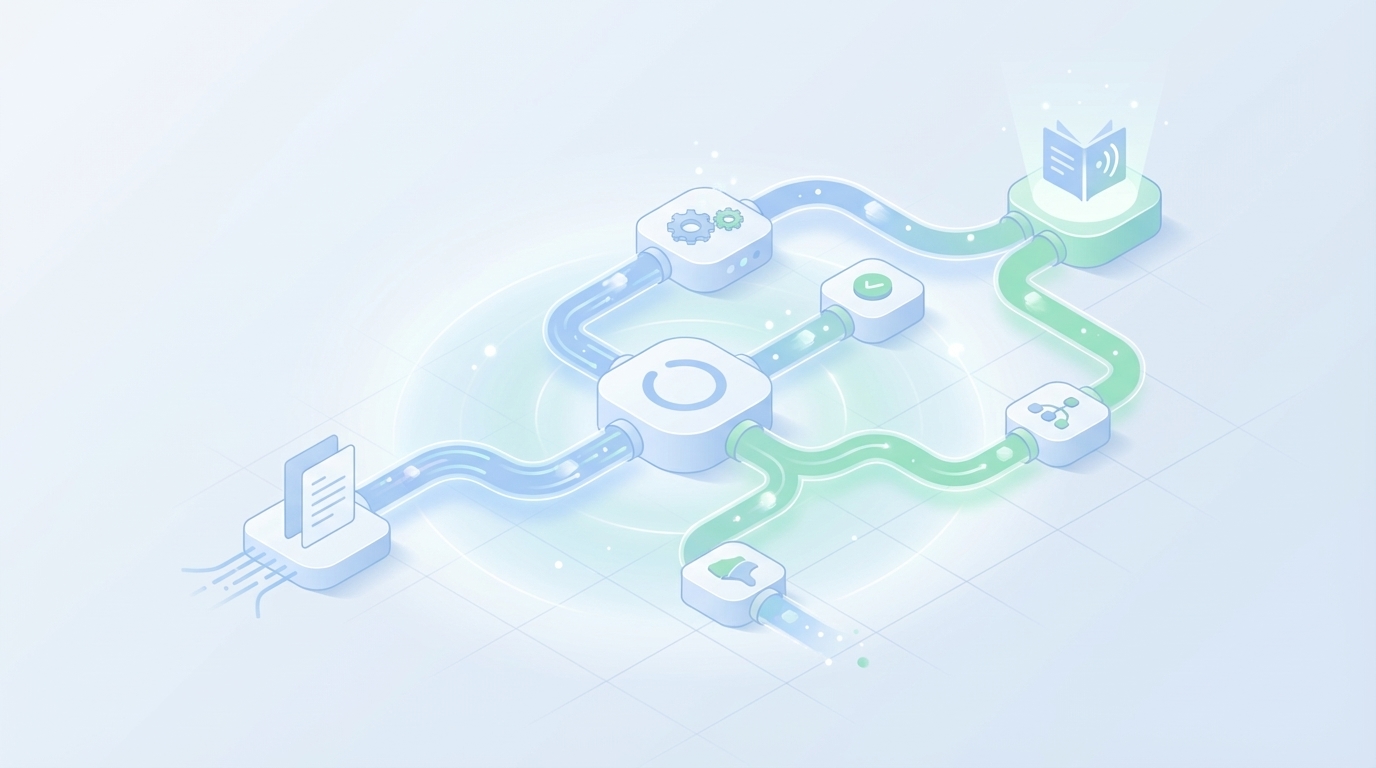
Most teams think their content problem is writing speed. It isn’t. The real drag is that strategy, drafts, visuals, QA, and publishing all live in different tools, with different owners, and no one source of truth. You can crank out words and still ship chaos. I’ve done it both ways, volume without coordination creates rework. And rework quietly kills momentum.
When I ran editorial operations with dozens of contributors, we scaled to thousands of pages because the system handled the work, not the people. At PostBeyond, when I was the sole marketer, I could push 3–4 posts a week because I had a framework, not a blank page. The pattern holds: when the pipeline is clear and governed, content compounds. When it isn’t, drafts pile up, editorial drifts, and publishing becomes a detective job.
Key Takeaways:
- Stop treating “draft” as the finish line, ship publish‑ready articles with visuals, links, and schema
- Coordination is the bottleneck, not copy, govern the pipeline end to end
- Encode QA gates and retries so failures are events, not emergencies
- Centralize brand memory (facts + voice) to cut rewrites and drift
- Design for determinism: internal links from a verified sitemap, schema via code, idempotent publishing
- Build authority over time with Topic Universe coverage and information gain thresholds
Ready to skip the theory and watch a governed pipeline run? Try Generating 3 Free Test Articles Now.
Stop Shipping Drafts And Start Shipping Articles
A governed content pipeline turns scattered tasks into a single system that moves from topic to publish the same way every time. The benefit is predictability, fewer surprises, fewer stalls, and fewer late fixes. For example, a brief with information gain and snippet-ready structure makes drafting and QA faster by design.
The hidden cost of treating content as isolated tasks
When writing, visuals, QA, and publishing live in different tools, drift is guaranteed. The creative intent that started in strategy gets diluted at each handoff. People make reasonable decisions locally that conflict globally. You feel it as “frustrating rework,” but what you’re really seeing is a system without rules.
I’ve seen this movie. You brief a writer, someone else slaps on a stock photo later, QA rewrites headlines to hit snippet length, and publishing fails because of a field mismatch. Everyone did their job. The pipeline didn’t. The fix isn’t more effort, it’s defining the end-to-end flow in writing, then making weak links machine-checkable.
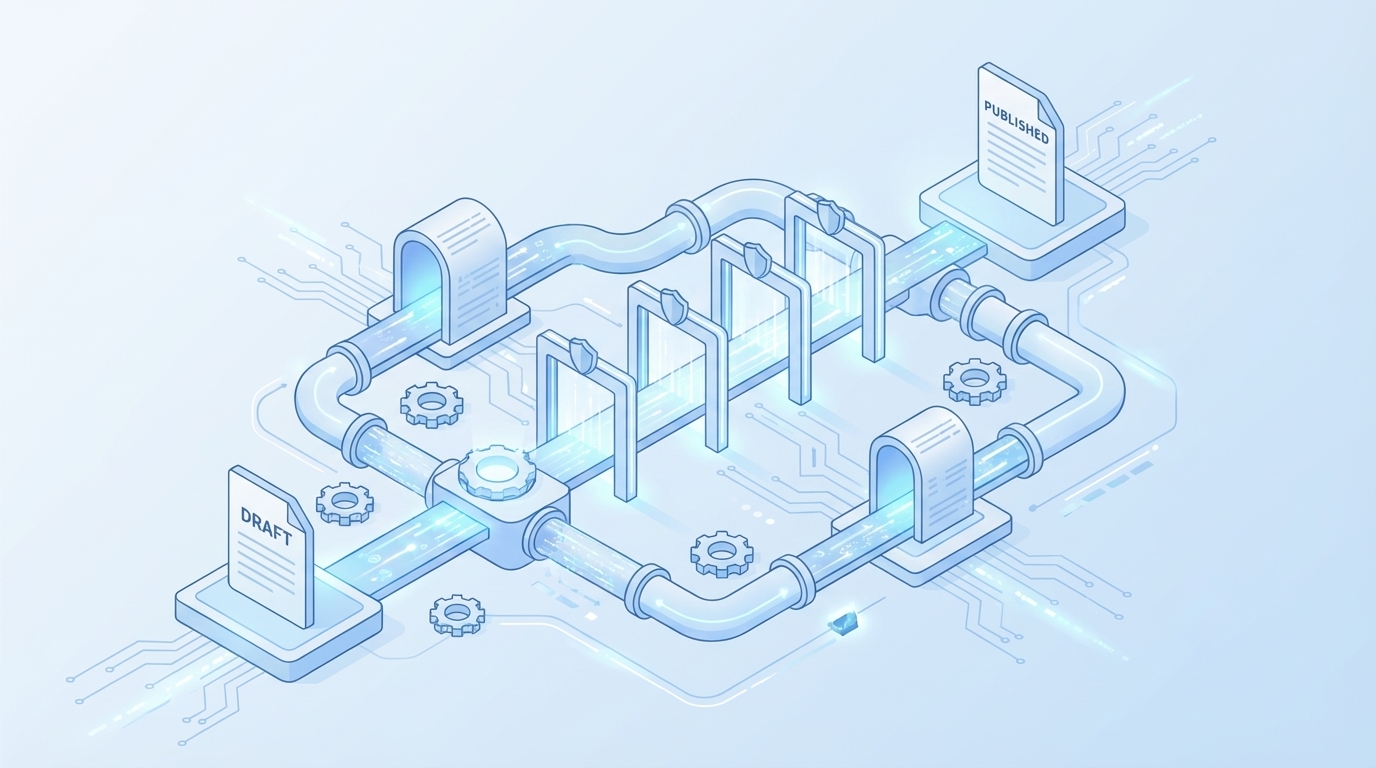
Name the full path: topic → brief → draft → QA → visuals → links/schema → publish. Capture the handoff rules, not just the tasks. When a step breaks, log it, remediate it, and retry. The outcome shifts from “we shipped a draft” to “we shipped an article.”
What is an orchestrated pipeline and why should you care?
An orchestrated pipeline is a fixed sequence with explicit gates: strategy, research, drafting, visuals, QA, and publishing run the same way, every time. Predictability reduces rework and makes output trustworthy. And when something fails, the system knows how to retry, and records what happened for a clean audit trail.
You care because teams burn hours on glue work they never planned for. Ad hoc fixes feel fast in the moment and slow over a quarter. Orchestration flips that. You define what “good” means upstream and let the pipeline enforce it downstream. The human job becomes narrative and exceptions, not structure and formatting.
Think of it like productionizing your content operation. Durable, not heroic. If you want a technical analogy, the way Microsoft’s Durable Functions orchestration model coordinates reliable, stateful workflows is the spirit you want, clear steps, explicit state, and deterministic retries.
Why drafts are not the deliverable
A draft is a waypoint, not the destination. The actual deliverable is a publish‑ready article with on-brand visuals, deterministic internal links, programmatic schema, and fields mapped to your CMS. Until you define that as “done,” teams will keep stopping early and handing work to the next person.
When you make “publish‑ready” the bar, you force quality upstream. The brief includes the angle and differentiation. The draft opens each H2 with a snippet‑ready paragraph. QA enforces voice, structure, and factual grounding. Visuals are generated and placed intentionally, not tacked on. Publishing calls are idempotent and logged.
This is the moment drift disappears. You’re not hoping the last mile gets handled. You’ve encoded it as part of the pipeline. Drafts stop sitting in limbo, waiting for images and links. They move.
Coordination, Not Copy, Is Your Bottleneck
The real bottleneck isn’t writing speed, it’s how decisions are made and enforced across the pipeline. Most teams use prompting to sprint through drafting, then lose days to misalignments and manual fixes. The hidden cost is context switching and “who owns this now?” drama. That’s solvable with governance.

What traditional AI workflows miss
Prompting speeds writing. It does not manage memory, structure, or publishing. There’s no persistent knowledge of what’s been said, what should be added, or how the work will be consumed by people and machines. Topic coverage, saturation, and duplication risks? Mostly guesswork. Visuals and links? Manual.
So you get drafts that read fine but don’t compound authority. Clusters get over-covered because there’s no cooldown rule. Two posts step on each other’s toes because no one tracked saturation. Visuals look off-brand because there’s no asset library or placement rule. All of it feels fixable in isolation; it’s expensive in aggregate.
If you’ve ever thought “this should be simple” while hand-placing internal links, that’s the signal. The work isn’t difficult, it’s just unmanaged.
How brand memory and knowledge control quality
Centralize facts and voice. Embed a knowledge base for grounding and a brand studio for tone, phrasing, and banned terms. Retrieval keeps claims accurate. Voice rules keep prose consistent. Use both at every stage: angle, draft, QA. Not just at the final edit.
This reduces hallucinations without turning your process into a fact-checking marathon. It trims review loops because off-voice sentences don’t sneak in. Multi-author output feels like one brain wrote it. It also gives you a lever: change a rule once, and the next run picks it up automatically.
The result isn’t perfection. It’s fewer surprises and faster correction when something deviates. That’s what you want.
Where manual handoffs create avoidable risk
Every manual handoff is a chance for context to leak. “I thought you had it.” “I didn’t know alt text mattered.” “Which CMS field maps to the excerpt?” These are normal last-mile questions when the system doesn’t answer them. Define machine-checked gates instead.
Check snippet-readiness and information gain automatically. Place visuals and internal links deterministically. Keep CMS mapping code-based with idempotency to prevent duplicates. Handoffs become logged events, not chores. And when something fails, you have a record, not a mystery.
You don’t need more meetings. You need rules the pipeline enforces.
The Costs You See, And The Ones You Do Not
Operational drag shows up as obvious tasks and invisible taxes. The obvious ones you plan for. The invisible ones eat your week. Either way, they add up. Quantify them, then encode them out of the system.
Engineering hours lost to custom scripts and fixes
Let’s pretend you ship 20 posts a month and spend 45 minutes per post fixing schema, internal links, or image filenames. That’s 15 engineer hours you didn’t budget. Add retries for failed CMS jobs or duplicates, and you’re flirting with two days of “glue code” no one wanted to own.
You can avoid this. Generate schema programmatically. Inject links from a verified sitemap with exact-match anchors. Standardize image filenames and alt text. Map CMS fields once. Use idempotent publish calls to prevent duplicates. This is less about sophistication and more about refusing to do the same cleanup twice.
If you want inspiration for reliable workflow control, study how AWS Step Functions treats retries, state, and failure handling. The pattern applies neatly to content operations.
The rework tax from hallucinations and voice drift
Unreliable drafts drive hidden rework. If 30% of posts need heavy rewrites due to factual drift or off‑voice copy, throughput collapses. Editors become translators. Writers lose confidence. And stakeholders start asking for “more reviews” (read: more delays).
Move fixes upstream. Use knowledge retrieval and voice constraints during brief and draft, not after. Enforce an 85+ quality threshold that checks structure, voice, KB accuracy, and snippet‑readiness before anything hits your CMS queue. It won’t eliminate rewrites. It will cut the heavy ones.
That’s the difference between “we can scale this” and “we’re drowning.”
What happens when your CMS publishing fails at scale?
One failed webhook is a blip. A silent series is a headache. Duplicates make it worse. Here’s the pattern that steadies delivery: idempotent publish calls, duplicate prevention, validation before send, and logged attempts with version history. Pair it with notifications that are informative, not noisy.
Map fields once. Test the mapping. Keep retries automatic but bounded. Your team needs predictable delivery, not another tab to babysit. When publishing becomes a rule, not a task, confidence returns.
If these costs look familiar, you’re not alone. Still papering over them manually? Try Using an Autonomous Content Engine for Always‑On Publishing.
The Stress Of Shipping Content You Do Not Trust Yet
Most content problems get solved eventually. It’s the uncertainty that wears teams down. The “are we safe to publish?” debate. The 3am rollback. The draft that sits for two weeks waiting on visuals. Let’s remove the anxiety by removing the variability.
The 3am rollback you wish you avoided
Publishing with weak checks invites late-night rollbacks. The fix isn’t heroics; it’s a gate. Structure checks, KB accuracy, brand alignment, and snippet‑readiness should pass before anything moves to the CMS. If a draft fails, remediation loops run automatically and try again.
I’ve lived the night-owl email: “Pull it down, the intro overpromises and the headings won’t win a snippet.” That’s not a performance problem; it’s a process problem. Codify the bar, enforce it every time, and your “oh no” moments drop.
And when something truly odd slips through, logs tell you where and why. You want post‑mortems, not guesswork.
When a great draft stalls for images and links
Drafts don’t ship because visuals and links are manual. Designers are busy. SEO is backlogged. Meanwhile, the window for relevance closes. You can fix that by making visuals and links part of the pipeline, not separate queues.
Create a brand asset library. Generate on‑brand images automatically. Match product screenshots by semantic relevance to the section. Write alt text that’s accurate and consistent. Inject internal links deterministically from a verified sitemap. The article should look finished without begging the design or SEO queue for a slot.
One interjection. This isn’t about skipping humans. It’s about making their time count where judgment matters.
Build A Deterministic Draft-To-Publish Workflow
A deterministic workflow makes “how we ship” boring, in a good way. You set rules once, and the system follows them. That stability frees you to obsess over narrative and strategy, not formatting and last‑mile cleanup. Here’s a two‑step pattern that teams adopt quickly.
Step 1: Initialize strategy with your knowledge base and sitemap
Start by embedding your knowledge base and importing a verified sitemap. Extract brand voice constraints, tone, phrasing, banned terms. Configure content pillars and focus areas that reflect your market, not just keywords. Initialize a brand asset library with logos, palettes, and tagged product screenshots.
Two reasons this matters. First, it grounds every downstream decision, angle selection, claim verification, and voice are no longer subjective. Second, it keeps your structure consistent. From the very first brief, you’re optimizing sections for snippet capture and AI citation, not hoping it happens later.
If you build these inputs once, the pipeline can enforce them for you. For a clear view of knowledge handling mechanics, see Dify’s knowledge pipeline docs.
Step 2: Generate topics, enforce information gain, and ship with QA, visuals, and publishing connectors
Cluster topics from your KB, sitemap, and focus areas into pillars. Track coverage and label clusters as underserved, healthy, well‑covered, or saturated. Enforce a 90‑day cooldown to avoid cannibalization. Approve suggestions that close gaps. You’re building authority, not chasing trends.
At brief time, run competitive scans, identify common coverage and missing angles, and score for information gain. Set a minimum threshold so low‑differentiation outlines get flagged or blocked. Include 3–5 credible external sources you plan to reference. Differentiation is enforced here, not hoped for.
Drafts then pull facts from your KB with voice constraints applied. Open every H2 with a 40–60 word snippet‑ready paragraph. Run QA gates for structure, voice, KB accuracy, and snippet readiness. Generate hero and inline images, match product screenshots semantically, and generate alt text. Map fields to your CMS, prevent duplicates with idempotent calls, and enable retries with logs. Publishing becomes a rule, not a gamble.
How Oleno Automates Draft-To-Publish With Guardrails
Oleno turns the approach above into a closed‑loop system that runs daily. It isn’t a writing toy; it’s an autonomous content and brand execution engine. Oleno handles strategy, differentiation, writing, visuals, quality enforcement, and publishing, end to end, so your team can focus on narrative and outcomes.
Topic Universe and saturation rules for smart prioritization
Oleno discovers topics from your knowledge base and sitemap, clusters them into pillars, and labels saturation states in real time. A 90‑day cooldown prevents over‑coverage. This prioritization reduces duplicates, aligns work to gaps, and compounds authority where it matters. Less second‑guessing, fewer collisions.
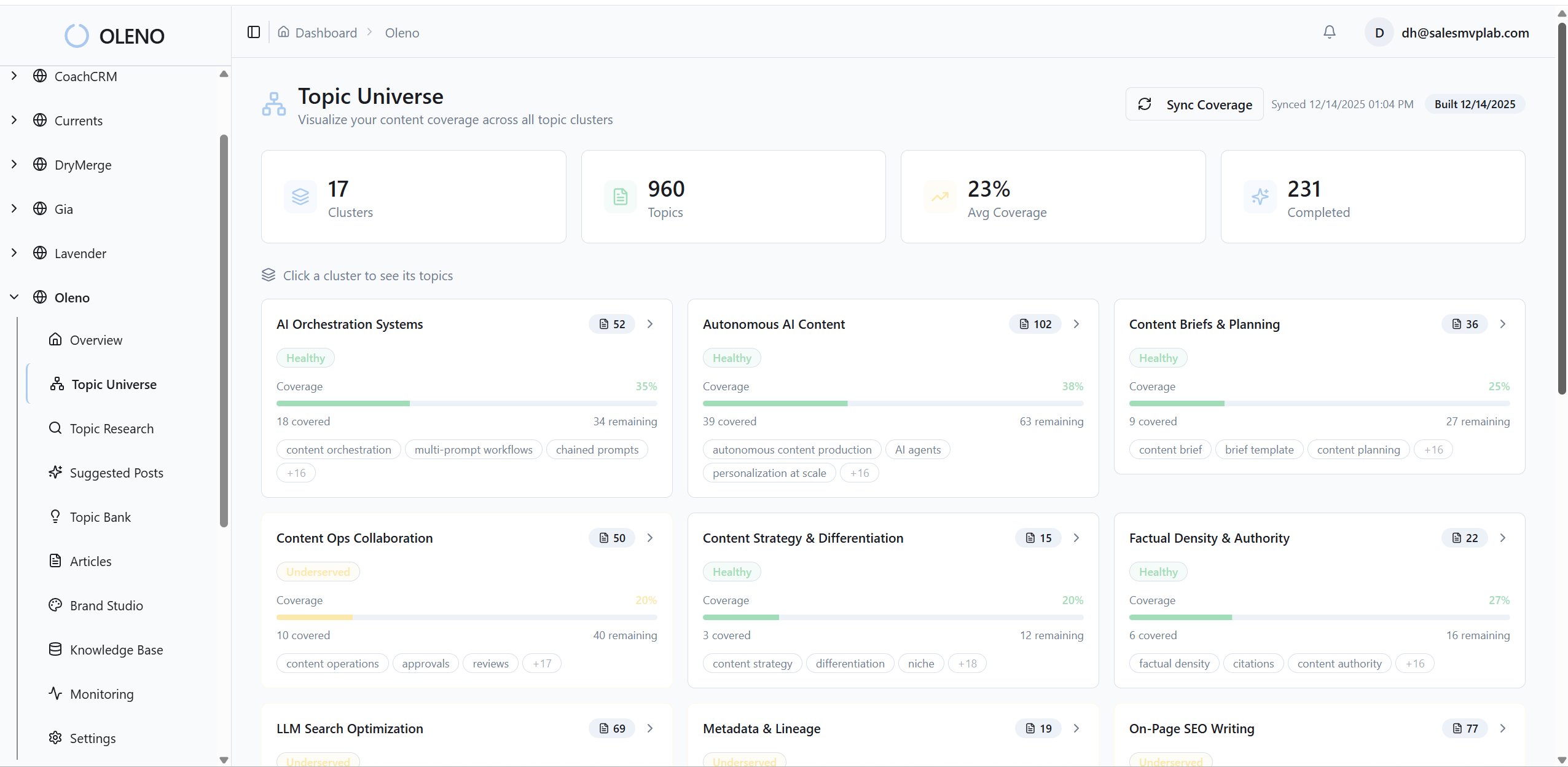
Because Oleno tracks coverage and saturation continuously, you avoid the “accidental cannibalization” that shows up months later. The queue stays full and sensible. You approve, it ships. Simple.
And if priorities shift, adjust focus areas once. Oleno adapts the queue automatically.
Information gain briefs and QA Gate scoring to prevent repeats
Before writing, Oleno runs competitive research, identifies shallow explanations and missing perspectives, and calculates an Information Gain Score. Low-differentiation briefs trigger warnings so you can revise the outline before words get written. That’s how you avoid publishing content that adds nothing new.
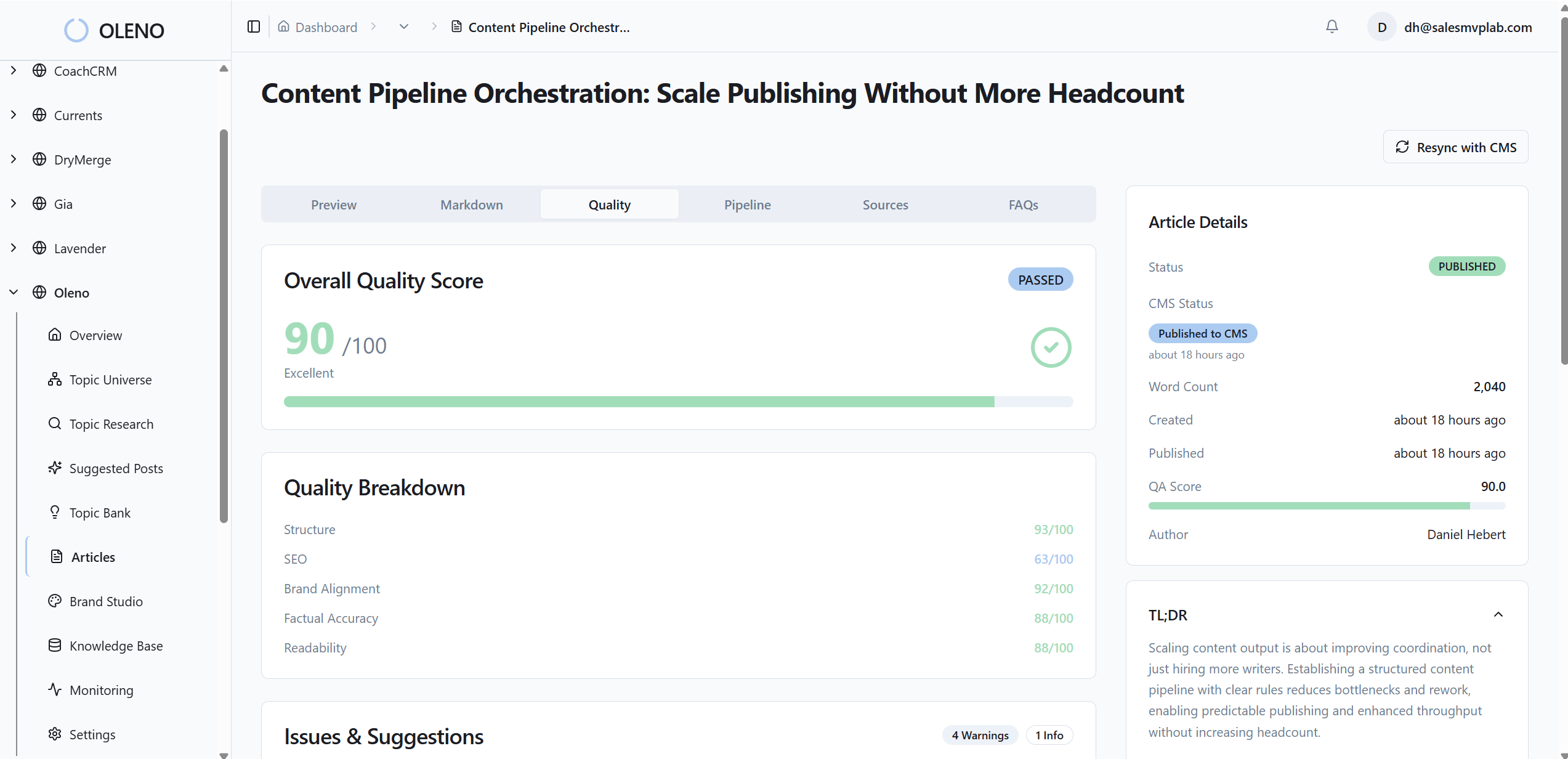
Drafts then pass a QA Gate with an 85+ minimum that checks structure, voice alignment, KB accuracy, and snippet‑readiness. Risky drafts don’t hit the CMS queue. This is how Oleno ties back to your rework costs: fewer heavy rewrites, fewer last‑minute edits, and tighter consistency across authors.
It’s not about perfect. It’s about predictable.
Visual Studio, deterministic links, schema, and CMS connectors
Oleno’s Visual Studio generates on‑brand hero and inline images using your color palette and style references, matches product screenshots to the right sections via semantic similarity, and writes accurate alt text. Internal links are injected deterministically from your verified sitemap with exact‑match anchors. Schema is generated programmatically. CMS connectors map fields, prevent duplicates with idempotent calls, and retry on transient failures with logged attempts.
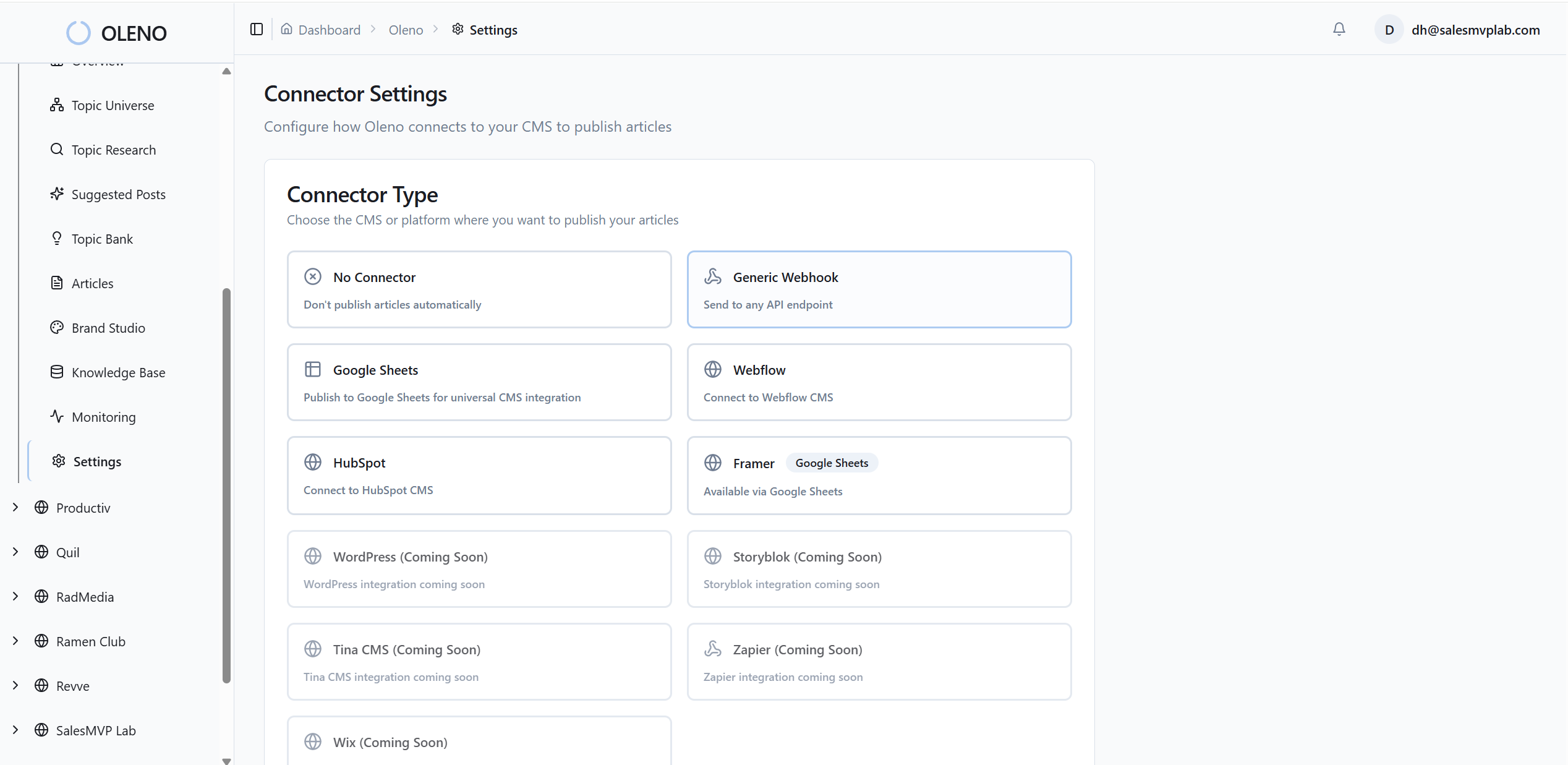
This is how drafts become publish‑ready articles without a design queue or SEO ticket. It also addresses the hidden costs we quantified earlier: fewer engineering hours on cleanup, fewer publishing errors, and far less “who owns this?” confusion.
Want the guardrails without the manual lift? Try Oleno for Free and see a governed pipeline move from topic to publish, complete with visuals, links, and schema.
Conclusion
You don’t need more drafts. You need a pipeline that ships articles, predictably, on‑brand, and ready to publish. Coordinate the system, not the people. Centralize facts and voice. Enforce information gain and snippet‑ready structure. Automate visuals, links, schema, and publishing. That’s how content stops being a project and starts acting like infrastructure. And once it’s repeatable, authority compounds.
About Daniel Hebert
I'm the founder of Oleno, SalesMVP Lab, and yourLumira. Been working in B2B SaaS in both sales and marketing leadership for 13+ years. I specialize in building revenue engines from the ground up. Over the years, I've codified writing frameworks, which are now powering Oleno.
Frequently Asked Questions