Orchestrated AI Pipelines: Publish Snippet-Ready Articles Daily

Most teams say they want to publish daily. What they really want is to stop babysitting drafts, design, and CMS fields at 10 p.m. Been there. When I was a team of one, I could brute-force output for a while. But the moment you scale, prompts and hero edits collapse under their own weight.
The fix isn’t another AI writer. It’s a pipeline that remembers your rules, enforces structure, and ships the whole thing, text, visuals, links, schema, without you gluing it together by hand. You can keep creativity in the words. Put correctness in the system.
Key Takeaways:
- Daily publishing fails when prompts reset context; pipelines succeed by enforcing sequence and rules
- Treat content like a governed system: strategy, differentiation, structure, visuals, QA, publishing
- Quantify hidden costs: glue work, rework, silent publish failures
- Ground every stage in a knowledge base and brand memory to cut drift
- Enforce information gain at the brief, snippet-ready H2s in the draft
- Use deterministic linking, schema, and idempotent connectors to reduce post-publish cleanup
- Oleno automates this end to end with Topic Universe, QA-Gate, Visual Studio, and publishing connectors
Why Prompt-First Workflows Stall Out At Daily Publishing
Prompt-first workflows stall because they reset context every time, producing unpredictable structure and manual cleanup. Daily publishing needs a reproducible pipeline: fixed inputs, enforced order, and gates that catch drift. After a week, the pattern shows up as frantic edits and broken links that don’t go away.
The Hidden Complexity Behind a Daily Cadence
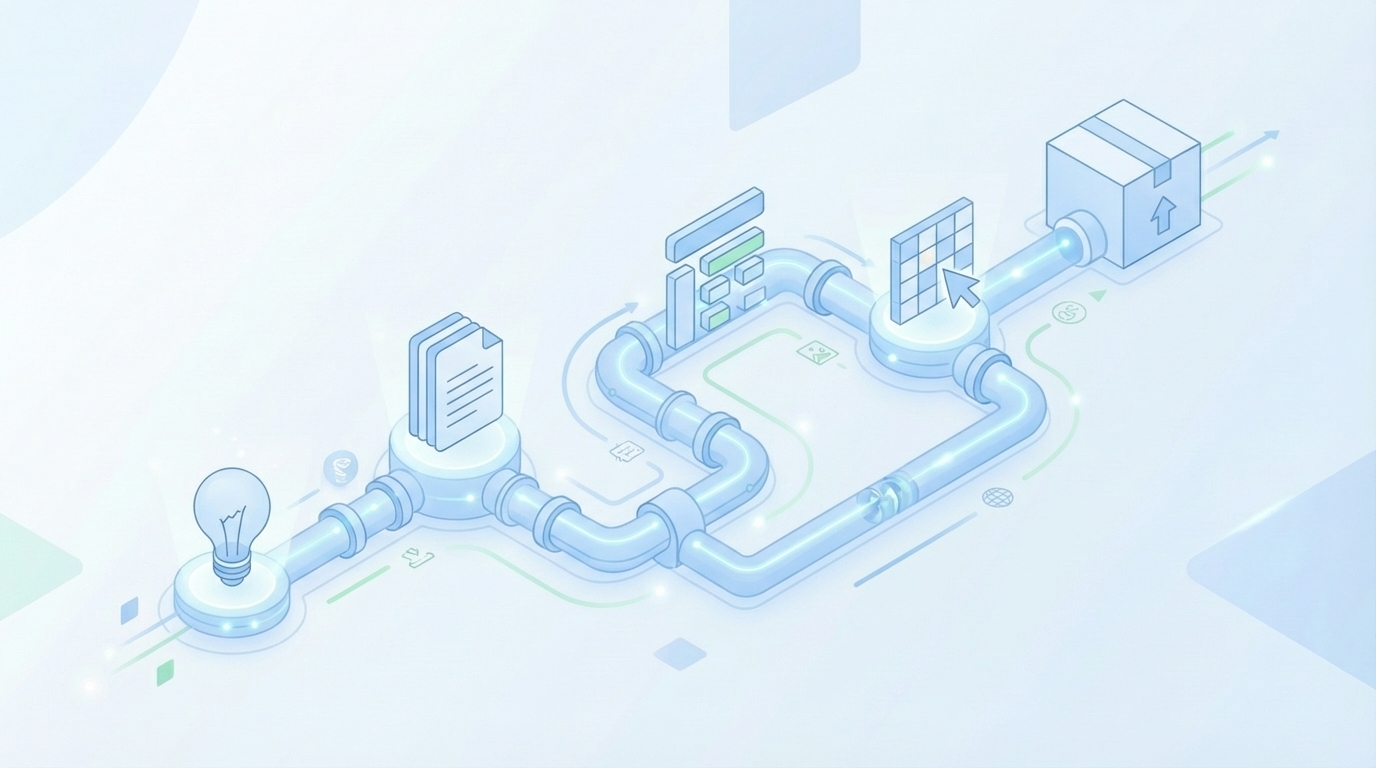
A true daily cadence looks simple from the outside. Inside, it’s topic selection, angle, brand voice, knowledge grounding, structure rules, visuals, internal links, schema, and publishing. If even one piece is “we’ll figure it out later,” that’s tomorrow’s slowdown. Prompts don’t govern these dependencies. They produce words, not a workflow.
I’ve tried to “work faster.” It backfires. You fix a headline here, swap an image there, paste schema, push to CMS, then repeat the same fixes tomorrow. The pattern is the problem. Successful daily ops depend on repeatability: the same sequence, the same checks, the same outcomes. Agent systems follow patterns for a reason; see how modular governance shows up in Microsoft’s AI agent design patterns.
What Breaks When Prompts Run the Show?
Prompts don’t handle memory, sequencing, or publishing constraints. So structure drifts, claims loosen without KB retrieval, visuals stay generic, and internal links get made up. Editors turn into air-traffic control. You end up with a line of “quick fixes” masquerading as process.
The switch is simple to say, harder to do: govern deterministic tasks with code. Link injection after the draft, not during it. Programmatic JSON-LD, not “we’ll paste it at the end.” Idempotent publishing with duplicate prevention. Keep creativity where it belongs, in the narrative, and let the system police structure.
Content Is a System You Can Govern and Ship
Content becomes reliable when you treat it like a system with governed stages and deterministic outputs. Codify what’s repeatable, constrain what’s subjective, and validate before anything goes live. For example, enforce snippet-ready H2s, deterministic links, and schema generation so editors stop hunting for consistency.

What Should a Production-Grade Pipeline Include?
You need an end-to-end path that never changes order: Topic Universe, prioritization, briefs with information gain scoring, KB-grounded drafting, snippet-ready structure, Visual Studio rules, deterministic internal linking, JSON-LD, QA-Gate thresholds, and idempotent publishing with retries. If a step is correctness-critical and repeatable, automate it. If a step is subjective, constrain it with templates and examples.
The upside isn’t just speed. It’s consistency. Coverage becomes intentional across clusters. Differentiation is enforced before writing starts. Structure is predictable enough that QA becomes a confirmation, not a rewrite. This mirrors how mature ops approach orchestration across disciplines; an ML orchestration overview from IBM outlines similar stage discipline.
Want to see this governed pipeline in action without rebuilding your stack first? Try Generating 3 Free Test Articles Now.
KB Grounding and Brand Memory, Applied Everywhere
Two persistent assets run the show: your knowledge base (facts) and your brand studio (tone, phrasing, banned terms). Retrieve KB snippets during angle creation and drafting. Re-check during QA. Do the same with voice rules so contractions, cadence, and word choice don’t drift.
You’ll notice the impact in small places: alt text that sounds like you, filenames that follow conventions, CTAs that use the same verbs, microcopy that doesn’t fight the brand. Consistency compounds trust. Not flashy, but you feel it.
The Hidden Costs Draining Your Team
The costs aren’t in writing a draft. They’re in glue work, rework, and silent publish failures. A few hours here, 40 minutes there, and suddenly your “fast” process chews up a day. The fix is pushing rules upstream and letting the system handle recovery instead of humans.
Engineering Hours Lost to Glue Work
When tools don’t align, Ops glues drafts to CMS templates, fixes internal links, and chases schema. That’s not free, it’s just spread across calendars. Codify field mappings. Select links from a verified sitemap. Generate filenames programmatically. Validate JSON-LD before publish. Track pipeline events and retries so work self-heals without a Slack pile-on.
Pipelines outside of content already treat this as table stakes. Data teams lean on explicit stages, retries, and idempotency to avoid accidental duplicates; the same mentality applies here. If you’ve never formalized that layer, the quick primer on DataFlow pipeline fundamentals makes the case clearly.
Rework From Generic Drafts
Let’s pretend you ship 20 articles this month. If 30% fail editorial and each takes 90 minutes to repair voice, structure, and visuals, that’s 9 hours gone. And that’s just the visible part. The fixes are the same every time: reorganize H2s, add a direct answer, fix tone, re-source images, wire links, add schema.
Stop approving bland outlines. Enforce information gain at the brief level and snippet-ready H2s at the draft level. When the draft shows up already aligned, voice, structure, section openings, rework drops. Editors focus on narrative, not surgery.
When You Are on the Hook for Ship-Ready Content
Ship-ready means you still review, but you don’t rescue. The difference is upstream rules: brand asset libraries, semantic screenshot matching, deterministic links from a verified sitemap, and QA that blocks what doesn’t meet threshold. The result feels boring in the best way, it just ships.
The Late‑Night Scramble You Would Rather Avoid
I’ve done the scramble. Small team, big goals, and a publish blocking on images and internal links. We tried transcribing founder videos to speed output. It worked for words, not for structure. No snippet-ready openers. Weak topic selection. We ranked on some things, but it didn’t tie back to the product, so sales couldn’t use it.
The fix wasn’t “write faster.” It was rules: brand asset library set once, images placed by similarity, internal links injected after the draft from a verified sitemap, schema added by code, not memory. You go from anxiety to habits your team trusts.
What Does Trust Feel Like When Your System Just Ships?
It’s the email that quietly says “publish succeeded,” not the thread asking “who has the latest version?” It’s fewer editorial swings and more line edits. Predictable structure. Consistent visuals. A cadence you can plan around because the pipeline does what it says it does.
If you’re done with babysitting the last mile, there’s a simpler path. Try Using an Autonomous Content Engine for Always-On Publishing.
Build a Deterministic Pipeline That Publishes Every Day
Daily output requires a deterministic sequence that never changes, even as topics do. Start by giving the system memory, your KB, sitemap, and brand voice, then enforce gates: information gain, snippet-ready H2s, deterministic links, JSON-LD, and idempotent delivery. A pipeline is just rules with receipts.
Strategy Initialization With KB, Sitemap, and Pillars
Begin before any words are written. Ingest your knowledge base so claims stay grounded. Import the sitemap so internal links can only point to verified URLs. Configure content pillars to define coverage lanes. Extract brand voice and banned terms so tone doesn’t drift.
This sounds like overhead. It isn’t. It’s preventing the cleanup you’d otherwise do later. When the pipeline knows your facts, your site, and your voice, it stops guessing. For teams formalizing this layer, the notion of a governed “knowledge pipeline” is well captured in this orchestration guide.
Briefs That Enforce Information Gain Before Writing
Make the brief the gate. Include competitive coverage, missing angles, required sections, snippet-ready H2 openings, and 3–5 authoritative external sources. Score information gain. If the outline is generic, refine upstream. Don’t ask drafts to invent differentiation that wasn’t planned.
Good briefs shift the job from “write something” to “explain this better than the field.” Writers stop reinventing structure and start adding substance. Interjection. That’s where authority starts to compound.
Draft Patterns That Produce Snippet‑Ready Sections
Write to a consistent shape. Open every H2 with a 40–60 word direct answer, then add context and an example. Keep paragraphs scannable. Enforce voice rules and KB retrieval at the section level so claims anchor to facts and phrasing stays aligned.
By the time QA runs, most structural checks should pass because the draft followed the right scaffolding. Editors focus on argument strength and examples, where humans shine.
How Oleno Automates This Pipeline End to End
Oleno automates the whole pipeline so content ships complete and consistent, not just “drafted.” It combines Topic Universe, information gain briefs, snippet-ready structure, Visual Studio, deterministic linking and schema, QA-Gate, and idempotent publishing. For example, it delivers to WordPress, Webflow, HubSpot, or Sheets with duplicate prevention and retries.
Topic Universe and Cooldown Logic Keep Coverage Balanced
Oleno discovers topics from your knowledge base, sitemap, and focus areas, then organizes them into clusters and labels saturation. It enforces 90-day cooldowns to avoid over-publishing the same idea and prioritizes gaps that actually move authority forward. You stop guessing what to write next and reduce cannibalization risk without spreadsheets.
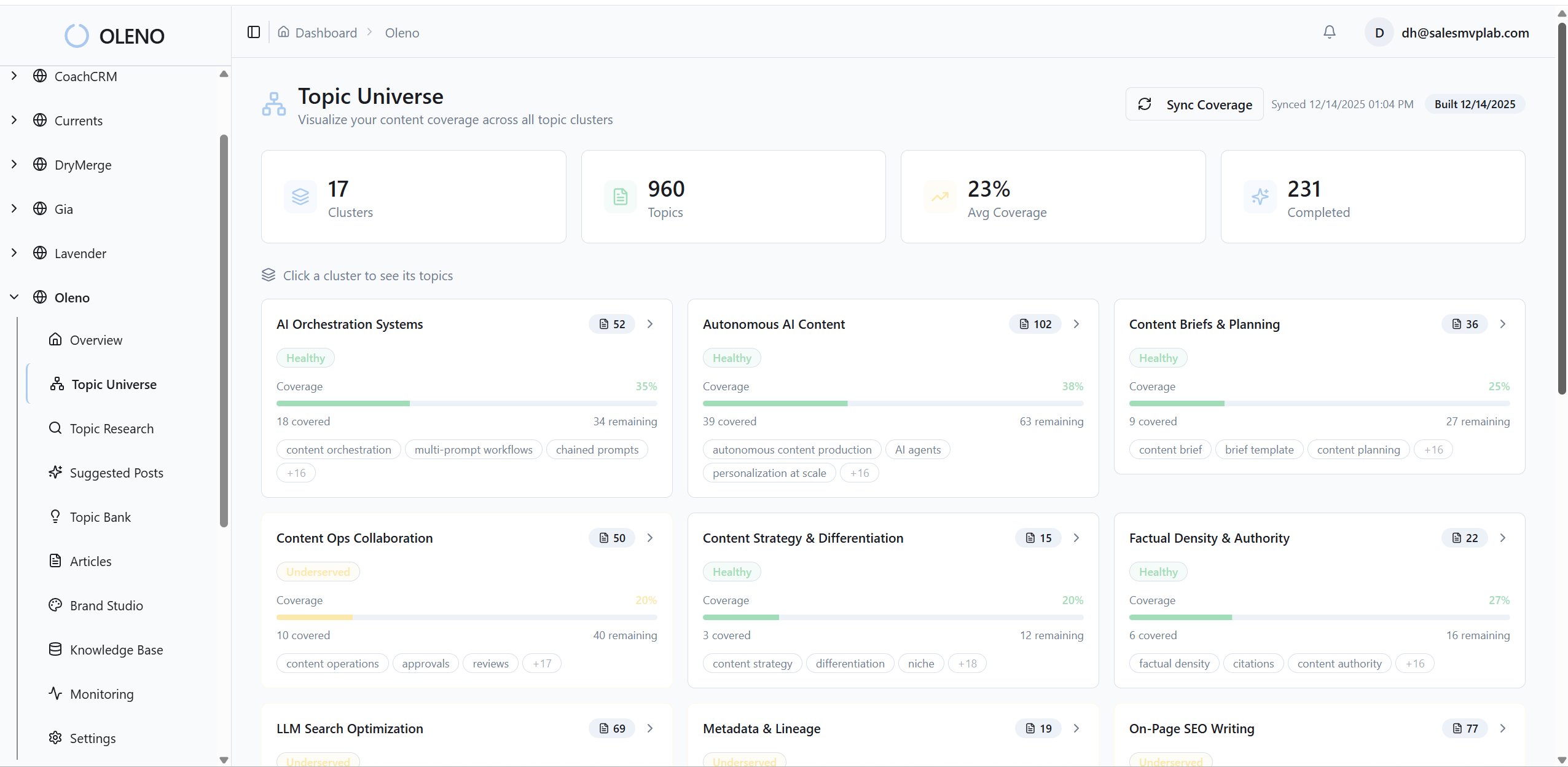
Because coverage is tracked across clusters, suggestions align with long-term positioning, not impulse. The output feels intentional: breadth where you need discovery, depth where you need trust.
QA‑Gate With 80 Plus Checks, Refinement Loops, and Pass Thresholds
Oleno evaluates drafts against 80+ criteria: structure, information gain, brand alignment, snippet readiness, visual placement, alt text, and filenames. Low-scoring sections trigger automated refinement loops until thresholds are met. Minimum passing score is enforced before anything moves forward.
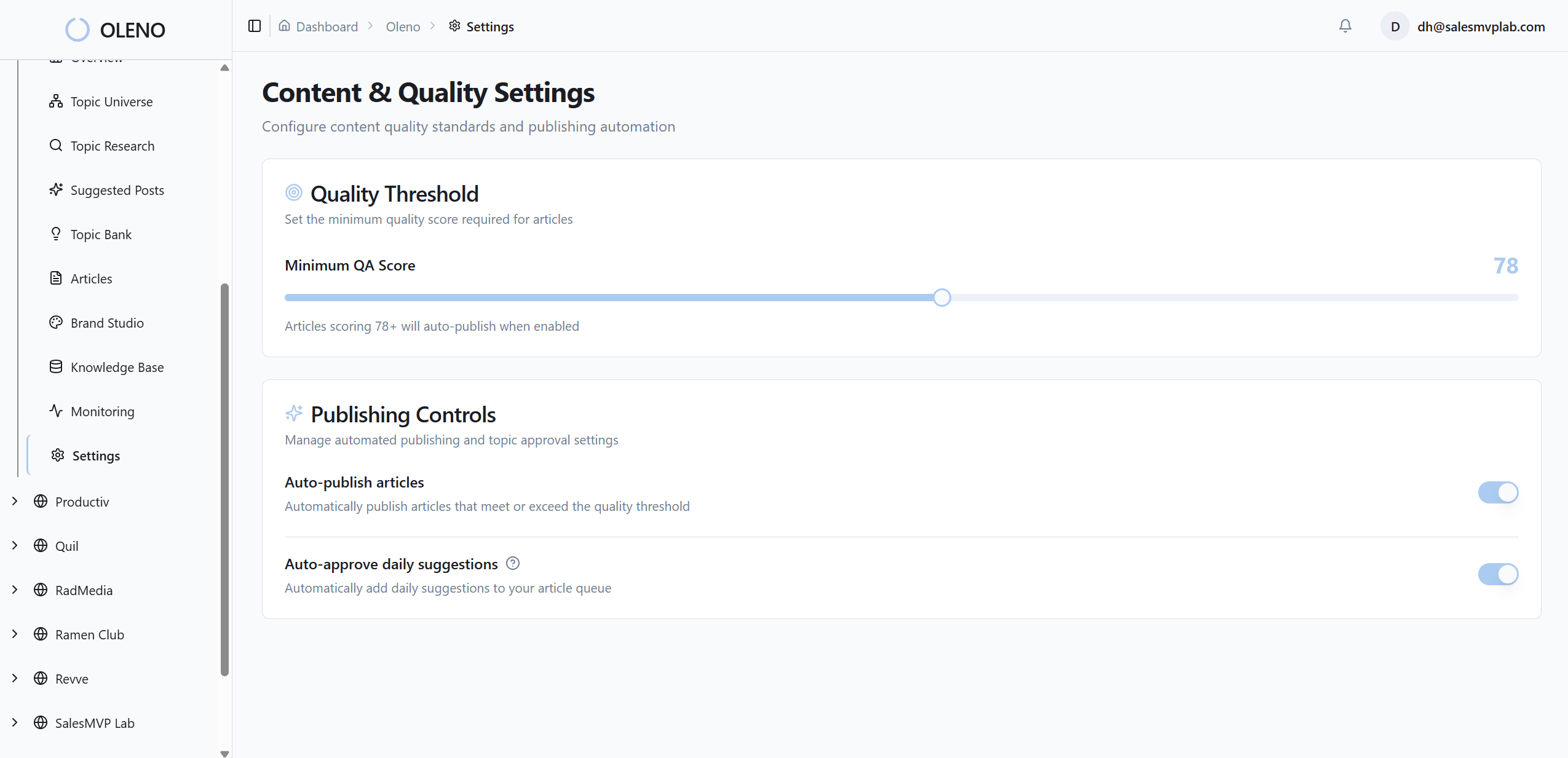
This isn’t analytics. It’s quality as a system. The effect is fewer manual edits, fewer late-stage surprises, and a predictable path to “publish-ready.” If a draft fails, Oleno improves and re-tests automatically.
Visual Studio Places Assets and Alt Text Deterministically
Oleno’s Visual Studio uses your Brand Asset Library, colors, logos, style references, and tagged product screenshots, to generate hero and inline images with Google Gemini 3 Pro and place them where they matter. It matches screenshots to sections using semantic similarity and writes SEO-friendly alt text and filenames automatically.
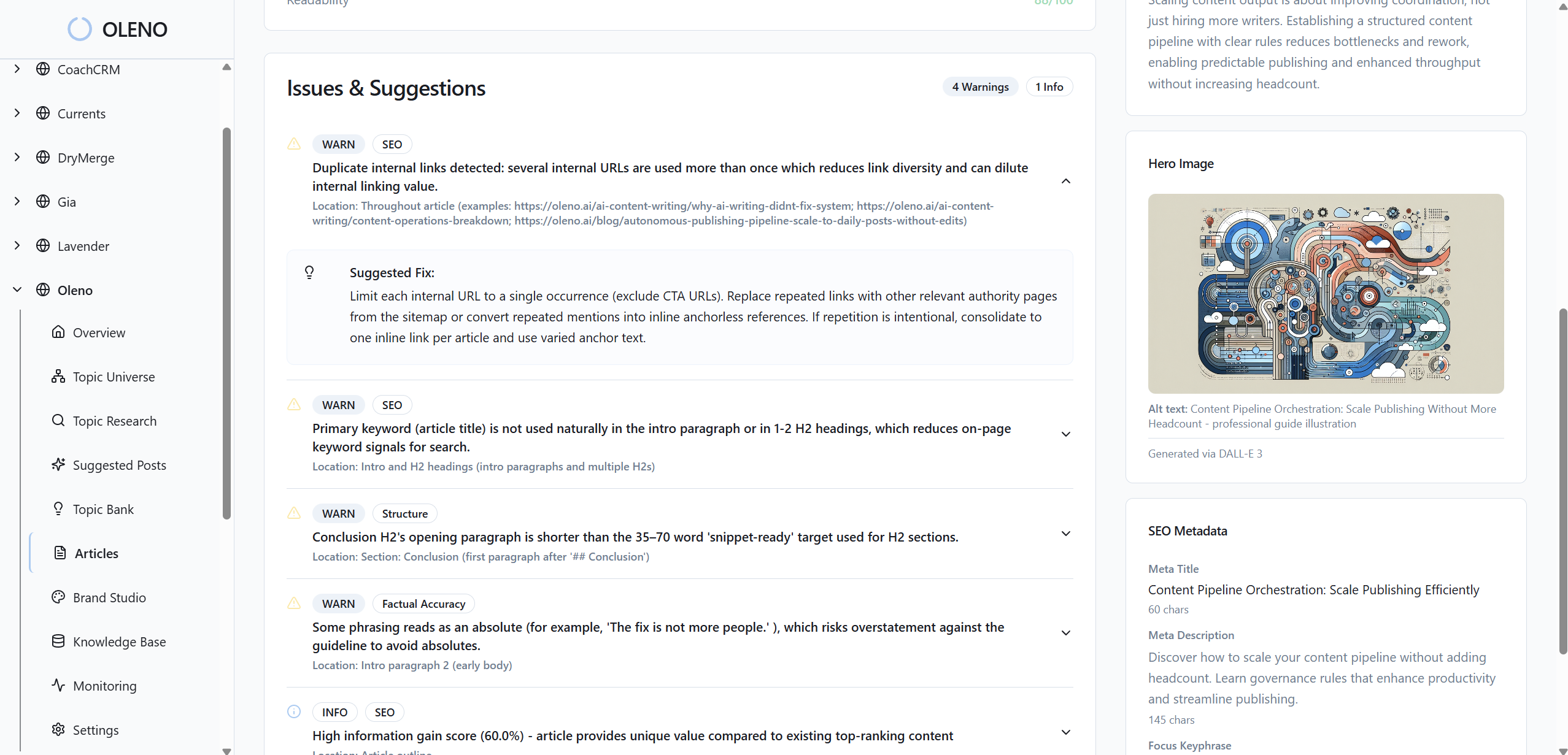
No stock photo scramble. No guesswork on placement. Solution sections get product visuals by default, and every image looks like it came from your brand, because it did.
Publishing Connectors Handle Idempotent Delivery and Retries
Oleno maps fields to WordPress, Webflow, HubSpot, or Google Sheets, prevents duplicate posts, and retries on transient failures. Links, visuals, and schema ship together. Delivery validation happens before anything goes live, so silent failures trend down, and recoveries don’t require a group chat.
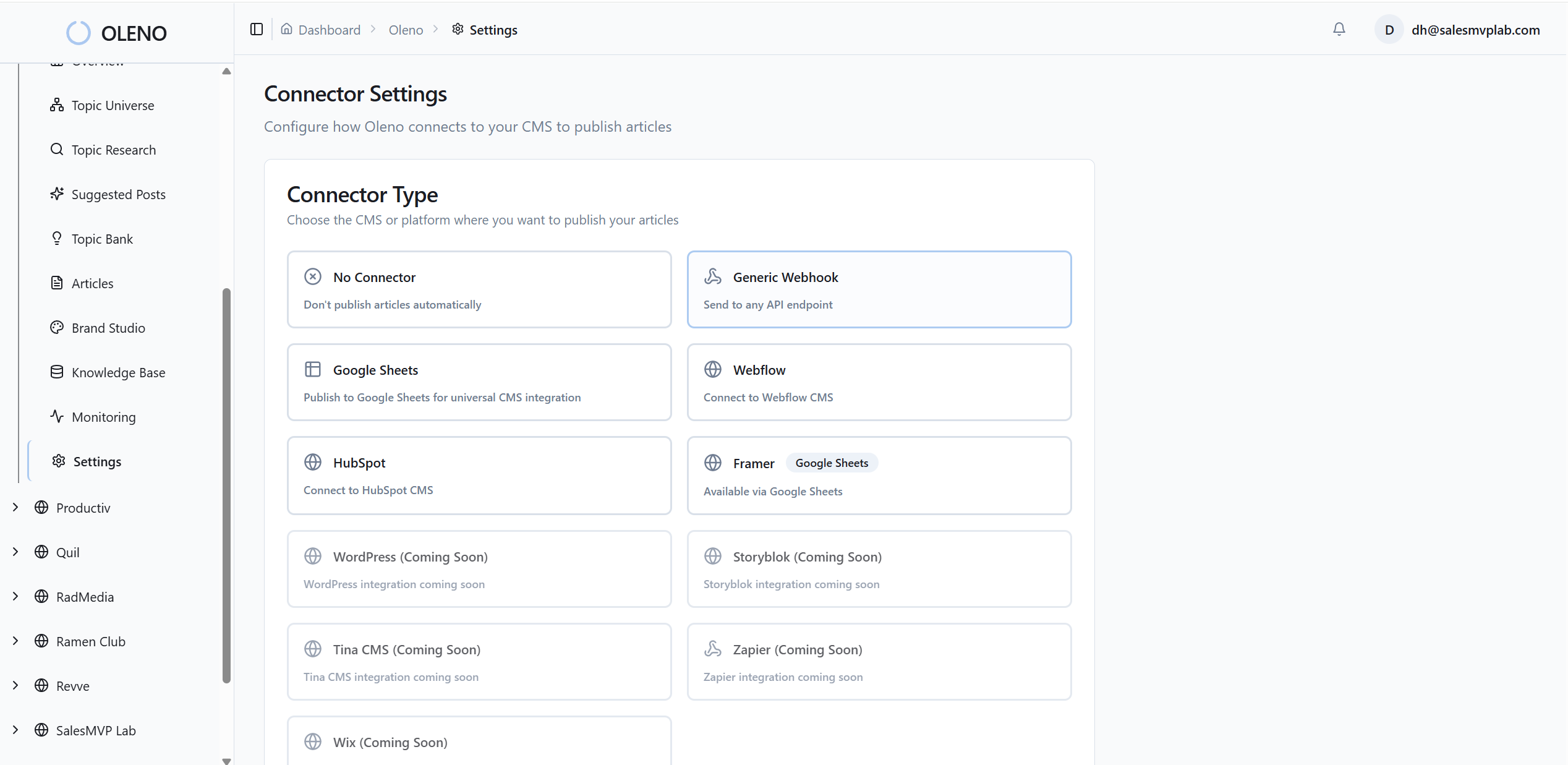
This is where you feel the calendar open up. Shipping stops being a cliff you jump from and turns into a ramp you walk down.
Ready to automate the boring parts and ship stronger articles? Try Oleno for Free.
Conclusion
You can’t prompt your way to daily, ship-ready content. Not sustainably. The path is a governed pipeline that enforces differentiation, structure, visuals, links, schema, and delivery, the same way, every time. When memory lives in your KB and brand rules, and correctness lives in code, your team spends time on story, not cleanup. That’s how authority compounds.
About Daniel Hebert
I'm the founder of Oleno, SalesMVP Lab, and yourLumira. Been working in B2B SaaS in both sales and marketing leadership for 13+ years. I specialize in building revenue engines from the ground up. Over the years, I've codified writing frameworks, which are now powering Oleno.
Frequently Asked Questions