Orchestrated AI Publishing: Build a No-Edit Pipeline to Cut Manual Hours

Most teams think their content problem is writing. It usually isn’t. The real drag is the friction between draft and publish. You still copy, paste, patch links, rename files, fix headings, and play editor at 9pm. That is not a workflow. That is unpaid tax.
And the volume pressure is real. AI can crank out drafts all day, which sounds helpful until quality buckles and your process snaps. You don’t fix that with a new prompt. You fix it with a system that turns repeated edits into rules the pipeline enforces, every time.
Key Takeaways:
- Convert repeated edits into rules, then enforce them with pass or fail gates
- Standardize the path from topic to publish so you stop managing exceptions
- Replace tool sprawl with one orchestrated pipeline that runs the same way every time
- Quantify rework, then eliminate it by moving voice, links, schema, and visuals into code
- Block weak content automatically with a minimum QA threshold and refinement loops
- Publish safely with deterministic links, validated schema, and idempotent CMS delivery
Manual Edits Mean Your System Isn’t Automated Yet
Manual edits signal your pipeline still relies on people, not rules. If voice, links, or schema need human cleanup, you have policy, not automation. The fix is simple, though not always easy: push those decisions upstream and enforce them in code. Then drafts ship without you babysitting them.
Why Tool Lists Don’t Fix Publishing
A bigger tool list usually hides a process problem. You add another writer, a “smart” prompt, a schema plugin, then still copy and paste between apps and fix the same five issues. Treat tool collections as a symptom. Map where edits happen, then ask why that rule does not live upstream in your system for autonomous content operations.
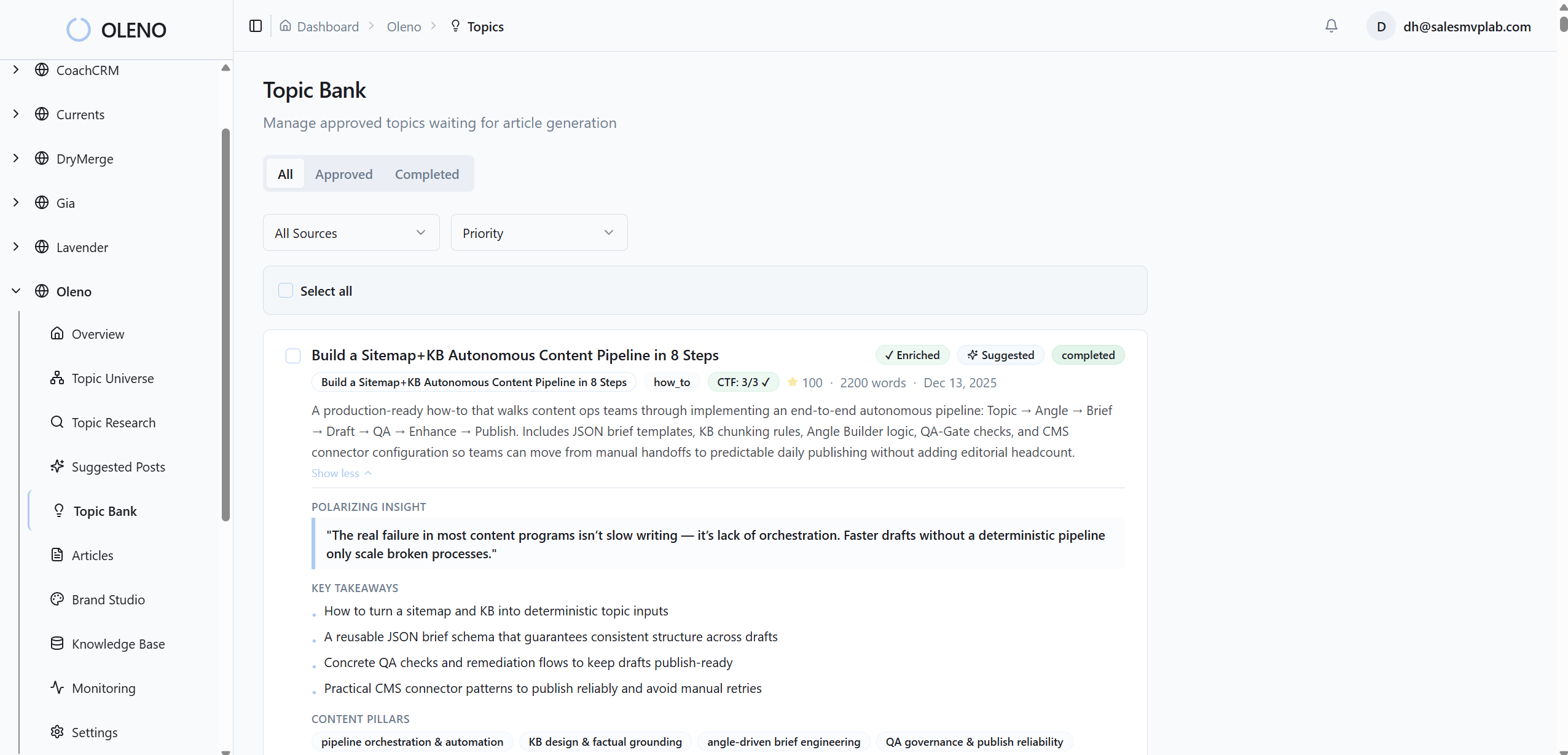
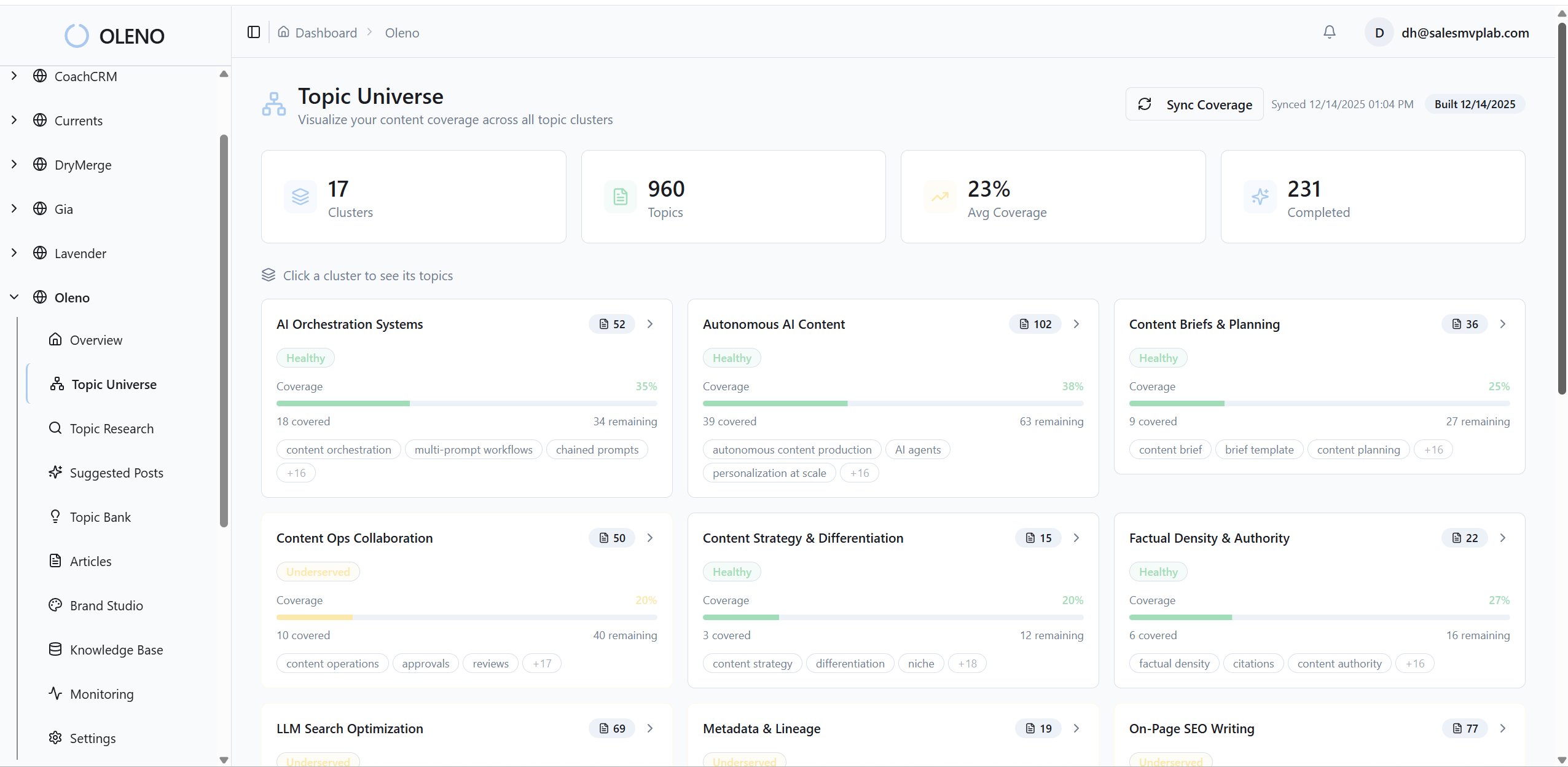
The goal is not more knobs, it is fewer judgment calls. The rule is simple: if you fix it twice, write a test and move it into code. Voice enforcement becomes phrase lists and banned terms. Structure becomes heading and paragraph constraints. Links come only from a verified sitemap. No exceptions.
What Changes When You Remove Edits?
Time stops bleeding into “quick fixes.” Those minutes add up. You redirect that energy into upstream constraints and a QA gate that blocks weak content. Risk drops because deterministic links, filenames, and schema reduce publish day surprises. Scale becomes possible because the system enforces quality without adding reviewers.
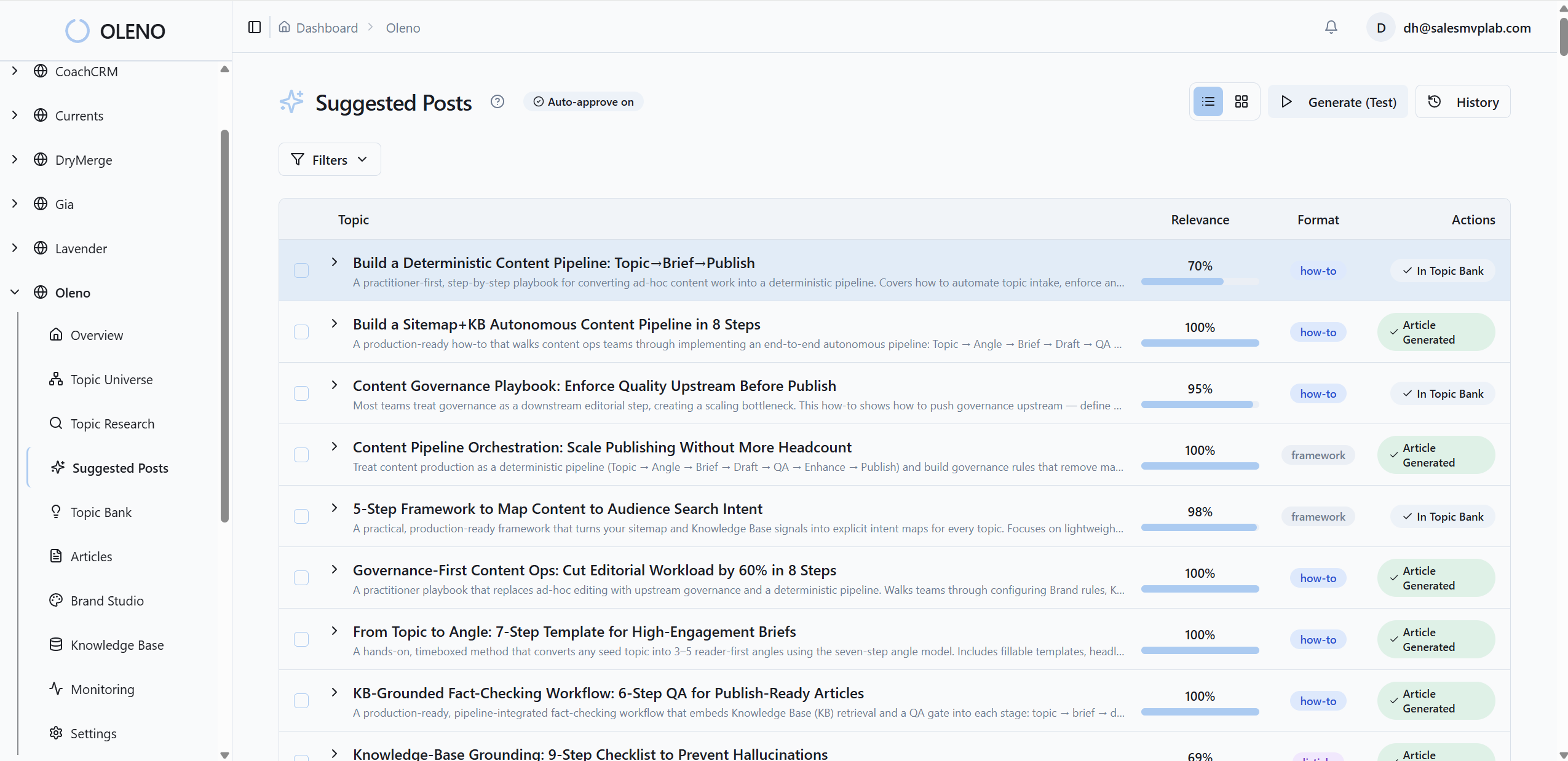
This matters more as volume rises. Research shows AI output is surging, which raises pressure to publish fast without losing credibility. See Graphite’s analysis on AI-written articles outpacing human-written content for the scale context. You want speed, sure, but not speed with cleanup.
Replace Ad‑Hoc Tools With A Single Orchestrated Pipeline
A single orchestrated pipeline replaces fragmented steps with one governed flow. It starts with topic selection and ends in your CMS, with guardrails for voice, structure, visuals, links, and schema. When each run looks the same, quality stops depending on who touched it that day. That is the shift from hustle to system.
Map Your Current Flow And Define Ownership
Write the path from topic to publish. Every handoff, every tool, every decision. Assign a single owner per stage for configuration, not execution. That owner sets the rules the pipeline enforces automatically. Then decide what can auto-advance without human review and what still needs a temporary approval.
Owners should describe triggers precisely. Topic approval starts generation. Drafts that hit the threshold auto-advance to visuals, links, and schema. Publishing runs in draft mode first, then live. You are not adding bureaucracy. You are removing ambiguity. For context on why coordination beats faster drafting, study the orchestration shift.
Who Owns Each Stage And What Stays Automated?
Create a RACI for topic curation, brief, draft, QA, visuals, schema, and CMS. The “A” is accountable for rules, not edits. Put a change window in place for updates to banned terms, information gain minimums, or link boundaries. Test rule changes on a staging article before you promote them. Treat it like code.
Maintain a single source of truth for brand voice, KB facts, and linkable pages. If writers keep private snippets or link lists, drift returns and rules are bypassed. Interjection. You are not slowing creativity, you are accelerating it by getting compliance out of the way.
Curious what this looks like when it works end to end? Try using an autonomous content engine for always-on publishing. Try using an autonomous content engine for always-on publishing.
The Hidden Costs Of Manual Publishing
Manual publishing burns time, increases risk, and creates inconsistency that quietly erodes trust. The pain rarely shows up as a single crisis. It shows up as hours lost, links fixed, images renamed, and a queue that never shrinks. Quantify it once, then codify it out of your process.

Quantify Time, Risk, And Rework
Let’s pretend a 1,600‑word post burns 2.5 hours of edits, 30 minutes of image wrangling, and 20 minutes for schema and links. Call it 4 hours. At 20 posts per month, that is 80 hours, or two weeks of a full‑time role spent fixing things the system could enforce. That is avoidable payroll.
Error costs compound. One wrong link template might take two minutes to fix per post, but across a backlog it becomes days of cleanup. Decision fatigue is real. When every publish requires judgment calls about voice and grounding, your throughput drops. Codify those calls into pass or fail checks and stop paying the cognitive tax. This is how autonomous systems break the bottleneck in your content operations breakdown.
Low-quality output also carries reputational risk. Even outside marketing, we see what happens when volume outpaces rigor. See the cautionary trend in Science’s report on low-quality papers surging and why guardrails matter. And look at the analysis of GPT-fabricated scientific papers and the signals they exploit. Different domain, same lesson: enforce structure and verification in the pipeline.
Model A Minimum Acceptable Standard
Set a minimum QA threshold, for example 85, across structure, voice, KB accuracy, and snippet readiness. Anything below loops for refinement automatically until it passes or times out. Require schema presence for Article, FAQ, and BreadcrumbList, validated every time. Verified internal links only, placed at natural sentence boundaries.
Track retries and failures centrally. You do not need a dashboard for traffic, you need an audit trail for publishing. Version history, QA scoring events, and publish attempts show where to tighten rules, not who to ping. That is how you reduce the noise while raising the floor.
What A No‑Edit Workflow Feels Like In Practice
A no‑edit workflow feels oddly calm. Drafts follow the brief. Each H2 opens with a direct answer. Visuals look like your brand without you hovering. Links, filenames, and schema are correct before you ever open the CMS. You skim for outcomes, not typos.

The Rework Spiral Ends
Drafts adhere to the approved brief and open sections with snippet‑ready paragraphs. Voice and structure are normalized upstream, so your review moves from “is this on brand” to “does this say something new.” Visuals are not an afterthought. Hero and inline images land with the right aspect ratios, filenames, and alt text already in place.
Screenshots align to the right sections based on semantics, not guesswork. Internal links are already right because URLs only come from your verified sitemap and anchor text lands naturally in sentences. No more checking if someone linked to a staging slug. If you want a reminder of why drafting alone did not remove edits for most teams, revisit the AI writing limits.
Operational Visibility Without Dashboard Bloat
You get email notifications for draft ready, publish success, failures, and low topic inventory. That is it. No rank charts. No vanity dashboards. Audit trails record inputs, outputs, retrievals, QA scores, publish attempts, retries, and versions. When something fails, you see why, adjust a rule, and rerun.
This mirrors what reliable processes look like in other disciplines, where auditability and repeatability matter more than pretty graphs. See the discussion on methodological rigor and process reliability in peer‑reviewed process reliability research. Different field, same principle: small, trusted signals keep the system healthy.
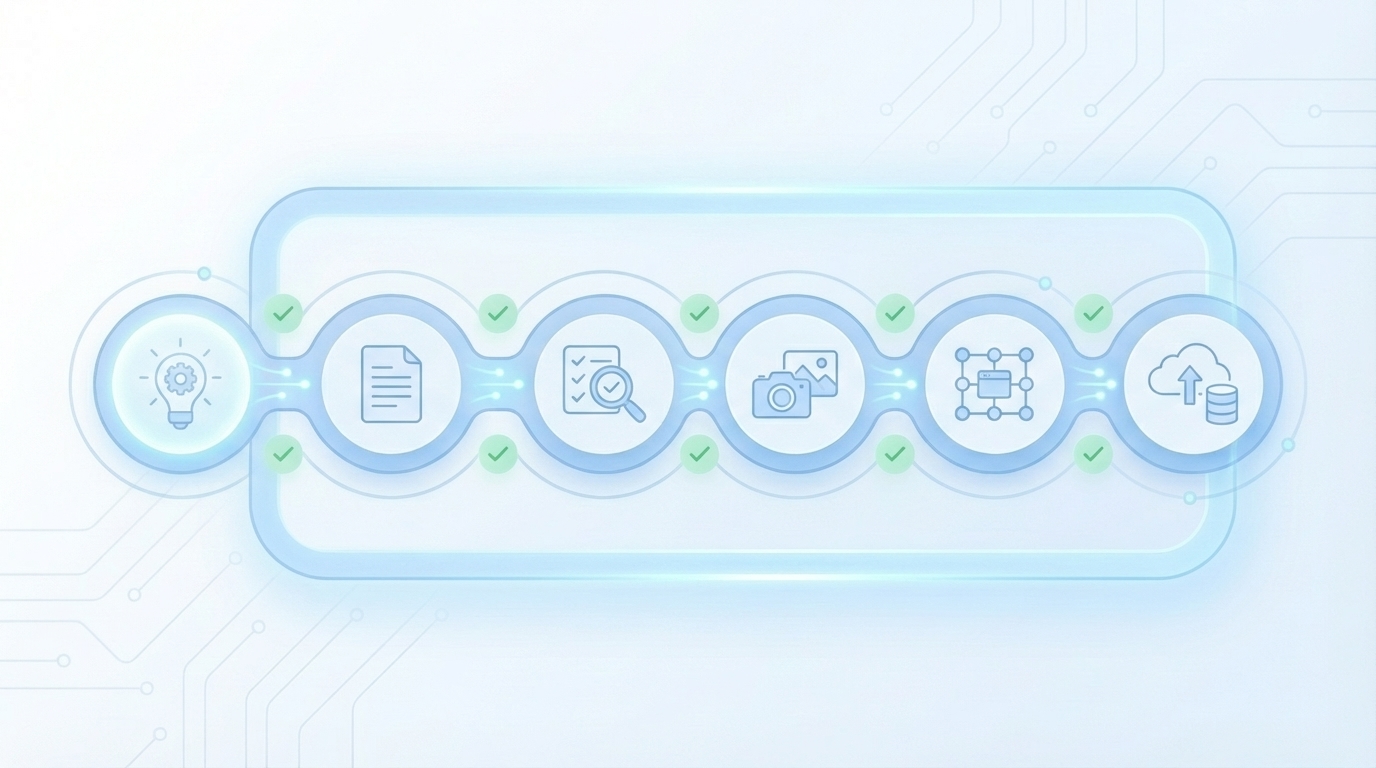
Build The Deterministic Pipeline: Topic → Brief → Draft → QA → Visuals → Schema → CMS
A deterministic pipeline turns creativity into governable outputs. Ideas and angles remain human, but compliance is code. You enforce pass or fail gates, generate brand‑safe visuals, attach validated schema, and ship to the CMS with idempotent delivery. The pipeline runs the same way every time, which machines and reviewers both appreciate.
How Do You Enforce Pass/Fail Gates?
Implement broad automated checks across structure, voice, KB accuracy, snippet readiness, visual placement, alt text, filenames, and link correctness. Set a minimum passing score, for example 85. Anything below refines automatically until it clears or times out. That is how you make quality a property of the system, not a meeting.
Convert manual edits into rules. Banned terms, product naming, CTA tone, heading length, and paragraph sizing should be evaluated mechanically. Then create acceptance tests so everyone knows the standard. Two useful examples:
- Every H2 opens with a 40–60 word direct answer using a 3‑sentence pattern
- Every internal link must exist in the verified sitemap and sit at a natural boundary
For structure that is clear to search and assistants, see how dual discovery elevates clarity.
Ready to eliminate judgment calls at the last mile? Try automated quality enforcement before you ship. Try generating 3 free test articles now.
Integrate Brand-Safe Visuals And Schema
Generate hero and inline images from a brand asset library that includes colors, marks, style references, and tagged product screenshots. Use semantic matching to place product visuals in relevant sections and prioritize solution areas where product context matters most. Produce SEO‑friendly alt text and filenames programmatically.
Attach validated JSON‑LD for Article, FAQ, and BreadcrumbList and send it alongside the content. Validation is table stakes. If it fails, it does not publish. If you want a checklist to pressure test your gate design, review these patterns for automated QA gates.
Connector Recipes And Safe Publishing Patterns
Authenticate with secure keys or OAuth. Map CMS fields to your payload: title, slug, canonical, hero image, body HTML, inline images, alt text, categories or tags, author, and schema JSON‑LD. Choose mode per run, draft or publish. Prevent duplicates by slug or external ID and keep retries idempotent.
Validate delivery by checking response codes, storing the CMS item ID, and recording publish state. On failure, capture the error and attempt controlled retries with backoff. Use idempotency keys tied to the article slug, so retries never create partial or duplicate posts. For an implementation‑level guide, see patterns for retry idempotency.
Stop wasting hours on cleanup when rules can run the show. If you want to see a governed pipeline in action, try a short run. Try using an autonomous content engine for always-on publishing.
How Oleno Automates The No‑Edit Pipeline End To End
An autonomous system should handle strategy to publish in one governed loop. That is where Oleno focuses. It assembles topic selection, differentiation, drafting, snippet‑ready structure, brand‑safe visuals, deterministic links, validated schema, automated QA, and CMS delivery into a single run that does not ask you to fix the same issues again.
What Oleno Runs For You
Remember the hours you spend on post‑draft cleanup? Oleno collapses that work into a predictable flow. Topic Universe maps your landscape and prevents over‑publishing. Briefs include competitive research and an Information Gain Score to flag thin outlines before writing. Drafts follow the brief and open sections with snippet‑ready paragraphs that answer directly in 40–60 words.
Visual Studio then generates on‑brand hero and inline images, draws from your Brand Asset Library, and matches screenshots to relevant sections using semantic similarity. After text and visuals are set, Oleno injects internal links from your verified sitemap and attaches JSON‑LD for Article, FAQ, and BreadcrumbList.
Guardrails You Can Rely On
Quality enforcement is built in. Oleno evaluates drafts against 80+ criteria across structure, voice alignment, KB grounding, snippet readiness, visual placement, alt text, and filenames. Low‑scoring areas trigger refinement loops automatically, and articles do not publish until quality thresholds are met.
Determinism handles accuracy while writing handles creativity. Internal links use only verified URLs. Schema is generated programmatically and validated. Publishing uses mapped fields, supports draft or live modes, and prevents duplicates by design. Logs record inputs, outputs, retrievals, QA scoring events, publish attempts, retries, and version history so you can see what happened without adding dashboard bloat.
Connectors And Getting Started
Oleno delivers CMS‑ready HTML with embedded visuals and metadata to WordPress, Webflow, HubSpot, or Google Sheets for custom workflows. Fields map automatically. Delivery failures trigger notifications and safe retries, not guesswork. Multi‑site management keeps voice, KB, and visual assets isolated per property.
Getting started does not require a committee. The Quick Start wizard seeds your Knowledge Base from your site, extracts brand voice, imports your sitemap, configures focus areas, and initializes Visual Studio. Run several cycles in draft mode, tune your QA thresholds and banned terms, then switch to publish when pass rates stabilize.
Ready to see a governed run from topic to publish without the manual patchwork? Try Oleno for a short pilot. Try Oleno for free.
Conclusion
If you are still fixing voice, links, schema, and visuals by hand, you do not have an automated system yet. You have people catching what code should prevent. The fix is not another prompt. It is a deterministic pipeline that turns repeated edits into rules, enforces them with pass or fail gates, and publishes safely every time.
You move faster once the rules move upstream. Risk drops. Scale becomes doable. And your content starts compounding, not because you hustled harder, but because the system made consistency the default. That is the point: fewer judgment calls, more trusted outputs, and a publishing cadence you can actually plan around.
About Daniel Hebert
I'm the founder of Oleno, SalesMVP Lab, and yourLumira. Been working in B2B SaaS in both sales and marketing leadership for 13+ years. I specialize in building revenue engines from the ground up. Over the years, I've codified writing frameworks, which are now powering Oleno.
Frequently Asked Questions