Orchestrated Content Pipelines: Publish 100+ Articles/Month
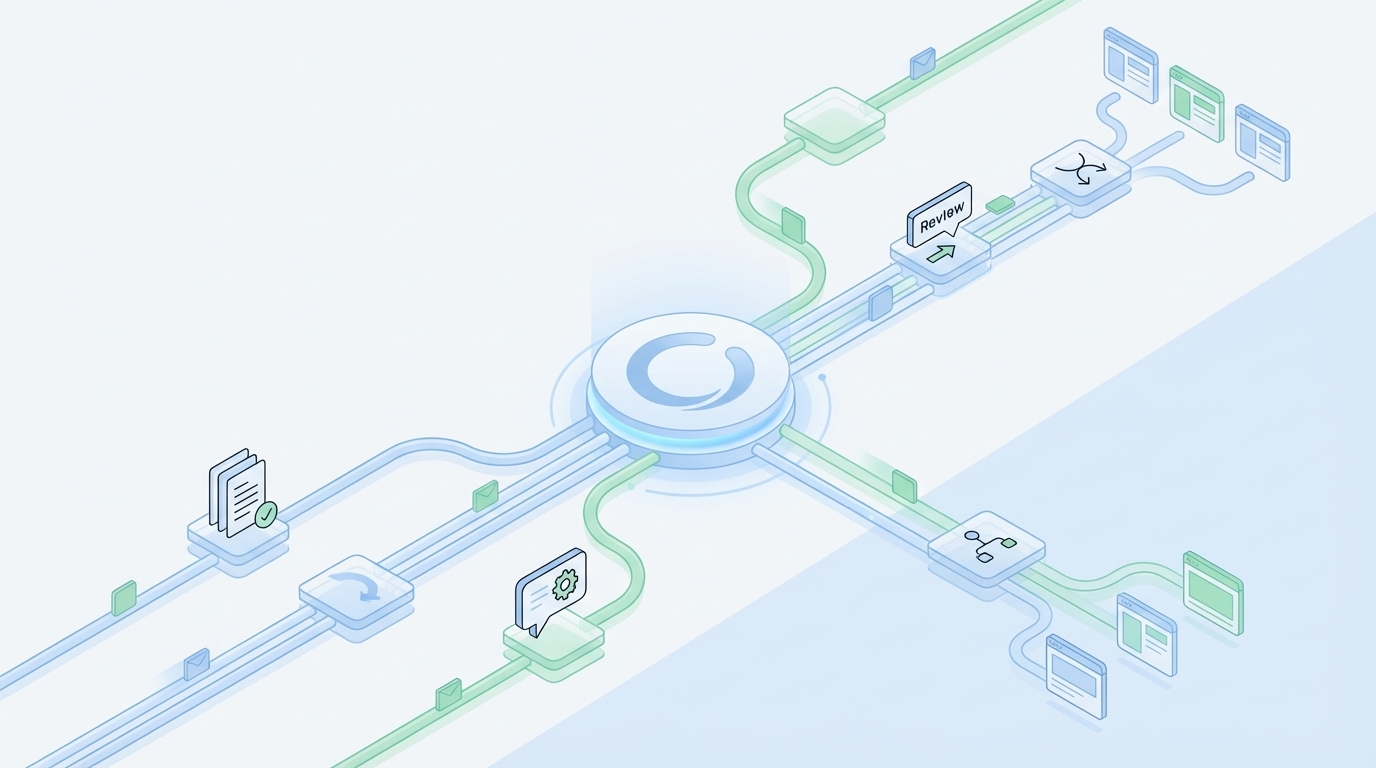
Back in 2012–2016 I ran a site called Steamfeed. At our peak we hit 120k unique visitors a month on the back of breadth plus depth. Dozens of contributors. Hundreds of angles. It worked because the system forced variety and cadence, not because any single post was special.
Then I got a front-row seat to the opposite pattern. At PostBeyond I could write fast, but the team couldn’t carry the same context. At LevelJump, transcripts shipped as “posts” without structure. At Proposify, traffic boomed but the content sat too far from the product. Great effort. Fragmented outcomes. I learned the hard way: speed without coordination erodes authority.
Key Takeaways:
- Don’t scale prompts; scale a governed pipeline from topic to publish
- Enforce topic coverage and cooldowns to prevent duplication and drift
- Bake differentiation into briefs with information gain scoring
- Separate drafting from enhancements; lock visuals, links, and schema deterministically
- Use QA gates and retries to cut rework and 3am rollbacks
- Aim for authority over time, not one-off wins
Speed Without A System Erodes Authority
Most teams think they need more words. They actually need a predictable flow that keeps those words on-brand, non-duplicative, and publishable without cleanup. A governed pipeline protects tone, structure, and accuracy while scaling output. Think less “faster drafts,” more “fewer incidents per 100 articles.”
What Goes Wrong When You Scale On Prompts?
At low volume, clever prompts feel fine. At 100-plus articles a month, they collapse. You get inconsistent tone, wobbly structure, and no way to police accuracy or publishing rules. I’ve watched teams spike output, then spend weeks untangling contradictions and cleaning up CMS messes.
The reason is simple. Prompts start from zero context every time. No memory of brand rules. No guaranteed section hierarchy. No enforceable QA thresholds. You’re managing drafts, not a system. And when you try to do it daily? The small misses multiply into real brand debt.
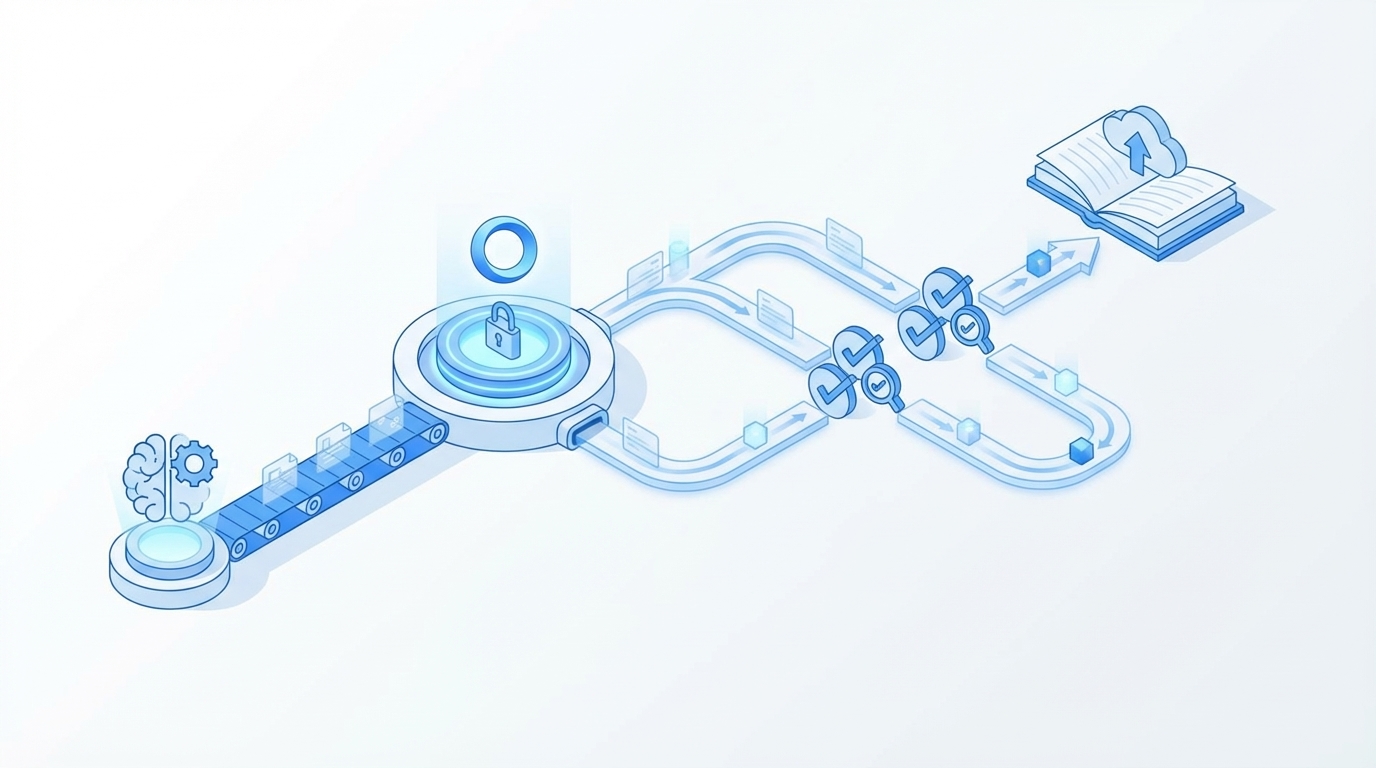
What you need is flow control. Guardrails that turn good drafts into repeatable, shippable outputs:
- Topic governance so you don’t cannibalize coverage
- Brief-level differentiation checks before writing
- A hard QA gate before anything publishes
The More-Is-Worse Trap At Volume
More content isn’t better if topics repeat, visuals look generic, and links drift. At scale, errors compound. Duplicates sneak through. Anchor text gets weird. Voice slides off brand. The rework builds up quietly until your calendar looks busy but your authority stalls.
I’ve been in that meeting. “Why are we plateauing?” Because the pipeline’s leaking. You’re measuring outputs, not the cost of stabilization. Every duplicate slug, every fabricated link, every off-brand diagram, tiny individually, expensive together, pushes you into a maintenance mode you didn’t budget for.
The fix isn’t more writers. It’s a deterministic pipeline that prevents repetition, enforces structure, and ships clean. Boring wins matter: exact-match internal link anchors, code-based schema, brand-consistent visuals. Less glamorous than brainstorming, sure. But it’s how you scale without wobble.
The Simple Guardrails That Protect Authority
Three rules change everything. Govern topics with a Topic Universe and 90-day cooldowns. Enforce differentiation with information gain scoring in the brief. Require a passing QA threshold before publish, with automatic refinement loops. That combination reduces waste, blocks accidental duplicates, and cuts those frustrating late-stage edits.
Here’s why this works. Topic governance stops you from chasing the same idea five times because it “felt new.” Information gain scoring prevents restating the SERP. And a real QA gate ensures structure, voice, visuals, and schema meet a consistent bar before anything ships.
It’s not complicated. It’s discipline, encoded. A system that makes the right thing the default. That’s the difference between “we publish a lot” and “we build authority daily.”
Ready to see the governed version of this? Try Oleno For Free.
Coordination, Not Writing, Is The Real Bottleneck
You don’t scale by typing faster; you scale by removing coordination failures. The gap isn’t ideation or drafting. It’s topic selection, differentiation, visuals, linking, and publishing all working together. When those steps are orchestrated, daily publishing stops being chaotic and starts being predictable.
What Traditional Approaches Miss About Scale
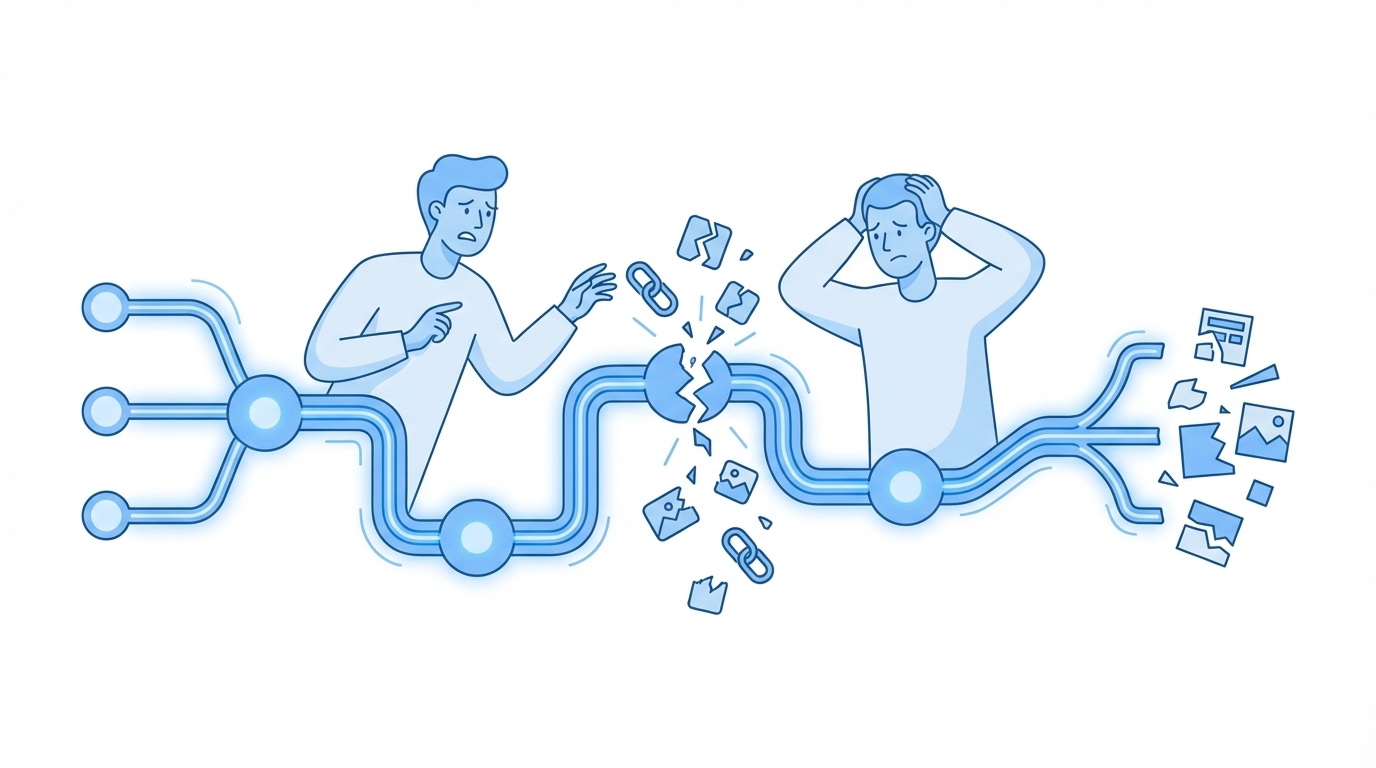
Most teams optimize for draft speed. That’s not where scale breaks. The cracks show up before and after writing, ad hoc topic choices, briefs that restate top results, visuals added at the end, and a messy handoff to the CMS. Every extra handoff introduces risk.
Think in pipelines, not pieces. Orchestration means each stage runs with a known contract: inputs, outputs, and checks. That concept is common in engineering. It should be in content too. A dependable system beats clever copy when you’re producing at volume.
If you want a mental model, read the Apache Airflow DAGs documentation. Different domain, same principle: consistent sequences, explicit dependencies, and predictable outcomes.
Topic Universe Is The Governor You Are Missing
A Topic Universe maps clusters, tracks saturation, and prioritizes gaps. It enforces a 90-day cooldown on covered topics. That governor stops unintentional duplication and gives you a durable backlog. You stop guessing and start covering pillars with intent.
Here’s the payoff. Coverage becomes visible and enforceable. You know where you’re underserved and where you’re saturated. Approved ideas flow from gaps, not whims. Daily publishing becomes a scheduling problem, not a brainstorming one. Less arguing, more shipping.
And when leadership asks what’s next, you show the map. Not a spreadsheet of keywords. A governed portfolio of topics aligned to authority, not volume.
Deterministic Visuals And Links Are Boring Wins
Lock visuals and links after the draft, not during it. Generate brand-consistent images from a central asset library so every article looks like it came from you. Inject internal links from a verified sitemap with exact-match anchors, no fabricated URLs, no random placement.
This is where code beats craft. When visuals and links are deterministic, you lower error rates and cut the back-and-forth. You also set up your articles to be referenceable by machines, not just humans. See Google’s guidance on structured data for search if you want the “why” behind the markup piece.
Small, repeatable decisions. Large reduction in rework.
The Costs You Pay When Pipelines Are Manual
Manual pipelines look cheaper until you price rework, rollbacks, and duplicates. The hidden tax is context switching and cleanup. A governed pipeline reduces incident frequency and the time to recover when something slips. That’s how you keep momentum without burning people out.
How Much Does Rework Really Cost?
Let’s pretend you publish 120 articles this month. If 30 percent need edits, and each edit run takes 45 minutes across writer, editor, and CMS cleanup, that’s 27 hours of rework. Add two rollback incidents and duplicate-prevention fixes, and you just burned a week.
You also lost velocity. Momentum matters when you’re trying to build authority across clusters. Teams that practice quality gates tend to ship faster over time with fewer failures. The DORA State of DevOps research highlights that trade-off regularly: fewer defects, steadier delivery.
You don’t need enterprise ceremony. You need a minimum viable gate that stops preventable mistakes before they hit production.
The Duplicate Publish Incident You Do Not Want
Duplicates happen when topics lack cooldowns and publishing isn’t idempotent. The fix is unglamorous: track coverage and cluster saturation; use idempotent publish operations that check for existing slugs or titles; fail safely, then retry. No drama. No cleanup.
If you want a quick primer, study Stripe’s idempotency guidance. Different space, same idea: repeatable operations without duplicate side effects. Apply that concept to your CMS publishing and you’ll avoid the “why is this live twice?” headache.
You won’t prevent every edge case. But you’ll keep incidents from turning into brand debt.
The Silent Leak When Briefs Lack Information Gain
If your brief repeats the common SERP, you waste tokens and damage authority. Bake competitive research into the brief. Calculate an information gain score. Block low-scoring outlines before they consume drafting time or publishing cycles. Reward high-gain drafts during QA.
This is the cheapest place to enforce originality. Early constraints save expensive edits later. It also forces a simple question: what are we adding that doesn’t exist yet? When the answer is thin, park the topic or adjust the angle.
Do this consistently and you’ll notice fewer “nice but forgettable” pieces slipping through.
The Human Friction When Quality Wobbles
People don’t remember the smooth weeks. They remember the late-night rollback and the tense post-mortem. Wobbly pipelines create worry, about links, visuals, tone, and what might break next. Fix the gates and the worry goes down. Simple as that.
The 3am Rollback Nobody Forgets
We’ve all been there. A post goes live with off-brand visuals or a fabricated link. You roll it back at 3am and spend a day diffusing worry about quality. That’s not a writing problem. It’s a pipeline problem.
When QA is optional, it becomes someone’s job to be heroic. Don’t make heroics a role. Put checks in the system, voice normalization, link validation against a verified sitemap, schema requirements, and let the pipeline fail fast in draft, not live.
You’ll sleep better. Your team will, too.
When Your Brand Sounds Different On Tuesday
Voice drift happens when brand constraints live in a style doc, not in the system. Codify tone, phrasing, and banned terms. Apply them during drafting and QA. Normalize language before publish. Consistency doesn’t mean boring. It means recognizable.
I learned this the hard way at PostBeyond. One person with deep context can write quickly; a team without embedded guardrails slows down and ships unevenly. Put the rules in the pipeline so new writers don’t need a year of osmosis to sound credible.
You’ll get more freedom to focus on story while the system enforces structure.
The Leadership Question You Do Not Want To Answer
“Why did we publish two articles on the same topic this month, and why do three sections contradict product messaging?” Without topic governance, information gain checks, and QA thresholds, you don’t have a credible answer.
With them, you can show the controls that prevented the next five incidents. You can point to cooldowns, blocked outlines, and failed QA attempts that never reached the CMS. That’s the kind of operational confidence leadership expects when you say “we can publish daily.”
The story moves from blame to design. From who missed it to what prevented it.
Still dealing with this manually? Take the low-risk path. Try Generating 3 Free Test Articles Now.
Build A Deterministic Pipeline That Ships Daily
Daily publishing without rework requires governance at topic, differentiation, and quality gates. Design a Topic Universe with cooldowns, automate briefs with information gain scoring, and separate drafting from enhancements. Then prove readiness with clear pass-fail criteria and retries.
Design The Topic Universe With Cooldowns
Start with your sitemap and knowledge base. Cluster topics, label saturation, and enforce a 90-day cooldown on any covered concept. Approve daily suggestions from gaps, not guesses. That keeps throughput high without cannibalization and builds durable authority across pillars.
Practically, this means you always know what to write next. It also means you stop “relaunching” the same idea every month. Cooldowns add patience to your system. The result is a clean, intentional portfolio rather than a pile of near-duplicates.
You’ll also see meetings get shorter. Decisions move from subjective to governed. That’s a relief.
Automate Briefs With Information Gain Checks
Generate briefs that include competitive coverage, missing angles, and information gain scoring. Set a minimum threshold before drafting begins. Include 3–5 authoritative external link candidates with suggested anchors. If the score is low, revise the angle or park the topic.
This turns your brief into a filter, not a formality. You’re deciding what not to write just as intentionally as what to write. Over a quarter, that discipline compounds. Fewer thin pieces. More citability. Less frustrated rework at the end of the month.
Interjection. Your writers will thank you.
Ground Drafts In Your KB And Voice
Write drafts with knowledge-base retrieval and voice constraints. Use snippet-ready section openers so each H2 stands alone. Avoid injecting links or visuals during drafting. Keep the writing clean, then attach enhancements deterministically later. That separation reduces hallucinations and keeps structure predictable.
You’ll also create space for humans to focus on narrative decisions. They shouldn’t worry about commas or schema. Let the system handle structural checks, image placement rules, and internal link integrity. Humans decide the story and examples; machines enforce the scaffolding.
That’s the balance that scales.
How Oleno Automates Topic To Publish Reliably
Oleno runs a governed pipeline, Topic Universe to publish, so you don’t have to juggle tools, prompts, and handoffs. It enforces coverage and differentiation upstream, locks links and visuals downstream, and won’t ship until quality thresholds are met. The goal isn’t more drafts. It’s publish-ready outputs, daily.
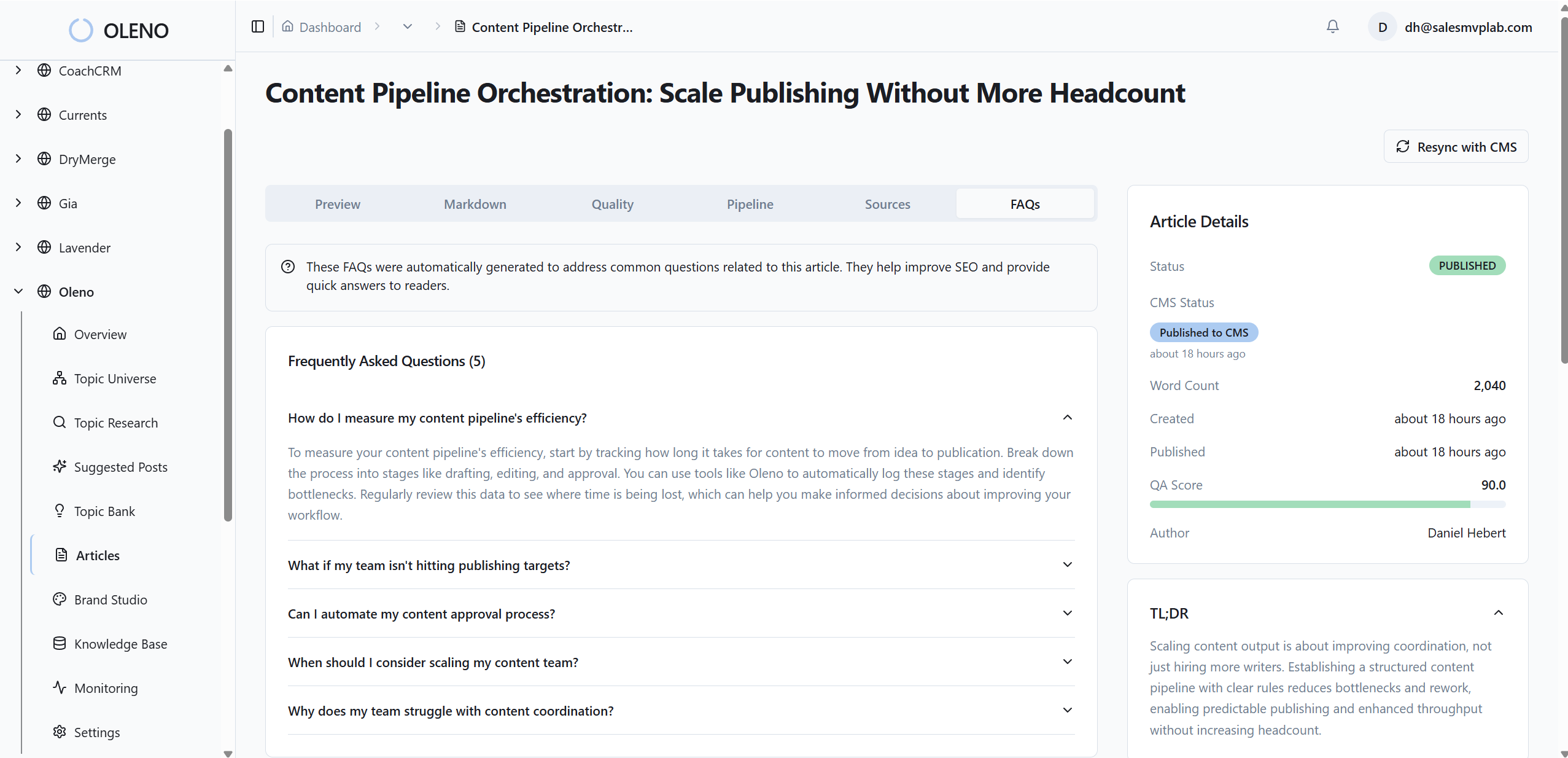
Oleno starts by mapping your Topic Universe, tracking cluster saturation, and enforcing a 90-day cooldown before re-covering a topic. Those daily suggestions come from gaps, not guesses, so duplicates decline and coverage evens out across pillars. You get the cadence without the cannibalization.
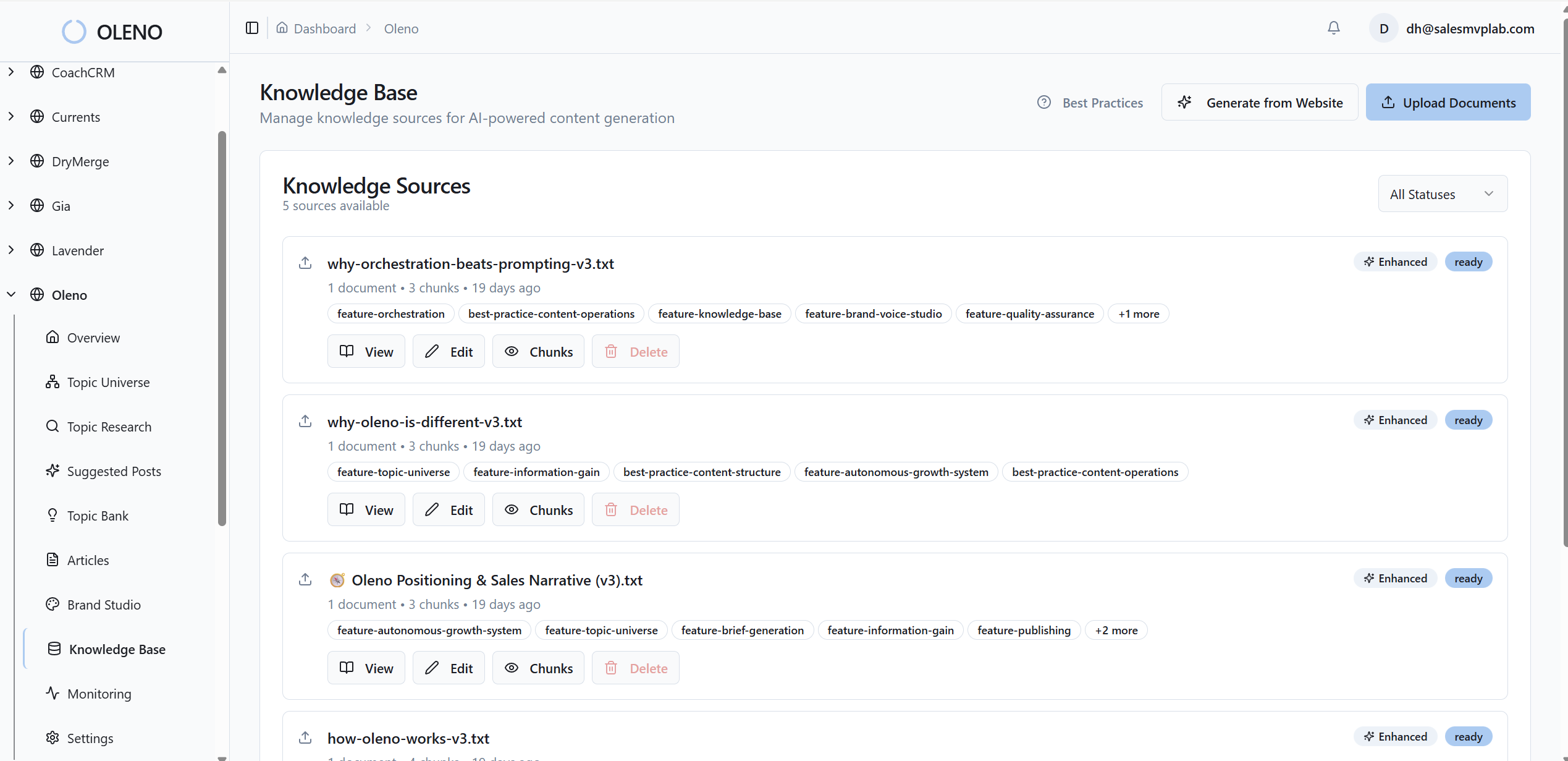
Every brief includes competitive research and an Information Gain Score. Low-differentiation outlines are flagged early; high-gain ones are rewarded during QA. That keeps you from repeating the SERP and nudges the system toward originality before any tokens are spent. It’s the cheapest fix you can implement.
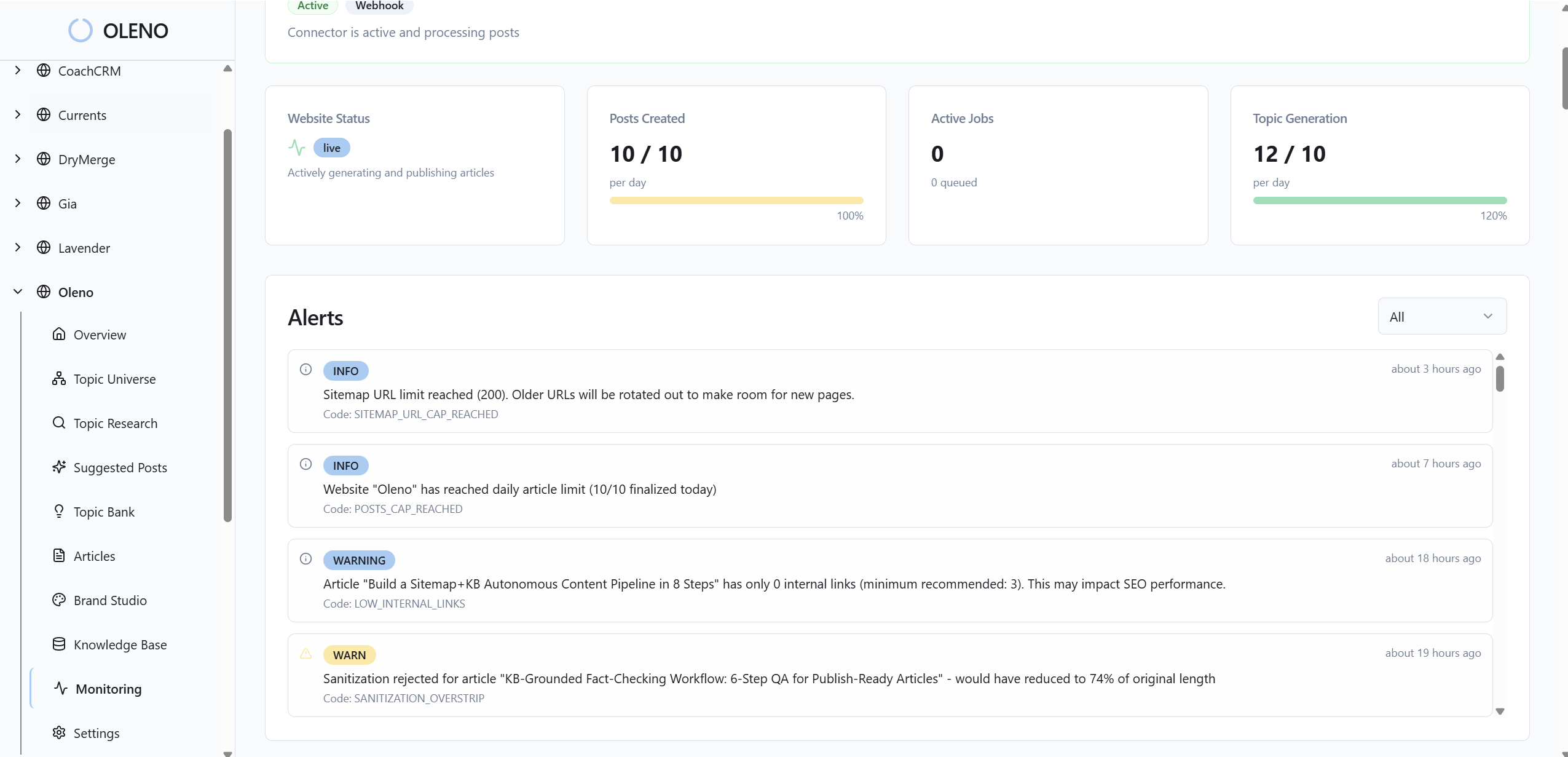
On the enhancement side, Oleno’s Visual Studio generates brand-consistent hero and inline images using your colors, marks, and style references. Product screenshots are matched to relevant sections. Internal links are injected deterministically from your verified sitemap, with exact-match anchors, no fabricated URLs, no random placement. Boring wins, banked.
Quality isn’t a suggestion. Oleno’s QA gate checks 80+ criteria, structure, voice alignment, information gain, snippet readiness, visuals, alt text, filenames, and schema, and requires a passing score (typically 85 or higher) before shipping. If a draft fails, automated refinement loops run until it passes. Then connectors convert markdown to CMS-ready HTML, map fields, attach JSON-LD schema, and publish as draft or live to WordPress, Webflow, HubSpot, or Google Sheets. Duplicate prevention and safe retries keep incidents low and recovery fast.
You don’t need more hands. You need a system that reduces rework hours, avoids duplicate publishes, and eliminates 3am rollbacks. Oleno does that by design, not heroics.
Want to see the pipeline handle the busywork while your team focuses on story? Try Using An Autonomous Content Engine For Always-On Publishing.
Conclusion
Here’s the throughline. You don’t win by writing faster. You win by governing the sequence from topic to publish so quality survives scale. Topic Universe and cooldowns prevent drift. Information gain stops repetition. Deterministic links, visuals, schema, and QA cut the headaches. Whether you build it yourself or let Oleno run it, make it a system, not a sprint.
About Daniel Hebert
I'm the founder of Oleno, SalesMVP Lab, and yourLumira. Been working in B2B SaaS in both sales and marketing leadership for 13+ years. I specialize in building revenue engines from the ground up. Over the years, I've codified writing frameworks, which are now powering Oleno.
Frequently Asked Questions