Orchestrated Pipeline: Produce 3x Content Without Quality Loss

You can brute-force your way to more content. I’ve done it. We hit volume targets, watched traffic climb, and still felt uneasy. Why? Because speed without a system quietly creates repetition, drift, and cleanup. It looks productive until the rework backlog shows up and eats your Friday.
Here’s the thing: you don’t fix that by hiring more writers or buying another “AI writer.” You fix it by turning content into a governed pipeline. Steps. Gates. Rules. Then speed stops breaking quality. And your team stops spending nights fixing what should’ve shipped right the first time.
Key Takeaways:
- Measure throughput alongside QA pass rate, rework hours, and coverage health
- Replace headcount growth with a deterministic, orchestrated pipeline
- Enforce information gain at the brief stage to prevent repetition
- Use coverage maps and cooldowns to avoid cannibalization
- Treat visuals, structure, and schema as part of the pipeline, not afterthoughts
- Publish through code-based checks to reduce failed pushes and triage
Why Speed Without A System Produces Repetitive Content
Speed without a system usually produces repetitive content because drafts repeat what’s already ranking and drift off-brand. The fix is orchestration, governed steps, gates, and rules that prevent repetition before writing begins. Think of it like DAGs rather than prompts; order matters, and so does what’s allowed to move forward.

The Metrics That Actually Matter For Scale
If you want to scale, track the right scoreboard. Throughput per week matters, but only next to QA pass rate, rework hours, and coverage health. Words shipped is vanity. Coverage progress and remediation loops are sanity. If those don’t improve, speed is masking waste.
I’ve watched teams celebrate volume, then burn a sprint on fixes. Duplicate internal links. Off-brand phrasing. Mixed schema. The surprise? None of this was surprising. It was predictable because no one tracked the signals that forecast rework. Build a weekly scorecard that surfaces leading indicators, then improve the system, not just the output.
Why Conventional Wisdom About Hiring More Writers Fails
More writers do not fix fragmentation; they multiply it. You get parallel drafts with different micro-phrasing, inconsistent structure, and links that point wherever the writer last researched. Each individual piece reads fine. The portfolio starts to wobble.
I’ve been in that seat. At one company, our writers were strong, the voice was great, but the content was too detached from the product story. We ranked. Sales shrugged. The problem wasn’t talent; it was sequencing. Without deterministic steps that enforce scope, sequence, and style, you get a chorus without a conductor. Orchestration beats headcount. Want a primer on how teams operationalize this at scale? See how DAG-based scheduling keeps order in systems like Apache Airflow’s DAGs. Different domain, same lesson: sequence and checks prevent chaos.
Ready to see what an orchestrated pipeline feels like without rebuilding your team? Generate a few and study the differences. Generate 3 Free Test Articles.
The Real Root Cause Of Quality Loss When You Scale
The real root cause of quality loss is a lack of coverage discipline and pre-draft differentiation. Calendars focus on topics, not coverage health, so clusters saturate and posts repeat each other. Add no uniqueness check at the brief stage, and repetition is baked in before a single paragraph is written.

What Traditional Approaches Miss About Coverage And Cooldowns
Most teams plan by topic lists. The hidden problem is cluster health. Without a coverage matrix and cooldowns, you accidentally cannibalize your own authority. You publish five pieces around one idea, then watch internal links and anchors compete.
A simple rule helps: map clusters, label saturation (underserved, healthy, well covered, saturated), and enforce a 90-day cooldown before re-covering a topic. That one policy changes your roadmap. New articles add surface area instead of making more noise. You’ll feel it in fewer “didn’t we already write this?” moments.
How Repetition Happens Before The First Draft
Repetition starts in the brief. If you don’t calculate information gain, writers echo what already ranks because it feels “safe.” The irony is it guarantees forgettable content. The gate you want is upstream: set a minimum uniqueness threshold before a draft is allowed to start.
When low info-gain briefs trigger a revision loop, two things happen. First, drafts arrive with sharper angles and fresher examples. Second, downstream editing shrinks. You’re not arguing about adjectives; you’re building something that didn’t exist. That’s how you protect quality at speed, by preventing sameness, not fixing it later.
The Hidden Costs Draining Your Content Budget
Hidden costs come from rework, failed publishes, and cannibalization. These aren’t line items in your budget, but they hit output and morale. If 30–40 percent of drafts loop back, the team loses days to cleanup. Each failed publish spikes stress. Cannibalization delays authority compounding for months.
Engineering Hours Lost To Rework And Handoffs
Let’s pretend you ship 20 posts monthly. If 40 percent need rework, that’s eight posts returning to the queue. Two hours of fixes per post sounds light. Call it 16 hours. Easy to ignore until you add context switching, design updates, and new schema. Over a quarter, that’s a workweek you didn’t plan.
You can’t edit your way out of that at scale. You need gates that prevent predictable errors. Structure checks. Link checks. Voice checks. Schema checks. Put them before publish, not after. Rework drops, and the calendar you promised stops slipping.
How Much Does A Failed Publish Cost Your Team?
Failed publishes are expensive because they happen late. One broken schema or duplicate slug, and you’re untangling a CMS issue at the worst moment. Let’s pretend two failures per month cost three hours each across content and dev. That’s six avoidable hours plus a morale tax.
Schema is a perfect example. A consistent JSON-LD pattern, validated before publish, eliminates a whole class of surprises. If you’re not sure what “good” looks like, start with Google’s structured data guidelines and standardize your Article, FAQ, and BreadcrumbList use. Codify it once; stop firefighting later.
The Opportunity Cost Of Cannibalization
Cannibalization doesn’t look like an outage. It looks like flatline authority. Overlapping articles split internal links, dilute anchors, and confuse readers. Short-term traffic might look fine. Long-term momentum stalls.
Coverage maps and cooldowns protect your future. You’re trading one article now for three better articles later. If you need a refresher on the pattern, this primer on keyword cannibalization explains why overlap blurs signals. Different vocabulary, same problem: without spacing and intent discipline, your cluster stops compounding.
Still losing hours to preventable cleanup? There’s an easier path. Try Using An Autonomous Content Engine For Always-On Publishing.
The Frustration Of Shipping More And Trusting It Less
Shipping more but trusting it less is a real feeling. You finally hit cadence, then Slack pings start. Off-brand phrasing. Two visuals look like stock. An internal link points at the wrong page. Not a crisis, just a momentum killer. It’s preventable with rules embedded in the pipeline.
When Your Biggest Day Turns Into Cleanup
I’ve lived this one. Early in a role, we hit a strong week, four solid posts shipped. By afternoon, I was fielding comments: “This sentence isn’t our voice.” “Why does the image feel generic?” “Is this link still the right target?” No disasters. Just death by a dozen papercuts.
We didn’t have budget for an agency or endless edits. The fix wasn’t heroics. It was guardrails: snippet-ready openers, banned term lists, visual style rules, and link validation before publish. Once those lived in the pipeline, the misses stopped showing up downstream. The team stayed focused on story, not cleanup.
Who Owns The 3 AM Fix When Links Break?
Without deterministic internal links, responsibility is vague. Is it on the writer, the editor, or SEO? When links are injected by code from a verified sitemap, the answer changes. The system owns it. Exact-match anchors. Natural sentence boundaries. Only verified URLs.
That flips the operating model from blame to prevention. And yes, it means fewer pings at odd hours. The job becomes setting the rule once and letting it apply every time it should, rather than trusting every contributor to remember every nuance.
A New Pipeline To Triple Output Without Quality Loss
Tripling output without quality loss requires a governed pipeline: coverage mapping, uniqueness gates, snippet-ready structure, brand-consistent visuals, and deterministic publish checks. The work shifts left, away from editing and into rules. You’ll spend less time fixing and more time publishing with confidence.
Step 1: Map Your Topic Universe With Coverage And Cooldowns
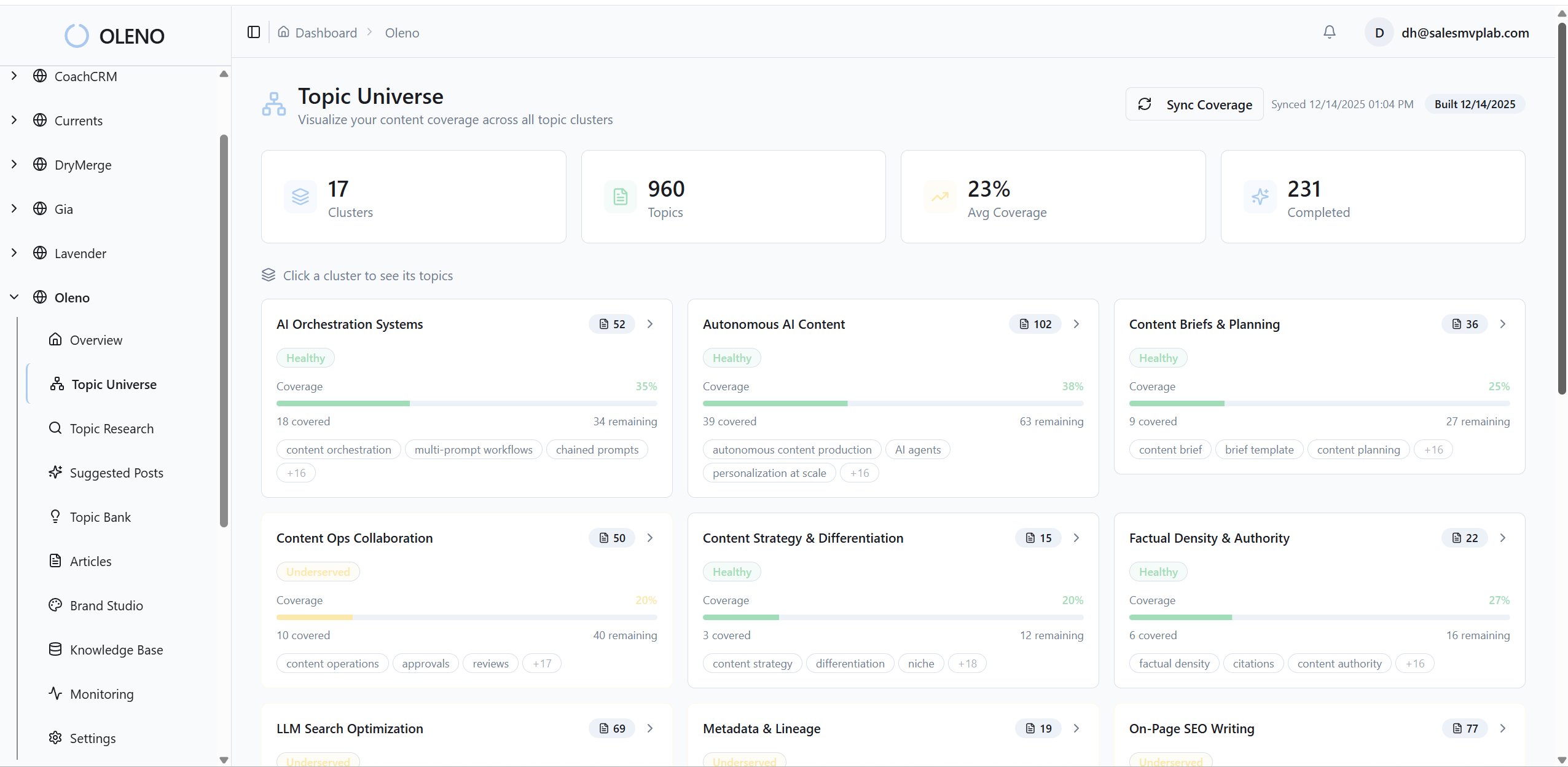
Start with a coverage matrix by cluster. Label each as underserved, healthy, well covered, or saturated. Enforce a 90-day cooldown before re-covering a topic. You’re not throttling creativity, you’re spacing it so authority compounds.
This gives you a prioritized backlog where every new post adds surface area. Daily suggestions keep the pipeline full, but the map keeps it balanced. The outcome is simple: fewer duplicates, fewer “we already did this,” and stronger topical trust as clusters mature.
Step 2: Enforce Differentiation With Information Gain Thresholds
Generate briefs with competitive research and calculate an information gain score from 0 to 100. Set a minimum threshold before drafting starts. Low-gain briefs trigger a revision loop to add unique angles, examples, or structure.
This single rule is an insurance policy. It pushes novelty upstream, where changes are cheap. Downstream, your QA pass rates improve and edit time falls. The voice doesn’t drift because the brief itself carries the angle, not just the headline.
Step 3: Auto-Generate Briefs, Snippet-Ready Structure, And Visuals
Standardize section templates that open with a direct answer, then two support sentences. Make every H2 snippet-ready by design. For visuals, use a brand asset library to generate one hero and two to three inline images, and match product screenshots to solution sections using semantic similarity.
You’re removing decisions that invite drift. Visuals come from rules, not luck. Structure is consistent across pieces. Bonus: alt text and filenames can be standardized, and schema patterns can be attached automatically. Quality becomes repeatable, not aspirational.
How Oleno Runs This Pipeline End To End
Oleno runs a closed-loop system that turns strategy into published, on-brand articles without manual handoffs. Topic Universe prioritizes what to write, brief generation enforces differentiation, drafts follow snippet-ready structure, the visual engine produces brand-consistent images, and deterministic publishing handles links, schema, QA, and delivery.
Topic Universe, Differentiation, And Snippet-Ready Drafts
Oleno starts with Topic Universe, discovering topics from your knowledge base and sitemap, clustering them, labeling saturation, and enforcing a 90-day cooldown. Daily suggestions keep the backlog healthy, so you cover gaps instead of repeating yourself. You don’t guess what’s next, the system decides based on coverage health.
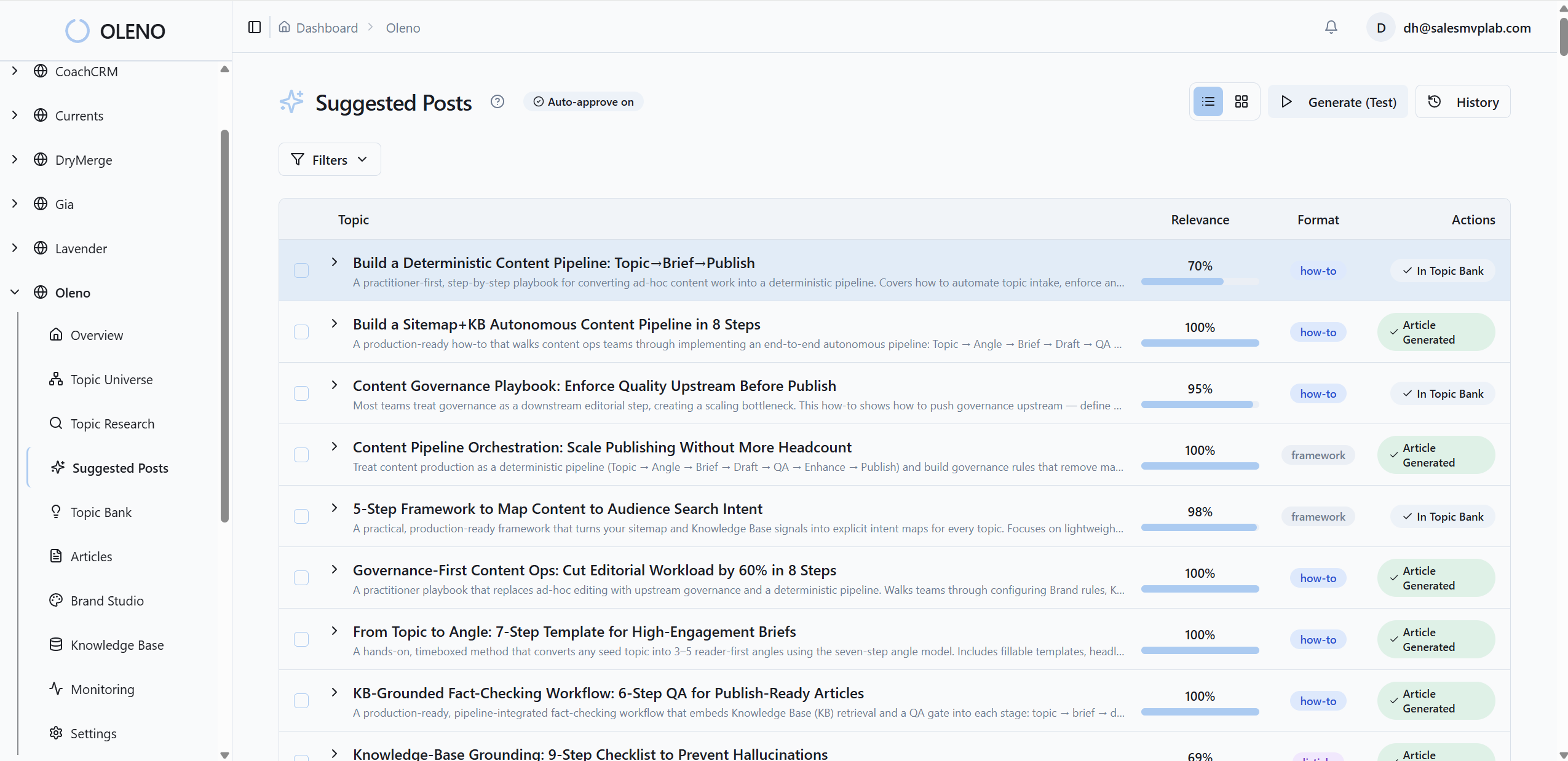
Every approved topic gets a structured brief with competitive research and an Information Gain Score. Low scores trigger a differentiation warning and a revision loop. Drafts are then generated with snippet-ready openers, direct answer, context, example, so each section stands on its own. The visual engine adds one hero and 2–3 inline visuals using your colors, logos, and style references, and it matches screenshots to the right sections using semantic similarity and a semantic model. Want to see this end-to-end flow without committing a sprint? Try Oleno For Free.
Deterministic Links, JSON-LD, QA Gate, And CMS Connectors
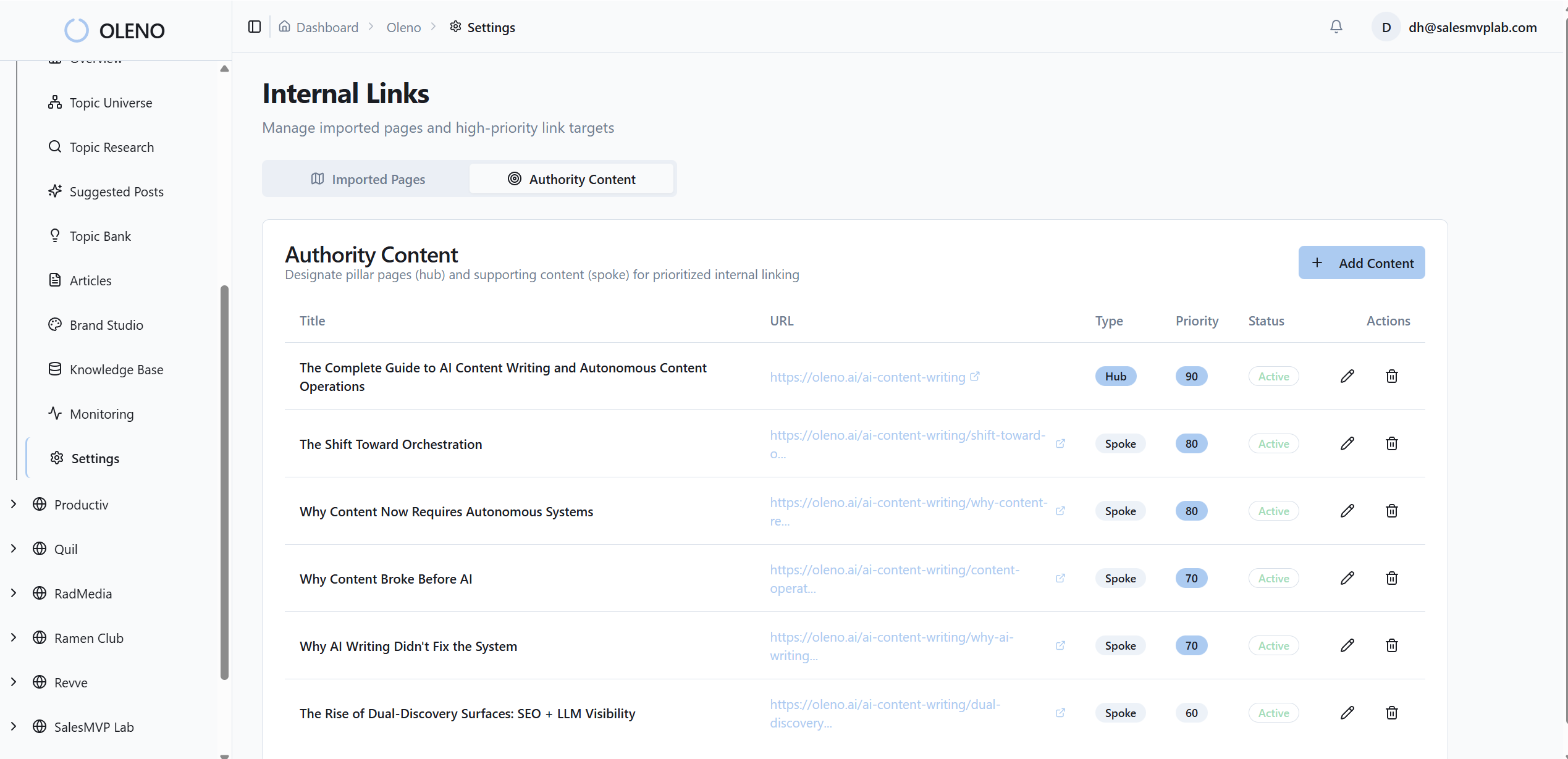
Oleno injects internal links algorithmically from your verified sitemap, with exact-match anchors placed at natural sentence boundaries. It auto-generates JSON-LD for Article, FAQ, and BreadcrumbList, validates it, and runs a QA gate across 80+ criteria, structure, tone, information gain, visual placement, alt text, and more, before a single publish attempt.
Publishing uses mapped fields into WordPress, Webflow, HubSpot, or Google Sheets-based workflows, and duplicate protection prevents accidental re-publishes. Notifications let you know when drafts are ready or publishes succeed, without turning into a dashboard you have to manage. In short: Oleno makes the boring parts deterministic so your team can focus on narrative and strategy. If you’re ready to hand the operational burden to a system, Generate 3 Free Test Articles and compare the delta.
Conclusion
You don’t need more hands. You need fewer surprises. When coverage is mapped, differentiation is enforced, structure is consistent, visuals are on-brand, and publishing is deterministic, speed stops breaking quality. The rework backlog shrinks. Confidence returns.
Turn content from a project into a system. That’s how you ship more and trust it more, week after week.
About Daniel Hebert
I'm the founder of Oleno, SalesMVP Lab, and yourLumira. Been working in B2B SaaS in both sales and marketing leadership for 13+ years. I specialize in building revenue engines from the ground up. Over the years, I've codified writing frameworks, which are now powering Oleno.
Frequently Asked Questions